
How to Fit a Backpack
Move the load onto your hips where your legs can carry it.
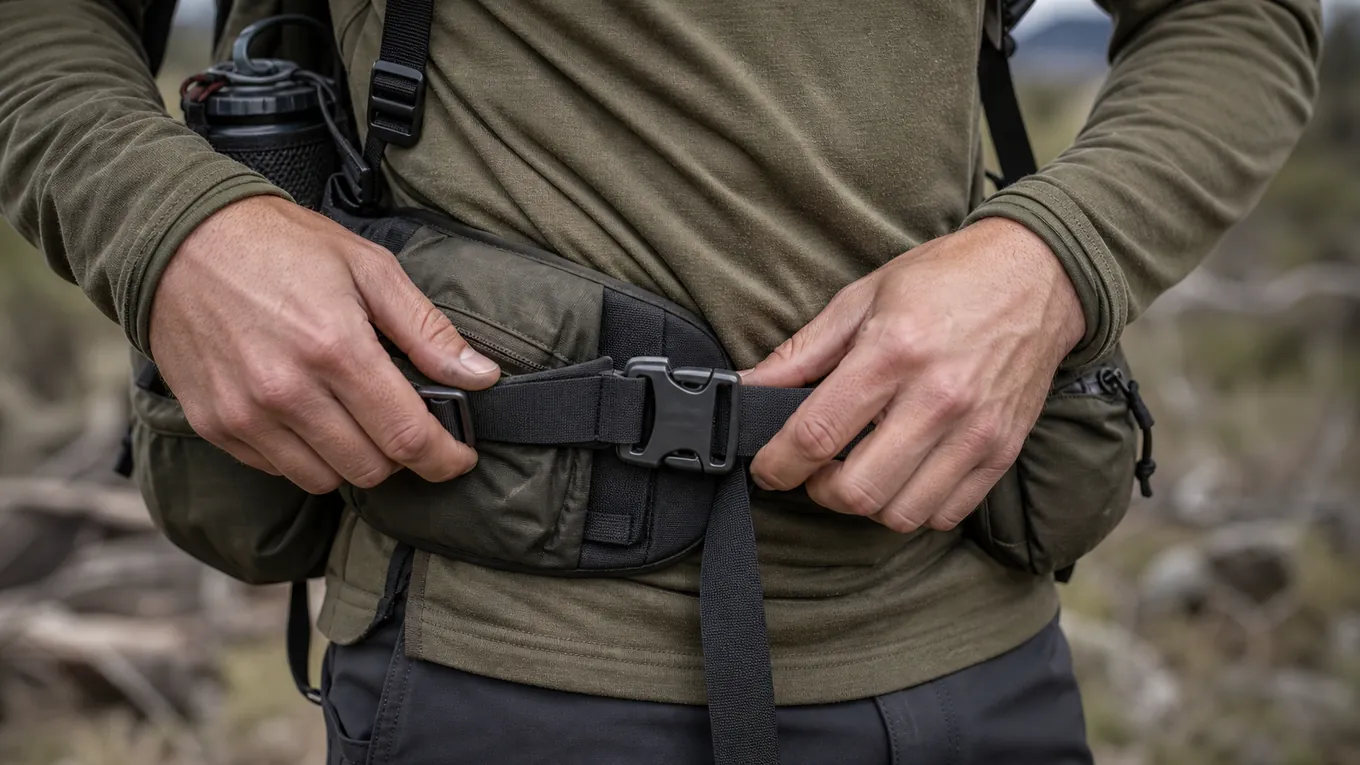
A pack that rides badly turns every mile into a chore. Good fit puts the weight on your hips, not your shoulders.
Start by measuring your torso length, not your height. Packs are sized to the spine, not to how tall you are.
| Torso length | Pack size |
|---|---|
| 15 to 17 in | Extra small |
| 17 to 19 in | Small |
| 19 to 21 in | Medium |
| 21 in and up | Large |
Load the pack with real weight, then settle the hip belt over the top of your hip bones and tighten it first, so the weight rides on your hips.
The shoulder straps should wrap close without carrying the load. The load-lifter straps angle back toward the pack at roughly 45 degrees.
- Hip belt centered on the hip bones, not the soft waist.
- Shoulder straps wrap with no gap and no pinch.
- Load-lifters angle back near 45 degrees.
- Sternum strap sits a few fingers below the collarbone.
Frame style trades weight against load support, so match the pack to how much you actually carry.
Pros
- Internal frame rides close and stays stable on rough ground
- Internal frame hauls heavy loads without sway
Cons
- Internal frame runs warmer against your back
- External frame looks dated but ventilates better
A pack marked unisex often means a men's hip shape, so if that belt digs in, look for a women's-specific belt.
The best pack is the one you stop noticing an hour into the walk.
Field fitting notes
Walk with it before you commit. A pack that fits in the store but pinches after an hour is the wrong pack.
Step by stepHow to do it
- Measure torso length, not height.
- Load the pack with real weight.
- Set the hip belt over your hip bones and tighten first.
- Snug shoulder straps; angle load-lifters near 45 degrees.