
How to Train for a Day Hike
Build the legs and lungs for a full day on trail.
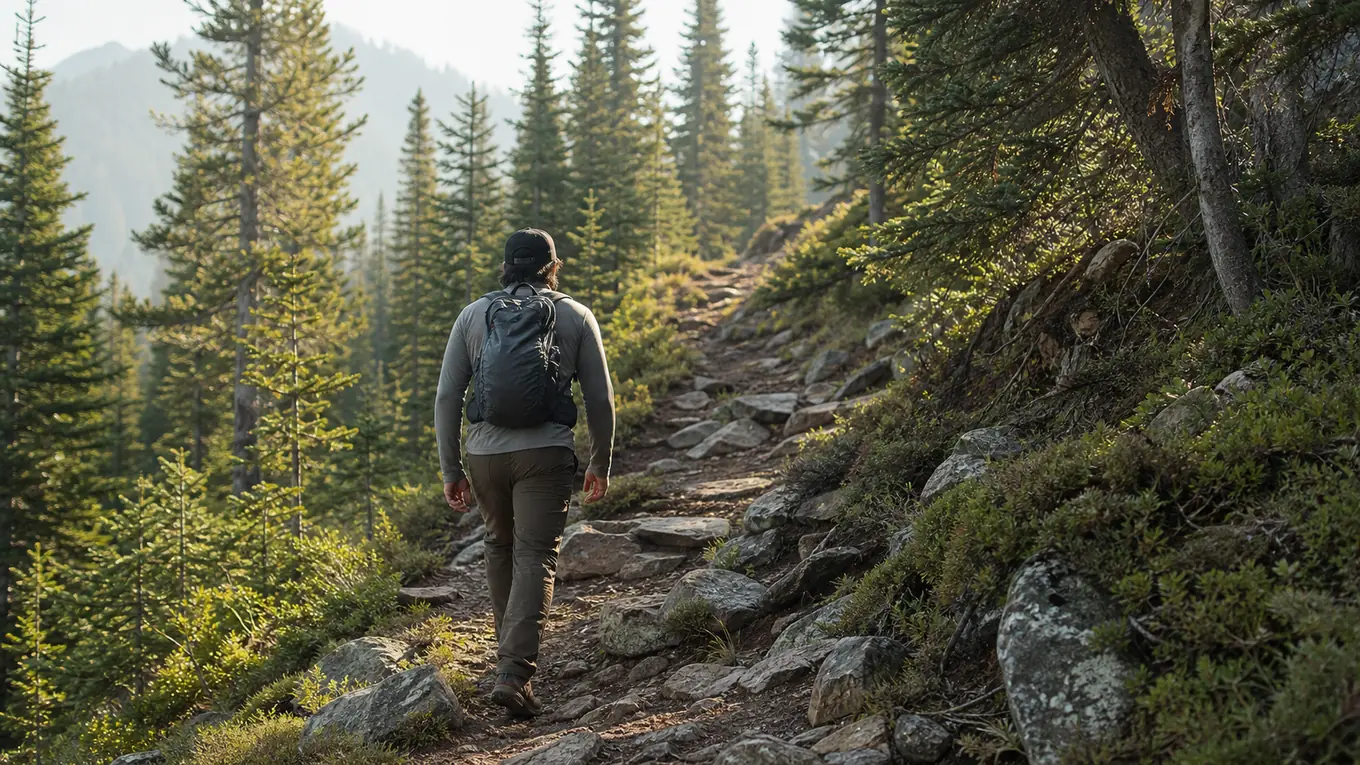
A day hike asks more of your body than a walk around the block. A few weeks of steady preparation turns a hard slog into an enjoyable day.
Start with the hike you want to finish
Training works best when it matches the day you are planning. A flat six-mile lake path asks for steady walking. A four-mile ridge with 1,500 feet of gain asks for climbing legs, controlled downhills, and feet that can handle uneven ground.
Train for the slowest, steepest, most awkward part of the route, not the easiest mile.
- Good first training window
- 4 to 6 weeks
- Minimum useful rhythm
- 3 walks per week
- First goal
- Finish the target distance without sore feet
- Second goal
- Handle the climb and descent without rushing
- Final week
- Cut volume so you arrive rested
Use the route page, map, or trail sign to find the distance, elevation gain, surface, and expected time. If you are still choosing a route, the beginner hiking guide shows how to keep the first plan small enough to learn from.
The broader hiking hub helps you separate route choice, pacing, etiquette, and gear instead of turning training into the answer for every first-hike problem.
How many weeks should you train?
Most healthy beginners can prepare for an easy to moderate day hike in four steady weeks. Add two more weeks if the hike is long, hot, steep, or if you have not walked much lately.
The best plan is the one you can repeat without getting hurt or skipping days.
| Training window | Best for | What to focus on |
|---|---|---|
| 2 weeks | Already active walkers | Hills, shoes, and pack practice |
| 4 weeks | Most easy to moderate day hikes | Distance first, then climbing |
| 6 weeks | Longer or steeper routes | Base miles, descents, and recovery |
| 8 weeks or more | Big elevation or low starting fitness | Gradual volume with rest weeks |
Do not jump from short city walks to one hard weekend workout. Spread the work across the week so your feet, calves, hips, and lungs adapt together.
Build the base before you chase hills
Start with three walks per week at a pace where you can speak in short sentences. Make one walk a little longer than the others, because day hikes usually fail from total time on feet before they fail from speed.
Flat miles are not wasted. They teach shoe fit, sock comfort, skin hot spots, and whether your water habit is realistic.
Add distance before intensity, because sore feet ruin a hike faster than slow lungs.
- Week 1Walk 25 to 40 minutes three times and notice any rubbing.
- Week 2Make one walk close to half your target hike time.
- Week 3Add hills or stairs to two walks while keeping one easy.
- Week 4Do one dress rehearsal, then taper for the final few days.
Carry water during these walks so drinking becomes normal instead of an afterthought. A simple water carry plan keeps training close to the real day.
Add climbs, descents, and rough footing
Once flat walking feels routine, find the steepest local hill, stair set, or trail loop you can repeat. Climbing builds the engine, but descending is where tired quads and knees often complain.
Short repeats work well. Walk uphill under control, come down slowly, rest briefly, and repeat. If your goal trail has loose rock or roots, practice on uneven but safe ground instead of only on pavement.
Downhill control is training, not just the way back to the car.
Uphill
Shorten your stride and keep breathing steady instead of attacking the slope.
Downhill
Bend the knees slightly and place each foot before loading it.
Side slope
Keep steps deliberate because angled ground stresses ankles.
Rough tread
Look several steps ahead so you do not stare at your toes all day.
Navigation mistakes happen more often when people are tired. If your goal trail has many junctions, refresh basic compass use before the hike instead of learning it while breathing hard.
When should you train with a loaded pack?
Add your day pack after the base walks feel easy. Start with the weight you expect to carry, not extra weight with no trail purpose. Water, snacks, layers, first-aid basics, and a headlamp are enough for most day-hike practice.
The pack should teach fit and balance, not turn every walk into a punishment.
A loaded pack changes posture. It can rub shoulders, swing on descents, and make uphill pacing feel harder. If the pack bounces or pulls backward, fix the straps before you add more miles.
- Hip belt or waist belt sits snug before the shoulder straps are tight.
- Heavy items ride close to your back.
- Water is easy to reach without unpacking.
- Nothing hard presses into your spine.
- No strap rubs after 30 minutes of walking.
Use the backpack fit steps if weight lands on your shoulders or the bag swings side to side.
If your practice load grows beyond a simple day kit, browse backpack categories before you train with weight the pack was not built to carry.
What strength work helps most?
Strength work should make hiking feel steadier, not turn the plan into a gym program. Two short sessions per week are enough for most day hikers.
Focus on legs, hips, calves, and trunk control. These areas help you climb, step down, carry a pack, and recover when your foot lands on uneven ground.
Choose simple movements you can do well, then repeat them with control.
| Movement | Trail job | Easy version |
|---|---|---|
| Step-up | Climbing rocks and stairs | Low bench or stair |
| Split squat | Single-leg strength | Short range of motion |
| Calf raise | Uphill push and ankle support | Both feet on flat ground |
| Hip hinge | Pack posture | Light backpack good morning |
| Side step | Lateral stability | Slow band walk or side step |
Stop a set while your form still looks clean. Sharp pain, limping, or a change in how you walk is a reason to back off and get qualified help if it does not settle.
How do you know you are ready?
You are ready when your longest practice walk reaches about 70 to 80 percent of the expected hike time and you finish without new foot pain. You do not need to train the whole route if the hike is moderate and your base is steady.
The final week should feel almost too easy. Keep light walks, skip hard hill repeats, sleep well, and check weather before you commit.
Arrive a little undertrained and rested rather than perfectly trained and tired.
Rested legs beat one extra workout.
Training rule
Cold rain, wind, and fatigue make any route harder than the training log suggests. If the forecast turns ugly, review early hypothermia signs and choose a shorter trail.
When the plan starts to include heavier loads or more remote travel, compare hiking and trekking before you borrow a day-hike training plan for a different activity.
Training is finished when the route feels predictable. You know your pace, your pack is quiet, your feet are calm, and the climb no longer feels like a surprise.
Step by stepHow to do it
- Walk 3x per week, building flat distance first.
- Add a weighted pack once flat miles feel easy.
- Train on the steepest hills you can repeat, up and down.
- Taper in the final week so you arrive rested.