
Achiou Touch Screen Thermal Review: Dexterity Has a Weather Limit
A dexterous mild-weather knit glove that should not be mistaken for insulated windproof protection.
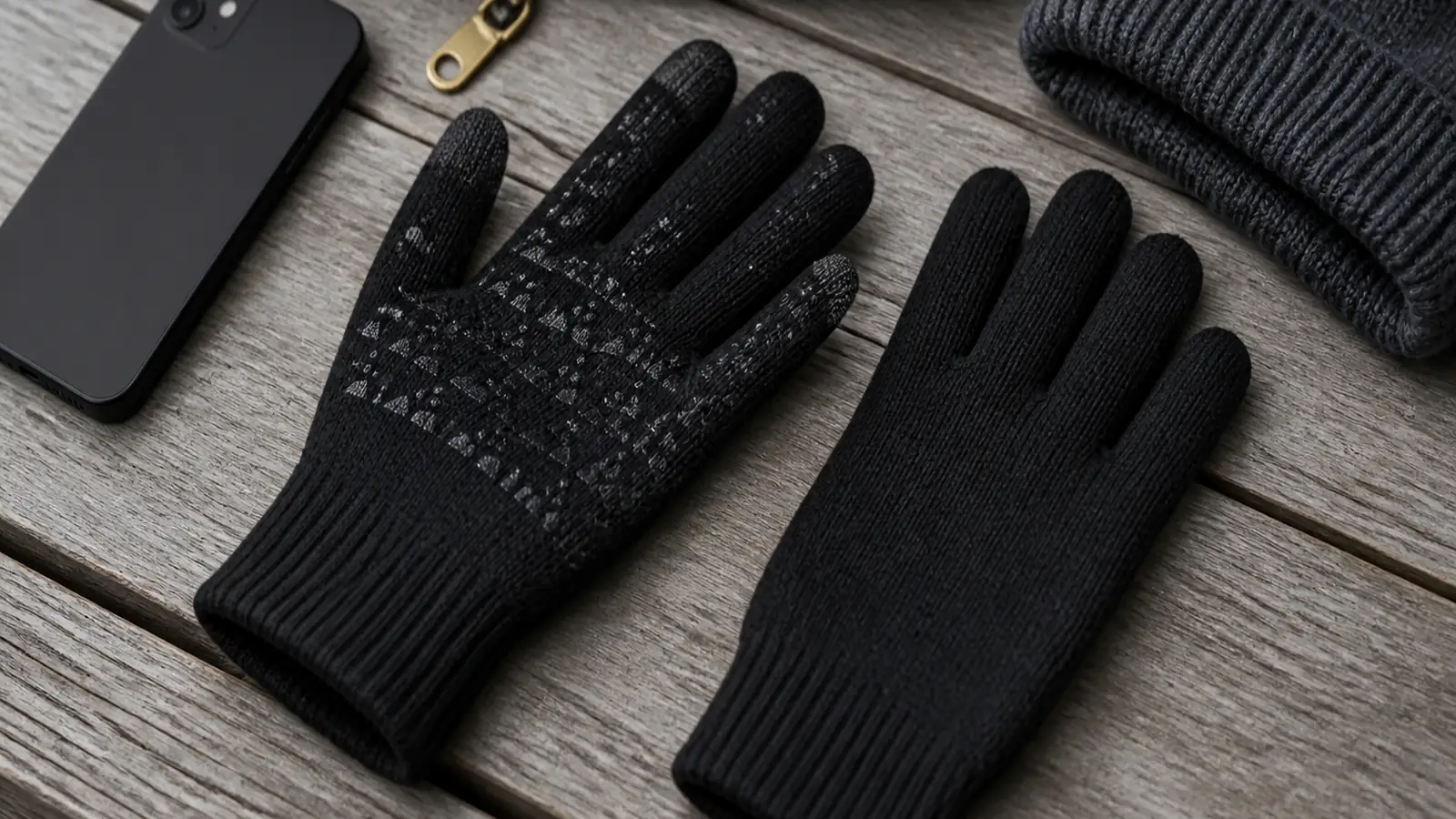
The Achiou Touch Screen Thermal glove is useful for dry commuting and phone use, but wind and water quickly expose its limits.
The Achiou Touch Screen Thermal glove is useful for dry, mild cold when you need to type, drive, or handle a phone without exposing bare skin. It is a thin knit utility glove, not a substitute for an insulated windproof or waterproof winter glove.
KnowOutdoor has not conducted a hands-on test. This editorial review compares Achiou's current product description with independent test observations, and it does not assign a temperature rating that neither source can support.
- Name the jobChoose phone use, driving, short errands, or a thin liner rather than treating "winter glove" as one job.
- Check the weather boundaryReject exposed wind, rain, wet snow, and long stationary cold unless another layer supplies the missing protection.
- Fit the fingertipsMake sure the thumb and first two fingers fully reach their conductive zones without tight seams or loose folds.
- Test the real controlsTry the phone case, screen protector, steering wheel, zipper, and small buttons you actually use.
- Protect the knitKeep the gloves away from hook-and-loop fasteners, rough wood, and sharp pack hardware that can pull loops.
Dexterity is the benefit and the limit. Thin material lets your fingers move, but the same construction provides little barrier against wind and water.
Is the Achiou Touch Screen Thermal glove actually warm?
It provides modest warmth for commuting, short walks, driving, and cool indoor work.
Independent evaluation found the glove comfortable and dexterous but weak in sustained cold and poor weather.
OutdoorGearLab's test places the model near the bottom of serious winter protection while recognizing its dexterity and touchscreen use. That combination fits a lightweight utility glove, not a mountain glove whose insulation and shell must preserve hand function through weather.
The current Achiou listing describes a stretch knit with a soft lining. That lining can hold a layer of warm air near the skin, yet it lacks the thick loft and weather shell used by serious winter gloves.
The independently tested glove used an acrylic and polyester knit, and the fabric dried relatively quickly after becoming wet. Faster drying is useful after a damp commute, but it does not prevent the initial loss of warmth while water occupies the knit.
| Condition | What the glove can do | Main limit | Better choice when the limit matters |
|---|---|---|---|
| Dry cool commute | Reduces direct skin exposure while preserving phone use | Hands may cool during a long wait | Add a pocket warmer or use a thicker commuter glove |
| Active walk in calm air | Moves and breathes without much bulk | Sweat can dampen the knit | Carry a dry spare if the outing is long |
| Windy trail or bus stop | Offers little barrier to moving air | Heat leaves faster through the open knit | Use a wind-resistant shell glove |
| Rain or wet snow | Knit can absorb moisture | Wet material loses warmth and dries against the hand | Use a waterproof insulated glove |
Do not attach a universal temperature to this conclusion. Cold tolerance, wind, duration, circulation, activity level, and whether the glove is wet all change the result.
Duration is especially easy to miss. A ten-minute walk with warm hands and continuous movement can feel acceptable, while waiting motionless for a delayed bus gives wind and conductive heat loss much more time to cool the fingers.
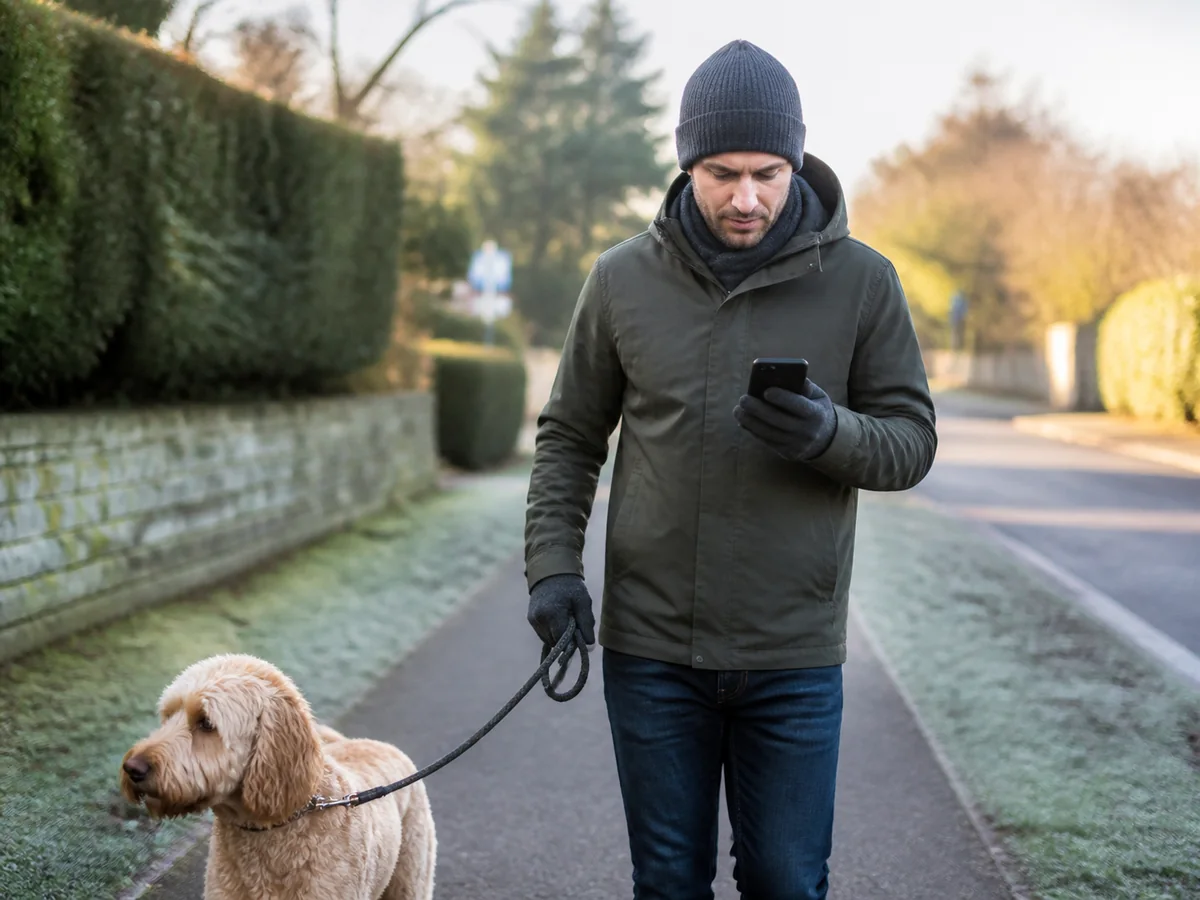
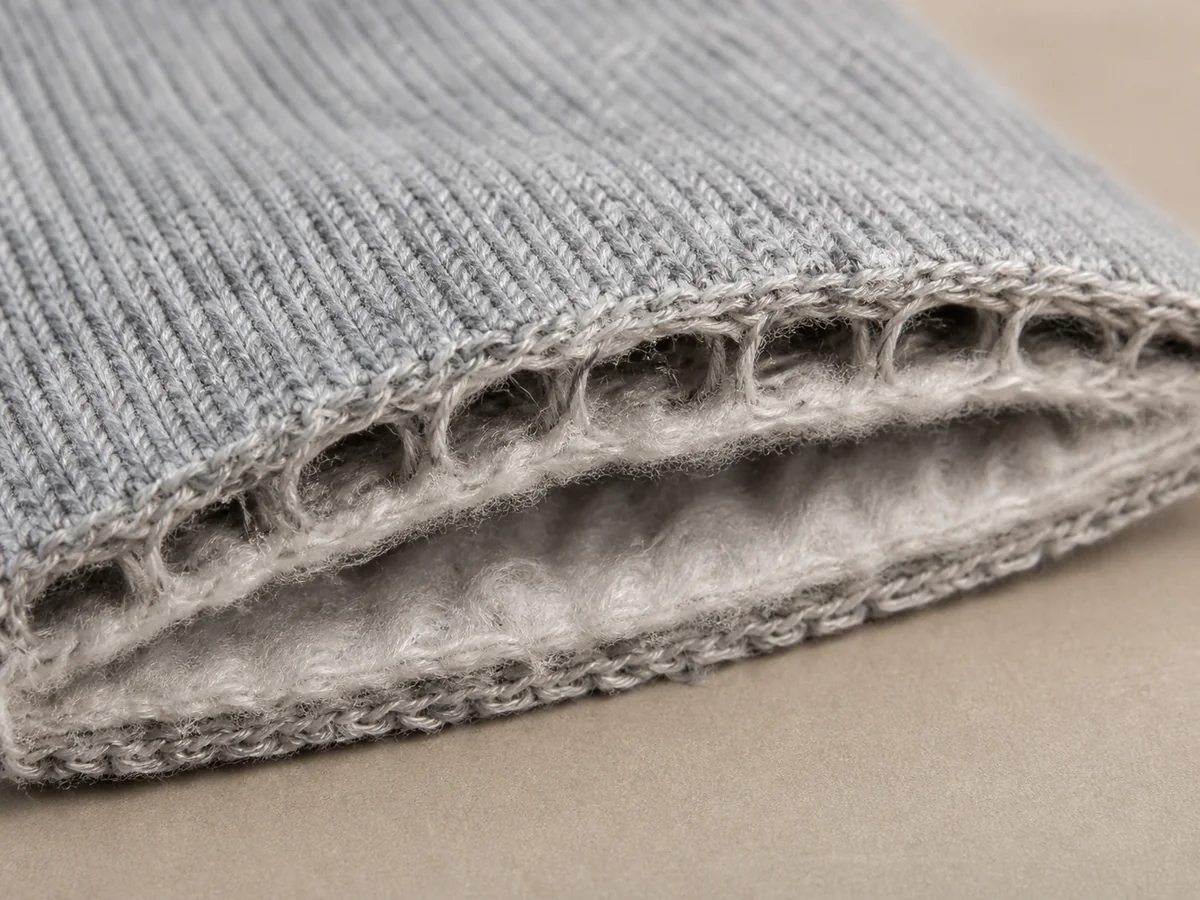
For a real winter hike, the Achiou can serve as a liner only when it fits comfortably under a protective outer glove. A liner that bunches or makes the outer glove tight can reduce circulation and leave the hand colder.
Why does touchscreen performance depend on fingertip fit?
Capacitive screens respond when conductive material carries the electrical interaction from your finger to the glass. Achiou places conductive material at the thumb, forefinger, and middle finger on the current model.
OutdoorGearLab also found those three digits usable on the tested pair. That supports the basic function, although it does not prove identical accuracy across screen protectors, phone cases, hand sizes, or later product revisions.
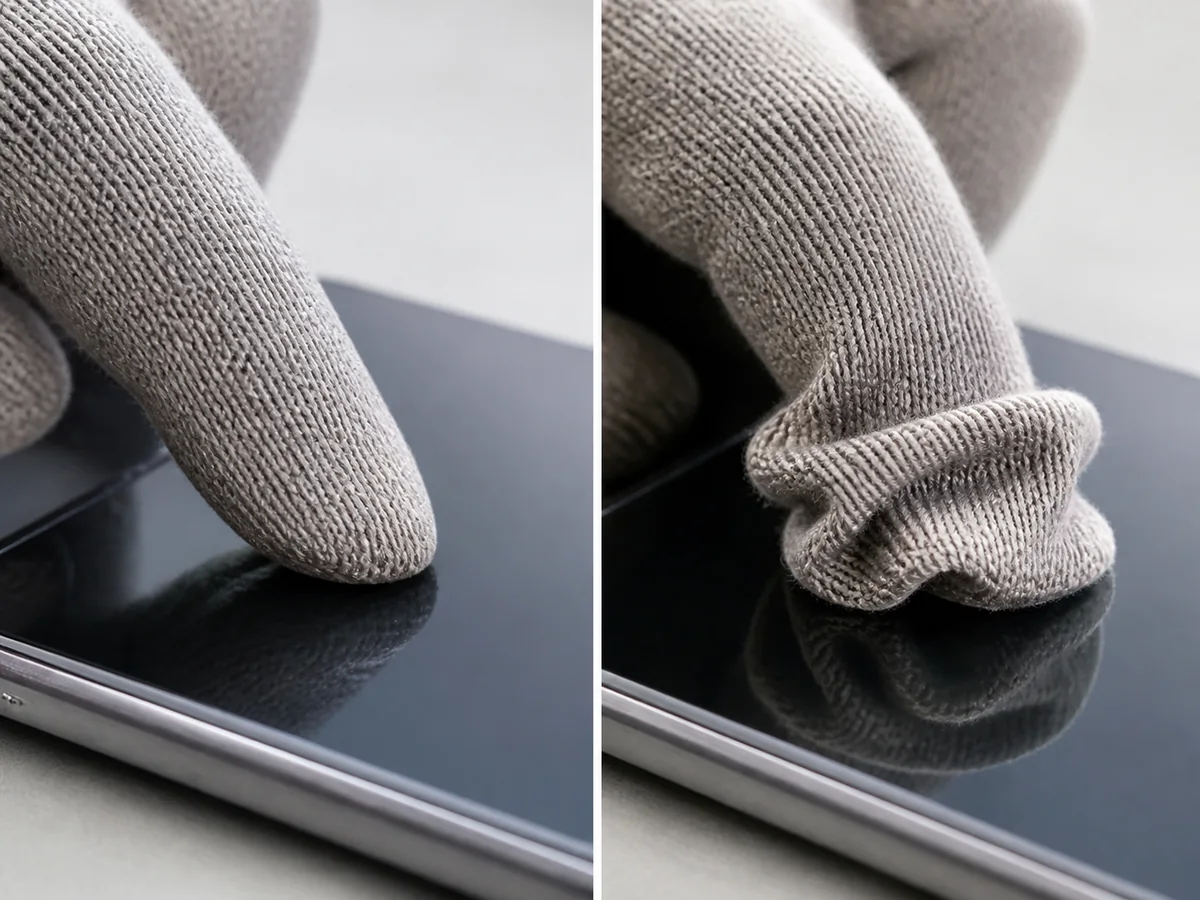
Conductive material needs contact with both your fingertip and the screen. If excess fabric folds beyond the finger, the conductive zone can land at an angle and make taps or small keyboard targets inconsistent.
- Seat each fingertipPull the glove fully on so your finger reaches the end without painful tension.
- Test a single tapOpen an ordinary app and check whether the center of the fingertip registers.
- Test a swipeMove across the screen to reveal whether the fabric twists away from contact.
- Test a pinchSmall gestures expose loose fabric more quickly than a large tap.
- Compare with a bare fingerIf every gesture is poor, check the screen protector and glove fit separately.
Achiou specifically warns that fingertips need to reach the top of the glove and that long nails can interfere. This is a fit requirement, not a promise that every finger and screen protector combination will behave like bare skin.
Typing speed is a stricter test than answering a call. Large taps can register even when extra fabric shifts, while a small keyboard key or map control exposes poor alignment between the finger and conductive patch.
Cold can also change how you use the screen. If you press harder because a touch misses, the glove may twist around the fingertip and make the next gesture worse, so a snug fit usually helps more than extra force.
Can the silicone palm hold a phone securely?
The current glove uses a large triangular silicone pattern across the palm. It can increase friction against a dry phone case, steering wheel, or smooth handle compared with plain knit.
OutdoorGearLab noted useful palm and finger grip in ordinary handling. The pattern supports object control, but it does not turn a flexible knit glove into protective workwear or establish grip on wet rock, ice tools, or safety-critical equipment.
- Touch zones
- Thumb, forefinger, and middle finger on the current listing
- Palm grip
- Silicone pattern intended to add friction
- Main fabric
- Stretch knit with a soft inner surface
- Cuff
- Simple pull-on construction
- Primary use
- Driving, typing, commuting, and mild cold rather than severe winter exposure
Grip material cannot fix a glove that slides around the hand. If the palm pattern rotates toward the side because the glove is too large, the phone can still move even when silicone grips the case.
Water also changes the result. Neither the manufacturer listing nor the independent review establishes reliable wet grip, so the silicone pattern should not be treated as drop prevention in rain.
Phone-case texture matters as well. Silicone can engage a matte rubberized case more effectively than a smooth wet glass surface, which means a quick dry indoor test cannot predict every outdoor grip condition.
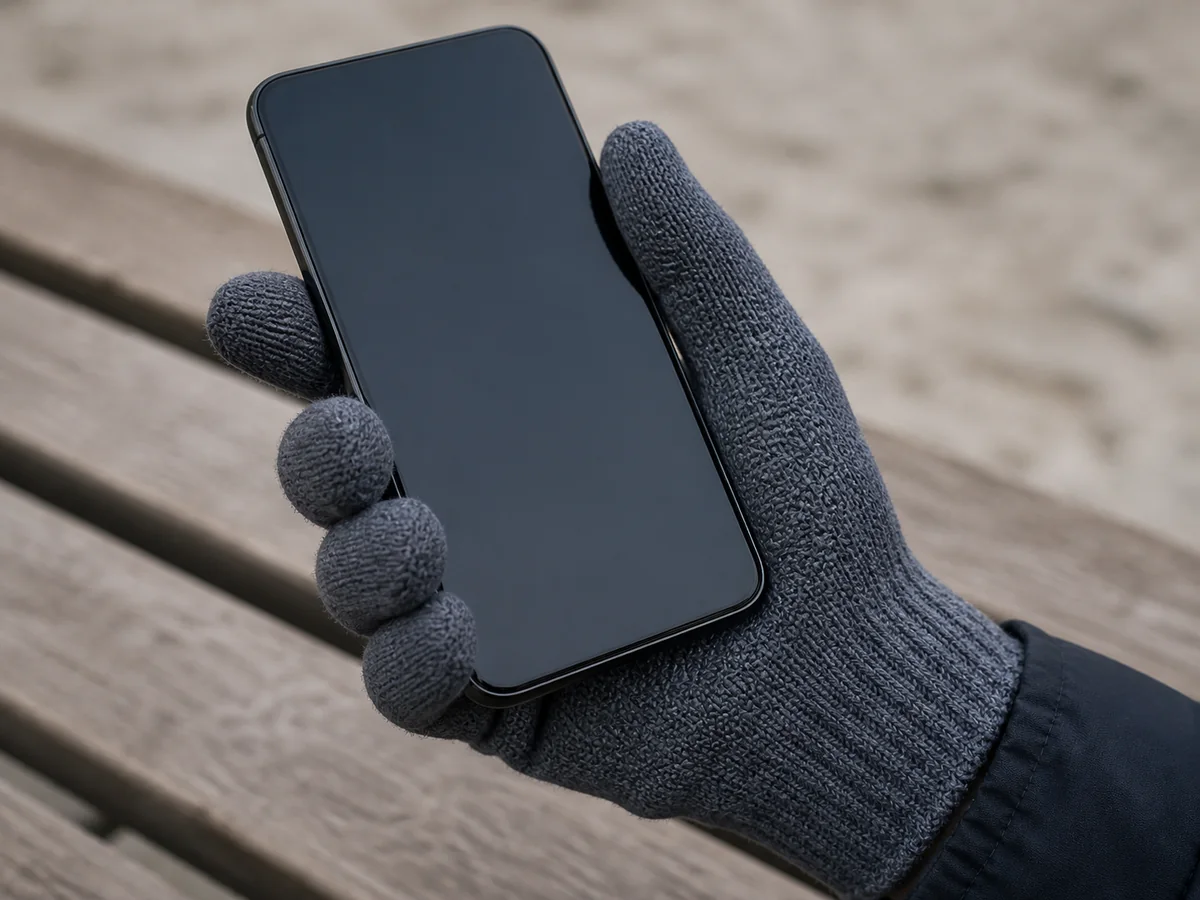
What happens in wind, rain, and wet snow?
Wind pushes warmed air out of an open knit and replaces it with colder air.
A stationary bus stop can therefore feel harder on the hands than an active walk at the same temperature.
Water creates a second problem. Once knit fabric becomes wet, it conducts heat away more quickly and can remain in contact with the skin while it dries.
OutdoorGearLab observed both problems directly. Wind passed through the glove, and water soaked into it rather than beading on an outer barrier.
This makes weather resistance a category boundary, not a minor score deduction. When a trip requires fingers to operate buckles, navigation tools, or shelter hardware, a glove that loses warmth in wind and water can compromise the very dexterity it was chosen to preserve.
Achiou sells other products that it explicitly describes as thicker, wind resistant, or waterproof. Those claims belong to those models and cannot be transferred to the Touch Screen Thermal glove because the brand name is the same.
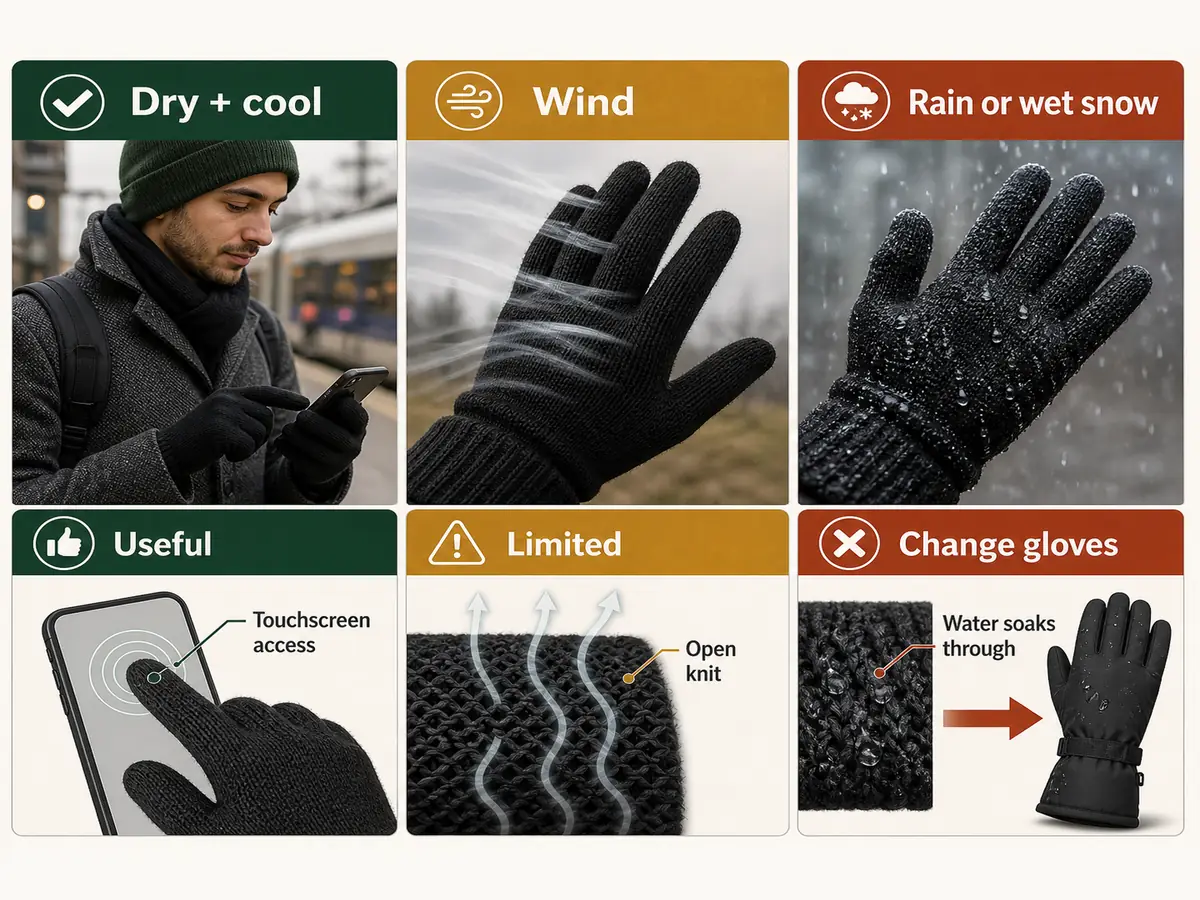
An outer shell can extend the glove's range if the combination remains loose enough for circulation. This follows the same principle as a broader layering system, where each layer has one job and the outer layer controls weather.
Test the liner and shell together before relying on them. If the shell compresses the knit or the combined cuffs bind at the wrist, the added layers can reduce finger movement and circulation instead of expanding the usable range.
How should the gloves fit, and will the knit last?
The glove should reach the end of every finger without stretching the seams hard across the tips. The palm pattern should remain centered when you close your hand around a phone.
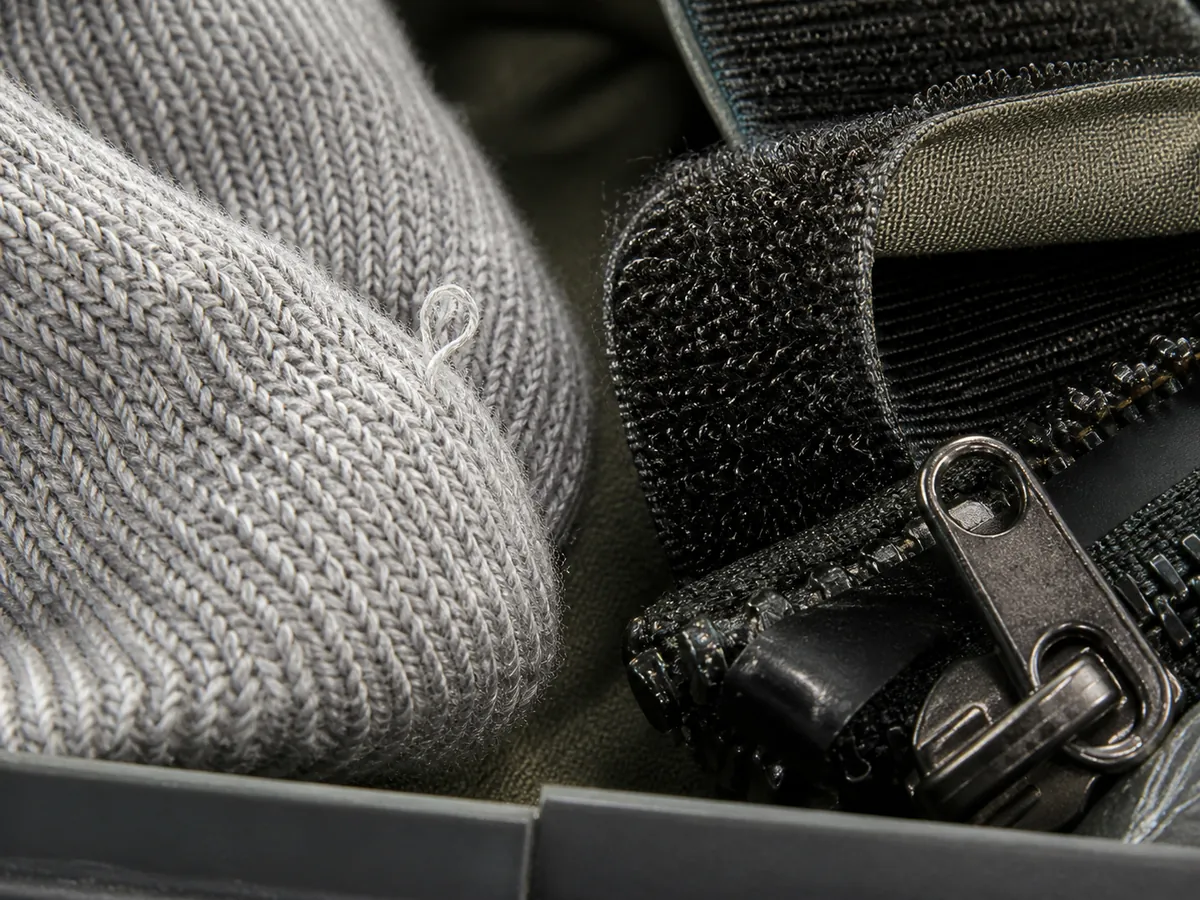
Independent testing identified snagging as a known weakness. Rough hook-and-loop fasteners, pack hardware, splintered wood, and sharp zipper edges can pull loops from a fine knit.
That failure mode differs from ordinary surface abrasion. One caught loop can pull a visible run through the fabric, so separating the gloves from hook-and-loop closures can matter more than buying a generic fabric protector.
- Every fingertip reaches the conductive end without excess fabric
- The cuff stays in place without cutting into the wrist
- No seam presses against a nail or fingertip
- The silicone pattern remains centered when gripping
- The knit has no pulled loops when it arrives
- The glove can be stored away from hook-and-loop and sharp hardware
Stretch helps the glove accommodate hand shapes, but it should not be used to force a small size over a larger hand. Constant overstretch can open the knit, move the touch zones, and make seams carry more load.
An oversized pair fails differently. Loose fingertips reduce touchscreen precision, and a palm that rotates can move the silicone away from the load-bearing side of a phone or steering wheel.
Wash and dry the gloves only according to the current care label. High heat or aggressive handling can change stretch, seam alignment, and the conductive fingertips, and the evidence does not support a promise that touchscreen performance survives unlimited wash cycles.
Who should buy the Achiou, and who needs a different glove?
Buy it for dry commuting, driving, typing, short cool-weather errands, or as a low-bulk liner that fits under a separate shell.
The combination of fingertip contact and palm grip is useful when device control matters more than deep insulation.
It can also work as a compact spare for ordinary travel because the knit occupies little room and dries faster than a heavily insulated glove. A backup role still requires a dry storage pocket, since carrying the pair loose beside hook-and-loop straps recreates its known durability problem.
Pros
- High finger dexterity for typing and small controls
- Three conductive fingertips on the current model
- Silicone palm pattern improves dry-surface grip
- Stretch knit fits a range of hand shapes
Cons
- Limited insulation for sustained cold
- Open knit provides little wind protection
- Not established as waterproof
- Fine fabric can snag on rough hardware
- Touch response drops when fingertips do not fill the glove
Choose a different glove for long stationary exposure, strong wind, rain, wet snow, or any trip where hand function is safety critical. A cheap glove can be good value inside its narrow job and poor value when its name encourages use beyond that job.
Sources
The current Achiou Touch Screen Gloves listing was used to verify the stretch knit, lining, conductive fingers, silicone palm, and fingertip-fit note on August 31, 2026.
Warmth, dexterity, weather resistance, drying, and snagging observations came from the independent OutdoorGearLab Achiou Touch Screen Thermal review. Broader touchscreen behavior was cross-checked against the TechGearLab touchscreen glove evaluation.