
100% Hypercraft Review: Ultralight Comfort With a Rimless Tradeoff
A very light shield with broad coverage, strong airflow, fit sensitivity, and exposed lens edges.
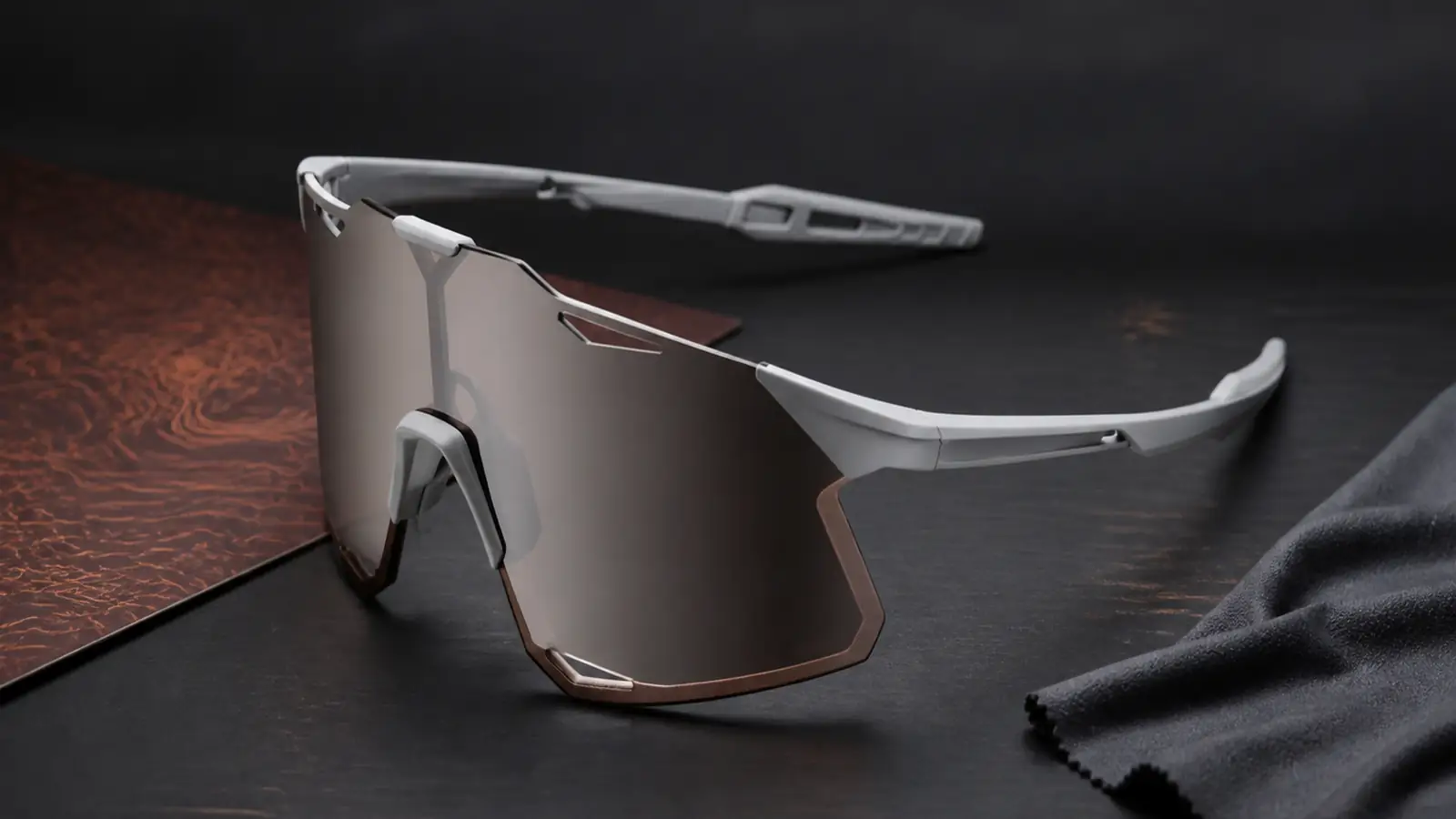
The 100% Hypercraft suits long, hot efforts when low face pressure matters more than maximum frame protection.
The 100% Hypercraft is a strong choice when low face pressure, an open field of view, and ventilation matter more than maximum protection around the edge of the lens. Its rimless shield removes material, but it also leaves more of the lens exposed during handling and makes fit especially important.
This is an evidence-based editorial review. KnowOutdoor has not conducted a hands-on test of this model, so the verdict combines current manufacturer documentation with observations from independent reviewers and states where the evidence stops.
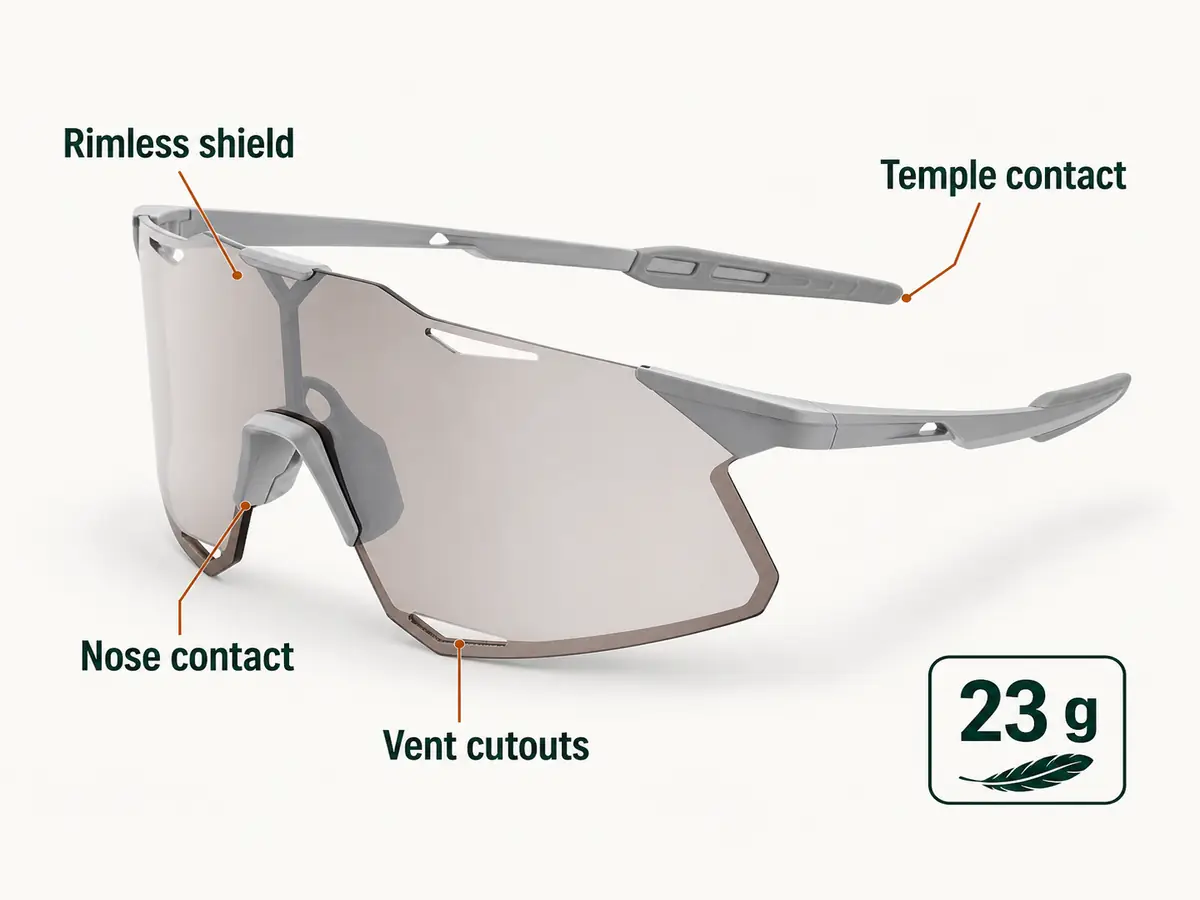
- Listed weight
- 23 grams for the current standard Hypercraft configuration
- Shield geometry
- Frameless 5.5-base cylindrical lens with ventilation openings
- Protection
- UV400 polycarbonate lens with scratch-resistant, hydrophobic, and oleophobic treatments
- Lens families
- Fixed tint, HiPER contrast, and photochromic options exist, but specifications vary by SKU
- Core compromise
- Very low face weight and open vision in exchange for exposed lens edges and fit sensitivity
The rimless tradeoff decides the review.
If you value a barely-there feel and will protect the lens, the Hypercraft makes sense. If you want a sturdier everyday pair that gets dropped into a bag, start with a more framed design.
Is the 100% Hypercraft actually good?
Yes, for the right rider or runner.
Independent reviews consistently identify exceptionally low weight, a broad view, and useful ventilation as its defining strengths, while fit and exposed lens edges account for most of the reservations.
BikeRadar measured its review sample at 23.1 grams, almost exactly matching the manufacturer's 23-gram listing. That agreement gives the low-weight claim a firmer basis than a vague description such as "feels light."
Cyclingnews found the glasses stable in ordinary use but reported that a smaller head could experience movement over rough ground. The same review noted that a low-brow helmet could contact the upper shield and push it down, so the strongest weakness is compatibility rather than optical coverage.
That verdict is narrower than calling it the best pair of performance sunglasses. The Hypercraft succeeds because its construction solves a specific comfort problem, not because it wins every durability, weather, or value comparison.
The original Hypercraft also needs to be distinguished from the Hypercraft SQ and Hypercraft XS. The SQ uses a shorter, squarer shield, while the XS targets a narrower fit, so observations about one version should not be silently transferred to another.
How light does the Hypercraft feel, and what does low mass change?
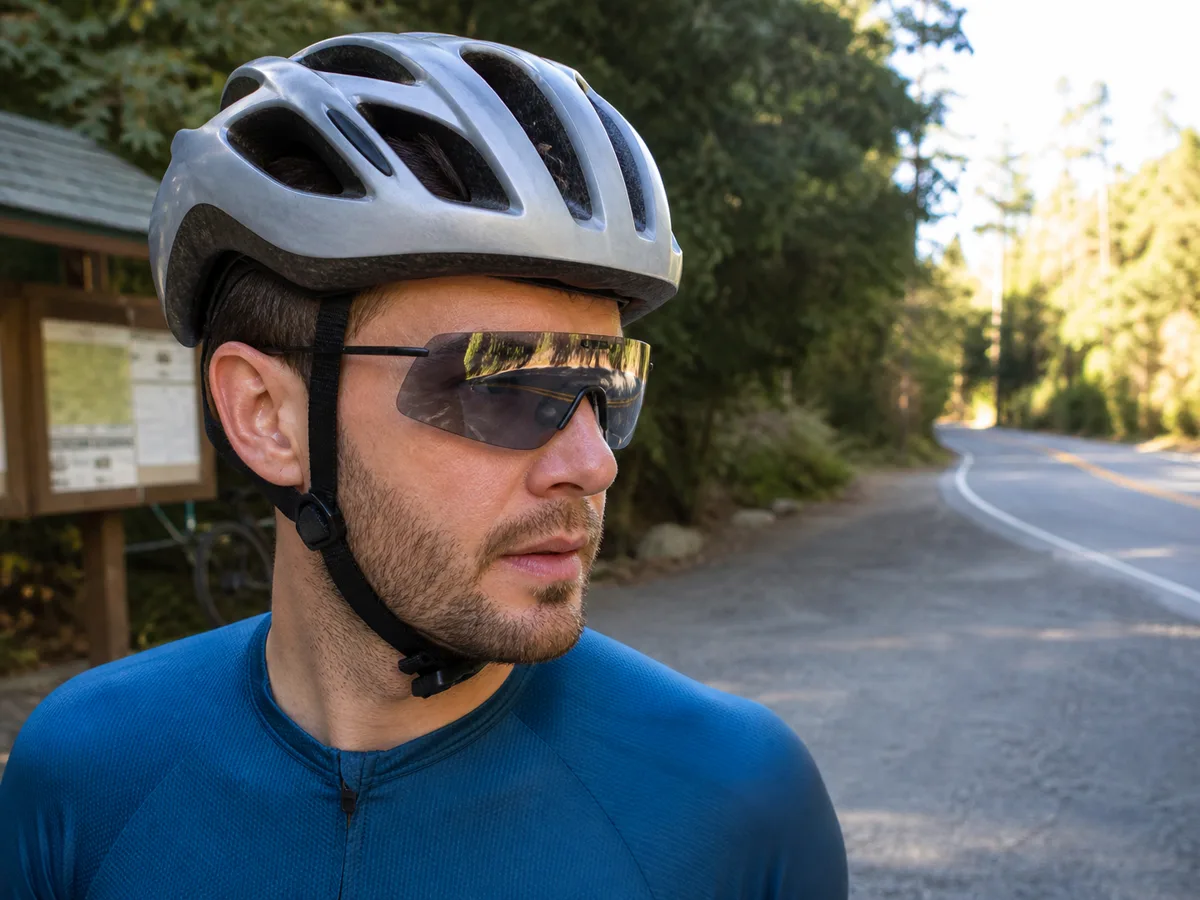
100% attributes the Hypercraft's low mass to its UltraCarbon material and rimless architecture. Independent reviewers describe it as unusually light on the face, which matters most during long sessions when small pressure points become distracting.
The advantage becomes clearer when you compare what the design removes. There is no full brow or lower rim carrying extra material across the face, and the slim arms leave less bulk beside a helmet retention cradle.
Removing a lower and upper frame reduces the material that can press on the nose or pull at the temples. It can also reduce the tendency to feel front-heavy when sweat softens the contact at the nosepiece.
Low mass does not guarantee stability. A light shield can still move if the nosepiece sits too high, the temples conflict with a helmet retention system, or the lens is too wide for the face.
The useful question is therefore whether the Hypercraft stays positioned with very little clamping force. That combination gives the model its comfort advantage, while a loose fit only turns low mass into bounce.
Low mass also changes how quickly you notice a bad interface. If the top of the lens touches a helmet, very little frame stiffness is available to resist the downward pressure, so the shield can settle onto the nose even though the temples themselves feel comfortable.
Will the shield block wind without trapping fog?
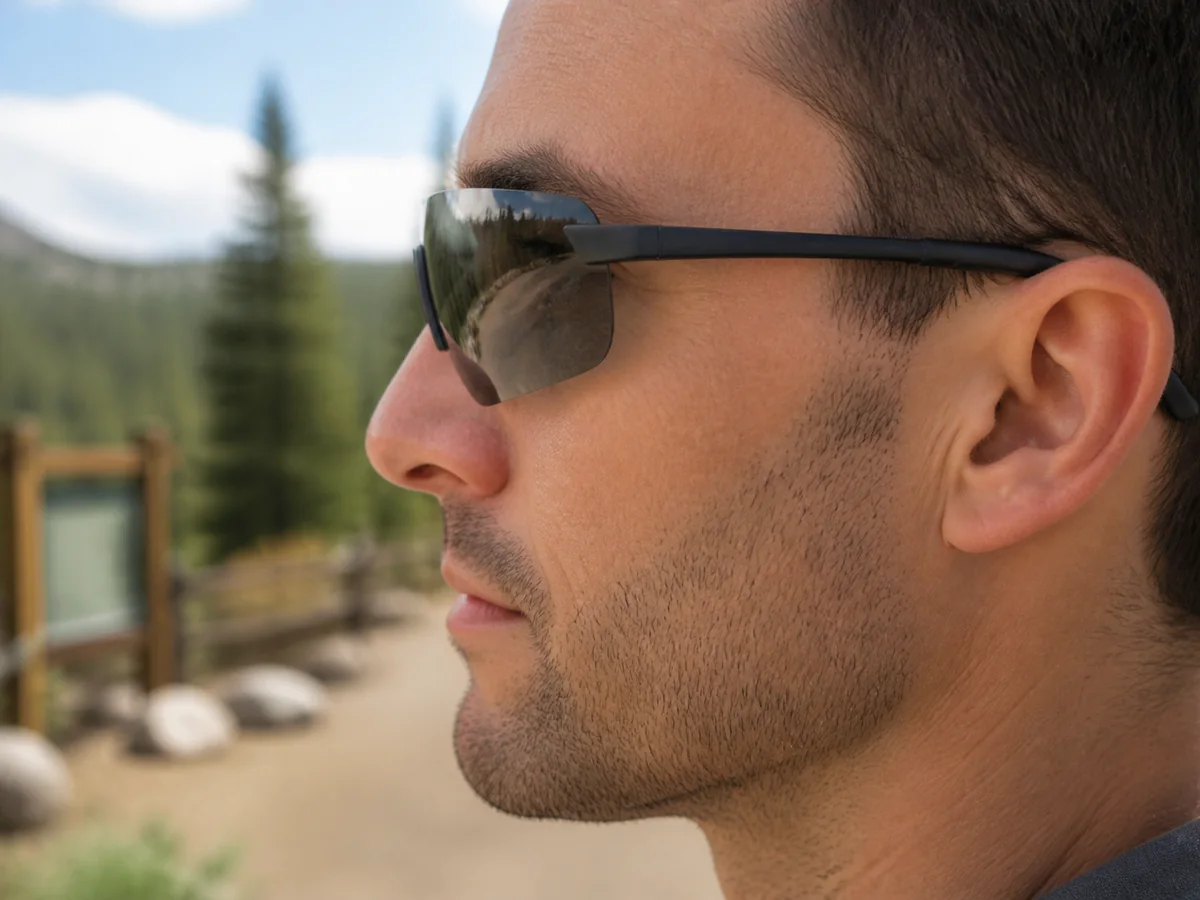
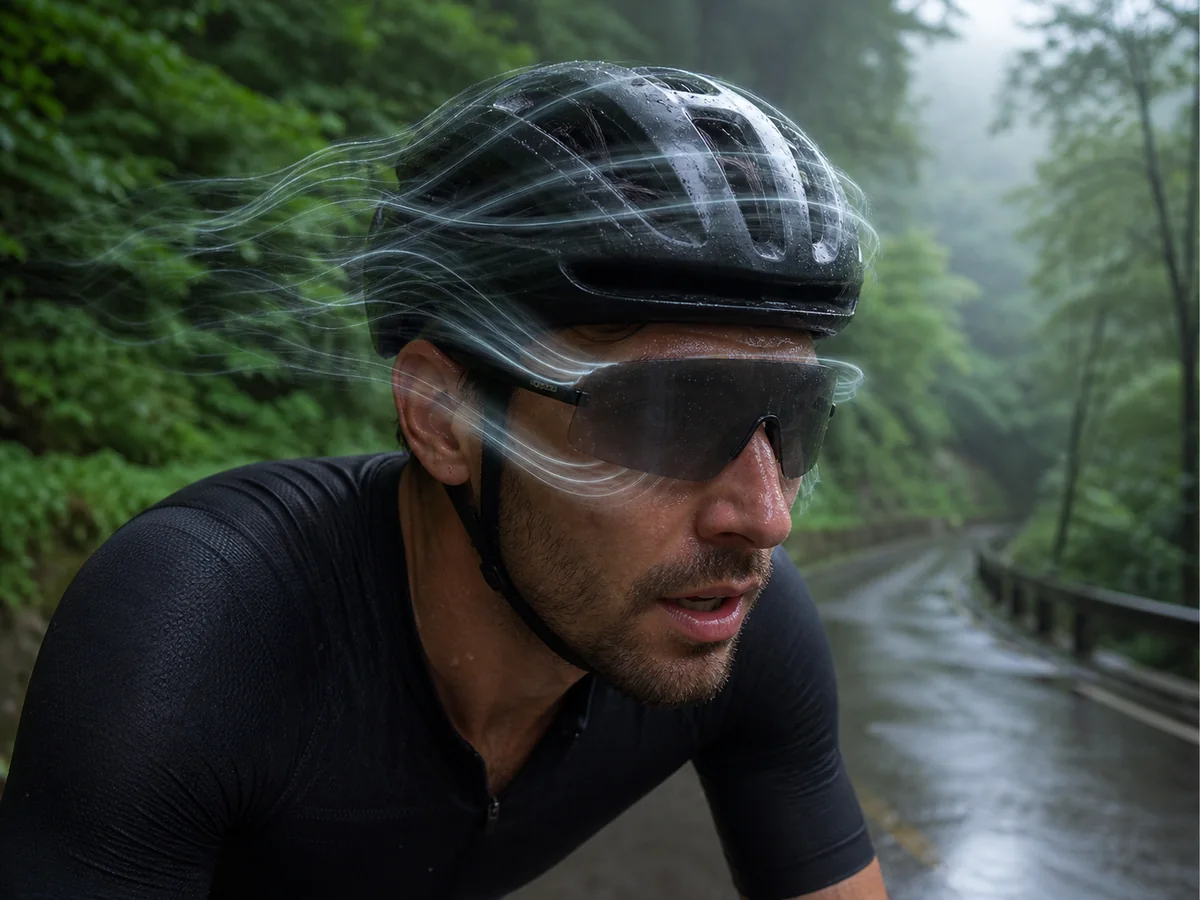
The large cylindrical shield places a broad surface in front of the eyes, and that can reduce direct wind on fast roads. Whether it seals comfortably depends on the gaps created by your forehead, cheek shape, nose position, and helmet.
Cyclingnews praised the hot-weather airflow and field of view in its test. That result supports using the Hypercraft for sustained warm-weather movement, but it does not prove that the same vent pattern will remain clear during a cold stop or a slow humid climb.
The Hypercraft uses openings in the lens to move air across the inside surface. Those vents work best while you are moving, because forward speed supplies the airflow that carries moist air away.
| Condition | What the airflow is doing | Likely concern | Useful response |
|---|---|---|---|
| Fast, dry descent | Air moves continuously around the shield | Eye dryness if the side gap is large | Check the seal at speed during a returnable first ride |
| Slow humid climb | Sweat rises while forward airflow drops | Moisture can collect near the brow | Leave a clean brow gap and keep helmet pads from blocking it |
| Running | Head movement and lower speed create changing airflow | Bounce or sweat on the lens | Prioritize nose and temple security over maximum lens width |
| Cold stop after hard effort | Warm moist air reaches a cold lens | Fog can form quickly while stationary | Keep moving gently or lift the shield briefly in a safe place |
No vented sunglass is fog-proof. A lens can remain clear for one face and helmet combination while the same lens fogs when a low helmet shell blocks its upper vents.
Side airflow is the opposite tradeoff. A gap that prevents fog can also allow enough crosswind to dry or irritate the eyes, so riders who are sensitive to wind need to test a fast descent rather than judging coverage from a mirror.
Which Hypercraft lens should you choose?
Choose the lens by visible light transmission and route conditions, not by mirror color.
A dark fixed tint suits sustained bright exposure, while a clear or high-transmission lens is more useful before sunrise, after sunset, or under dense tree cover.
100% sells fixed-tint, HiPER, and photochromic versions across the Hypercraft family. HiPER is the company's contrast-enhancing lens technology, while photochromic versions change transmission as ultraviolet exposure changes.
These are separate decisions. HiPER changes contrast and color perception within a fixed lens specification, while a photochromic lens changes darkness across a stated range as conditions change.
- VLT
- The percentage of visible light that passes through the lens. A lower number means a darker lens.
- Filter category
- A broad classification of lens darkness. Confirm the category for the exact colorway.
- HiPER
- 100%'s branded contrast lens option. It is not the same thing as photochromic tint.
- Photochromic
- A lens that changes tint across a stated transmission range. Response still depends on temperature and ultraviolet exposure.
- Spare lens
- Some packages include a clear or alternative lens and others do not. Check the exact listing before buying.
The official catalog lists different light-transmission values for different colorways, so there is no single Hypercraft lens specification. A review of one mirrored version cannot establish the brightness or color balance of every version.
For mixed woodland and open roads, a photochromic option can reduce lens changes. For consistently bright conditions, a fixed dark lens is simpler and may provide the exact transmission you want without waiting for a tint transition.
Road.cc's review of the photochromic Hypercraft found the changing tint useful across variable conditions, but that evidence belongs only to the photochromic configuration. It cannot establish how quickly a HiPER or fixed mirror lens adapts because those lenses do not use the same light-reactive mechanism.
Check the package as carefully as the tint. 100% lists a hard case, microfiber bag, alternate-fit nose pad, and clear spare lens with standard packages, but the official workbook excludes the clear spare from some photochromic SKUs.

How should the Hypercraft fit with a helmet?
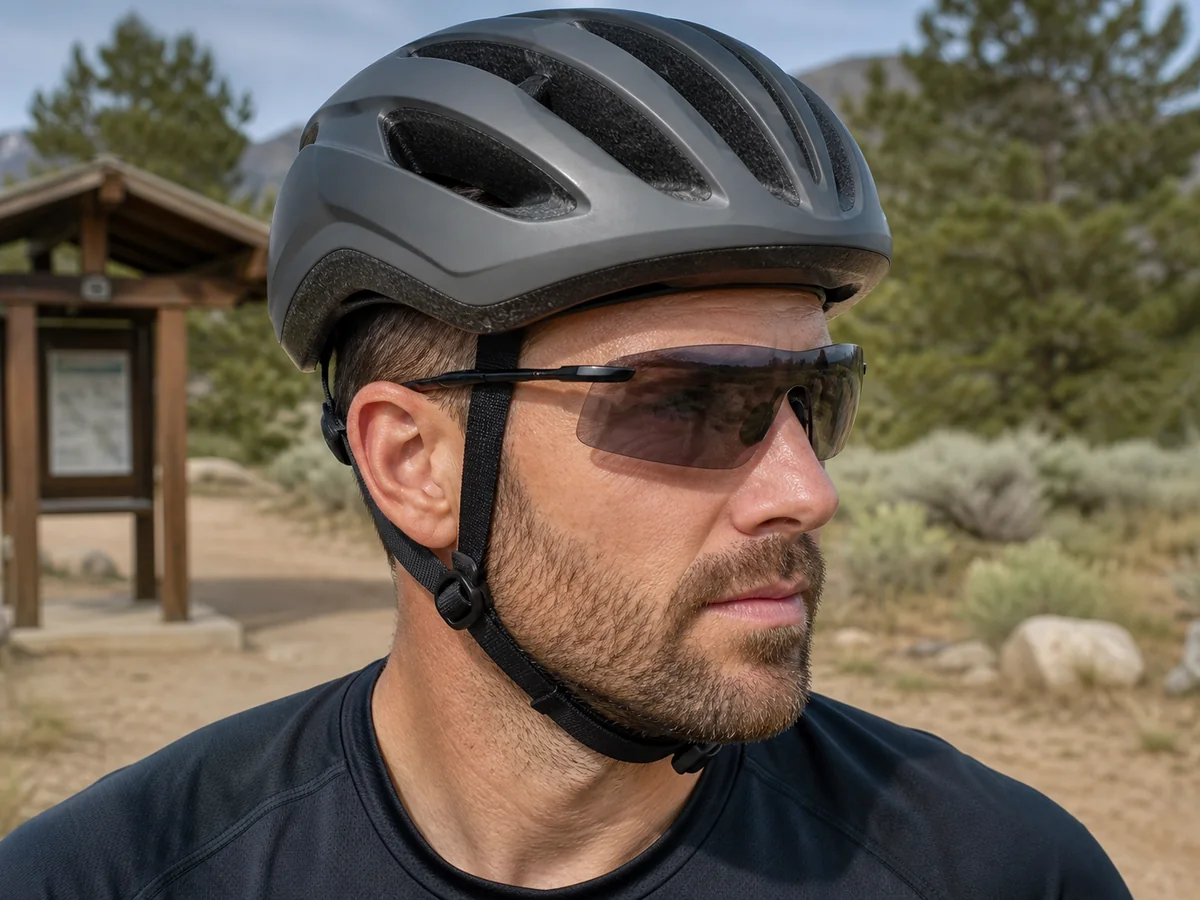
Start with the shield position, rather than the temple length. The lens should sit high enough to cover the upper view without touching your eyelashes or resting on your cheeks when you smile.
Then add the helmet. Retention arms or low side shells can press the sunglass temples inward, which creates a pressure point even when the glasses feel comfortable by themselves.
Cyclingnews identified upper-lens contact with a low helmet as a specific failure mode, while BikeRadar found the slim arms easy to combine with a helmet. Both observations can be true because one concerns the brow line and the other concerns the side cradle.
- The lens clears your eyelashes through a full blink
- The lower edge does not lift when you smile
- The nosepiece holds position without pinching
- The temple tips do not fight the helmet retention arms
- A quick head turn does not shift the shield
- The brow gap leaves the vents open without admitting distracting wind
Current official listings include an alternative-fit nosepad with many packages, but the contents can change by market and colorway. A second nosepad can alter height and contact, though it cannot make an overly wide shield narrow.
Use a returnable indoor fitting only as the first filter. The meaningful second test is a short ride over ordinary vibration with the exact helmet you use, because a shield can pass a static head shake and still creep when sweat and repeated impacts change the contact.
Does the rimless design make it too fragile?
Rimless does not mean the lens lacks impact protection.
100% describes the injection-molded polycarbonate lens as impact rated and applies hard-coat, hydrophobic, and oleophobic treatments to current versions.
The treatments solve different problems. The hard coat is meant to resist surface damage, while hydrophobic and oleophobic layers make water and skin oils easier to remove.
Those treatments do not make the surface scratch-proof. With no lower rim to take contact, the lens edge can touch a table, zipper, or loose tool first.
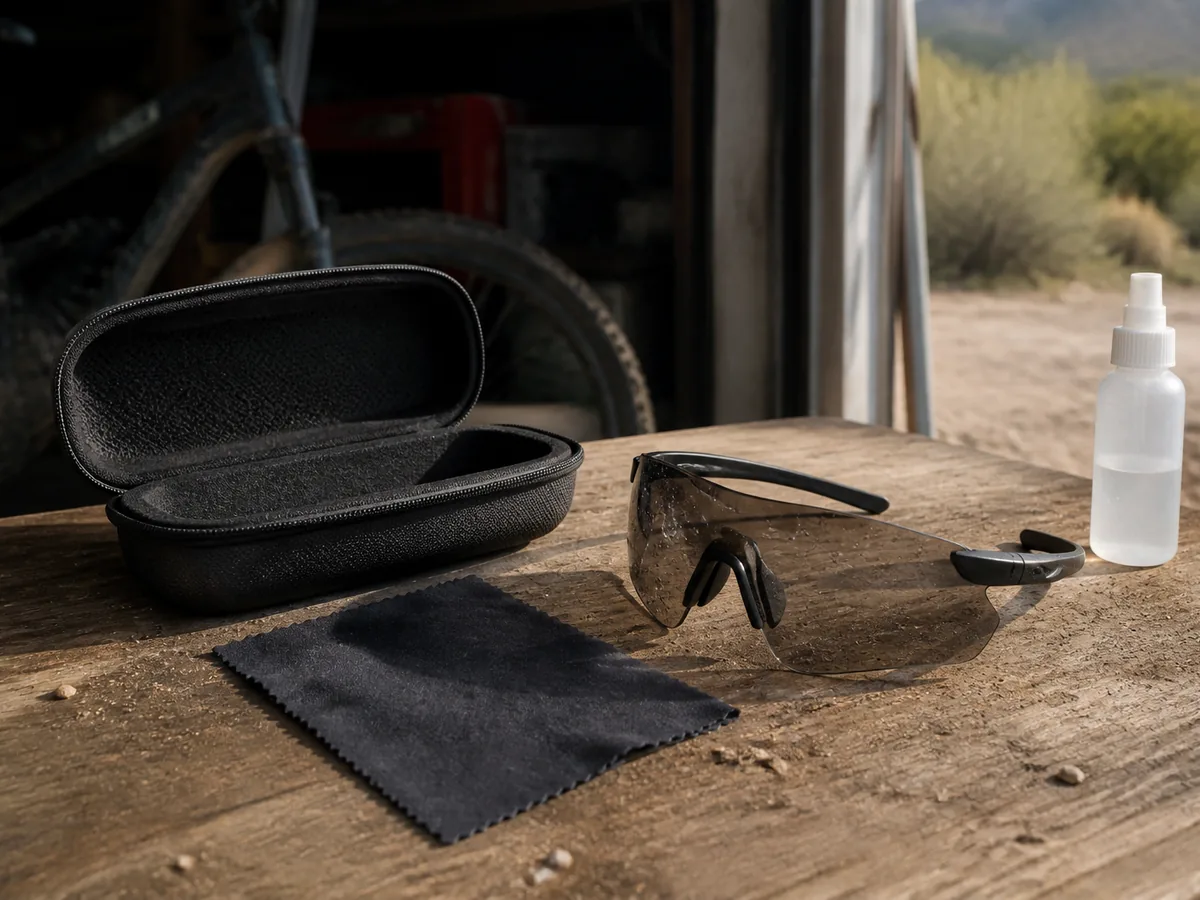
The included case matters more than it would for a cheap casual pair. Riders who habitually tuck glasses into a crowded helmet, jersey pocket, or open pack should count that care requirement as part of ownership.
Lens replacement is possible, and BikeRadar found the process simple after learning it. That does not make hurried roadside changes risk-free, because a broad frameless shield gives you fewer rigid surfaces to hold without touching or flexing the optical area.
Should you buy the Hypercraft or a more framed shield?
Buy the Hypercraft when a light, open-feeling shield solves a real comfort problem and the fit remains secure with your helmet. Try it before committing if your face is narrow, your cheeks often touch large lenses, or you are sensitive to side wind.
Pros
- Very low-mass rimless construction reduces material on the face
- Broad shield creates an open field of view
- Lens openings support airflow while moving
- Multiple fixed, contrast, and photochromic lens choices
Cons
- Fit depends heavily on nose height, face width, and helmet clearance
- Exposed lens edges need deliberate storage and cleaning
- Lens specifications and included spares vary by exact colorway
- A large shield may admit wind at the sides on some faces
Choose a more framed shield if lens-edge protection and everyday handling matter more than the lowest possible mass. Choose the Hypercraft only after confirming the exact lens package, because the frame name alone does not tell you whether the tint suits your route.
Fit before weight. Low mass is the reason to consider the Hypercraft, but correct placement and useful light transmission are what make it work.
Sources
The current 100% Hypercraft collection was used to verify family variants, fit categories, materials, nosepad options, and lens availability on August 31, 2026.
Independent observations about mass, ventilation, coverage, fit, and handling were compared across reviews from BikeRadar, Cyclingnews, Cycling Weekly, and Velo.