
Why an Emergency Shelter Needs a Floor Before a Roof
The ground is what takes the heat, and a few hundred grams often beats an hour of building.
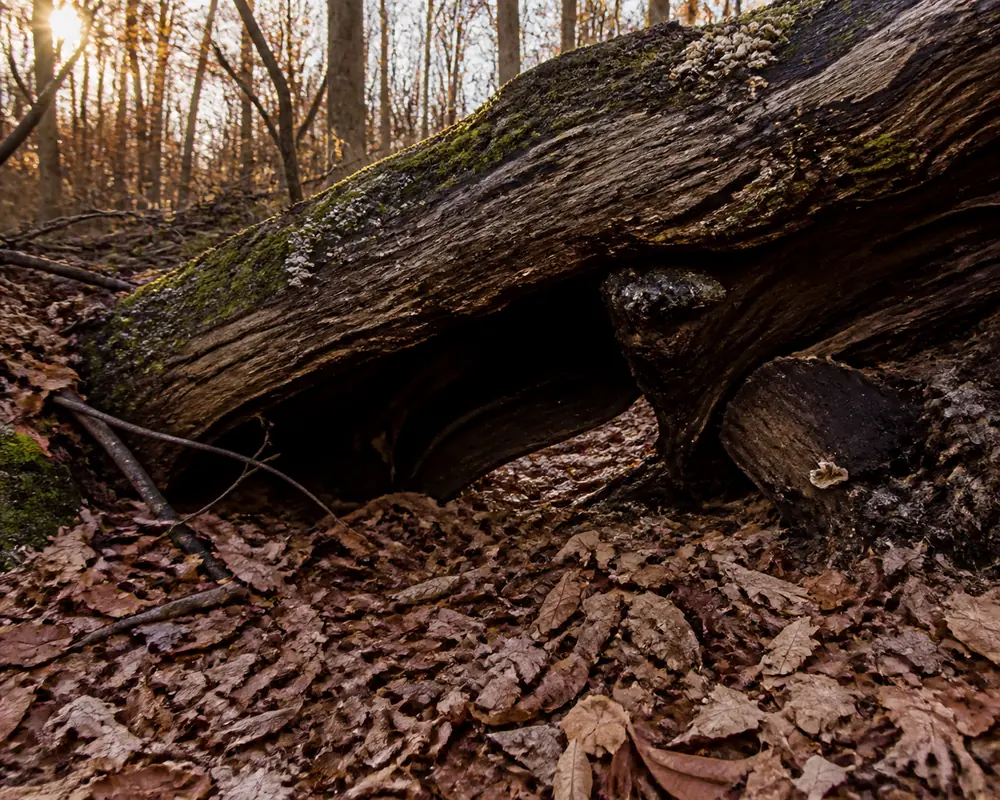
Ground conducts heat away from a body far faster than still air, which means the bed matters more than the roof and gets built first. It also means an emergency bag in the pack usually beats anything you can construct before dark.
Everybody builds the roof first. It is the visible part, it looks like shelter, and it is the part that matters least.
Ground conducts heat away from a body far faster than still air at the same temperature.
Wilderness shelter teaching on conduction and insulation
That single fact reorders the whole afternoon. A thick roof over a thin floor still leaves somebody cold by midnight, because the ground has been drawing heat out of them the entire time.
The ground takes far more heat than the air does
Air steals heat slowly and the ground does it by direct contact, continuously, all night, from the whole surface you are lying on. You cannot out-insulate that with anything overhead.
So the bed comes first, and it is not a token layer.
The number that catches people out is compression. A pile of leaves that reaches your knee flattens to a few inches once you lie on it, so the loose heap has to be several times deeper than the layer you want to end up with.
Gather more than looks sensible, then gather that much again.
Dry matters as much as deep. Wet leaves conduct heat rather than trapping it, so a deep bed of soaked debris is closer to lying on the ground than to lying on insulation.
Your pack is already insulation. A sleeping mat, an emptied rucksack, a coiled rope, spare clothing and a groundsheet all go underneath you before anything gets built.
Above the treeline there is nothing to gather, which is the situation this advice usually forgets. On rock, scree or frozen ground the pack contents are not a supplement to a debris bed, they are the entire bed.
That changes the calculation before you leave, because a party going high is carrying its insulation whether it means to or not.
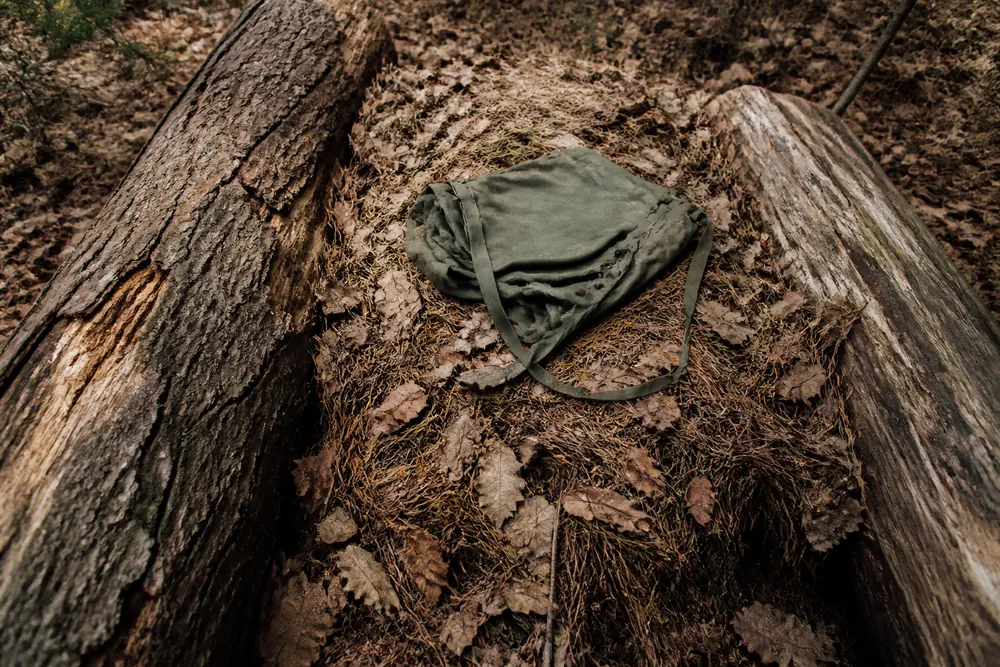
Small is warm, and buildable before dark
Before you build anything, spend ten minutes looking for something that already exists. A boulder overhang, a dense low conifer with dry ground under it, a hollow out of the wind, or the lee side of a fallen trunk all save you the hour you were about to spend.
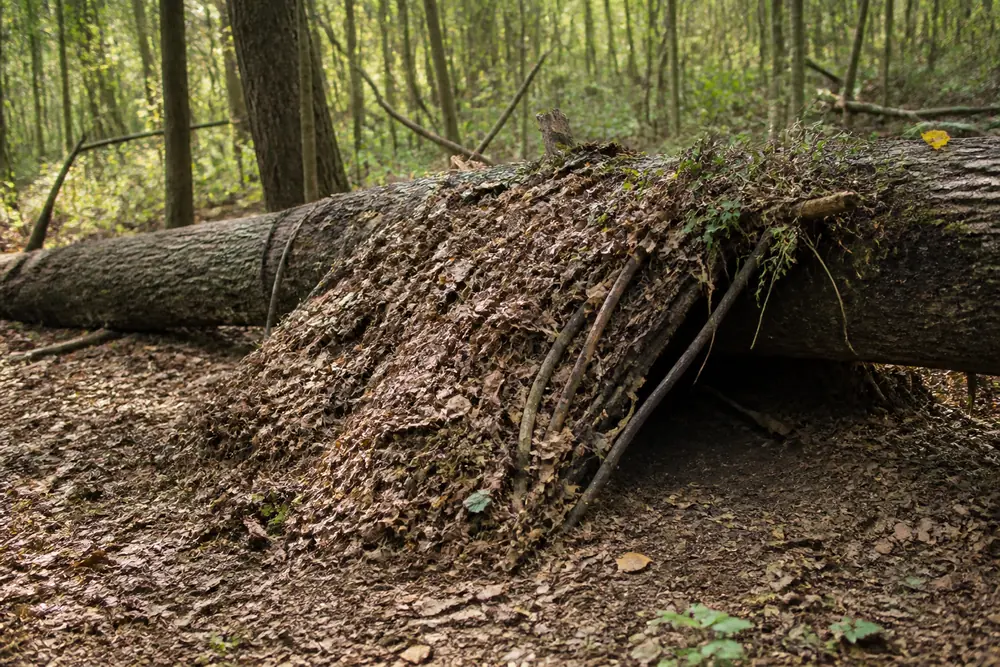
Improving a natural feature is almost always faster than constructing one. You are adding a bed and closing one side rather than making the whole thing.
Building from nothing is the last option rather than the first, and treating it as the first is how people run out of daylight.
Your body is the heat source and the enclosed air is what it has to warm. Every extra inch of interior is more work for the same output.
So build something barely larger than the person going into it. A shelter you have to crawl into and cannot sit up in is not a failure of construction, it is the design.
- Reject the site before you startDrainage lines, dead branches overhead and exposed wind are vetoes, and moving after you have built is not realistic
- Lay the bed first, deeper than looks necessaryThe stage that pays even if nothing else gets finished
- Keep the enclosed space barely bigger than your bodyEvery extra inch is more air you have to heat all night
- Close the windward side and the endsWind stripping heat off you costs more than rain that has not started
- Add roof depth last, and keep adding while there is lightThe only stage with no natural stopping point, so it absorbs whatever time is left
That order is chosen so that stopping early still leaves you better off. Darkness and weather routinely end the work before the plan does, and a half-built shelter with a finished bed beats a finished roof over bare ground.
Site rejection is a veto rather than a stage.
A flat, sheltered spot in a drainage line is not a spot, and a dead branch overhead does not care how good the rest of the site is.
Plug the entrance once you are inside. A pack, a heap of the same debris or a jacket across the opening turns a tunnel that the wind blows through into an enclosed space, and it is the last two minutes of work that makes the previous hour count.
The cost nobody budgets is your own effort. Building is hard physical work, it makes you sweat, and sweat in cold conditions is a liability you carry for the rest of the night.
Work slowly enough not to soak your layers. That is genuinely part of the technique rather than an aside.
Rain changes what is worth attempting. Wet debris conducts rather than insulates, so in sustained rain the honest goal is usually a windproof, roofed hollow you can sit in rather than an insulated bed you cannot build.
If you genuinely cannot get insulation underneath you, sit rather than lie. Sitting on a pack with your feet on a coiled rope puts far less of you in contact with the ground than lying down does, and a bad night sitting up beats a dangerous one stretched out on rock.
Would the bag in your pack have beaten all of this?
Usually, yes. That is an uncomfortable thing to say at the end of a page about building, and it is the honest answer for most people reading it.
An emergency bag or group shelter weighs a few hundred grams and is working within about a minute.
| Built shelter | Carried bag | |
|---|---|---|
| Time to usable shelter | One to three hours of work | A minute or two |
| Energy cost | High, and it makes you sweat | None |
| Weight carried all trip | Nothing | A few hundred grams |
| Performance when wet | Poor, because wet debris insulates badly | Unaffected |
| For a group | One person at a time | Several people at once |
Look at the wet row. Improvised shelter is least effective in exactly the conditions that make you need it, because the debris you are relying on is soaked and so is the ground under it.
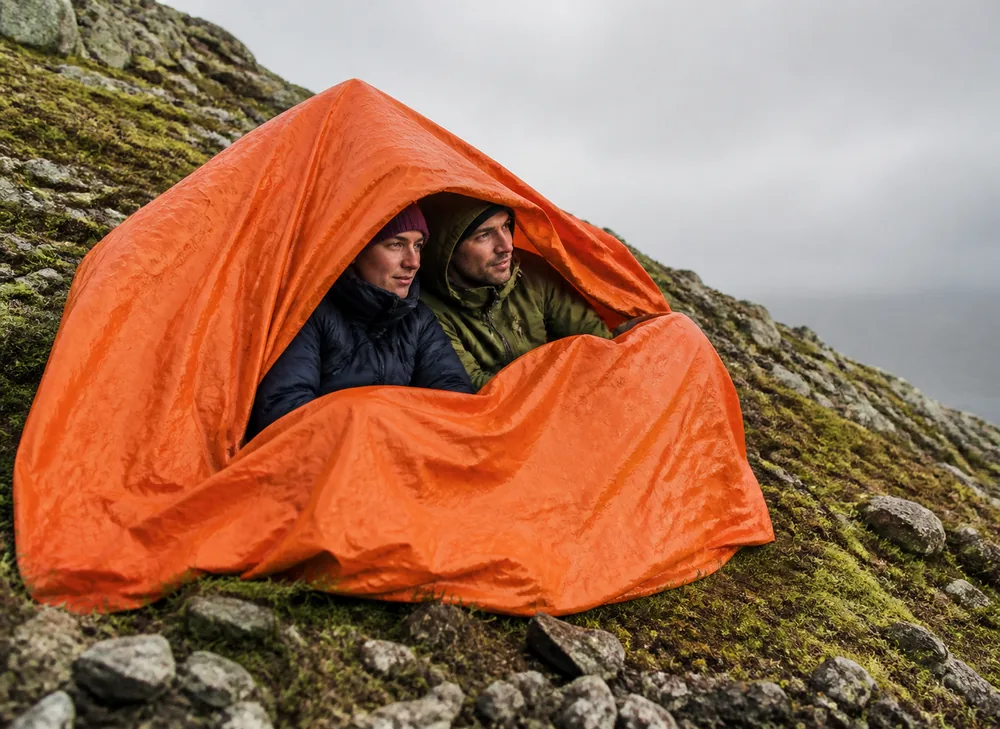
Building genuinely wins in three cases. You have no bag, the wait will run into days rather than hours, or the party needs one site for more than a single night.
For an unplanned night out on an ordinary walk, none of those usually apply.
Which puts the real decision back at home, on the morning you loaded the pack. The skill on this page is worth having and it is worth hoping you never need, and the few hundred grams is what makes that a comfortable position rather than an anxious one.
Sources
The relative rate at which ground conducts heat away from the body compared with still air, the priority of insulation underneath over roofing, and the six to eight inch working minimum for compressed dry debris come from wilderness survival shelter teaching on insulation technique in emergency shelters.
The principle that a smaller enclosed volume is warmer because the body has less air to heat, and the construction order that follows from putting the bed before the roof, are set out in guidance on improvised shelters and emergency bivouacs.
Step by stepPractical steps
- Look for a natural feature to improve before building anything
- Reject sites with drainage lines, dead branches overhead or wind exposure
- Lay the bed first, several times deeper than the finished layer
- Put pack contents underneath you before gathering debris
- Keep the enclosed space barely bigger than your body
- Close the windward side and the ends
- Add roof depth last and keep adding while there is light
- Plug the entrance once you are inside
AnswersQuestions readers ask
What is the most important part of an emergency shelter?
The bed. Ground conducts heat away from a body far faster than still air, so a thick roof over a thin floor still leaves you cold by midnight.
How much insulation do you need underneath you?
Six to eight inches of compressed dry debris is the working minimum, and hard cold pushes that past a foot. Debris compresses under body weight, so the loose heap has to be several times deeper.
Why should an emergency shelter be small?
Because your body is the heat source and the enclosed air is what it has to warm. A shelter you cannot sit up in is the design rather than a failure of construction.
What if there is nothing to gather?
Above the treeline or on rock, your pack contents are the entire bed. A sleeping mat, an emptied rucksack, spare clothing and a coiled rope all go underneath you.
Is it better to build a shelter or carry an emergency bag?
For an unplanned night out, usually the bag. It weighs a few hundred grams, works in a minute, shelters several people and is unaffected by wet, which is when debris insulates worst.
When is building genuinely worth it?
When you have no bag, when the wait will run into days rather than hours, or when a party needs one site for more than a single night.