
How Do You Signal for Help With No Phone Signal?
Reaching somebody and being found by them are two different jobs.
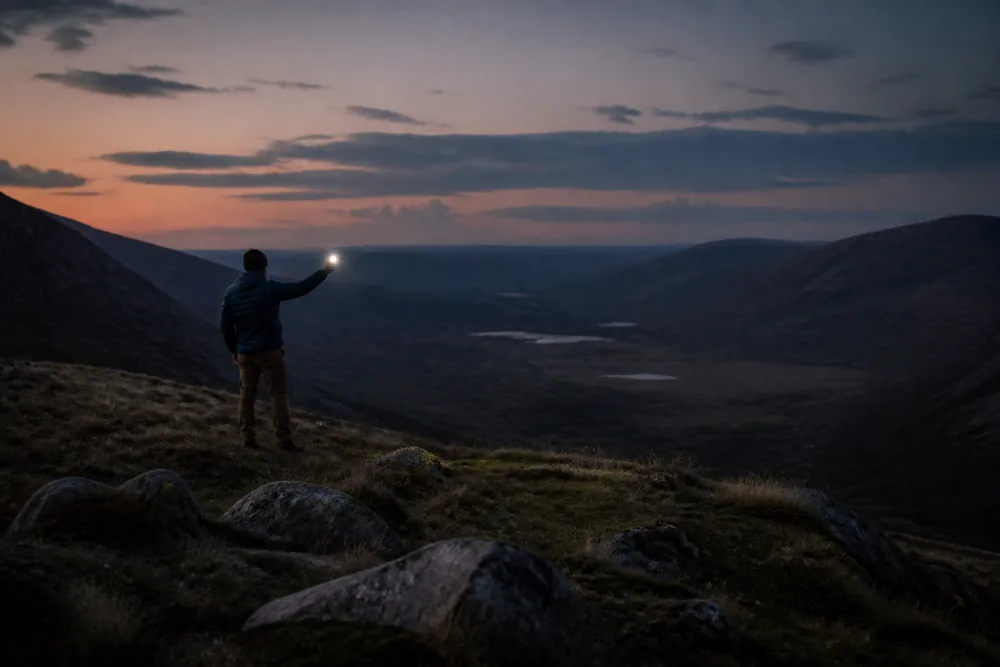
Signalling is two problems wearing one name. A device can reach a rescue service from anywhere, and nothing you own solves the second half, which is being located once somebody is already looking for you.
Signalling sounds like one job and it is two. Somebody has to learn you need help, and then somebody has to find you.
Only the first half has a gadget.
| What you carry | Who it reaches | What it cannot do |
|---|---|---|
| Phone | Anyone, if there is a network | Work where there is no network, which is most of the backcountry |
| Personal locator beacon | Rescue agencies directly, worldwide, no subscription | Carry any information beyond who and where |
| Satellite messenger | Rescue agencies and your own contacts, both ways | Work without a subscription, or with a flat battery |
| Whistle, mirror, fire | Anyone within sight or earshot | Reach anybody who is not already looking |
Read the last column rather than the second. What each thing cannot do is what decides whether you should be relying on it.
Why does a text get out when a call will not?
Because a call needs a continuous connection and a message needs a fraction of a second. A text can slip through a gap in coverage that would drop a call instantly.
Better still, a queued message sends itself the moment the phone touches a network. You can write it, press send, put the phone in a pocket, and it will go without you standing in the one spot where a bar appeared.
There is one more thing worth knowing. An emergency call can sometimes route through a network you have no contract with, so a phone showing no bars for your provider is still worth a 911 attempt.
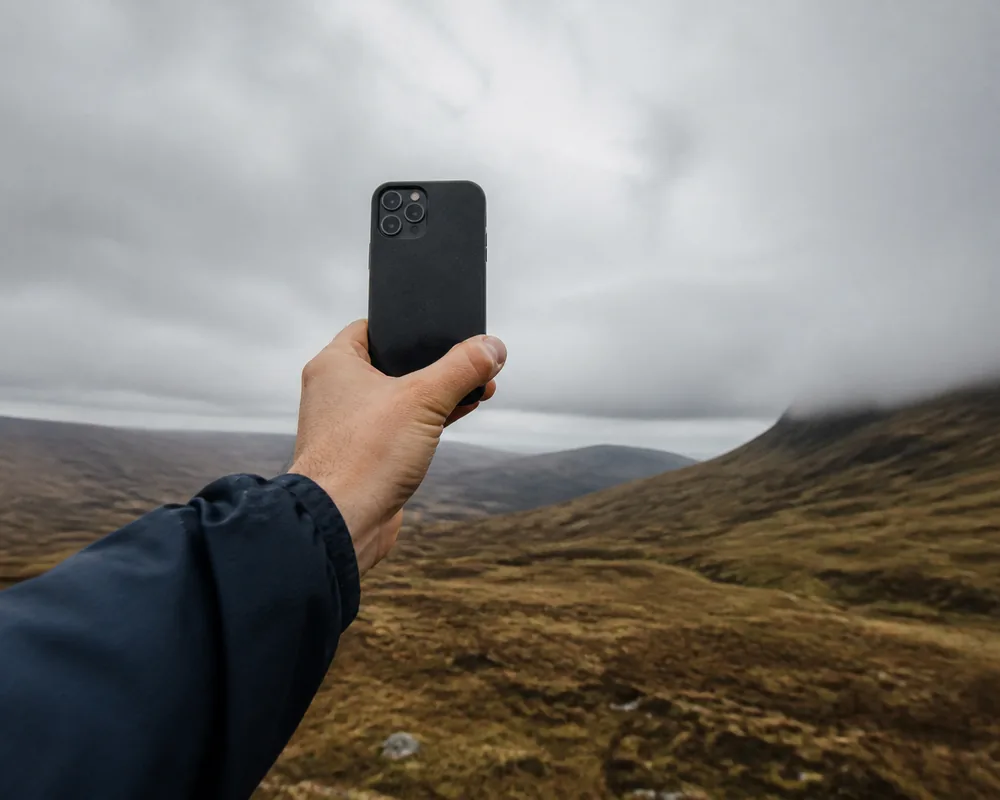
None of that helps where there is no network at all.
That is the honest boundary of a phone in the backcountry, and it is why the other rows of that table exist. A beacon and a messenger talk to satellites rather than to masts, which is a different problem with a different answer.
The difference between those two is not really features. A beacon says come, and a messenger says come and bring this.
What you send decides what they send
A rescue service does not respond to the fact of your call. It responds to what your call says, because that is what determines whether a team walks in, a vehicle drives round, or a helicopter is worth the risk and the cost.
So the message is the part to get right, and you may only get one.
- Where you areCoordinates if your device gives them, and a described position if not, because nothing else in the message is usable without this
- What has happened, and to how many peopleDecides whether this is one stretcher or a team, which changes what leaves the base
- The condition of the casualty, in plain wordsBreathing, bleeding and consciousness are what justify an aircraft
- What you have with youShelter, warmth and food decide how long you can safely be left, which sets your priority against other calls
- Whether you can move, and whether you intend toThe single most important line for whoever has to find you
Plain words beat medical words. Nobody needs you to name a condition, and everybody needs to know whether the person is awake, whether they are bleeding, and whether they are breathing normally.
The two-way advantage lands here rather than in a feature list. A messenger lets a rescue team ask the question you did not think to answer, and lets you find out what is coming and when, which changes how you spend the next four hours.
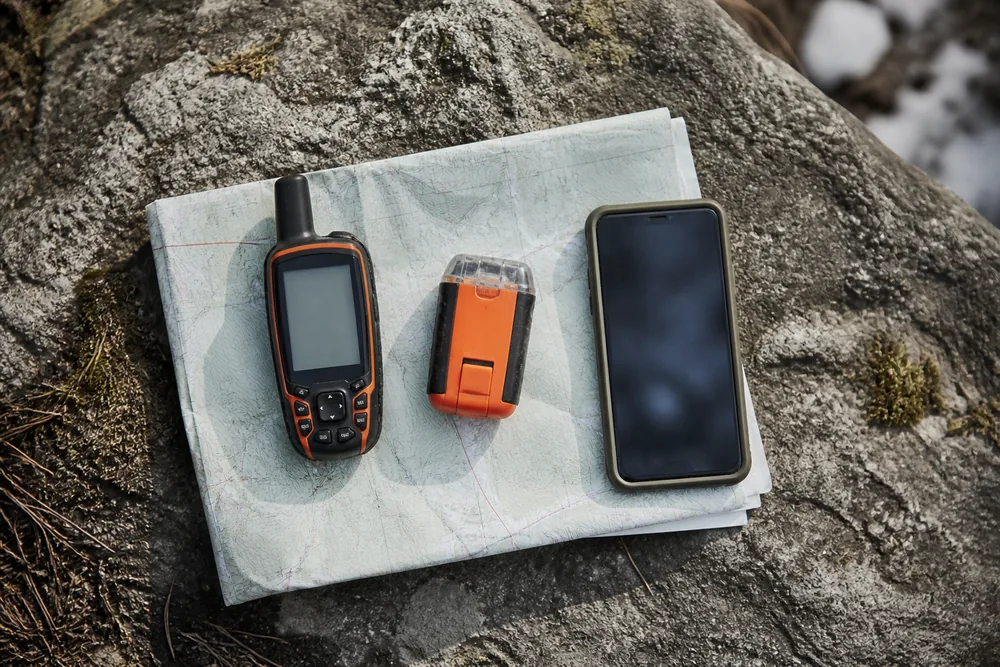
Write the message before you need it. Sitting down to compose this while cold, frightened and one-handed is how the position gets left out.
One thing worth knowing before you ever press the button. If you trigger an alert by accident, say so immediately through whatever channel you have rather than switching the device off and hoping.
A cancelled call costs a phone call, and a silent one that stops transmitting costs a search.
With no device, three of anything means distress
Three blasts, three flashes, three fires. The convention is old, it is widely recognised, and it costs nothing to follow.
What matters more is choosing signals that carry, because you have a limited amount of energy and shouting spends it fast.
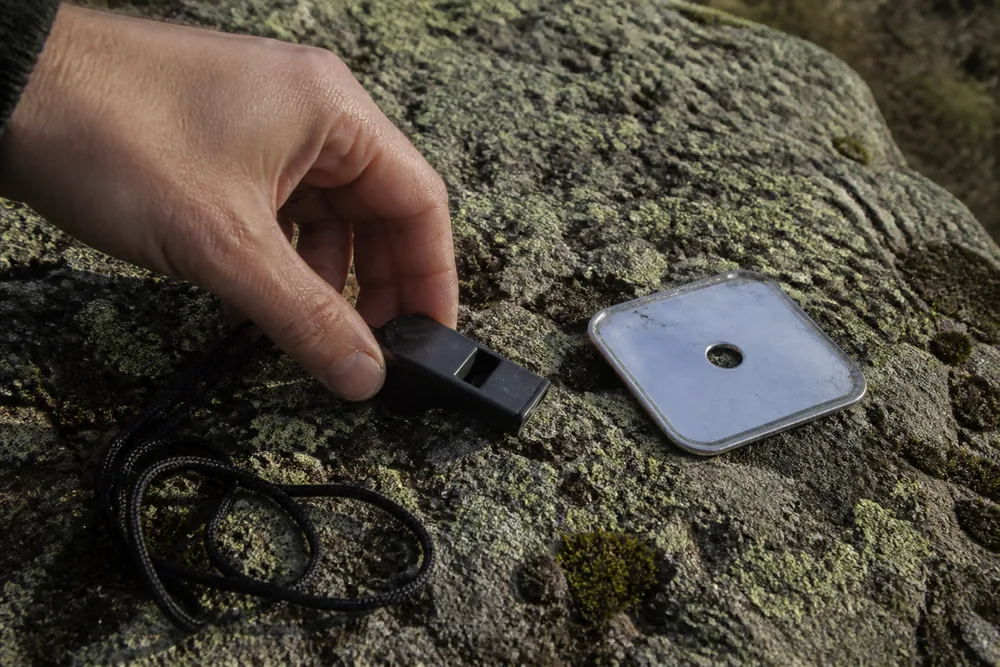
Whistle, three blasts
Carries far beyond a shout for almost no effort, works in fog and trees where nothing visual does, and weighs nothing. The one thing on this list worth carrying deliberately.
Mirror or any bright surface
A flash can be seen for miles in sun and is unusually effective against aircraft. A phone screen, a pot lid or a foil blanket all work.
Fire and smoke
Three fires in a triangle read as deliberate rather than accidental. It costs the most effort and attention of anything here, and needs fuel you may want for warmth.
Ground-to-air letters
Turns a position into a readable message. V means require assistance and X means require medical assistance.
Of those four, only the whistle is worth carrying deliberately. The rest are things you improvise from what is already in the pack.
Make ground symbols far larger than feels sensible. They have to read from an aircraft moving at speed, which means contrast matters as much as size, so tramped snow, dark rocks on pale ground or clothing laid out all work better than scratched lines.
Shouting is the worst option on this list. It carries poorly in wind and trees, it wrecks your throat, and it costs energy you may need for a cold night.
Being found is a different problem from being heard
The beacon has gone off and somebody knows. Nothing about your situation has changed yet.
The gap between somebody looking and somebody arriving is where the hours go.
The single most expensive thing you can do now is move.
Your reported position is the centre of the search. Everything the team plans is built on it, and walking away from it discards the only fact anyone is certain of.
- Stay where you were when you signalled
- Move to open ground only if it stays within sight of that position
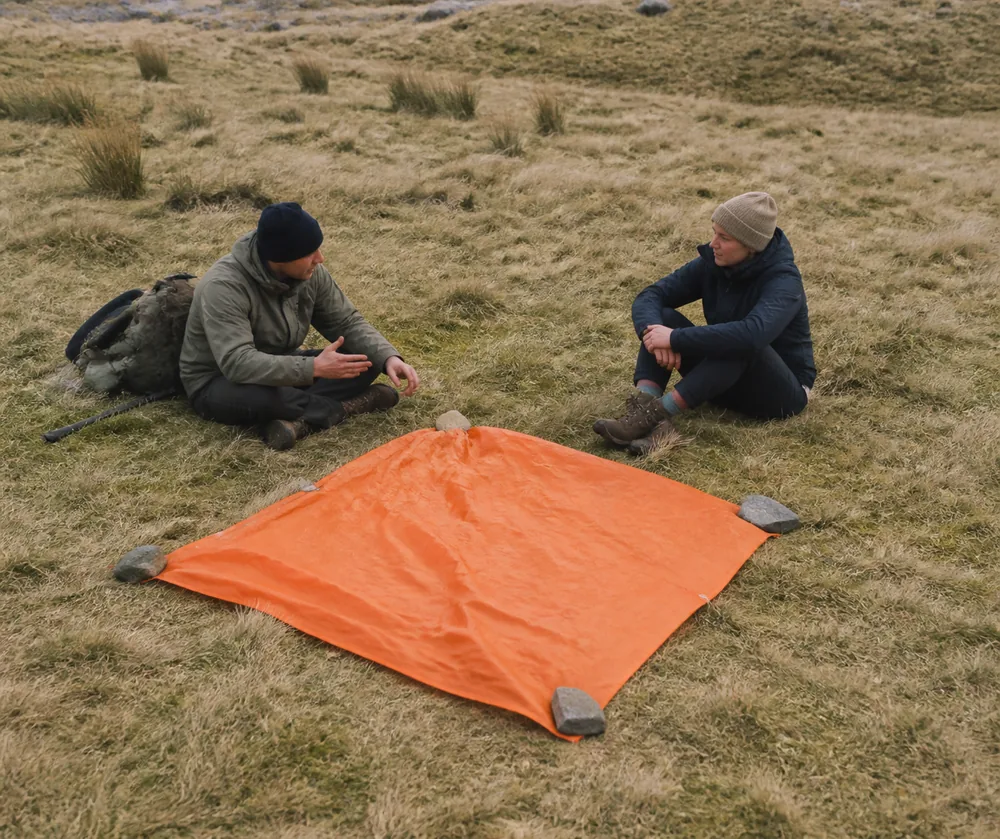
- Put something bright and unnatural where it can be seen from above
- Keep the whistle on your body rather than in the pack
- Keep the group together
- Ration torch and phone battery for the hours you will actually need them
A person on the ground is remarkably hard to see from the air. What an aircrew picks up is colour and straight lines, neither of which occur naturally, so a foil blanket, a bright jacket or a laid-out rope does more than waving does.
Ground teams are often heard before they are seen. That is why the whistle stays in a pocket rather than in the pack, and why three blasts repeated at intervals beats blowing continuously until you are exhausted.
Keep the party together. Splitting up turns one search into two, and halves the shelter, warmth and spare clothing available to each group.
There is one signal that works when every device has failed and you are unconscious, and it is sent before you leave. Somebody at home who knows your route and your expected return time will raise the alarm whether or not you are able to.
Without that, a party with no working device is not overdue to anyone, and nobody starts looking at all.
Expect it to take longer than feels reasonable. Searches are slow, night stops most of them, and the people waiting almost always assume a faster response than the terrain allows.
Sources
Personal locator beacons transmit on 406 MHz to the international search and rescue satellite system, which is operated in the United States by NOAA: SARSAT, Search and Rescue Satellite Aided Tracking. Registering a beacon so that responders know whose it is happens through the NOAA beacon registration database.
The three-signal distress convention, whistle and mirror use, and the ground-to-air letters with their meanings come from state emergency preparedness material on signalling for help and hunter education guidance on the same signals.
Step by stepPractical steps
- Try a text before a call, then switch the phone off between attempts
- Use a beacon or satellite messenger where there is no network
- State your position first, as precisely as you can
- Say what happened, to how many people, and their condition
- Say what you are carrying and whether you intend to move
- Stay where you were when you signalled
- Put something bright and unnatural where it can be seen from above
- Keep a whistle on your body and the group together
AnswersQuestions readers ask
What is the difference between a beacon and a satellite messenger?
A beacon sends a one-way distress alert with your position and needs no subscription. A messenger is two-way, so rescuers can ask what they are coming to and you can find out what is on its way.
Why send a text instead of calling?
A call needs a continuous connection and a text needs a fraction of a second. A queued message also sends itself the moment the phone touches a network, without you standing there.
What should you say when you call for help?
Position first, then what happened and to how many people, the condition of the casualty in plain words, what you are carrying, and whether you can or intend to move.
What is the distress signal without a device?
Three of anything. Three whistle blasts, three flashes or three fires. A whistle carries far beyond a shout for almost no effort, and a mirror flash is visible for miles.
What do the ground-to-air letters mean?
V means require assistance and X means require medical assistance. Make them as large as you can and use contrast, because they have to read from a moving aircraft.
Should you move after signalling for help?
No. Your reported position is the centre of the search, and leaving it discards the only fact rescuers are certain of. Move only far enough to stay in sight of it.