
What Are the First Decisions in Wilderness First Aid?
Not the treatment you can remember. The call you have to make.
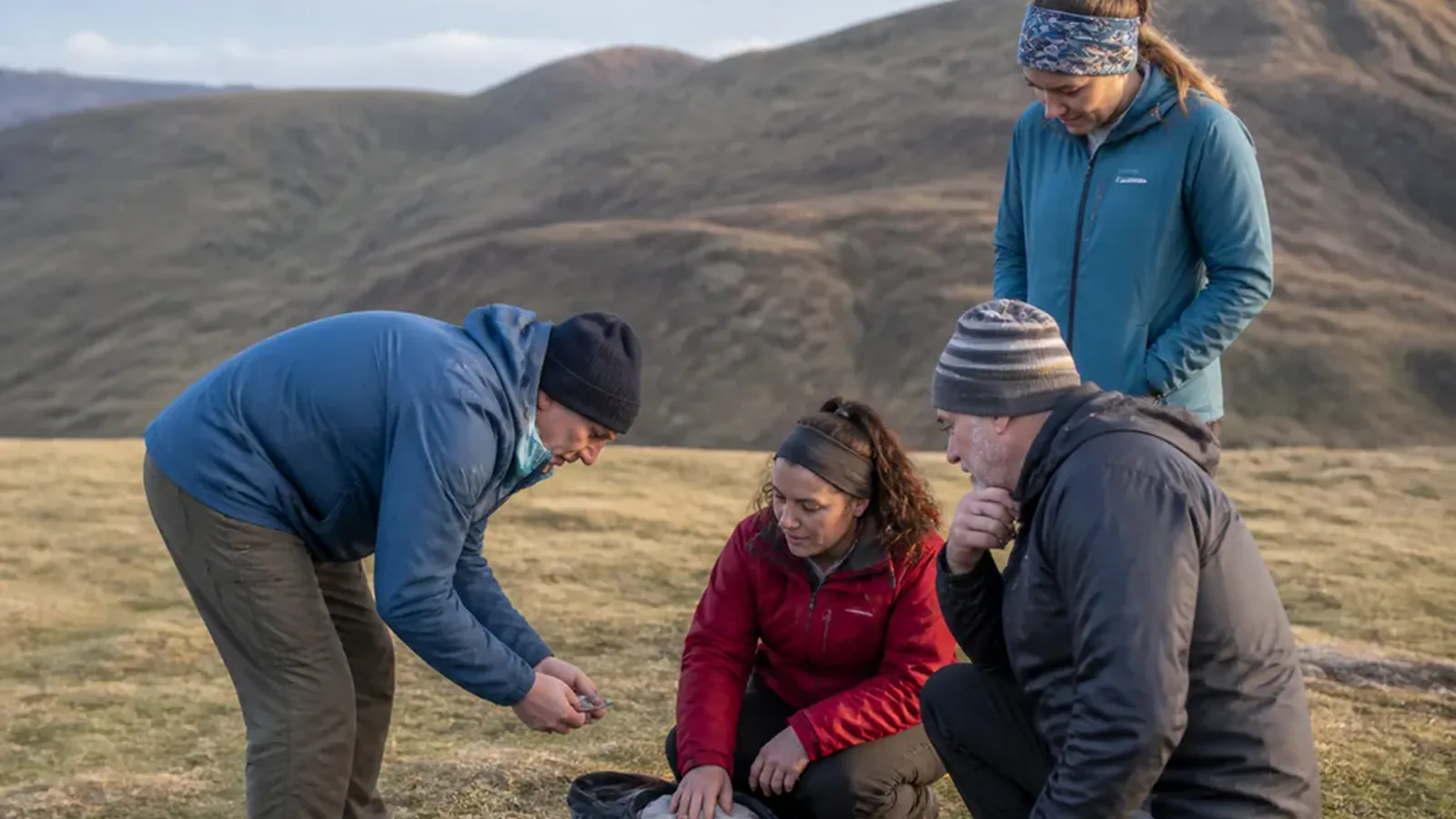
Backcountry first aid is graded on sequence and judgement rather than on remembered treatments. What you are producing is an evacuation decision, and everything you assess exists to help you choose between carrying on, walking out now, and staying put.
You are carrying a first aid kit you have never opened for anything worse than a blister. The thing you are underprepared for is not a treatment you cannot remember.
It is a decision.
- Breathing that is noisy, laboured or absent
- Bleeding that does not stop with firm pressure
- Any confusion, drowsiness or change in how the person is behaving
- A mechanism that could have injured the spine, such as a fall onto the back or head
- Chest pain, or pain that does not fit the injury you can see
- Anything that is measurably worse than it was twenty minutes ago
If any of those are true, the decision has already been made for you and the rest of this page is about what you do around it.
The output is an evacuation decision, not a treatment
There are three ways this ends. The party carries on, the person walks out now, or the party stays put and calls for help.
Everything you assess is in service of choosing between those three.
That is the part that surprises people. The treatments a lay responder can safely give are few, and none of them change the outcome as much as calling early does.
The middle option is the one that expires. Somebody who can walk out under their own power at four in the afternoon may not be able to at seven, and a party that waited has turned a walk into a carry.
So the question is never only how bad is this. It is also how bad will this be in two hours, and what will still be possible then.
- Carry on
- The commonest outcome, and still a decision rather than a default
- Walk out now
- Available only while the person can walk, which is why it expires
- Stay put and call
- The right call when moving would make things worse, and the one people delay
- What makes it urgent
- Breathing, bleeding, consciousness, and anything trending worse
- What time does to it
- Daylight, weather and the casualty's condition all narrow the options
The word that matters in that block is trending. A single reading tells you almost nothing, and the same reading taken three times over an hour tells you which way this is going.
Getting worse slowly is still getting worse.
Alone, the three outcomes collapse into two. Nobody can be sent for help while somebody stays, so the choice is between walking out injured and staying put with whatever signalling you carry, which is why solo walkers should decide their communication plan before the trip rather than during it.
Distance is what makes this different from first aid anywhere else. An ambulance measures its response in minutes and a mountain rescue team measures it in hours.
So you are not stabilising somebody until help arrives. You are looking after them for a long time.
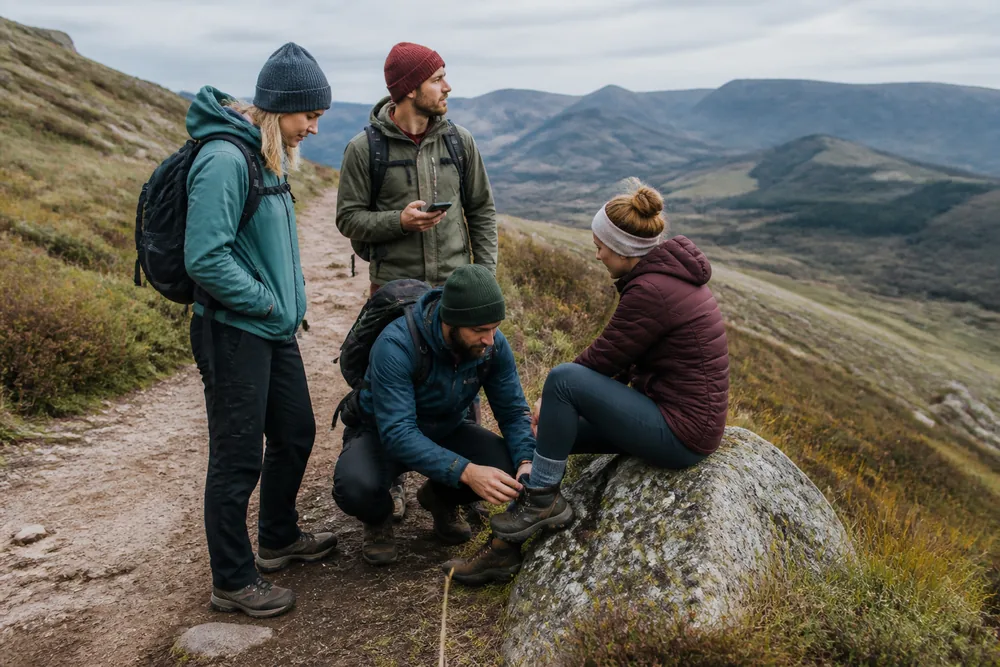
Look up before you kneel down
The first casualty is why you are here. The second casualty is the end of the rescue, because there is nobody left to make the call.
So read the ground before you walk onto it.
What you are looking up at depends on where you are. Loose rock above a scree slope, a river that is rising, a road with a blind bend, dead branches over a woodland stop, or simply weather that is about to make everybody cold.
- Stop and read the scene before approachingRockfall, water, traffic and unstable ground do not pause because somebody is hurt
- Check responsiveness, airway, breathing and circulationThis is the survey for things that kill in minutes, and nothing else happens until it is done
- Work head to toe once nothing is immediately life-threateningAdrenaline hides injuries, and people routinely fail to mention the worst one
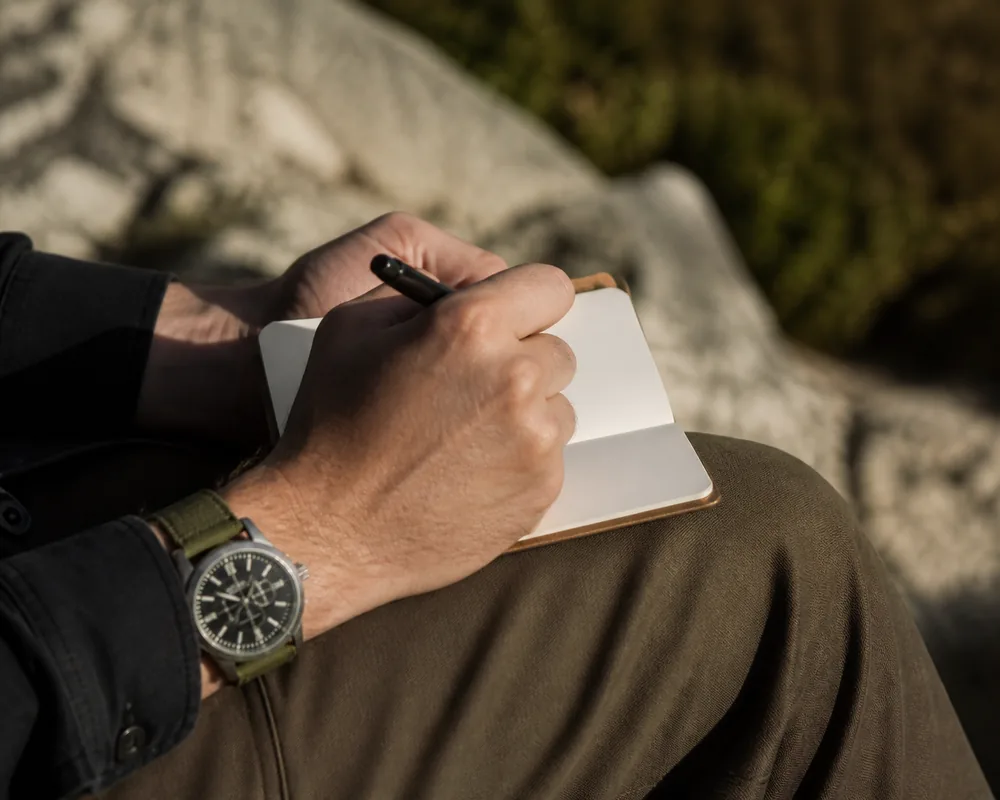
- Write down what you find, with the timeOne set of observations is a snapshot and three sets are a direction
In a group, give the jobs out loud rather than letting everybody crowd in. One person leads and stays with the casualty, one writes down observations and times, one handles communication, and everybody else gets told to sort shelter and warmth.
Three people around one casualty is help, and six is a crowd that stops anybody thinking.
The head-to-toe check catches what the casualty does not report. Somebody who has just fallen will tell you about the ankle that hurts and not about the shoulder they landed on, because the ankle is louder.
Ask them to move each part before you move it for them.
The last step is the one people skip and the one that travels. Write the time next to every observation, because a handwritten note goes to the hospital with the casualty and your memory of the afternoon does not.
Include what you did and when you did it. A rescue team arriving in the dark will ask questions you will not be able to answer from memory by then.
Repeat the observations rather than taking them once. Every fifteen minutes for anybody you are worried about, and hourly for anybody you are not, which is what turns a set of numbers into a direction.
The handover is the last part of the job and the part nobody rehearses. Give the team what happened, what you found, what you did, and how the person has changed since, in that order and in under a minute.
Which parts of the kit actually get used?
Almost all real use on almost all trips is blisters, small wounds and tape. That is not an argument for carrying less.
It is an argument for knowing which items are there for the rare day, and for checking that they are still in there.
Two capabilities matter when something serious happens.
Warmth is the capability people leave out. A casualty who is lying still on cold ground gets cold fast, and a sleeping mat, a spare jacket and a groundsheet are first aid equipment the moment somebody stops moving.
Most splinting improvises well. Trekking poles, a rucksack frame, a rolled sleeping mat and spare clothing cover almost everything a purpose-made splint would.
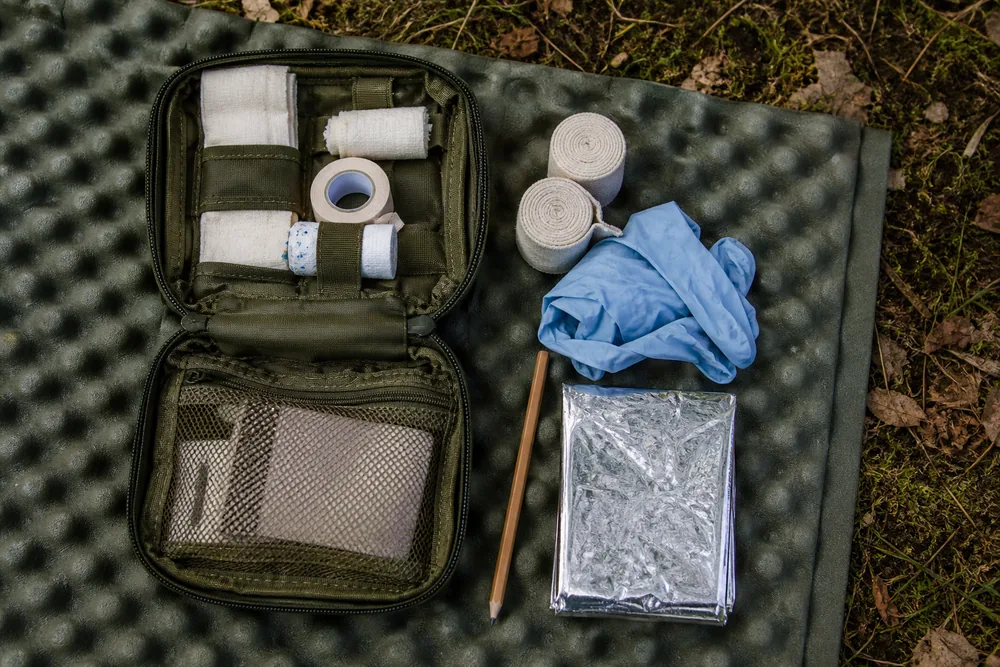
The item most often missing is a pencil.
What a weekend course does and does not qualify you for
Wilderness first aid runs about sixteen hours. Wilderness first responder runs seventy-two to eighty, which is roughly ten full days and four times the depth rather than a slightly longer version of the same thing.
The shorter course is built around a specific assumption, which is that outside help reaches you within a few hours.
That assumption fits most day walks and fits very little else. Longer training exists because somebody managing a casualty overnight, or deciding alone whether to move them, is doing a different job.
What sixteen hours genuinely buys is rehearsal. You practise the sequence on a real person who is pretending, you get it wrong in front of an instructor, and the order stops being something you have to recall.
That is worth a weekend, and it is not the same as being medically qualified.
Reading a page like this one is a further step down again. It can give you the shape of the problem and it cannot give you the practice, which is the part that survives adrenaline.
Between courses, you can rehearse the decision sequence without pretending to treat an injury. One person can describe the mechanism, changing symptoms, weather, distance from help, and available communication while another states the scene hazards, immediate threats, monitoring intervals, and evacuation threshold.
That drill can expose missing information and kit-access problems. It does not qualify anyone to perform techniques they have not been taught.
For any specific condition, this page deliberately says nothing. Hypothermia, heat illness, altitude, cold injury, sprains, blisters, allergic reactions and waterborne illness each have their own page, because summarising nine conditions badly would be worse than sending you to the one you actually need.
Sources
Course lengths and scope, including the sixteen-hour wilderness first aid standard against the seventy-two to eighty hour wilderness first responder qualification, and the place of evacuation decision-making in both, come from this comparison of the two certifications.
The content of a wilderness first aid syllabus, including patient assessment, written documentation and evacuation and handoffs, is listed in this outline of what a WFA course covers.
Step by stepPractical steps
- Read the scene for hazards before approaching
- Check responsiveness, airway, breathing and circulation
- Work head to toe once nothing is immediately life-threatening
- Write down what you find, with the time
- Repeat the observations to establish a direction
- Decide between carrying on, walking out, and staying put
- Hand over what happened, what you found, what you did and how they changed
AnswersQuestions readers ask
What is the most important skill in wilderness first aid?
Deciding how somebody gets out. The treatments a lay responder can safely give are few, and the evacuation call changes outcomes more than any of them.
Why does scene safety come first?
Because a second casualty removes the only rescuer. Rockfall, rising water, traffic and unstable ground do not pause because somebody is hurt.
What order do you assess somebody in?
Scene first, then responsiveness, airway, breathing and circulation, then a head-to-toe check, then written observations with times so you can see which way things are going.
What actually belongs in a backcountry first aid kit?
Most real use is blisters, small wounds and tape. When something serious happens, the two capabilities that matter are controlling bleeding and keeping somebody warm, and a pencil is among the most useful items.
Is a weekend wilderness first aid course worth it?
Yes, for the rehearsal. Sixteen hours gets you practising the sequence on a person under supervision, which is what survives adrenaline. It is not the same as being medically qualified.
How is wilderness first aid different from ordinary first aid?
Time and distance. An ambulance responds in minutes and a mountain rescue team in hours, so you are looking after somebody over a long period rather than stabilising them until help arrives.