
How to Purify Water Safely in the Backcountry
Choose a usable source, match treatment to the pathogens, and protect the clean side when equipment or conditions change.
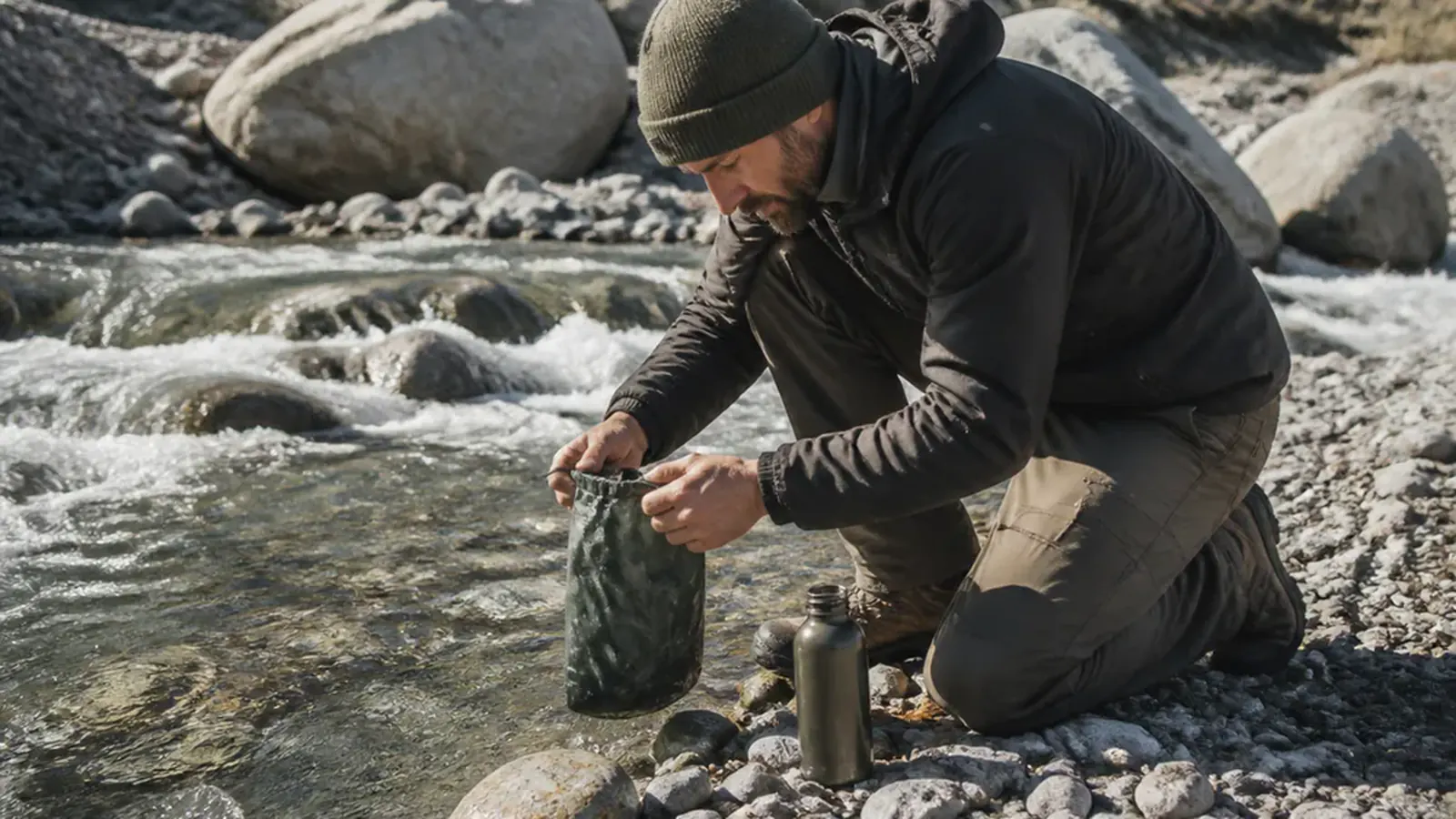
Backcountry water treatment is a chain from source to storage. Identify what the method must remove, clarify cloudy water, complete the full treatment, and keep untreated water away from the finished batch.
A water filter, tablet, UV unit, or stove can only solve the part of the problem it was designed to handle. You still have to choose a usable source, prepare cloudy water, complete the treatment, and keep raw water away from the finished batch.
That sequence matters because clear water is not proof of safe water. A mistake at the bottle cap can also undo a treatment that worked exactly as intended.
The practical job is to maintain one controlled chain from collection to storage. Each stage has a different failure, so a fast device does not replace careful handling.
Clear water can still carry four different problems
Natural water can look cold and transparent while carrying organisms too small to see. The useful starting point is to separate what is suspended in the water from what can make you ill.
Sediment is the visible part. It clogs filter media, consumes time, and can shield organisms from UV light, but removing sediment with cloth does not disinfect the water.
Protozoan parasites such as Giardia and Cryptosporidium are larger than bacteria and viruses. Many portable filters target parasites, while the exact pore size and certification determine whether the same filter also removes bacteria.
Bacteria are smaller. CDC guidance says a portable filter with an absolute pore size of 0.3 micron or less can remove bacteria and parasites, but it still does not remove viruses.
Viruses are the gap that catches people who treat every filter as a purifier. They are more important where human sanitation is poor, and they require a method whose verified coverage includes viruses, such as boiling, an appropriate purifier, chemical disinfection, or UV used correctly.
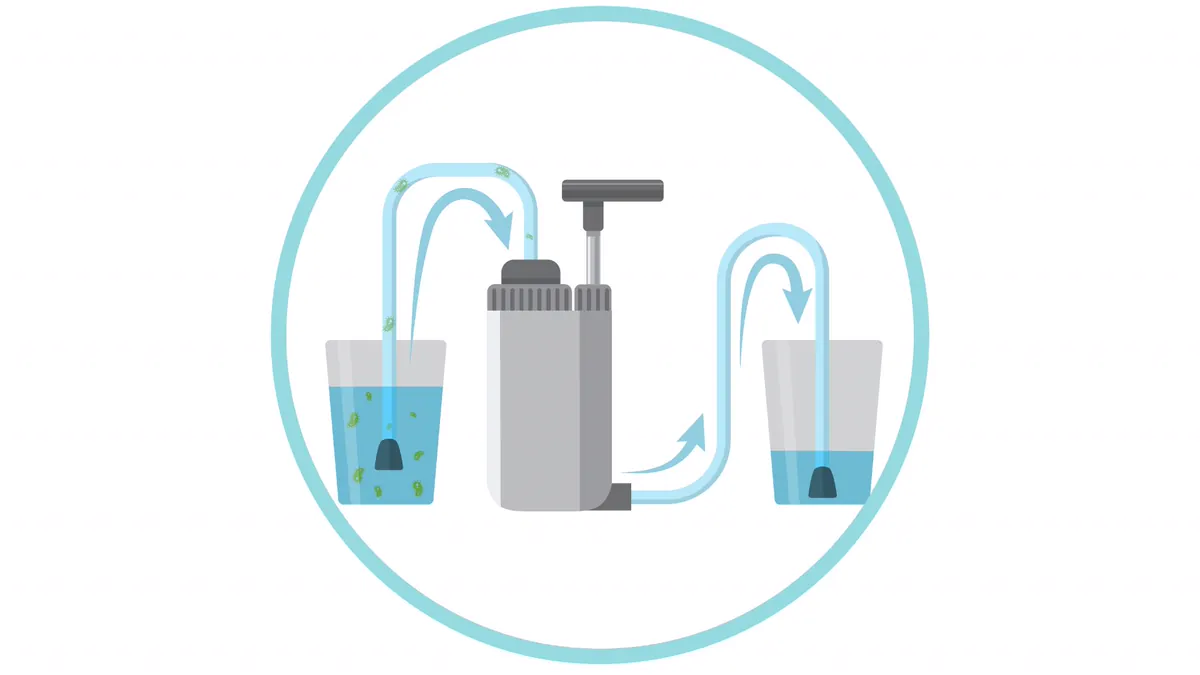
Chemicals, toxins, radioactive material, and dissolved salts form a different category. No ordinary field treatment fixes that source, so the correct action is to move rather than combine more microbial treatments.
Which source gives treatment the best starting point?
Start by checking whether the managing agency reports potable-water locations, harmful algae, a spill, or another water-quality alert. That check can remove an entire drainage or lake from consideration before you depend on it.
In the field, choose the best available source rather than assuming any moving stream is safe. Moving water, higher collection points, and water away from camps or grazing usually give you a cleaner collection job, but every natural source still receives treatment.
Moving river or stream water
Prefer a flowing section where you can reach below the surface without scraping the bed
Lake water
Collect from the top few inches at the clearest accessible edge and avoid stirring bottom sediment
Stagnant pool
Walk farther when a flowing or clearer source is available because insects, debris, and warm still water complicate collection
Below camps or grazing
Look for a source farther from human and animal use rather than assuming the filter will correct every upstream influence
Wash or sanitize your hands before handling collection gear when practical. NPS guidance also recommends using a clean container, but that container becomes the dirty-side vessel as soon as untreated source water enters it.
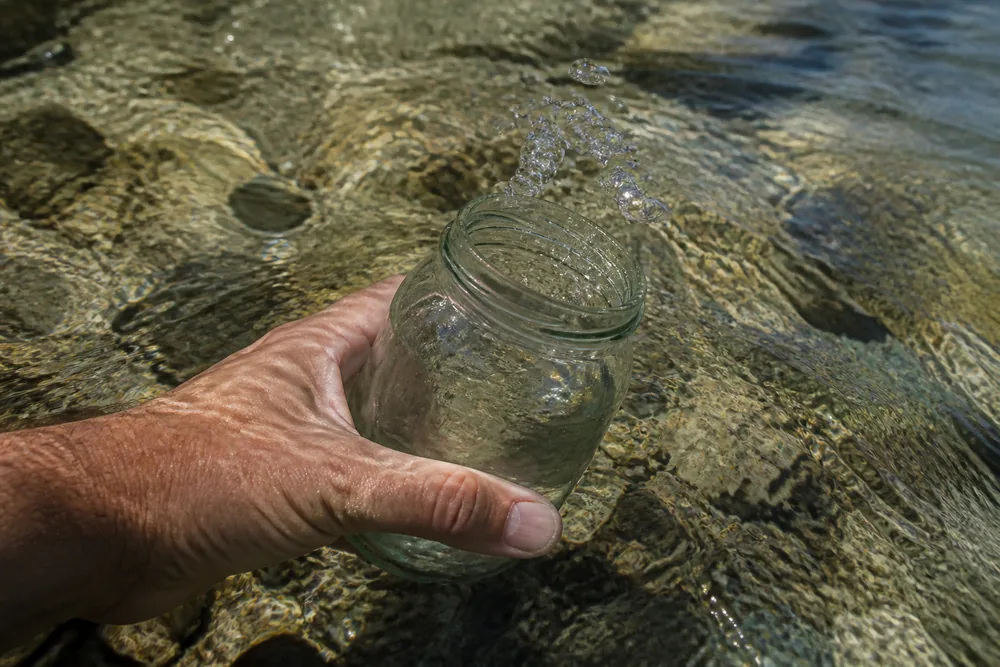
Approach from a rock or stable bank when possible. Wading upstream of your own collection point stirs sediment and turns a clear draw into a pretreatment problem.
Cloudy water needs a separate clarification step
Cloudy water interferes with the treatment that follows. EPA guidance recommends letting particles settle, then passing the clearer water through a clean cloth, paper towel, or coffee filter before boiling or disinfection.
Give gravity time to work instead of squeezing turbid water harder through a filter. Pour the clearer upper water into the dirty-side treatment vessel and leave the settled layer behind.
If the water remains visibly cloudy, strain it through tightly woven clean cloth. That step protects a filter from some of the particle load and gives UV light a clearer path, but the strained water still contains any microorganisms that passed through the cloth.
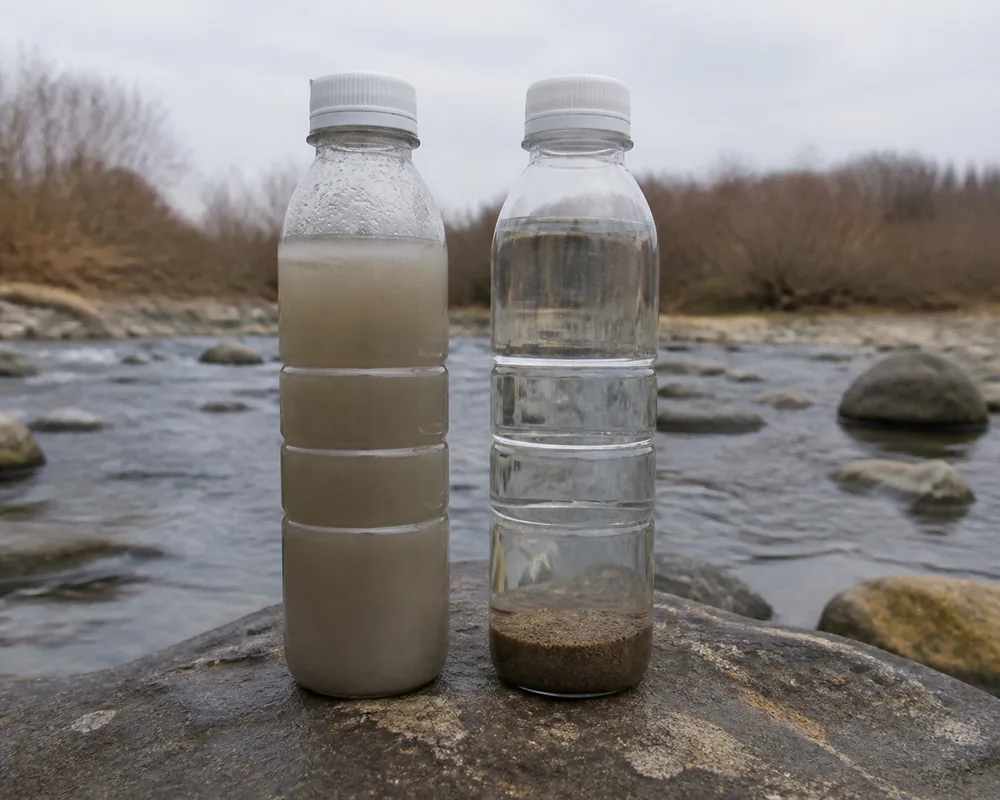
There is no universal settling time because silt, clay, organic material, and container depth differ. Wait until a distinct clearer layer forms, decant without disturbing the bottom, then reassess clarity before choosing UV or pushing the batch through a filter.
What does each treatment method actually cover?
Method choice begins with organism coverage, then moves to fuel, time, clarity, temperature, battery power, and volume. Speed has little value when the fast method misses the hazard you are trying to remove.
| Method | What it can cover | Field constraint | Best decision use |
|---|---|---|---|
| Rolling boil | Viruses, bacteria, and parasites | Needs a vessel, fuel, cooling time, and burn control | Broad microbial coverage when fuel is available |
| Portable filter | Coverage depends on absolute pore size and certification | Can clog, freeze after wetting, or miss viruses | Clear backcountry water when the rated barrier matches the threat |
| Chemical disinfectant | Usually strong against bacteria and viruses, with parasite performance varying by active ingredient | Full label contact time, water temperature, and product life matter | Lightweight treatment or a complement to filtration |
| Portable UV | Parasites, bacteria, and viruses in small amounts of clear water | Needs clear water, battery power, and a completed exposure cycle | Fast treatment when clarity and electronics are reliable |
| Filter then disinfect | Physical removal followed by microbial disinfection | Requires two complete operations | CDC's next-best sequence after boiling when one method alone leaves a coverage gap |
For boiling, bring clear water to a rolling boil for one minute. CDC raises that time to three minutes above 6,500 feet, then the water should cool naturally before it enters a clean covered container.
A filter label needs more attention than the word “filter.” CDC says a one-micron absolute filter or one certified to NSF 53 or 58 for cyst reduction removes parasites but not viruses or all bacteria, while a 0.3-micron absolute filter can remove bacteria and parasites but still misses viruses.
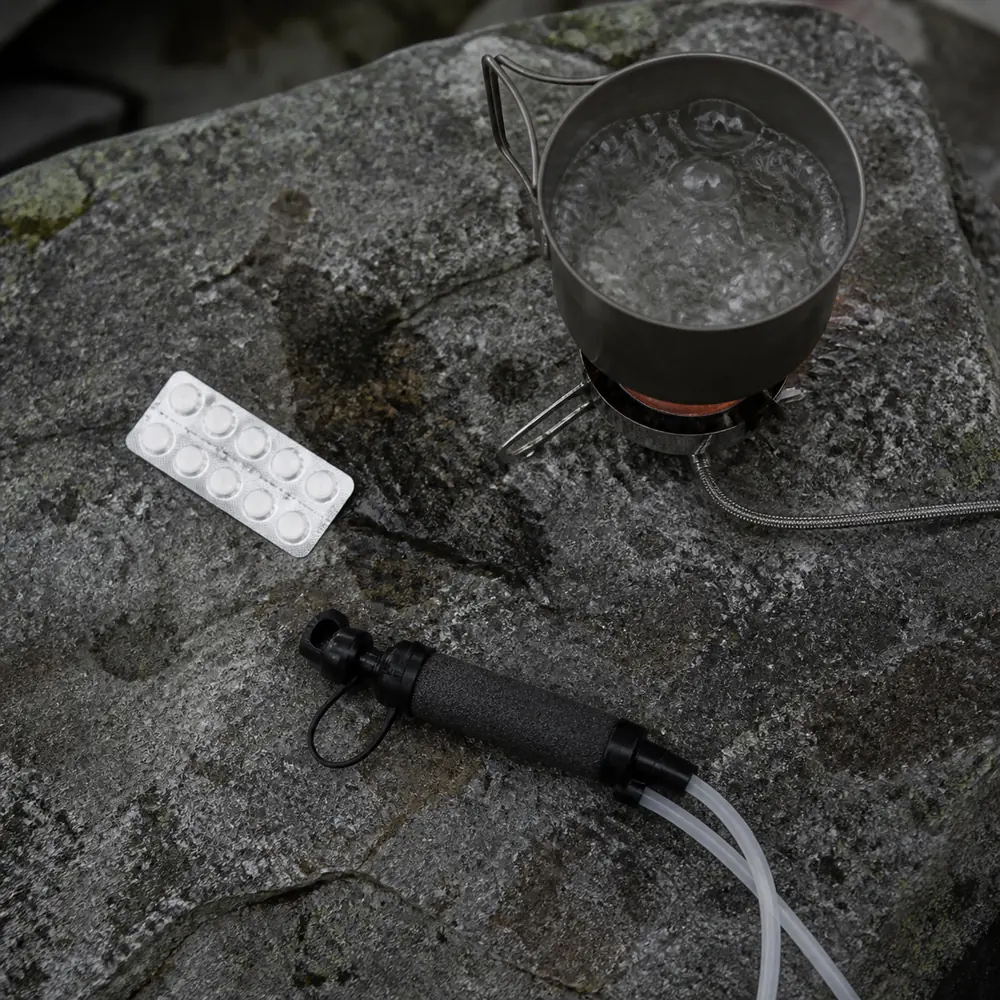
Chemical disinfectants require the product label because active ingredients and strengths differ. Chlorine and iodine work well against bacteria and viruses but perform poorly against some parasites, while chlorine dioxide can kill Giardia and is somewhat effective against Cryptosporidium.
CDC still recommends filtering before chemical disinfection when parasites may be present. Pregnant people, anyone with thyroid disease or iodine hypersensitivity, and anyone treating water for more than a few weeks should avoid iodine-treated water.
UV works only when the light reaches the organisms.
Cloudy water, a weak battery, an incomplete cycle, or a volume larger than the unit supports turns a quick method into an uncertain batch.
Treat one batch from dirty container to clean storage
Assign equipment roles before the first collection. One bag, bottle, scoop, or pot handles raw water, while a separate closed container receives water only after the method has completed.
- Check the source and current alertsReject water affected by chemical, toxin, algal, or spill warnings before collection
- Collect into the dirty-side vesselKeep raw water away from the clean bottle, cap, hose, and drinking surface
- Clarify cloudy waterLet sediment settle, decant the clear layer, and strain it when particles remain
- Apply the chosen treatmentBoil, filter, disinfect, use UV, or combine methods according to the coverage required
- Complete the full time or cycleUse the product label for chemicals and devices, and restart a failed cycle rather than estimating the remainder
- Protect the clean openingPrevent untreated drips, wet hands, and the dirty hose from touching threads or the inside of the cap
- Close the finished batchLet boiled water cool naturally and store every treated batch in a clean covered container
- Mark shared water as readyFor groups, record the finish time or use an agreed clean-side marker before anyone drinks
The cap is the smallest part of the system and one of the easiest to contaminate. Do not place its drinking surface on soil or rock, and do not rinse the clean bottle with untreated water before filling it.
If raw water runs over bottle threads, treat those threads as dirty. Clean them with treated water according to the container and treatment instructions rather than hoping the first sip washes the problem away.
Finished means closed and separated. A bottle that remains open beside the dirty bag has completed the device step but has not completed the handling sequence.
A failed device changes the safe next move
Treatment fails safely only when you recognize that the result can no longer be verified. Reduced flow, a suspected freeze, a cracked housing, a failed UV signal, or an interrupted chemical wait all change the decision.
Wet hollow-fiber filter may have frozen
Follow the manufacturer's rule and switch methods when damage cannot be ruled out. Sawyer recommends replacement when freezing is suspected
Filter flow has collapsed
Stop forcing pressure, clarify the raw water, and clean or backflush only by the manufacturer's approved procedure
Housing, bag, or fitting is damaged
Retire the compromised part and use a compatible clean vessel or another complete treatment method
UV battery or cycle fails
Replace or recharge the power source and run a full successful cycle, or change to boiling or a suitable chemical method
Chemical wait is interrupted
Keep the batch on the dirty side and complete the full label-directed contact time before calling it treated
A slow filter does not automatically mean the barrier failed. Sediment may have reduced flow, so approved cleaning can restore performance, but squeezing harder risks damaging the bag or fittings and does not prove the output is safe.
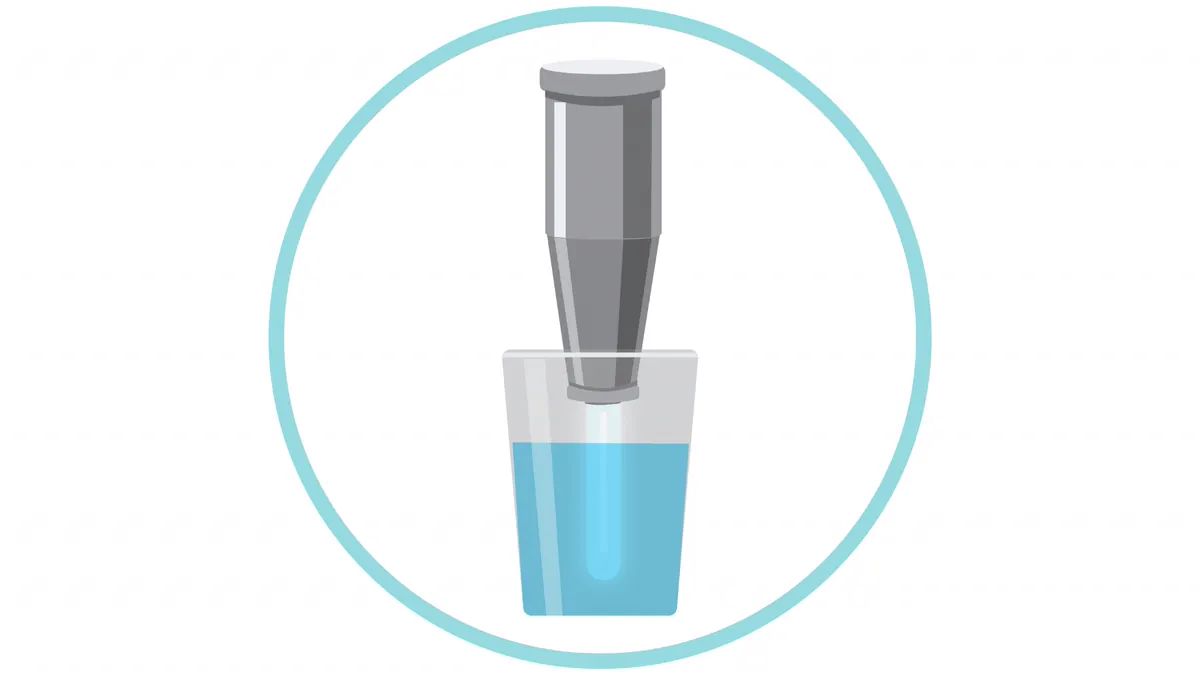
Freezing is different because a wetted hollow-fiber filter may suffer damage that is not visible. Apply the instructions for your exact model, keep a wet filter from freezing, and use the backup if you cannot verify its integrity.
Group water is a throughput and contamination problem
A method that works for one person can create a queue for four. Slow output or long contact time encourages thirsty people to drink from an unfinished batch unless the group plans collection and treatment before bottles run dry.
Work backward from the slowest part of the process. That may be collecting from a shallow source, waiting for sediment to fall, pumping through a clogged cartridge, boiling one pot at a time, or holding chemical water until the clock finishes.
- Label one vessel or bag as dirty and never use it for finished water
- Keep one closed clean container ready to receive completed batches
- Assign one person to handle clean caps, bottle threads, and outlet fittings
- Record chemical start and finish times instead of relying on memory
- Begin the next batch before the group empties the current clean supply
- Clean hands before handling food or any clean-side drinking surface
- Keep shared bite valves and cups off the ground and away from raw-water gear
CDC recommends hand sanitizer containing at least 60 percent alcohol when soap and safe water are unavailable. Hand hygiene matters because treatment corrects the source water, not what group members transfer to caps, food, and drinking surfaces afterward.
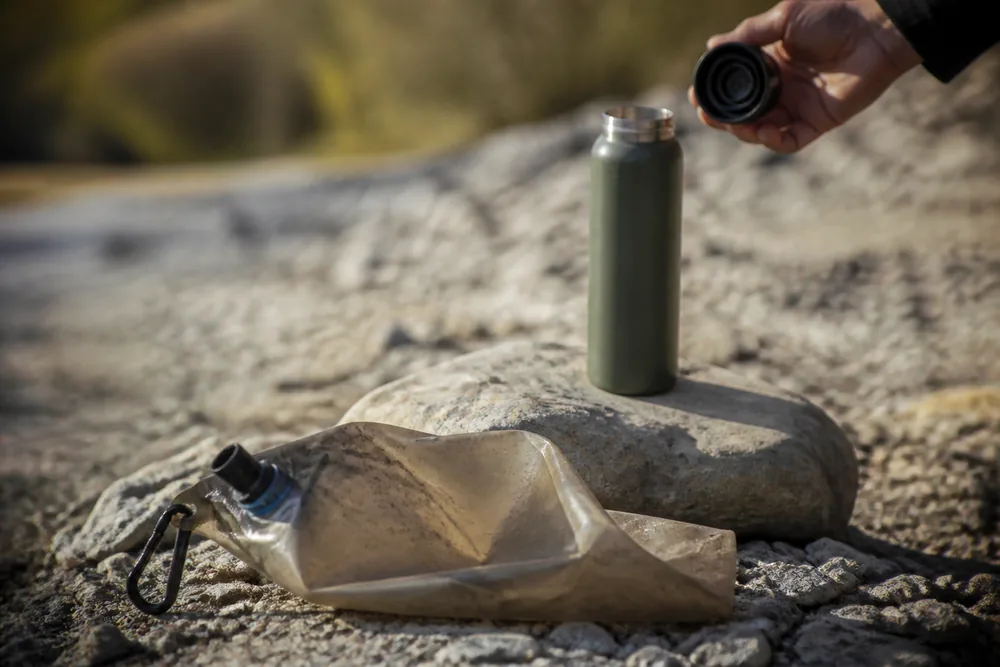
For chemical batches, use a timer or write the ready time where everyone can see it. A bottle becomes clean when the full label time ends, not when another person feels thirsty.
Pair the primary method with a different failure mode
A backup earns its weight when it works for a different reason than the primary method. Two identical hollow-fiber filters can share the same freeze exposure, while tablets remain usable without intact filter media or battery power.
If UV is primary, carry a chemical treatment whose label covers the trip conditions. If a filter is primary, chemical disinfection can cover a damaged filter or add virus protection when the source context requires it.
Boiling is a powerful fallback when you still have a vessel and enough fuel. It is a weak backup for a group that has already rationed fuel tightly, so that trip needs another independent treatment rather than a plan that consumes the last cooking fuel.
The backup also has limits. Expired chemicals, missing instructions, a dead lighter, no vessel, or a second frozen filter can leave the group with no verified method.
At that point, stop calling the water treated. Change source, return to known potable water, shorten the trip, or seek assistance before dehydration pressure turns an uncertain method into a risky guess.
Sources
Pathogen coverage, boiling times, filter pore guidance, iodine cautions, the filter-then-disinfect sequence, and UV requirements come from the CDC page on water treatment while hiking, camping, and traveling.
Clarification and clean covered storage guidance comes from the EPA page on emergency disinfection of drinking water. Product strengths and contact times vary, so the EPA and CDC both direct users to follow the label.
Natural-source selection, water-quality alerts, and portable UV operating limits come from the National Park Service guidance on purifying natural water.
Filter freezing, integrity, backwashing, and damage guidance is model-specific. The failure examples above use the manufacturer's current Sawyer water filtration FAQ and direct readers back to the instructions for their exact unit.
Step by stepPractical steps
- Confirm that the source and contamination context fit your treatment method.
- Collect raw water in a dedicated dirty-side vessel.
- Let cloudy water settle, decant the clearer layer, and strain remaining particles.
- Apply boiling, filtration, chemical disinfection, UV, or a justified combination.
- Complete the full boiling time, label contact time, or successful device cycle.
- Keep untreated water and dirty equipment away from clean caps, threads, and outlets.
- Close and mark each finished batch before anyone drinks from it.
- Switch to an independent backup when treatment integrity cannot be verified.
AnswersQuestions readers ask
Is clear stream water safe to drink without treatment?
No. Clear water can contain disease-causing organisms that you cannot see. Treat natural water unless an official source confirms that it is potable.
How long should I boil backcountry water?
CDC guidance says to bring clear water to a rolling boil for 1 minute. Above 6,500 feet, boil it for 3 minutes, then let it cool naturally in a clean covered container.
Does a backpacking filter remove viruses?
Many common portable filters do not remove viruses. Check the stated pore size and organism coverage for your exact model, then add a suitable disinfection step when the source context requires virus protection.
Should I filter cloudy water before using tablets or UV?
Yes. Let sediment settle and prefilter the clearer water first. Particles can reduce UV effectiveness and make chemical treatment less reliable, so follow the device or product label after clarification.
Can I keep using a hollow-fiber filter after it freezes?
Follow the manufacturer instructions for your model. If a wetted filter may have frozen and its integrity cannot be verified, replace it or use another complete treatment method.
What is the best backup water-treatment method?
Choose a backup with a different failure mode from your primary method. For example, chemical treatment can remain usable after a filter is damaged, while boiling can work when a battery-powered UV device fails if you still have fuel and a suitable vessel.