
What Are the Signs of Dehydration, and How Much Should You Drink?
And the advice about it reversed, for a reason almost nobody was told.
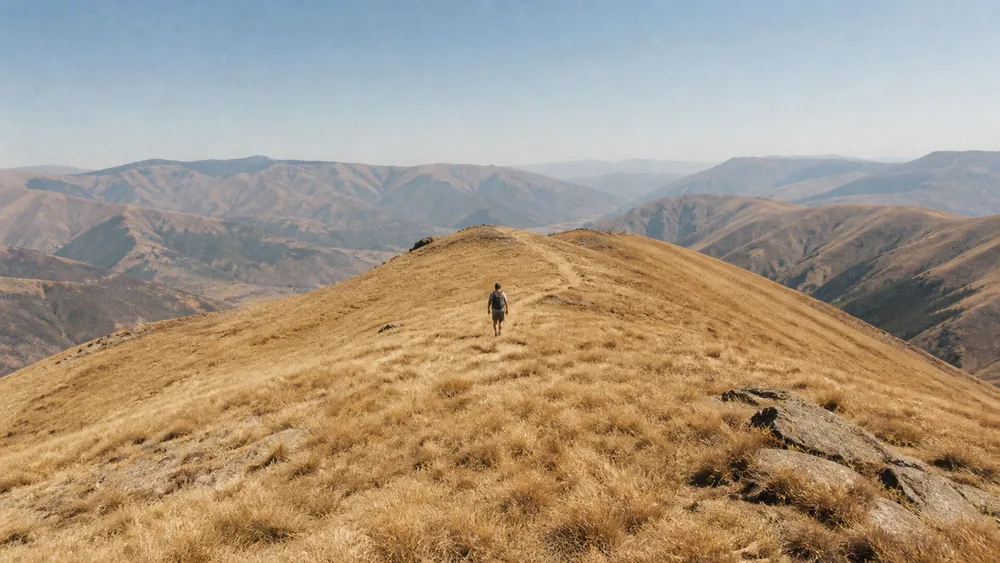
Fluid on a walking day is a band rather than a direction, with a failure mode at each end. The guidance moved to drinking by thirst because the overdrinking end kills faster, and the two conditions look identical from the outside.
Dehydration takes your judgement before it takes your legs. That is the part worth knowing, because a walker making poor decisions on a route is in more trouble than one walking slowly.
Here is roughly what each stage costs, measured as a share of body weight lost.
Most walking days never get past the second rung. The advice that surrounds this subject, though, was built for the far end of the ladder, and it has quietly reversed in the last decade.
Should you drink before you are thirsty?
For most people, on most days, no. Current guidance from wilderness medicine says to drink to satisfy thirst rather than to a schedule.
That will contradict what you were taught.
The older instruction was to drink ahead of thirst, on the reasoning that thirst lags behind fluid loss and by the time you feel it you are already behind. The physiology behind that is real, and the advice was still changed.
It changed because of what happened at the other end.
Scheduled drinking pushed endurance participants into taking in more fluid than they were losing, and the resulting condition kills faster than the dehydration it was meant to prevent. The guidance moved to thirst specifically to stop that.
- The old advice
- Drink ahead of thirst on a schedule, because thirst lags behind loss
- The current recommendation
- Drink to satisfy thirst, named as the primary preventive strategy
- What changed it
- Scheduled drinking produced intake exceeding losses, with fatal results
- The target
- Keep losses under roughly 2 percent without overshooting the other way
- The stated limitation
- The guidelines say plainly that no single rule fits everyone
That last line matters and most pages drop it. The guidelines themselves acknowledge that no single recommendation covers every person, sweat rate, temperature, and effort level.
So thirst is the default rather than a law.
Somebody working very hard in extreme heat, or anyone who knows from experience that their thirst runs late, has reason to be more deliberate. Aim for a band, not a direction.
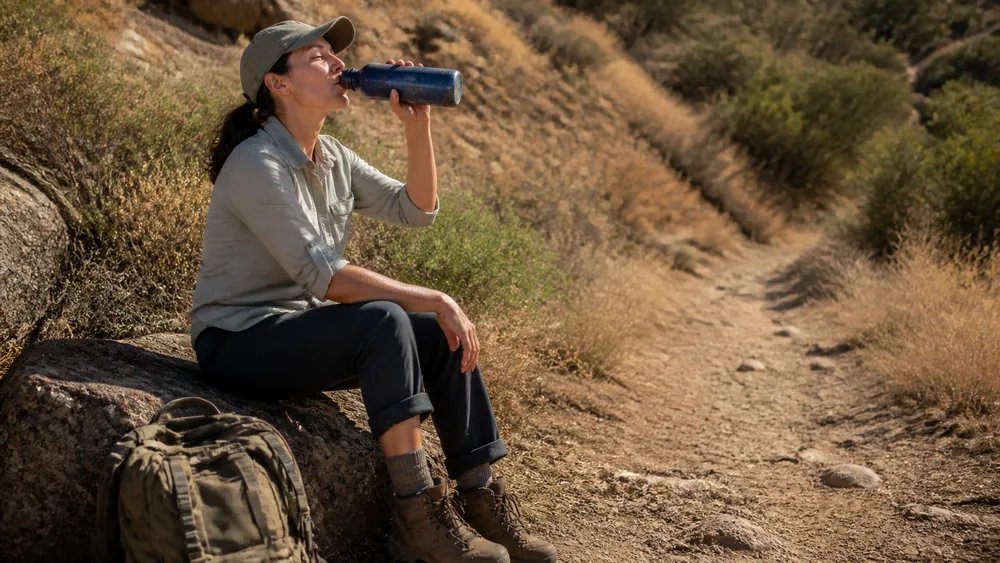
Dehydration costs judgement before it costs speed
The first things to go are mood, concentration, and the quality of your decisions. Your pace holds up considerably longer than your route-finding does.
This ordering is the whole argument for taking it seriously.
On a treadmill a two percent loss is a small performance decrement. On a route it is the reason somebody misreads a junction, presses on past a sensible turnaround, or fails to notice that the weather has changed.
| Roughly how much you have lost | What it feels like | What it costs on a route |
|---|---|---|
| About 1 percent | Thirst, and nothing else | Nothing yet, and this is the signal to act on |
| About 2 percent | Slightly harder work for the same pace | The threshold current guidance aims to stay under |
| About 3 to 4 percent | Headache, tiredness, shorter temper | Companions notice before you do |
| More than that | Clumsiness, poor decisions | The genuine hazard, and it arrives without drama |
Notice the third row. Irritability is the one other people spot first, which makes a walking group a better instrument than your own sense of how you are doing.
Heat and hard effort simply move you down the ladder faster.
Under-eating does the same thing from a different direction, because food carries both water and sodium. A long day on nothing but water and enthusiasm produces the same rungs sooner than the arithmetic suggests.
Which field checks actually tell you anything?
Urine colour is the check everyone uses and it works, with two caveats that people routinely ignore.
The first is timing.
Your first urine of the day is concentrated regardless of how well hydrated you are, so judging yourself on it at seven in the morning tells you almost nothing. Use the ones that come later.
The second is that plenty of things colour urine independently.
Vitamin supplements are the usual culprit, and several common medicines do it too. If you take either, the check is compromised and you need something else.
- Check urine colour, but not the first one of the day.
- Notice how long it has been since you last went, because frequency carries information colour does not.
- Discount the colour check entirely if you take vitamins or medicines that tint it.
- On a multi-day trip, weigh yourself at the same time each morning if you can.
- Ask whether you are actually thirsty, since that is what the guidance rests on.
Morning weight is the only one of these that discriminates properly. A stable weight across days means the balance is roughly right, and it is the single check that can distinguish drinking too little from drinking too much.
That distinction is the one everything else fails at.
None of the colour checks can tell you which side of the band you are on, which matters enormously once somebody actually feels unwell.
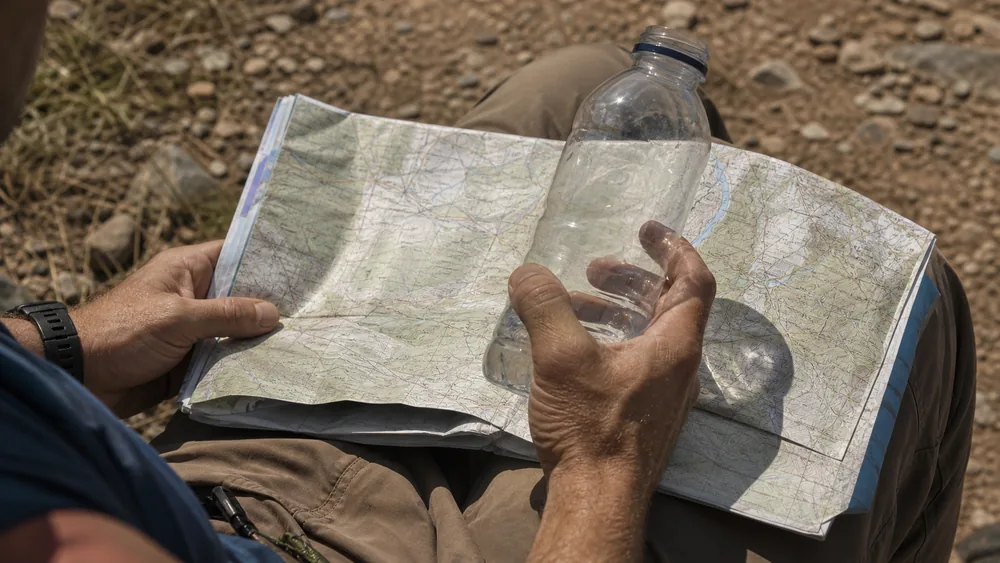
Drinking too much is the other failure
Here is the problem that makes this page necessary. Dehydration and overdrinking produce the same headache, the same nausea, and the same confusion.
You cannot tell them apart by looking at the person.
What separates them is what they have been doing. Somebody who has drunk very little on a hot day is a different case from somebody who has been steadily working through litres of plain water while sweating hard, and the second person is the one in more immediate danger.
Weight is the other discriminator. Somebody who has gained weight over a long hot day has taken in more than they lost, which points firmly away from dehydration.
Most of the time you will not have a scale, and the person will not remember what they drank.
Work with what you can establish. How many bottles have they actually emptied, has anyone seen them refilling constantly, and have they eaten anything at all since breakfast are three questions that get you most of the way.
Somebody who has barely drunk and has not eaten is straightforwardly dehydrated.
Somebody who has been drinking heavily, eating little, and sweating hard for hours is the case where more plain water is the wrong move. That combination of high intake and no salt is what produces the dangerous version.
When you genuinely cannot tell, the safe course is narrow but real.
Stop and get them out of the sun, give food with salt in it rather than another bottle, and offer fluid in small sips rather than volume. That approach helps a dehydrated person and does not worsen an overdrinking one, which is the only thing you can say about any single action here.
Then watch rather than repeat.
If they improve over the next hour, you had the common problem and it is resolving. If they get worse while drinking, you had the other one, and the walk out has become urgent.
Salt is part of the answer on both sides.
Food alongside fluid addresses the sodium that plain water dilutes, which is why a proper stop with salty food does more than another bottle. The full management of the overdrinking condition is its own subject and its own page.
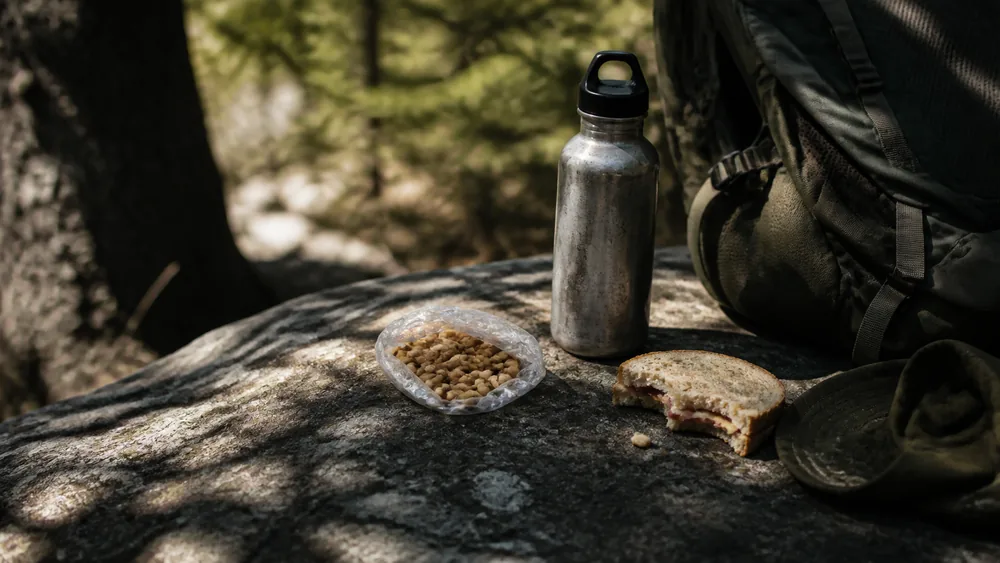
Getting fluid back in without overshooting
Sip steadily rather than gulping. Large volumes taken at once are absorbed less well and are exactly the behaviour that produces the opposite problem.
Sit down somewhere out of the sun while you do it.
Steady means something specific here. A few mouthfuls every ten or fifteen minutes over an hour beats a litre in one go, because absorption has a rate and exceeding it simply leaves fluid sitting in the stomach.
That is also why gulping tends to produce nausea rather than recovery.
Eat something at the same time, because food restores sodium and carries water of its own, and a recovery that has stalled on water alone will often move once somebody has eaten properly.
Improvement should be noticeable within an hour or two.
The headache eases, energy returns, and the person starts taking part in the conversation again. If that does not happen after sensible rehydration and food, then fluid was not the problem and you should be looking at heat, at altitude sickness, or at something else entirely.
One situation stops being self-treatable.
Somebody who cannot keep fluid down is no longer managing a hydration problem with a hydration solution, and the plan needs to change to getting them out rather than getting them drinking.
Sources
The current recommendation to drink to thirst as the primary preventive strategy, the target of keeping total body water loss under about 2 percent, and the explicit statement that no single drinking rule fits all individuals and conditions, come from: Wilderness Medical Society Clinical Practice Guidelines for the Management of Exercise-Associated Hyponatremia, 2019 Update.
The clinical summary of those guidelines, including the reasoning that overhydration rather than underhydration is the failure the advice protects against, is: Exercise-Associated Hyponatremia: Updated Guidelines from the Wilderness Medical Society.
Reporting on the shift away from preplanned scheduled drinking, and why it was made, is covered in: Patients with exercise-related hyponatremia advised to drink to thirst.
AnswersQuestions readers ask
Should you drink before you feel thirsty?
For most people on most days, no. Current wilderness medicine guidance names drinking to thirst as the primary strategy, and it moved there because scheduled drinking pushed people into taking in more than they lost.
Why did hydration advice change?
Because overdrinking turned out to kill faster than underdrinking. Preplanned drinking produced fluid intake exceeding losses in endurance participants, which causes exercise-associated hyponatremia.
What are the first signs of dehydration?
Mood, concentration, and decision quality go before pace does. Companions often notice irritability before the affected person notices thirst.
Is urine colour a reliable hydration check?
It works with two caveats. The first urine of the day is concentrated regardless of hydration, and vitamins or some medicines colour it independently, which invalidates the check entirely.
How do you tell dehydration from drinking too much?
Not by symptoms, because headache, nausea, and confusion appear in both. Ask what the person has actually drunk and eaten, and on a multi-day trip compare morning weight.
What if you cannot tell which one it is?
Get them out of the sun, give salty food rather than another bottle, and offer fluid in small sips rather than volume. That helps a dehydrated person without worsening an overdrinking one.