
What Are the Signs of Altitude Sickness, and When Do You Descend?
Three illnesses share the name, and only one of them lets you wait for morning.
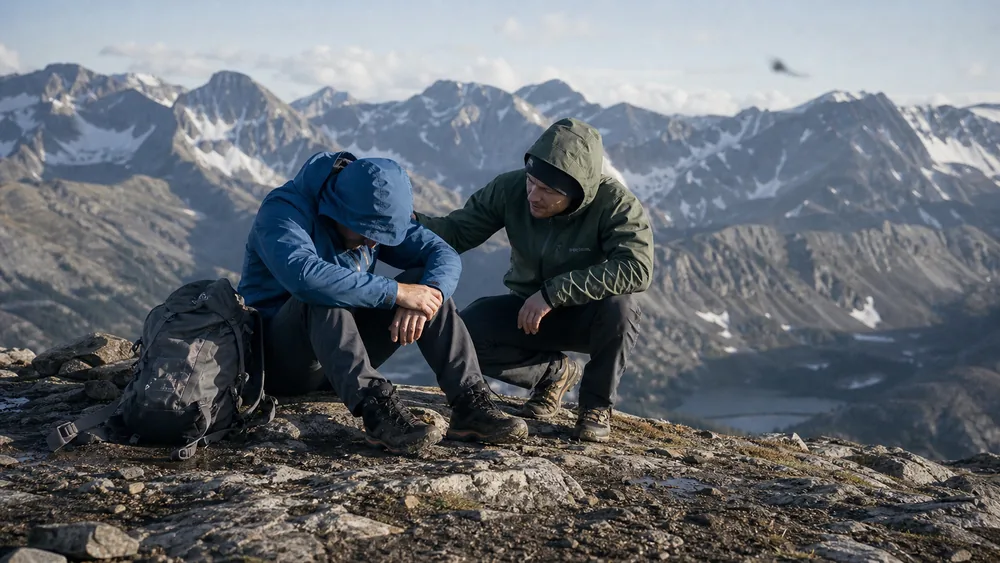
Altitude sickness is a diagnosis with criteria, not a general word for a bad night high up. Getting the name right matters because two of the three illnesses behind it need elevation given back the same night.
Altitude sickness is a specific diagnosis, not a general word for feeling rough at a high camp. It starts with a headache that arrives after a recent gain in elevation, and the 2018 Lake Louise criteria add a scoring threshold on top of that headache.
Disturbed sleep used to be part of the score. It was removed because poor sleep at elevation tracks the thin air itself rather than the illness.
- The person gained meaningful elevation in the last day or two.
- A headache is present, because without one this is something else.
- At least one of nausea, unusual fatigue, or dizziness is present alongside it.
- The symptoms are worse than the rest of the group's tiredness explains.
- Nothing in camp offers a better explanation, such as a stove burning in an enclosed space.
Meeting those conditions tells you someone is ill. It does not tell you which of three separate illnesses you are dealing with, and that is the distinction the rest of the night turns on.
Two of the three kill people.
Both begin looking almost exactly like the common one, which is why a group that only knows the phrase altitude sickness tends to treat every case as a rough night.
Why does altitude sickness hit the fittest person in the group?
Watch any group arrive at a high trailhead and the distribution looks unfair. The strongest walker is retching behind a boulder while somebody who trains for nothing sets up a tent and eats dinner.
Aerobic fitness does not protect anyone from this. It can work against a person, because a strong walker covers ground faster and arrives at a sleeping elevation their body has had less time to meet.
The variable a party controls is the rate at which sleeping elevation increases.
Where you stand at midday matters far less than where you close your eyes.
Elevation sets the background odds, and the published figures are blunt enough to plan around.
| Sleeping elevation | Reported symptom rate | What that looks like in practice |
|---|---|---|
| About 9,350 feet | Roughly 9 percent | Common western trailheads, where a case per large group is normal |
| About 10,000 feet | Roughly 13 percent | First-night camps that most parties treat as harmless |
| About 12,000 feet | Roughly 34 percent | A third of the party affected, which changes the schedule |
| About 15,000 feet | Roughly 53 percent | More likely than not, so the plan has to assume it |
Timing is tighter than most people expect.
Two-thirds of susceptible people feel it within 12 hours of arriving, and nearly all of the rest within 36 hours.
That window matters because a party often blames the first bad evening on the drive, the altitude of the pass, or a missed lunch. The clock starts at arrival, so a headache on the first night deserves the criteria rather than a shrug.
Individual susceptibility is real and largely unexplained. The most useful predictor anybody has is personal history, so a walker who was sick at 11,000 feet last summer should plan for 11,000 feet this summer.
Altitude sickness is three illnesses sharing one name
Most writing on this subject grades the problem as mild, moderate, or severe.
That framing hides the thing a group actually needs, because the three conditions behind the phrase demand three different responses.
Acute mountain sickness is the common one. It is miserable and it resolves, and a party that stops climbing usually watches it fade over a day or two at the same camp.
High-altitude cerebral edema is swelling in the brain. It is defined by loss of coordination and changed thinking in somebody who already has altitude symptoms, and it does not permit waiting for morning.
High-altitude pulmonary edema is fluid in the lungs.
It announces itself as breathlessness at rest and a dry cough, which later turns productive and can bring up pink froth.
The lung form deserves particular suspicion because it can arrive without a headache at all. A person with early pulmonary edema often looks fine sitting down and only falls apart on the first uphill step.
Acute mountain sickness
Headache plus nausea, fatigue, or dizziness after a recent climb. Stop gaining elevation, stay put, and expect improvement within a day or two.
High-altitude cerebral edema
Stumbling, confusion, uncharacteristic behaviour, or drowsiness in somebody already unwell. Lose elevation now, whatever the hour.
High-altitude pulmonary edema
Breathlessness that does not settle with rest, a cough, and a heart rate that stays high. Lose elevation with as little effort from the patient as possible.
Neither dangerous form is a late stage of the common one. A person can develop pulmonary edema without ever scoring badly on the standard criteria, and the two can appear together in the same patient.
Both also favour the second night at a new elevation over the first. The second night is the test, which is exactly when a party has relaxed and stopped paying attention.
Two field checks that separate a rough night from an emergency
A symptom list works poorly at nine in the evening.
Everybody is cold, everybody is tired, and half the group has a headache from the sun.
What a party needs is something physical and repeatable. Two checks do most of the work, and neither requires equipment.
The first tests coordination, because loss of it is what defines the brain form. Ask the person to walk a straight line heel to toe on flat, firm ground while somebody watches.
Then have a well companion walk the same line. Cold feet, stiff boots, and eight hours of walking make anybody wobble, so the comparison is what turns a stumble into a finding.
The second check is quieter.
Sit the person down, say nothing for several minutes, and watch whether their breathing settles.
Effort-related breathlessness fades when the effort stops. Breathlessness that is still there after a real rest points at the lungs, and needing a breath in the middle of a spoken sentence is a change the whole group can hear.
- Pick the groundFind flat, firm footing away from slope, loose rock, and tent guylines before anybody walks a line.
- Walk heel to toeHave the unwell person walk a straight line touching heel to toe, arms down, for eight or ten steps.
- Set a baselineHave a well member of the party walk the identical line so cold and fatigue are ruled out.
- Sit and watchSeat the person for five quiet minutes and watch the chest and shoulders rather than asking how they feel.
- Listen to a sentenceAsk an open question and listen for a breath taken mid-sentence at rest.
- Repeat before sleepRun both checks again at bedtime and any time somebody wakes, because deterioration happens overnight.
Neither check produces a number, and that is fine. A failed line is a finding, and a party that has one has stopped guessing.
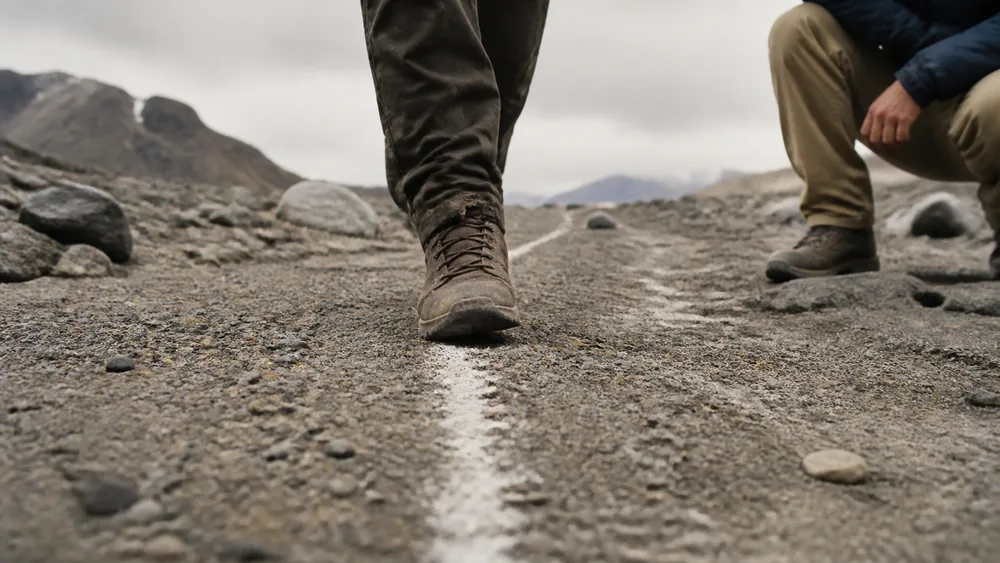
A pulse oximeter is tempting and mostly unhelpful here. Readings at elevation are low in well people and vary with cold fingers, so a reassuring number has talked more than one group into staying put.
What should you do in the first hour?
One rule survives every version of this situation, and it is worth fixing before the details.
Nobody with symptoms sleeps higher than they slept last night.
Stopping means more than a slow day. It means the party's high point for tomorrow is capped, and the tents stay where they are until the person is genuinely well.
Ordinary altitude sickness responds to that patience. Most cases settle within a day or two at an unchanged sleeping elevation, and nothing further is needed.
Simple measures make the wait tolerable without changing the illness. Painkillers help the headache, food and fluid help the general misery, and neither one is evidence that the person is acclimatizing.
Set an interval and use it.
A person who is no better after 24 hours at the same elevation has answered the question, and the answer is to go down rather than give it another night.
How far down do you actually have to go?
Losing elevation is the one intervention that treats the cause, but a token descent achieves nothing.
Dropping 200 feet to a slightly flatter bench is not a treatment, and a party that tries it and sees no change often concludes wrongly that altitude was not the problem.
The working range is roughly 1,000 to 3,000 feet. Anchor it to the last elevation at which the person slept and woke well, because that number is specific to them rather than to the mountain.
| What you are treating | Descent target | How you know it worked |
|---|---|---|
| Ordinary sickness that will not settle | 1,000 to 1,600 feet, or back to the last good sleeping elevation | Headache and nausea ease within hours, not days |
| Cerebral edema | 1,600 to 3,000 feet, starting immediately regardless of the hour | Coordination and clear thinking return, though slower than the headache does |
| Pulmonary edema | 1,600 to 3,000 feet, with the patient exerting as little as possible | Breathing at rest settles and the resting heart rate falls |
| No improvement after a real descent | Stop adding elevation loss | Look for another cause rather than assuming more descent is needed |
Speed of response is diagnostic in itself. Ordinary altitude sickness eases within hours of arriving lower, so a person who is unchanged the next morning was probably never suffering from what the party assumed.
The lung form carries a cost the others do not.
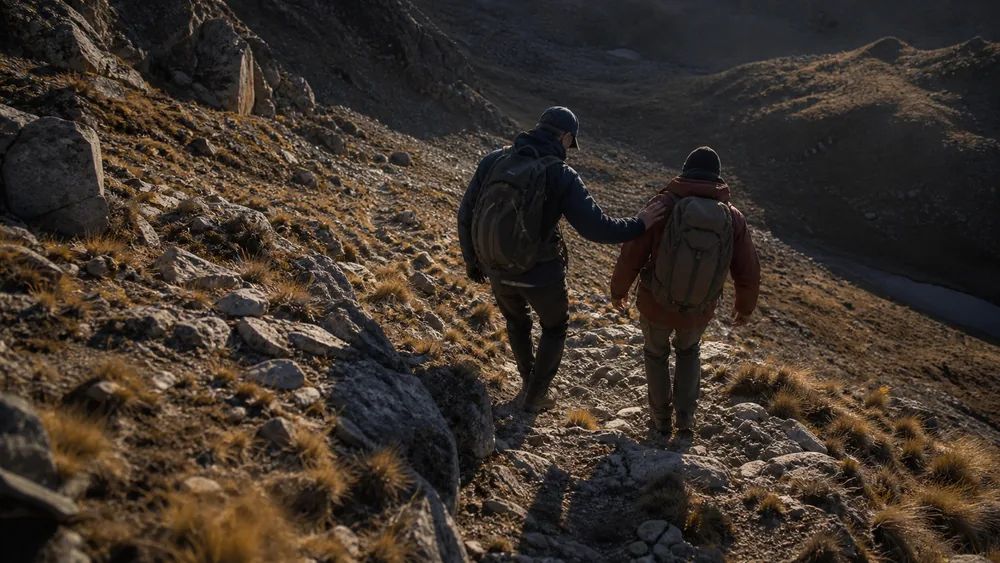
Exertion worsens it, so assisting or carrying the patient is not a courtesy but part of the treatment.
Descent also has to be survivable. Elevation lost safely counts, and a party that injures somebody on a scree slope at midnight has traded one emergency for two.
Which medicines help, and which only hide the problem?
Drugs in this area split into two groups that get confused constantly. One group helps a body acclimatize on schedule, and the other buys time during an emergency.
Acetazolamide sits in the first group. It speeds acclimatization rather than blocking the illness, and it comes with side effects that shape the trip, including tingling in the hands and feet and a strange flat taste to carbonated drinks.
The rescue drugs are different in kind.
Dexamethasone relieves the brain symptoms without improving acclimatization at all, which is precisely why it is dangerous outside an emergency.
- Acetazolamide
- Prevention. Speeds acclimatization when the schedule is unavoidably fast
- Dexamethasone
- Rescue. Relieves cerebral symptoms while the party arranges descent
- Nifedipine
- Rescue. Lowers pressure in the lung circulation in pulmonary edema
- Supplementary oxygen
- Support. Eases symptoms at huts and lodges and buys time only
Nifedipine belongs to the lung form and is the one most hikers have never heard of. Portable pressure bags do a similar job by simulating a lower elevation inside a sealed chamber.
All of these are prescription decisions, settled with a clinician before a trip rather than improvised at camp. A party carrying them should also know what each one is for, because a drug handed over without that understanding tends to be used as reassurance.
That is the real hazard in this section. A person on dexamethasone can feel well while their brain is still swelling, so feeling better is not the same as being better, and no drug in any kit removes the need to lose elevation.
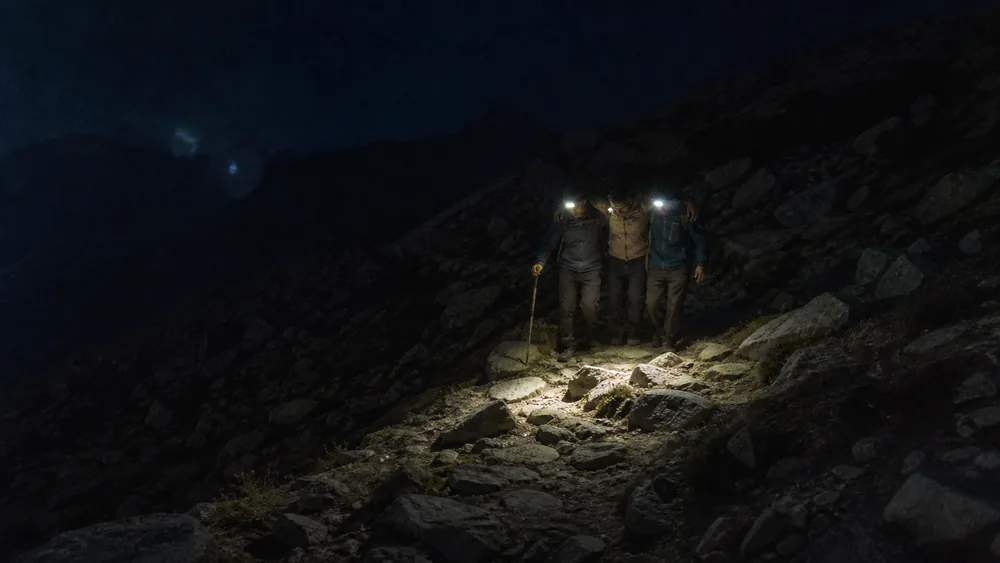
Moving someone down in the dark
Two risks sit on opposite sides of this decision, and pretending otherwise helps nobody. Staying lets a dangerous illness progress unwatched, and moving puts a tired, impaired group on terrain they cannot see.
Cerebral edema settles the argument.
Somebody who cannot walk a straight line and is becoming confused needs elevation loss now, and a party that genuinely cannot move them safely should be calling for help rather than improvising.
Pulmonary edema usually allows a short pause for organisation. The patient should be kept warm, sitting up rather than flat, and doing as little as the descent permits.
Terrain wins the argument in the other direction. Exposure, loose rock, and river crossings do not become safer because the reason for moving is medical, and a party without lights or a known route is choosing a second casualty.
If the decision is to hold until first light, that choice comes with obligations.
- One person stays awake and is named, with a handover if the night is long.
- Both field checks are repeated on a fixed interval rather than when somebody remembers.
- Boots, headlamps, and warm layers stay packed and within reach of the door.
- The descent route is agreed and, if possible, walked in daylight before dark.
- A message goes out while there is still signal or battery, even if nobody is needed yet.
The watch is the part groups skip. Both dangerous forms worsen during sleep, and an unwatched patient in a zipped tent is the detail that recurs in accounts of these deaths.
What gets mistaken for altitude sickness
Once a party is high, elevation becomes the explanation for everything. That bias runs one way, and it hides problems that are either easier to fix or considerably more dangerous.
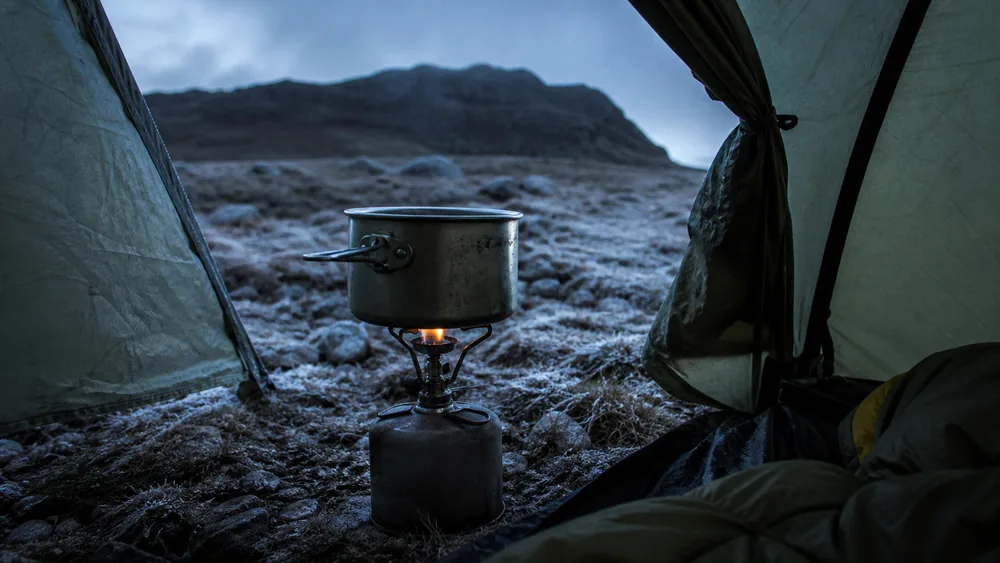
Carbon monoxide is the one that kills quietly. A stove run inside a tent or a zipped vestibule produces headache, nausea, and confusion that map almost perfectly onto the criteria at the top of this page.
The tell is who is affected.
Carbon monoxide takes down everyone sharing the enclosed space on roughly the same schedule, while altitude illness picks individuals out of a group.
Carbon monoxide
Several people in one tent unwell together, improving in fresh air. Never run a stove in an enclosed space, however cold it is outside.
Under-fuelling and dehydration
Headache and flatness that lift within an hour or two of real food and fluid. Common after a long day with a skipped lunch.
Too much plain water
Confusion and nausea in somebody who has drunk heavily and sweated hard, which dilutes blood sodium. It looks like the brain form and is made worse by drinking more.
A chest infection
Cough and breathlessness with fever, building over days rather than hours. It does not improve on descent, which is what separates it from the lung form.
Overdrinking deserves a mention because the standard advice pushes people toward it. Drinking large volumes of plain water while sweating can lower blood sodium far enough to cause confusion, and treating that confusion with more water makes it worse.
There is one rule that catches most of these. Real descent should help, so a problem that is unchanged after a genuine loss of elevation is telling the party to look somewhere other than the air.
Sources
The Lake Louise AMS Score Consensus Committee sets the diagnostic threshold used at the top of this page, including the decision to drop sleep disturbance from the score: The 2018 Lake Louise Acute Mountain Sickness Score.
The Wilderness Medical Society covers ascent-rate limits, the role of acetazolamide and dexamethasone, and descent as the primary treatment for both dangerous forms: Clinical Practice Guidelines for the Prevention, Diagnosis, and Treatment of Acute Altitude Illness, 2024 Update.
The CDC advises against gaining more than about 1,600 feet of sleeping elevation per day above roughly 9,800 feet, with an added rest day for every 3,300 feet gained: High-Altitude Travel and Altitude Illness.
The incidence figures by elevation, the onset timing, and the clinical definitions of the cerebral and pulmonary forms come from a review of high-altitude illness: High-Altitude Illnesses: Physiology, Risk Factors, Prevention, and Treatment.
AnswersQuestions readers ask
What altitude does altitude sickness start at?
Symptoms become common from roughly 8,000 feet upward, and the reported rate climbs from about 9 percent near 9,350 feet to about 53 percent near 15,000 feet. The elevation you sleep at matters more than the high point of your day.
How do you prevent altitude sickness?
Control how fast your sleeping elevation rises. Above roughly 9,800 feet the CDC advises gaining no more than about 1,600 feet of sleeping elevation per day, with an extra rest day for every 3,300 feet gained.
Can you get altitude sickness if you are fit?
Yes, and fitness offers no protection. A strong walker can raise their own risk by covering ground fast enough to reach a high camp before their body has had time to adjust.
How do you know when altitude sickness is an emergency?
Stumbling, confusion, or drowsiness points to swelling in the brain, and breathlessness that does not settle after several minutes of sitting still points to fluid in the lungs. Either one means losing elevation immediately.
How far down do you have to go?
Roughly 1,000 to 3,000 feet, anchored to the last elevation where the person slept and woke well. Ordinary symptoms usually ease within hours of arriving lower rather than days.
How long does altitude sickness last?
Most ordinary cases settle within a day or two at an unchanged sleeping elevation. Anyone who is no better after 24 hours should go down rather than give it another night.