
Trekking Safety Tips That Protect a Multi-Day Route
Keep a trek safer by protecting the margins that disappear first: daylight, weather, water, food, navigation, camp setup, and exit options.
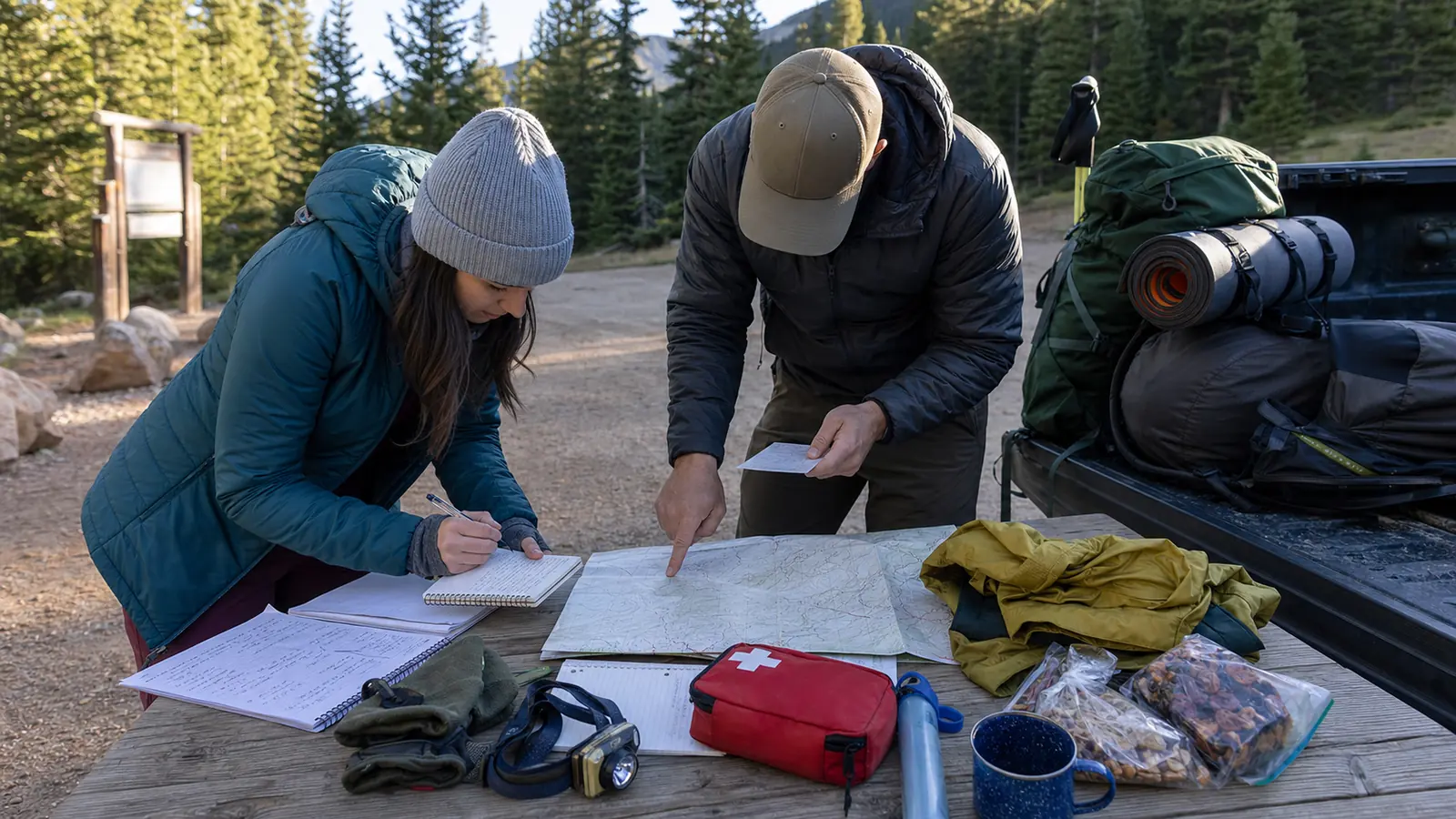
Trekking safety starts before anything feels dangerous. A multi-day route becomes safer when you check the plan each morning, keep critical gear reachable, treat water before you need it, and exit early when small problems begin to stack.
Trekking safety is different from day-hike safety because the trip keeps going after the first tired evening. Small errors compound overnight, then show up again with a heavier pack, damp gear, sore feet, or a colder morning.
Margin disappears slowly on a trek. The safe move is to catch the first weak signal while you still have daylight, food, warm layers, and a clean exit.
Which safety margins fail first on a trek?
The first margin to fail is rarely one dramatic hazard. It is usually the mix of a long day, a late start, poor water timing, wet clothing, and a group that waits too long to change the plan.
A trek adds repeated exposure. If you finish day one dehydrated, chilled, hungry, or blistered, day two starts with less judgment and less body reserve.
Daylight
Late miles make navigation, stream crossings, and camp setup harder.
Dry warmth
Wet base layers and damp sleep gear turn normal breaks into cold stress.
Water timing
A missed refill can force rationing before the next reliable source.
Food access
Packed-away snacks become skipped calories when weather or terrain gets busy.
Navigation certainty
One missed junction can steal hours across a loaded day.
Group reserve
The slowest recovery sets the next morning's safe pace.
A safer first trekking trip keeps daily stages short enough that one delay does not ruin camp, dinner, and sleep.
The same margin thinking explains many trekking mistake patterns because preventable trouble usually starts early.
Stacked problems matter more than any single hard mile.
What should you check before the trailhead?
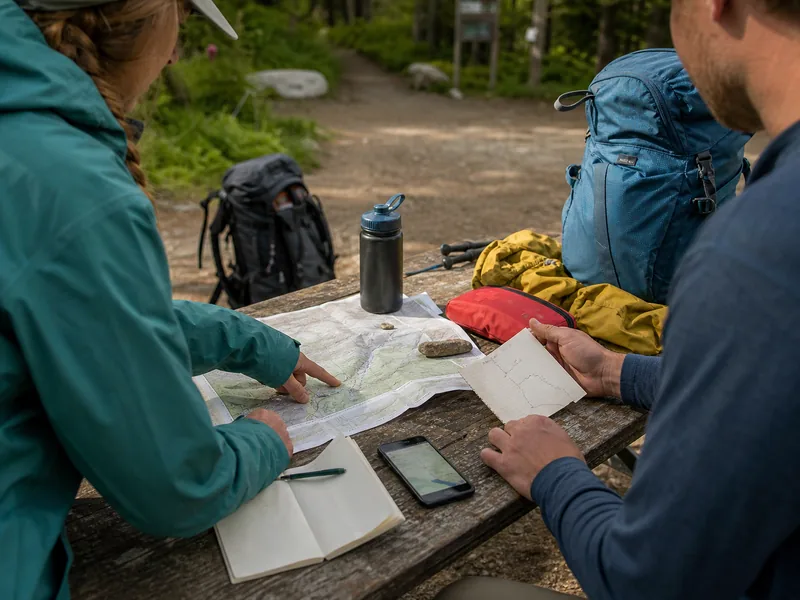
Before you leave, prove four things: where you will sleep, where you can refill water, where you can leave early, and who will know if you are late. A pretty itinerary is not enough.
The route should have a conservative daily distance, a known camp or lodging plan, and at least one practical exit after each hard segment. If the only way out is finishing the whole route, treat the trip as more serious than the mileage suggests.
Write down the overdue time before anyone starts walking. The person at home needs a clear time to worry, not a vague promise that you will message whenever service returns.
- Safest first shape
- Short stages with a clear exit after each night
- Daily proof
- Water, camp, weather, and daylight checked each morning
- Strongest group rule
- Pace and decisions match the slowest recovery
- High-risk plan
- Long commitment with no verified water or early exit
- Best backup
- Written trip plan plus offline navigation and a communication plan
A first overnight route should apply trekking beginner basics before ambitious terrain.
If a dog is coming, the dog trail plan should shrink distance before the trail forces the lesson.
If a child is coming, the kid pace rules should shrink distance for the same reason.
Give every person one shared fact about the day: the next water source, the planned camp, the main exit, or the turnaround condition. Safety gets weaker when only one confident person understands the plan.
Prove the exit before you commit to the scenic version of the plan.
Pack the items that solve delays and emergencies
A trekking pack should help you survive a slow day, not only carry a neat kit. The safety items that matter most are the ones you can reach while cold, tired, wet, or standing in wind.
Keep rain shell, warm layer, headlamp, map, snacks, water treatment, blister care, and emergency communication easy to reach. Gear buried deep in the pack often gets used too late.
- Headlamp with enough battery for an unplanned late finish.
- Map, offline map, and compass backup.
- Rain shell and warm stop layer near the top or outside pocket.
- Water treatment plus a backup method or chemical tablets.
- Food that can be eaten without unpacking the whole bag.
- Blister care, compression wrap, pain-safe first-aid basics, and personal medication.
- Repair items for a torn strap, broken buckle, leaking shelter, or failed stove.
- Emergency contact card and trip details in a waterproof bag.
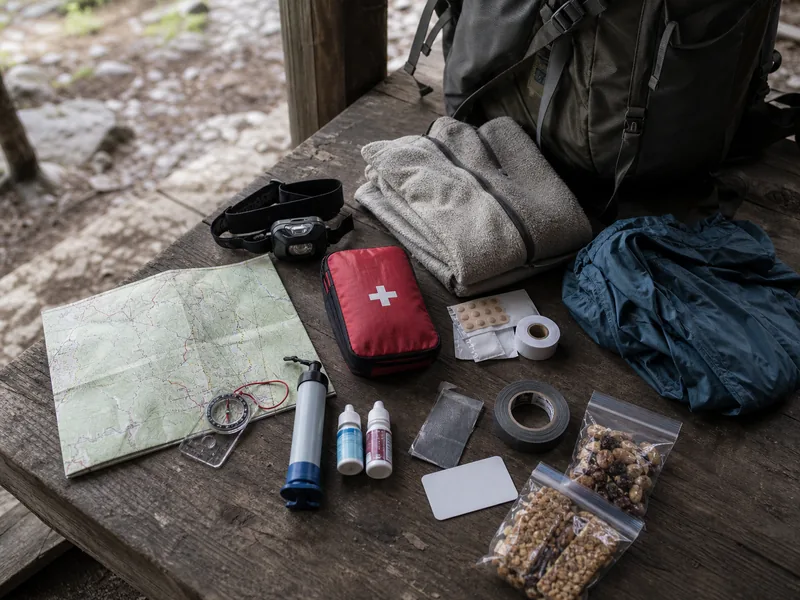
The overnight packing list keeps the load focused on shelter, sleep, food, water, insulation, navigation, first aid, and repair.
Pack fit matters too because poor backpack fit can turn normal miles into shoulder pain, unstable descents, and slower exits.
Split group-critical items on purpose. One stove, one filter, one shelter pole set, or one map should not become useless because it sits in the only pack that gets soaked, dropped, or carried out ahead.
Reachable beats packed when weather or fatigue changes fast.
How much water, food, and heat margin does each day need?
Plan water and food by the day ahead, not by the whole trip in one guess. Each morning should start with a refill plan, treatment method, heat check, and enough food within reach for the first hard segment.
Natural water can be seasonal, dry, contaminated, or harder to reach than the map suggests. Treat every backcountry source unless a local official source says it is potable.
Time the treatment method before you need it. A filter can clog in silty water, chemical treatment needs contact time, and boiling costs fuel that may already be assigned to dinner.
| Safety check | Good signal | Change the plan when |
|---|---|---|
| Water | You know the next reliable refill and treatment method | The next source is uncertain, seasonal, or far away |
| Food | Snacks are reachable before hunger gets sharp | Food is buried or appetite drops during effort |
| Heat | Shade, pace, and water match the climb | The day starts hot and the route is exposed |
| Feet | Hot spots are fixed before skin opens | Someone changes stride to protect pain |
| Recovery | Dinner, dry layers, and sleep can happen before cold sets in | Camp chores will start after dark |
| Navigation | Position and next segment are confirmed before moving | One device, fading visibility, or repeated doubt controls the route |
| Exit | A lower, shorter, or supported option remains usable | Weather, injury, or delay removes the last simple exit |
A practical water carry plan should account for heat, climb, refill certainty, and the slowest person.
If you are training for longer days, build the same habits during loaded-pack training instead of waiting for a remote route.
Food safety is partly decision safety. A hungry group moves slower, argues faster, and delays small repairs because every stop feels annoying.
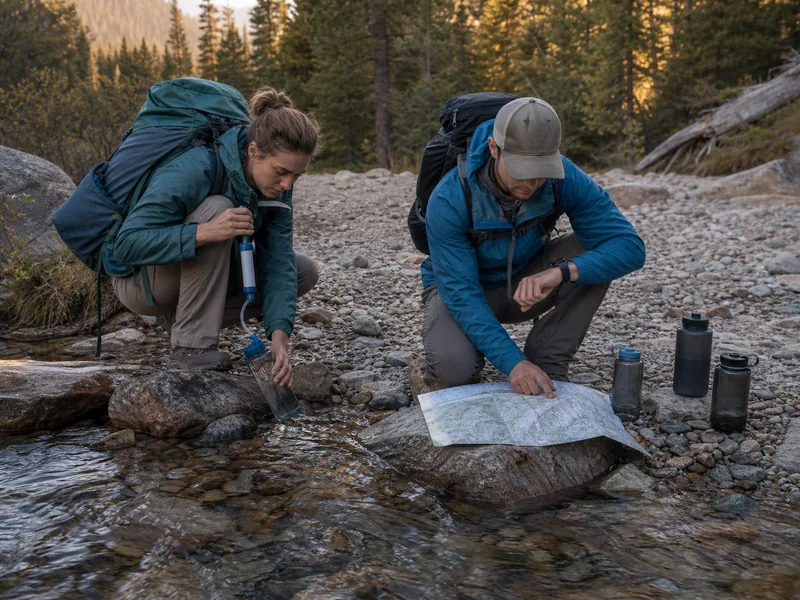
Refill before need. A dry source is easier to manage when you still have enough water to choose a safer option.
How should bad weather change the morning plan?
Weather should change the plan before the exposed section, creek crossing, ridge, or long descent. Waiting until the storm is overhead leaves fewer safe choices.
Cold rain is especially important on a trek because wet clothing can follow you into camp. If sleep insulation, dry layers, or spare socks get wet, tomorrow becomes harder before it starts.
Check the forecast against the slowest segment, not only the start time. A storm that arrives during the exposed descent or final water crossing matters more than a calm morning at camp.
The rain trekking choices are about keeping one dry recovery system protected.
A winter trekking plan must protect daylight, dry insulation, traction, and camp setup.
Cold, wet, tired people should watch for cold stress signs before shivering becomes clumsiness or confusion.
Weather changes timing. The same route can be reasonable at breakfast and wrong by noon.
Which navigation and check-in backups should you carry?
A phone is useful, but it should not be the only navigation tool, battery, or message path. Trekking asks for a layered system because poor weather, low battery, cracked screens, and long valleys can all appear on the same trip.
Carry offline maps, a paper map or printed route notes, and a compass you can actually use. Practice compass backup skills on an easy day before the tool becomes part of a real problem.
At breaks, confirm the next landmark out loud. That can be a pass, creek, junction, bridge, hut, or contour change.
Shared navigation keeps the group from following one tired person without noticing.
- Share the planGive a trusted person the trailhead, route, camps, exit options, vehicle details, and overdue time.
- Download mapsSave offline maps before service disappears.
- Carry paper backupKeep route notes dry and available outside the phone.
- Check junctions earlyConfirm direction before the group spreads out.
- Preserve batteryUse airplane mode, keep the phone warm, and carry power.
- Report changesSend a clear update when you change camp, exit, or timing.
Solo travel raises the standard because nobody else can notice your bad call or share a dead device. A solo trekking plan needs stricter check-ins, shorter commitments, and exits that one tired person can still reach.
One device is fragile. Good navigation has a backup that still works when the phone does not.
Reach camp before dark to protect the safety routine
Camp is part of the safety plan, not the reward after the hard work. You need enough light and energy to collect water, pitch shelter, change into dry layers, cook, store food, treat feet, and set tomorrow's plan.
Arriving late creates a chain reaction. People skip food, leave wet clothing on too long, choose poor shelter sites, miss local food-storage rules, or stop checking each other because everyone wants to be done.
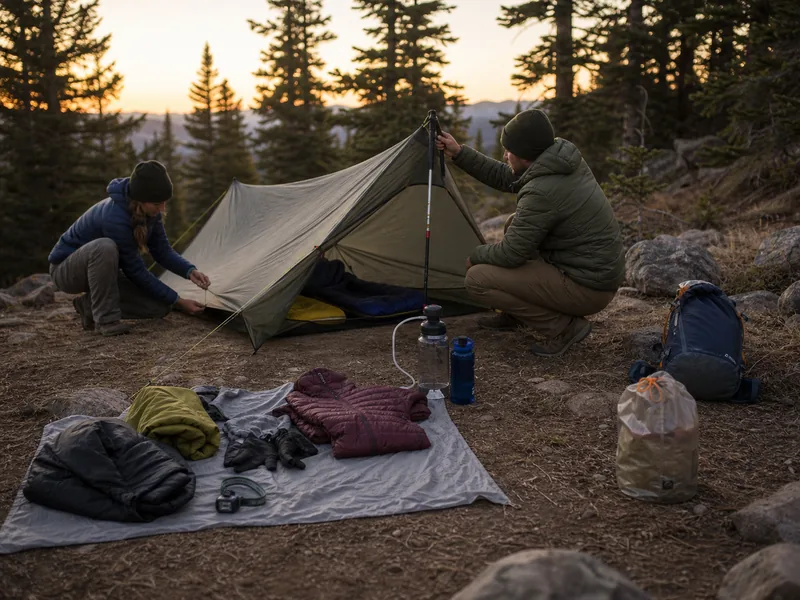
Shelter
Choose a durable legal site before darkness hides drainage, dead limbs, and crowding.
Water
Refill and treat enough for dinner, overnight needs, and the first morning segment.
Warmth
Change damp layers before you cool down during chores.
Food
Follow the local storage method before people get sleepy.
Feet
Treat hot spots after washing and drying, not after they reopen tomorrow.
Morning
Stage headlamp, map, rain shell, and first snacks where you can reach them.
Group behavior matters more at camp because fatigue is high and patience is lower. The trekking etiquette rules also keep shared shelters, water sources, and quiet hours predictable for other tired people.
Camp is recovery work. The trip gets safer when the evening routine is simple enough to repeat.
What should you check before each new stage?
A morning check should decide whether the group starts the planned stage, shortens it, or uses an exit. Ask about sleep, appetite, fluid intake, urination, foot pain, joint pain, medication, and any symptom that changed overnight.
Do the check before packs are closed. People often hide a problem once everyone is ready to leave because changing the plan then feels costly.
Start with movement quality. Watch each person stand, shoulder the pack, walk a short distance, and step down from a curb, rock, or root.
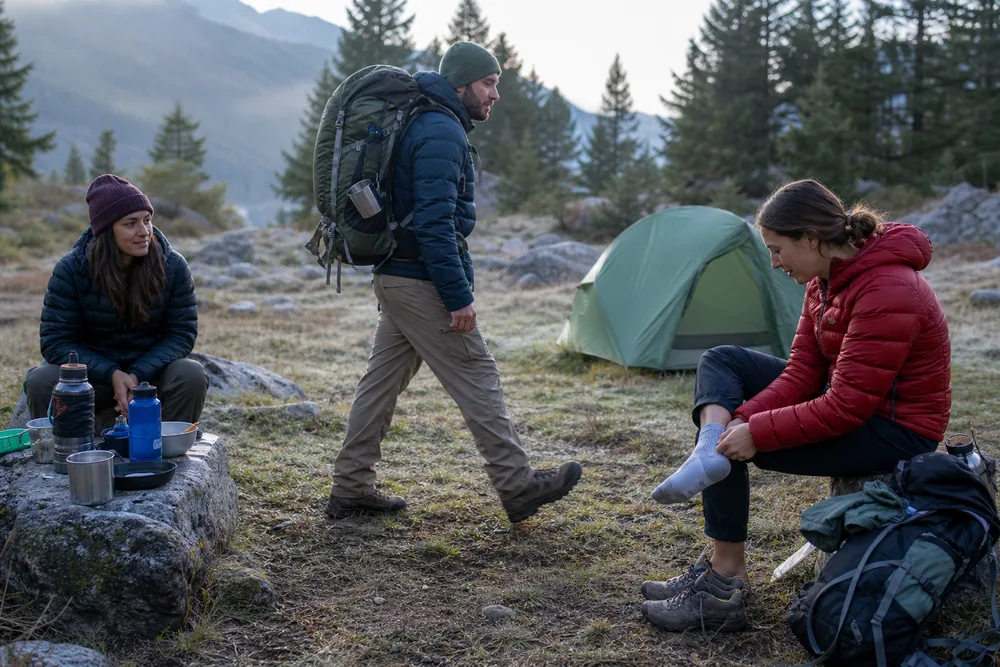
Pain that changes stride can overload the other leg and make a long descent less controlled. A blister that was manageable at camp can reopen within the first hour if the fit problem remains.
Check food and water next. A person who cannot eat breakfast, keep fluids down, or replace losses from vomiting or diarrhea has less reserve for heat, cold, and climbing.
Dark urine can have several causes, so it is not a diagnosis by itself. Pair it with thirst, low output, dizziness, unusual fatigue, heat exposure, and the distance to reliable water.
Ask a simple route question that everyone should know. A person who cannot state the next landmark, water point, or camp may be exhausted, cold, ill, or simply uninformed, but the group should solve that uncertainty before moving.
Repeat the check at lunch and camp. Compare each answer with the morning rather than asking only whether someone feels fine.
Write the baseline down when the route is long or the group is new. A short note about normal pace, known injuries, medication timing, and expected recovery makes a change easier to recognize the next day.
Change over time is the signal that a multi-day trip exposes.
| Daily check | Continue with the plan | Shorten, stop, or exit when |
|---|---|---|
| Feet and joints | Normal soreness does not change gait | Pain, swelling, or an open blister changes each step |
| Food and fluids | The person eats, drinks, and keeps both down | Vomiting, diarrhea, or appetite loss prevents replacement |
| Thinking | The person follows conversation and route decisions | Confusion, unusual withdrawal, or repeated poor choices appear |
| Warmth | Dry layers restore comfort during a break | Shivering, clumsy hands, or wet insulation persists |
| Breathing | Effort settles after a normal rest | Breathlessness, chest symptoms, or faintness persists |
| Recovery | Sleep and rest restore useful movement | Function is worse after the overnight stop |
Do not use a table to diagnose illness. Use it to notice when the original route no longer fits the person who must walk it.
When should the group shorten the stage or exit?
The person with the smallest reserve sets the safe pace and distance. A faster member cannot lend balance, body heat, or pain-free steps during the final descent.
Name the decision in plain terms. You can continue to the next verified exit, stop at the legal camp already behind schedule, or turn toward help while everyone can still travel under control.
Separate discomfort from loss of function. Damp socks, ordinary muscle soreness, and a missed snack often improve with a short stop, dry gear, food, or fit adjustment.
A changed gait, repeated falls, worsening confusion, uncontrolled shivering, persistent vomiting, chest pain, fainting, or an inability to perform camp tasks needs a more conservative response. Contact emergency services when symptoms or terrain make self-exit unsafe.
Avoid bargaining with distance already covered. The remaining climb, descent, weather window, and daylight determine the decision now.
If the group exits, keep one shared destination and communication plan. Do not send an unwell person alone or split into separate routes unless an immediate hazard makes staying together less safe.
Record the time, location, symptoms, action taken, supplies, and planned exit. Clear information helps a remote contact or responder understand what changed.
Partners should know where essential medication is carried and how the person wants help if they cannot reach it. Keep private details limited to what the trip may require.
Move shared weight before asking an unwell person to push harder. Shelter parts, water treatment, food, or fuel can often shift to stronger walkers without splitting the group.
Recalculate time after the load changes. Helping one person may slow everyone, so daylight and the next exit need a fresh estimate.
A stable rest is useful only when the person can stay warm, eat, drink, and resume controlled movement. If function keeps declining, the stop has confirmed the need to leave or call for help.
Do not let embarrassment decide the route. A person who reports a problem early gives the group more choices than someone who waits until walking is no longer possible.
Act while the group can still help itself. Waiting for certainty often removes the easy options first.
What should you do when a trekking problem starts?
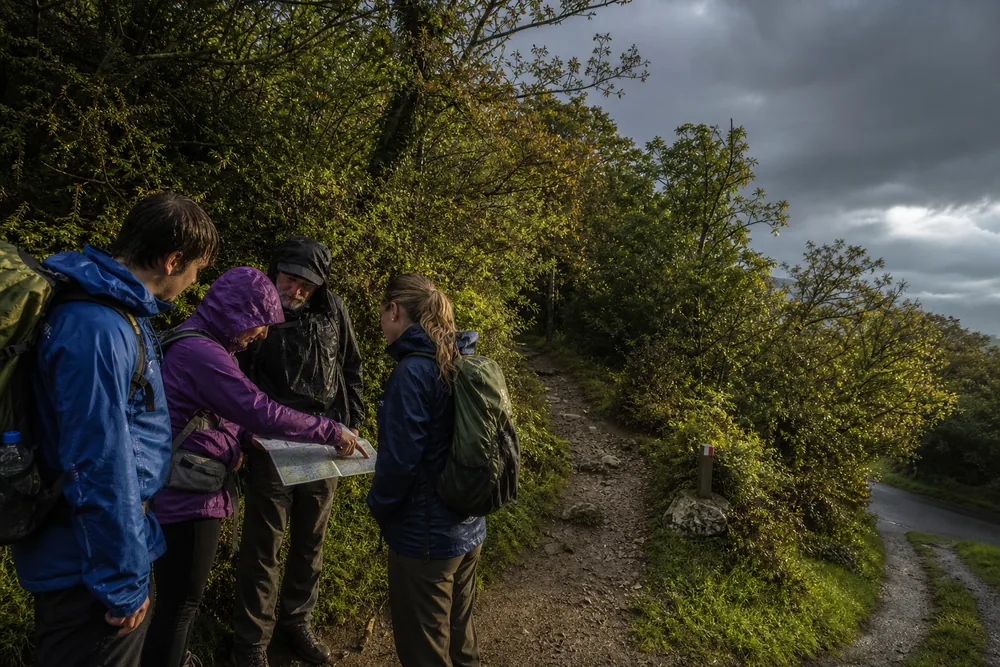
When something feels wrong, stop while the choices are still simple. Put on a layer, eat, drink, treat the foot, check the map, and compare the original plan with the body and weather you have now.
Continuing is not safer just because the destination is closer than the exit. On a trek, a forced finish can carry the problem into camp and the next morning.
| Signal | Early response | Exit trigger |
|---|---|---|
| Repeated wrong turns | Stop together and reset navigation | You cannot confirm location or next safe direction |
| Foot pain | Dry, tape, adjust socks, and shorten the day | Pain changes stride or slows the group sharply |
| Cold wet fatigue | Add dry layers, eat, and reduce exposure | Shivering, clumsy hands, or confusion appears |
| Low water | Slow pace and choose the next reliable source | The next source is uncertain and the group is already rationing |
| Thunder or fast weather | Leave exposed ground early | Safe shelter or lower ground is no longer reachable in time |
| Group conflict | Pause, feed people, and simplify choices | One person cannot continue safely with the group |
If someone may need help, communicate early.
Send location, route name, group size, condition, supplies, weather, and whether you are staying put or moving to a named exit. Save battery after the message.
Keep the group together unless staying together creates a clearer danger. Splitting up can turn one problem into two locations, two timelines, and twice as much uncertainty for anyone trying to help.
Exit early, exit controlled. The best safety decision is often the one that keeps a small problem from becoming tomorrow's emergency.
Sources
The National Park Service explains the ten essentials for outdoor trips, including navigation, light, sun protection, first aid, shelter, food, water, and insulation: NPS Ten Essentials. Its trip-planning guide emphasizes planning ahead, checking conditions, sharing the plan, and preparing for emergency communication: NPS Trip Planning Guide.
The National Weather Service warns that thunder means lightning danger and advises leaving elevated areas, ridges, isolated trees, water, and open spaces early: Outdoor Lightning Safety. The CDC explains water treatment for hiking and camping, including boiling or filtering and disinfecting when safe water is not available: Water Treatment Options.
The CDC also lists hypothermia warning signs such as shivering, exhaustion, confusion, fumbling hands, memory loss, slurred speech, and drowsiness: Preventing Hypothermia. Official local rules come first because permits, fire restrictions, water reliability, food storage, and weather hazards change by area.
Step by stepPractical steps
- Check water, weather, daylight, camp, and exit options before each day starts.
- Keep rain shell, warm layer, headlamp, map, water treatment, food, and first aid reachable.
- Refill and treat water before the group is forced to ration.
- Turn or shorten the day when thunder, cold rain, heat, poor visibility, or fast water removes choices.
- Confirm navigation at every major junction before the group spreads out.
- Stop early, stabilize the group, and exit while the problem is still small.
AnswersQuestions readers ask
What is the most important trekking safety tip?
Protect your safety margin early. Check water, weather, daylight, navigation, camp timing, and exit options before small problems begin stacking together.
Is trekking more dangerous than hiking?
Trekking is not automatically more dangerous, but it carries more exposure because the trip lasts longer and usually includes a heavier pack, overnight recovery, water treatment, and camp decisions.
What safety gear should I keep reachable while trekking?
Keep a rain shell, warm layer, headlamp, map or route notes, water treatment, snacks, blister care, first aid, and emergency communication where you can reach them without fully unpacking.
When should I turn around or exit a trek?
Exit or shorten the day when weather removes choices, water becomes uncertain, someone changes stride from pain, navigation is unclear, or the group cannot reach camp with enough light and energy to recover.
Is a phone enough for trekking navigation?
No. A phone is useful, but you should also have offline maps, battery reserve, dry route notes or a paper map, and basic compass skill for when service, battery, or the screen fails.