
Can Trekking With Kids Stay Short and Adjustable Each Day?
Plan a child's first trek around overnight readiness, short adjustable segments, adult load reserve, simple camp recovery, and an exit after each night.
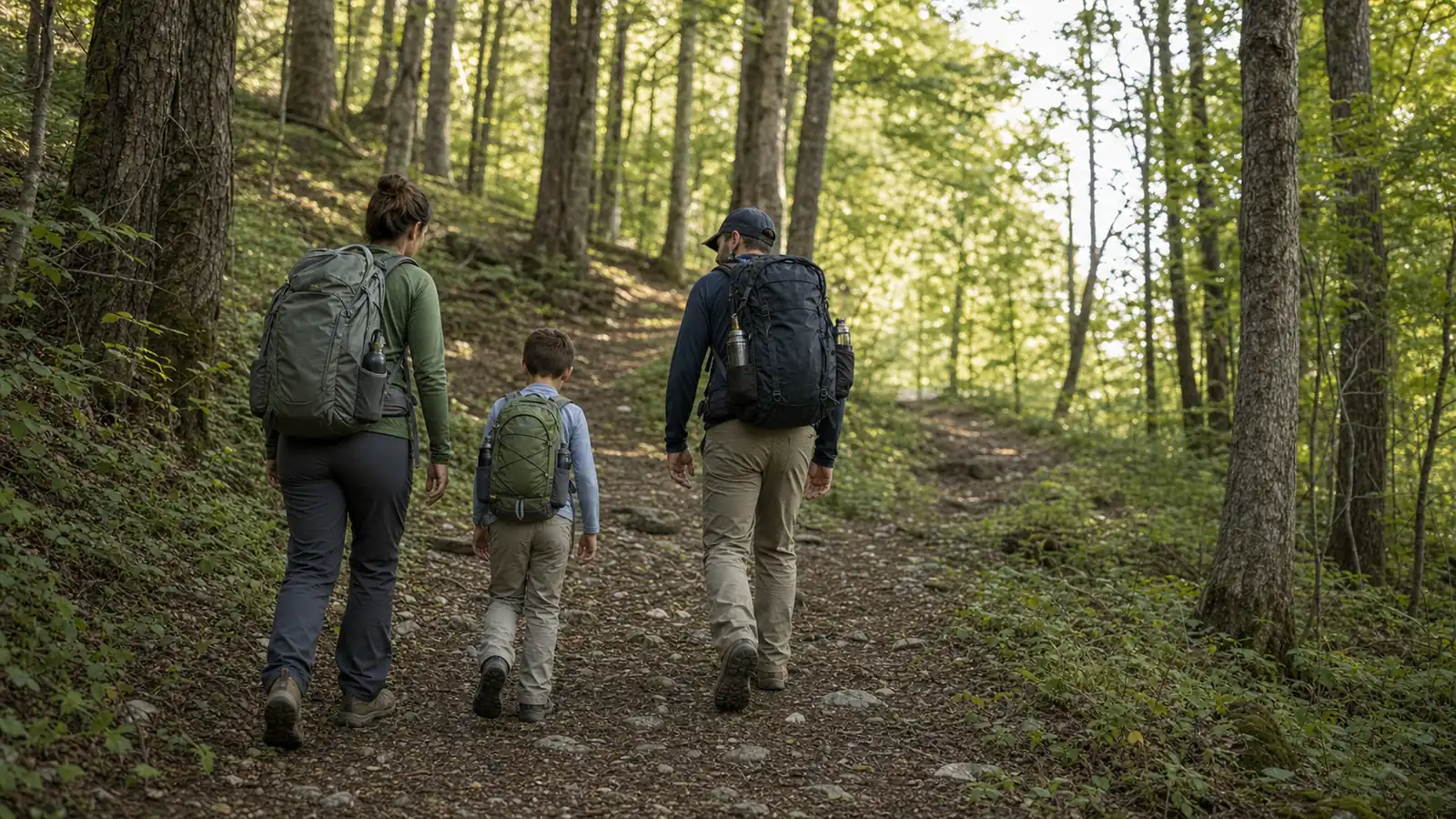
You should treat a practice overnight as proof that the child can walk, eat, sleep, pack, and start again without being pushed. The adults still need enough time, pack space, and route flexibility to solve a hard afternoon or poor night.
Why the first morning proves more than one strong hike
A child is ready for a first trek when a short practice overnight shows that walking, eating, sleeping, packing, and starting again remain manageable. Age and one energetic day hike do not prove multi-day readiness.
The readiness table turns that practice into observable go-or-wait evidence.
| Readiness signal | Good sign | Reason to wait |
|---|---|---|
| Day-hike finish | Child ends tired but moves normally | Pain, limping, or a carry needed far from the finish |
| Communication | Child reports cold, rubbing, hunger, fear, or bathroom needs | Child hides discomfort or cannot explain it |
| Practice night | Eats, settles, sleeps enough, and wakes willing to help | Cannot warm, sleep, eat, or handle the setting |
| Morning function | Dresses, drinks, and walks a short second segment | Exhausted, withdrawn, or unwilling to leave shelter |
| Adult reserve | Adults can carry extra child gear and still move safely | Every adult pack is already at its limit |
Your practice night should use a familiar campground, hut, cabin, or legal campsite close to the car. Include a short walk with the real clothing and sleep system, then observe the next morning without promising a bigger trip.
Run the practice with the same bedtime, bathroom plan, food, headlamps, and temperature range expected on the first trek. Borrowed or untested sleep gear can make the trial measure equipment confusion instead of the child's readiness.
You need to notice recovery rather than asking only whether the child had fun. Did the child eat dinner, settle after dark, stay warm, sleep enough, use the bathroom without panic, and put on cold morning clothes?
Those tasks predict the second day more clearly than excitement at the campsite.
A child who enjoyed a day hike may still dislike sleeping outside, unfamiliar night sounds, cold morning clothing, or using the bathroom away from home. These are normal findings from a practice, not failures to overcome with pressure.
Repeat the practice if one problem has an obvious fix. A warmer pad, familiar food, closer bathroom, or different layer may change the next night.
Wait on trekking when several needs failed at once or the child does not want another overnight.
Morning willingness is evidence. The adult should still make the safety decision, but the child's appetite, mood, movement, and ability to describe discomfort show whether the overnight system worked.
A child who has not yet finished several short day hikes comfortably still needs day-hike pacing for kids before any overnight trek. Trekking adds a second day, sleep, and more distance from an easy return.
Why every camp needs an exit
The first route should be short, marked, familiar, and easy to shorten. Look for known camps or lodging, simple navigation, reliable water information, and an exit that does not require completing the whole itinerary.
You should plan from each night's stop outward. Ask how the family leaves after poor sleep, wet gear, a sore foot, homesickness, or a child who wakes without enough energy for the planned segment.
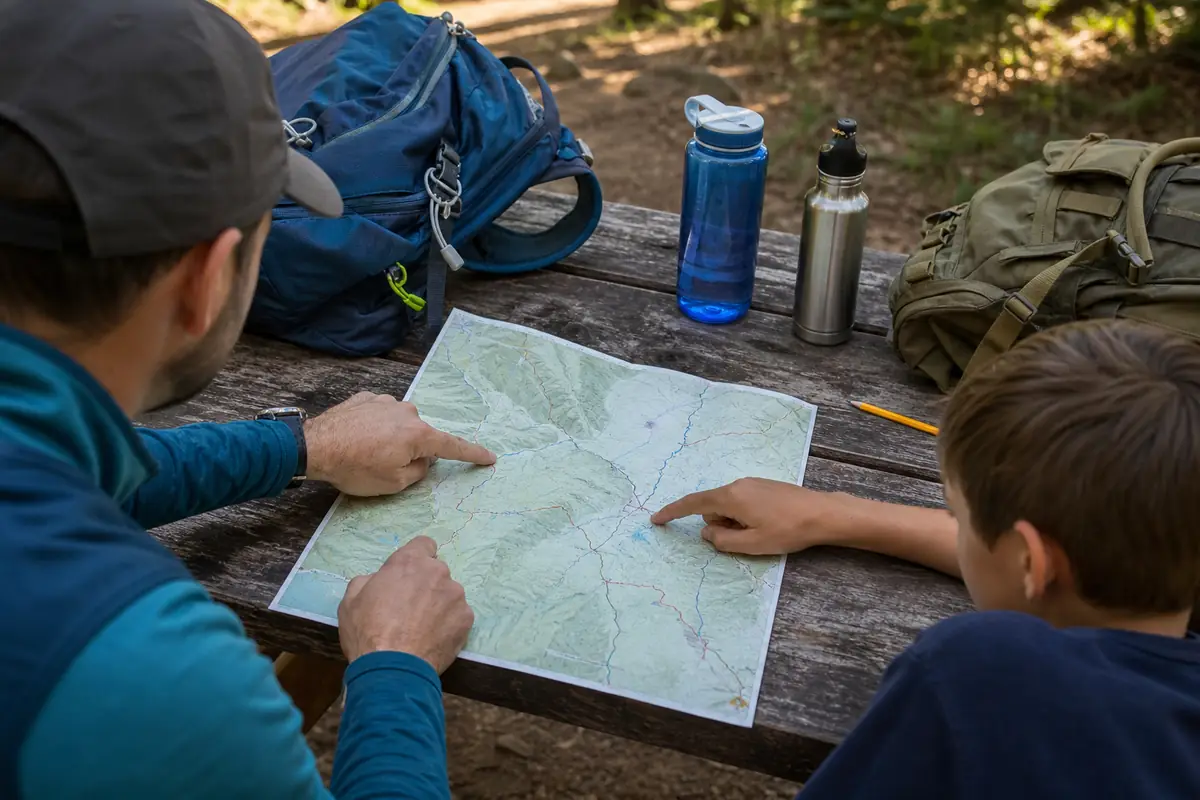
You should avoid placing the longest climb, roughest descent, or most remote section at the end. Adults often expect a child to improve after a night's sleep, but unfamiliar sleep can make the second day harder than the first.
Camp access matters beyond mileage. Confirm legal camping, water, toilets or waste rules, shelter exposure, and the distance from camp to the nearest exit.
A short day can still be a poor family choice when the night adds difficult water or bathroom tasks.
The final morning should stay simple. A short walk to the exit leaves room for slow breakfast, cold shoes, a late pack-up, and a child who wants more stops after poor sleep.
Weather should shrink the route early. Heat, cold rain, snow, strong wind, exposed water, or a high-consequence crossing leaves less room for a child who stops suddenly.
Winter conditions require a separate family winter margin around short daylight, frozen water, dry insulation, and cold morning function. Do not add snow to the same trip that is testing a child's first overnight.
Every night needs an exit. Adapt the first trekking route plan around the child's recovery instead of copying adult daily mileage.
The trekking foundation explains why repeated days need food, water, sleep, and foot care. With children, the family needs those systems to work on a shorter clock.
What adults must be ready to carry
A child's pack should stay simple. Water, a small snack, a warm layer, rain protection, and a whistle can give the child a useful role without making the pack the reason the day stops.
Do not use a universal body-weight percentage as the answer. Age, size, balance, terrain, heat, and prior practice all change what the child can carry while still walking normally.
- Child pack job
- Carry a few light items that remain easy to reach
- Adult reserve
- Hold space and strength for the child's layer, water, or whole pack
- Carrier rule
- Test the carrier, child, and adult pack together before the trek
- Fit signal
- Straps stay comfortable and the child walks without leaning or changing gait
- Transfer trigger
- Pain, repeated stumbling, withdrawal, or pace collapse
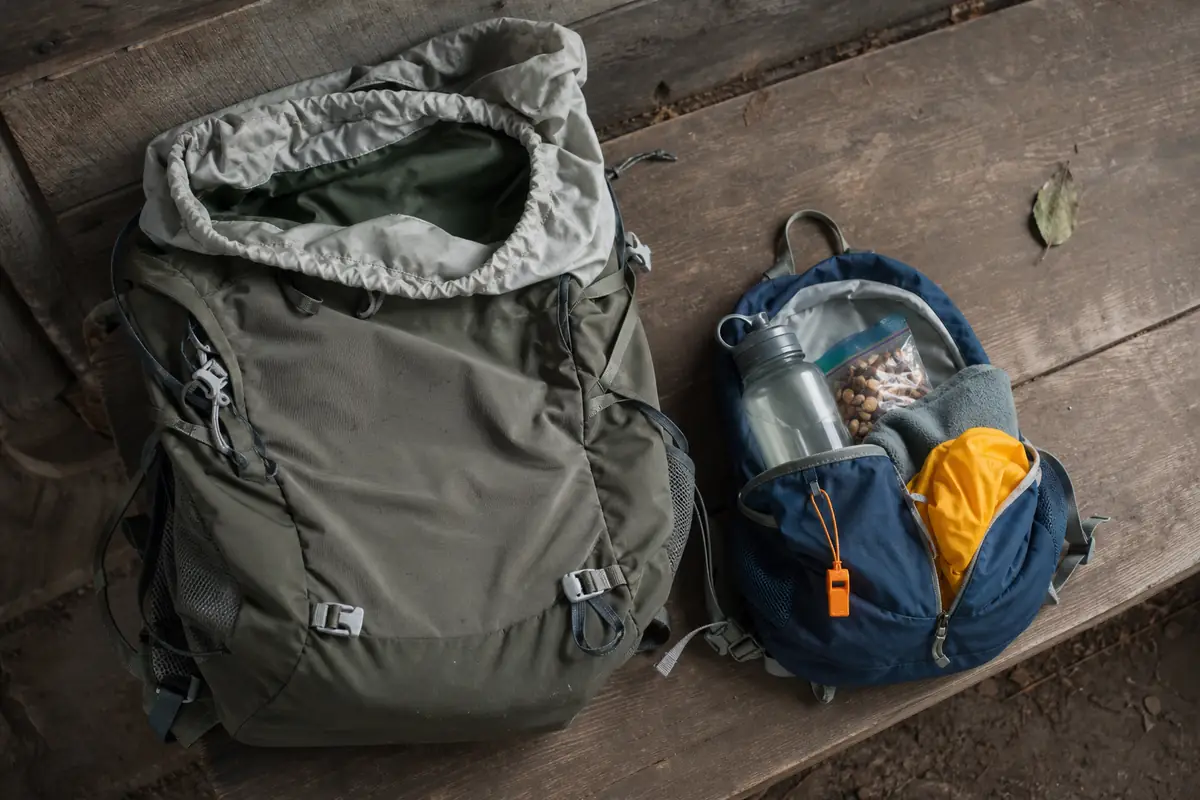
Adults should divide group gear with the transfer plan in mind. If one adult may carry a child in a carrier, that adult cannot also be assigned a pack that makes the combination unstable or exhausting.
Practice the transfer before the route.
During the practice walk, you should move the child's pack contents into the adult load and walk a hill. The adult still needs enough balance and control to manage water and the group pace.
If a younger child rides in a carrier, follow the carrier maker's limits and fit instructions. The adult must still have a way to carry shared shelter, food, water, and safety equipment without hanging loose items where they affect balance.
Reserve is part of the pack.
You need to test the complete arrangement on local walks, including the point where a child pack moves onto an adult. A stable backpack fit matters because transferred weight should not make the adult stumble or lose control on descents.
The trekking training approach can be scaled to the adults. They need enough capacity to walk the planned route after taking extra family weight, not only enough fitness for their original packs.
How should you pace the first hour and the later days?
You should treat the first hour as a test of the planned stage. Watch whether the child can walk with a normal gait, talk comfortably, drink, eat, and reach the first landmark without repeated bargaining or long recovery stops.
You should use the child's sustainable pace from the start. An adult pace followed by frequent catch-up waits creates repeated surges, while a steady child-led pace makes breathing, foot comfort, and group spacing easier to read.
A gap is evidence. If the same child falls behind after every climb or needs several minutes to rejoin the group, reduce the pace before adding encouragement, snacks, or promises about the next stop.
The family should stop at useful places rather than on a rigid timer. Shade, shelter from wind, water access where legal, a safe wide trail edge, or a known junction lets everyone eat, adjust clothing, and check the route without creating another hazard.
A good stop restores walking. The child should be able to stand, shoulder the simple pack, and resume a normal gait without a growing limp, shiver, stomach complaint, or immediate request to sit again.
You should compare the first hour with the map and the camp deadline. If the family covers half the expected distance, the remaining stage has effectively doubled unless terrain becomes easier, so use the shorter camp or exit while that option still feels early.
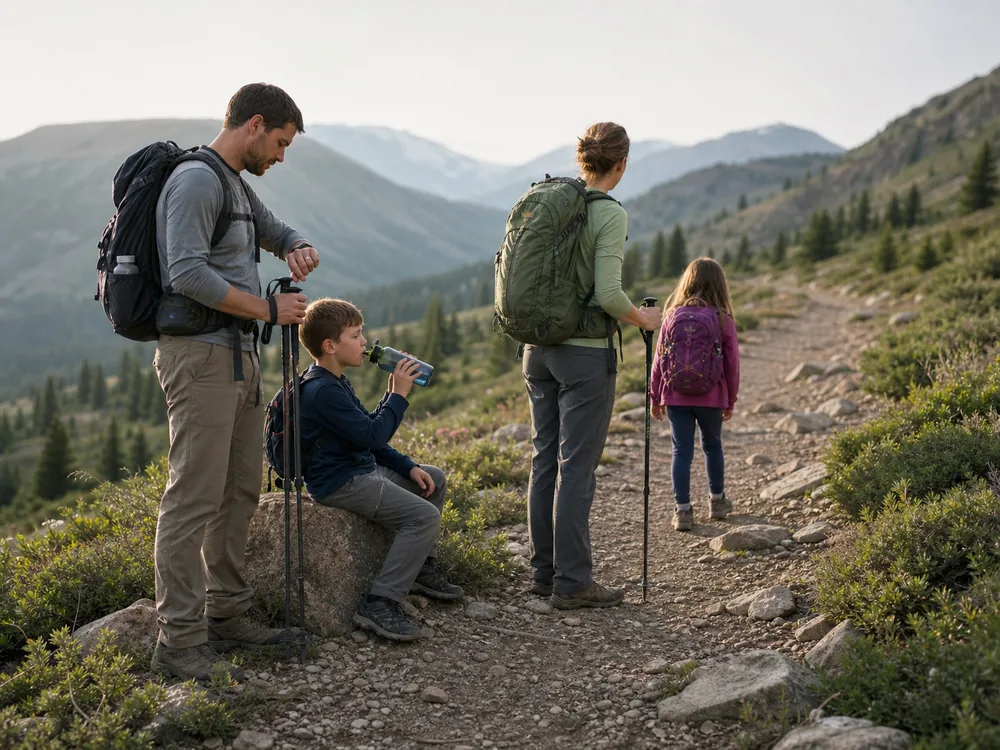
You need to protect time at the end of the day. Children may need more help with food, dry clothes, bathroom routines, bedding, and reassurance, so arriving at dusk transfers trail delay into the hardest camp hour.
You can use terrain to set expectations. A short steep climb, loose descent, exposed traverse, or repeated stream approach can take longer than the same map distance on a clear level path.
Do not recover lost time by rushing the descent. Tired children may shorten steps, catch toes, or stop watching the tread, and an adult carrying extra group weight may also have less balance reserve.
You should start the next morning from new evidence. Poor sleep, damp gear, low appetite, a sore foot, or an adult who absorbed extra weight can make yesterday's suitable distance too long today.
Your daily decision should remain reversible. Name the latest point for continuing to the planned camp, the earlier camp or exit, and who makes the call when the child and the clock give different answers.
The itinerary follows the sustainable child pace. Shortening the stage while everyone still walks normally protects camp recovery and leaves the next morning available for another honest decision.
Which checks catch hunger, cold, and foot pain early?
Children may notice a need without naming it clearly. Sudden silence, irritability, slower steps, repeated sitting, or refusal to eat can appear after hunger, thirst, cold, heat, or foot discomfort has already grown.
Offer small familiar food before the child becomes depleted. Keep water and snacks easy to reach so every stop does not require a full pack opening.
- Ask about feet, temperature, thirst, hunger, and bathroom needs at regular stops.
- Offer a familiar snack before the child becomes quiet or irritable.
- Keep the child's water bottle reachable and check how much is actually consumed.
- Add a layer before a carried or resting child becomes chilled.
- Remove a layer before an active child becomes soaked with sweat.
- Stop for hot spots, sock wrinkles, or changed gait before skin breaks.
A child walking uphill may be warm while a younger child in a carrier stays still and cools. The carrying adult may feel hot from the load, so adult comfort is not a reliable temperature check for the child.
Check before the sudden stop. Size the water carry plan around route time, heat, climb, sources, and the needs of each person instead of relying on one shared bottle estimate.
The full trekking packing system should also include extra dry child layers, foot care, simple food, and a sleep setup already tested near home.
How camp recovery should unfold
A tired child can need food, warmth, reassurance, and attention at the exact moment the adults need to set shelter, collect or treat water, and protect sleep gear. Decide the job split before reaching camp.
One adult can focus on the child's warm layer, snack, and dry clothing while another handles shelter and water. A single adult needs a simpler camp where essential tasks can pause safely while the child is helped.
- Add warmth before the long stopPut on the child's protected layer while body heat from walking remains.
- Offer food and water earlyUse a familiar ready snack before shelter work takes the adults' attention.
- Build the sleeping spaceKeep the child nearby while the legal shelter or lodging space is made ready.
- Change wet clothingMove the child into dry camp layers only after protection from weather exists.
- Follow a familiar sleep routineUse the same short order for bathroom, teeth, story, light, and comfort item.
- Prepare the morningPlace clothing, shoes, breakfast, and the child's pack where the next start stays calm.
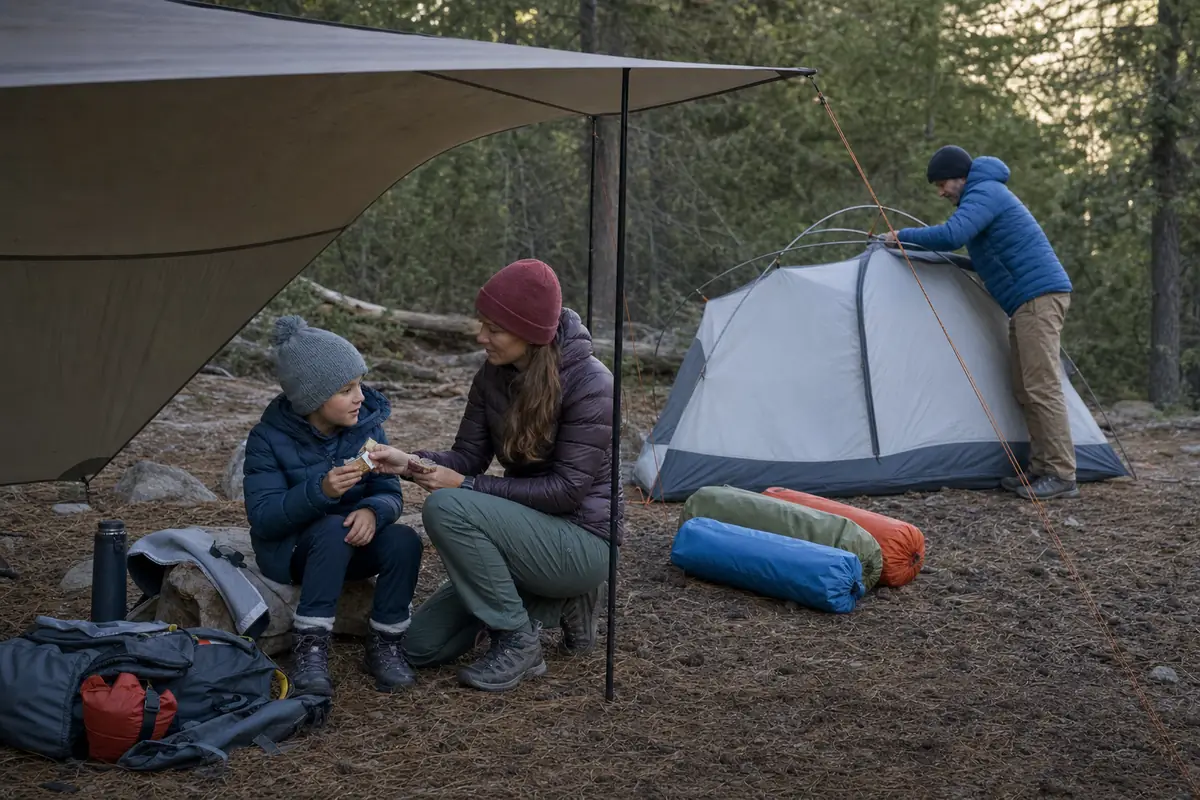
Keep one small comfort object if it helps sleep and does not compromise essential gear. Familiarity has a practical job when the night sounds, temperature, or sleeping surface are new.
Recovery starts on arrival. A child who eats, warms, uses the bathroom, and settles calmly has a better chance of beginning the next day with usable energy.
Rain changes the same camp sequence by adding a wet transfer problem. In active rain, the wet camp setup order matters, because shelter must go up before any dry family gear is opened.
What separation rule should a child know?
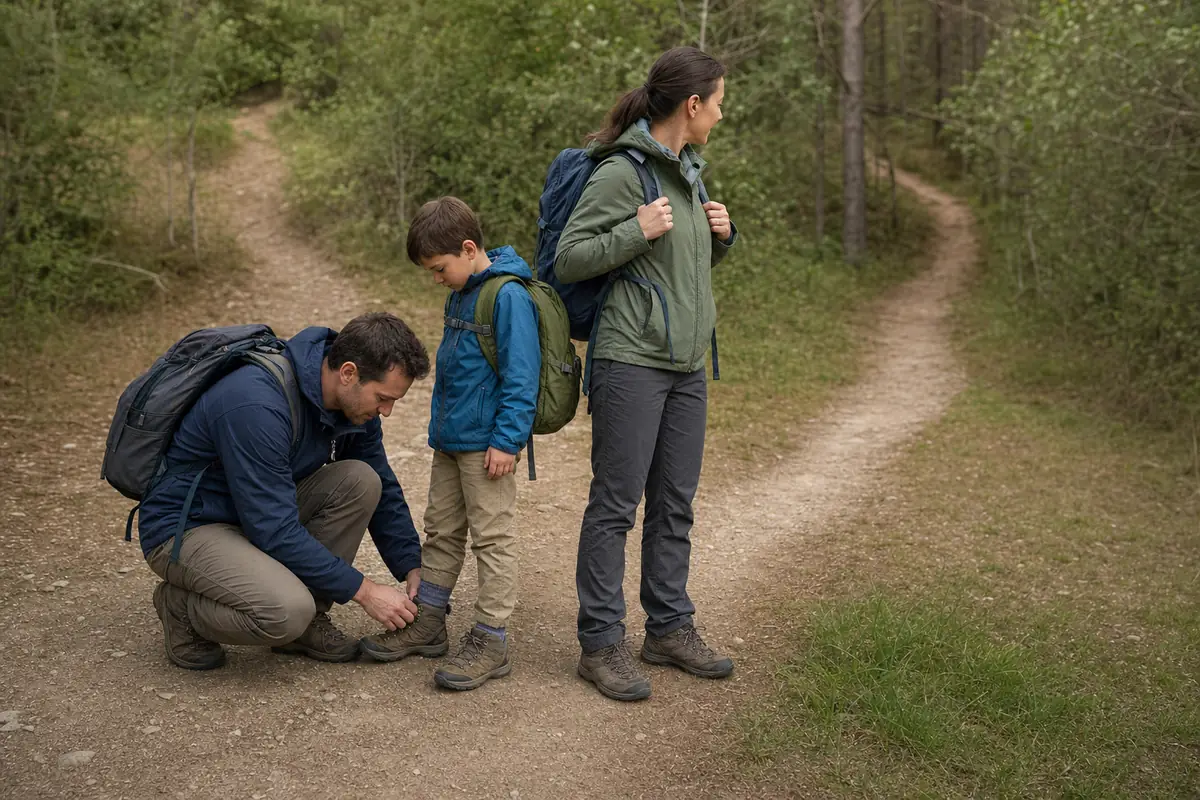
You need to keep the children in sight. An adult should lead at a pace the group can follow, while another adult stays behind the last child when the group has enough adults for both positions.
Teach one response before every walking day. If the child loses sight of the adults, the child stops, stays put, and uses the whistle rather than running down the trail to search.
The American Hiking Society recommends reviewing the separation plan each hike. A child may understand the rule at home and forget it when a junction, animal, or interesting object pulls attention away.
Sight lines are a group job.
The family should stop at every junction, crossing, and bend where the child could choose another direction. Basic compass map habits can become a shared activity, but an adult remains responsible for navigation.
When should the family shorten or leave?
Not every complaint ends a trek. A child may need a snack, a layer, a bathroom stop, a shoe adjustment, a slower pace, or a clear explanation of the next small landmark.
The response changes when the problem affects normal function. Limping, repeated stumbling, inability to warm, vomiting, confusion, extreme sleepiness, panic that does not settle, or an adult who can no longer carry the contingency load requires a shorter plan or an exit.
Pause
Use a short stop for water, food, bathroom, layer, or sock adjustment.
Solve
Move one item to an adult pack, shorten the next landmark, or change the group position.
Shorten
Use the closer camp, lower route, or planned alternate before daylight gets tight.
Exit
Leave when pain, cold, illness, fear, weather, or adult capacity makes the next segment unreasonable.
Adult frustration is not evidence that the child can continue. Do not bargain for hidden pain or reward a child for staying silent about cold, fear, or rubbing feet.
The adults need their own stop rule.
A caregiver who is exhausted, angry, injured, or overloaded may no longer have the reserve to supervise footing, manage camp, or take the child's pack. Use the shorter route before adult capacity becomes another problem for the child.
Name one adult as the decision lead before the trek, then invite observations from everyone. Clear responsibility helps when one person handles the child, another checks the map, and both are tired.
Protect trust and function. The common trekking warning chain shows how small foot, pace, water, and weather issues grow when a group keeps the original plan too long.
Cold or wet behavior changes need a lower threshold. Know the hypothermia warning signs because children may not describe the problem clearly.
Which challenge belongs in the next trip?
You should ask the child specific questions after the trip. Which part felt longest?
What was hard at camp?
Were the sleeping clothes warm enough? What should stay the same next time?
You should add only one challenge to the next trek. Choose another night, a little more distance, a modest climb, or less support.
Do not increase all four at once.
Let the first trek set the next one. Repeating the same route can be useful because familiarity lets the family test one change without adding a new navigation or camp problem.
Sources
The American Hiking Society recommends short interesting routes, layers, small packs, reachable snacks and water, whistles, and a repeated stay-put plan: Hiking with Kids. The National Park Service covers extra clothing, water, snacks, footwear, and preparation for hiking with children: NPS hiking with kids.
The NPS also advises keeping children in sight and the group together: NPS trail safety.
Step by stepPractical steps
- Prove readiness with a short practice overnight close to an exit.
- Choose a marked route with short segments and a way out after each night.
- Keep enough adult pack space and strength to absorb the child's load.
- Use an early food, warmth, shelter, and sleep routine at camp.
- Shorten or end the trek when the child or adults cannot function normally.
AnswersQuestions readers ask
What age can a child start trekking?
There is no single age. Readiness is better shown by comfortable day hikes, clear communication, a successful practice overnight, normal morning function, and adults who can carry extra family load.
How far should kids trek in a day?
Use a distance the child has already handled with energy left, then reduce it for pack weight, camp tasks, terrain, weather, and a second day. Avoid relying on a universal mileage formula.
What should a child carry on a trek?
A small pack can hold water, a snack, a warm layer, rain protection, and a whistle. Adults should keep room to take that load if the child's gait, energy, or comfort changes.
How do I help a child sleep on a trek?
Test the sleep system close to home, use dry warm clothing, eat before bedtime, keep the routine familiar, and choose a first camp where leaving after a poor night is easy.
When should a family end a trek early?
Leave for pain, limping, repeated stumbling, inability to warm, illness, persistent panic, dangerous weather, or when the adults can no longer carry the planned contingency load safely.