
Common Trekking Mistakes That Get Harder After Day One
Spot the planning, packing, pacing, and recovery mistakes that make multi-day trekking harder than it needs to be.
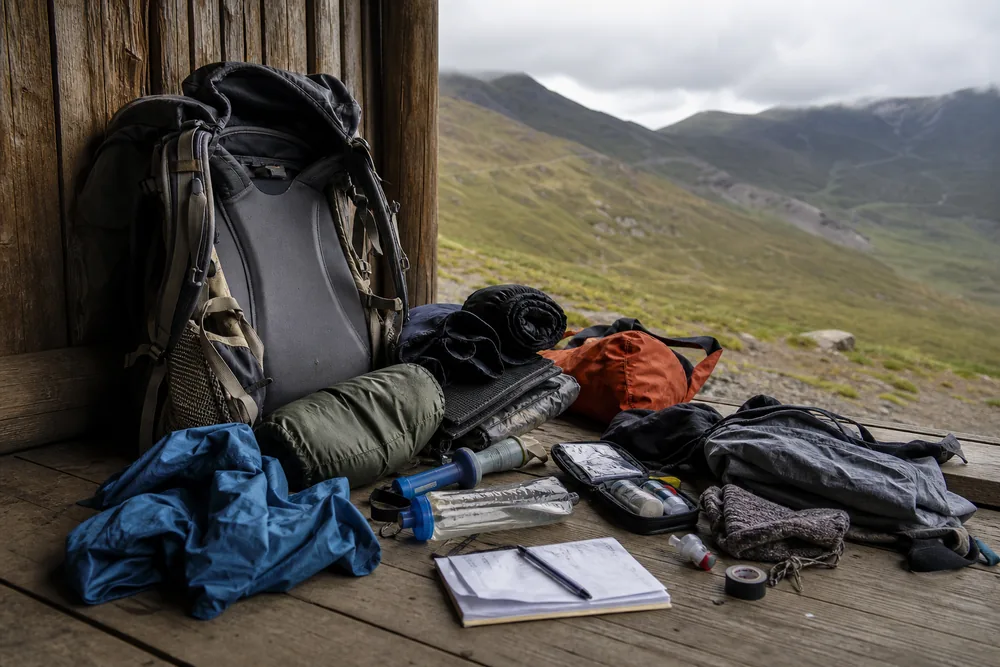
Common trekking mistakes usually start before the first mile: too much distance, too much pack weight, weak foot care, loose water planning, and no recovery margin for the next day.
Trekking usually fails on day two, not day one
The biggest trekking mistake is not choosing the wrong trail.
It is treating a multi-day route like one long day hike. Sleep, recovery, food, water, pack weight, and repeat decisions all attach to every mile on a trek, not just the miles themselves.
A hard hiking day can end at the car. A hard trekking day still has to become dinner, foot care, drying layers, sleep, and another alarm.
The demands do not stop when the walking does.
Tomorrow changes today. Every choice on the trail should protect the next day's energy, not only finish the current climb.
Most of these errors trace back to beginner trekking basics that never got settled, like route length, sleep system, and daily food.
Pros
- Treat each day as one part of a longer system: pace, food, water, feet, and dry sleep.
- Plan mileage around recovery time, not only distance.
- Stop at the first foot hot spot. Tape before skin breaks.
- Filter water before anyone is near empty, not after.
- Change the route plan when weak signals start stacking up.
Cons
- Treat a multi-day trek like one very long day hike.
- Add mileage because legs feel good in the first hour.
- Ignore foot warmth until pain forces a stop.
- Assume every mapped water source is currently running.
- Hold the original plan because adjusting it feels like giving up.
These five patterns produce real consequences on multi-day routes. The sections below explain why each one happens and what a better habit looks like in practice.
Why does distance planning fail on a loaded route?
Daily mileage is not a single number. A trekking day includes climb, descent, rough footing, pack weight, water stops, camp setup, cooking, foot care, and drying wet layers.
Add poor sleep, a damp camp, or a weather delay and the same mileage takes thirty percent longer than the map suggests.
The most reliable planning mistake is making the first day as hard as the rest.
Day one reveals pack fit, foot issues, group pace, and appetite. A shorter opening day gives that information while there are still four days left to adjust.
By the time a problem shows up on day three, the options narrow.
Exit options matter as much as daily distance targets. A plan that needs perfect pace, ideal weather, and no foot trouble to reach camp before dark is not actually a plan.
It is a bet that everything goes right.
Recovery is part of mileage because tired legs and poor sleep make the next day slower, not just harder.
The first trekking trip plan turns total route distance into daily choices with water sources, sleep locations, weather windows, and exit points attached to each stage.
A pack gets heavier as the route gets harder
A pack that feels manageable at the trailhead often becomes a real problem by day two. Shoulders are tender.
Feet carry weight differently on descents. Appetite drops.
Every item that does not earn its place will cost you more than it gives back before the route is over.
Overpacking and underpacking are both genuine risks.
Overpacking damages pace and foot health over time. Underpacking removes the margin needed for rain protection, insulation, blister care, repair tape, or a one-night delay that the route decides for you.
The right load answers the actual route: sleep conditions, weather, water reliability, food for the days plus one, and one reasonable problem.
If the load feels unstable during training, fix backpack fit before blaming fitness. A pack that rides badly creates sore shoulders, pressure points on hips, and poor downhill control before the hard miles even start.
Weight should earn its place. A comfort item that changes your stride costs more than the comfort it returns.
| Pack decision | Better choice | Mistake to avoid |
|---|---|---|
| Clothing | One set per temperature range | Duplicate layers for the same conditions |
| Rain protection | Packed where you reach it without unpacking | Buried under everything else |
| Blister care | Treated as non-negotiable | Left home to save a few grams |
| Sleep layers | Sealed separately from wet walking clothes | Mixed with damp gear in the same compartment |
| Group gear | Divided with everyone knowing who carries what | Split vaguely, discovered missing at camp |
| Food | Planned by day and actual calorie demand | Estimated from a vague sense of appetite |
A better load comes from trekking packing decisions built on sleep style, water source reliability, expected weather, foot care needs, and shared gear instead of anxiety about running short.
What happens when you start at day-hike speed?
A loaded pack changes everything about how you move: breathing rhythm, stride length, balance, downhill braking, and how fast small foot problems appear. The pace that felt comfortable on a day hike without a pack is too fast for the same trail with thirty-five pounds on your back.
Most trekkers find this out around the first long climb. Legs feel good in hour one.
The pace stretches out. The group spreads.
By the time the first descent appears, some people are already behind on water and ahead on fatigue without knowing it.
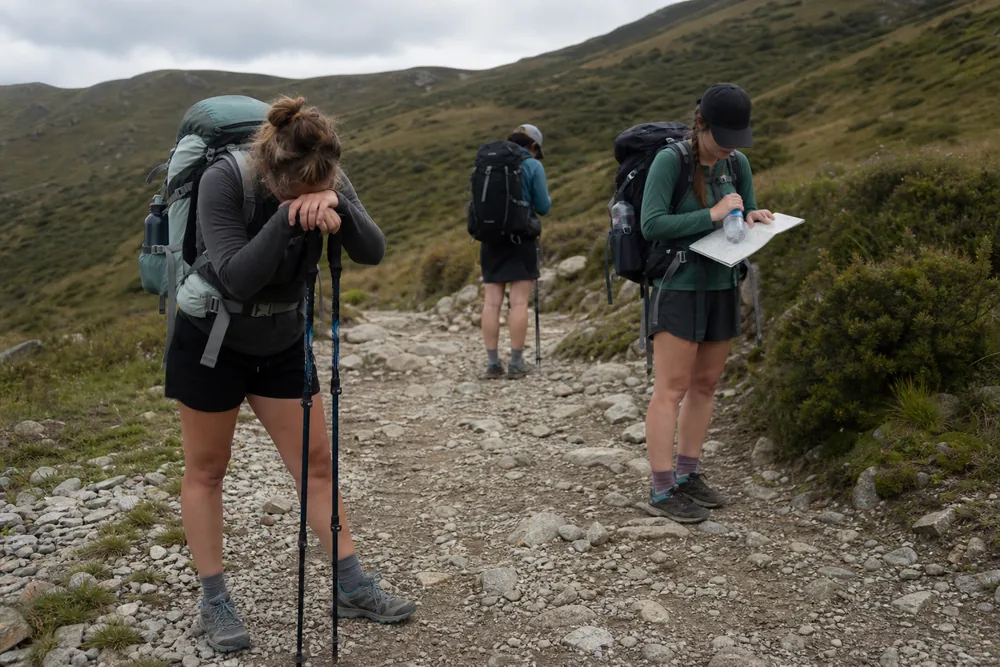
Start slower than fresh because the trek asks you to keep moving after lunch, after camp chores, and again tomorrow.
Keep the group together at junctions and water stops. When navigation and pace decisions stay shared, problems get caught earlier.
A group that spreads out loses the ability to make good decisions quickly when a trail splits or weather shifts.
Training should include the actual pack you will carry. The trekking training plan covers loaded walks, hill repetitions, long descents, and recovery days before the route begins.
Trekkers ignore the same foot signals every time
Feet fail in a predictable sequence: warmth, friction, wrinkle, blister, altered stride, slower pace, and eventually knee or hip pain from compensating. Trekkers who wait until a blister is obvious are already in damage control.
The window for simple tape closes earlier than most expect.
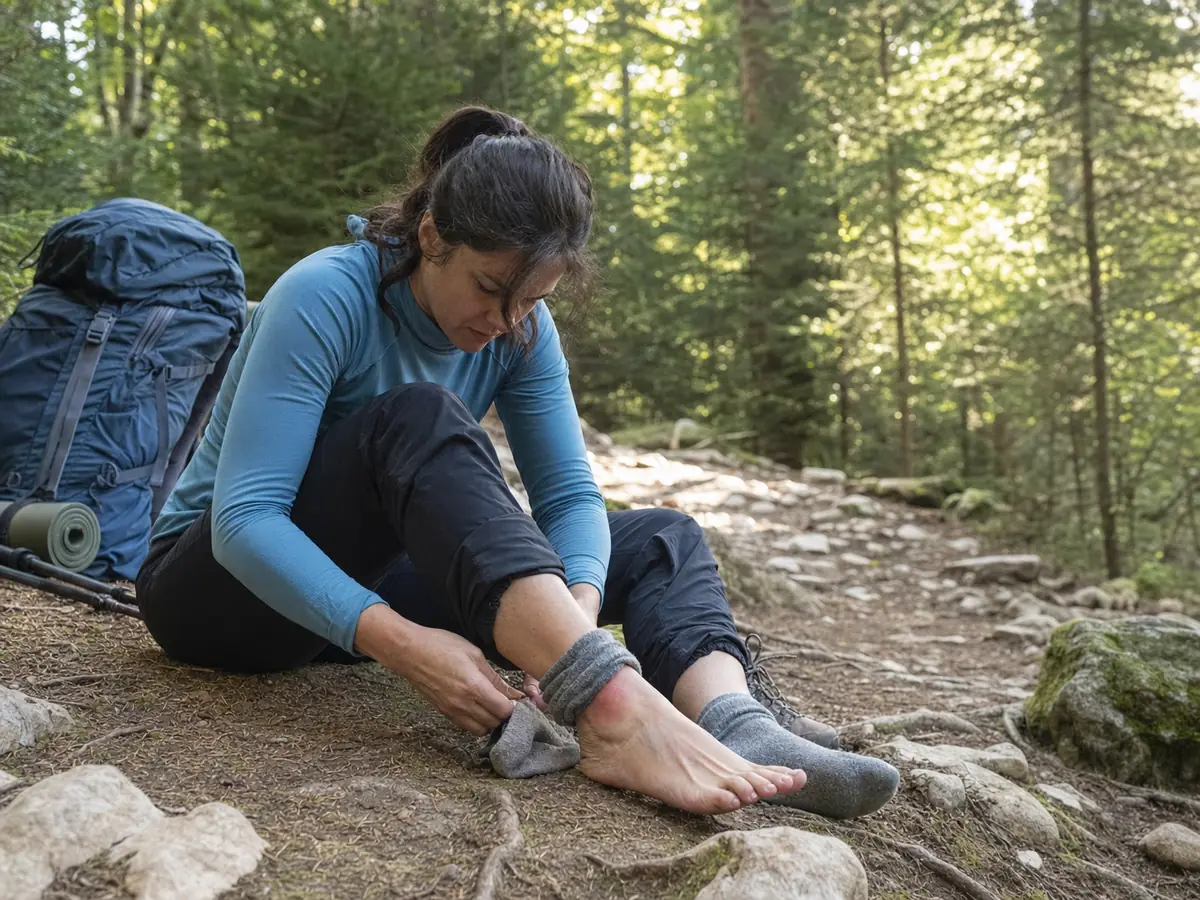
A hot spot is a signal, not a minor nuisance. Stopping for three minutes at that point is faster than stopping for twenty minutes an hour later when skin has broken and the pad under the pack is now wet with sweat.
Foot care is timing. Early tape is a three-minute stop.
Late tape is damage control and a changed stride that costs you the next two days.
- Stop when you feel warmth or frictionDo not wait for pain to confirm the problem is real.
- Remove the shoe and sockCheck for sock wrinkles, grit, and wet skin on the sole.
- Dry the area before tapingTape holds far better on dry, smooth skin.
- Cover the spot before skin breaksProtect a hot spot, not just an open blister.
- Check laces and stride after tapingA changed stride from foot pain can create knee or hip problems before the day ends.
Foot trouble often starts during training with a loaded pack.
If pack weight changes how you walk in preparation, fix the fit problem then. The trail does not solve a fit issue that training already revealed.
How do water and food gaps compound across a trekking day?
Water and food planning fails the same way distance planning does. Trekkers total the amount but ignore the timing.
A filter used only when bottles run dry arrives thirty minutes too late. A trekker with enough food for the day but no trail snacks will under-eat while walking and arrive at camp too tired to make a real meal.
Plan the gaps between sources and meals, not just the daily totals.
How far to the next reliable water point? How long does treatment take when everyone is waiting?
When does appetite drop enough that a packaged lunch gets skipped on the trail?
Mapped water sources are not guaranteed.
A spring that shows on a summer-season map may be dry by late season. Checking recent trail reports for each source before departure takes twenty minutes and saves real hours on the route.
Plan the gaps between sources, meals, and energy dips, not only the start-of-day totals.
- Check distance between every reliable water source, not just the route start and end.
- Filter before anyone in the group runs below half a bottle.
- Carry trail snacks that require no preparation and can be eaten while walking.
- Choose camp dinners you will want to cook when already tired and partially fed on snacks.
- Keep a small food and water reserve for the day that takes longer than expected.
- Verify each mapped water source with recent trip reports, not just the route description.
The water carry plan helps when heat, climb, refill reliability, or group pace changes the amount you need between sources.
Good trek meal planning matches meals and snacks to walking time, stove fuel, treated water, and the appetite you actually have after a hard day.
Which local rules can expose a packing mistake?
A trek can be physically manageable and still fail because the group assumed the wrong camp, fire, food-storage, waste, permit, or water rule. Check the current land manager's instructions for the exact area and dates, because a habit from another trip may not be legal or workable here.
Read the permit conditions before dividing gear. A designated campsite may change daily distance, while a required bear-resistant container can change pack volume and how group food is split.
Fire restrictions should never remove the only way to eat or stay warm. Carry food and clothing that still work when fires are prohibited, and treat a stove as cooking equipment rather than a substitute for a sleep system.
Human-waste rules affect both route and equipment. Some places allow a cathole under stated conditions, some require packing waste out, and some restrict disposal near water, camps, or fragile ground.
The needed kit must be in the pack before the group reaches camp.
Food storage is another shared task that needs one clear owner. Every scented item, trash item, and cooking tool must fit the required method.
A container that holds dinner but not tomorrow's breakfast, toothpaste, and wrappers does not solve the night.
Check whether planned water sources require treatment and whether collecting water is restricted. A mapped source can be present but unsuitable, inaccessible, or too close to contamination to support the group plan.
Put the controlling rules beside each day in the itinerary. Note the legal camp, storage method, waste method, water assumption, and any time or area restriction that changes movement.
Do not rely on memory from an old visit. Closures, fire rules, permits, and site instructions can change, so verify them close to departure and save the official information for offline access.
If one rule breaks the schedule, repair the schedule. Do not hide the conflict by camping outside the allowed area, burning during a restriction, or carrying too little storage capacity.
Rules change real equipment. They belong in the route and packing decisions, not in a final note that nobody reads until camp.
Wet gear needs its own place in the pack
Rain days on a trek are not unusual.
The mistake is not getting wet. The mistake is letting wet gear migrate into the spaces where dry gear lives.
A damp shell pressed against a down sleeping bag, a wet sock tucked next to dry insulation, or a draining water filter dropped near food creates problems that compound through the night and slow the next morning.
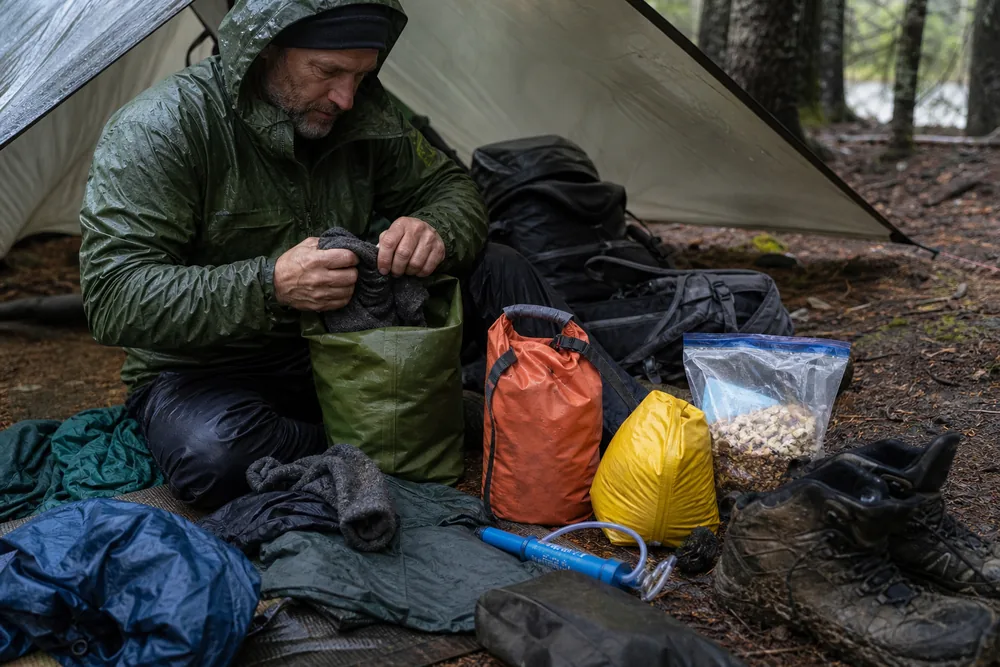
Repack when weather is building, not after the exposed section has already soaked the top of the bag. Rain gear goes where you can reach it without emptying the pack.
Sleep layers stay sealed until you are under cover and ready to use them.
Dry sleep gear is non-negotiable because warmth at night protects recovery for the day that follows.
Rain shell
Lives near the top or in an outside pocket, reachable in thirty seconds.
Sleep layers
Stay sealed in a dry bag until camp is fully set.
Wet socks
Stay away from dry insulation at all times, not just when rain is falling.
Water filter
Drains into a pocket where it cannot soak clothing or food.
Food bag
Closes completely before rain and animals become part of the problem.
Cold wet mistakes can become safety problems. Know the early hypothermia signs when rain, wind, slow pace, and fatigue start stacking at the same time.
A wet-weather trekking plan covers the next decision layer, from crossings and foot checks to protected sleep gear and whether another wet day still leaves a workable exit.
Why does changing the plan feel harder than it should?
The final trekking mistake is not one bad decision. It is ignoring a collection of soft signals because none feels serious enough on its own.
Slow pace, low water, sore feet, late-building weather, poor sleep, and dropped appetite can combine quietly into a hard situation with fewer options than an earlier change would have preserved.
Trekkers hold plans because adjusting them feels like admitting the route beat them.
The actual cost of a change made early is usually one shorter day or a lower route option. The cost of a change made too late is often an injury, a cold night with wet sleep gear, or a call for help.
Change the plan while choices still exist. Shorten a day, use the lower option, stop earlier, dry gear at a rest spot, treat feet, or take the exit that still has daylight left behind it.
Early changes protect choices. Late changes usually protect pride less than people think they will.
- Shorten the day if the group is behind by the first major checkpoint.
- Stop for foot care before anyone changes their stride to compensate.
- Filter water before the whole group runs low, not after.
- Choose the lower route option when weather reaches exposed ground early in the day.
- Repack before wet gear touches dry sleep layers.
- Tell your check-in contact when the plan changes and signal is available to do so.
Navigation doubts should also trigger a pause. Practice compass basics before a trek so map checks happen at junctions instead of after the group is already uncertain about which way the trail splits.
Routine trekking safety checks turn these weak signals into clear decisions about daylight, weather, water, navigation, camp setup, and exit options.
Why does a rushed camp create problems the next morning?
Arriving late compresses water collection, shelter setup, wet-gear separation, foot care, food storage, route review, and sleep into darkness. The group may finish the mileage yet begin morning with damp insulation, empty bottles, untreated feet, and no clear start plan.
Do camp jobs in the order that protects function. Put on warmth before the body cools.
Secure shelter before unpacking loose gear.
Keep sleeping insulation sealed until wet work is finished. Treat enough water for dinner, breakfast, and the first walking segment when the next source is uncertain.
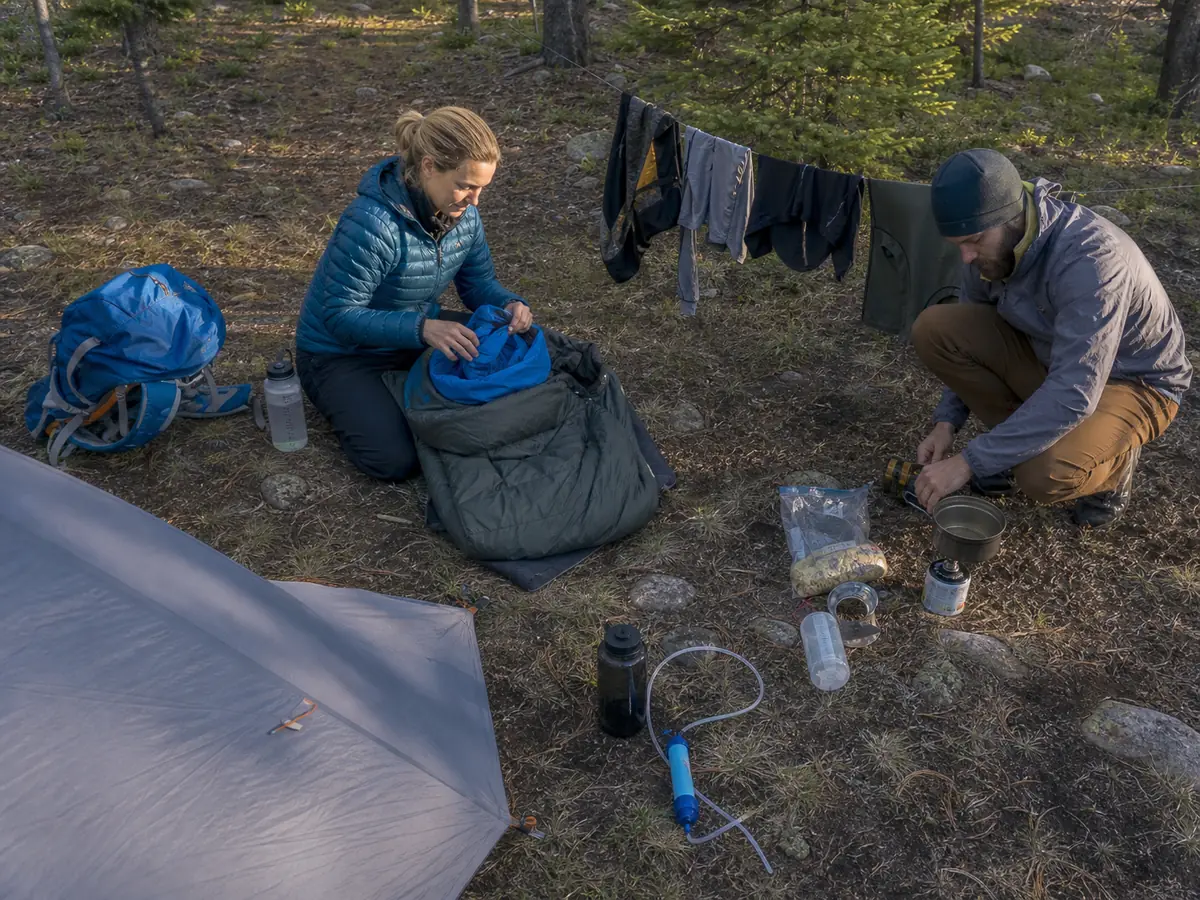
Practice a new stove and filter before departure. If camp regularly begins with less than an hour of usable light, shorten the walking stage.
Camp is part of the route because a clean morning begins with time protected the evening before.
How do you reset after one bad trekking day?
Identify what failed: pace, distance, feet, pack fit, water, food, sleep, weather, navigation, or group communication. Then reduce the next day's demand in the same category.
If a rough descent caused a two-hour delay, an earlier alarm does not fix the descent. Shorten the next stage or choose smoother ground.
If wet gear damaged sleep, protect drying time and choose a sheltered stop before adding miles.
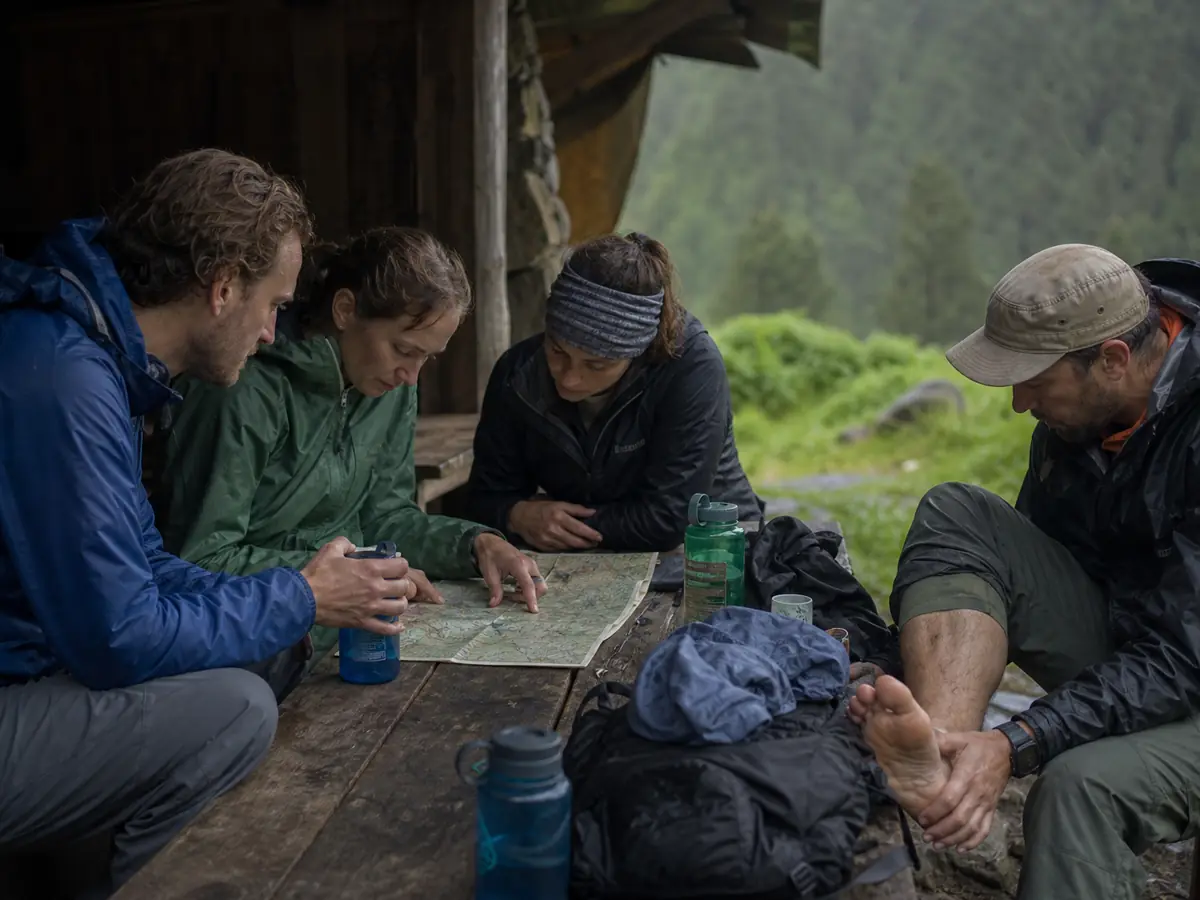
Check whether everyone can walk normally, reach reliable water and a legal night stop with reserve, and retain an exit in the forecast conditions.
A no means the day needs a different plan. Reset the demand, not the promise.
A shorter day can preserve the trip.
After the trip, rebuild the failed part through multi-day trek preparation before repeating the same route demand.
Sources
The National Park Service Hike Smart article covers personal limits, trip plans, weather, emergency planning, communication, and backup plans: NPS hiking safety.
The NPS ten essentials article covers navigation, illumination, insulation, first aid, hydration, nutrition, and emergency shelter: NPS Ten Essentials. Its camp cooking guidance recommends practicing with a new stove before a trip and following local food-storage rules: NPS Cooking in Camp.
Step by stepPractical steps
- Plan daily mileage with recovery, water, camp chores, and exit options.
- Pack for route function instead of fear, then remove duplicate weight.
- Start slower with a loaded pack and keep the group together at decisions.
- Treat foot hot spots immediately before they change your stride.
- Change the trek plan early when water, weather, feet, pace, or sleep reduce choices.
AnswersQuestions readers ask
What is the most common trekking mistake?
The most common mistake is planning a trek like one long day hike. Multi-day routes need recovery, food, water, sleep, pack weight, and next-day energy built into each day.
Is overpacking worse than underpacking for trekking?
Both can cause problems. Overpacking damages pace and feet, while underpacking removes safety margin.
The best pack answers the actual route, weather, water, sleep, and repair needs.
How do I avoid blisters while trekking?
Stop at the first warm spot, dry the area, smooth the sock, tape before skin breaks, and adjust laces or pack fit if your stride has changed.
How fast should I trek with a loaded pack?
Start at a pace that lets the group speak in short full sentences. A pace that feels easy in the first hour is often the one that survives the full day.
When should I change a trekking plan?
Change it when water, weather, feet, pace, sleep, or navigation starts reducing choices. Earlier changes are usually safer and easier than late decisions.