
What Should You Eat on a Trek From Breakfast to Camp?
Build meals around when you can eat, how much water and fuel they need, and whether you will still want them after a hard day.
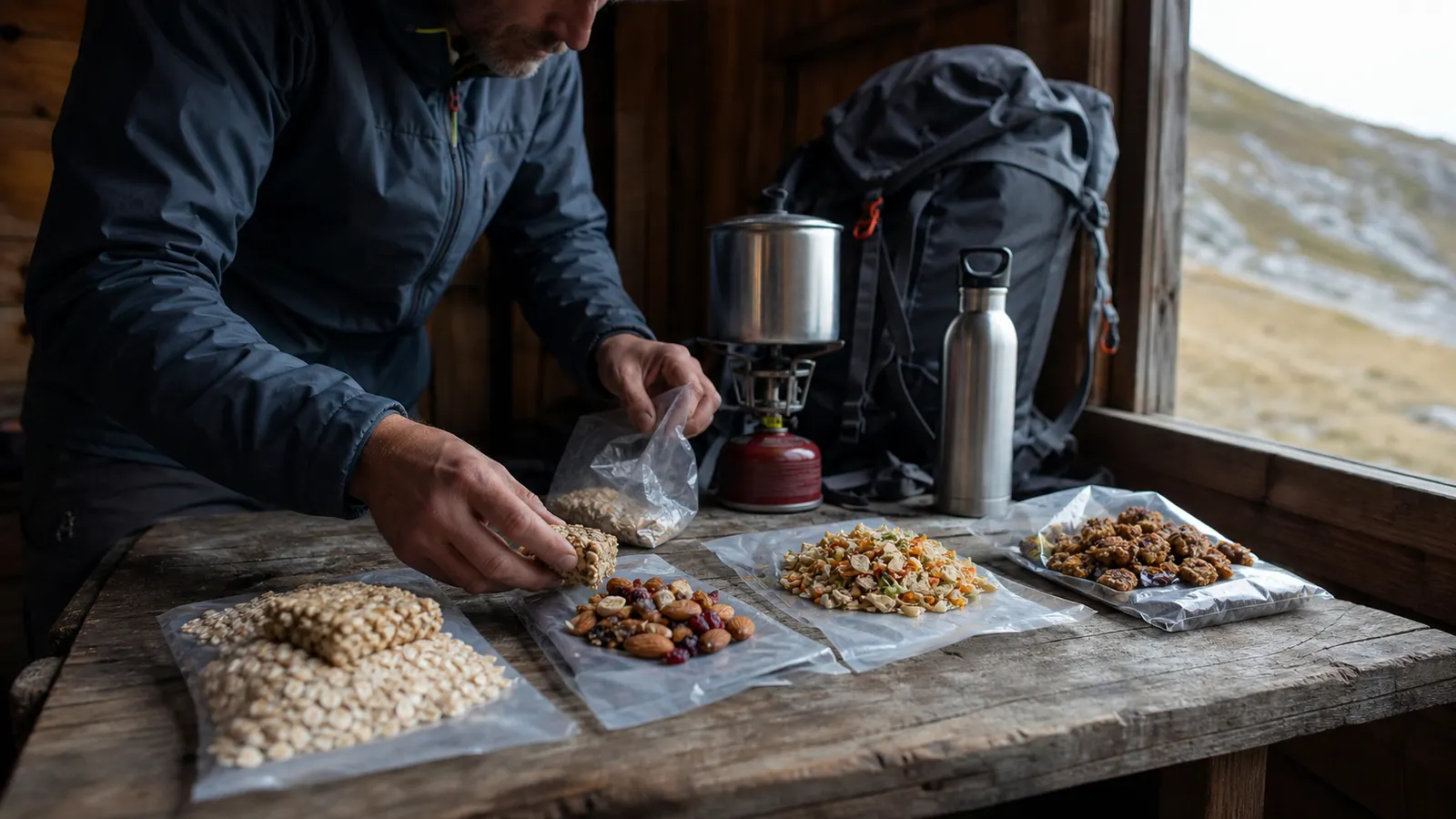
Eat familiar, shelf-stable food that gives you an easy breakfast, reachable food while moving, a practical camp dinner, and a separate delay reserve. Test the full menu on a loaded rehearsal because appetite, preparation time, water use, and cleanup matter as much as the food label.
- Breakfast job
- Start movement without a long cooking or cleanup delay
- Trail-food job
- Deliver small portions during short safe stops
- Dinner job
- Replace energy and support warmth, sleep, and tomorrow
- Reserve job
- Cover a named delay without being eaten as normal snacks
- Hard constraint
- Water, fuel, food safety, or local storage can veto a meal
The best trek menu is a working sequence, not a pile of high-calorie food. Each item needs a time, a preparation method, a place in the pack, and a reason it will still be usable when weather or fatigue changes the day.
Plan by food job. Breakfast, moving food, dinner, and the delay reserve solve different problems, so one food rule cannot choose all four.
Trek food does four jobs, and most menus cover two
Morning food should help you leave camp without spending the first hour cooking, searching, and cleaning.
It also has to be mild enough for a person whose appetite arrives later than the alarm.
Food eaten while moving needs a different shape.
It must survive the pack, open with cold or damp hands, and fit a stop short enough that the group does not cool down.
Dinner carries the heaviest camp job.
It should be something you will eat after effort, and its water, fuel, cooking time, pot size, and cleanup must fit the evening.
The reserve is not a larger dinner. It covers a delayed exit, missed resupply, dry water source, or unplanned night, so keep it separate from the food you expect to finish on schedule.
Start
A familiar breakfast that works with low appetite and a cold morning.
Move
Small reachable portions that can be eaten during short safe stops.
Recover
A camp meal whose water, fuel, cooking, and cleanup are already tested.
Delay
Shelf-stable food reserved for one named extension of the trip.
Route demand decides how large each job becomes. A long climb may need more frequent moving food, while a short final day may need little beyond breakfast and a snack before transport.
The multi-day preparation test should include the real menu. Food that returns untouched from a two-day rehearsal is evidence, even when a spreadsheet said the quantity was correct.
Give every item a moment. If you cannot say when and how a food will be eaten, it may be extra weight rather than a meal plan.
What should you eat before an early start?
A cold early start can make a large breakfast feel impossible.
Choose food you have already eaten before exercise, then keep the first portion small enough to begin without forcing it.
Carbohydrate-rich foods are often simple to use in the morning because they can be eaten quickly or prepared with little water. Add some protein or fat when you know it sits well and the added preparation does not delay departure.
Hot food can help on a cold trek, but a hot breakfast costs time, fuel, water, and cleanup. On an early weather window, a quick cold breakfast followed by another portion after the first hour may fit the route better.
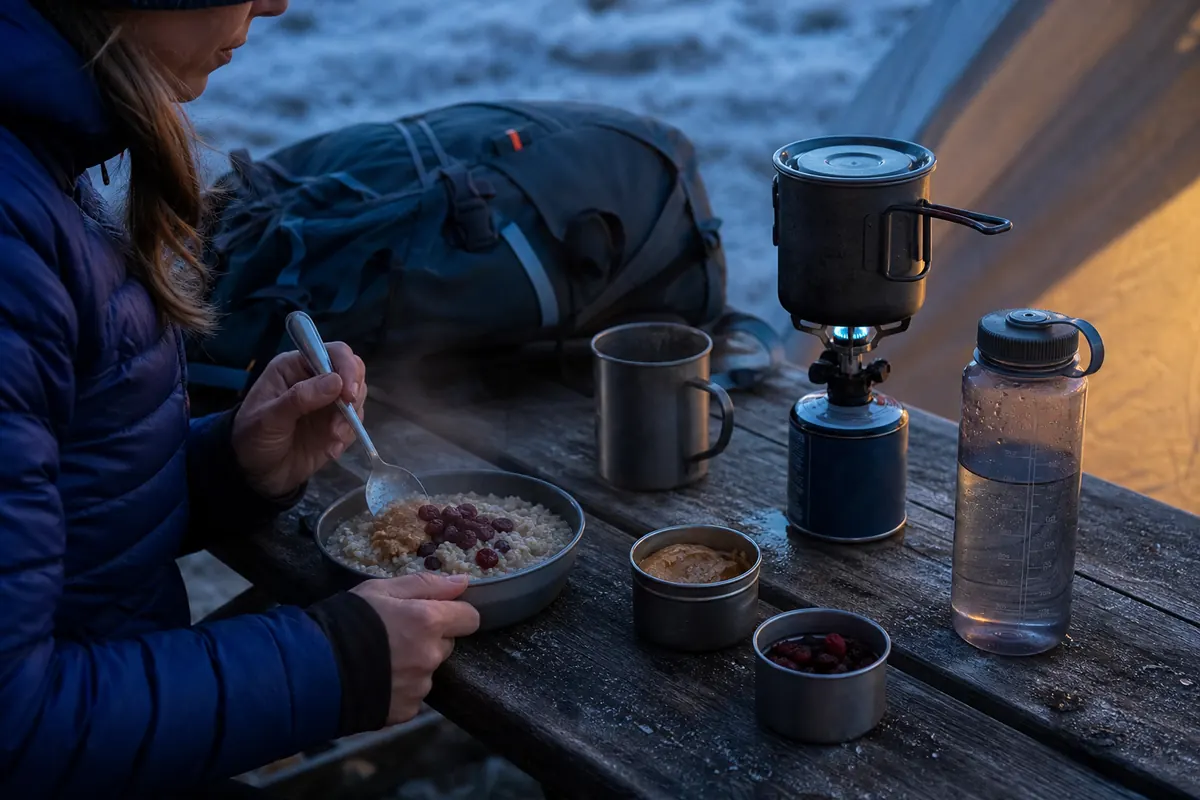
Measure the water used by oatmeal, drinks, and cleaning. That amount belongs in the water carry calculation when the next reliable source is several hours away.
Try breakfast after sleeping outside during a rehearsal. The useful question is whether you ate enough to begin moving with control, not whether the meal looked substantial at home.
Small first, more soon often works better than one oversized bowl before your body is ready to eat.
A ten-minute stop rules out most trail food
Wind, rain, insects, exposure, or a slow group can turn a planned lunch break into ten minutes.
Your moving food should still be reachable, openable, and edible under that version of the day.
Pack small portions in more than one texture and flavor. Dry sweet food can become tiring after hours, while salty, soft, crisp, or savory choices may keep appetite working.
Put the first half of the day where you can reach it without opening the main pack. Refill that pocket at camp instead of carrying the entire trip's snack supply near the zipper.
- Open the portion with the gloves or cold hands expected on the route.
- Eat it without a stove, knife, plate, or long setup.
- Keep it intact through pack pressure and normal heat.
- Carry one savory choice as well as sweet food.
- Avoid a mouthful so dry that it demands extra water every time.
- Contain crumbs, wrappers, peels, and sticky packaging immediately.
- Know which item remains usable when appetite drops.
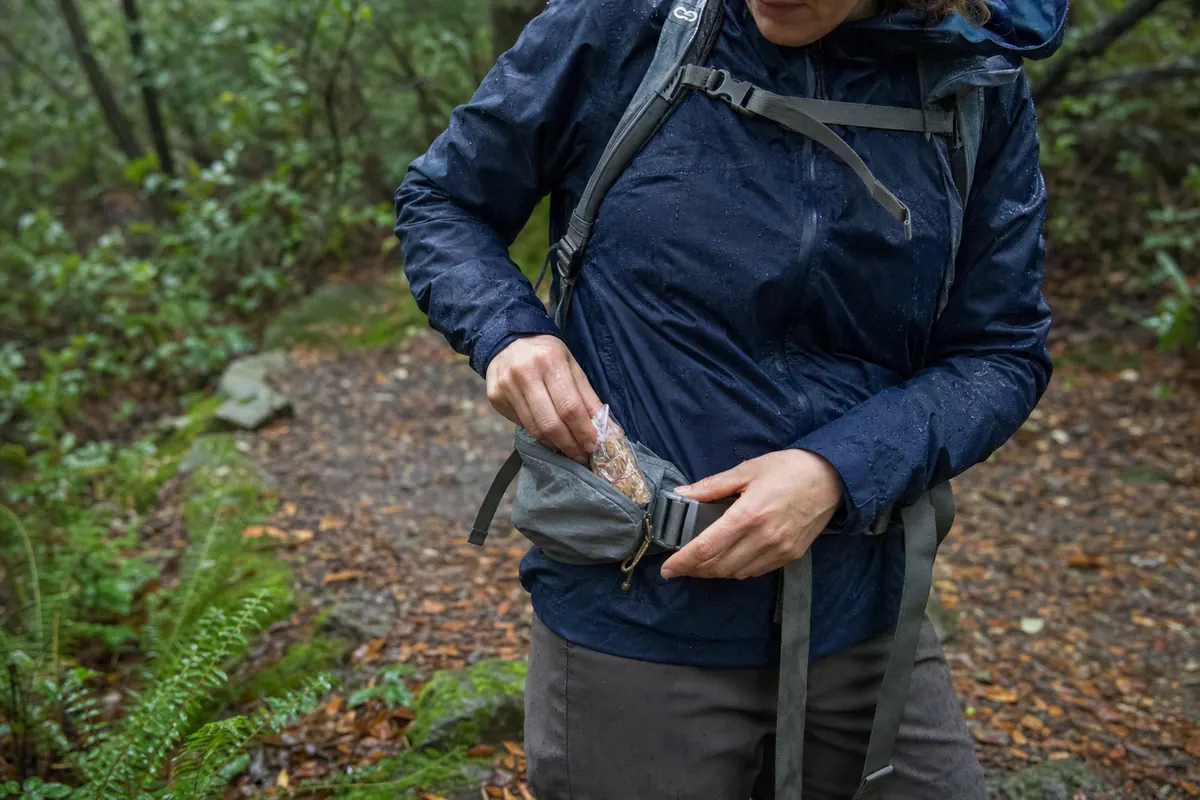
Temperature matters. Chocolate can melt, bars can become hard in cold weather, oily food can leak, and some fresh items bruise after repeated pack pressure.
Separate waste storage before leaving. The trekking etiquette rules apply to tiny wrappers, crumbs, fruit scraps, and wash water as much as they apply to camp behavior.
A common food mistake is waiting until hunger feels urgent. The trekking exercise load continues for hours, so smaller planned portions can be easier to tolerate than trying to catch up with one large stop.
Access controls eating. Food buried beside the sleep system often remains there until the group is already tired and underfed.
When should lunch become several short stops?
An open ridge, cold rain, or difficult navigation may not offer a comfortable thirty-minute lunch.
Several short stops can keep food going into the day without forcing the group to remain still in a poor place.
On a sheltered route with a reliable schedule, one larger lunch can provide a real rest and simplify packaging. On a day with exposure or uncertain timing, split the same midday amount into two or three portions.
| Lunch pattern | Works best when | Main risk | Practical correction |
|---|---|---|---|
| One longer stop | Shelter, daylight, and pace are predictable | Cooling down or losing time | Put on a layer and set a departure time |
| Two short stops | Terrain changes and breaks are limited | Forgetting the second portion | Pack the portions separately |
| Food while moving | Trail permits safe brief pauses | Poor chewing, dropped food, inattention | Stop in a stable place even if only for minutes |
| First-day fresh lunch | Cold storage remains reliable | Perishable food warms too long | Eat it early or choose shelf-stable food |
Perishable food carried without reliable cold control has a time limit. Treat a fresh first-day lunch as a specific plan, not permission to carry the same food for later days.
The rain trekking routine protects dry layers and camp recovery. It should also keep one easy food portion accessible so wet hands and a closed pack do not cancel the midday plan.
Match the stop you have. A meal that requires a picnic can fail on a day that only offers brief shelter.
What makes a trek dinner practical at camp?
Camp appetite can be unpredictable after a long day.
A dinner that smelled good at home may feel too rich, too dry, or too slow when you are tired and cold.
Use familiar ingredients and test the full preparation. Record how much water the meal needs, how long the stove runs, whether soaking helps, and how much food sticks to the pot.
Warm food can support comfort and make fluids easier to take in cool conditions. It still needs a backup because a late arrival, failed stove, or local fire restriction can remove the planned cooking method.
- Protect dry recoveryPut on the needed layer before a long cooking stop.
- Treat meal waterPrepare enough safe water for the meal, drinks, and cleanup.
- Cook the slowest item firstUse the tested order instead of improvising with limited fuel.
- Eat before appetite fadesBegin with a portion you can finish, then add more.
- Contain every scented itemStore ingredients, scraps, and cleanup material by the local rule.
- Stage breakfastPut the first morning food where it will not be buried during pack-up.
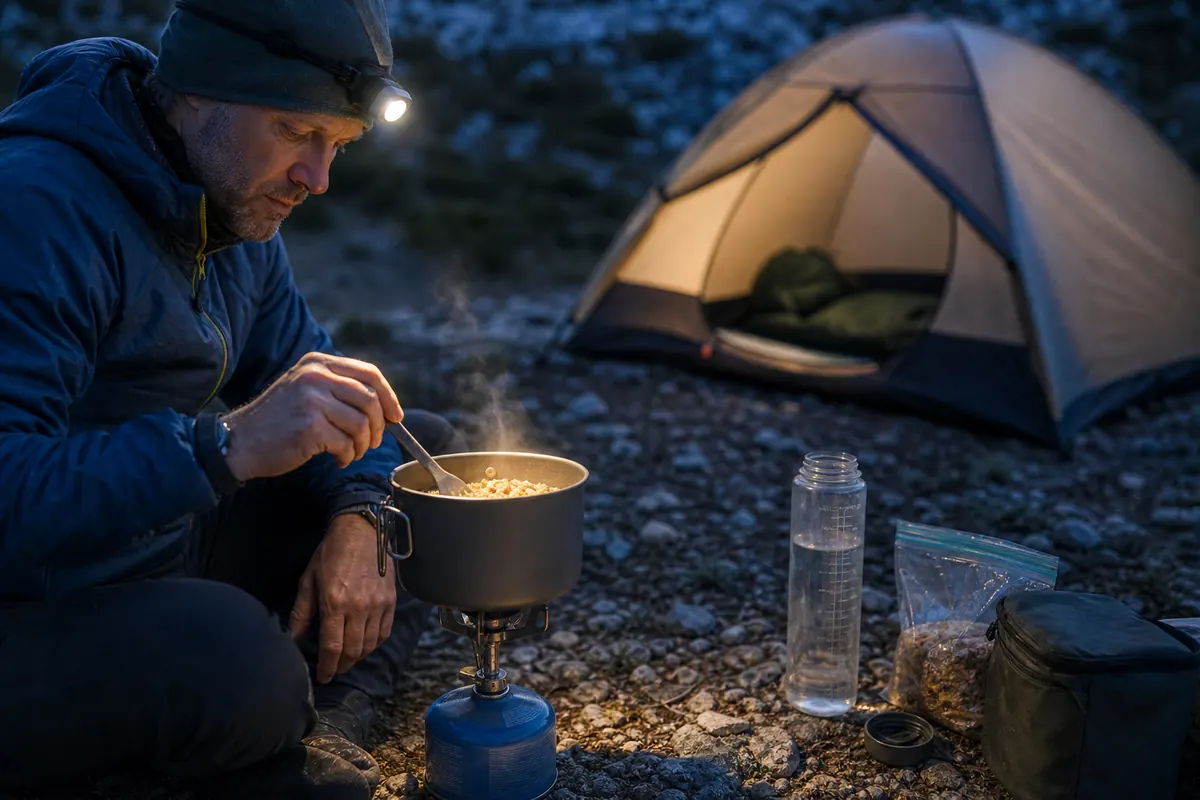
Balance matters more than a perfect recipe. A practical meal often combines an easy carbohydrate base with protein and fat that you already tolerate, plus salt and flavor strong enough to remain appealing.
Keep one no-cook or low-effort meal. On winter trekking days, shorter daylight and cold equipment can make this backup more valuable than an elaborate menu.
Cleanup is part of the meal test. Scrape and pack food particles, use water as local rules allow, and never assume a stream is a sink.
Dinner must leave reserve. The group still needs time and attention for foot care, food storage, weather checks, and sleep.
How should you divide food by route day?
Start with one route day, not the pantry.
Mark the wake time, hardest effort, likely break windows, water access, camp arrival, and whether dinner must be made after dark.
Assign food to those moments. Breakfast and the first moving portion should be available without opening every bag, while dinner and the next morning's food can sit deeper until camp.
Lay out the complete day and check portion volume. Bulky packaging can fill the odor-resistant container or required bear canister before the food weight becomes the problem.
| Route moment | Food job | Preparation note | Pack position |
|---|---|---|---|
| Wake and pack | Easy breakfast | Known water and fuel cost | Top of food bag |
| First climb | Small moving portion | No preparation | Hipbelt or outer pocket |
| Midday | Lunch pattern | Long stop or split portions | Reachable day bag |
| Late hard segment | Reliable savory or soft food | Works with low appetite | Separate marked portion |
| Camp | Dinner | Tested water, fuel, and cleanup | Main food storage |
| Unexpected delay | Reserve | No-cook or low-fuel | Sealed and separate |
| Next morning | Breakfast | Protected from accidental use | With dinner bag or named day bag |
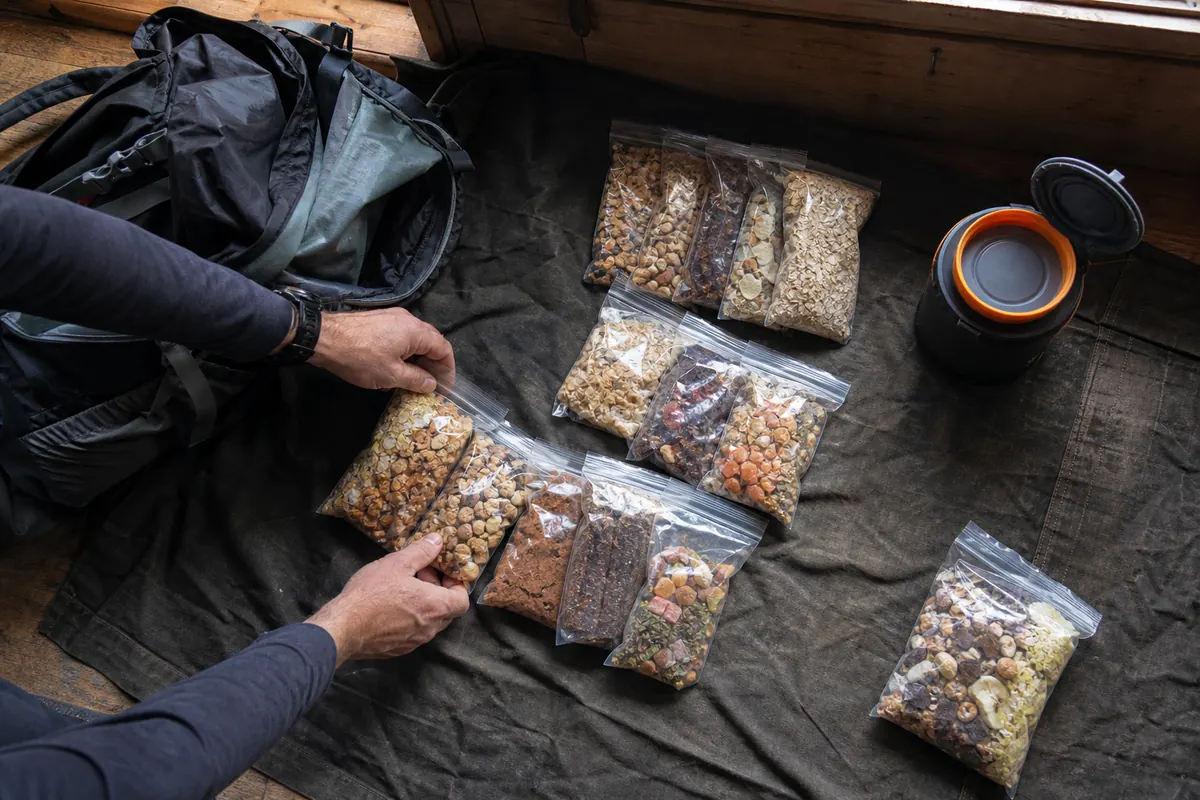
Add the water and fuel notes to the bag, even if the food has no printed label after repackaging. A meal that needs more water than camp provides is not ready.
Use cold food only while safe cold storage remains dependable. After that point, USDA guidance favors shelf-stable options for multi-day travel because a backpack cannot maintain refrigerator temperature.
Keep the delay reserve visually separate. If it looks like another normal snack bag, it is likely to disappear before the delay occurs.
The complete trekking packing system must fit food beside shelter, sleep gear, clothing, water, first aid, and repair supplies. Repackaging can reduce excess volume, but never remove cooking directions or safety information you still need.
Pack tomorrow on purpose. A daily unit reduces searching, accidental overeating, and uncertainty about what remains.
A few constraints quietly rule out a meal
Some meals fail before taste matters. Remove a choice if you cannot keep it safe, obtain and treat its water, cook it with the allowed fuel, or store its odor and waste correctly.
Natural water can look clean and still contain germs.
Treat uncertain water, keep clean and untreated containers distinct, and include meal water in the same plan as drinking water.
Fuel use changes with wind, temperature, stove performance, and boil time. Test the stove safely and measure a normal meal instead of guessing from one fast kitchen boil.
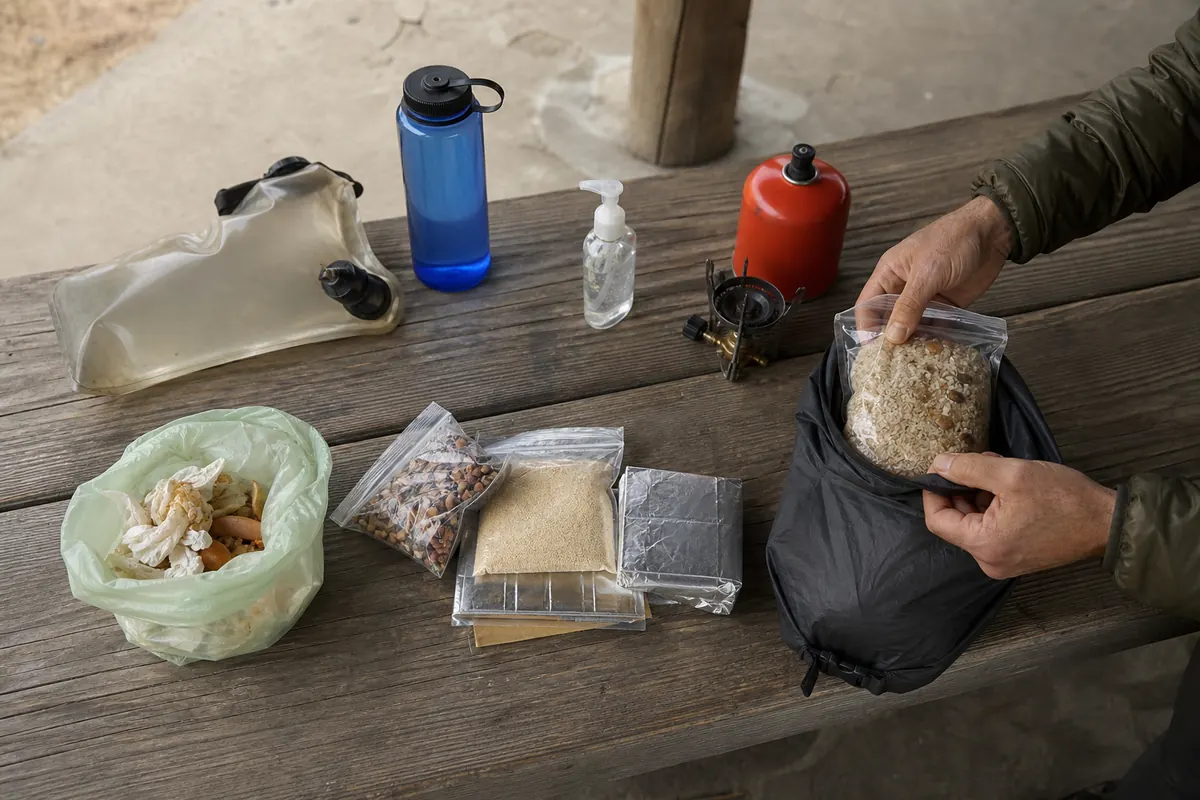
Clean hands before handling food. When soap and safe water are unavailable, USDA guidance recommends hand sanitizer with at least 60 percent alcohol, but sanitizer does not remove dirt or replace handwashing whenever proper washing is possible.
Follow current land-manager rules for cooking, food storage, and wildlife. The trekking safety plan should name the required storage method before food is divided into bags.
People, dogs, and children change the calculation. A dog trekking food plan must keep animal food and waste controlled, while a trek with kids needs familiar portions that match smaller appetites and more frequent stops.
Constraints choose first. Taste and variety matter only after the meal can be carried, prepared, eaten, and stored safely.
How do you test a trek menu before departure?
Bring the planned food on a loaded overnight or two-day rehearsal.
Return with the wrappers, leftovers, fuel amount, and notes instead of relying on memory.
Record what you ate, what you delayed, and what you could not finish. Also note when hunger appeared, whether the food was too dry, and whether a flavor became unpleasant after repeated portions.
- Eat the planned breakfast at the planned departure time.
- Carry trail food in the same pockets and packaging.
- Use the intended water treatment and meal water amount.
- Cook dinner with the actual stove, pot, and fuel.
- Measure the fuel remaining after breakfast.
- Keep all scented waste in the intended storage system.
- Count leftovers and identify why each item was not eaten.
- Notice stomach discomfort without trying new foods on the real trip.
Appetite is affected by effort, heat, cold, altitude, stress, and unfamiliar routine. The rehearsal cannot predict every trip, but it can expose food that already fails in ordinary conditions.
If a food causes persistent digestive trouble, remove it and use something familiar. Do not turn a remote trek into the first test of a supplement, concentrated drink, or very different diet.
The first trek planning process places the hardest stages, water, and camps on the calendar. Use that sequence to decide which day needs the most accessible food rather than making every daily bag identical.
Freeze the menu after a successful rehearsal. Last-minute variety is less useful than knowing you can eat and prepare what is already packed.
Leftovers are data. They show where taste, portion, timing, packaging, or preparation did not match the trek.
How should the menu change across route days?
A long climbing day, an exposed day, and a short exit day can use the same food categories in different amounts and positions. The route changes the eating rhythm before it changes the grocery list.
| Day type | Moving-food pattern | Camp meal | Extra attention |
|---|---|---|---|
| Long climb | Small frequent portions before hunger is sharp | Familiar meal with tested preparation | More food reachable during ascent |
| Exposed weather day | Food that opens quickly during brief sheltered stops | Low-effort hot or no-cook backup | Packaging that works with cold or wet hands |
| Late camp day | Larger afternoon portion before the final segment | Fast dinner with little cleanup | Enough daylight and fuel for safe preparation |
| Short exit day | Simple breakfast and one useful trail portion | Meal after transport if practical | Do not carry a full camp dinner without a reason |
On each day, protect the reserve from normal eating and keep the next meal identifiable. The common trekking mistakes often begin with small planning failures that force rushed decisions later.
Food planning becomes simpler once every portion has a job. Choose familiar shelf-stable food, test it under effort, account for water and fuel, and let the actual route decide when each piece becomes useful.
Build the rhythm, then shop. A clear eating sequence prevents both a hungry day and a pack full of food nobody wants.
What should you eat when appetite drops?
Do not wait for a large meal to become appealing. Start with a small familiar portion that is easy to chew and swallow, then try another portion after a short interval.
Heat, cold, altitude, fatigue, stress, dehydration, and repetitive flavors can all reduce the desire to eat. The menu should include at least two textures and one savory option so a rejected sweet bar is not the only reachable choice.
Begin with the simplest item in the day's plan. A soft tortilla, crackers with a familiar spread, dried fruit, soup, or another tested food may be easier than a dense meal, but the correct choice is one the person already tolerates.
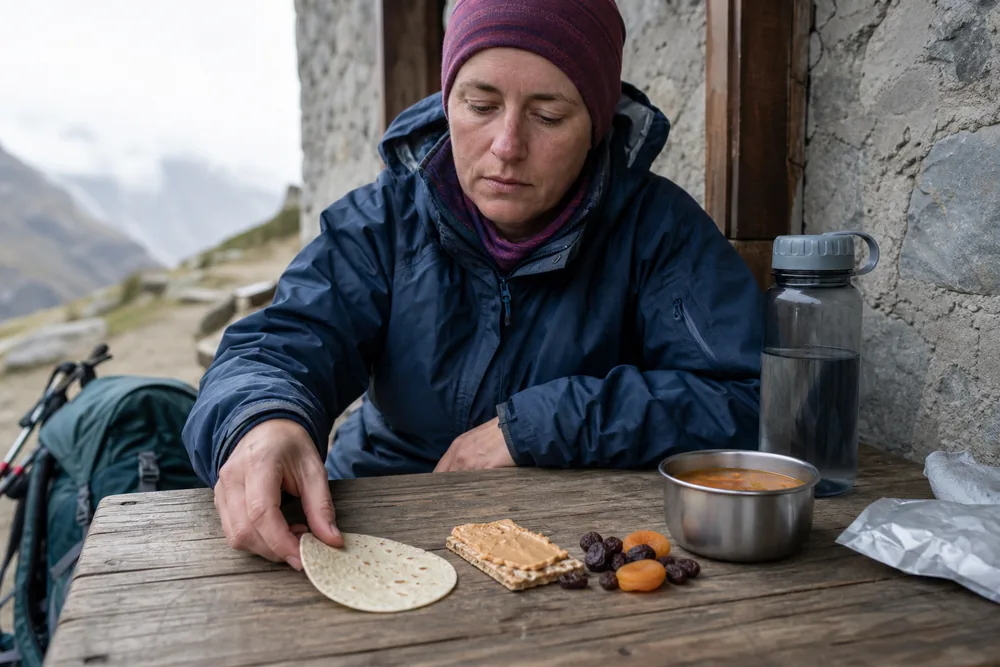
Take fluids in normal controlled amounts and follow the water plan. Forcing a large volume at once can add nausea, and drinking untreated water creates a separate problem.
Move to a sheltered stable stop before opening several packages. Keep the person warm enough to eat, especially when wet clothing or wind has already reduced comfort.
Record what the person manages to eat and whether normal energy, coordination, and judgment return. A small portion that stays down is more useful than a full dinner that cannot be finished.
Do not use an unfamiliar supplement, concentrated drink, or medicine as a remote experiment. A product that causes stomach trouble at home will be harder to manage when water, toilets, and an exit are limited.
Repeated vomiting, confusion, fainting, severe weakness, severe abdominal pain, or inability to keep fluids down needs an appropriate medical response. Food planning cannot diagnose or fix those warning signs.
If low appetite continues while pace, warmth, or decision-making declines, shorten the day or use the exit plan. Saving tomorrow's meal does not help when the group cannot reach tomorrow's camp with control.
After the trip, replace the failed flavor, texture, portion size, or preparation method. The goal is a menu the same person can actually use under effort, not a theoretical calorie total.
Use the first tolerable bite. Small tested portions give you evidence and time to decide whether the trek can continue.
Sources
The U.S. Department of Agriculture explains cold control, contamination prevention, shelf-stable choices, clean hands, safe cooking, and potable water for outdoor trips: Food Safety While Hiking and Camping.
The Centers for Disease Control and Prevention advises treating water when safety is uncertain. It identifies boiling as the best way to kill germs and filtering followed by disinfection as the next best option: Preventing Drinking Water-Related Illnesses.
Leave No Trace recommends planning for regulations and hazards, repackaging food to reduce waste, using appropriate storage, and preparing for weather and emergencies: Plan Ahead and Prepare. Current local rules come first for fires, cooking, food storage, water, wildlife, and waste.
Step by stepPractical steps
- Assign breakfast, moving food, dinner, and a delay reserve to each route day.
- Choose familiar food that fits the expected appetite, stop length, water, fuel, and storage method.
- Divide the menu into daily units and keep the reserve separate.
- Test the complete menu on a loaded rehearsal using the real stove, water treatment, and packaging.
- Adjust from leftovers, appetite, preparation time, cleanup, and fuel use before departure.
AnswersQuestions readers ask
What food is best to eat on a trek?
Choose familiar shelf-stable food that is easy to eat at the time you need it. Build the day from a simple breakfast, reachable moving food, a tested camp dinner, and a separate delay reserve.
How much food should I bring on a trek?
Base the amount on the number of route days, expected effort, your tested appetite, resupply certainty, and one named delay scenario. A rehearsal gives better evidence than copying another person's total.
What should I eat for dinner while trekking?
Use a familiar meal that you will eat when tired, with a known water amount, cooking time, fuel cost, and cleanup method. Carry one no-cook or low-effort backup.
Can I bring fresh food on a multi-day trek?
Fresh perishable food is suitable only while reliable cold control and safe time limits can be maintained. Use shelf-stable food for later days unless continuous safe temperature control is proven.
How should I pack trek food?
Divide food by day, keep the first portions reachable, protect tomorrow's meals, separate the delay reserve, and confirm that all food and scented waste fit the required storage system.