
What Is Good Trekking Etiquette on Trails, at Water, and in Camp?
Yield the easier move, protect scarce water, and keep shared overnight space usable for the next group.
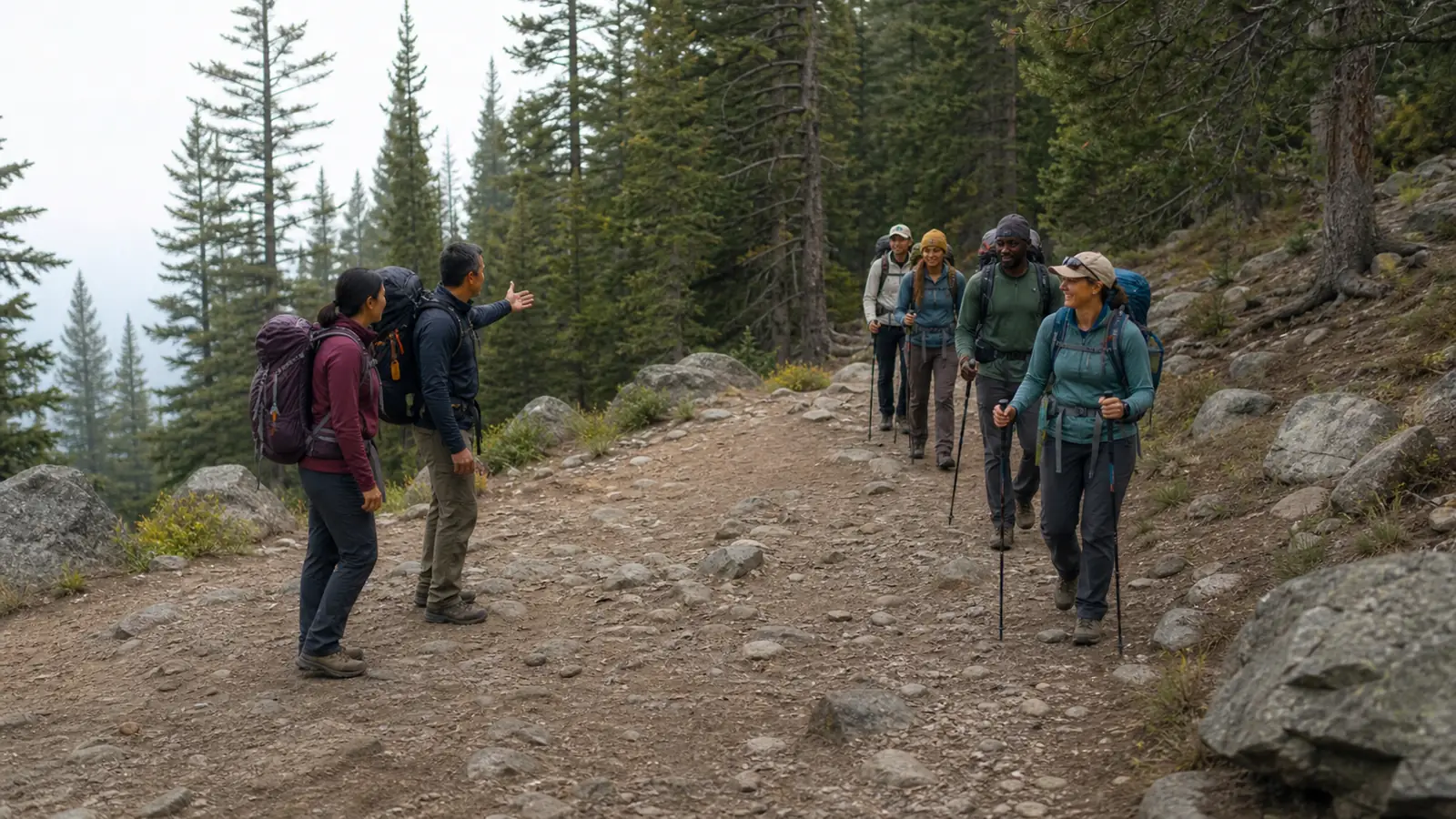
Trekking etiquette is the habit of choosing the move that creates less work, risk, noise, and damage for everyone else. On a multi-day route, that means signaling before a loaded pass, collecting water without washing at the source, respecting occupied sites, containing food odors, and preparing a quiet departure before people sleep.
Most etiquette questions are about who takes the harder move
Good trekking etiquette starts with one practical test. Ask which person, animal, campsite, or water source will absorb the harder move if you continue as planned.
Take the easier adjustment before another group has to take the risky one.
Shared route rule
A trekker carrying several days of equipment cannot step, stop, or turn as easily as an unloaded walker.
A person already climbing may need more effort to regain momentum, while a pack animal needs calm space and predictable movement.
The same test works overnight.
Spreading gear through a shelter forces others into smaller sleeping space, and washing beside a spring makes the cleanest collection point serve as a kitchen sink.
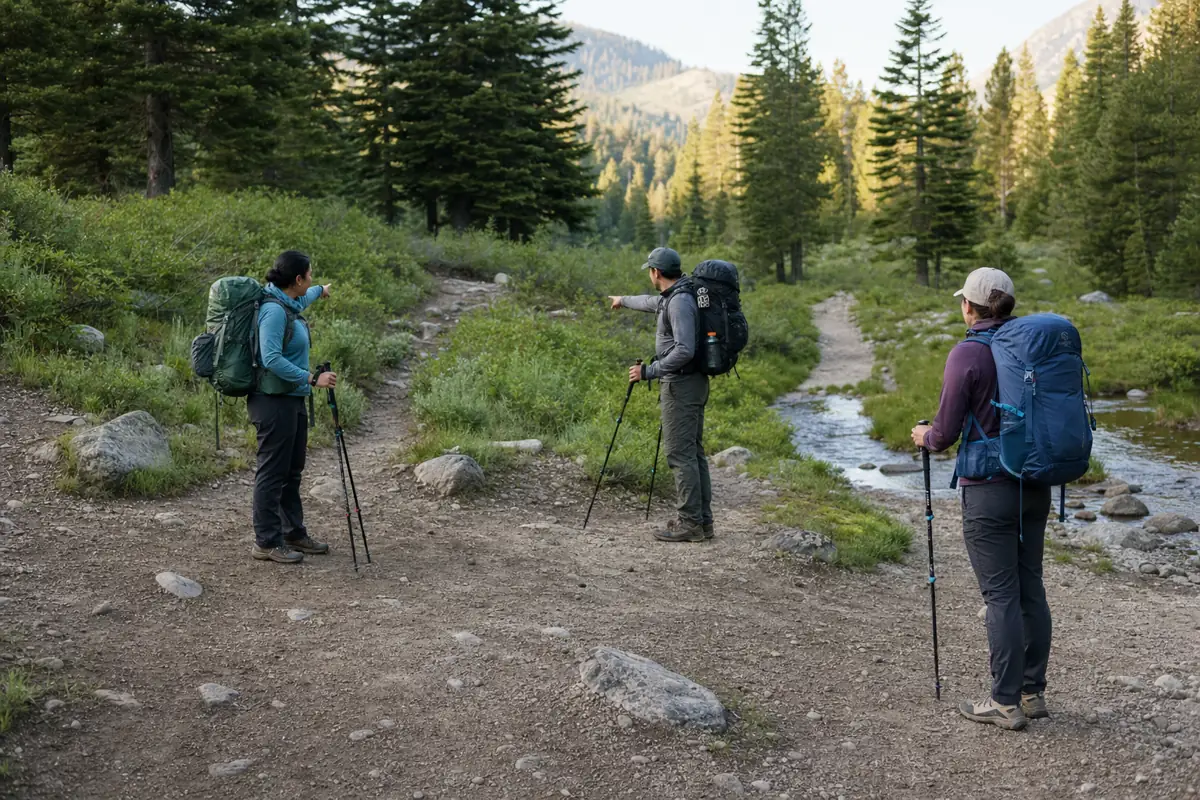
Rules posted by the land manager come first. Where no sign settles the moment, slow down, make eye contact, state your plan, and let the person with less room or control choose the safe pass.
New trekkers should practice these interactions before a remote route adds fatigue and overnight pressure. The trekking beginner basics put pace, pack control, water, camp, and recovery into one repeatable system.
Yield the easier move. Courtesy becomes useful when it prevents another person from stepping onto loose ground, backing an animal, abandoning a legal site, or collecting dirty water.
The hiking and trekking difference helps explain why pack weight, repeated days, and overnight stops make small encounters more consequential than on a short walk.
How should loaded trekking groups pass on a narrow trail?
Notice an approaching group before the trail narrows.
Choose a wide durable place, move in single file, and keep the full group together so the other party passes once rather than threading through separated walkers.
Uphill hikers usually have the harder restart, so downhill walkers should yield where local guidance uses that convention. Terrain can reverse the sensible choice, which is why a clear question is better than forcing someone toward an unstable edge.
| Encounter | Better move | Avoid |
|---|---|---|
| Passing a slower loaded trekker | Announce from several steps back and wait for acknowledgment | Squeezing past without warning |
| Meeting an uphill group | Stop at a stable wide point when you can do so safely | Making climbers step onto loose downhill ground |
| Meeting horses or pack stock | Follow the rider's direction and stand on the downhill side where advised | Hiding silently in brush or making sudden movements |
| Large group meets small group | Tighten into one line and pass as one unit | Spreading across the trail or splitting the other party |
| Taking a break | Move packs and poles completely off the walking line on durable ground | Sitting at a junction, gate, bridge, or water access |
When passing from behind, say how many people are with you.
“Two passing on your left when there is room” gives the other trekker time to choose a stable step and prevents surprise from the second person.
Do not race to overtake just before a narrow bridge, steep switchback, ladder, ford, or exposed traverse. Wait until both parties can stand securely without leaning under their packs.
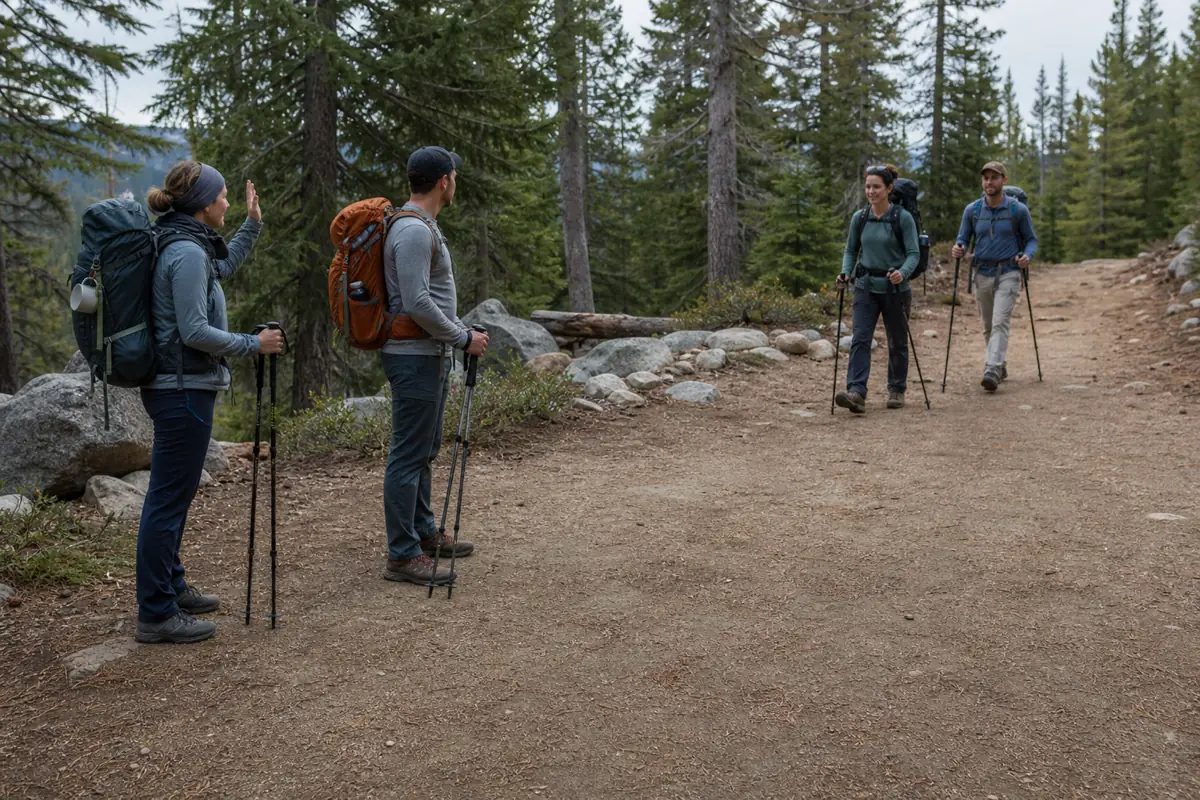
Talk normally near stock so the animal can identify you as a person. Follow the handler's instructions, keep poles and loose jackets still, and wait until the whole string has passed before returning to the trail.
Close gates as signs direct and leave them as you found them when no instruction appears. A gate controls animals and land use, so its position is not a personal preference.
Stable passing also depends on strength and balance under the real load. The trekking training plan should include controlled starts, stops, turns, and step-asides with a full pack.
Signal before you move. A quiet surprise is more disruptive than a short, calm conversation.
The broad trekking skills overview connects balance, pacing, navigation, and group management. Courtesy depends on those skills because a controlled trekker has more safe places to yield.
How do you collect water without blocking or dirtying the source?
Approach a spring, stream, or tank with bottles and treatment gear ready.
Find the cleanest safe collection point, fill promptly, then move away so another group can reach it.
- Observe firstCheck where water flows from and where people, animals, or runoff are entering.
- Collect cleanlyKeep hands, feet, cookware, soap, and dirty bottle threads out of the source.
- Clear the accessCarry filled containers to a durable spot away from the bank or spring box.
- Treat the waterFilter, disinfect, or boil according to the method and local risk.
- Wash elsewhereUse a container and follow the required distance and disposal method.
- Leave no scrapsStrain food particles and pack them with trash.
Do not hold the only flat approach while filtering several liters, eating lunch, or reorganizing packs. Collect first and complete those tasks somewhere that does not block the next person.
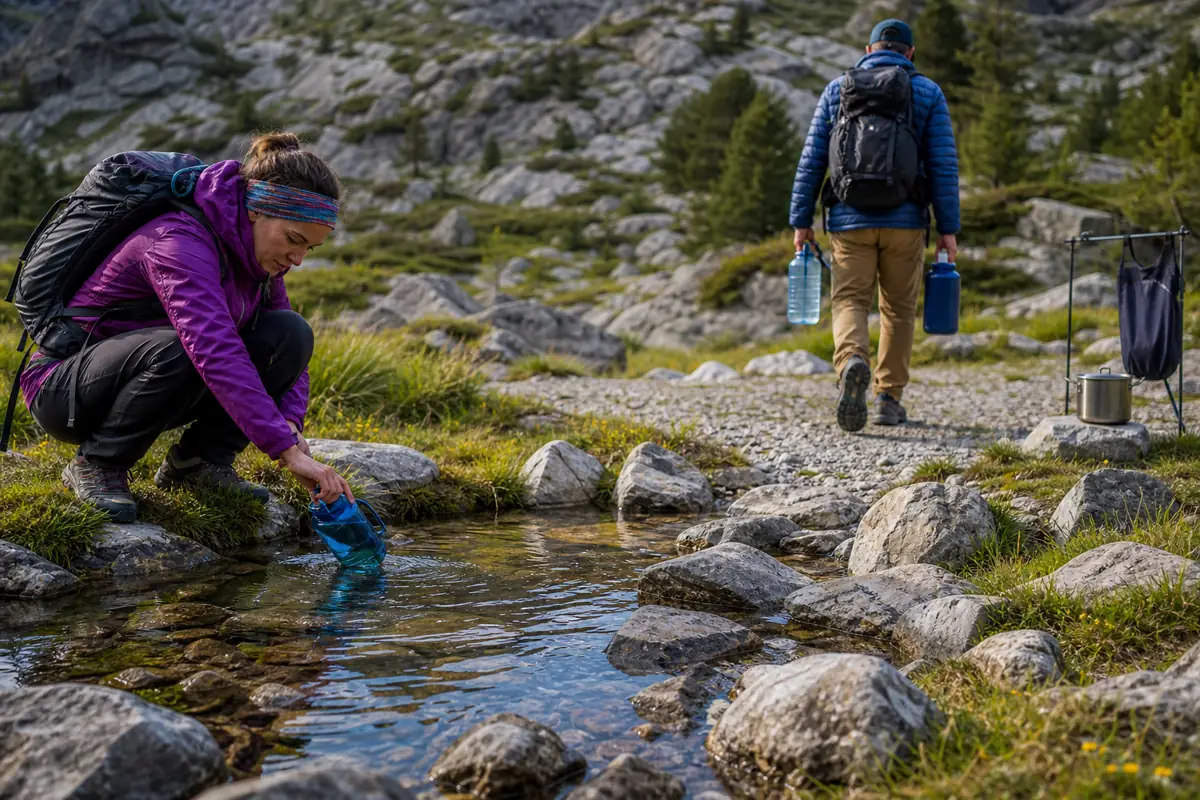
Soap does not belong in natural water, including soap labeled biodegradable. Carry wash water away and follow the current local distance and dispersal rule because soil, vegetation, wildlife, and regulations differ.
Avoid stepping into a shallow source when a bottle or scoop can reach it from durable ground. Mud stirred from the bottom can make the next group wait and can damage a fragile bank.
Give animals room to drink. If wildlife approaches a small source, move back rather than surrounding the water with people, food, and cameras.
Collection is the only source task. Treatment, washing, cooking, bathing, and breaks belong elsewhere.
The trekking water plan should include enough capacity to leave the source before drinking, cooking, and refilling every small container. Efficient collection protects both your schedule and shared access.
Can you use a campsite that looks empty?
Check permits, reservation systems, site numbers, occupancy tags, and local sharing rules before putting down a pack.
An empty tent pad can still belong to a party collecting water or finishing a side trip.
Use designated sites where required. In dispersed areas, choose an established durable surface when local rules allow it, rather than enlarging a worn site or clearing vegetation for a wider tent.
Keep guy lines, trekking poles, shoes, and cooking equipment inside the space you are entitled to use. A line stretched across the route to water or a toilet becomes a trip hazard after dark.
Late arrival does not create priority. If the legal site is full, use the alternate camp identified during planning rather than pressuring another party to crowd beyond the posted capacity.
Pushing toward a full site after the alternate cutoff is one of several common trekking mistakes that removes good choices late in the day. Decide when to use the alternate before leaving the previous checkpoint.
Occupancy survives an empty moment. Confirm that a site is available before treating unattended space as abandoned.
The first trek planning process should name legal alternate camps before departure. That preparation keeps a full site from becoming an argument at the end of a long day.
Your gear should take one person's worth of space
A shared shelter gives each person a sleeping place, not unlimited floor, hooks, benches, or drying space.
Keep the pack upright and closed, place footwear where it will not block an exit, and collapse poles before they become obstacles.
- Sleeping space
- Claim one compact footprint and keep walkways clear
- Pack space
- Store gear together instead of spreading items to mark territory
- Light
- Aim a dim headlamp at your own task, never across sleeping faces
- Sound
- Move long conversations and equipment sorting away during quiet hours
- Cooking
- Use only the place and method allowed by current shelter rules
- Departure
- Pack noisy items and loose equipment before people settle
Ask before moving another person's equipment. A wet jacket or food bag may be positioned for a safety reason, and touching attractants can create confusion about storage responsibility.
Do not reserve places for people far behind unless the shelter rules explicitly allow it. Space is normally used by the trekkers who have arrived, subject to permits, capacity, and any priority system posted on site.
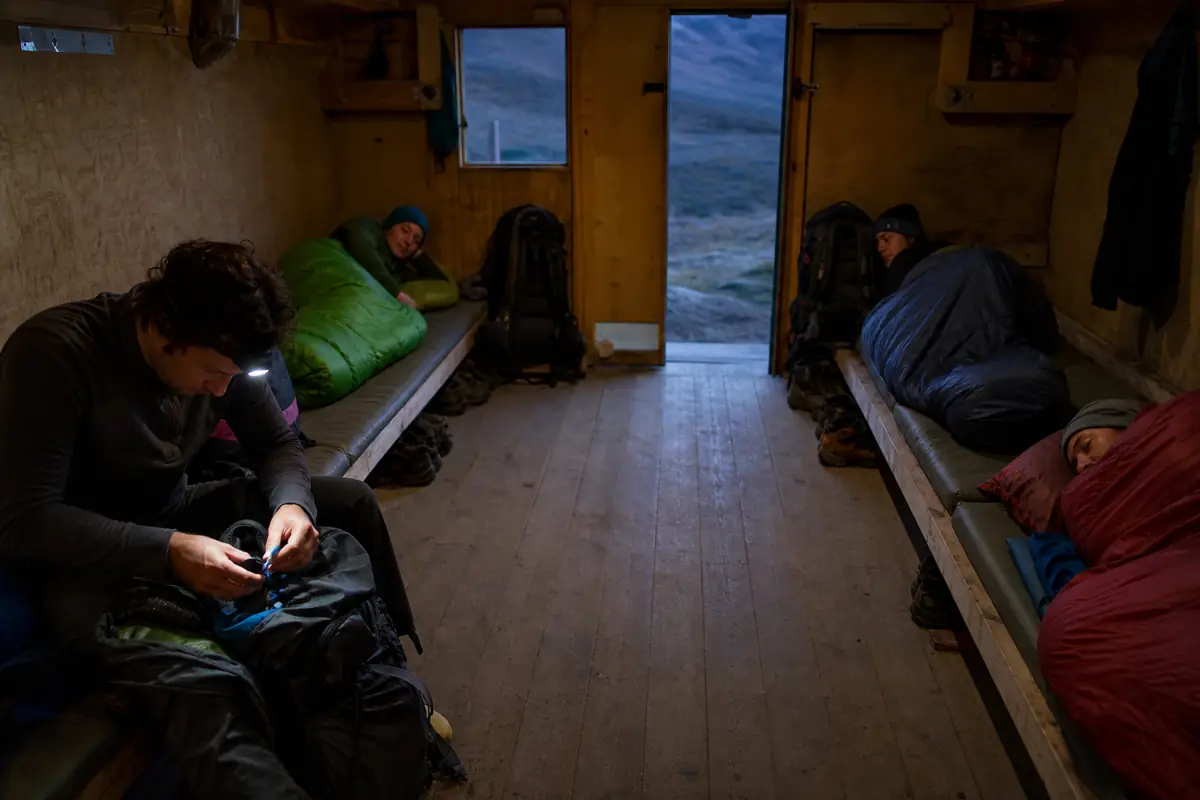
Keep strong odors and food out of sleeping areas when the local setup provides a cooking area or storage system. Never use a stove in a place where shelter rules, ventilation, or fire safety make it unsafe.
Set alarms to vibrate when possible, prepare layers before sleep, and keep early conversation outside. A headlamp on its lowest useful setting protects other people's rest and your own night vision.
If you snore heavily, arrive sick, or need to rearrange medical equipment during the night, say so calmly before lights out. People can choose positions and expectations more easily with honest information.
A person traveling alone may still share a shelter, spring, or designated camp. The solo trekking plan should include the same occupancy checks and a quiet routine rather than assuming solitude at every stop.
Keep one human footprint. More gear does not earn more shared floor.
Your trekking pack layout works better when small items have fixed homes, so nothing gets dumped on the trail while you search. Organized equipment reduces midnight searches and makes a quiet morning possible.
How should food and scented items leave camp?
Follow the exact storage method required for the area.
A hard-sided canister, locker, cable, pole, or approved hang is a local safety requirement, not a menu of interchangeable preferences.
Treat food, trash, cookware, toothpaste, lip balm, sunscreen, pet food, and other scented items as attractants when local guidance says they are. The storage system must fit all of them, not only dinner.
- Keep food attended while it is open.
- Prepare and eat in the designated area when one exists.
- Close storage immediately after removing or returning an item.
- Strain food scraps from dishwater and pack them out.
- Inspect the ground for crumbs, grease, tea bags, and packaging.
- Never leave unwanted food in a shelter, locker, fire ring, or beside the trail.
Do not assume that burning scraps makes them disappear. Food residue and partly burned trash can attract animals, smell for later groups, and violate fire rules.
Clean the cooking area as soon as the meal ends. A tidy site discourages rodents and larger wildlife from learning that camps provide food.
If another group stores food incorrectly, explain the current rule without handling their gear. Contact a ranger, host, or land manager when the behavior creates an immediate wildlife or safety problem.
Every odor leaves with you. The next party should not inherit wildlife investigating a meal they never cooked.
Repeated-day camp work is part of trekking with kids too. Giving each person a small cleanup job teaches that a shared site is restored before anyone relaxes.
Where should human waste and dishwater go?
Learn the current human-waste rule before departure.
Some places require toilets, some allow a cathole with exact depth and distance rules, and sensitive areas require every person to pack waste out.
Never choose a toilet area beside a trail, camp, shelter, or water collection point. Walk far enough to protect privacy and comply with the land manager's measured distance.
| Waste task | Better practice | Why a universal shortcut fails |
|---|---|---|
| Human waste | Use the required toilet, cathole method, or pack-out system | Soil, climate, use level, and regulations differ |
| Toilet paper | Pack it out when required and whenever decomposition is unreliable | Animals and erosion can expose buried paper |
| Dishwater | Strain scraps, pack solids, and disperse liquid as directed | Food residue attracts wildlife |
| Soap and bathing | Carry water away from natural sources before use | Biodegradable soap still affects water |
| Trash | Pack every item to an approved bin | Fire rings, shelters, and toilets are not disposal sites |
Carry a small waste kit where it can be reached without unloading the whole pack. Include the locally required tool or bags, hand cleaning supplies, and a durable outer bag for used material.
Do not build rock markers, hang paper, or leave improvised signs around a bathroom spot. Restore disturbed soil and natural cover only as the local method directs.
The local disposal rule wins over habits learned elsewhere. Check again when crossing into another park, forest, country, or protected zone.
Rain can push cooking and washing closer to shelter than planned. The rain trekking routine helps separate wet equipment from dry sleep space without moving wastewater or food odors into the sleeping area.
A quiet early start is prepared the night before
Prepare an early exit while normal conversation and light are still appropriate.
Refill water, place breakfast together, loosen only the equipment that will not spill, and pack items you will not use overnight.
- Stage clothingPut the morning layers in dressing order inside your sleep space.
- Contain loose gearPack cookware, poles, and small metal items before quiet hours.
- Use low lightAim a dim headlamp at your own hands and avoid sweeping the shelter.
- Move before talkingCarry the closed pack away from sleepers before conversation begins.
- Sweep the siteCheck for food, cord, stakes, waste, and moved natural material.
- Close what you openedRestore gates, storage, doors, and occupancy markers as rules direct.
Choose a breakfast that does not require a long noisy cooking routine when others are sleeping nearby. If hot food is essential, use the designated area and complete preparation away from beds.
Do not drag packs, shake shelters, or snap trekking poles beside sleeping people. Small sounds carry farther before dawn and can wake an entire site.
Pack tomorrow tonight. A prepared group can leave early without making its schedule everyone else's alarm.
Winter equipment is often louder, stiffer, and slower to pack. The winter trekking system needs extra preparation so frozen buckles, traction, and warm layers do not turn into a predawn equipment sort.
What should you agree with guides, porters, and hut staff?
Porters, cooks, hut staff, guides, drivers, and local hosts are people doing defined work. Agree on the service before the trek begins, including the load, schedule, meals, sleeping arrangement, payment, and what happens when weather changes the route.
Do not add loose equipment to a porter load at the trailhead because your own pack feels heavy. Weigh or divide group equipment by the operator's stated process, and keep personal essentials with the person who may need them during the day.
Ask before photographing a worker, a home, a ceremony, or a working kitchen. A person who helps the group travel has the same right to decline a photograph as any other trekker.
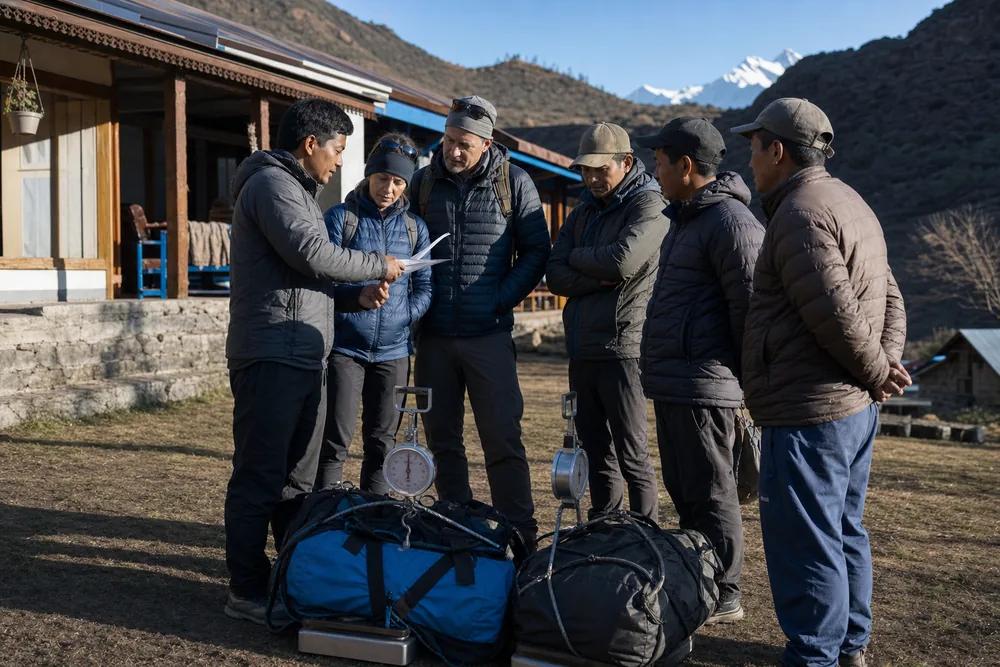
At a hut, learn where wet boots, packs, cooking, water, waste, and sleeping gear belong. Staff may be protecting a water supply, fire exit, food store, or cleaning routine that a tired visitor cannot see.
Give requests to the guide or named group contact instead of sending several people to ask for the same change. One clear conversation prevents conflicting meal times, wake-up calls, or baggage instructions.
Weather can force a shorter day or a different camp. Confirm who decides, what safety limit applies, and how extra work or an extra night will be handled before anyone starts moving equipment.
Carry the cash or payment method that the confirmed arrangement requires. Do not make the final transfer depend on an internet connection that may not exist at the route end.
Report damaged hut equipment or a missing item as soon as you notice it. Quietly replacing, hiding, or leaving the problem makes the next group and the staff spend time finding the cause.
Learn the local tipping practice from the operator or a current trusted source before departure. A tip should not replace the agreed wage, equipment, food, or safe load.
Make the agreement visible. Names, duties, timing, loads, and payment should be understood before fatigue or weather makes the conversation harder.
Sources
Leave No Trace presents seven minimum-impact principles that cover preparation, durable surfaces, waste, fire, wildlife, and consideration for other visitors: The 7 Principles. The U.S.
Forest Service advises trail users to yield courteously, give stock the trail, stand downhill from horses where directed, keep groups single file, camp away from trails, and let natural sounds prevail: USFS Trail Etiquette.
The National Park Service advises people not to enter occupied camps without permission and to leave sites clean: NPS Camp Etiquette. Its campsite guidance covers permits, reservations, site selection, food storage, and checking local rules: Finding and Setting Up a Campsite.
NPS backcountry rules show why food storage, washing, camping distance, and waste methods must be checked for the exact area: Yellowstone Backcountry Camping. Current site rules come first whenever they differ from general practice.
Step by stepPractical steps
- Notice the encounter early and choose a stable place to yield or pass.
- Collect water cleanly, then move away for treatment, washing, and breaks.
- Confirm occupancy and local sharing rules before entering a camp or shelter space.
- Secure every food, trash, and scented item under the current local method.
- Stage gear the night before so an early departure stays quiet and complete.
AnswersQuestions readers ask
Who has the right of way while trekking?
Follow posted local rules first. In common practice, downhill walkers yield to uphill walkers when safe, all hikers yield to horses and pack stock, and every group should choose a stable passing place rather than force another person toward an edge.
How should I pass a slower trekker?
Announce yourself from several steps back, wait for acknowledgment, say how many people are passing, and use a wide stable place. Do not squeeze past at a bridge, ford, switchback, or exposed traverse.
Can I wash dishes in a stream while trekking?
No. Collect water, carry it away from the source, use soap only as local rules allow, strain food particles, pack the solids, and dispose of liquid by the required method and distance.
Can I use an empty space in an occupied campsite?
Do not assume it is free. Check the permit, reservation, occupancy marker, capacity, and local sharing rule, then ask the occupants before entering or unpacking.
What is polite behavior in a shared trekking shelter?
Use one compact sleeping footprint, keep walkways clear, contain your gear, dim your headlamp, move conversations away during quiet hours, follow cooking and food rules, and stage an early departure before others sleep.