
Will Your Kids Still Manage the Walk Back on This Hike?
Choose the route for attention, snacks, safety boundaries, and the walk back.
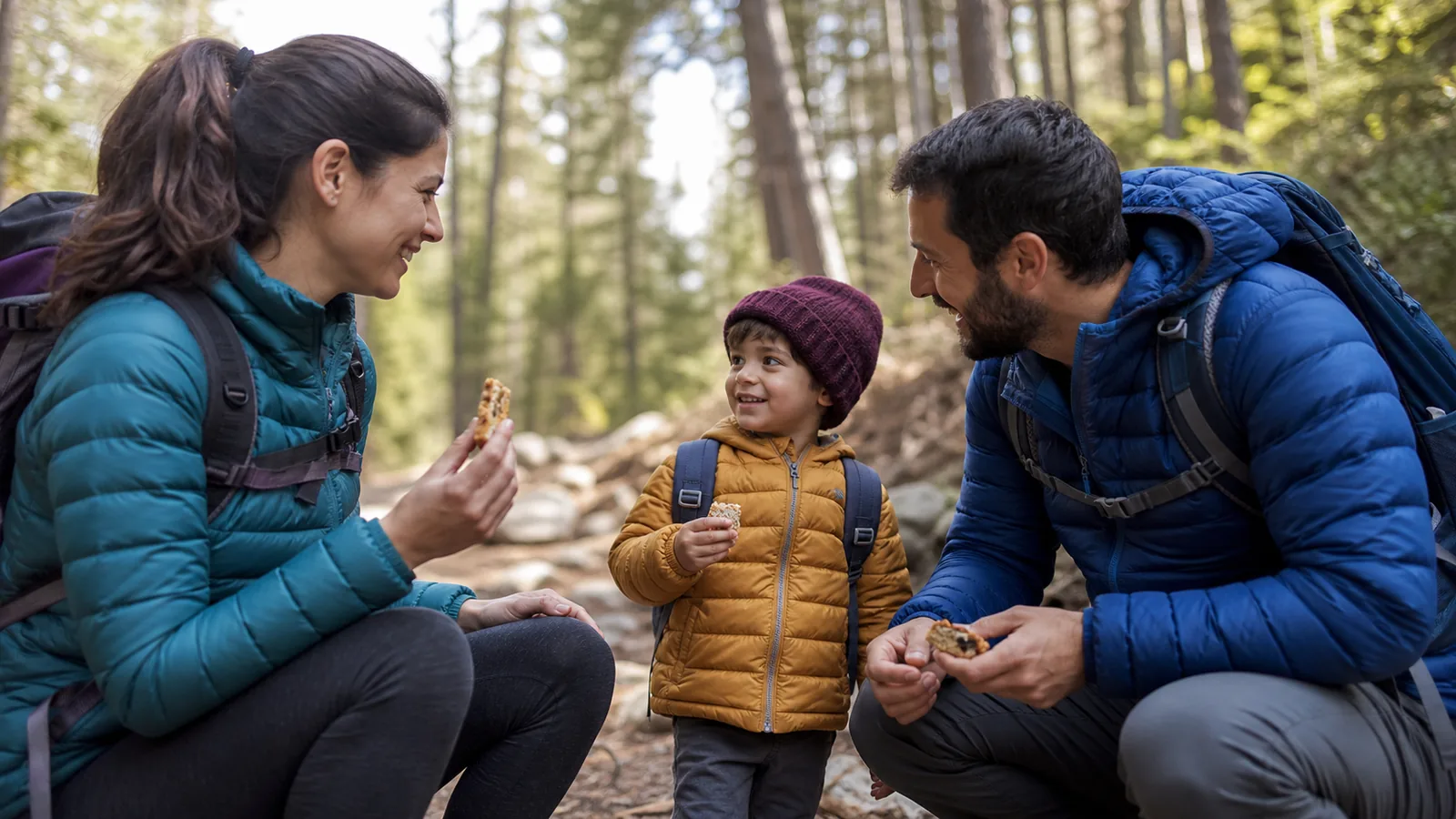
You should plan a family hike from the farthest point back to the car. The least-ready child sets the day, while adult positions, reachable fixes, short hazard rules, and one calm reset determine whether the family continues or turns around.
Which route keeps the walk back manageable?
A child-friendly route is short enough for the walk back after the main attraction, best snack, and first burst of excitement are gone.
Your route check should start at the farthest point and trace the return to the car. Count climb, surface, crossings, exposure, bathrooms, daylight, and the adult's ability to help a child who stops walking.
An out-and-back gives frequent turnarounds, but the return repeats the same distance.
A short loop avoids repetition, but it may commit the family after the midpoint. A shuttle or one-way route adds transport that can fail when a child is tired.
You should choose the route shape with the simplest early exit.
The return is the real route because tired legs and attention still have to cover it.
- Distance
- Short enough to reverse at the first persistent body or behavior change
- Surface
- Stable footing the least-steady child has already used
- Commitment
- No mandatory climb, crossing, or long loop after the easiest turnaround
- Interest
- Several close features rather than one reward at the end
- Needs
- Bathroom, food, water, shade, and layers work for the slow schedule
- Exit
- Adults can guide or assist every child from the farthest point
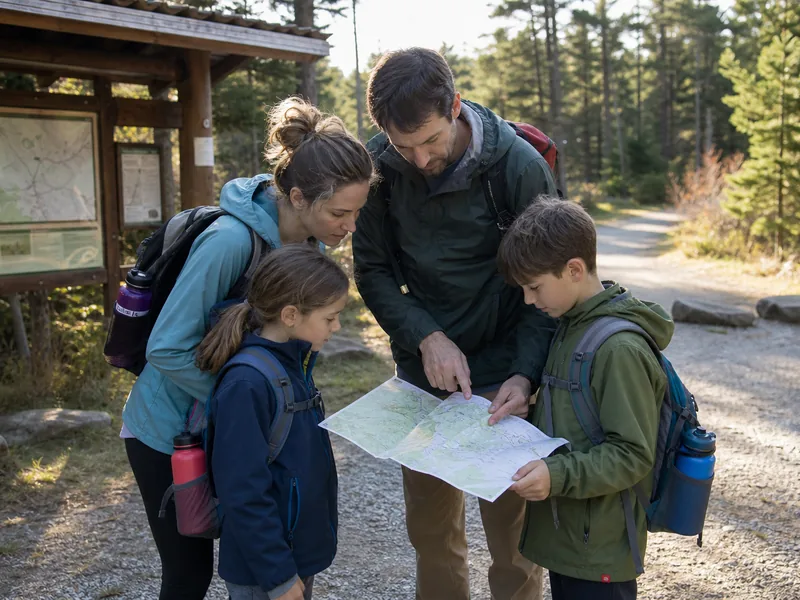
Work through two routes.
A two-mile out-and-back reaches a bridge after half a mile, a picnic area after one mile, and can reverse anywhere. A two-mile loop saves its rocky climb for mile three and has no shortcut.
The loop is not the better family route merely because it avoids repeating scenery.
Do not promise the summit, waterfall, or full loop before seeing the child on the trail.
Name the first bridge, sign, or overlook as the first decision point. Reaching it can be the complete hike.
Drive time changes the day too. A child who slept poorly in the car, skipped a toilet stop, or arrived hungry may have less capacity than the map suggests.
You should build those needs into the trip planning basics and check current access before leaving.
A child's first outing still runs on the first-hike route basics of distance, gain, surface, current conditions, and turnaround. A family adds closer supervision, faster access to food and layers, and an earlier exit.
How far should children hike today?
Age does not set one safe mileage. Recent walking, sleep, illness, heat, terrain, shoes, attention, fear, and the ability to return matter more than a chart.
Two children of the same age can need different routes on the same day.
You need recent evidence from the child, not a hopeful distance estimate.
A child who comfortably walked an hour in a park has proved an hour near exits on familiar ground. That does not prove an hour of climbing on loose rock.
Match time and surface first, then add one challenge.
Recent evidence beats an age formula when choosing the first route.
| Child state | What it proves | First route choice | What not to add yet |
|---|---|---|---|
| Toddler with short neighborhood walks | Brief movement with frequent stops | Very short loop near the car with a carry plan | Distance plus climb plus heat |
| Young child comfortable for 45 minutes | Time on easy ground | Short shaded out-and-back with visible goals | A committed loop |
| Older child who reads simple maps | Attention and one trail skill | Marked route with supervised junction jobs | Independent travel out of sight |
| Child new to uneven ground | No surface evidence yet | Packed tread with a small root or rock sample | Loose descent or exposed edge |
| Child returning after illness or poor sleep | Normal capacity is uncertain | Local walk that can end immediately | Remote route or schedule pressure |
| Mixed-age group | Different pace and attention needs | Route sized for the least-ready child | Making the older child drag or wait as punishment |
Run a rehearsal close to home with the planned shoes, socks, bottles, child pack, and layers.
You can test the day with 30 to 60 minutes on easy ground. Include a snack stop, toilet plan, small hill, and the return after the child is no longer excited.
You should watch where the first friction appears. Heel rubbing changes footwear.
Shoulder complaints reduce the child pack. Repeated requests to be carried shrink the route.
A child who stays comfortable but loses interest may need closer landmarks rather than shorter physical capacity.
For mixed ages, size distance for the least-ready child and add responsibility for the older child.
They can read the map beside an adult, choose between two snack spots, photograph trail markers, or carry a light personal item. Do not make their reward depend on pushing the youngest child farther.
You should change only one variable on the next hike. Add a little time, a modest climb, rougher ground, warmer weather, or a larger group.
Changing all of them hides which demand exceeded the child's margin.
Put one adult in front and one behind
Adult positions matter more than a general promise to watch everyone.
One adult leads at a pace that keeps the group together. Another stays behind the slowest child.
Both stop at every junction, crossing, edge, and change in visibility.
The sweep adult does not hurry the child. They notice loose laces, a changed gait, silence, cold hands, rubbing shoes, a toilet need, and whether the lead group has moved out of sight.
Line of sight is an adult job rather than a child promise.
Lead adult
Sets a pace that keeps the next child and the sweep visible, then stops before every junction.
Sweep adult
Stays behind the last child and watches feet, clothing, behavior, and growing gaps.
Boundary adult
Moves next to water, cliffs, roads, wildlife, or a busy pass before the children arrive.
Resource adult
Tracks water, food, layers, bathroom supplies, first aid, and the return snack.
Route caller
Compares time, weather, child state, and the shortest exit without debating from the front.
One-adult group
Uses a much shorter route, keeps every child within reach or clear sight, and avoids complex hazards.
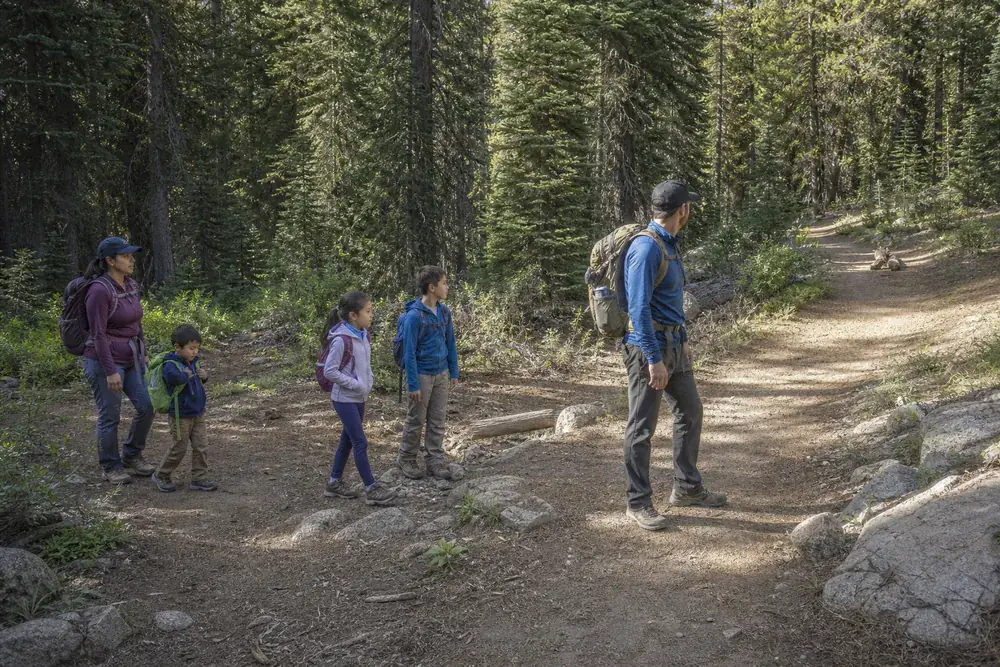
Say the jobs before leaving the car. Children should know which adult to follow, who stays last, and that the whole group stops at a junction.
When adults swap jobs, announce the change.
If only one adult is present, remove complexity.
The route should use a signed path without an exposed edge, fast water, confusing network, or crowd that can split attention. The adult should not need to manage a stroller, dog, map problem, and several moving children at once.
Perform a head count after every pass, stop, turn, and distraction. Keep children in sight rather than allowing an older child to run ahead around a bend.
NPS trail guidance explicitly tells adults not to let children get far ahead or behind.
Which child needs must stay within quick reach?
Family packing works when an adult can reach the next likely fix before a small need becomes the whole hike. Water, familiar snacks, a layer, rain protection, sun care, bathroom supplies, and foot care belong near the top or in known pockets.
Adults carry the group safety equipment.
A child may carry a light bottle, snack, whistle, or layer after the pack is tested. Remove it when straps hurt, the pack changes balance, or the return slows.
Pride is not a reason to preserve a painful load.
Fast access matters more than a neat pack once the child needs help.
- Water in bottles or cups the children can use without assistance.
- Several small familiar snacks plus one saved for the return.
- Dry warm layer and rain shell protected from leaks.
- Hat, sunscreen, and age-appropriate insect protection used as directed.
- Spare socks, blister care, small first-aid kit, and needed medication.
- Bathroom kit, hand cleaning supplies, and a waste plan.
- Map, charged phone, light, and outside trip plan held by an adult.
- Identification and contact information appropriate to the child's age and setting.
- Whistle only after the child learns when to use it and not to play with it.
- Carrier or realistic assistance plan when a young child may stop walking.
The normal hiking packing list is the starting point for a family day. NPS family guidance also highlights water, snacks, sunscreen, footwear, clothing, map, and first aid.
Your pack needs child access and extra clothing changes without dropping adult essentials.
Stage the first hour at the trailhead.
Every adult should know where the water, next snack, warm layer, bathroom kit, first aid, and light are stored. Do not make one adult's pack the only source of warmth if the adults may briefly separate for a toilet stop.
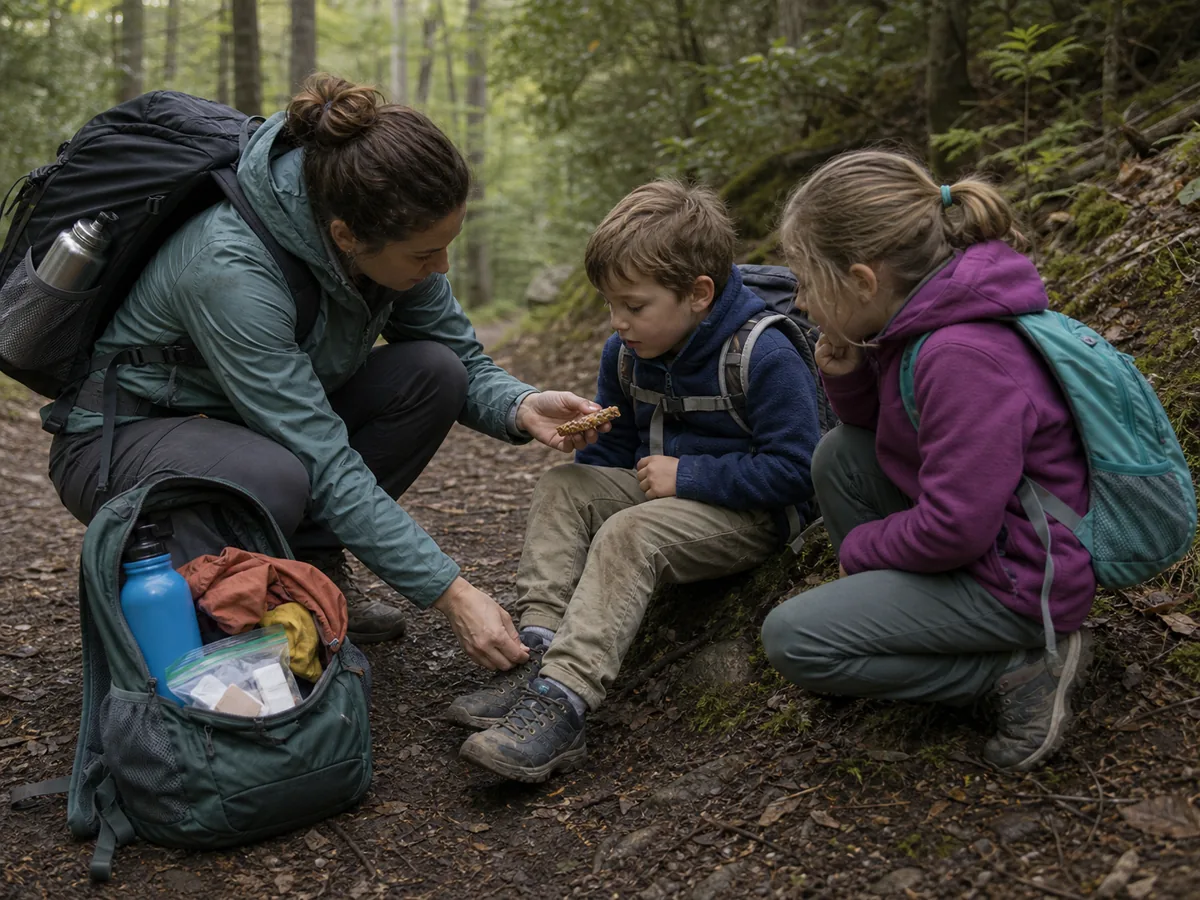
The whole group's supply comes from one water carry plan rather than separate guesses. Children need frequent offers because they may not ask before thirst, especially when play and conversation hold their attention.
Rain, cold, insects, and sun change the fast-fix list.
Steady rain adds dry-layer and footing choices for every child in the group. A hot day moves shade and turnaround timing to the front of the family plan.
Use visible goals without bargaining through fatigue
Children may run, stop, crouch over a beetle, ask to be carried, then run again. That rhythm is different from a steady adult pace.
Do not use the first ten excited minutes to expand the route.
You can use goals the child can see or understand.
You can ask the child to walk to the next trail sign, bridge, large tree, or safe rest rock. At that point, check the child and choose another small goal or turn around.
Small goals reveal the child's state while a promised summit can hide it.
- Let the first ten minutes settleKeep the promised route unchanged while excitement and clothing settle.
- Name one visible goalChoose a landmark close enough for the child to understand.
- Give one useful jobLet the child spot markers, count bridges, choose between two stops, or hold the family trash bag.
- Check before the rewardAsk about water, temperature, feet, toilet need, and fear before opening the snack.
- Offer a real choiceContinue to one close landmark or make the current spot the finish.
- Save one return activityKeep a story, observation game, or familiar snack for the second half.
- End without bargainingDo not trade a large prize for walking through pain, heat, fear, or exhaustion.
Jobs should fit the age and remain supervised.
A young child can find signs while holding an adult's hand. An older child can orient a map beside an adult or announce the next water stop.
No navigation job allows the child to disappear around a turn.
Games work best when they help the child observe the place. Listen for three sounds, sketch a leaf without picking it, photograph trail signs, or count bridges.
Do not encourage chasing wildlife, collecting protected objects, shouting around other visitors, or leaving the trail.
Your adult fitness work belongs on another day.
A child should not become the required pace or load for an adult training session. Adult capacity comes from separate hiking fitness work on days without children.
What does a tired or uncomfortable child look like?
A child who fades may become quiet, angry, silly, clumsy, tearful, slow, or unwilling to eat. Do not label the change before checking hunger, thirst, heat, cold, feet, fear, pain, a bathroom need, and ordinary loss of interest.
When the child's movement or mood changes, you should stop in a safe place and compare the child with the trailhead.
Listen to the answer, then observe gait, speech, attention, skin, hands, clothing, drinking, and shoe comfort. Children may say fine because they want the next attraction or fear disappointing an adult.
Check the cause before asking for effort so the response matches the problem.
| Observed change | First checks | One safe test | Exit or medical signal |
|---|---|---|---|
| Quiet, irritable, or tearful | Hunger, thirst, fear, heat, cold, and toilet need | Short sheltered stop with one likely fix | State remains changed after the stop |
| Repeated tripping | Pace, fatigue, footwear, surface, and coordination | Shoe check and slower steps on easy ground | Poor coordination continues |
| Cold hands or wet clothing | Wind, shade, wet cuffs, socks, and dry layer | Add dry warmth before shivering | Shivering, confusion, or worsening function |
| Headache or unusual fatigue in heat | Water, shade, heat index, pace, and urine history | Stop activity, move to shade, cool, and offer water if alert | Confusion, fainting, vomiting, poor coordination, or unusual drowsiness |
| Hot spot or limp | Socks, heel, toes, debris, blister, and pain | Fix the shoe and protect the skin | Limp or pain changes normal walking |
| Refuses food | Nausea, heat, fear, illness, and usual appetite | Do not force food, shorten the route | Vomiting, severe pain, or worsening behavior |
| Asks about the car repeatedly | Fatigue, fear, boredom, and return distance | Make the next close landmark the finish | The request continues or movement declines |
The American Academy of Pediatrics treats a heat index at or above 90 F as a significant health risk for children.
Local shade, humidity, exertion, clothing, and each child's health still matter below that number. Shorten or cancel before a child becomes the heat test.
Children should drink frequently with water available before they ask.
AAP guidance notes that during vigorous activity with sweating, many children age 9 to 12 may need roughly 3 to 8 ounces every 20 minutes. That is not a universal hiking prescription.
Younger children, teens, lower effort, medical conditions, food, heat, and individual needs change the amount, so follow pediatric guidance.
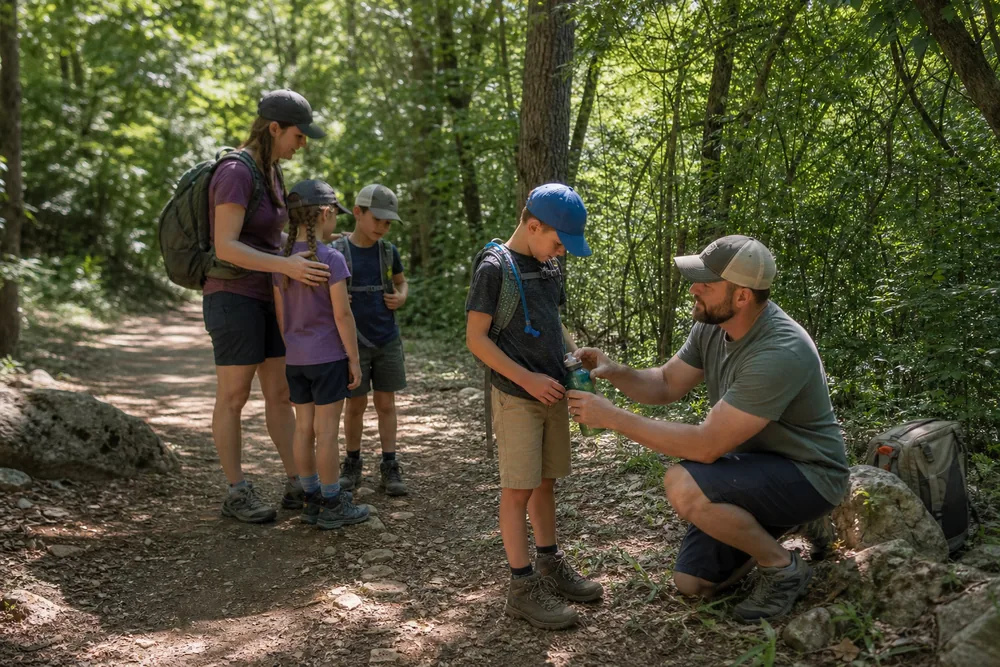
Feeling faint, confusion, loss of coordination, severe or unusual headache, vomiting, unusual drowsiness, or a child who is hard to wake needs prompt action. Stop activity, move to a cooler place, begin appropriate cooling, and seek medical help according to the symptoms and local emergency guidance.
Cold deserves the same attention.
Children often run hot, then cool quickly during a long snack stop. Add a layer before shivering.
Replace wet clothing when possible, protect from wind and rain, and use the shortest exit when hands, speech, coordination, or behavior changes.
Feet need a direct look.
Smooth a sock, remove grit, relace the shoe, protect a hot spot, and check that toes are not hitting the front on descents. A limp is not a motivation problem.
You should turn around or assist the child when pain changes normal walking.
Which trail rules should children learn at each hazard?
Children remember a short action better when the place provides the cue. Teach the junction rule at the first sign, the water rule before the bank, the edge rule before the overlook, and the passing rule before the path narrows.
You should use the same short safety words all day. A long talk in the car will not compete with water, wildlife, or a crowded viewpoint.
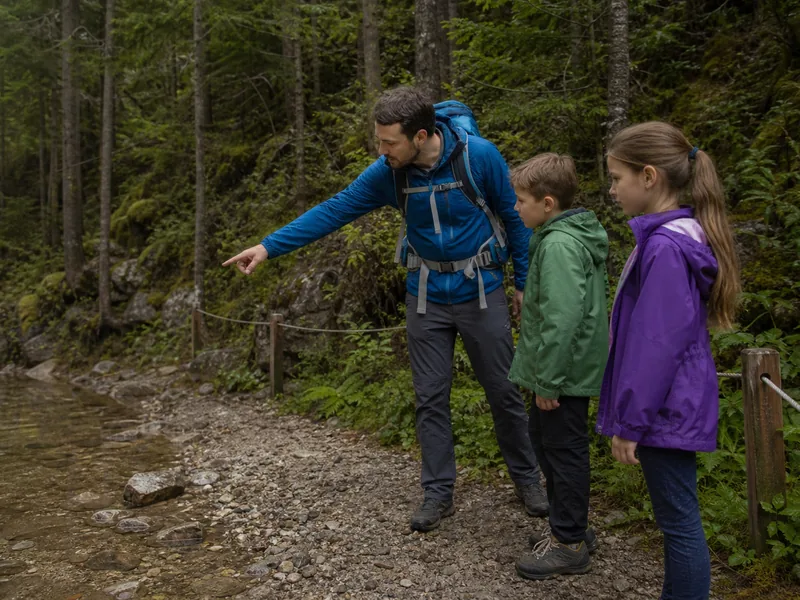
Place plus action makes the rule easier to repeat when the child is excited.
| Place | Child action | Adult position | Why it works |
|---|---|---|---|
| Junction or sign | Stop, touch the sign if safe, and wait | Lead stops before the turn and sweep closes the group | Nobody guesses which branch the child took |
| Water edge | Stop one large step back | Adult stands between child and water | Excitement does not move the child onto a slippery bank |
| Cliff or steep slope | Feet on the marked trail | Adult moves within immediate reach | The rule names a visible boundary |
| Wildlife | Stop and look only | Adult keeps the group back and prevents feeding or chasing | Distance protects children and animals |
| Passing group | Step to the chosen side and pause | Adults place children away from the moving party | Bikes, dogs, horses, and hikers get a predictable path |
| Lost sight of family | Stop in place, call, and use the whistle as taught | Adults return to the last confirmed point and follow the emergency plan | Wandering makes the search area larger |
Teach the child their full name, the adult's name, and an age-appropriate contact method. A whistle is useful only after the child understands that it is for separation or emergency, not a trail toy.
Adults keep the map and navigation responsibility. Older children can learn under supervision, but they still stop at every junction.
Adults should practice compass basics before making a child lesson the family's only navigation plan.
Passing, noise, waste, wildlife, and durable trail are the shared-trail habits a family practices together. Adults must model the rule they expect the child to follow.
When should a family turn around after one reset?
When a child changes, stop where the group is safe. Name one likely cause and make one direct fix.
Offer water for thirst, food for hunger, shade and cooling for heat, a layer for cold, a shoe check for foot pain, or a toilet stop for discomfort.
Give the fix a short chance to work while staying near the exit.
If gait, speech, coordination, mood, or willingness does not return to the child's normal state, turn around. Do not stack snacks, games, promises, and scolding until the child walks farther.
One failed reset ends the outward plan while the family still has a normal return.
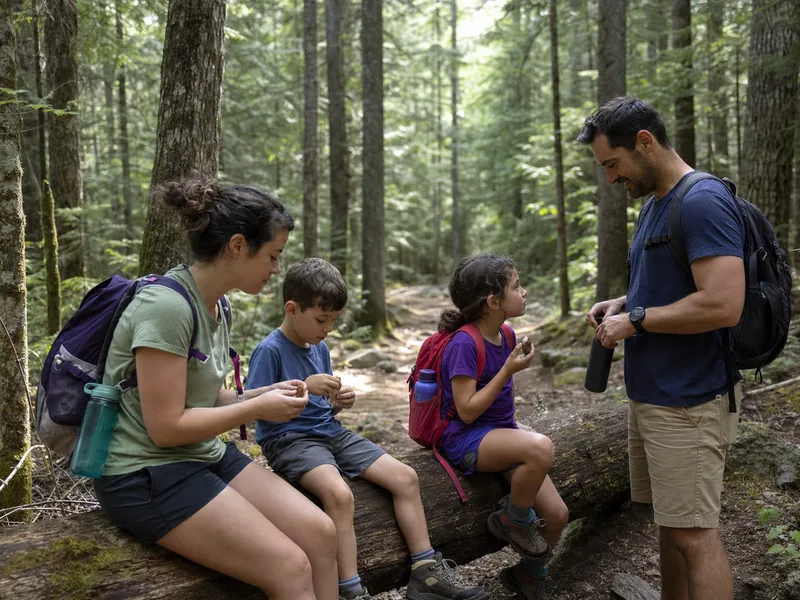
You can make the turnaround calm by naming the current bridge, rock, or sign as the finish.
Take the photo, have the planned stop, and describe the return as the second half rather than a punishment.
The adult route caller decides.
Do not ask a tired child to vote against an older sibling or adult who wants the destination. A child can choose between two safe options, but adults own the safety boundary.
At home, record route time, surface, weather, shade, water, food, clothing, favorite feature, and the first state change. Include how the child walked after the drive and the next morning.
Adult memory often keeps the view and loses the slow return.
You should check the child for ticks after wooded, brushy, or grassy outings.
CDC guidance includes the hair, ears, under the arms, navel, waist, between the legs, and behind the knees. Check clothing, packs, and other gear too.
You should use an EPA-registered insect repellent exactly as the label directs. The CDC says products containing oil of lemon eucalyptus or para-menthane-diol should not be used on children under three.
Apply repellent to an adult's hands before applying it to a child's exposed skin, and avoid hands, eyes, mouth, cuts, and irritated skin.
You should change one thing next time.
Add a little time, a mild hill, a new surface, or another family. Keep the other variables familiar so the adults can tell whether the child gained capacity or the route simply became harder.
Pace, late starts, footwear, water, and ignored warnings are the most common hiking mistakes that stack on each other. Family hikes add attention and supervision, so the route needs more reserve.
A useful family hike ends with normal gait, safe temperature, enough water and daylight, and a child who still trusts the adults to listen on the next trail.
Step by stepPractical steps
- Choose the route from the farthest point back and keep an early exit available.
- Size time, surface, climb, and weather for the least-ready child's recent evidence.
- Assign lead, sweep, boundary, resource, and turnaround jobs among the adults.
- Stage water, food, layers, bathroom supplies, foot care, navigation, and light for quick access.
- Use close visible goals and age-appropriate jobs without hiding fatigue or fear.
- Check the whole child when movement or behavior changes and test one likely fix.
- Turn around when normal movement and communication do not return, and record recovery for the next route.
AnswersQuestions readers ask
How far should kids hike?
There is no universal mileage by age.
Start from a recent comfortable walk, match the surface, keep an early turnaround, and add only one new demand such as time, climb, heat, or rough ground. The least-ready child's return sets the route.
What should kids carry hiking?
A tested light pack may hold a bottle, snack, whistle, or layer. Adults should carry navigation, first aid, extra water, weather protection, light, and the group safety equipment.
Remove the child's pack if straps hurt or it changes the return.
How do I keep kids interested on a hike?
Choose a route with close landmarks and give one age-appropriate job such as spotting signs, counting bridges, or reading the map beside an adult. Use one visible goal at a time and save an activity for the return.
What is the most important safety rule for kids?
Keep every child in sight and stop the whole group at every junction. Teach the child one repeatable action such as stop at the sign and wait, then use the same words all day.
When should we turn around?
Stop safely when gait, speech, coordination, temperature, feet, thirst, mood, or behavior changes.
Test one likely fix. If the child does not return to normal movement and communication, use the shortest normal exit.
How often should children drink on a hike?
Offer water frequently and before children ask, then adjust for age, effort, weather, food, health, and pediatric guidance. During vigorous sweating activity, AAP guidance gives 3 to 8 ounces every 20 minutes as a general example for many 9-to-12-year-olds, not a universal trail rule.
What heat signs in a child need urgent action?
Confusion, fainting, loss of coordination, repeated vomiting, severe or unusual headache, unusual drowsiness, or a child who is hard to wake needs prompt cooling and medical help. Stop activity, move to a cooler place, and follow local emergency guidance.