
What Is Good Hiking Etiquette When Yielding and Passing?
Share the trail clearly, protect the tread, and make passing easy.
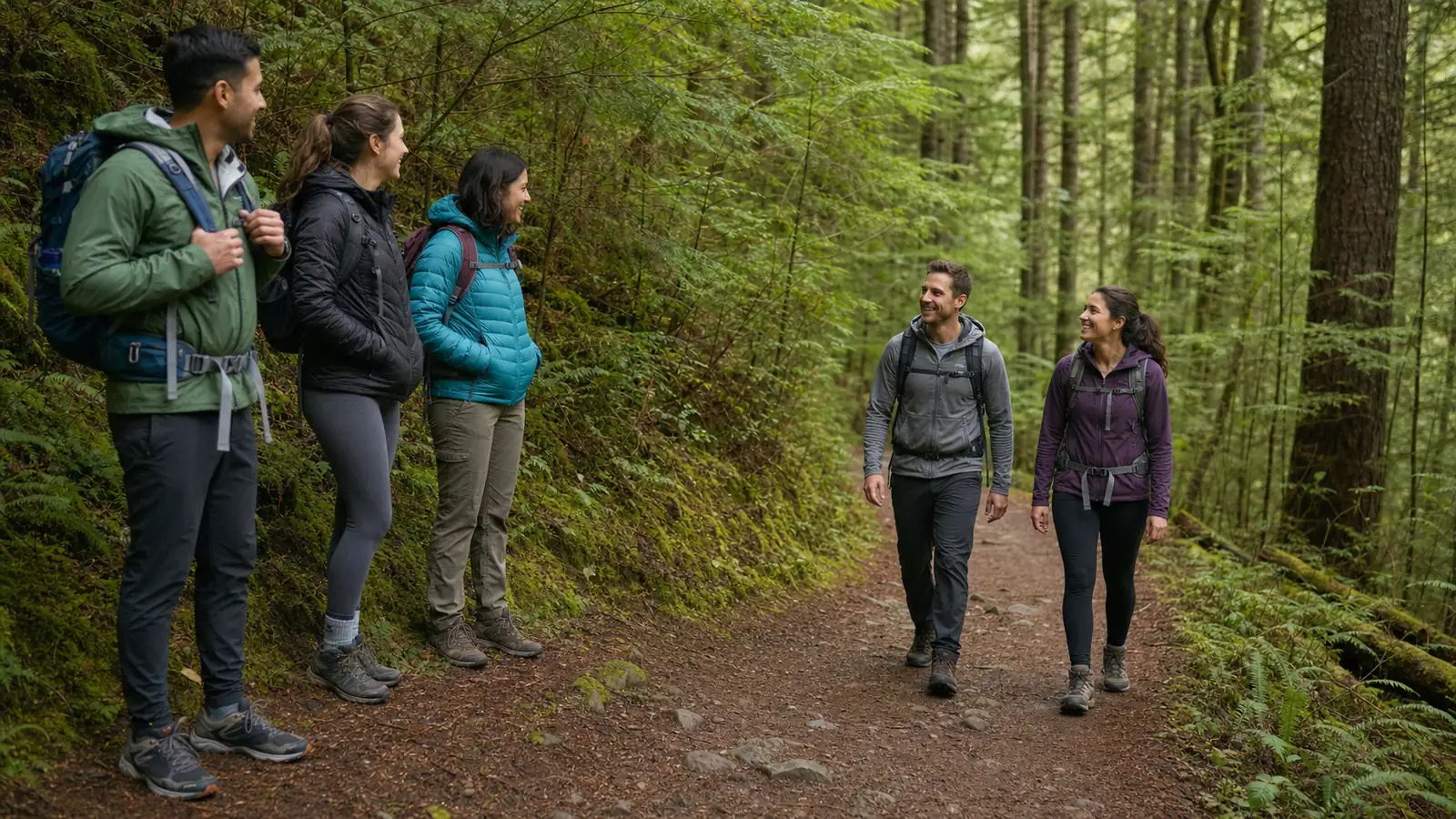
Hiking etiquette is practical, not fancy. Clear yielding, calm passing, quiet behavior, leash control, and staying on durable trail keep people, animals, and the route itself safer.
Who yields on a hiking trail?
Use simple right-of-way rules, then adjust for posted signs, footing, and the space each user needs. Uphill hikers often get priority because restarting on a climb is harder, and horses need more space than people.
The polite move is the clear move. Stop where the other party can understand what you are doing.
Good yielding removes confusion before the trail gets crowded.
| Trail meeting | Usual move | Why it helps |
|---|---|---|
| Downhill meets uphill | Downhill steps aside | Uphill rhythm is harder to restart |
| Hiker meets horse | Hiker steps to the downhill side when safe | Horses need space and calm movement |
| Fast hiker behind you | Step aside at a durable spot | Passing stays controlled |
| Group meets solo hiker | Group compresses and yields | Large groups take more trail |
| Dog meets anyone | Handler shortens leash | Other users should not manage the dog |
Use that order when two rules seem to conflict. The usual yielding custom is the starting point, but it never requires a hiker to balance near a drop-off or push another user into fragile plants.
- First authority
- Follow posted signs and the land manager's local rules
- Safety check
- Use the nearest stable spot instead of forcing a textbook move
- Predictable move
- Stop early, make eye contact, and say what will happen
- Surface check
- Step only where the tread or shoulder can handle the traffic
- Animal check
- Yield to horses and follow the rider's calm direction
When the normal rule does not fit the ground, name the stable spot and let one party move at a time.
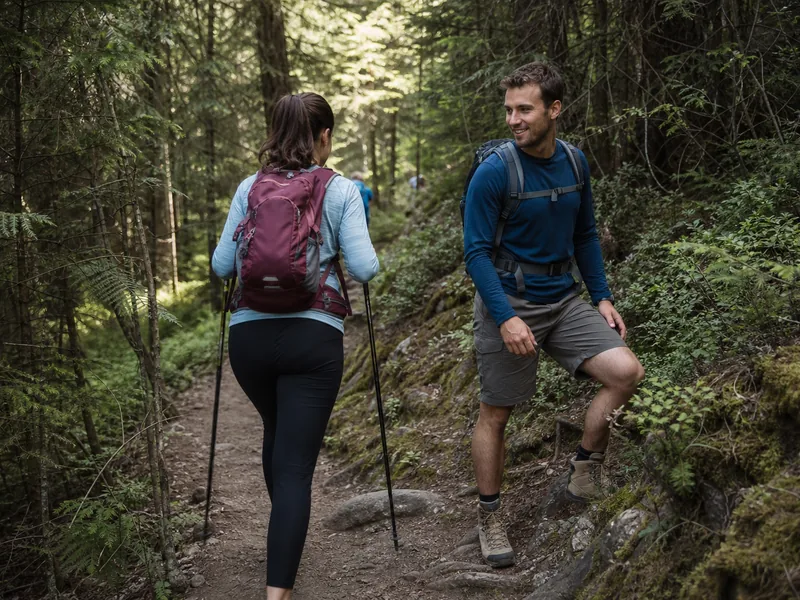
Dog handlers need a short-leash passing routine that keeps the animal beside them before the other trail user arrives.
A wrong right-of-way call is easy to repair
Fix the moment plainly.
Stop, give space, say what you are doing, and let the other person pass safely. Most trail mistakes get worse when people rush, joke defensively, or keep moving while everyone is confused.
Right-of-way rules are useful, but footing and safety still win. If the uphill hiker is standing in a wide durable spot and you are on a narrow drop-off, communicate and choose the safer move.
Etiquette is not about winning the rule. It is about making the next ten seconds clear.
After the pass, move on. Stopping to explain every detail can block the trail again and make the moment larger than it needs to be.
Narrow trail changes the usual rule
Narrow trail changes the etiquette job. The useful question is who can make the safer move.
Look for the nearest durable widening, rock step, or firm shoulder before anyone squeezes past.
If no safe step-off exists, one party should stop early and speak clearly. A few calm seconds prevent brush damage, startled dogs, and awkward shoulder-to-shoulder passing.
The safest stable spot beats the rulebook answer on a narrow trail.
Drop-off edge
Do not force the outside person to balance near exposure.
Muddy shoulder
Step through durable mud when safe instead of widening the trail.
Blind corner
Announce early and slow before the turn.
Dog or kid present
Give the handler time to shorten the leash or gather the child.
Heavy pack
Let the less stable person keep the better footing.
Rain makes this choice sharper because slick roots and mud reduce safe passing spots. Use wet-weather planning when footing changes how people should move.
Shared-use trails need clearer signals
Shared-use trails need earlier communication because hikers, horses, runners, and bikes move at different speeds and read the trail differently. The safest etiquette is predictable movement.
Step aside where the ground is durable, make eye contact when possible, and avoid sudden moves around animals or fast users. If you are wearing earbuds, keep one ear open enough to hear what is coming.
National Park Service guidance gives horses and other pack stock priority over hikers.
Move to the downhill side when it is safe, stand quietly, speak in a calm voice, and follow the rider's direction. Keep poles still and bring dogs close before the animal reaches you.
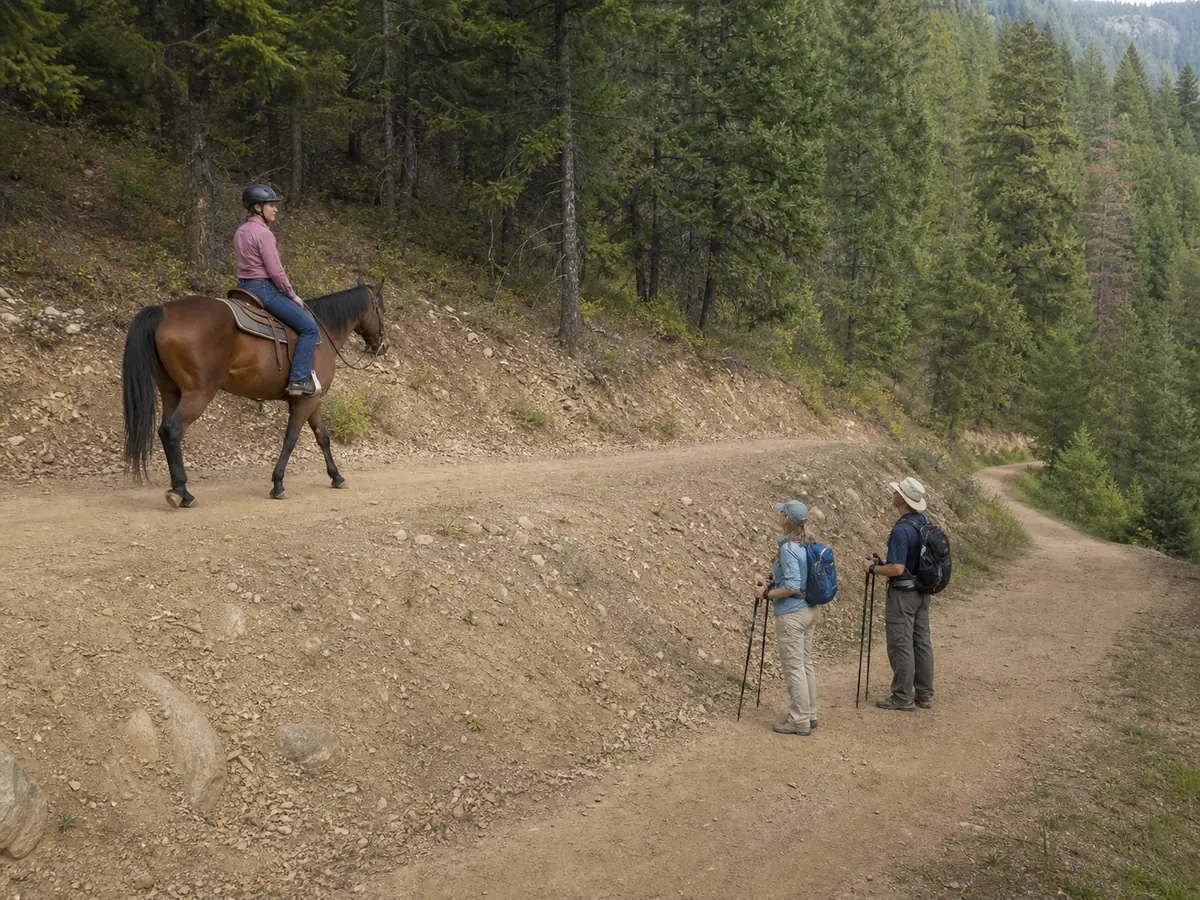
Bikes generally yield to hikers and horses on shared trails, but the posted rule for that trail comes first. A hiker who already has a safe durable pullout may still wave a bike through.
Courtesy can make the pass easier without changing who was expected to yield.
On shared trails, being predictable matters more than being technically right.
| Trail user | Better hiker move | Why it helps |
|---|---|---|
| Horse | Stop, speak calmly, and give space | Horses can startle at quick movement |
| Runner | Hold your line or step aside clearly | Last-second dodges cause confusion |
| Bike where allowed | Move predictably at a safe spot | Speed changes passing distance |
| Large group | Compress before the pass | Others should not weave through you |
| Dog team | Ask before approaching | Dogs and handlers need control space |
How should you pass another hiker?
Pass with a calm voice, enough space, and no surprise movement. Say which side you want if the trail is narrow or the other person does not hear you.
Do not push through brush or fragile trail edge just to keep your pace.
A good pass is slow enough that nobody has to guess.
- AnnounceSay hello before you are close.
- AskUse a simple phrase if space is tight.
- PauseLet the other person choose a stable spot.
- PassMove at walking speed.
- ThankReset the tone and continue.
If the other person is startled, you started the pass too late.
Passing rule
Crowded rainy trails need extra patience because mud and slick roots reduce passing options. A wet-trail footing plan should identify where your group can stop without widening the tread.
How should groups manage kids and dogs on busy trails?
Groups should shrink when other users approach. Walk single file on narrow trail, keep voices reasonable, and do not block junctions for long breaks.
Kids and dogs need closer handling because they move unpredictably.
The larger or less predictable your group is, the more responsibility you carry.
Groups
Step aside together instead of spreading across the trail.
Kids
Teach stop-and-wait rules at junctions and water.
Dogs
Keep leash short during passes.
Speakers
Use headphones or keep sound low enough that others can avoid it.
Breaks
Move off the durable side only when the spot can handle it.
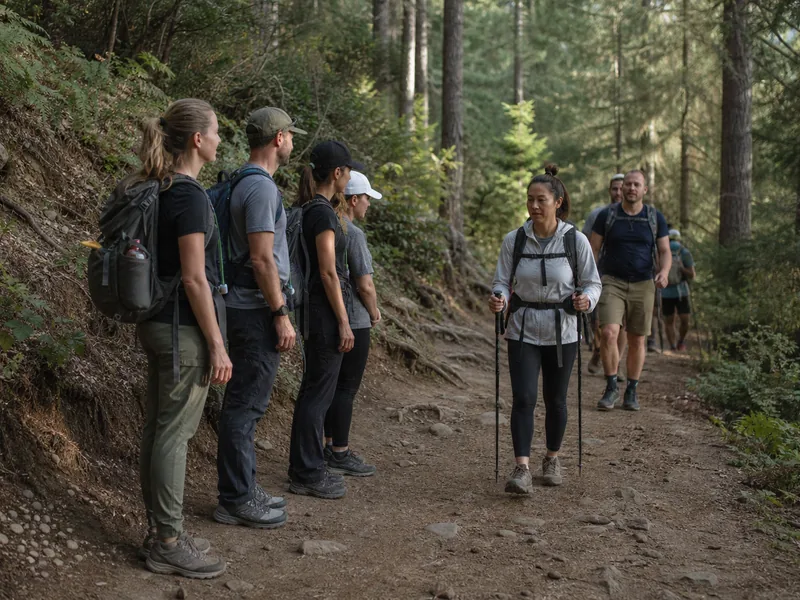
Family-specific pacing and boundaries matter before the trail gets busy, especially on hiking with kids days.
Trailheads and viewpoints need lower friction
Trail etiquette starts before the dirt path. Do not block the map board, restroom path, water station, bridge entrance, or first narrow section while adjusting packs or waiting for friends.
At viewpoints, take the photo, step aside, and let the next group enjoy the same space. Long breaks belong where people can pass without squeezing around your pack, poles, or snack spread.
Busy places need shorter stops and clearer space.
| Place | Better habit | Why it matters |
|---|---|---|
| Trailhead map | Read, then step aside | Others need route info too |
| Narrow bridge | Cross before stopping | Bottlenecks form fast |
| Viewpoint | Take turns near the edge | Everyone came for the view |
| Restroom path | Keep packs and poles clear | People need access |
| Parking area | Leash dogs and control kids | Cars and excited hikers mix poorly |
If your group needs a longer reset, move well away from the flow before opening snacks or changing layers. Busy trailheads work better when people treat them like intersections, not picnic spots.
Stops belong on durable ground out of the flow
Stop where the trail can keep working without you. Move past junction signs, bridge entrances, narrow stairs, and viewpoints before you pull out snacks or take a long photo.
For bathroom breaks, follow the land manager's rules and keep away from water, trail tread, camps, and places people gather. Pack out hygiene trash every time.
A good stop does not make the next hiker solve your pause.
Photos
Step fully out of the tread before framing the shot.
Snacks
Pick durable ground where crumbs can be controlled.
Bathroom
Follow local distance and disposal rules.
Viewpoints
Take turns instead of occupying the whole edge.
Junctions
Clear the sign so others can read and decide.
Stay on the built tread when mud or snow narrows it
Stay on the built tread, even when mud, puddles, or rocks make the middle less pleasant. Walking around the edge widens the trail and damages plants.
Cutting switchbacks creates erosion because water follows the shortcut downhill.
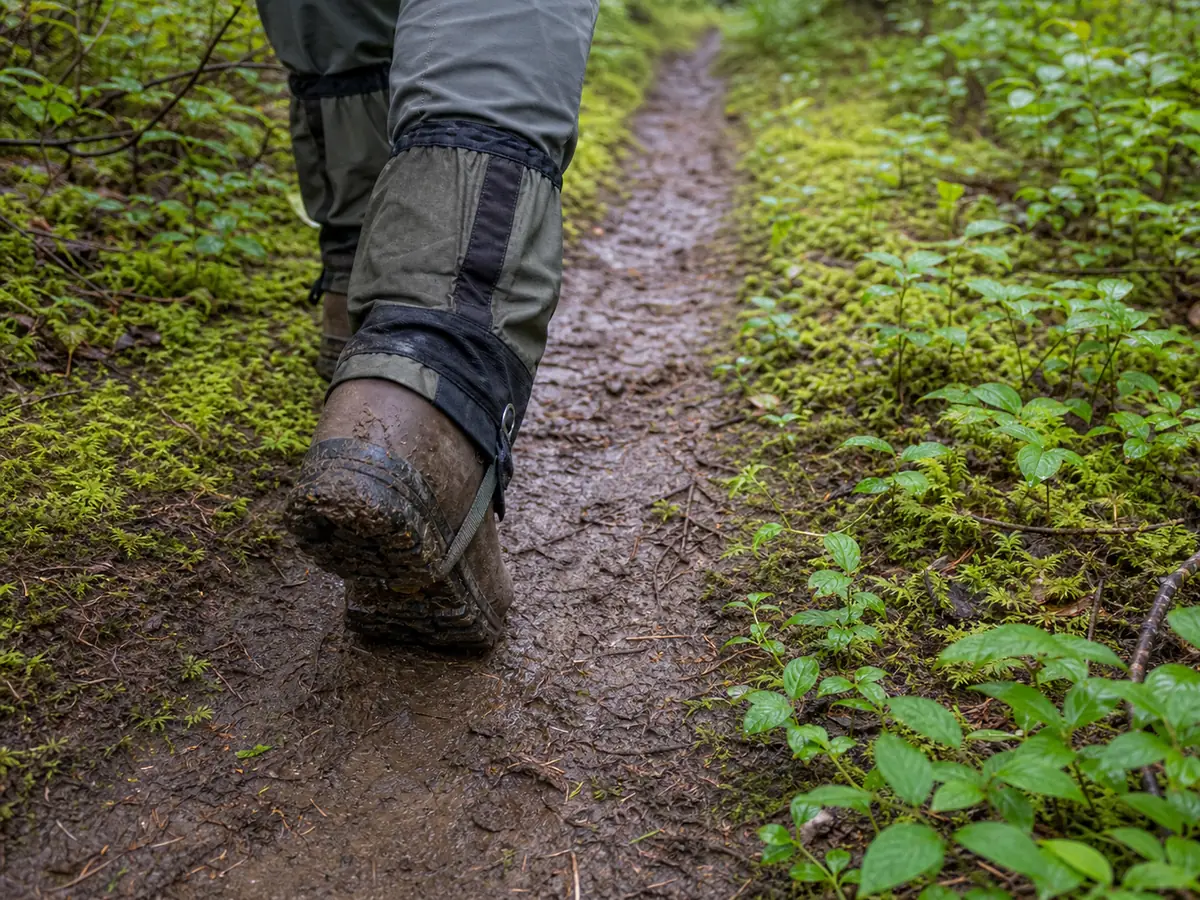
Dirty shoes are easier to fix than a widened trail.
- Walk through durable muddy sections when safe.
- Stay off fragile trail edges and restoration areas.
- Do not cut switchbacks.
- Keep breaks on durable surfaces.
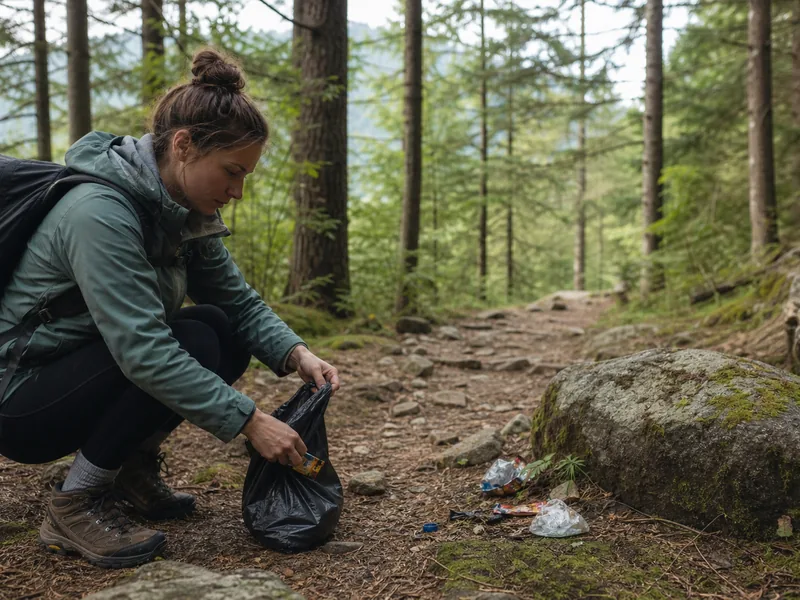
- Pack out food scraps and trash.
- Leave rocks, plants, signs, and structures alone.
Many small hiking mistakes become lasting trail damage when each person steps around the same puddle or shortcut.
Solo hikers still need etiquette because nobody else is there to smooth over a poor pass. A solo hiking margin includes stopping early enough to communicate without being crowded toward an edge.
Mud, snow, and crowds change the polite move
Bad conditions make etiquette more important because the trail has fewer good passing spots. Mud tempts people to widen the tread, snow hides fragile edges, and crowds make every unclear stop ripple backward.
Slow down before the tight spot. Let one party move at a time, use durable surfaces, and accept dirty shoes when the alternative is trampling the edge.
Hard conditions reward patience more than speed.
Local rules can override normal habits.
A land manager may close a muddy trail, require dogs on leash, ban bikes on certain days, or ask hikers to stay off restoration areas. Trip planning details belong before the route when access or user rules may change the day.
If the official trail is closed or the tread is unsafe to cross, turn back instead of creating a route around the problem. Staying on trail applies only while the established route remains open and passable.
Official access notices and recent surface reports drive the trail choice decision when mud, snow, or storm damage may control the day.
Follow the posted rule even when another hiker ignores it. Etiquette is partly social, but it also protects the trail owner's access rules and the next visitor's chance to use the place.
On winter routes, a snow-trail movement plan must account for hidden edges, traction changes, and the time one party needs to reach stable ground.
How should you handle noise, trash, and wildlife?
Keep sound low enough that other hikers can choose their own experience. Music, shouting, and repeated loud calls carry farther than people expect.
Food scraps are trash. Orange peels, shells, and crumbs can attract wildlife and change animal behavior.
When wildlife occupies the trail, stop at a distance and give the animal time and space. Do not form a crowd on both sides, push it toward another group, or leave the tread for a closer photograph.
Warn approaching hikers with a quiet factual description while keeping your own group controlled. The next party needs enough notice to stop before dogs, children, or fast movement add pressure.
If local rules specify a minimum viewing distance, follow that number and the ranger's direction. Turn around when the animal blocks the only safe route rather than treating the encounter as permission to approach.
Food should stay packed while animals are nearby. A dropped snack, open bag, or occupied picnic spot can connect people with food even when nobody intentionally feeds the animal.
Wait until the route and the animal's escape direction are clear before moving again. One calm group can prevent several later groups from surrounding the same animal.
Quiet, clean habits protect both the next hiker and the place itself.
| Behavior | Better habit | Reason |
|---|---|---|
| Music | Use headphones or keep it off | Sound travels on open trail |
| Snack scraps | Pack every piece out | Wildlife learns from food |
| Photos | Step aside before stopping | The trail keeps moving |
| Wildlife | Watch from distance | Feeding and crowding harm animals |
| Junction breaks | Clear the sign and path | Others need space to decide |
Reset a confusing trail encounter with one clear move
Crowded trail moments get awkward when everyone keeps moving while trying to solve the problem. The fix is usually to stop early, stand on durable ground, and make the next move obvious.
Use one short phrase. Say where you will stand, which side is open, or that you are shortening the leash.
Clear words reduce guessing, especially around kids, dogs, horses, mud, or narrow tread.
A calm reset beats rushing because the other person can see what you are doing before they have to react.
What is the simplest etiquette rule for beginners?
Make your next move easy to understand. Whether you are yielding, passing, stopping, taking photos, managing a dog, or helping kids, the other person should not have to guess what you are about to do.
That rule gives new hikers practical habits for most trail moments. Slow down, communicate early, choose durable ground, and leave the path clear for the next person.
Clear, early, and low-impact beats fancy trail manners.
When you are unsure, pause and make space. A short pause prevents most trail friction better than rushing to prove you know the rule.
People can respond to a slow, visible move. They cannot respond well when a hiker says one thing while continuing to squeeze forward.
Etiquette works best when it is planned into the day. A hiking packing list with a trash bag, working leash, water, and spare layers makes considerate choices easier.
What if another person will not yield?
Do not turn a right-of-way disagreement into a contest on narrow ground. Stop where you are stable, state the move you can safely make, and give the other person time to respond.
Use a short factual sentence such as, "I can wait at this wide spot," or, "There is no safe edge behind me." The sentence should describe the terrain and your action, not accuse the other person of breaking a rule.
If the other party keeps advancing, make a safe footing decision first. Move only when the surface can hold you, and do not step into loose soil, fragile plants, deep mud, or exposure just to end the exchange quickly.
A faster hiker may be frustrated, but speed does not create a safe passing place. Let the faster person wait until the trail opens rather than squeezing shoulder to shoulder on a narrow bench.
With a horse, stop speaking to the other hiker and follow the rider's direction. A rider can see the animal's response and may need you to stand still, move farther away, or keep a dog out of sight.
With a bike, runner, or large group, avoid sudden side changes. Hold the line you announced until everyone has finished the pass because a last-second dodge sends mixed information.
Do not lecture after the trail clears. Note a serious threat, collision, loose aggressive dog, or repeated dangerous behavior to the land manager when reporting is appropriate, but ordinary rudeness is best left behind.
Safety ends the argument. A calm pause costs less than a fall, damaged trail edge, or frightened animal.
How much space should you leave between hikers?
Spacing is part of etiquette because hikers stop, slip, drop poles, and change pace without warning. Leave enough room to see the next person's feet and stop without touching their pack.
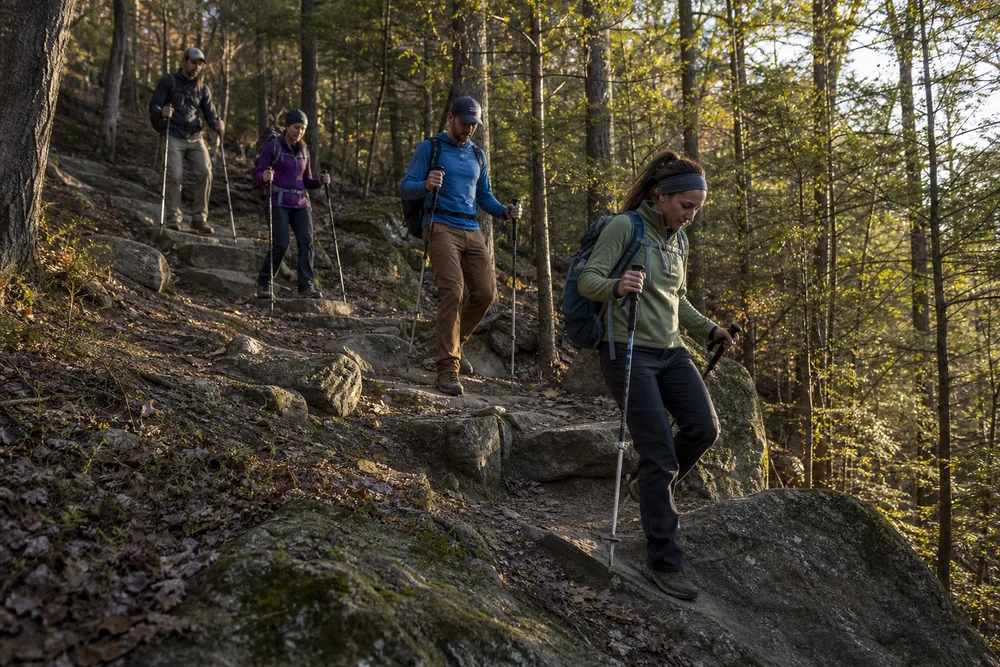
On a climb, do not walk so close that the person ahead feels pushed to speed up. Pass at the next stable opening or settle into their pace until that opening appears.
On a descent, extra room protects you from a sliding hiker, rolling rock, or a pole planted behind them. If someone slips, you need space to stop instead of becoming a second falling person.
Groups should cross a narrow bridge, stair, or rocky step one person at a time when crowding would remove handholds or footing choices. Regroup beyond the obstacle on durable ground, not in the landing area.
At junctions, move past the sign before waiting for the rest of the group. Keep the sign readable and leave room for another party to stop, compare directions, and turn around.
When you pause for a slower group member, choose a spot where everyone can fit without spreading across the tread. The last person should not arrive to find every stable place already occupied by their own group.
Spacing also changes conversation and sound. A long line that shouts from front to back can dominate the trail, so stop together at a suitable place when the group needs a real discussion.
Space is useful reserve. It gives every trail user time to correct a stumble, manage an animal, or change direction without forcing someone else off the tread.
Sources
The National Park Service explains posted right-of-way rules, uphill priority, shared-use yielding, calm passing, and staying on trail: NPS Hiking Etiquette. Its stock guidance tells hikers to stand quietly on the lower side and yield to horses and other pack animals: NPS Hiking and Camping with Horses.
New York State's Department of Environmental Conservation covers group width, shared-use trails, passing, noise, dogs, and trail protection: NYSDEC Trail Etiquette. Leave No Trace covers durable surfaces, waste, wildlife, and consideration for other visitors: Leave No Trace Seven Principles.
Step by stepPractical steps
- Yield clearly at narrow spots and give uphill hikers room.
- Pass with a calm voice and enough space.
- Keep groups compact, dogs controlled, and kids close at junctions.
- Stay on durable trail surfaces and avoid cutting switchbacks.
- Pack out trash and keep wildlife encounters quiet and distant.
AnswersQuestions readers ask
Do uphill hikers always have the right of way?
Uphill hikers usually get priority because restarting is harder, but clear communication and safe footing matter more than rigid rules.
How should I pass someone on a narrow trail?
Say hello early, ask for space if needed, pass slowly, and thank them. Do not surprise people from behind.
Is it okay to play music on a hike?
Use headphones or keep sound off. Many hikers are there for quiet, and sound carries far on open trail.
Should I walk around muddy spots?
Walk through durable muddy sections when safe. Going around widens the trail and damages the edge.
What should dog owners do when passing hikers?
Shorten the leash, keep the dog beside you, step aside on durable ground, and wait calmly until the trail is clear.
What should hikers do when meeting a horse?
Yield to the horse, move calmly to the lower side when it is safe, keep dogs and poles still, speak quietly, and follow the rider's direction.
Do hikers or mountain bikes have the right of way?
Bikes generally yield to hikers and horses on shared trails, but posted local rules come first. Communicate early and use the safest durable passing spot.