
Common Hiking Mistakes That Turn an Easy Trail Into a Long Day
Avoid the small choices that turn an easy trail into a long day.
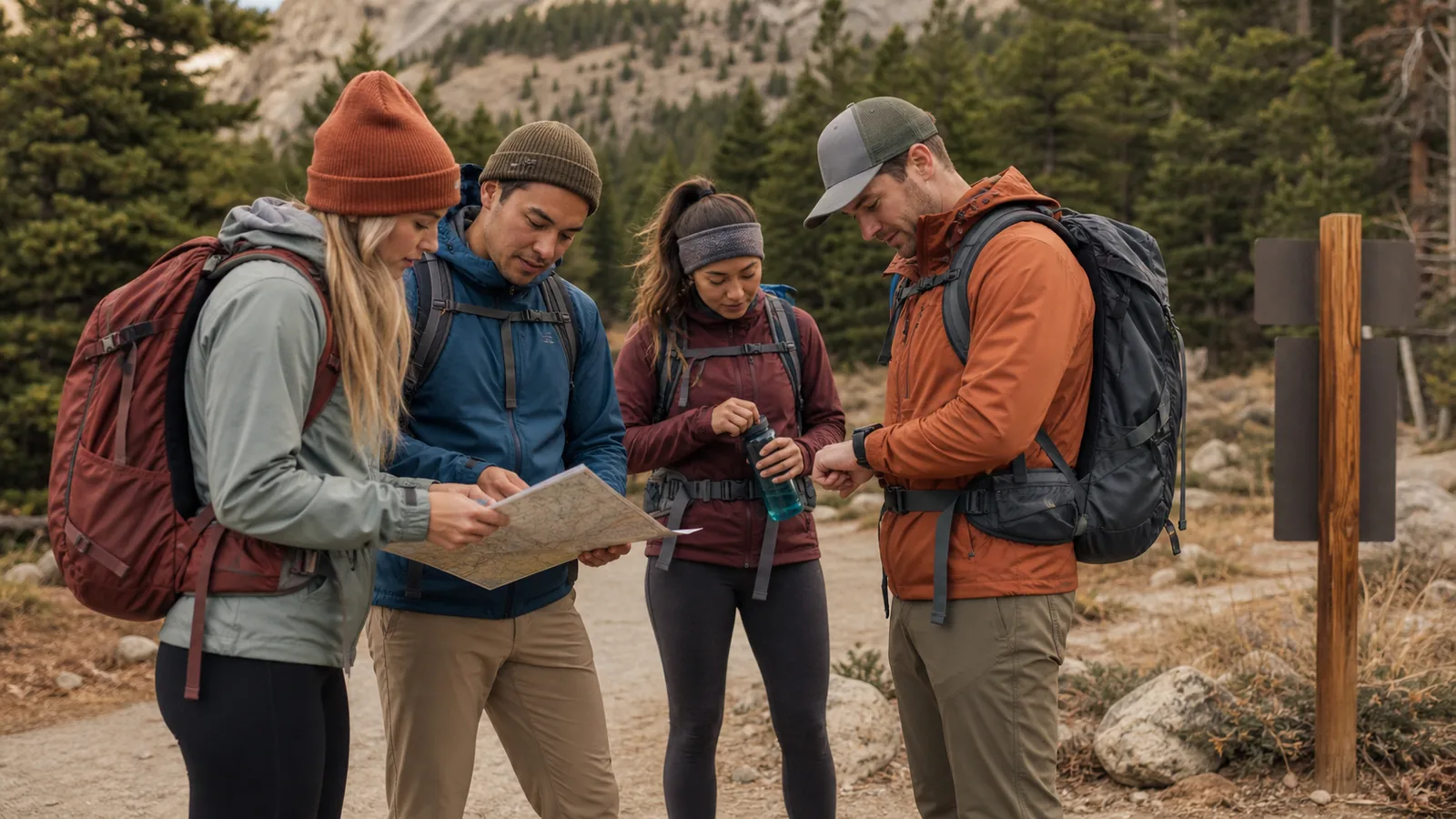
Most hiking mistakes begin as an ordinary mismatch between the route, the group, the weather, and the time left. Catch that mismatch early and you can usually repair it, shorten the hike, or turn around while every option is still simple.
Which mistake starts most hiking problems?
The mistake behind many bad hiking days is accepting a route that needs more time, water, fitness, skill, or daylight than the group actually has. Mileage hides climbing, rough footing, exposure, heat, junctions, and slow breaks.
A route can look small online and still become a problem when the return is uphill, the trail is rocky, or someone starts with sore feet. A local difficulty label also needs context.
One park's moderate trail can feel hard to a person whose recent baseline is a flat neighborhood walk.
Pick the hike for the real group in the parking lot, not the strongest version of the group in your head.
- Route fit
- Distance, gain, footing, exposure, and exits match the group
- Time fit
- Start, turnaround, finish, and daylight buffer are written down
- Condition fit
- Current weather and trail reports still support the plan
- Group fit
- The least experienced hiker can manage the hardest segment and return
- Recovery fit
- Water, light, layers, navigation, and a simple exit remain available
Beginner route rules matter when the group has no recent trail baseline. Start with a shorter marked trail and a clean exit.
Separate a route problem from a fitness problem.
Three hours on smooth ground does not prove readiness for a loose descent. Choose a hiking trail by comparing its hardest part with something the group has completed comfortably.
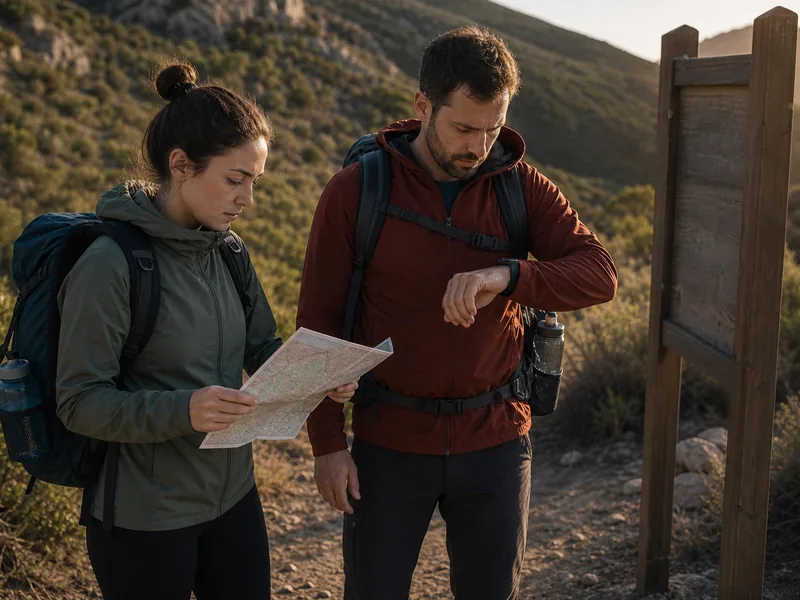
What makes a hiking time estimate wrong?
Plans usually fail at the inputs. People count distance only, then forget elevation gain, rough surface, heat, breaks, photos, junctions, and the slowest hiker.
A steep descent can take longer than expected because knees and footing need control. A hot mile can take longer than a cool mile because every shade stop adds time.
An out-and-back may also place the hardest climb on the return, so halfway by distance is not always halfway by time.
Build time from the route, the group, conditions, and stops instead of trusting distance alone.
| Hidden time cost | What it does | Safer planning move |
|---|---|---|
| Elevation gain | Slows breathing and legs | Add time before the climb |
| Rocky footing | Reduces stride length | Lower expected pace |
| Heat | Forces more breaks | Start early or shorten route |
| Junctions | Add map checks | Know the first turns before walking |
| Group spread | Slows decisions | Keep the route easy for everyone |
| Daylight | Start time leaves little return margin | Shorten before normal delays push the finish into darkness |
Work backward to a turnaround time
Start with the latest finish that still leaves a useful daylight margin.
Subtract the expected return time, then subtract a delay buffer for breaks, route checks, and slower footing. The result is the turnaround time.
It is a decision written before the summit or viewpoint starts pulling the group onward.
Suppose the group wants to finish by 5:00 p.m.
The return should take two hours, and the route deserves a 45-minute buffer.
The turnaround time is 2:15 p.m. If the group reaches the planned high point at 2:25, the correct response is to start back, even when the map says the car is only four miles away.
Use a larger buffer for remote routes, confusing junctions, unfamiliar footing, children, or an unstable forecast.
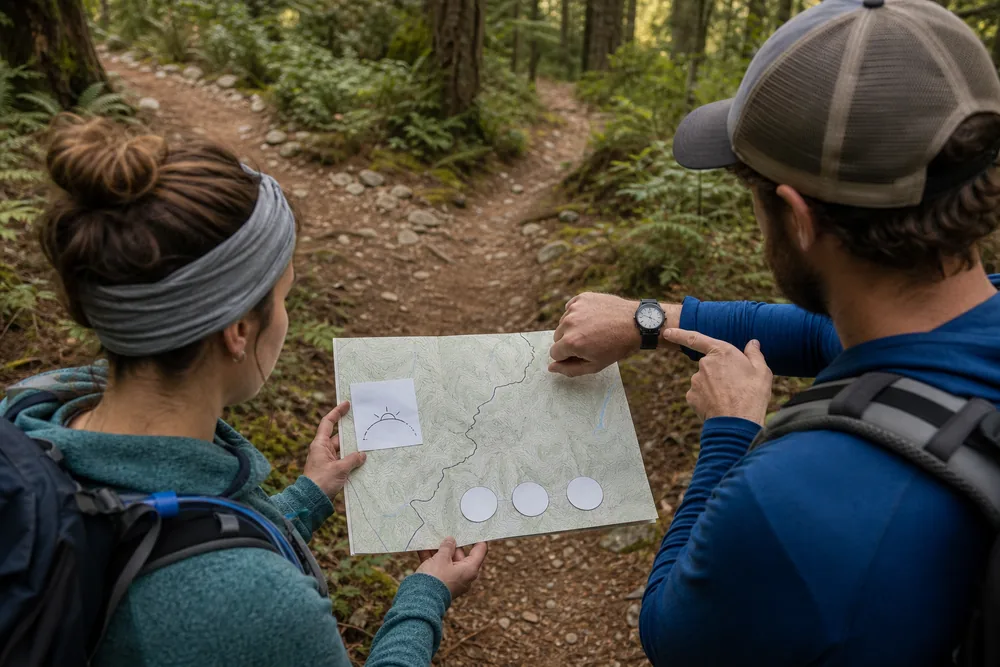
Treat pace as an estimate. Compare it with recent hikes on similar ground, and let hiking fitness training come before any untested jump in distance or gain.
A useful outside contact plan names the route, trailhead, vehicle, party, finish time, and overdue action. A promise to return before dinner gives that person no clear time to act.
What should you check during the first hour?
Check pack fit after 15 minutes, then compare the first meaningful section with the plan. Watch pace, water, feet, weather, route confidence, and group spread.
A slow first mile plus hot sun means water will disappear faster. A late start plus extra photo stops means the turnaround time should move earlier.
A sore heel plus a long descent means tape now, not later.
Two small problems in the first hour are enough reason to simplify the route.
Late start
Move the turnaround earlier before daylight becomes the decision maker.
Slow pace
Shorten the objective instead of pressuring the slowest hiker.
Hot feet
Stop, dry, smooth, and tape before skin breaks.
Fast water use
Turn around or reduce effort before thirst shapes choices.
Weather shift
Leave exposed ground before the group feels rushed.
Pack movement
Stop and reset a loose or rubbing load before the route gets harder.
Turn pace drift into a number. If the plan allowed 45 minutes for the first section and the group needed 60, do not assume the lost 15 minutes will return later.
Carry that difference into the finish estimate, then move the turnaround earlier if the remaining terrain is no easier.
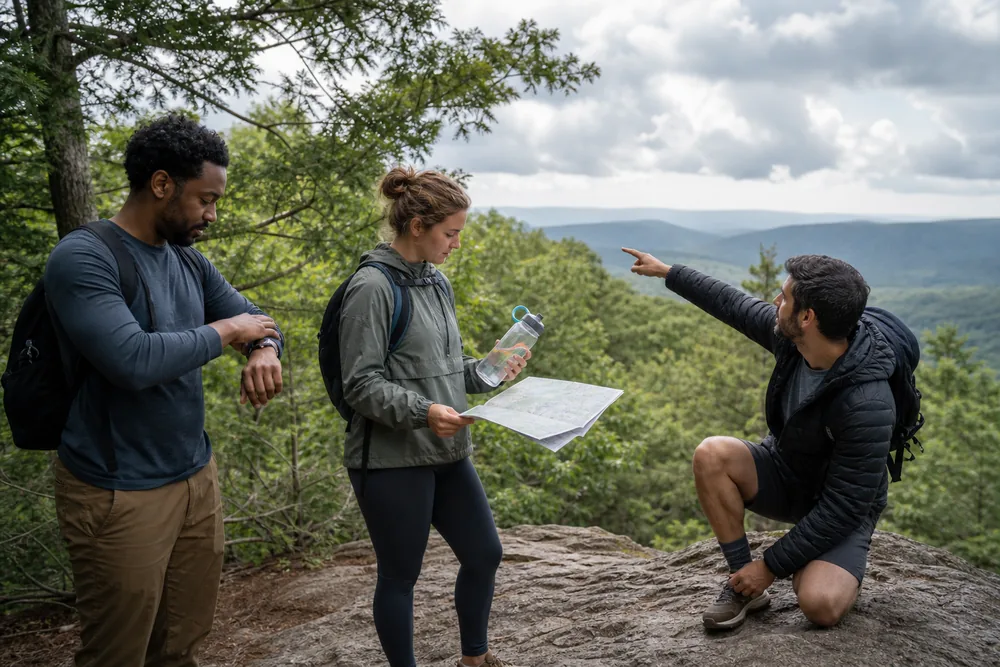
Do not pressure the slowest hiker to recover lost time. A smaller loop, lower viewpoint, or earlier turnaround protects the return.
Say what changed before the group starts negotiating
State an observation the group can verify, such as being 20 minutes behind or using one-third of the water. That gives everyone a fact to act on.
Then name the move in plain words. Say that the group is behind and will take the shorter loop instead of asking whether everyone still feels okay.
Groups should name a decision lead before starting, but any person can report a problem. That rule matters on hikes with kids because adults need to change the plan before a tired child has to prove how tired they are.
Which packing and clothing mistakes remove easy fixes?
The fastest trouble comes from missing water, light, layers, navigation, food, first aid, or repair supplies. The National Park Service groups the Ten Essentials by the problems they solve, which is more useful than packing by habit.
Burying useful items creates another failure. A shell at the bottom of the bag or a headlamp with dead batteries offers false comfort.
A useful hiking pack removes friction from the next smart move.
- Water is sized to time, heat, and refill options.
- Headlamp is packed even for a daytime start.
- Shell or warm layer is easy to reach.
- Map or offline route works without signal.
- Blister tape and a dry sock are packed before feet hurt.
- Snack is reachable without unpacking.
- Emergency shelter matches the distance from quick help.
Use a focused hiking packing list, then test the headlamp, offline map, and blister tape before leaving.
About half a liter per hour during moderate activity in moderate temperatures is only a starting point.
Heat, climb, sweat rate, and refill reliability can change it greatly. Compare use with time remaining at the first hour and turnaround point.
A solid water carry plan adjusts for heat and names where treatment happens.
Stop at the first foot or pack warning
A hot spot, pinched toe, slipping heel, or rubbing hip belt is an early repair signal. Stop on stable ground, remove grit, dry the skin, apply the treatment you know, and reset the fit.
Fix backpack fit on a short loaded walk. Adjust instability before removing light, water, or weather protection.
Test new footwear with the planned socks. A store fit does not show heel slip after climbing or toe pressure on a descent.
Dress for a slower and colder return
Clothing mistakes often start by dressing for the parking lot. A warm start can hide cold wind, rain, and a slow return.
Wet socks and a buried shell cost more when the group slows. Dress around the coldest expected stop and wettest exposed segment.
Protect the slow return with dry layers that remain reachable.
Feet
Socks should stay smooth and manage sweat.
Core
A light insulation layer protects stops and delays.
Shell
Wind or rain protection should be reachable.
Hands
Thin gloves help in cold wind and wet weather.
Sun
Hat and sunglasses matter on open trails.
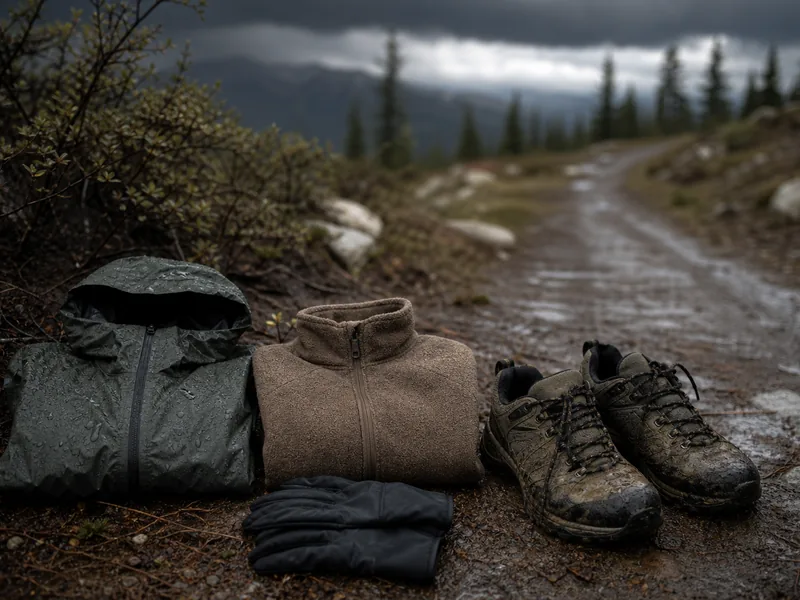
Wet, clumsy, and unusually quiet behavior in cold wind are signs of hypothermia that call for ending the exposure early.
For colder months, winter hiking needs its own route and layer plan instead of a normal fair-weather checklist.
When does a long break make the return harder?
A break should restore the group without consuming the margin needed to leave. Long stops cost daylight, cool sweaty clothing, stiffen tired legs, and make water or food use look smaller than the remaining time demands.
Choose the stop location before everyone drops packs. Move off the tread, stay clear of junction signs and cliff edges, and keep the group in one place where the route forward and back remain obvious.
Start the break with the task that caused it. Eat when energy is fading, adjust a layer when the body is cooling, treat the hot spot before sitting for twenty minutes, or confirm the map before conversation scatters attention.
Set a leave time when daylight, weather, or turnaround timing is tight. A ten-minute stop that begins at 2 in the afternoon is measurable.
“We will leave when everyone is ready” can quietly become half an hour.
Keep one warm layer reachable during a windy or cool stop. The person who was comfortable while climbing may cool first, especially when clothing is damp and the group is no longer producing the same heat.
Check whether the group can stand and walk normally before committing to the next hard segment. Knee pain, foot pain, dizziness, unusual fatigue, or a person who remains cold after adding a layer should change the plan while the stop is still near a known route.
Recount water and compare it with the return time, not with miles already completed. A long scenic stop can leave the group with the same distance but less daylight and a warmer afternoon.
Do not let faster hikers restart alone while another person is packing. The group should leave together, confirm the next junction, and carry forward any earlier pace or foot problem.
A useful break ends with a decision. Continue only when the stop corrected the problem and the remaining route still fits the clock, weather, water, and least comfortable hiker.
What should you do after the first wrong turn?
The first wrong turn is usually small.
The larger mistake is walking farther while hoping the trail will explain itself. Distance walked is not evidence that the route must be ahead.
Stop when the trail, junction name, direction of travel, or terrain stops matching the map. Backtrack to the last known point before adding guesses.
That may be the signed junction, creek crossing, bridge, or viewpoint you can identify with confidence.
Navigation gets easier when you admit uncertainty early.
- PauseStop walking when the trail no longer matches the plan.
- MatchCompare map, junctions, terrain, and direction of travel.
- BacktrackReturn to the last place you were sure about.
- ResetChoose the known route, shorter option, or established exit.
- TellUpdate the group before moving again.
A phone map helps only when the map is downloaded, the device has power, and the hiker can match the screen with the ground. Keep an independent route reference and practice using a compass on easy trails before you need it.
Do not invent an off-trail shortcut to reconnect with a line on the screen.
Cliffs, thick vegetation, private property, unstable slopes, and streams may sit between two points that look close. The known trail back to the last confirmed point is usually the easier correction.
At a confusing junction, look backward before leaving. The return view can be surprisingly different.
A quick photo or mental note of the sign, side trail, and terrain makes the reverse choice easier without leaving marks.
Rain, heat, winter, and crowds raise the cost
The same mistake has a different cost in rain, winter, heat, or crowds. A late start is annoying on a short cool trail, but it can become serious when snow slows every mile or summer heat drains water early.
Check official alerts, closures, fire restrictions, and access information close to departure. An old photo or review cannot confirm today's bridge, snow, smoke, mud, or gate status.
Name the condition before choosing the fix.
Wet footing needs slower movement. Cold needs dry layers and shorter stops.
Smoke may require a different place or a canceled hike.
The field fix should match the condition that made the mistake larger.
| Condition | Mistake that grows faster | Better field fix |
|---|---|---|
| Rain | Rushing slick steps and widening mud | Slow down and stay on durable tread |
| Winter | Waiting too long to turn around | Leave while hands and route choices still work |
| Heat | Underestimating water and shade breaks | Shorten effort and drink before strong thirst |
| Crowds | Blocking passes or junctions | Apply hiking etiquette before tension builds |
| Solo hiking | Ignoring a small route doubt | Follow solo hiking check-in and turnaround rules |
| Smoke or haze | Treating visibility as the only concern | Follow official air guidance and change location or cancel |
Ask which condition made the error cost more. Rain reduces traction, heat raises water use, snow hides tread, and crowds add delays.
Walking around mud widens the trail, while cutting switchbacks creates erosion and unstable shortcuts. Stay on durable tread unless an official closure or immediate hazard requires another move.
Slick roots, mud, and polished rock make wet-trail footing a different skill from dry-trail walking.
Act in the section you still control. Add a layer before the ridge, drink before the exposed climb, and backtrack before the wrong turn becomes the new route.
Should you repair, shorten, turn around, or call for help?
The response depends on what changed and how much margin remains. A loose strap may need a short stop.
Low water, rising heat, and an exposed return need a larger change.
Use four levels. Repair in place when the issue settles and the original plan retains margin.
Shorten when the repair works but uses that margin.
Turn around when the issue continues or the return grows uncertain. Get emergency help when a serious threat prevents a safe self-exit.
Match the action to the margin that remains, not to how much effort the group has already spent.
| Response | Use it when | Example |
|---|---|---|
| Repair in place | Location is known and the problem settles quickly | Tape a hot spot, add a layer, reset the pack, or eat |
| Shorten | The issue improves but time, water, or comfort margin is smaller | Take an established lower viewpoint or shorter loop |
| Turn around | The issue continues or the known return is getting harder | Water use is too fast, weather closes in, or pain changes the gait |
| Get emergency help | A serious condition prevents safe self-exit or threatens life | Severe bleeding, chest pain, breathing trouble, worsening confusion, or inability to walk |
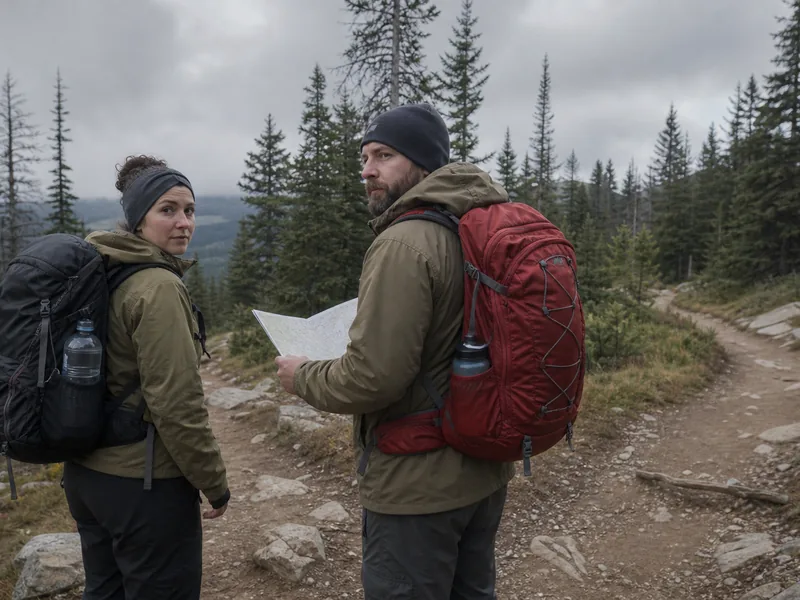
Two small problems often move the decision up one level.
A taped hot spot may settle. Add a loose descent and late pace, and shortening makes sense.
Low water plus heat supports turning around on the known route.
Reassess after a short, defined interval on easy ground. Check whether pain, coordination, pace, temperature, or route confidence improved.
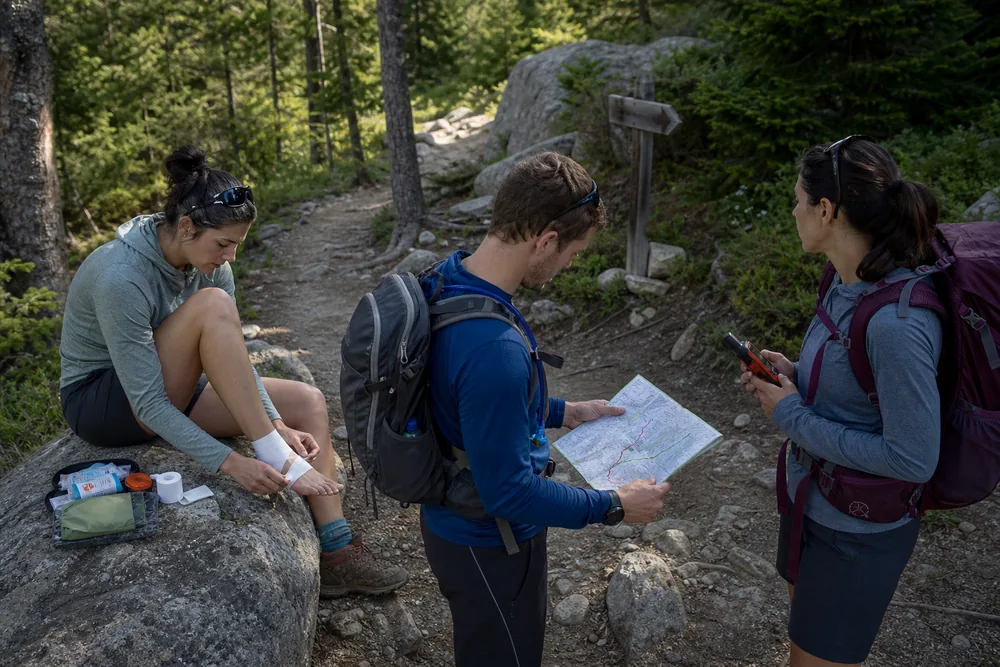
Half a bottle means something different with ten cool minutes to the car than with two exposed hours left. A headlamp creates light, but it does not restore route confidence or fix an injury.
For severe bleeding, chest pain, serious breathing trouble, worsening confusion, or inability to walk safely, use local emergency services or an emergency communicator. Give the location, problem, group size, weather, and supplies.
A written trip safety plan names who to call, what to say, and when to trigger it.
Fix the next plan after a hiking mistake
A hiking mistake becomes useful when it changes the next plan. Record the first weak signal, action time, start delay, slow-section time, water remaining, and finish time.
Classify the main issue as route choice, packing, pace, weather, navigation, or group communication.
Repair the pattern, not just the one bad day.
Late start
Pick a closer trail or set a non-negotiable leave time.
Low water
Plan by hours, heat, climb, and refill options.
Foot pain
Fix socks, shoes, or pack weight before adding distance.
Map doubt
Preview the first junctions and backtrack earlier.
Group silence
Name a decision person before the route starts.
Slow descent
Add time for the surface and choose a smoother return.
Keep the review factual. A 40-minute late departure is easier to fix than calling the group careless.
A descent that took twice the planned time gives more useful evidence than calling the trail hard.
The numbers identify where the error entered.
A 40-minute late start needs a departure fix. An extra hour on an on-time hike needs a route-time fix.
Change one variable next time. If rocky footing caused the delay, keep distance and gain similar while testing smoother tread or a larger time allowance.
Dry gear, replace used first-aid items, recharge devices, and tell the outside contact that the group returned.
Put the new start time, water estimate, footwear test, route limit, or turnaround rule into the next trip plan before choosing a harder route.
Sources
The National Park Service covers planning, weather, personal limits, communication, backup plans, and emergency preparation in NPS Hike Smart. Its Ten Essentials explains the systems used for navigation, light, sun, insulation, first aid, fire, repair, food, water, and emergency shelter.
The American Hiking Society explains route preparation, weather checks, water planning, footwear, layers, navigation, first aid, light, and emergency shelter in AHS Ten Essentials.
Step by stepPractical steps
- Choose a route that fits the group's recent experience, the current conditions, and the available daylight.
- Work backward from the latest safe finish to set a turnaround time and delay buffer.
- Pack and test the systems needed for navigation, light, weather, water, food, first aid, and an unexpected delay.
- Compare actual pace, water use, feet, weather, and route confidence during the first hour.
- Repair, shorten, turn around, or get help according to the margin that remains.
- Record the first weak signal and make one concrete change before the next hike.
AnswersQuestions readers ask
What is the most common hiking mistake?
Choosing a route that needs more time, water, skill, fitness, or daylight than the real group has is the mistake behind many bad days. Distance alone does not show gain, rough footing, exposure, weather, or a slow return.
Is it bad to turn around on a hike?
No. Turning around while the route is known protects daylight, water, energy, and simple exit options.
Reaching the planned viewpoint never matters more than getting the whole group back.
Why do hikers run out of water?
They often plan by distance instead of time, heat, climb, sweat rate, and reliable refill options. A moderate-condition starting estimate must be adjusted to the actual person and route, then checked against use during the hike.
Can I rely on my phone for navigation?
A phone is useful when the map is downloaded and the battery lasts, but it is not enough by itself. Carry an independent route reference and know how to return to the last point you could identify with confidence.
How can beginners avoid hiking mistakes?
Pick a shorter marked trail with a simple exit, compare its hardest segment with a hike you already know, test essential gear, set a turnaround time, and act when the first two small problems appear.
How do I calculate a hiking turnaround time?
Start with the latest finish that leaves a useful daylight margin. Subtract the expected return time and a delay buffer.
If you want to finish by 5:00 p.m., expect a two-hour return, and allow 45 minutes for delays, turn around at 2:15 p.m.
When is a hiking problem an emergency?
Get emergency help when a serious problem threatens life or prevents a safe self-exit.
Severe bleeding, chest pain, serious breathing trouble, worsening confusion, or inability to walk safely are examples. Give responders your location, group size, conditions, and supplies.