
Camping Safety Tips That Keep the Easy Exit Open
Verify current conditions, inspect the pad, separate campsite zones, assign people, close food and fire tasks, and leave before a simple problem removes the easy exit.
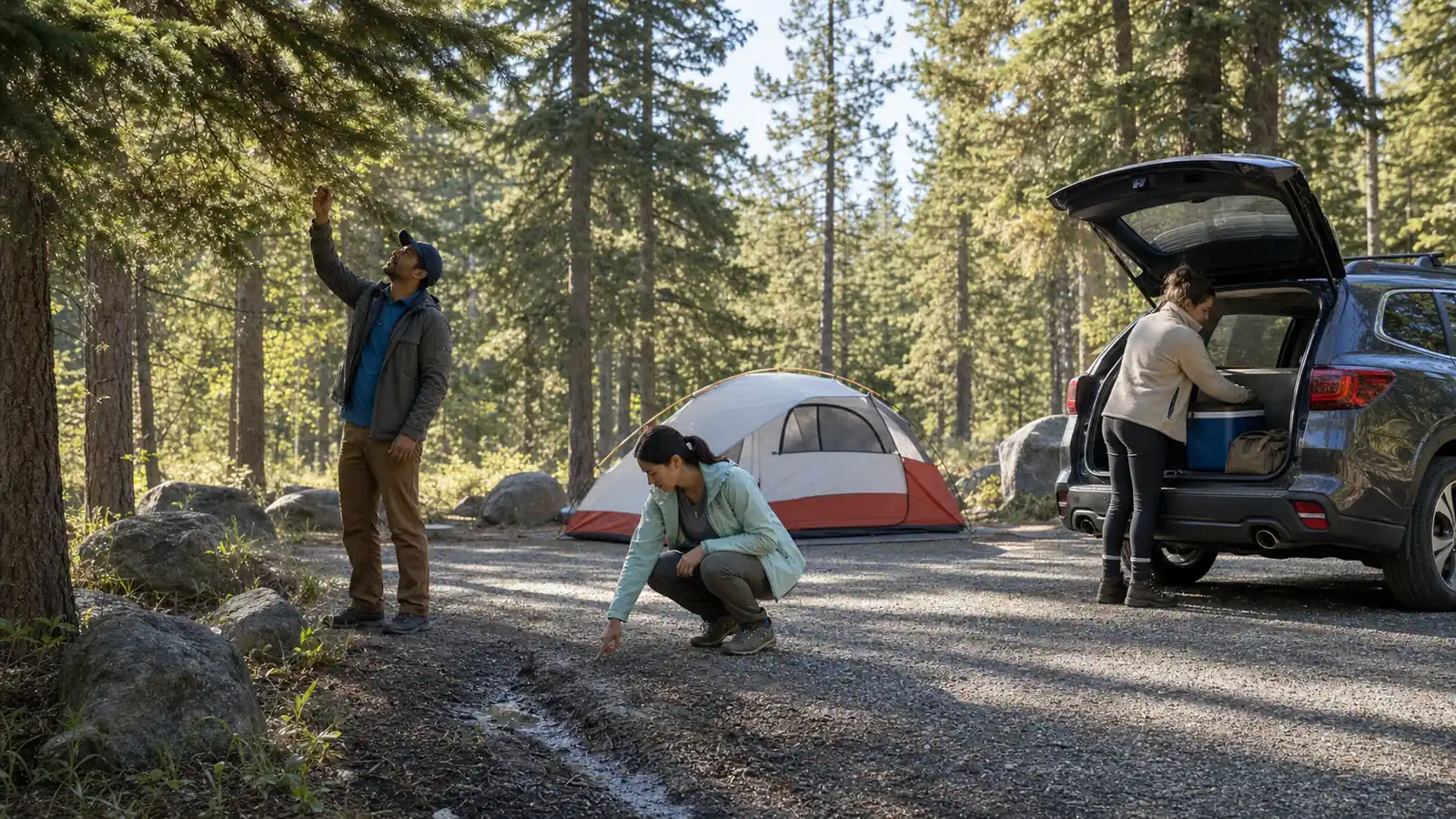
Camping safety starts before gear leaves the vehicle. Verify current rules and weather, reject overhead and drainage hazards, separate sleeping from food and flame, assign supervision, and keep a route out that the group can still use after dark or in changing conditions.
At camp, basic camping controls must remain usable. A first-aid kit cannot repair a tent under a dead branch.
A full food bin cannot help if storage breaks current wildlife rules. A good forecast cannot rescue an exit road that floods.
The best time to solve these problems is while the group still has daylight, packed equipment, working transportation, and several alternative sites.
What should you check before unloading camp?
Pause at the assigned site before unloading.
Confirm the campground choice still matches the group, site number, legal occupancy, parking position, nearest approved path, and route back out. Keep keys, footwear, lights, and essential medication accessible.
The first inspection should answer five questions.
Are current rules known? Is the pad free from visible overhead, ground, and traffic hazards?
Can sleep, cooking, food, and flame be separated? Does every dependent person or pet have an assigned adult?
Can the group leave without moving half the camp first?
One failed answer does not always cancel the trip.
It does require a correction before setup. Move to a legal alternative, change the layout, ask staff about conditions, or use the backup plan.
Solve problems while packed. Every open bin and erected shelter makes a later move harder.
Which campground rules and alerts need a current check?
Use the official page for the exact campground or land manager.
Record that official source in the first camping trip plan so it remains available when service disappears. Check that the facility is open on the trip dates.
Confirm reservation or permit details, group limits, vehicle rules, check-in procedure, food storage, pet rules, fire restrictions, and whether listed water is currently potable.
Read weather for the route and campsite, not only the nearest city. Overnight temperature, wind, thunderstorms, heavy rain, heat, smoke, and snow can affect shelter, road access, water, and the safe time to arrive.
Save enough information to work without a signal.
Keep the reservation, site number, map, managing agency contact, local emergency method, and route out available offline or on paper. Tell an outside contact where the group will be and when to act after a missed return.
Include the vehicle description, license number, group names, important health information, and the exact action time in the trip note. An outside contact should know which agency or emergency service to call rather than searching after the group is already overdue.
- Exact campground, loop, site, and occupancy dates verified.
- Current closures, alerts, weather, and road conditions checked.
- Food, fire, pet, waste, and quiet rules confirmed.
- Water and toilet status confirmed rather than assumed.
- Reservation, map, contacts, and return time saved offline.
- Backup campground, lodging, or return-home plan remains usable.
Recheck shortly before leaving. A screenshot from booking day cannot show a new closure, fire restriction, washed road, water notice, or storm warning.
Current facts control the trip, even when an older plan looked complete.
How do you inspect a campsite for hazards?
Look up first.
Dead, broken, hanging, or sharply leaning branches can reach beyond the trunk. Wind can also move cones, limbs, and unsecured objects from outside the exact pad.
Ask staff for another site when the assigned area cannot avoid an overhead hazard.
Then read the ground. Before clouds arrive, trace runoff with a rain drainage check while the pad is still easy to change.
Avoid a depression, channel, ravine edge, eroded bank, or place where water and debris already collect. A flat patch can still be the lowest point.
Follow the likely path of rain from higher ground through the whole shelter footprint.
Above
Dead branches, unstable trees, rockfall exposure, power lines, and objects that wind can move.
Below
Depressions, runoff channels, unstable edges, sharp debris, holes, and standing water.
Across
Roads, parking movements, shortcuts, tent lines, fire sparks, smoke, and neighboring activity.
Beyond
Weather approach, rising water, blocked roads, wildlife activity, and the route to safer shelter.
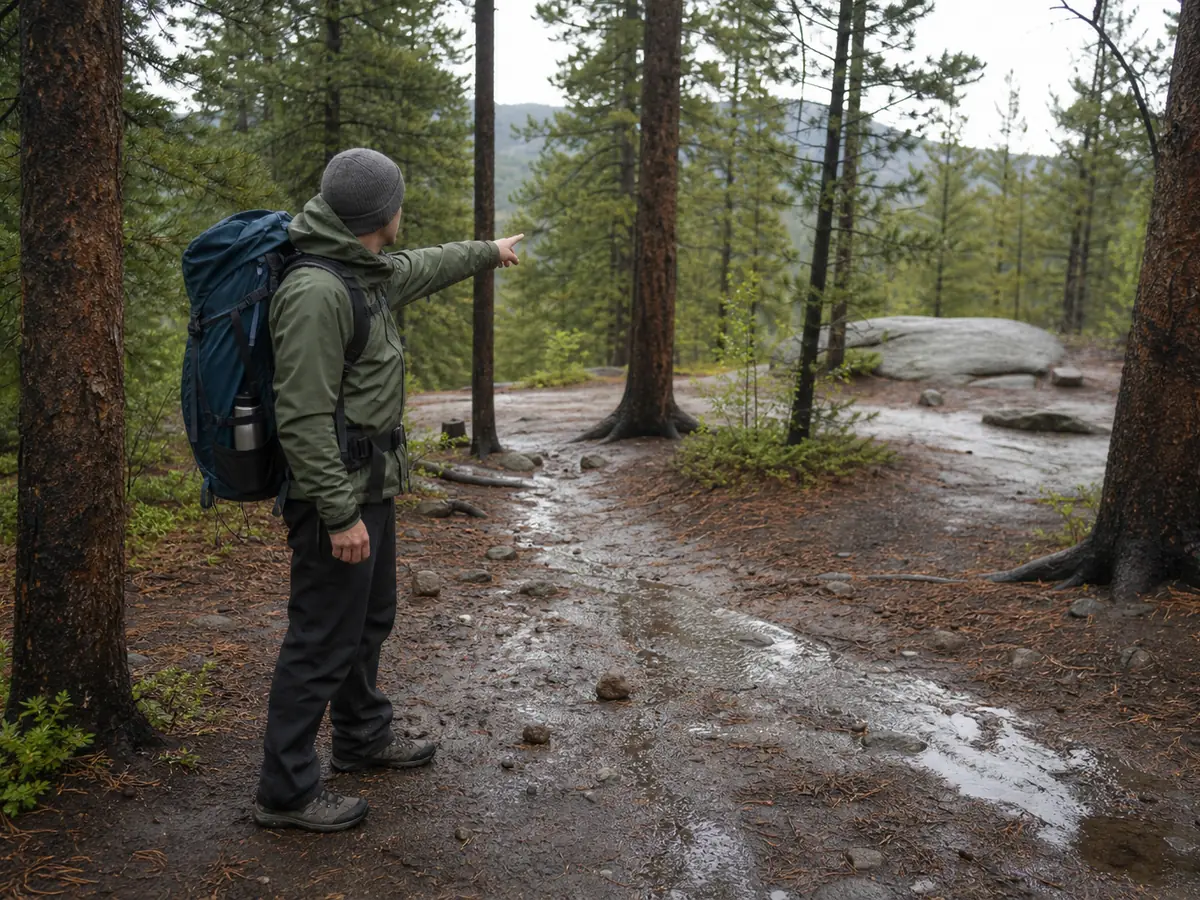
Check wind without creating a new hazard.
A location may be calm because a building, slope, or vegetation changes the flow, but the same feature may carry falling material. When gusts build, use a controlled tent-pitching sequence and never shelter beneath suspect branches.
Walk the night route to the toilet, water, vehicle, and exit. Keep it away from cooking equipment, fire, guylines, and another occupied site.
A child or tired adult should not need to step across a stove area or roadway to reach the tent.
Reject the pad when the hazard cannot be removed without digging, cutting vegetation, moving protected material, or breaking rules. A legal move is safer than trying to engineer the ground.
The pad must pass as found before the shelter goes up.
Separate sleeping, cooking, food, and walking zones
Every campsite has zones even when no sign labels them.
The sleeping area needs a safe pad and a clear door. Cooking needs stable equipment, ventilation, adult control, and distance from combustible material.
Food and scented items need the storage method required by the land manager.
| Zone | Main conflict | Safer correction |
|---|---|---|
| Sleeping | Fire, smoke, food scent, flooding, and blocked doors | Use the legal dry pad and keep the exit clear |
| Cooking | Children, pets, tent fabric, traffic, and unstable surfaces | Create a controlled work edge with adult attendance |
| Food storage | Wildlife access, heat, and open containers | Follow the exact current storage rule after every use |
| Fire | Wind, dry fuel, tents, vehicles, and unattended flame | Use only when allowed and fully extinguish it |
| Movement | Roads, guylines, dark shortcuts, and neighboring pads | Keep one lit approved path through the site |
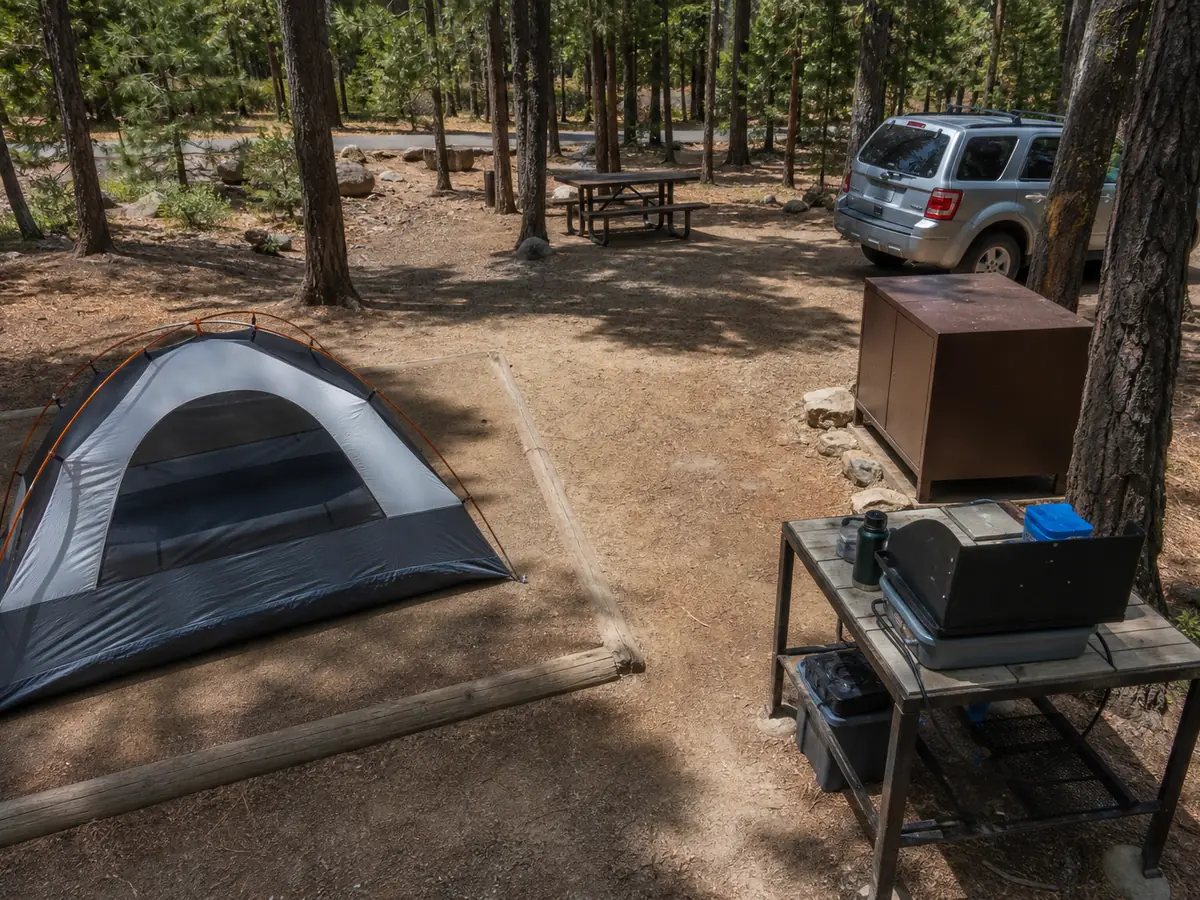
Do not invent one universal spacing rule. Developed campground layouts and wildlife regulations differ.
The managing agency may require a locker, hard-sided vehicle, container, or a specific separation method.
Keep the vehicle able to leave.
Pack so the camp inventory fits without trapping keys in a tent pocket, building the kitchen behind the vehicle, or spreading furniture across the only loading path. In an urgent change, people should be able to get in without dismantling the whole site.
Zones prevent crossed hazards. Their purpose is to keep one task from making another task unsafe.
Who is responsible for each child, pet, and camp task?
Group safety fails when everyone assumes someone else is watching.
During setup and cooking, camping with children requires one named adult to stay responsible through each handoff.
Pets need the same spoken handoff. When camping with a dog, wait for a clear reply before the responsible adult changes.
- Name the site leadOne person confirms the site, rules, layout, and exit.
- Name the supervisorOne adult owns each child or pet during busy transitions.
- Name the cook or fire leadThat person controls flame, fuel, hot surfaces, and shutdown.
- Name the weather checkerOne person watches current alerts and visible change.
- Name the driverKeys, condition, route, and vehicle access stay under clear control.
- Practice the departureEveryone knows where to meet and what essential item to carry.
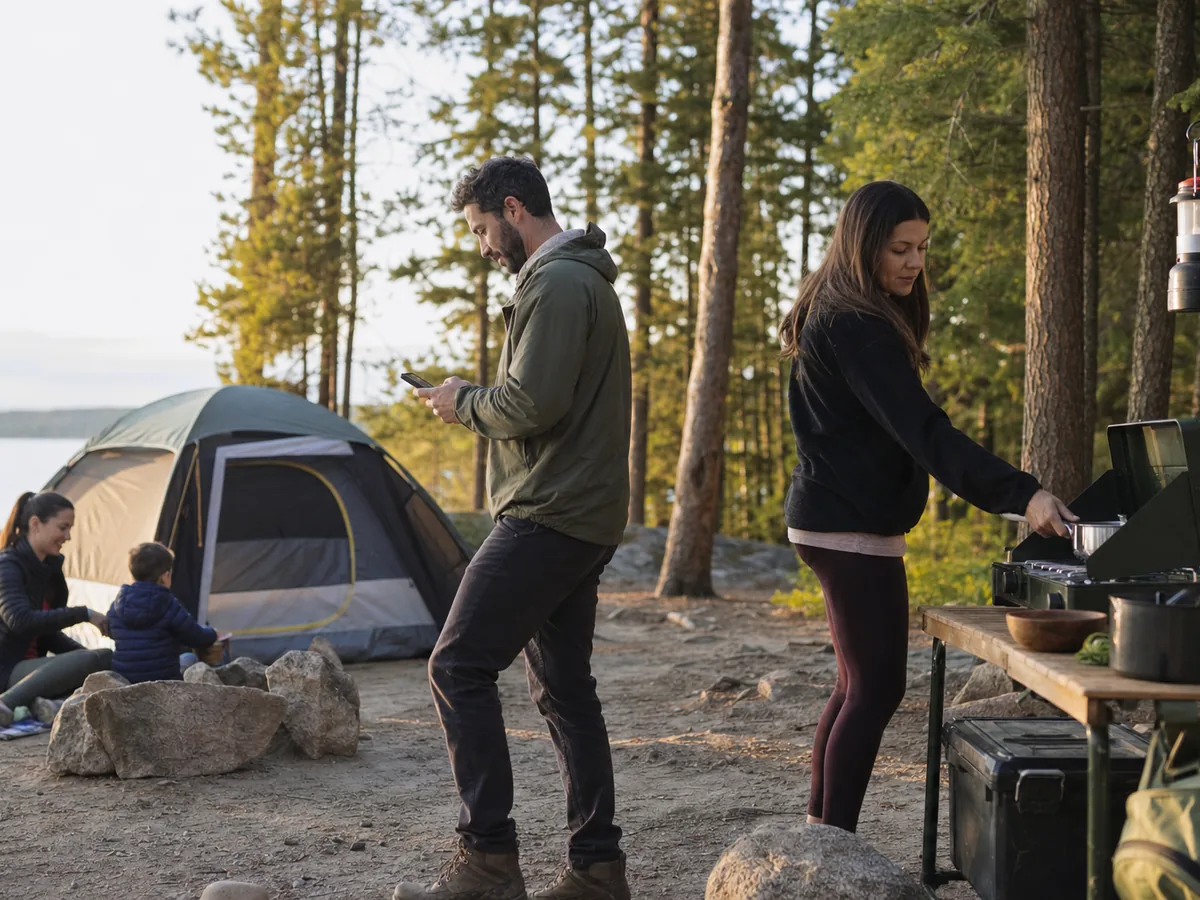
Roles can change. The handoff must be explicit.
A child beside a road, a dog near hot cookware, or a person with a health concern cannot disappear into a vague group responsibility.
Keep essential medication with the person or responsible adult, not buried under bedding. Confirm allergies, mobility limits, communication needs, and the closest appropriate care before arrival.
One task has one owner during the moments when attention is divided.
Finish food, water, fire, and hygiene tasks completely
A task is not finished when use stops. Unsecured food, warm coals, or untreated dishwater become common camping mistakes when attention moves elsewhere.
Food ends in approved storage or disposal.
A fire ends cold and fully out under current instructions. Water handling ends with containers protected from contamination.
Toilet and washing tasks end at approved facilities or disposal points.
Treat water according to the official status. A faucet at a campground is not proof of potability.
Carry a backup when water is unavailable, seasonal, under notice, or uncertain.
Keep raw food, ready-to-eat food, hands, utensils, and coolers managed to reduce cross-contamination. Follow safe holding guidance for the food you bring.
When cold storage fails or food has been left in unsafe conditions, discard it rather than testing it by smell.
Never leave flame or hot equipment with a child, pet, wind shift, or quick toilet trip.
Turn stoves off according to their instructions. Extinguish fires completely and confirm they meet the land manager's cold-out standard before sleep or departure.
Finish every safety loop before attention moves elsewhere.
Why must fuel-burning equipment stay outside?
Carbon monoxide is colorless and odorless, so smell cannot prove that a tent, camper, vehicle, or screened shelter is safe. Fuel-burning equipment must stay in the open location allowed by its instructions and current campground rules.
Never use a portable gas camp stove, charcoal grill, flame lantern, or similar fuel-burning device inside a tent or other enclosed sleeping area. Opening a door or window does not turn an enclosed space into a safe cooking location.
A vestibule is still part of the shelter system. Fabric, sleeping bags, fuel, and people remain close to flame and exhaust, while wind can push heat or fumes in an unexpected direction.
Cook in the approved outdoor area with stable equipment and the clearances required by the manufacturer.
Portable generators create the same invisible hazard. The Centers for Disease Control and Prevention says to operate them outside more than 20 feet from windows, doors, and vents.
At a campground, you must also follow the site boundary, generator zone, operating-hour, fire, and noise rules.
Do not place a generator where exhaust can enter your tent, a neighboring tent, a camper vent, a restroom, or a vehicle. Wind direction can change after setup, so recheck the exhaust path when the weather changes.
Vehicle engines also produce carbon monoxide. Do not idle a vehicle to heat a sleeping space or charge equipment when exhaust can collect around tents, open tailgates, windows, or vents.
Snow, mud, vegetation, or packed gear near the tailpipe can make exhaust flow less predictable.
| Combustion source | Unsafe shortcut | Safer action |
|---|---|---|
| Camp stove | Cooking inside a tent or vestibule | Use the approved outdoor cooking area and follow equipment clearances |
| Charcoal | Bringing warm coals into shelter | Leave charcoal in the legal fire system until fully cold and disposed as directed |
| Flame lantern | Using flame for tent heat or overnight light | Use a battery light inside the sleeping area |
| Generator | Running beside a tent door or camper vent | Keep it outdoors beyond required clearance and control the exhaust path |
| Vehicle | Idling for warmth near occupied shelter | Move people to a safe warm location or leave when the sleep system fails |
Headache, dizziness, weakness, nausea, vomiting, chest pain, and confusion can occur with carbon monoxide exposure. Several people or pets becoming ill at the same time near fuel-burning equipment is especially important evidence.
Move everyone into fresh air immediately when carbon monoxide exposure is possible. Call emergency services or poison control as directed for the location, and do not re-enter the space to retrieve ordinary gear.
A built-in carbon monoxide alarm in a camper or recreational vehicle adds warning, but it does not make indoor stove, charcoal, lantern, engine, or generator use acceptable. Test and maintain the alarm under the vehicle maker's instructions, then keep combustion sources in their approved locations.
Treat an alarm as real until responders or a qualified service identifies the cause. Move people and pets out first.
Do not silence the alarm and return to sleep because nobody can smell exhaust.
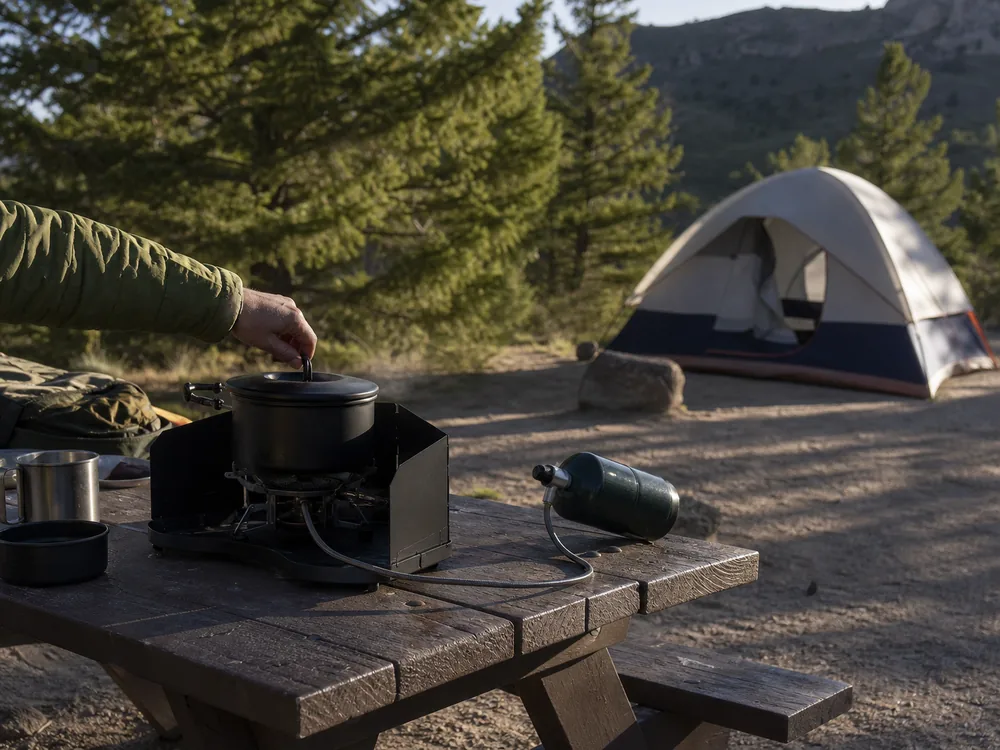
Do not use sleep as a test. A sleeping person may not notice early symptoms, and alcohol can reduce judgment before the danger is recognized.
Shut down the source only when that can be done without entering or remaining in the contaminated area.
Do not explain matching symptoms as food illness, altitude, heat, or fatigue while a combustion source is nearby. Fresh air and an emergency call come before deciding which cause seems most likely.
Combustion stays outside because ventilation guesses cannot detect or control carbon monoxide.
What belongs in the campsite night reset?
Walk the site in the light that will be used overnight.
This test becomes stricter during solo camping because one person must solve each failure. Check that tent doors open, shoes are reachable, guyline paths are visible, keys and headlamps are known, and the route to the vehicle and toilet stays clear.
Secure food, trash, toiletries, pet food, and other scented items.
Retension the shelter as its instructions require. Put loose objects away before wind arrives.
Check weather and alerts again rather than assuming the afternoon pattern will continue.
- Every person and pet is present and in expected condition.
- Food, waste, toiletries, and cookware are secured correctly.
- Fire and stove tasks are fully closed.
- Shelter, anchors, drainage, and loose objects are checked.
- Lights, footwear, keys, medication, and communication are reachable.
- Vehicle and approved exit route remain clear.
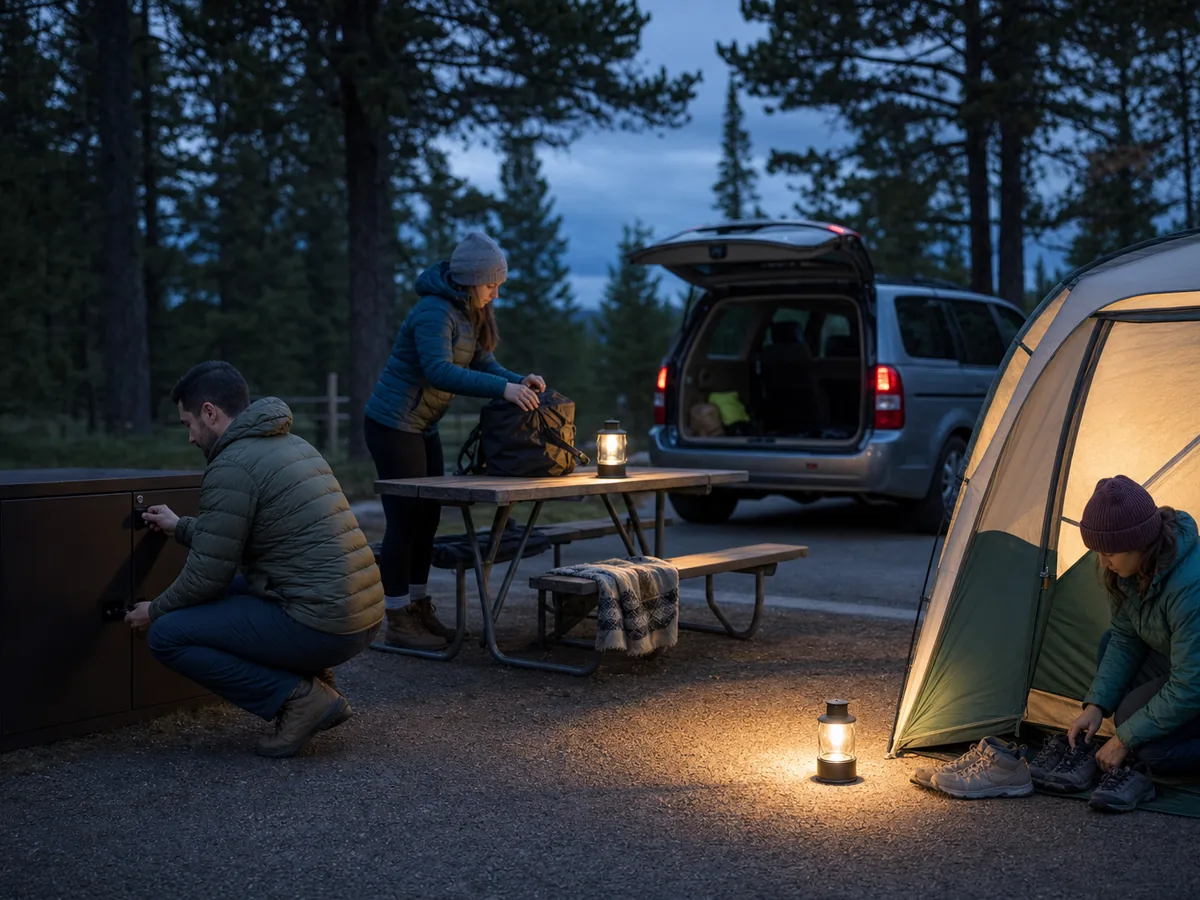
Check bodies as well as equipment.
Increasing pain, repeated vomiting, breathing difficulty, confusion, unusual sleepiness, loss of coordination, or a person who cannot stay warm at camp deserves prompt attention. Use emergency services when symptoms or circumstances require them.
Night begins with a reset, not when the last person enters the tent.
Write the campsite location so anyone can read it under pressure.
Include campground name, loop, site number, nearest road, managing agency, and any gate detail. A caller who reports only a park name may leave responders searching several loops or facilities.
Keep communication power for changes that matter. Put phones in low-power mode when service is weak, protect them from water and cold, and keep one charging option available.
A satellite messenger or locator helps only when the group knows its coverage, subscription, operation, and emergency procedure.
Before dark, confirm which device can actually send from the site and where a backup signal point can be reached legally. Do not leave a dependent person alone to search for service.
If a non-emergency problem develops overnight, use the smallest safe response first. Turn on a light, account for people, identify the change from shelter, and decide whether staff, a vehicle, relocation, or departure solves it.
Do not send one person into darkness to investigate an unknown sound, animal, person, or moving water.
When should the group leave the campsite?
Set thresholds before the trip. Leave or move when rising water, falling limbs, fire or smoke, severe weather, unsafe people, uncontrolled wildlife activity, failed shelter, serious symptoms, or a closing access route removes the planned margin.
Do not let the reservation cost decide. A voluntary departure in daylight is usually simpler than an evacuation after conditions worsen.
Report hazards that may affect the next occupant as part of responsible campground behavior before you leave.
When a person is missing, a fire spreads, water rises rapidly, violence occurs, or severe symptoms appear, use the appropriate emergency channel immediately. The planned exit threshold does not delay emergency help.
Protect the easy exit. The trip can be repeated after the people, vehicle, and equipment return safely.
Sources
The Centers for Disease Control and Prevention explains that carbon monoxide is colorless and odorless, portable gas camp stoves must not be used indoors, and generators belong outdoors more than 20 feet from windows, doors, and vents: Carbon Monoxide Poisoning Basics.
The National Park Service covers group limits, current regulations, weather, equipment, food storage, fire rules, communication, and backup plans: Camping Safely Before the Trip.
Its during-stay guidance addresses campsite setup, personal condition, wildlife, fires, alerts, weather, dead trees, and environmental hazards: Camping Safely During Your Stay.
The National Park Service also explains site registration, drainage, overhead hazards, traffic, food, fire separation, tent instructions, and daylight setup: Finding and Setting Up a Campsite.
Step by stepPractical steps
- Verify the exact campground rules, alerts, forecast, and access.
- Inspect overhead, ground, weather, and traffic hazards before unloading.
- Separate sleep, cooking, food storage, fire, and movement zones.
- Assign supervision, cooking, weather, and driving responsibilities.
- Close food, water, hygiene, stove, and fire tasks after every use.
- Reset the site before dark and leave while a simple exit remains.
AnswersQuestions readers ask
What is the first camping safety check?
Confirm the exact site, current rules and alerts, visible hazards, and the route out before unloading. Moving or changing the layout is easier while equipment remains packed.
How do I know whether a tent pad is safe?
Look above for dead or unstable material, below for drainage and unstable ground, across for traffic and fire conflicts, and beyond for weather and exit problems. Move when a hazard cannot be avoided legally.
Where should cooking happen at a campsite?
Use the approved stable area with ventilation, adult control, and separation from tent fabric, bedding, children, pets, and traffic. Follow local food, fire, and wildlife rules because layouts differ.
What should be checked before sleeping at camp?
Account for people and pets, secure food and scented items, close fire and stove tasks, check shelter and weather, and keep lights, shoes, keys, medication, vehicle, and exit route ready.
When should campers leave early?
Leave when weather, water, fire, falling material, health, conflict, wildlife, shelter failure, or access changes remove the planned margin. Use emergency services when symptoms or immediate danger require them.