
Camping With a Dog Starts Before You Reserve the Site
Verify every pet rule, compare the dog with its normal baseline, and plan restraint, water, sleep, waste, wildlife, and an early exit.
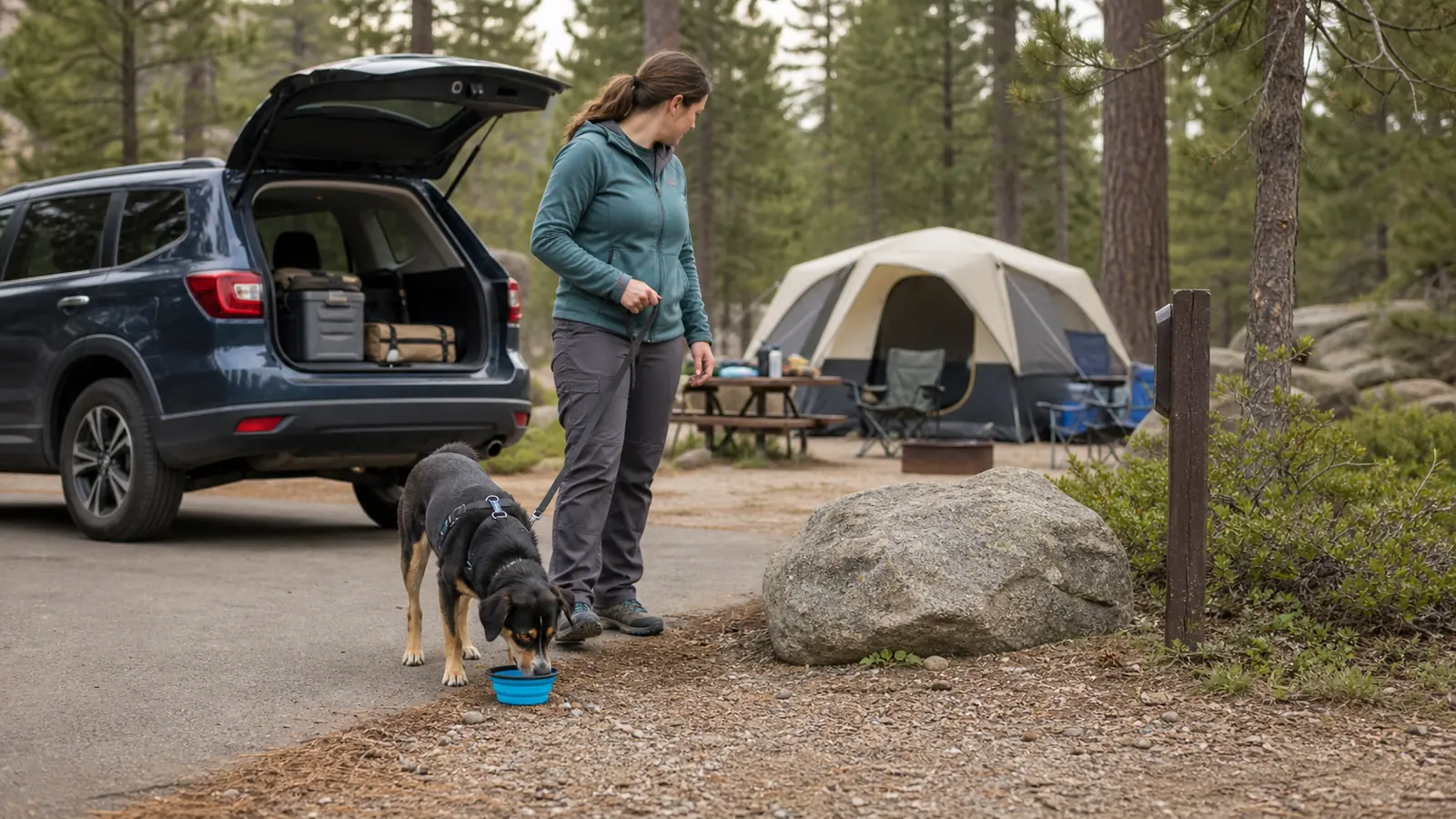
Camping with a dog works only when the exact campground and planned activities allow the animal, the dog can settle in the expected weather and noise, and one handler can manage restraint, water, food, waste, sleep, wildlife, and departure.
The camping basics do not override pet rules. A pet-friendly campground can still contain trails, buildings, beaches, shuttle areas, or facilities where dogs are restricted.
Then evaluate the dog, not an ideal version of the dog. Normal appetite, movement, rest, temperature tolerance, and response to noise form the baseline for the whole stay.
| Rule area | Question to answer | Camping consequence |
|---|---|---|
| Campsite | Are dogs allowed at this loop and pad | Confirms the overnight is legal |
| Trails and facilities | Where can the dog actually go | Changes the daytime plan |
| Restraint | Leash length tether and supervision rules | Determines setup and movement |
| Waste | Where must bags and waste go | Adds storage and disposal work |
| Food and wildlife | Which scented-item rule applies | Includes dog food bowls and treats |
| Emergency access | Which service can help an animal | Sets the exit and contact plan |
Permission has several parts. One pet icon does not answer the whole trip.
Which pet rules apply to the whole camping trip?
Read the current managing-agency page and the reservation terms. Record leash rules, prohibited areas, unattended-pet rules, pet limits, vaccination or documentation requirements, waste disposal, and seasonal restrictions.
Check the route from parking to the site. Hot pavement, steep stairs, metal grates, crowded shuttles, or a long walk with all supplies can change whether the dog can reach camp comfortably.
Ask whether potable water is operating and whether dogs can approach the water point. A natural stream does not become a safe or legal pet water source simply because it crosses the campground.
Look at nearby activities. If the family plan depends on a trail, beach, building, or boat that excludes dogs, someone must stay with the dog or the activity must change.
Confirm the rules again shortly before travel. Save pet limits, closures, water status, and reservation terms with the first camping trip details so they remain available offline.
Locate the nearest appropriate veterinary service and record its hours and phone number. Remote advice may still end with a drive, so include fuel, gate access, and a way to move a dog that cannot walk normally.
Carry a current identification method and confirm that the contact details can still reach the handler. A campsite number and vehicle description help staff reconnect a separated animal, but they do not replace secure restraint or supervision.
Verify the full itinerary before asking the dog to wait through a plan built for people.
Can your dog settle in a busy campground?
Camp adds vehicle travel, new smells, wildlife, unfamiliar people, other dogs, fabric movement, darkness, and limited personal space. A dog that rests well at home may remain alert for hours outdoors.
Know the normal baseline before departure. Note appetite, water intake, gait, bathroom habits, breathing at rest, ability to settle, and reactions to dogs and strangers.
Alert but responsive
The dog notices change and can still eat rest and follow known cues.
Overstimulated
Scanning pulling barking or pacing continues despite distance and quiet.
Too hot or too cold
The dog cannot settle and body behavior differs from normal.
Pain or paw trouble
Gait changes licking increases or the dog avoids weight on a foot.
Illness signal
Vomiting diarrhea weakness collapse or unusual behavior needs prompt action.
Test one low-consequence outing before the overnight. The checks from hiking with a dog help compare gait, drinking, settling, and response to people before adding a full night.
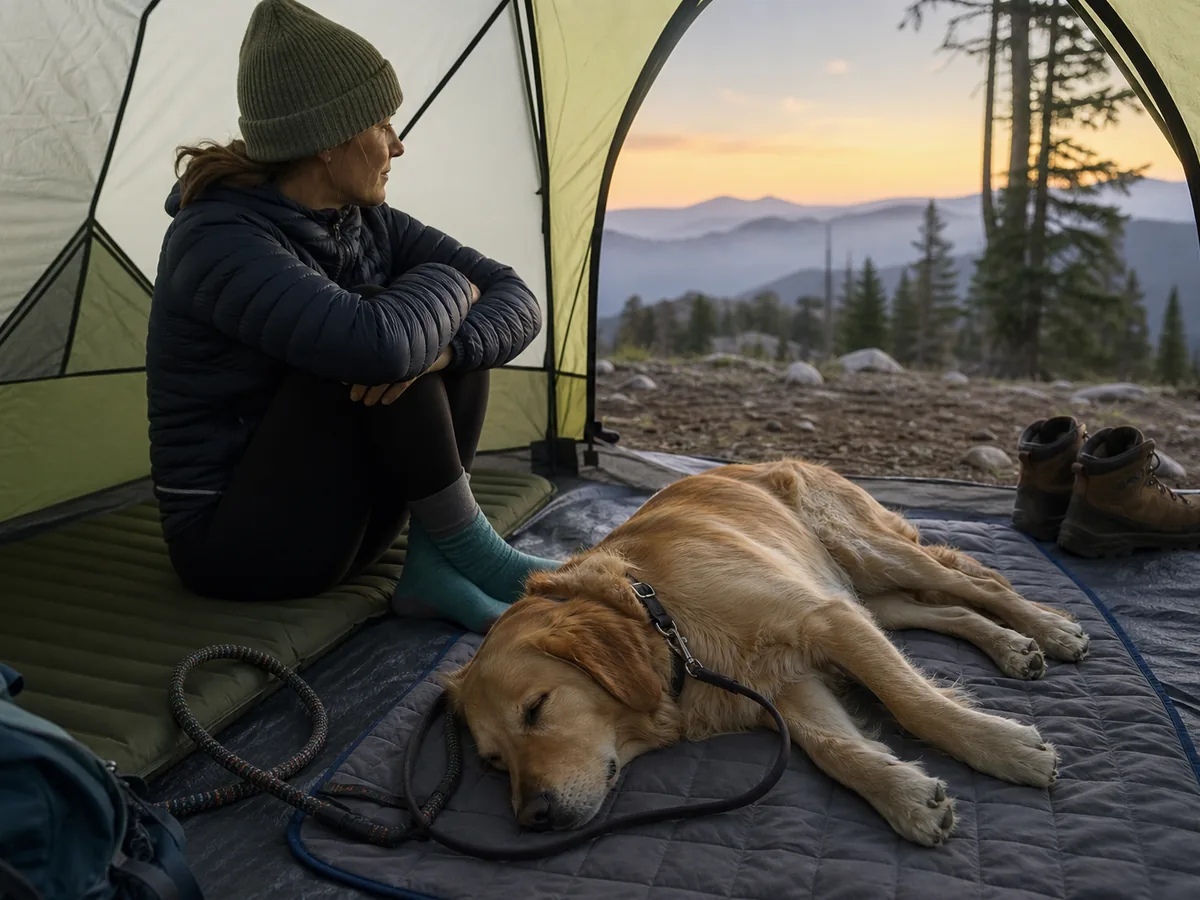
Do not use a busy holiday weekend as the first test of noise and crowd tolerance. The simple site recommended for camping beginners gives the dog a quieter date and an easier exit.
Watch recovery after the test outing. A dog that appears comfortable during activity may limp, refuse food, have stomach trouble, or remain unable to settle several hours later.
The overnight should not begin until the response to travel and the trial is understood.
Noise tolerance is specific. Play recordings cannot reproduce scent, vibration, proximity, or surprise, but a controlled practice with tent fabric, zippers, headlamps, and nearby movement can reveal whether familiar cues still work.
The normal dog is the reference. A major change deserves action even when another dog appears comfortable.
Keep the dog restrained during every camp transition
The dog needs control while doors open, shelter parts move, food appears, and both hands are occupied. Camp setup is not a safe time to depend on voice control alone.
Use a legal leash or tether system that fits the site rules and the dog. Keep it away from roads, fires, cooking, tent guylines, neighboring pads, and vegetation where it can tangle.
- Pause before openingFit the legal restraint and identify the first relief area.
- Walk the boundaryCheck roads wildlife sign sharp debris heat and neighboring dogs.
- Set the dog stationPlace water shade or weather protection and bedding in a controlled area.
- Build shelterKeep one person responsible for the dog while doors and gear remain open.
- Secure scentStore dog food treats bowls and waste under the local rule.
- Recheck the lineConfirm the dog cannot reach traffic fire cooking or another campsite.
- Prepare the nightKeep leash light footwear and waste supplies beside the exit.
Never leave a tethered dog unattended. Tangling, weather, wildlife, people, and other animals can change the situation before the dog can escape it.
Inside the tent, plan how the dog remains contained when someone enters or leaves. A loose door flap can become the easiest route to the campground.
Do not attach a tether to a table, shelter part, dead branch, or object the dog can drag.
Use only a method permitted by the campground and suitable for the animal. Inspect clips, leash, harness, collar, identification, and contact details before every trip.
Practice vehicle exits one at a time. Opening a door before attaching the leash is one of the camp setup mistakes that can become urgent in seconds.
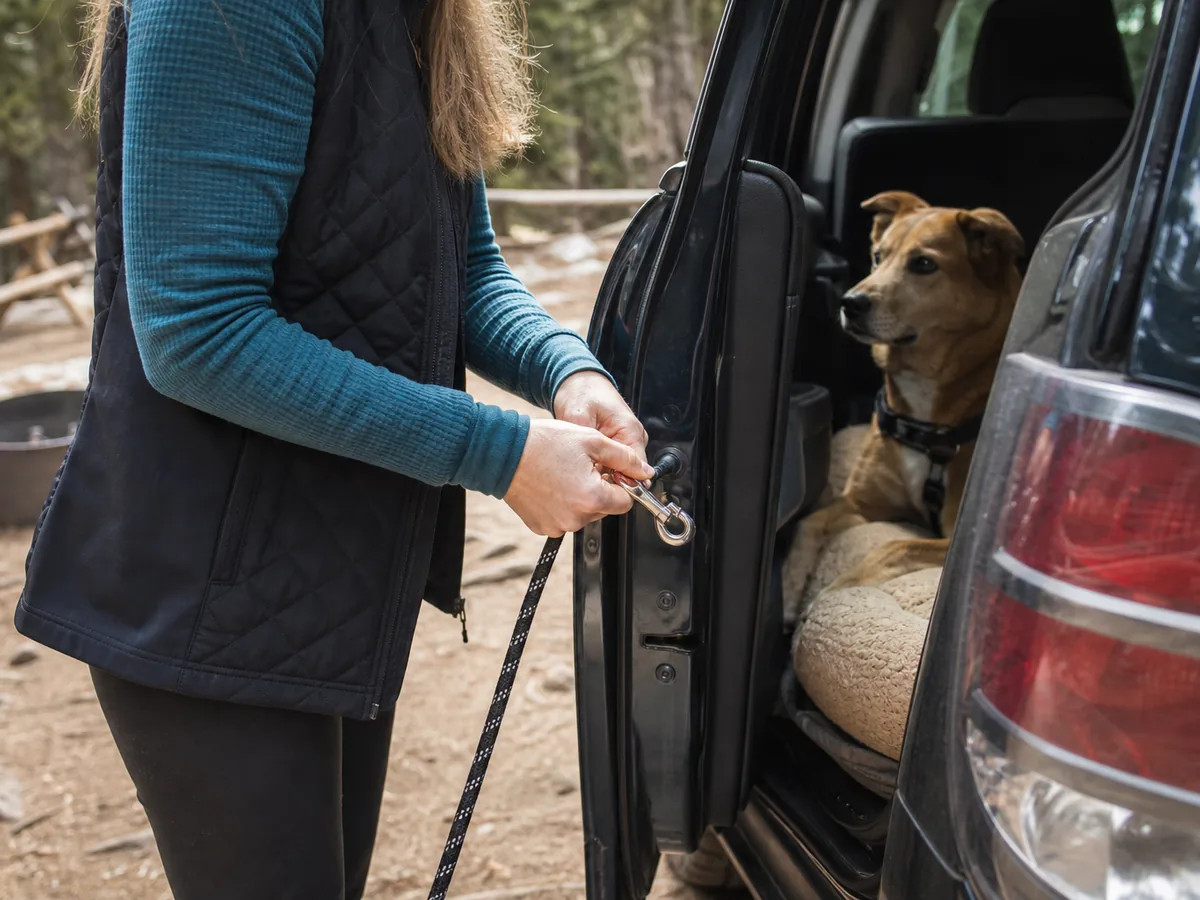
Control survives busy hands. The restraint plan must work during real camp tasks.
What food, water, medicine, and waste gear does your dog need?
Start with the dog's normal food, medication, and daily water pattern. The camp water calculation covers people first, then the dog's separate need based on professional advice, weather, activity, and reliable refills.
- Water
- Dog supply bowl and refill plan remain separate from human assumptions
- Food
- Familiar portions stay sealed under the campground scent rule
- Medicine
- Schedule instructions and storage remain accessible
- Treats
- Count as scented food and fit the same storage method
- Waste
- Bags handling and legal disposal work from every part of the stay
- Records
- Identification and useful medical information travel with the handler
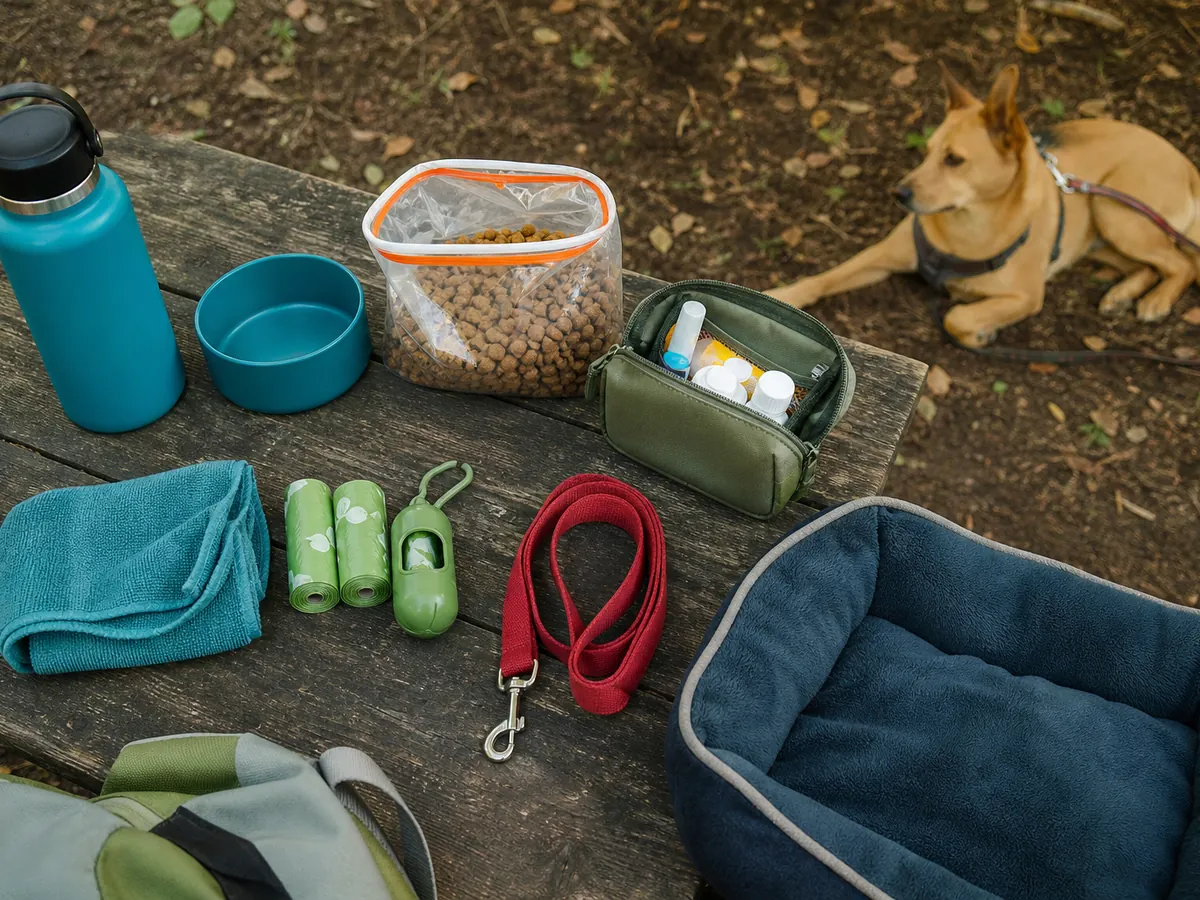
Offer water often enough to observe whether the dog is drinking normally. A dog that refuses water, vomits, or behaves unusually needs a reduced plan and may need veterinary advice.
Keep food and bowls away from the sleeping area when local wildlife rules require it. The camping packing list should give dog food, bowls, medicine, records, and waste their own checked places.
Separate the dog's daily portion from the delay reserve so overfeeding treats does not consume the food needed for an extra travel period. Keep feeding changes small because travel and unfamiliar water can already affect digestion.
Carry more waste bags than the expected number of stops requires. A bag can tear or be used to contain another dirty item.
Store filled bags away from food and sleeping areas until they reach the legal bin.
Dog supplies are complete systems rather than extras taken from the human kit.
How do you protect your dog's paws and sleep area?
Inspect the site at dog height. Look for hot ground, sharp gravel, burrs, broken glass, insects, standing water, sap, fire debris, and plants the dog should not contact.
Give the dog a defined dry sleeping place that fits its normal behavior and the weather. The tent floor alone may not provide insulation or protection from claws and wet fur.
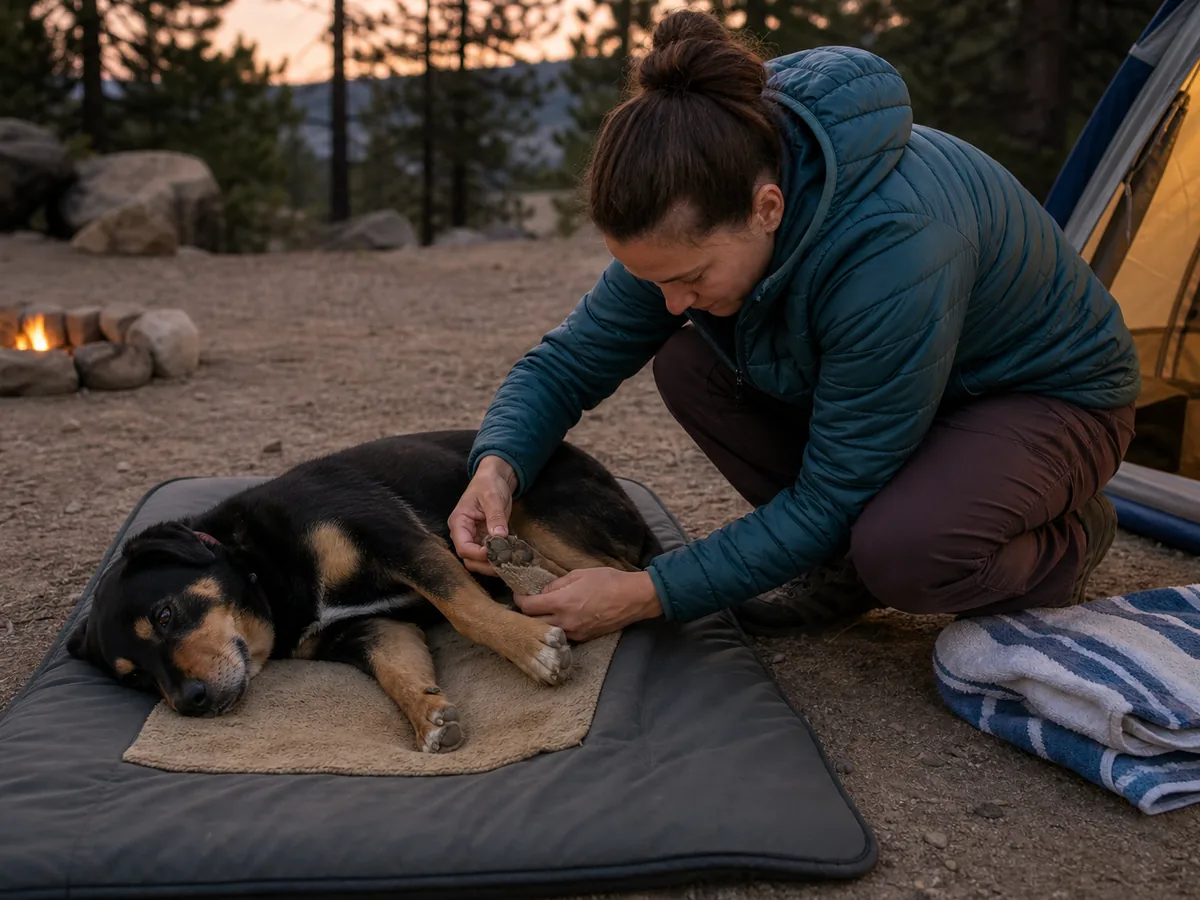
- Inspect every paw after travel and before bed.
- Remove dirt and moisture with dog-safe supplies.
- Keep bedding dry and away from the tent wall.
- Prevent access to cooking food trash and human medication.
- Place the dog where an adult can control the door.
- Carry a temperature plan based on the specific dog and professional advice.
Avoid universal breed claims. The weather limits used for winter camping need a dog-specific decision because coat, size, age, health, wind, dampness, shade, and the surface all matter.
Do not let the dog sleep in a vehicle with unsafe temperature or ventilation. The overnight arrangement needs active supervision and a clear exit.
Check paws after every long walk and after time around rough pads, hot surfaces, burrs, ice, or sharp plant material. Remove debris only when it can be done safely and do not force a painful foot.
A gait change is a reason to stop activity.
Wet fur can transfer water to bedding and tent walls. When camping in rain, give the dog its own towel and keep human sleep insulation inside the protected dry area.
Inspect the ground the dog uses rather than only the space people occupy.
Use distance before barking or wildlife contact escalates
Dog food, treats, bowls, waste, toys, and grooming products can carry scent. Store and dispose of them under the same local rules that protect human food and trash.
Move away from a trigger before barking becomes continuous. A site beside a busy path, dog area, or wildlife corridor may be legal but unsuitable for a dog that cannot settle there.
The shared boundaries in camping etiquette apply to dogs too. Keep the leash, dog, bowls, and noise inside the assigned area, and prevent greetings unless both handlers agree.
Watch the dog's response when another animal passes outside the site.
If the leash stays tight, barking continues, or familiar cues stop working, increase distance and block the view where allowed. A quieter pad or early departure is better than asking the whole loop to tolerate repeated distress.
Plan toileting before quiet hours and before the dog becomes urgent. Use the approved route, carry a light aimed at the ground, collect waste immediately, and keep the dog from entering other campsites during the walk.
Children should not approach or handle an unfamiliar dog without the handler's clear permission. Families camping with kids should assign separate adult responsibility when child and dog needs happen together.
Distance is the first correction when scent, sound, wildlife, or another dog raises arousal.
How do heat and cold change the plan for your dog?
Do not use one air-temperature cutoff for every dog. Coat, body size, age, health, humidity, sun, wind, damp fur, ground temperature, activity, and access to shade all change the result.
Build the plan from the dog's normal breathing, gait, posture, appetite, and ability to settle. A familiar dog gives you a better warning signal than a generic claim about what its breed should tolerate.
Check the surface with your hand before asking the dog to stand or lie there. Asphalt, sand, rock, metal, and dark tent fabric can become much hotter than shaded air, while wet or frozen ground can pull heat from a resting animal.
Shade must move with the sun. A dog station that is protected at breakfast can be exposed an hour later, so recheck it after setup and through the warmest part of the day.
Heavy or rapid breathing that does not ease with rest, weakness, poor coordination, vomiting, collapse, or a major behavior change requires immediate action. Move toward a cooler safe setting and contact a veterinarian or emergency service for instructions.
Do not force ice water or wrap an overheated dog in material that traps heat. Follow professional instructions while arranging transport because aggressive cooling can create another problem.
Cold also changes behavior before it creates an obvious emergency. Shivering, hunched posture, repeated paw lifting, reluctance to move, weakness, or failure to settle means the dog needs a warmer dry setting and a reduced plan.
Wet fur and wind can lower tolerance quickly. Dry the coat with dog-safe supplies, replace wet bedding, and end the stay when the prepared shelter and vehicle cannot restore normal comfort and behavior.
The dog sets the limit. The reservation, forecast, and other campers do not overrule a clear change from its normal condition.
Can you carry your dog to an open veterinary clinic?
A phone number alone is not an evacuation plan. Record the nearest appropriate veterinary service, its current hours, the driving route, gate restrictions, and a backup when the first facility is closed.
Keep the contact and route available offline. Cell service may fail at the campsite, and a search result does not prove that a clinic is open or equipped for the problem.
Decide how the dog reaches the vehicle if it cannot bear weight or walk normally. The method must fit the dog's size, the handler's strength, the campsite surface, and any stairs or distance between the tent and parking.
Practice with an uninjured calm dog before the trip. A towel sling, blanket carry, crate, harness, or commercial aid works only when it can be used without worsening pain or causing the handlers to fall.
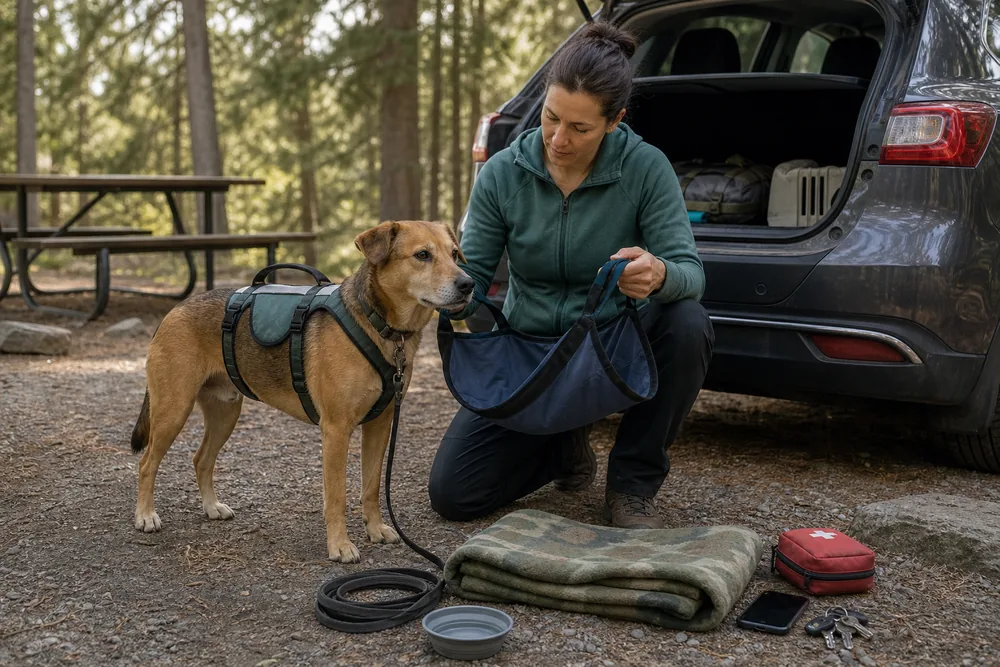
Store leash, keys, light, records, medication details, and a clean towel where setup gear cannot bury them. One adult should control the dog while another handles the vehicle, calls, gate access, and directions when two adults are present.
Do not give human medication unless a veterinarian directs it for that dog. A familiar household drug can have a different dose, effect, or danger in an animal.
Bring a basic pet first-aid kit recommended by the dog's veterinarian, but treat it as support for transport. It does not turn a campsite into a clinic or justify waiting through collapse, breathing trouble, uncontrolled bleeding, repeated vomiting, or severe pain.
Rehearse leaving with part of camp still standing. Essential medicine, records, restraint, water, and the dog go first, while chairs and replaceable equipment can wait for another adult or campground staff instructions.
A usable exit has four parts. You need a destination, an open route, a way to move the dog, and an adult who can act without searching through camp.
Should your dog continue after the first night?
Watch the first stand, walk, drink, and meal before planning another activity. Compare them with the dog's normal morning behavior.
| Observation | Possible concern | Camping decision |
|---|---|---|
| Normal gait appetite and rest | Dog recovered from the night | Continue with the planned easy day |
| Stiffness that resolves quickly | Surface or sleep may need adjustment | Reduce activity and reassess |
| Limping paw licking or refusal to bear weight | Paw or limb problem | End activity and seek appropriate care |
| Refusing water or food with unusual behavior | Illness stress or pain may be present | Leave and contact a veterinarian |
| Repeated barking pacing or inability to settle | Camp remains too stimulating | Move to the prepared quieter option or leave |
| Weakness collapse breathing trouble or severe distress | Emergency | Seek urgent veterinary help |
Know how the dog reaches the vehicle if it cannot walk normally. Frontcountry camping should keep that route short enough for the available adults and equipment.
Pack before the dog becomes restless. Maintain restraint through the empty-site sweep and keep water, leash, records, and keys accessible for the drive.
Repeat the check after the first short walk. Excitement can mask stiffness at the tent, while movement may reveal a paw, joint, heat, or breathing problem.
Return to camp early enough that departure remains simple.
Clean the site without releasing restraint. The staged closeout used in solo camping lets one person pack while the dog remains secured in a safe legal location.
The dog can veto day two. Leaving early protects the animal and the people sharing the campground.
Sources
The National Park Service explains that pet rules vary, recommends checking permitted areas, using required restraint, carrying water, removing waste, avoiding heat, and never leaving pets unattended: Visiting Parks With Pets.
Its camping safety guidance covers food security, wildlife distance, clean camps, water, weather, and fire: Camping Safely.
The National Park Service recommends verifying rules, conditions, reservations, equipment, communication, and backup options before departure: Before the Trip.
The American Veterinary Medical Association lists pet first-aid warning signs and immediate actions for heatstroke and other emergencies: AVMA Pet First Aid.
Local rules decide access, while the dog's observed condition decides whether the stay continues.
Step by stepPractical steps
- Verify campsite, trail, facility, restraint, waste, and unattended-pet rules.
- Compare the dog with its normal movement, appetite, rest, and behavior before travel.
- Maintain legal restraint and named supervision through setup and every door opening.
- Pack complete dog water, food, medicine, waste, bedding, and record systems.
- Protect paws, temperature, wildlife distance, and neighboring sites.
- Use the dog's morning baseline to continue, shorten, leave, or seek veterinary help.
AnswersQuestions readers ask
Can I take my dog camping at any pet-friendly campground?
Check the exact campsite and every planned trail, building, beach, shuttle, and facility. Pet-friendly does not mean dogs are allowed everywhere, and restraint, waste, unattended-pet, documentation, and seasonal rules can differ.
Should a dog sleep inside the tent?
Use a legal, supervised arrangement that keeps the dog contained, dry, protected from the ground and temperature, and away from food and the door. The right arrangement depends on the specific dog, shelter, weather, and site rules.
How much water should I bring for a dog while camping?
There is no universal amount.
Start with the dog's normal pattern and professional advice, then account for weather, activity, travel, health, and reliable refills. Carry a separate supply and watch whether the dog drinks normally.
Can I leave my dog tied at the campsite?
Do not leave a tethered dog unattended. Tangling, weather, wildlife, people, vehicles, and other animals can change the situation quickly.
Follow the site's leash and supervision rules.
When should I end a camping trip with my dog?
Leave and seek appropriate care for limping, paw injury, refusal to bear weight, unusual refusal of water or food, vomiting, weakness, collapse, breathing trouble, severe distress, or behavior that does not settle after reducing stimulation.