
Camping for Beginners Starts With Choosing a Forgiving First Site
Learn camping at a legal, accessible site where shelter, sleep, food, and departure problems can be corrected before they control the night.
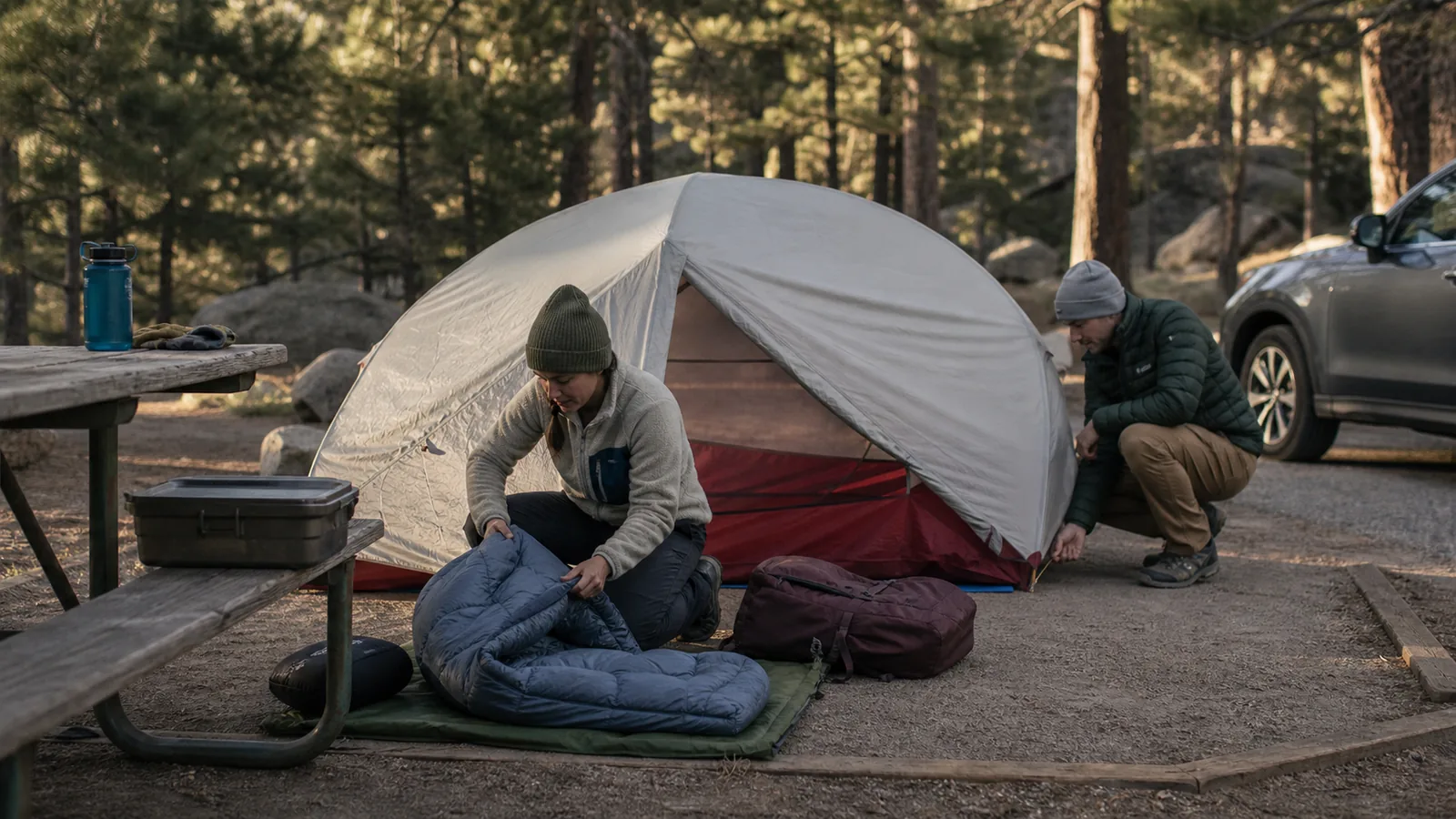
Start with one night at a legal frontcountry campground, mild weather, daylight arrival, and an easy route home. Your first trip should teach shelter, sleep, food storage, and camp closeout without making every mistake expensive.
A good first camping trip is deliberately small. Choose a legal site you can reach by vehicle, stay one night, arrive well before dark, and keep the next morning free of a tight deadline.
That setting does not remove every problem. It gives you time and access to correct a loose tent, cold bed, forgotten utensil, or tired camper before the mistake controls the night.
Pros
- Frontcountry site with a known reservation and direct vehicle access
- Potable water and toilets confirmed on the current campground page
- Mild forecast with no severe wind, heat, cold, or storm signal
- One simple meal and one planned overnight
Cons
- A remote site chosen mainly for solitude
- A late arrival that depends on a first tent setup in darkness
- Equipment that has never been assembled together
- A trip that becomes difficult to leave when someone is cold or unwell
Make correction easy. The first night succeeds when everyone can eat, sleep, stay warm enough, and leave the site clean without needing an improvised rescue from the plan.
Where should a beginner take a first camping trip?
Frontcountry camping is usually the best classroom because the campsite, parking, toilets, and site boundaries are defined. Many campgrounds also have a host or ranger nearby.
That gives a beginner a clear place to learn how a tent, sleeping pad, stove, cooler, and camp food-storage behavior work together.
Check the managing agency's current page before reserving.
Confirm whether the site is open, whether a reservation is required, how many people and vehicles it permits, and whether it has potable water. A faucet shown on an old map does not prove that water is available today.
Look for a direct exit. A first site does not need to be beside home, but a long rough access road or several hours of hiking turns a small equipment error into a larger commitment.
If you want the travel and camp to be part of one carried route, the backpacking beginner plan covers that different set of consequences.
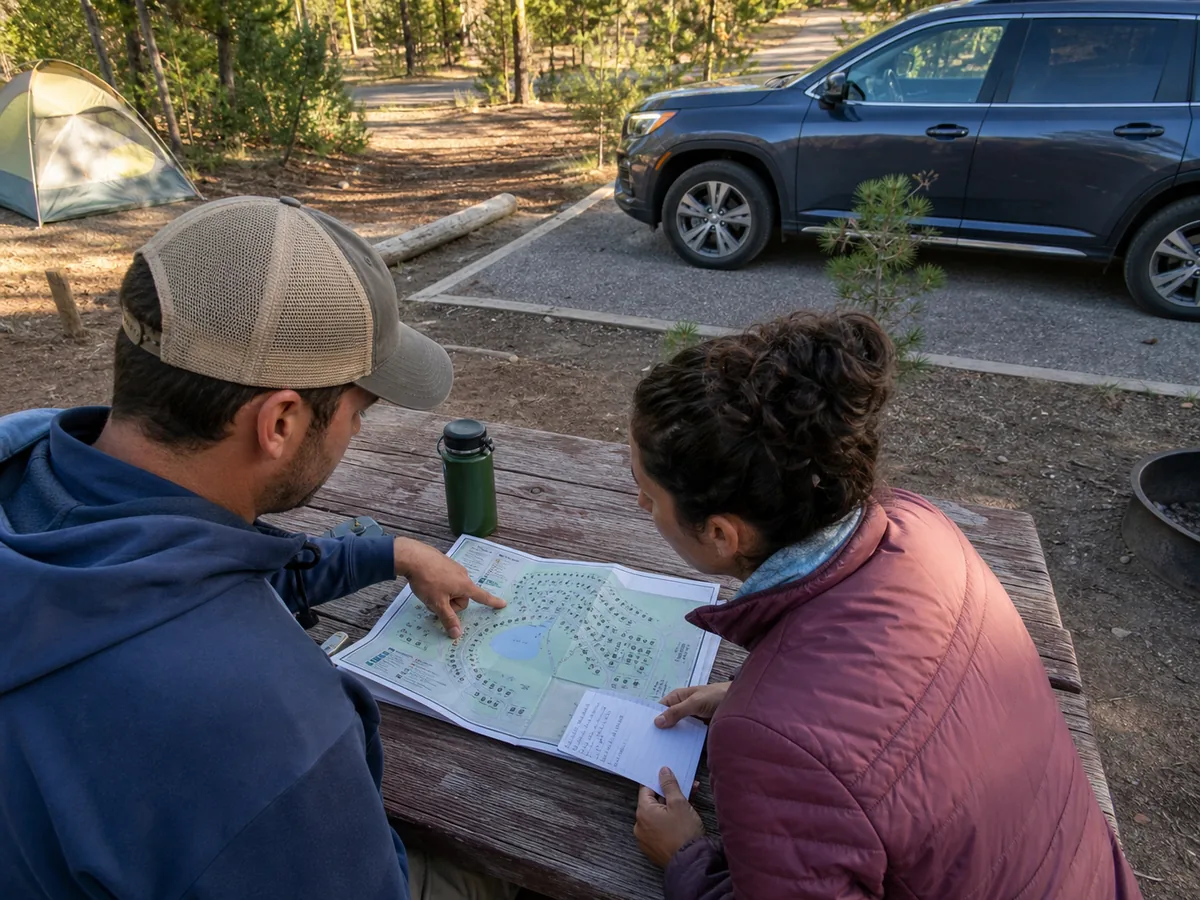
Keep daytime activities optional.
A short walk can be pleasant, but the core work is learning to arrive, inspect the site, build shelter, manage food, sleep, and close camp. The first camping trip plan turns those tasks into a timed overnight.
Frontcountry camping choices still vary widely. A paved family campground, a walk-in forest site, and a desert pad may share a category while exposing the group to different wind, temperature, water, wildlife, and toilet conditions.
Select from the facts rather than the label.
Do not confuse convenience with carelessness.
Vehicle access can support a warm layer, replacement meal, or early departure. It cannot make a dead branch safe, permit a prohibited fire, or protect food that local rules require you to secure.
Choose the learning setting before choosing extra equipment.
Rehearse the awkward parts at home first
Pitch the actual tent once.
Use every pole, clip, stake, guyline, and rainfly, then pack the parts back into the same bag. If two people will set it up at camp, both should know which end faces the door and how the fly attaches.
Inflate each sleeping pad and leave it for several hours. Put the pad, bag or quilt, pillow, and sleep clothing inside the tent so you can see whether bodies and gear truly fit.
A tent capacity describes sleeping space, not guaranteed room for pets, bags, or a wide mattress.
Test the stove outdoors with the exact fuel, connector, pot, ignition, and wind protection allowed by the manufacturer.
Never test or use a fuel-burning stove inside a tent, vehicle, or other enclosed sleeping space. Pack a simple no-cook option in case the stove fails or local restrictions change.
- Pitch the tent with every pole clip stake fly and guyline.
- Check the footprint or groundsheet fits without extending beyond the tent floor.
- Inflate the pads and confirm they hold air.
- Lie down in the complete sleep system for at least several minutes.
- Run every headlamp and pack spare power in a known place.
- Light the stove outdoors and confirm fuel and cookware compatibility.
- Open the first-aid kit and add personal medication.
- Put each tested item directly into the final bin or bag.
A camping packing system earns its place after the rehearsal, not before. It separates a complete shelter or kitchen from a checklist entry that names only the largest part.
Test the assembly. Owning an item and proving the whole system are different facts.
The first evening runs better in a fixed order
Arrive with enough daylight to inspect the site before unloading everything. Walk the boundary and look overhead for dead or damaged branches.
Check drainage, low spots, fire-ring placement, vehicle movement, and the path people will take to the toilet after dark.
Set shelter first when weather could change.
Choose level, durable ground within the assigned site, and let the wet-weather shelter setup in the tent instructions guide the pitch. Keep the footprint tucked beneath the floor so rain does not collect on exposed material and run underneath.
- Check in and read current noticesConfirm the site number checkout time water status fire rule food storage rule and any current hazard.
- Walk the site before unloadingLook overhead and across the ground for branches drainage traffic fire and tripping conflicts.
- Pitch shelterBuild the tent and rainfly while there is enough light to find a missing part or move locations.
- Build the sleep systemInflate pads lay out insulation and put dry sleep clothing where it will stay dry.
- Secure food and scented itemsUse the storage method required by the campground before leaving food unattended.
- Set the kitchenPlace cooking and washing equipment where it is legal stable and separated from the sleeping area.
- Prepare for darknessPut headlamps shoes water and required medication where each person can reach them.
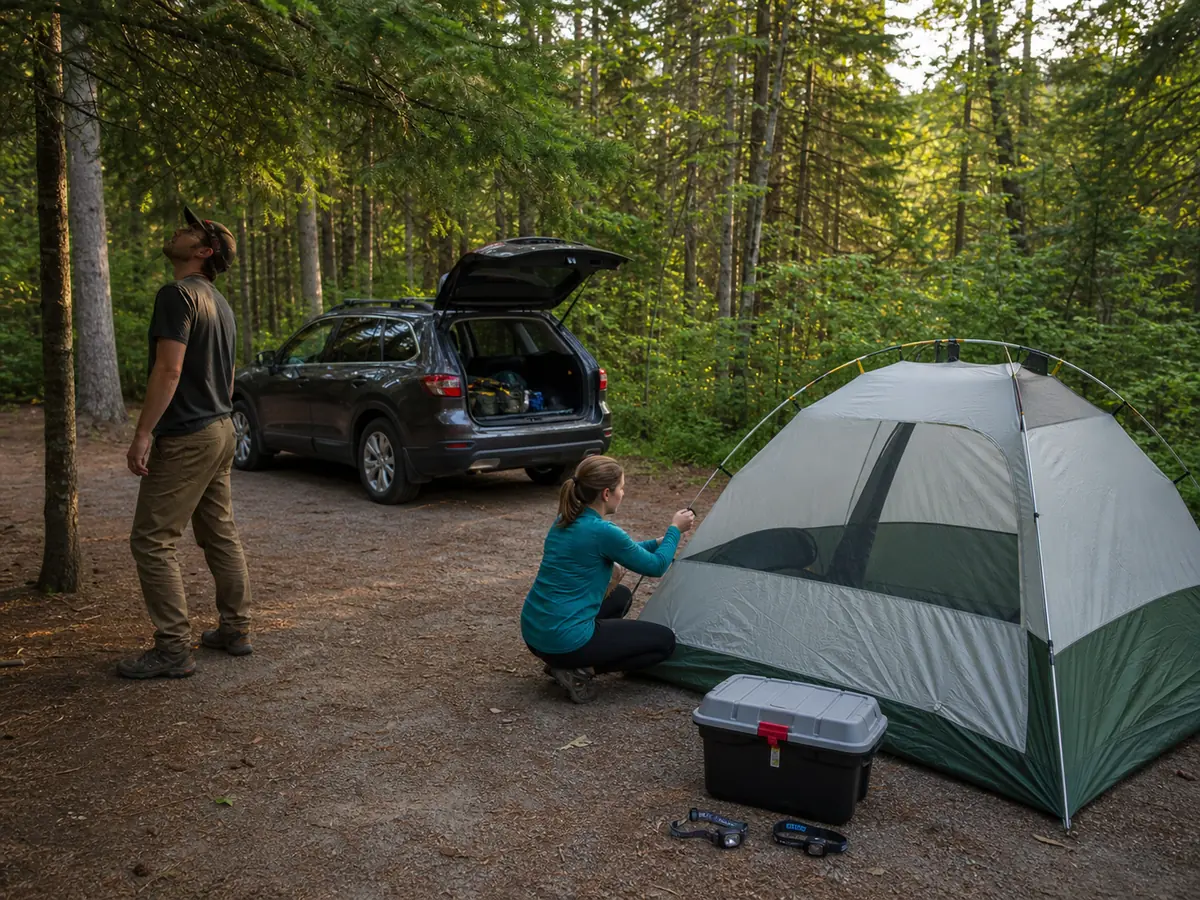
Only then begin the optional part of the evening. A campfire is never required for warmth, cooking, or a successful night.
If fires are prohibited, conditions are windy, or you cannot extinguish one completely, skip it.
Before bed, close the kitchen.
Put away food, trash, dishes, toiletries, pet food, and other scented items under the current local rule. Place footwear so rain cannot fill it, but do not bring food into the tent.
Required work comes first. Recreation fits into the time that remains.
How do you build a warm camping sleep system?
A sleeping bag slows heat loss from the top and sides, but the insulation beneath your body is compressed.
The sleeping pad provides the main resistance between you and the ground. A warm bag on an unsuitable or leaking pad can still produce a cold night.
Choose the bag and pad for the expected overnight low, the sleeper, and the conditions. Manufacturer ratings are comparison tools, not promises for every person.
Wind exposure, damp clothing, fatigue, food, pad insulation, and individual cold sensitivity all change comfort.
| Sleep part | Main job | Check before camp |
|---|---|---|
| Tent and rainfly | Block precipitation and reduce wind exposure | Complete pitch ventilation and waterproof condition |
| Sleeping pad | Reduce heat loss to the ground | Holds air fits sleeper and suits expected conditions |
| Bag or quilt | Trap warm air around the body | Dry correct size and suitable for the forecast |
| Sleep clothing | Keep a dry layer available for rest | Stored separately from wet or smoky clothing |
| Ventilation | Move moisture out of the shelter | Vents open without letting precipitation enter |
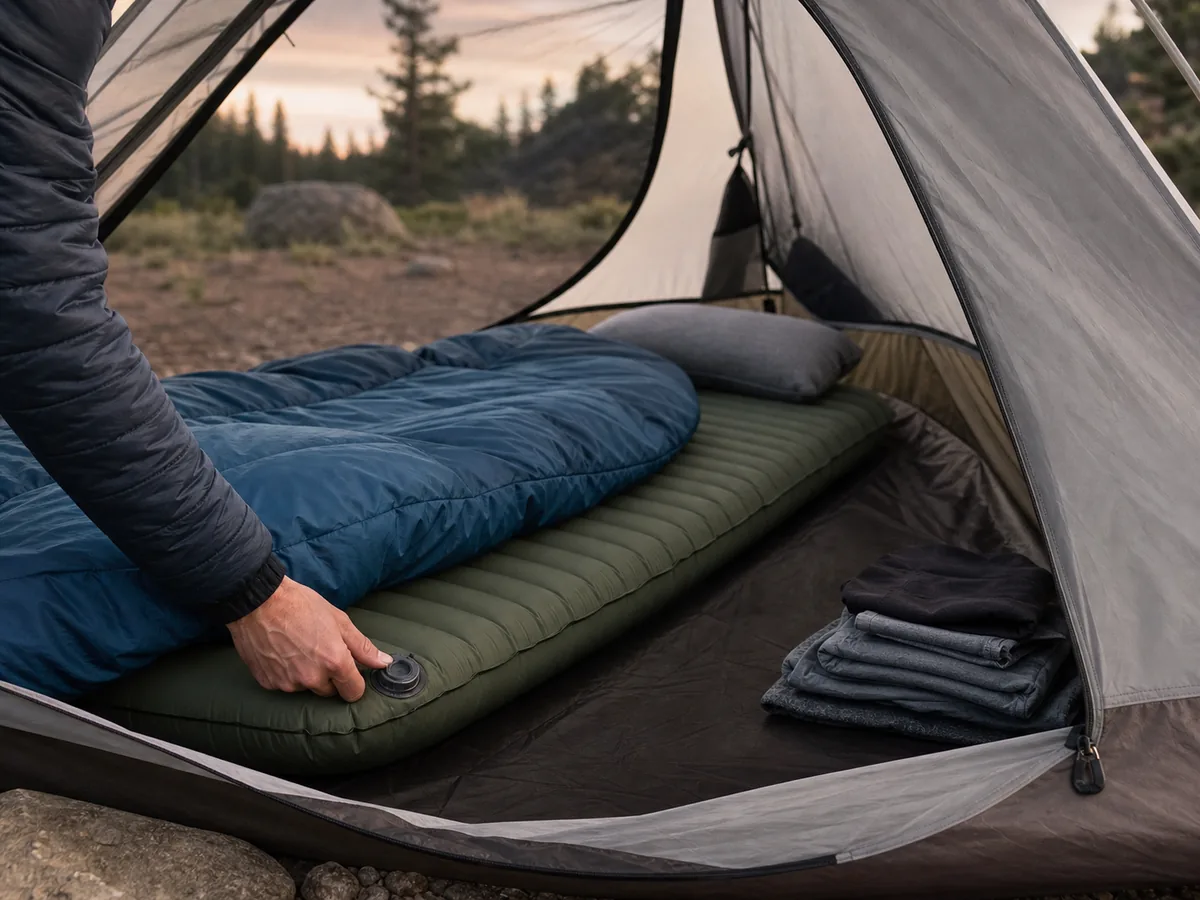
Change out of damp clothing before settling into insulation.
Keep one dry layer protected for sleep rather than wearing every warm item during setup. If the tent walls collect condensation, avoid pressing the bag against them and use the shelter's designed ventilation.
The early hypothermia signs matter on cool wet nights. Persistent shivering, fumbling, confusion, slurred speech, or unusual drowsiness are not ordinary camping discomfort.
When frost or snow is possible, a mild-weather rehearsal is not enough. A winter camping system must also protect liquid water, dry insulation, hand function, cold-weather fuel use, and the morning route home.
Warmth is a system. The same cold-night sleep system principle checks the ground, moisture, insulation, and person rather than blaming one item.
Which food, wildlife, and fire rules should you verify?
The campground's current instructions decide how food and scented items must be stored.
Depending on the place, the approved method may be a locked vehicle, a provided locker, or a specific wildlife-resistant container. Do not assume that a cooler beside the picnic table is acceptable overnight.
Treat toothpaste, trash, cooking oil, pet food, and used dishes as scented items. Close containers whenever the kitchen is unattended.
Clean crumbs and spills before bed, and never feed wildlife.
Measure water for drinking, cooking, and allowed cleanup rather than counting bottles. A practical water carry estimate starts with people, time, heat, effort, and refill reliability, then adds the kitchen volume the campground requires.
Keep cooking equipment stable and away from tent fabric, dry grass, and foot traffic.
Fuel-burning equipment produces heat and gases that make enclosed use dangerous. The broader camp cooking safety rule is to cook in the legal open area specified by the campground and follow the equipment instructions.
Use a campfire only where and when it is allowed. Keep water ready, attend it continuously, and extinguish it until the remains are cold.
A warm sleeping system and suitable clothing should carry the night, because a fire can go out and may be prohibited.
The common camping failure chains explain how a late meal, unsecured trash, and an unattended flame become larger night problems.
Local instructions decide the storage and flame method.
What counts as a successful first camping night?
Success does not require a long hike, elaborate dinner, or perfect sleep. A beginner trip has already done its work when the group can operate the site, remain comfortable enough, and make a calm decision about staying or leaving.
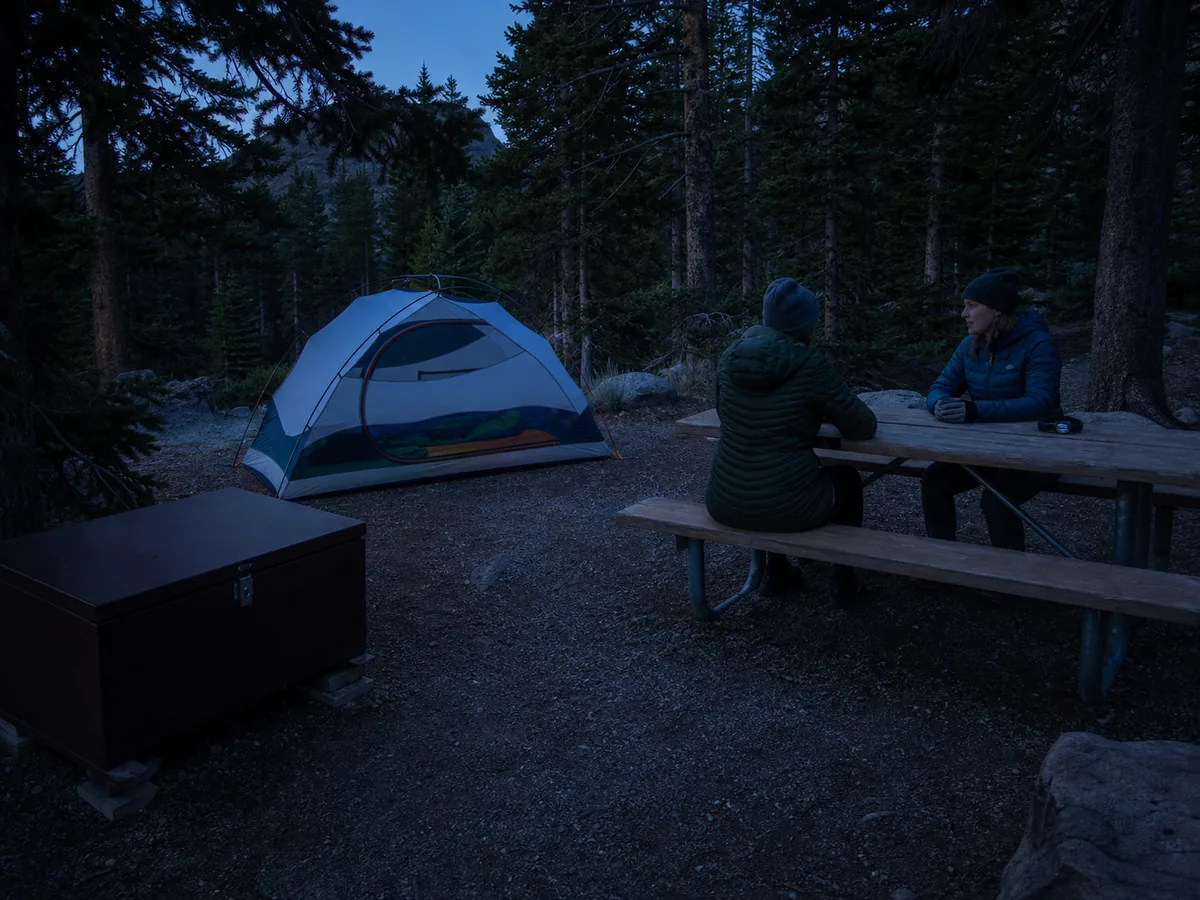
Ask each person about warmth, hunger, pain, medication, and whether the sleep setup is working. Fix a small problem while bins are open and the vehicle is available.
If someone cannot get warm, becomes ill, or wants to leave for a sound reason, use the easy exit you selected.
Quiet hours, generator hours, parking limits, and pet rules protect other campers. Speak softly, keep light directed at your own work, and prevent loose gear or pets from entering another site.
Give the night one honest comfort check.
Ask whether the pad is holding air, feet and hands are warm, the tent is managing moisture, and everyone can reach light and footwear.
A small first night counts when the group stays functional and can leave calmly.
What should you fix before leaving?
Diagnose the cold spot before adding every spare layer. Cold from below points to a pad that is leaking, undersized, or poorly insulated for the conditions.
Cold around the shoulders may come from a loose bag opening, damp clothing, or a bag that does not fit the sleeper.
Check the pad by pressing near the hips and shoulders. If the body reaches the ground, add the compatible backup pad or leave while the vehicle and road are easy to use.
A blanket placed only on top does little to replace missing insulation underneath.
Damp tent walls do not always mean the shelter leaks. Breath and wet clothing can condense on a cool fly.
Use the vents and separation built into the tent, keep bedding away from the wall, and move wet clothing out of contact with the sleep system.
Hunger can also feel like a warmth problem. Eat the planned simple food and drink water if the person is alert and able to do so safely.
Do not use alcohol as a warming method because it can weaken judgment and does not repair wet insulation or a failed pad.
Set one reassessment time, such as ten minutes after the correction. Leave if warmth, normal thinking, or sleep-system function does not improve.
The easy exit is part of the first-night equipment, even though it never enters a bin.
Make a concrete adjustment, then reassess. Adding several random blankets or running an engine without understanding the cause can create new moisture, exhaust, or space problems.
A calm night is enough. The second trip can add distance, weather, or a more complex meal one change at a time.
How do you close camp without leaving gear or waste?
Read the checkout time the night before. Put away items that are no longer needed and prepare a simple breakfast so the morning does not begin with every bin open.
Air damp sleeping gear when weather and rules allow, but do not miss checkout while waiting for it to become perfectly dry. Pack wet items separately and dry them fully at home before storage.
- Extinguish every allowed flame and confirm the remains are cold.
- Secure food and trash during breakfast and packing.
- Pack sleep gear before loose shelter parts cover it.
- Check the tent floor and picnic area for small personal items.
- Walk the site from several angles for trash food scraps stakes and cord.
- Return moved campground items to their required position.
- Confirm all people pets keys and shared equipment are accounted for.
- Record wet damaged missing or unused items after reaching home.
Do a final sweep after the vehicle is loaded. Small stakes, bread ties, food scraps, and bits of cord are easier to see from an empty site.
Leave the site at least as clean as you received it.
At home, dry shelter and bedding completely.
Recharge lights, clean cookware, replace used first-aid supplies, and note what the group actually needed. Those observations make the next trip better without turning the first one into a shopping contest.
Close the learning loop. Repair, dry, and record before equipment disappears into storage.
Only a short list belongs inside the tent
The tent works best as a dry sleep space. Bedding, sleep clothing, required medication, and a light belong inside, while food, fuel, cookware, muddy shoes, and wet outer layers need another legal place.
Set that boundary before darkness. Put a small mat or groundsheet at the entrance, choose where shoes will stay protected, and give each sleeper one reachable place for glasses, water, a headlamp, and nighttime medication.
Never bring a fuel canister, lit stove, grill, heater, or smoldering item into the tent. Tent fabric burns or melts quickly, and enclosed combustion can expose sleepers to carbon monoxide.
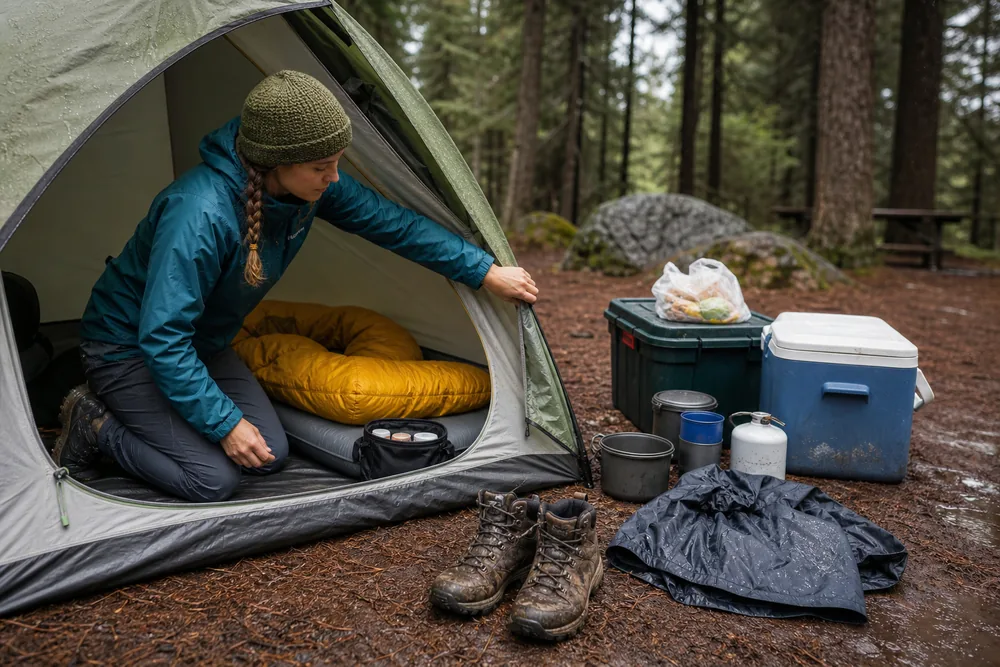
Food and scented items follow the campground storage rule even when the weather is calm. A snack kept beside the sleeping bag can attract wildlife and can undo the storage work completed at the kitchen.
Wet jackets should not lie on bedding. Hang or contain them only where the shelter design, ventilation, and site rules allow, and keep the door and exits clear.
A child may want every toy and bag nearby. Limit the inside load to items needed for sleep and the night, because loose objects hide glasses, lights, medication, and the route to the door.
Keep sharp tools, stakes, and trekking poles away from the floor. One misplaced point can puncture the tent or an inflatable pad after the repair kit is already packed away.
Before quiet hours, have each person practice reaching shoes and a light without standing on another sleeper. Check that nobody must crawl over a stove, cooler, pet lead, or heap of bags to leave.
In the morning, move dry bedding into its bag before wet footwear and breakfast traffic begin. This keeps a small spill or muddy step from turning the whole sleep system into work at home.
Protect the sleep space. The tent stays simpler, safer, and easier to close when every item has a reason to cross the door.
Sources
The National Park Service explains how setting, season, difficulty, duration, regulations, food storage, fire rules, emergency contacts, and equipment testing shape a camping trip: Before the Trip.
Its campsite guidance covers facilities, reservations, overhead and drainage hazards, tent placement, food separation, and making camp before dark: Finding and Setting Up a Campsite.
The NPS equipment overview describes shelter, bedding, cooler, food storage, and the way frontcountry and backcountry needs differ: What to Bring.
Verify the current campground page before every trip because access, water, food storage, fires, and facilities can change.
Step by stepPractical steps
- Choose one legal frontcountry night with mild conditions and a direct exit.
- Confirm reservations, facilities, food storage, fire, pet, and checkout rules.
- Pitch and test the complete shelter, sleep, stove, light, and first-aid systems at home.
- Arrive in daylight and set shelter, sleep, storage, kitchen, and lighting in that order.
- Check every person before bed and leave when warmth or health cannot be restored.
- Sweep the empty site, dry equipment at home, and record repairs before storage.
AnswersQuestions readers ask
What type of camping is best for beginners?
Start with one night at a legal frontcountry campground with direct vehicle access, confirmed facilities, mild weather, daylight arrival, and an easy route home. This keeps common equipment and comfort problems easier to correct.
Is camping hard for beginners?
The basic tasks are learnable when the first trip is small. Difficulty rises with remote access, severe weather, late arrival, untested equipment, uncertain water, and rules the group has not checked.
What should I practice before camping?
Pitch the complete tent, inflate the pads, lie in the sleep system, run headlamps, light the stove outdoors with compatible fuel, and locate first aid and medication. Pack each item after it passes the test.
Do beginners need a campfire?
No. Clothing, shelter, and the sleep system should provide warmth.
Use a fire only when local rules and conditions allow it, attend it continuously, and extinguish it until cold.
What makes a first camping trip successful?
Everyone can eat, sleep, stay warm enough, follow site rules, make a calm stay-or-leave decision, and depart with all gear and waste. Distance and elaborate activities are optional.