
What Is Good Backpacking Etiquette on Trails and at Camp?
Yield, pass, rest, collect water, manage dogs, store food, and leave camp without transferring risk or impact to the next person.
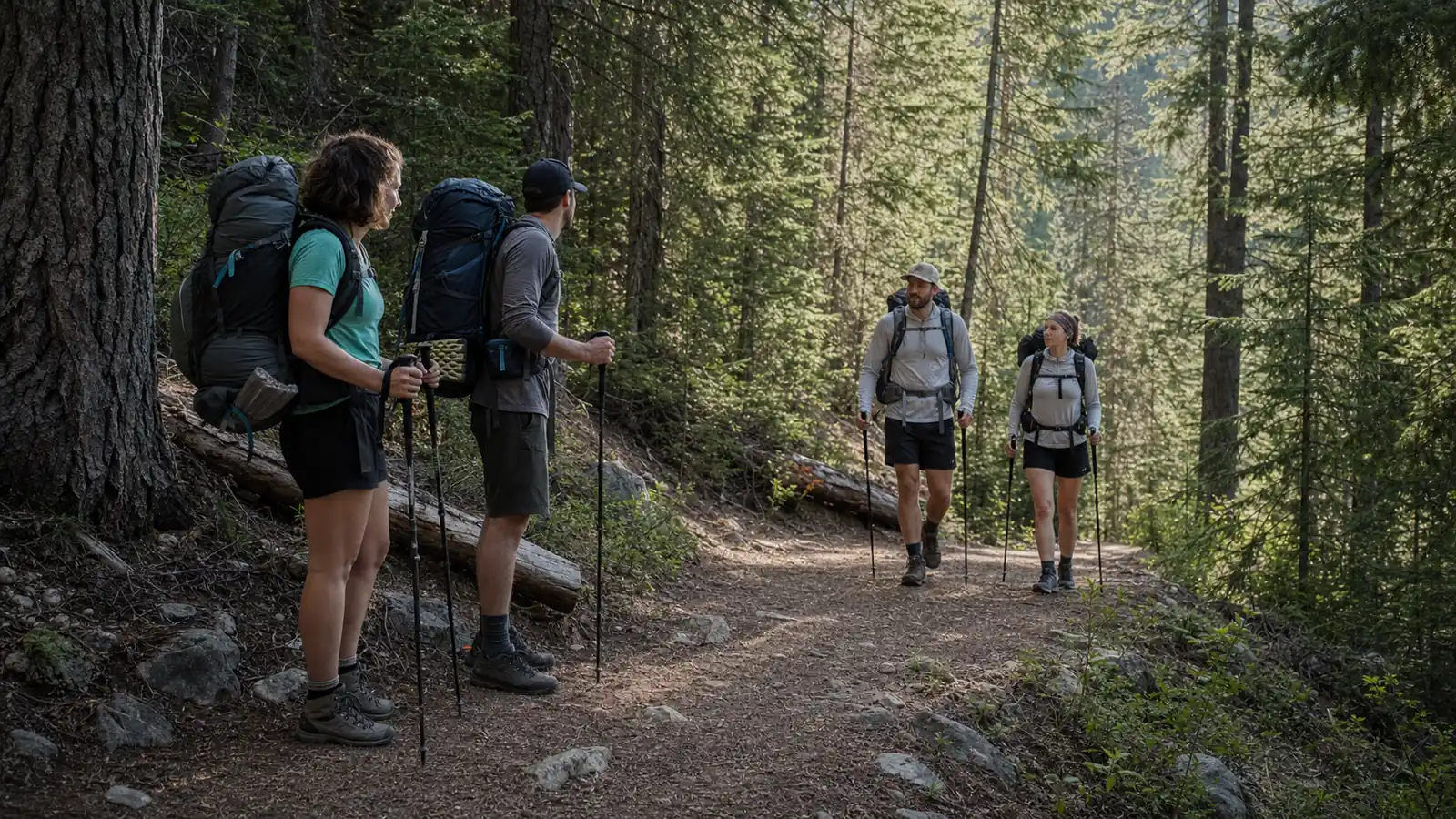
Backpacking etiquette is the set of small choices that keeps another hiker from taking the dangerous step, losing the durable surface, finding contaminated water, or inheriting an occupied campsite. Make your movement predictable and let the party with the safer option absorb the inconvenience.
Who should absorb the harder move?
Trail etiquette becomes clear when one question comes first. Who can give way with less risk and less damage?
The answer may be the faster hiker, the smaller group, the person beside a durable turnout, or the party that has not yet entered a narrow section.
- Look ahead before entering a bridge, switchback, ledge, muddy pinch point, or dense vegetation.
- Use a durable wide place instead of stepping onto plants or unstable slope.
- Speak early enough that the other person can choose a safe response.
- Keep the group together through the interaction rather than passing one person at a time.
- Control dogs, poles, and wide packs before they enter another person's space.
- Accept a short wait when passing would widen the trail or force someone toward exposure.
- Thank the other party and move clear before stopping again.
The familiar convention is that uphill hikers generally have the right of way because they may have a limited view and a hard-won rhythm. Yet the uphill person may choose to stop.
Follow that clear signal rather than arguing about the rule.
Basic hiking safety judgment still outranks courtesy when exposure, weather, injury, or unstable ground makes the polite move unsafe.
Pack stock follows local guidance and usually receives a wide, calm berth. Step to the side the handler requests, keep quiet, and avoid sudden movement.
Cyclists, runners, hunters, maintenance crews, and other users may share some routes. Read the local designation and make eye contact before assuming that one universal hierarchy applies.
When a person has limited mobility, carries a child, or is managing an injury, offer the durable side without demanding an explanation. Courtesy does not require someone to disclose a private condition.
The day-hiking etiquette basics cover shorter encounters. Overnight travel adds wide loads, long breaks, water collection, food storage, camp boundaries, and early or late quiet.
The safer party decides. A convention helps people predict each other, but terrain controls the final move.
How do wide packs change a safe pass?
A backpack can extend above the head and beyond both shoulders. It catches branches, strikes another pack, and shifts the wearer's balance when two people squeeze past.
Call from conversational distance. “Two behind you when there is a safe place” gives the slower party time to choose ground without being startled.
Narrow contour trail
The party nearest a durable turnout waits there instead of forcing a squeeze.
Steep switchback
Finish the turn before passing so neither pack swings toward the outside edge.
Bridge or boardwalk
One party clears the structure before the other enters.
Mud or snow pinch
Stay on the established surface and wait rather than creating a side track.
Large group
Regroup first and pass as one unit so the trail does not remain blocked.
Dog team
Shorten the leash, place the handler between dog and hiker, and ask before approaching closely.
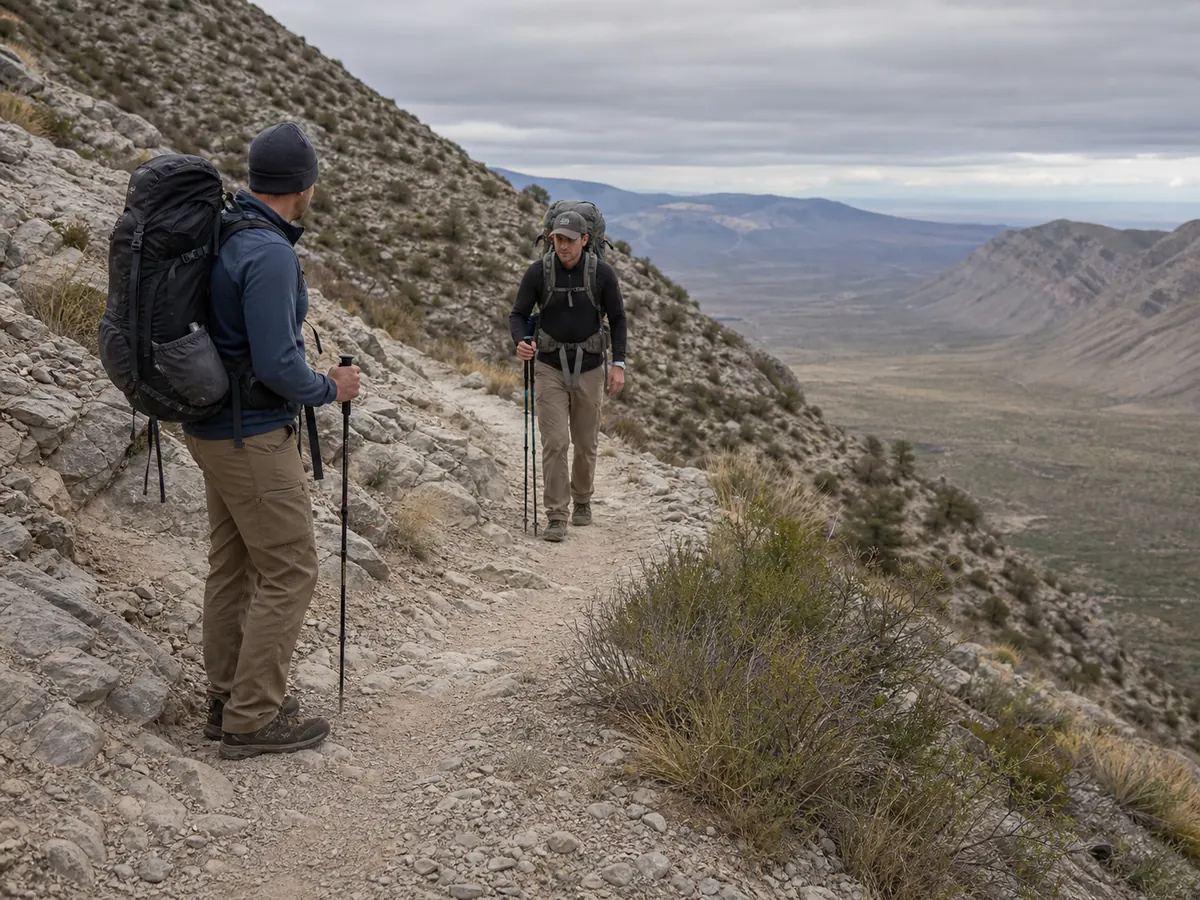
The passing hiker should move at a walking pace until fully clear. A rushed overtake can clip trekking poles or push a wide pack into the other person.
The slower party should not feel pressured to stop on unsafe ground. A simple reply such as “at the next wide spot” sets a clear expectation and keeps everyone moving predictably.
After passing, avoid dropping directly in front of the other hiker. Open enough distance that both parties can return to their own pace.
On a climb, the faster party may need to wait. Passing and then stopping a minute later makes the slower person repeat the same disruption.
Groups traveling with children can apply the same compact passing plan used on family backpacking trips, keeping everyone on one side of the trail. One adult communicates while the other keeps the group contained.
Pass once and clear. Finish the move before resuming speed or taking a break.
Where can a group stop without blocking the trail?
A pack dropped in the tread, poles laid across the path, and three people sitting at a junction can block a route more completely than they realize.
Walk to a durable spot that lets the whole group leave the travel line. Keep junction signs, water access, bridge ends, and the inside of switchbacks open.
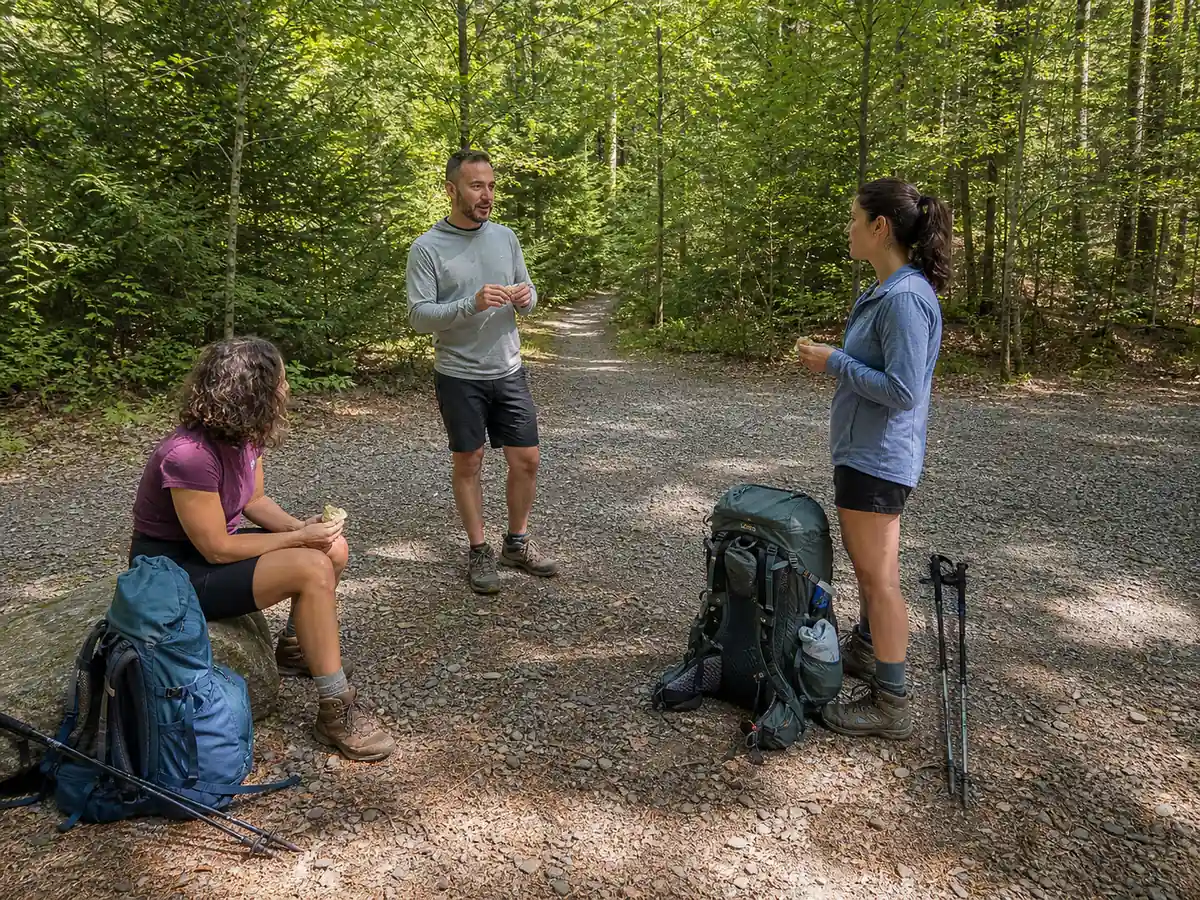
Keep food wrappers, straps, and clothing from spreading into the path. A person carrying a wide pack may need more clearance than an unburdened walker.
Use the break to check whether the group has separated. Restart only when every member is ready, so one person does not remain at the turnout while the rest block the next narrow section.
If no durable turnout exists, take a short standing break where sight lines are good. Wait for a better place before unloading the whole group.
Keep rain layers reachable through the backpacking packing system so a weather change does not turn a narrow trail into a dressing room.
A break should disappear from another hiker's route before that hiker reaches it.
A campsite is shared before your tent arrives
Established camps often have limited durable tent surfaces, cooking locations, water access, and food-storage capacity. Taking the first flat area does not grant control of the whole site.
Pause at the boundary and read the layout. Ask current occupants where tents, cooking, and food storage are already organized before scattering gear.
| Camp choice | Considerate action | Impact prevented |
|---|---|---|
| Tent surface | Use the smallest durable area that fits the shelter | New vegetation loss and blocked space |
| Kitchen area | Follow local separation rules and coordinate use | Food conflict and crowding |
| Water access | Keep the approach open and carry water away | Congestion and bank damage |
| Bear box or cable | Consolidate food and leave working room | Overflow and unsecured attractants |
| Late arrival | Use low light and quiet voices while choosing a site | Waking others and unsafe wandering |
| Early departure | Pack quietly and move final sorting away from sleepers | Repeated zipper, light, and conversation disturbance |
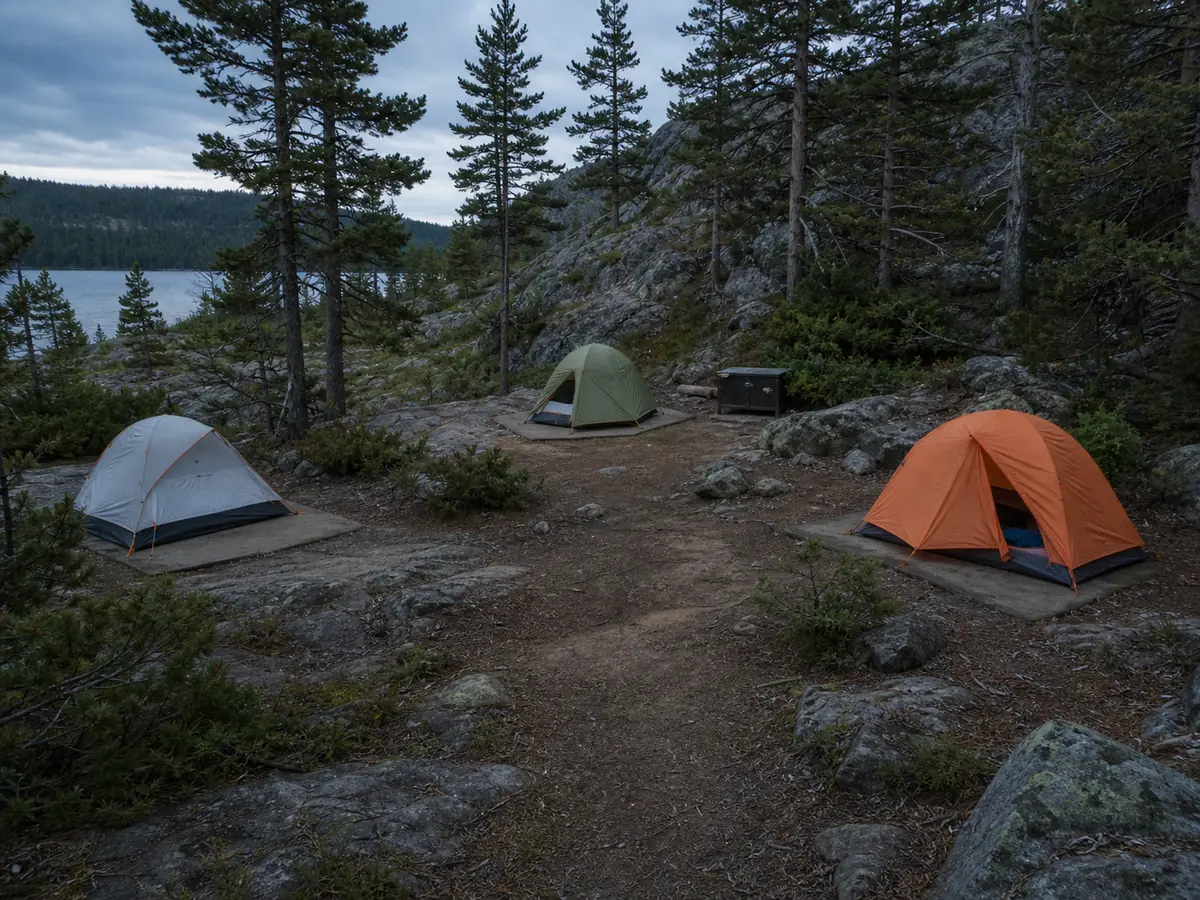
Do not reserve extra tent pads with packs when the group has not arrived. Explain the actual group size and current plan, then follow permit and site rules.
In active rain, the wet camp sequence still has to work without trenching, stripping vegetation, or occupying extra pads to dry gear.
At an unoccupied site, choose durable surfaces and avoid rearranging rocks, branches, or vegetation to make the campsite feel private. The beginner backpacking foundation begins camp with legal durable ground and protected essentials.
Ask before walking through another party's tent area, even when it looks like the shortest path to water. Use the established shared route and keep children or dogs within the same boundary.
If a site is full, follow permit and land-manager instructions. Do not create an overflow pad in vegetation or pressure another party to exceed the legal capacity.
Occupy only what you use. Another permitted party should not have to create fresh impact because your gear expanded across the site.
How should backpackers share one water access?
A spring outlet, creek edge, or lake access may be the only practical collection point for every person at camp. Keep bodies, food, soap, and washing away from that narrow shared space.
- Approach on the durable pathAvoid creating a second bank route around people already collecting.
- Wait with roomLet the current person finish without crowding the water edge.
- Fill containersCollect what the group needs efficiently without blocking the source for filtering at length.
- Carry water awayTreat it at camp or on another durable surface when local rules allow.
- Wash elsewhereFollow the required setback and keep soap, food scraps, and wastewater out of natural water.
- Leave the access clearRemove bottles, hoses, bags, and clothing when collection ends.
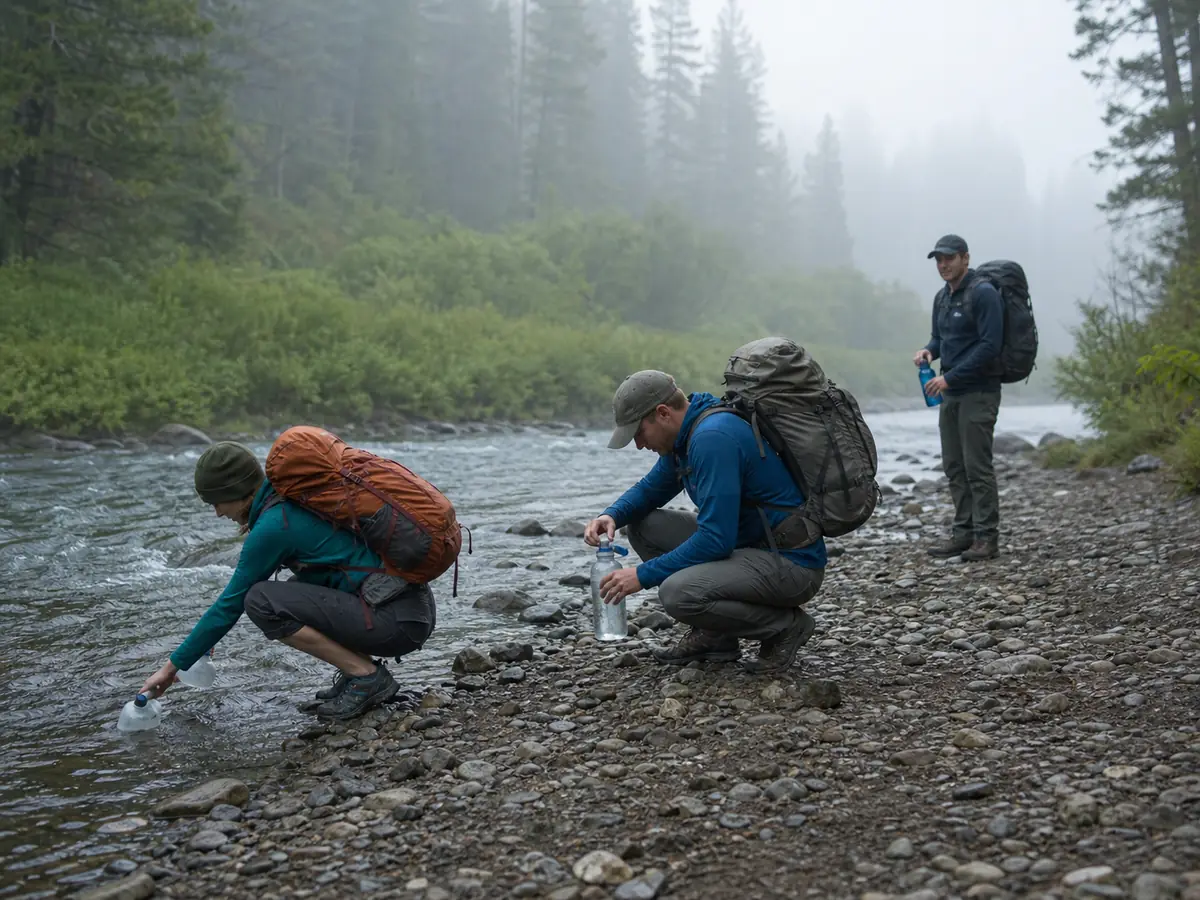
Do not stand upstream washing hands while another person fills below. Do not let a dog enter the collection point while people are using it.
The handler practices that control before an overnight. The dog backpacking plan owns fitness, paws, water allocation, camp restraint, and carry-out.
Settling the water carry calculation before the trip keeps unfamiliar equipment and repeated small fills from occupying the source for a long trial.
Fill the containers needed for the next camp period, then leave the bank. Repeated small visits can cause more congestion and trampling than one organized collection.
When the source is slow, agree on a simple order and help pass full containers back to durable ground. Do not place feet, packs, or filter hoses across the only approach.
Collect, then clear. The water edge should remain a brief access point rather than the social center of camp.
Food odor reaches beyond the tent
Etiquette around food is safety work. Unsecured food, cookware, trash, toiletries, and dog food can draw wildlife into a camp used by many people after you leave.
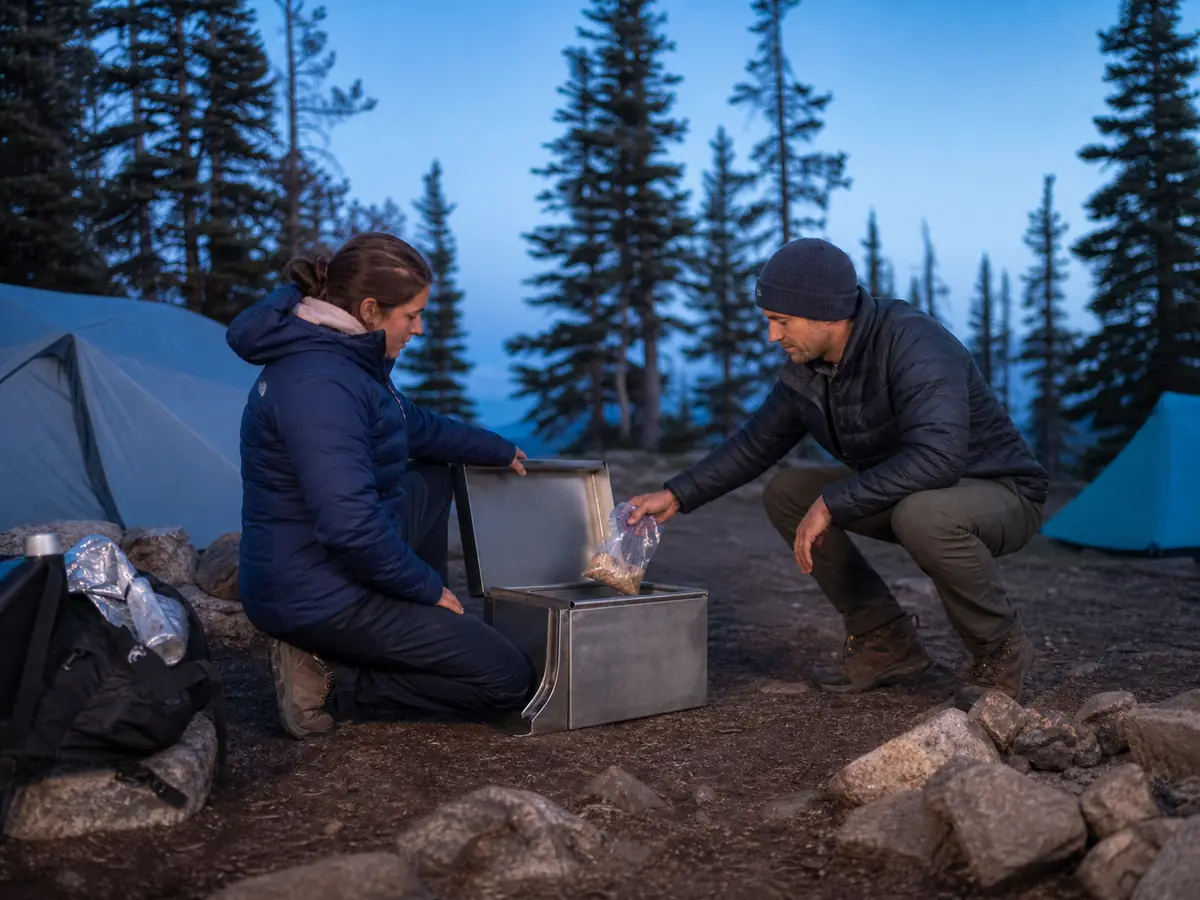
Cook in the designated or locally recommended area. Ask before joining an occupied kitchen space and keep the walkway clear of stoves, fuel, hot pots, and guy lines.
Make all food fit the approved system before the trip. Careful trek food planning shows how packaging, preparation, water, and delay food change the load before storage is chosen.
At a shared box, remove excess packaging before the trip and keep each party's food together. Loose bags spread across the container make it harder for everyone to close the lid correctly.
Clean visible spills at once and tell nearby campers when an animal has contacted food or storage hardware. That information may change where they cook, sleep, or report the incident.
Store for the next night too. Wildlife that receives food today may return when a different party occupies the site.
When is a waste stop actually finished?
Waste etiquette includes the method, the location, and the final condition. A shallow hole, exposed paper, or filled dog-waste bag beside the trail transfers the job to someone else.
Check current land-manager rules. Some places permit a cathole at specified distances and depth.
Others require every form of solid waste and toilet paper to be packed out.
Surface and use level matter. Thin desert soil, snow, narrow canyons, alpine ground, river corridors, and high-use zones often need more restrictive methods than a generic forest example.
Carry enough bags or approved containers for delay days. A waste plan sized to the exact itinerary fails as soon as weather adds a night.
Pros
- Carry the exact waste kit required for the route and expected surface.
- Walk far enough from water, camp, and trail when local catholes are allowed.
- Pack out toilet paper and hygiene products when required or when burial is unreliable.
- Inspect the stop for scraps, microtrash, food, cord, tape, and filled bags.
Cons
- Assume one universal cathole rule applies to desert, alpine, canyon, snow, and high-use routes.
- Leave a waste bag for pickup on the return trip.
- Burn trash or paper in a fire ring.
- Hide food scraps under rocks or throw them into vegetation.
Group leaders should explain the method before urgency. Provide privacy without placing people in unsafe terrain or sending them toward another campsite.
Many etiquette failures start as planning failures. Most common backpacking mistakes get worse when the group reaches a crowded site tired and late.
Match durable surfaces and waste practices to the exact place. Do not borrow a disposal method from a different climate or land unit.
On shorter routes with a dog, leash and passing space matter as much as water access and immediate waste carry-out.
Pack out unfinished impact. If the local method cannot be completed cleanly, the route requires a carry-out system.
Quiet begins while camp work is happening
Quiet hours do not mean loud setup is harmless until a posted minute. Voices, music, cookware, headlamps, barking, and repeated zipper use travel well before and after darkness.
Keep necessary work audible to your own group and avoid making it the whole campsite's soundtrack.
A useful camp rule
Use headphones if audio is allowed, but keep enough awareness for weather, wildlife, approaching hikers, and emergencies. Never assume an empty-looking valley is empty.
Schedule group conversations and gear sorting before others are sleeping. A whisper beside another tent can be more disruptive than a normal voice used earlier at the kitchen area.
For a necessary late arrival, assign jobs before entering camp. One person finds the legal pad, one handles shelter, and the rest keep lights low and gear contained.
Aim lights at the task and ground. A bright beam swept across tents can wake people and damage their night vision.
Manage dogs before barking becomes repeated. If the dog cannot settle around nearby people or animals, choose a route and site with enough legal separation.
On a longer repeated-day route, hut and porter customs add resupply points and multi-day community impacts to the same courtesy rules.
Reduce the radius of camp. Sound and light should solve your task without occupying everyone else's night.
Leave the site usable, not merely empty
Departure is the final interaction with people you may never meet. Walk the tent pads, kitchen, storage area, water path, and bathroom route after the packs are closed.
Tent area
Remove stakes, cord, food, fibers, and disturbed loose items. Leave existing drainage and vegetation alone.
Kitchen
Collect crumbs, foil, fuel caps, wash residue, and spilled ingredients.
Storage
Remove every attractant and close shared hardware as instructed.
Water path
Take filters, caps, bags, towels, and containers away from the bank.
Fire area
Follow current fire rules and never leave heat, foil, glass, or burned food.
Final route
Look back from the trail and correct anything that still signals your stay.
Do not sweep a natural site into a decorative pattern or dismantle features managed by the land agency. The goal is a clean, durable, functioning site.
Count small items deliberately. Tent stakes, bottle caps, food corners, gear ties, tape backing, and scraps of cord disappear easily against soil and rock.
If the group finds old trash, pack out only what can be handled safely and report hazardous or oversized waste. Do not disturb sharp objects, human waste, wildlife, or unknown material merely to leave a cleaner photo.
Close gates as directed and report damaged infrastructure, overflowing waste, an unsafe fire, or wildlife conflict through the land manager's stated channel.
Close the trip plan after the group reaches the exit. The first-trip planning process should name shared-site rules before the route begins.
Leave no new problem. The next party should inherit the route and campsite, not your unfinished work.
Trail registers are part of the safety record
A trail register is useful only when the entry is accurate and readable. Write the real group size, direction, destination, date, and time when the form asks for them, then close the box so weather and animals cannot damage later entries.
Do not write a joke name or an ambitious destination that the group has already changed. Rangers may use the record to understand who entered an area, where a delayed party intended to go, or whether a route saw unusual use.
Use one line or the space provided. Long messages, stickers, and unrelated notes can hide the information the next hiker or land manager needs.
Signing a voluntary register does not replace a permit, reservation, check-in, or trip plan. Complete each required process separately and keep the permit where an authorized person can inspect it without the group unloading every pack.
At a self-issue station, take only the copy and tag assigned to your trip. Leave blank forms, pencils, maps, envelopes, and fee materials protected for the next person.
If the station is out of forms or damaged, follow the posted alternative. Photographing the empty box can document the condition, but it does not create permission to ignore a required permit.
Group leaders should confirm the final exit entry when the system requests one. Do not sign out a person who has separated from the group or taken another route.
Keep the space around the register clear while completing the entry. Another party may need the map, instructions, or permit box, so sort packs and food away from the station.
Report an urgent route hazard through the official contact method when service becomes available. A note in a register may not be read soon enough to warn people about a damaged bridge, wildfire, aggressive animal, or medical emergency.
Leave a usable record. The entry should tell a responsible person what the group actually planned and when it passed the station.
Sources
The National Park Service advises hikers to know right-of-way practices, communicate before passing, remain on the trail, keep music private, manage pets, and follow Leave No Trace: Hiking Etiquette.
The Leave No Trace Center for Outdoor Ethics organizes minimum-impact choices around planning, durable surfaces, waste, leaving what is found, fire, wildlife, and consideration for others: The 7 Principles. Apply its current place-specific guidance and all land-manager rules.
Terrain and local rules decide. Verify stock encounters, group size, camps, water setbacks, waste, food storage, dogs, fires, and quiet hours for the chosen route.
Step by stepPractical steps
- Look ahead and choose the party with the safer durable place to yield or wait.
- Communicate before passing, contain wide packs and dogs, and complete the pass as one move.
- Keep breaks, tents, kitchens, water collection, food storage, and gear inside the smallest durable footprint.
- Follow current waste, wildlife, dog, fire, food-storage, and quiet rules for the exact route.
- Inspect camp, kitchen, storage, water access, and the trail after packing so no job passes to the next party.
AnswersQuestions readers ask
Who has the right of way on a hiking trail?
Uphill hikers generally have priority, but terrain controls the safe move. Use a durable turnout, communicate early, follow stock-handler directions, and accept a short wait when squeezing past would damage the trail or expose a person.
How should backpackers pass slower hikers?
Call from conversational distance, wait for a safe wide place, pass the whole group at walking speed, and move clear before stopping. Do not pressure another hiker onto plants, mud, or an exposed edge.
Is it rude to play music while backpacking?
Use headphones when audio is allowed and keep enough awareness for other people, wildlife, weather, and emergencies. Speaker sound travels beyond the campsite and removes another person's choice.
What is good etiquette at a shared backcountry campsite?
Use the smallest existing tent surface, coordinate kitchens and food storage, keep water access open, control dogs and light, respect quiet hours, and remove every item and attractant before departure.
Should dog waste be left beside a backpacking trail for later pickup?
No.
Carry it with you and follow the current land-manager disposal rule. A bag left beside the trail is litter and transfers the handling job to other visitors or staff.