
What to Pack for Backpacking Based on Route, Camp, and Water
Build the load from route conditions, overnight systems, consumables, and a carried test instead of copying a universal checklist.
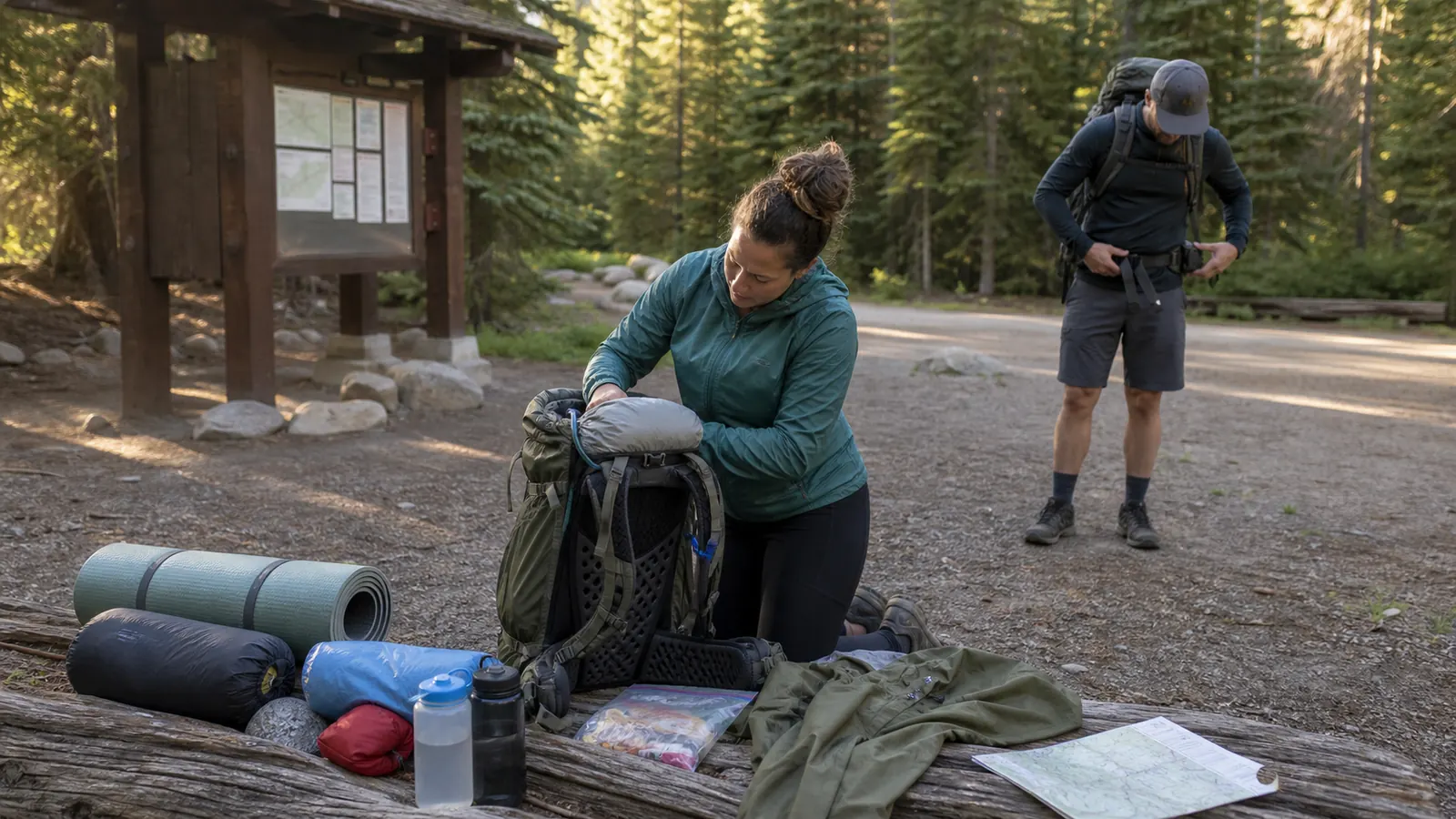
Pack for backpacking by defining the route first, then covering shelter and sleep, water, food and fuel, clothing, navigation, light, first aid, repair, hygiene, and local storage rules. Keep time-sensitive items reachable, place dense weight close to your back, and carry the complete load before departure because a list is not proven until it works while walking and at camp.
A backpacking load is a set of working systems. Shelter without a suitable pad can leave you cold, a stove without enough water cannot make dinner, and a full bottle buried under camp gear may be useless during the walk.
Route facts choose gear. A checklist helps you remember categories, but the actual route decides capacity, warmth, protection, redundancy, and what can stay home.
Route, season, and water rewrite the packing list
Begin with the number of nights and the longest time between resupply or exit. Duration increases food, fuel, hygiene supplies, battery needs, and the chance that one wet or damaged item must keep working tomorrow.
Lowest expected temperature matters more than the daytime high. Sleep insulation, stop layers, gloves, headwear, and the pad must protect the coldest inactive hours, not only the comfortable walk into camp.
Rain, wind, sun, insects, snow, and exposed terrain create different requirements. A forecast is one input, while the seasonal range and local hazard guidance show what conditions may still arrive.
Find the longest dry segment and the last reliable water before camp. Capacity must cover drinking, food, cleanup where allowed, overnight needs, and the next section before another dependable source.
Camp rules can require a particular food-storage method, a permit, a stove instead of a fire, or a waste system. These are load decisions, not paperwork that can be checked after packing.
Group size changes shared equipment. Name who carries shelter parts, stove, treatment backup, repair tools, first aid, and required storage so an item is neither duplicated without reason nor left behind by assumption.
Exit distance controls redundancy. A short first overnight near a simple walk-out may tolerate a smaller repair set than a remote multi-day route where one broken strap or failed treatment method can remove the only practical option.
| Trip fact | Packing change | Question to answer |
|---|---|---|
| Cold night | Warmer sleep and stop systems | Can you stay warm while inactive and on the ground? |
| Long dry segment | More capacity and treatment backup | Where is the last verified source before camp? |
| Wet forecast | Protected sleep core and wet-gear zone | What must remain dry for tomorrow? |
| Required food storage | Container or hanging system allowed locally | Will every scented item fit? |
| Remote exit | More repair and emergency reserve | Which failure cannot be replaced quickly? |
| Shared group gear | Named carrier and backup | Who has each part after the group separates? |
Do not let one severe possibility inflate every category. Match credible conditions with a clear response, then remove items that solve no likely route fact and no critical failure.
The output of this step is a short load brief. Write the coldest expected night, longest water carry, camp rule, weather range, hardest movement, nights out, and first-trip exit plan where you can see them while packing.
Write the load brief first. It prevents a familiar checklist from choosing equipment for a trip it has never seen.
How should shelter and sleep gear cover the coldest night?
Warmth starts underneath the sleeper. A bag or quilt compresses under body weight, so the sleeping pad must provide the ground insulation and stability the top insulation cannot.
Treat shelter, pad, top insulation, dry sleep clothing, and site choice as one system. A warm bag on a cold inadequate pad can fail, while a good shelter pitched in a drainage channel can collect water around both.
Choose shelter for the people, expected exposure, insects, and likely site surfaces. Confirm that every pole, stake, guyline, repair sleeve, and ground protection item is present and works with the places where you may pitch.
Protect insulation inside a waterproof pack liner or another dependable dry barrier. A pack cover can reduce direct wetting, but water can still enter around straps, through openings, or from wet items placed inside.
Keep sleep clothing separate from the layers worn during the day. That dry reserve has a clear job after sweat, rain, or a water crossing leaves the active system damp.
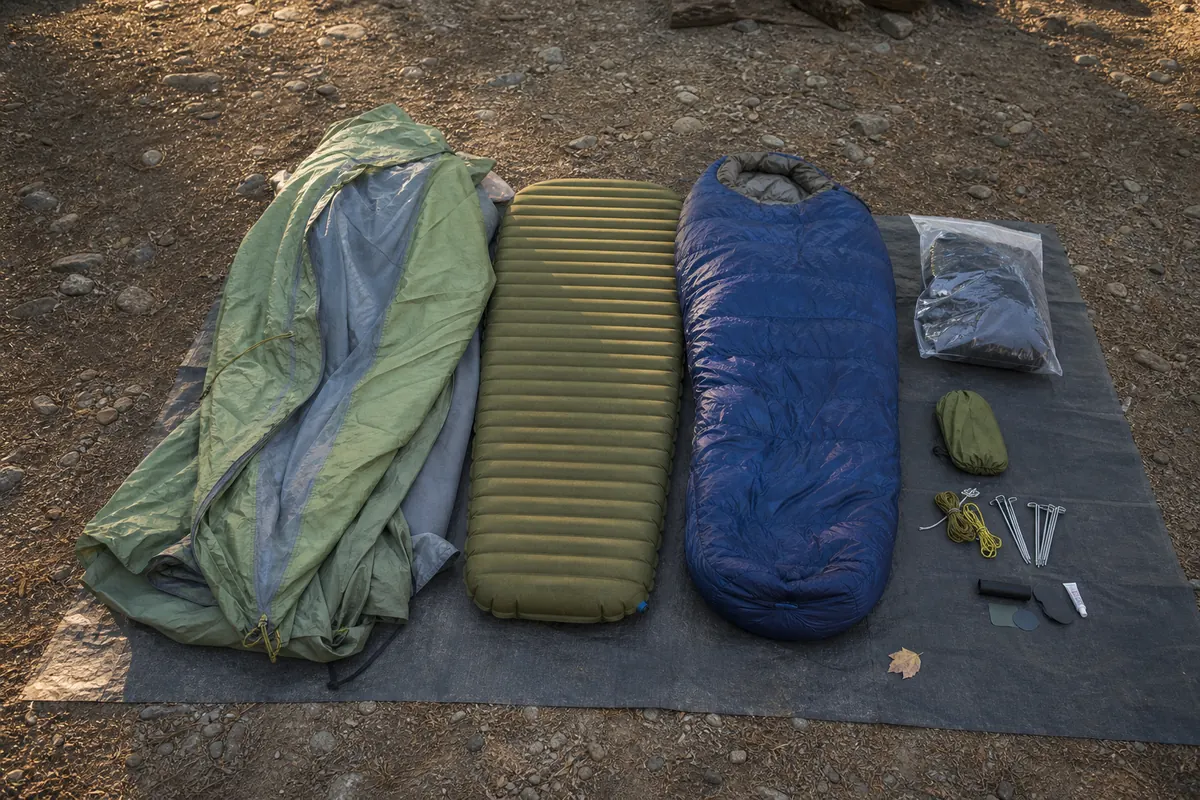
Practice pitching before the trip, including in low light and with the rainfly or full weather protection. Time the setup and notice which small parts become hard to find when the pack is closed and daylight is fading.
Sleep outside near home in conditions safely below the easiest indoor test. A multi-day systems rehearsal reveals ground cold, drafts, condensation, sliding, clothing needs, and difficult repacking.
Temperature labels describe standardized tests or product categories, not a promise of personal comfort. Body size, metabolism, food, fatigue, humidity, wind, shelter, clothing, and pad insulation all change the night.
Carry a compact repair that matches the actual shelter and pad. Adhesive repair material, a pad patch, spare cord, and the correct pole repair part have more value than a large generic tool roll.
Protect the recovery system. If shelter or sleep cannot support a functional morning, the route is larger than the packed load can manage.
How much water capacity does the route require?
Start at the longest section without dependable water, not at a standard bottle size. Include the walk to camp, dinner, overnight use, breakfast, and the next segment if camp has no reliable source.
Verify sources through a current official or local authority when possible. A blue line, old trip report, or visible pool does not prove flow, legal access, or safe drinking water.
Natural water can look clear and still contain germs. Carry a treatment method you know how to operate and a backup that can handle the same likely water without depending on the failed part.
Filters can clog, freeze, crack, or become contaminated between their dirty and clean sides. Winter water protection matters whenever a wet filter may encounter freezing conditions.
Containers need a combined capacity, a purpose, and a pack position. The water carry calculation must include flexible storage, rigid bottles, and camp demand.
- Capacity starts with
- Longest verified dry segment plus camp and morning use
- Primary treatment
- Practiced method suitable for expected source conditions
- Backup treatment
- Independent option that still works after the likely failure
- Clean-water boundary
- Separate clean containers, fittings, and hands from untreated water
- Meal demand
- Water for cooking and drinks is included before choosing food
- Route veto
- No credible source or carry capacity for the planned segment
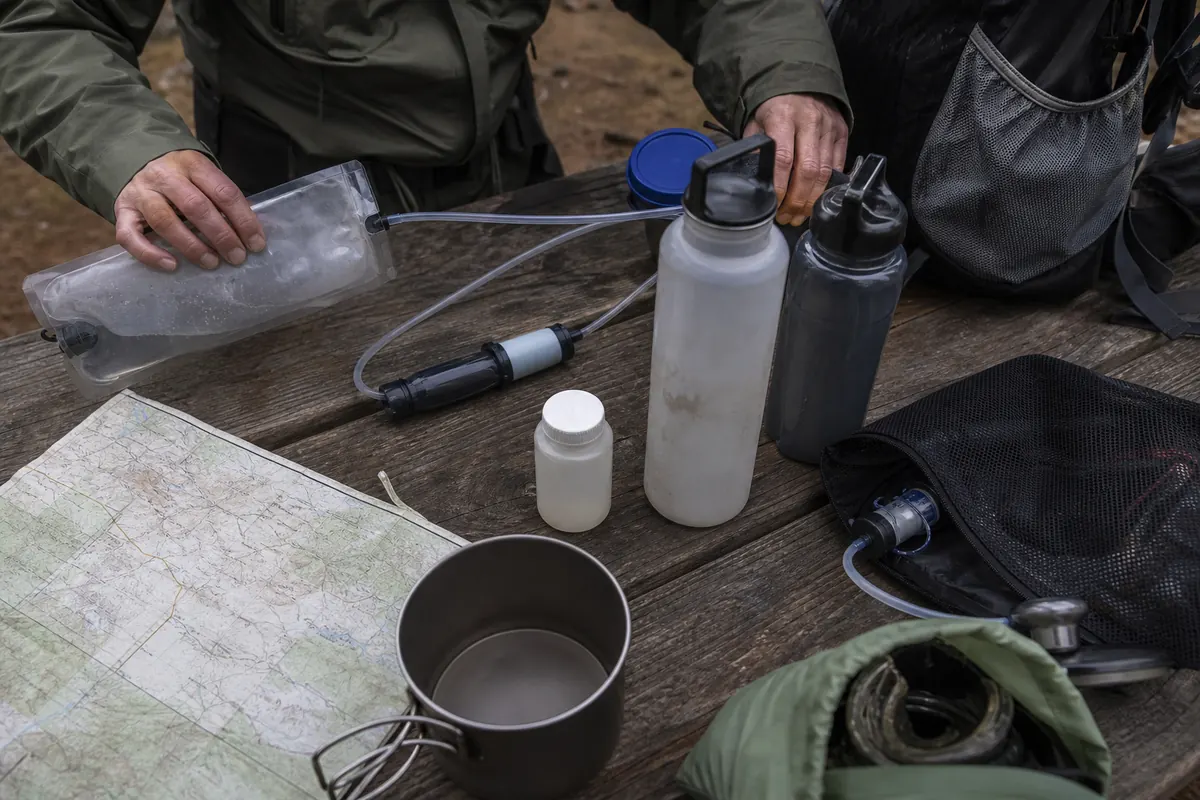
Keep the dirty side of a filter and collection bag away from clean bottle openings. Use a simple repeated routine so the boundary remains clear when hands are cold, light is poor, or several people need water.
Carry water where it remains balanced and accessible. A large amount on one side can pull the pack off center, while a buried bladder may hide a leak or make refilling unnecessarily disruptive.
Test the system with the meal plan. A dry camp can turn a light dehydrated dinner into a heavy water carry, and a meal that needs repeated boiling can increase both water and fuel demand.
If the capacity required for a section exceeds what the group can carry with stable movement, change the route, camp, season, or water plan. Rationing an inadequate supply is not a substitute for capacity.
The dry segment sets capacity. Choose containers after the route proves how much unsupported water the load must handle.
How should food, fuel, and storage work together?
Assign food to breakfast, moving, camp, and delay jobs. A tested trek food rhythm helps separate portions by use rather than by package.
Later-day food should be shelf-stable unless reliable cold control continues. Repackaging may reduce bulk, but preserve the preparation and safety information still needed at camp.
Test the stove, pot, wind protection allowed by the manufacturer, fuel, ignition, and meal together. One kitchen boil does not show how the system behaves in cold air, wind, or after several uses.
Fit all food, trash, toiletries, and other scented items inside the storage method required for the area. Confirm the rule before choosing the container because volume and shape can change the whole pack.
- Breakfast works with the expected morning appetite and departure time.
- Moving food is reachable without opening the main pack.
- Dinner uses a measured amount of water and fuel.
- A no-cook or low-effort reserve covers a late arrival or stove failure.
- Later-day meals remain safe without refrigeration.
- Every scented item and piece of trash fits the required storage system.
- Hands and utensils can be cleaned with the water and supplies carried.
- The delay reserve stays separate from normal snacks.
Pack one more day only when it corresponds to the route's delay plan or local guidance. Extra food that cannot be eaten without the stove or water system may not solve the failure that caused the delay.
Place the current day's food where it can be reached and protect later meals from accidental use. Daily bags make remaining quantity visible without spreading the whole food supply at each stop.
Keep fuel outside the food where a leak cannot contaminate meals. Follow the stove and fuel manufacturer's storage and use directions, and obey current fire restrictions.
Pack the whole meal process. Food weight alone says nothing about whether the meal can be prepared, eaten, cleaned, and stored under the route's rules.
Clothing has three jobs: moving, stopping, and sleeping
Clothing for movement manages heat and sweat. Start slightly cool, adjust pace, and vent before the base and insulation layers become wet from the inside.
The stop system replaces heat no longer produced by walking. It may include a warm layer, shell, hat, and hand protection that can be added quickly before a break, water stop, or camp task.
The sleep reserve stays dry. A rainy backpacking dry core prevents wet daytime equipment from consuming that recovery layer.
Move
Breathable layers and venting manage sweat while effort changes.
Stop
Warmth and weather protection go on before the body cools during camp work.
Sleep
A protected dry layer supports the coldest inactive hours and next morning.
Weather
Shells block wind or precipitation while allowing deliberate ventilation.
Feet
Socks rotate around moisture, friction, temperature, and overnight drying.
Dry reserve
One sealed set stays unavailable for normal hiking so camp and sleep can recover.
Sun and insects
Coverage changes with exposure, season, and whether camp extends into bug hours.
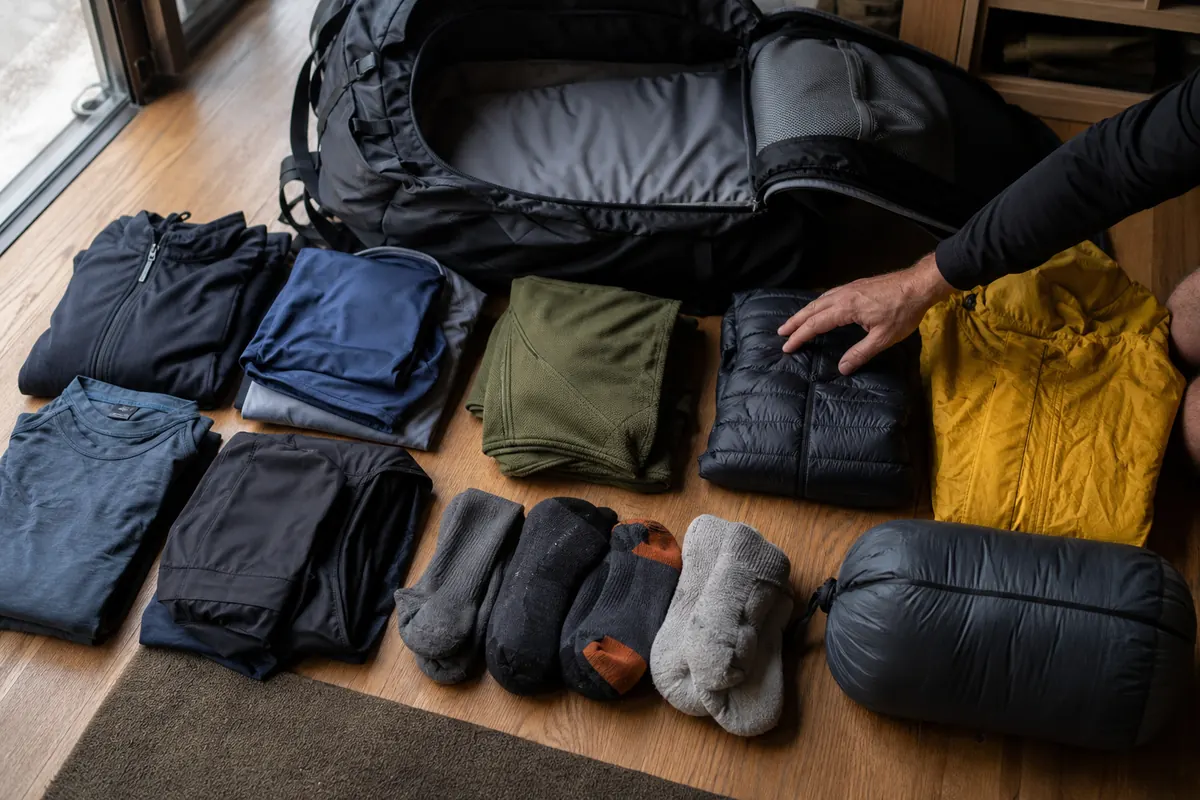
Bring spare clothing only when it has a named rotation or failure job. Several similar shirts can add volume while leaving hands, head, rain exposure, or sleep needs uncovered.
Footwear and socks should be tested under the real load. Room that feels adequate at home may disappear after feet swell, socks become damp, or a long descent pushes toes forward.
Sun protection remains part of the clothing system even in cool air. Exposed routes can require a brim, sunglasses, sunscreen, and coverage while the rest of the body still needs wind protection.
Three clothing zones keep movement, camp, and sleep needs from competing for the same damp layer.
A few things have to stay reachable while you walk
A useful item loses value when reaching it requires unloading shelter and sleep gear in rain, wind, or unstable terrain.
Keep water, moving food, navigation, rain protection, sun protection, foot care, and a small first-aid response in predictable access zones. The exact pocket matters less than using the same place every time.
| Access zone | Good candidates | Keep out |
|---|---|---|
| Hipbelt or shoulder pocket | Small food, lip protection, compact map tool | Sharp or leaking items |
| Side pocket | Water, poles when stowed, wet filter exterior | Unsecured dense objects |
| Top or front pocket | Rain shell, gloves, foot care, first response | Dry sleep insulation |
| Main-pack top | Warm stop layer, treatment backup, headlamp | Loose food outside storage rules |
| Sealed dry core | Sleep insulation and sleep clothing | Wet shelter, filter, or used rainwear |
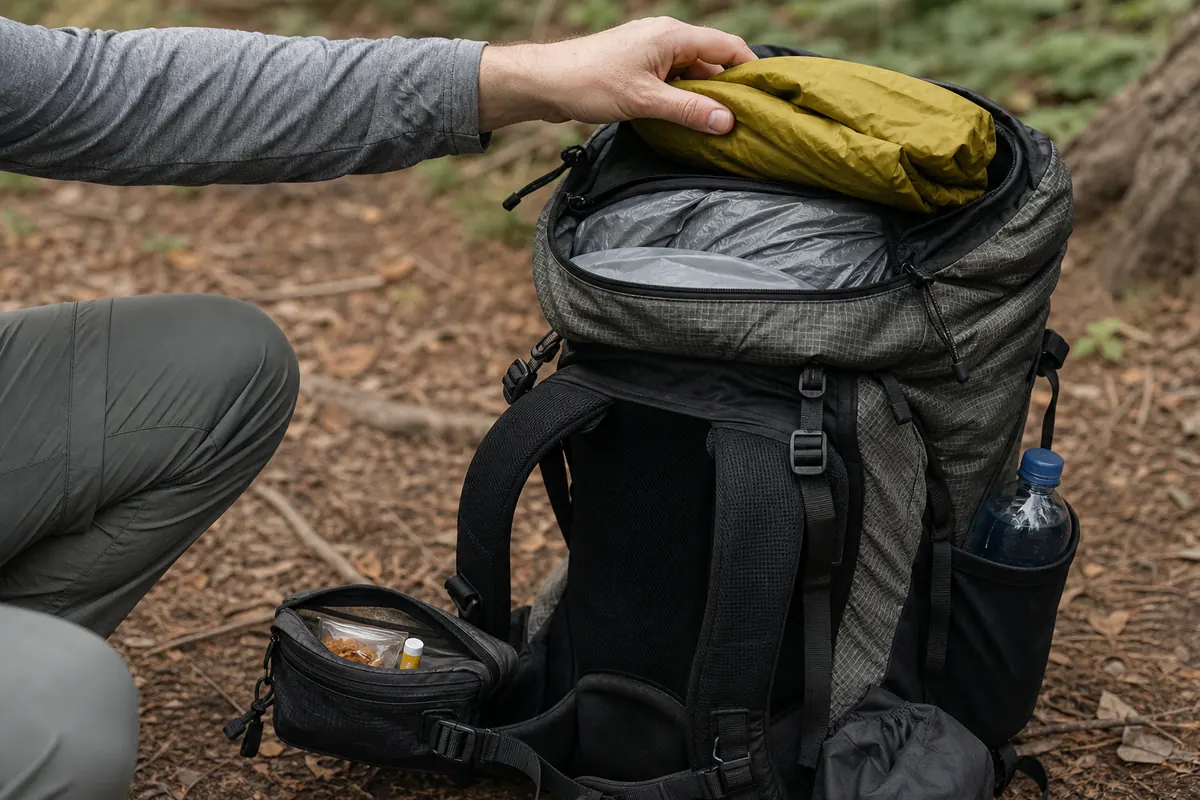
Wet items need their own zone. A damp shelter, filter, or rain shell should not be pushed into the sealed space protecting sleep insulation.
Avoid hanging loose equipment outside unless it is secured, quiet, and safe from snagging. Swinging footwear, metal cups, or bottles can alter balance and disappear without notice.
Access is part of function. Pack for the order of the day, not only for the shape of the storage space.
How should weight sit inside a backpack?
A stable load keeps the center of mass close to the body and prevents dense items from shifting. Weight far behind the back can pull the torso forward, while a heavy side can change balance on steps.
Use soft, less frequently needed items to fill the lower area. Place dense food, water, or shared equipment close to the back where the pack design supports it, then stabilize gaps with clothing or other soft items.
- Build the dry coreSeal sleep insulation and dry clothing before other items enter the pack.
- Shape the baseUse soft camp items that will not be needed while walking.
- Place dense weightKeep food, water, and compact shared equipment close and centered.
- Balance the sidesCompare bottles and pockets so one side does not pull the gait.
- Fill and stabilizeStop hard items from moving with soft equipment around them.
- Create accessPut rain, water, food, navigation, light, and foot care in known zones.
- Compress and fitClose straps, then adjust the loaded pack after walking begins.
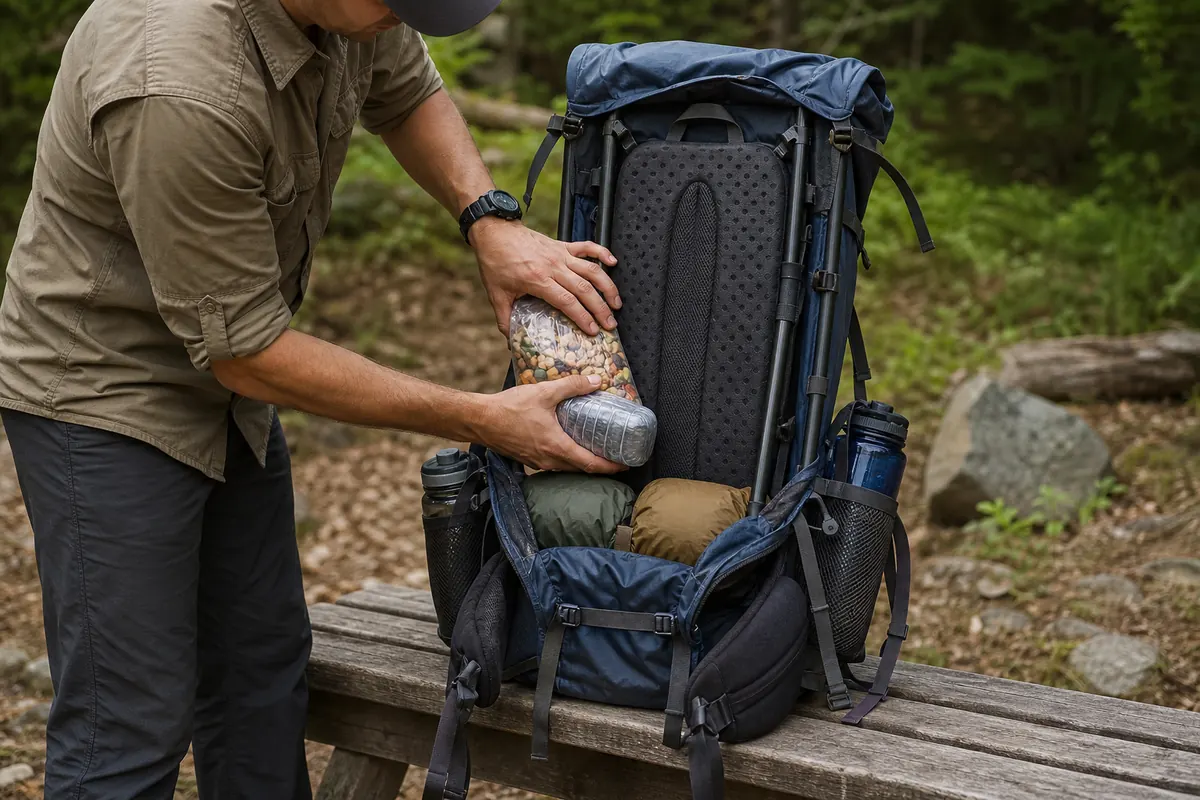
Follow the pack manufacturer's fit and loading guidance because frames, pockets, and suspension systems differ. The loaded backpack fit should transfer weight through the hipbelt without numbness or restricted breathing.
Walk stairs, slopes, and turns with the complete load. A backpacking training progression should add pack weight only while gait remains controlled.
Stable beats symmetrical-looking. The correct arrangement is the one that keeps weight close, accessible, and controlled on the actual route.
What can stay home without removing a needed function?
Remove duplicates only after every critical job has an owner. Two knives and three cooking vessels may repeat one function while no backup water treatment or pad repair exists.
Comfort items are personal tradeoffs, not automatic mistakes. A small pillow or book can earn its weight when it improves sleep or recovery, provided the full load remains manageable.
Pros
- Redundancy for water treatment, ignition, navigation, and critical repair when one failure would stop the trip
- Shared equipment with a named carrier and a clear plan if the group separates
- One comfort item whose value remains high after a loaded shakedown
Cons
- Duplicate tools that perform the same low-consequence job
- Clothing without a movement, stop, sleep, weather, or rotation role
- Large original packaging that adds volume and hides remaining quantity
- Gadgets never practiced before departure
Do not remove insulation, water capacity, navigation, light, first aid, or shelter simply to reach a round weight number. Basic compass backup skills still require a map and practiced use.
Weigh consumables separately from base equipment. Food, water, and fuel change by route stage, and the heaviest starting load may not represent how the pack behaves later.
Record why an item stayed unused. Good weather may leave a shell untouched without making it unnecessary, while a second large pan that never left the bag may have no clear job on this trip.
Separate consumables from equipment during the review. Food and fuel should shrink, water changes between sources, and trash needs storage of its own.
An item that was useful only because another part failed may deserve repair or replacement rather than permanent duplication.
Shared luxuries need the same named ownership as shared safety gear. Two people can agree to carry one camera or camp chair, but the choice should not displace shelter parts, water capacity, or the food-storage volume the group already proved it needs.
Cut duplicate jobs rather than cutting the system that protects a credible failure.
How do you run a full-load backpacking shakedown?
Load the actual backpack with the actual equipment, food volume, fuel, and a realistic water carry. Towels and gym weights can match a number while creating a different shape and pressure pattern.
Walk long enough for feet, shoulders, hips, and posture to change. A ten-minute fit check may miss the rubbing, bounce, numbness, or forward lean that appears after an hour.
Use the access plan during the walk. Drink, eat, add a shell, check navigation, and treat a foot hot spot without opening the protected sleep core.
- The hipbelt carries the load without sharp pressure or slipping.
- Shoulder straps guide the pack without numbness or restricted breathing.
- Stride and balance remain normal on steps, turns, climbs, and descents.
- Water and food are reachable and do not pull one side down.
- Rain protection and a warm stop layer can be added quickly.
- Nothing dense shifts, swings, leaks, or rattles during movement.
- Shelter, sleep, water, meal, and storage systems work in camp order.
- The complete load fits again after equipment has been used.
- Unused items have a clear emergency job or a reason to leave them home.
- One correction is retested before departure.
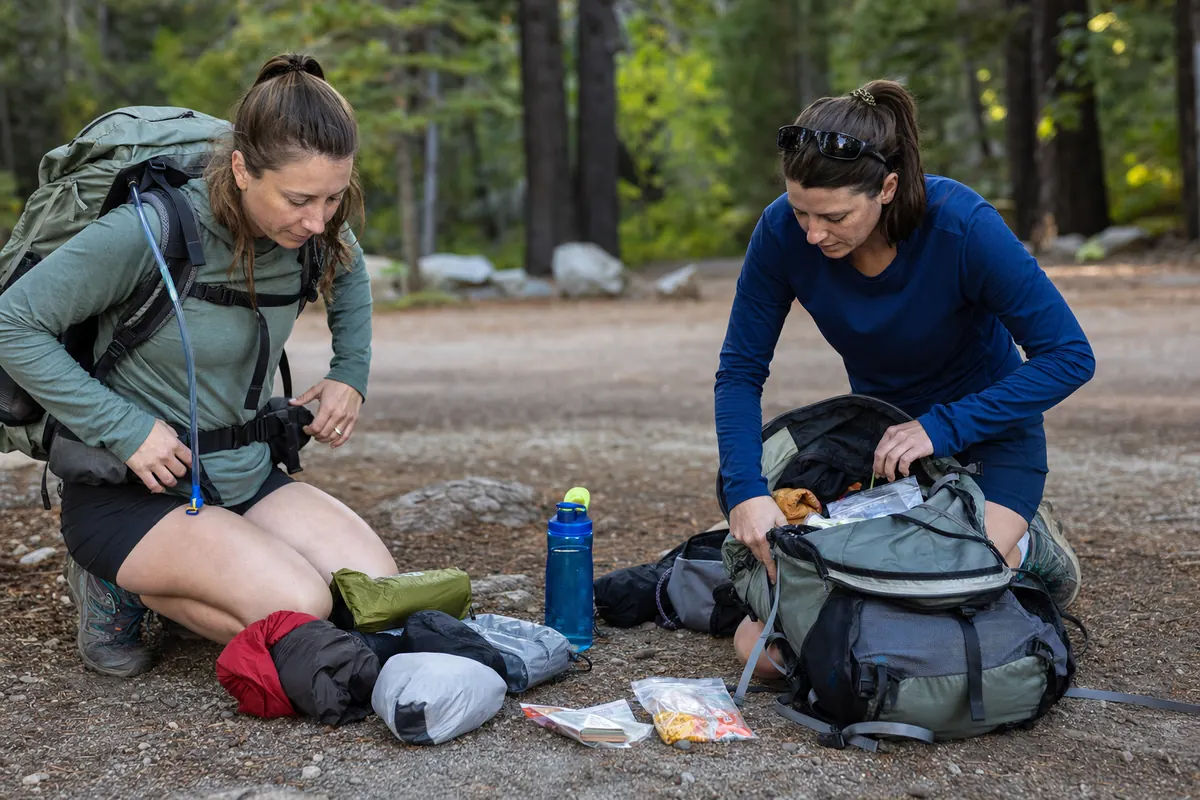
Set up shelter, inflate the pad, prepare water, make the meal, secure scented items, stage sleep clothing, and repack. Missing adapters, awkward containers, excess packaging, and poor access become obvious when the whole sequence runs.
Review what returned unused, what was hard to reach, what became wet, and what created pressure. Many common backpacking mistakes first appear during this full-system review.
If the load changes gait or cannot support the planned pace, shorten the route or reduce a noncritical item after checking system coverage. The backpacking activity baseline should remain smaller than the load's proven ability.
Repeat the changed part of the test. Moving dense food, changing a container, or replacing shelter can alter balance enough that yesterday's fit result no longer applies.
Repeat the test with the heaviest expected starting water and food. A pack that feels stable after consumables shrink may behave differently during the first climb away from the trailhead.
Record that starting configuration because it is the load's hardest normal case.
Leave the final pack closed overnight, then perform a last morning check for leaks, dead batteries, missing small parts, and food that no longer fits the required storage.
Carry it before counting it done. A complete list becomes a backpacking system only after the load moves, opens, works at camp, and packs again.
Sources
The National Park Service groups navigation, light, sun protection, first aid, repair, fire where permitted, shelter, extra food, extra water, and clothing as systems that help during delays and sudden changes: Ten Essentials.
The NPS recommends matching equipment, duration, route difficulty, current conditions, people, permits, transport, and an emergency plan before departure: Trip Planning Guide.
The Centers for Disease Control and Prevention advises treating uncertain backcountry water and explains boiling, filtering, and disinfection limits: Preventing Drinking Water-Related Illnesses.
The U.S.
Department of Agriculture recommends planning food preparation and equipment together and using shelf-stable food after reliable cold control ends: Food Safety While Hiking and Camping. Current local rules decide permits, fire use, food storage, waste, water access, and required equipment.
Step by stepPractical steps
- Write the route load brief with nights, weather, water gaps, camp rules, difficulty, group needs, and exits.
- Build shelter and sleep, water, food and fuel, clothing, navigation, emergency, repair, hygiene, and storage as working systems.
- Place the dry core, dense weight, wet items, and time-sensitive equipment in deliberate pack zones.
- Carry the complete load long enough to test fit, balance, access, and normal movement.
- Run the camp sequence, repack everything, remove unexplained duplicates, and retest each material change.
AnswersQuestions readers ask
What should I pack for an overnight backpacking trip?
Pack shelter and sleep, enough treated-water capacity, food and fuel, movement and camp clothing, navigation, light, first aid, repair, hygiene, required storage, and a delay reserve matched to the actual route.
How heavy should a backpacking pack be?
There is no useful universal number. The load must cover every credible system, fit correctly, remain balanced, preserve normal gait, and pass a realistic carried test with food and water.
What should stay accessible in a backpack?
Keep water, moving food, navigation, rain protection, a warm stop layer, sun protection, foot care, headlamp, and immediate first-aid items in predictable zones.
How do I keep sleeping gear dry while backpacking?
Seal sleep insulation and dry sleep clothing inside a dependable pack liner or separate waterproof barrier, and keep wet shelter, rainwear, and water equipment outside that dry core.
What can I leave home when backpacking?
Leave duplicate low-consequence tools, clothing without a specific job, excess packaging, and untested gadgets after confirming that no shelter, water, warmth, navigation, light, first-aid, or repair function is missing.