
Backpacking in the Rain Depends on a Dry Sleep System
Protect one dry recovery core and organize wet movement, pack access, camp setup, feet, cold response, and the next morning around it.
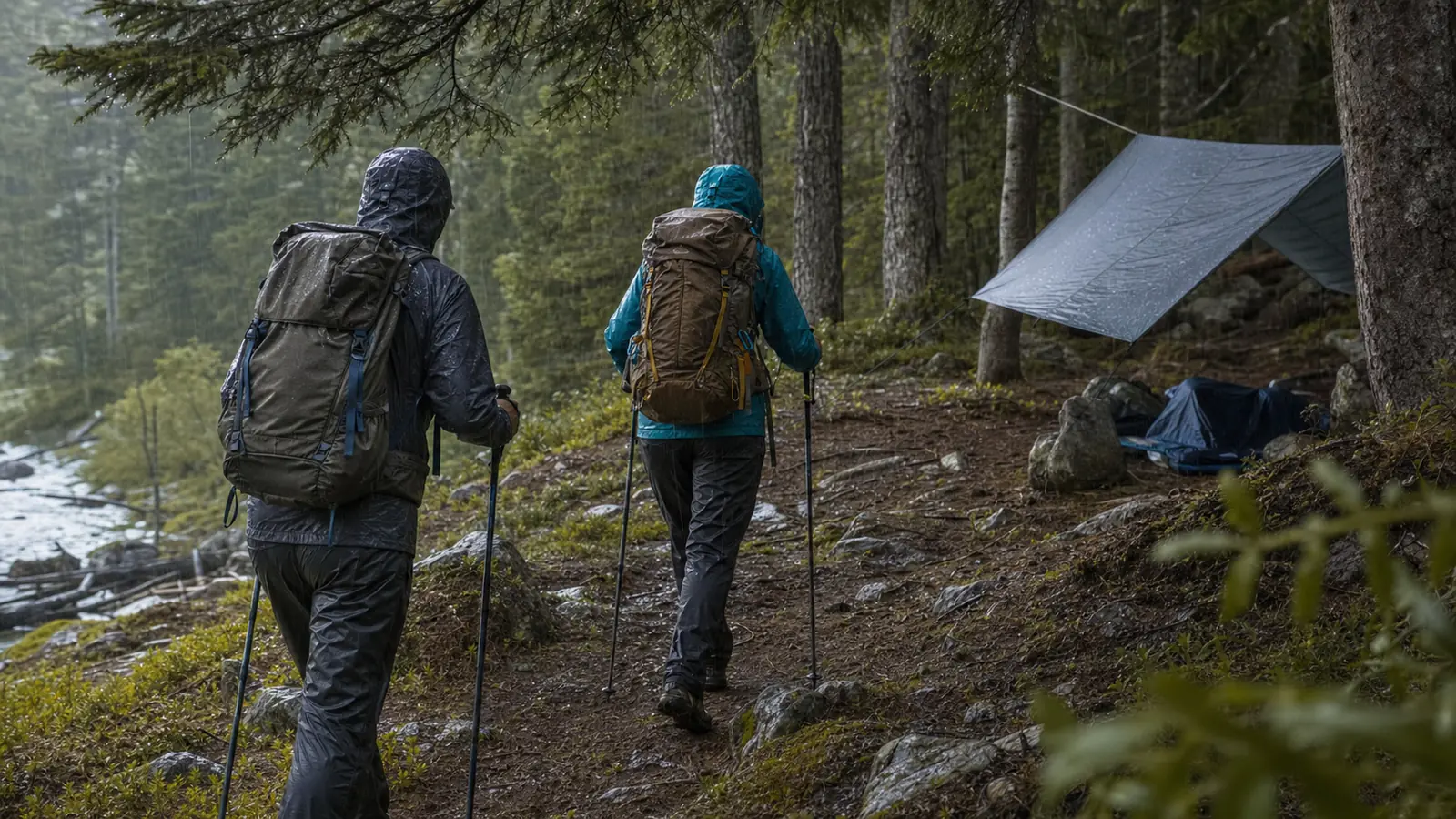
You can keep backpacking in the rain only while wet movement stays separate from the dry sleep reserve. Your shelter and rain gear need a wet-access zone, while insulation, sleep clothing, camp order, foot care, simple meals, and an early exit protect the next safe step.
- Protect the dry coreSeal sleep insulation, sleep clothing, and critical dry items before rain begins.
- Move wet on purposeVent, control pace, and use conservative footing instead of trying to remain perfectly dry.
- Open the pack narrowlyRetrieve rain, water, food, navigation, and shelter without exposing the dry core.
- Build cover firstEstablish the legal shelter and wet zone before unpacking recovery gear.
- Recover feet and heatChange layers, inspect skin, eat, drink, and contain wet equipment.
- Test the morningContinue only when insulation, gait, weather, crossings, and exit margin remain usable.
Rain is an overnight workflow, not one jacket choice. The critical moment often arrives at camp, when wet people stop producing walking heat and must create shelter, warmth, water, food, and a dry night.
Your dry core is the part of the load that must survive every pack opening. Other equipment may become wet, but the sleep system and recovery clothing need a deliberate boundary.
Why is rain an overnight systems problem?
Rain changes movement first. A loaded training baseline should include controlled steps on safe wet terrain before the overnight.
Clothing rarely stays perfectly dry during sustained effort. Rain can enter at openings while sweat accumulates inside a shell, so pace and ventilation matter alongside waterproof materials.
The pack becomes a second exposure point. Water can enter around straps, through openings, from saturated exterior fabric, or with wet equipment pushed inside.
Ground conditions alter camp. Depressions collect runoff, soil may stop holding stakes, splash reaches the shelter, and every unpacked item needs somewhere protected from mud and rain.
Stopping removes walking heat. Damp clothing, wind, cooler air, and slow hands can turn ordinary camp work into a cold-stress problem.
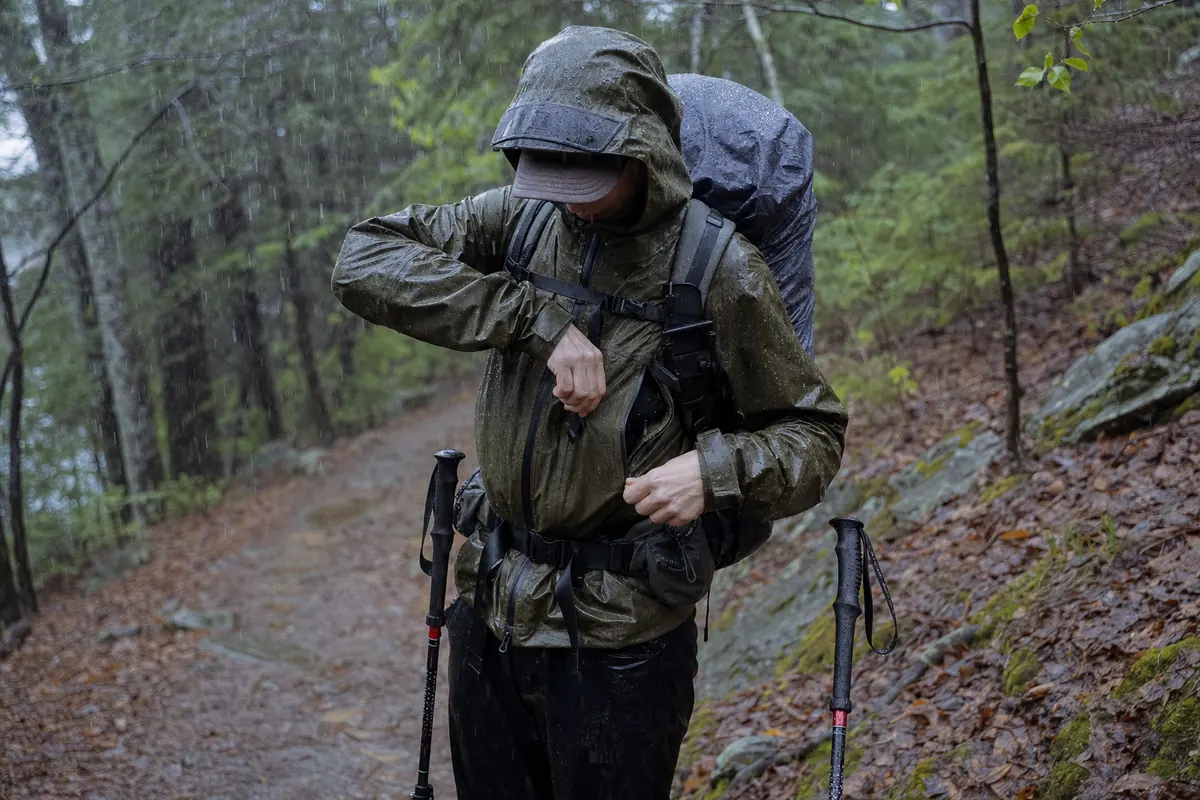
Feet remain inside a warm wet environment for hours. Skin softens, socks hold grit, friction shifts, and a small hot spot can become a gait problem before camp.
Food and water become slower when every package, stove part, and bottle must stay controlled under cover. A complex meal can keep the group inactive and exposed longer than planned.
Morning reveals whether the system worked. A wet night is survivable only if the group can restore normal warmth, walking, navigation, and a safe route choice.
Rain continues after rainfall. Moisture carried into the pack, shelter, footwear, and clothing determines how much of the next day remains.
What belongs inside the dry core?
You need a waterproof pack liner or another dependable sealed barrier for items that cannot perform when wet. A route-based packing system tests the closure with the actual full load.
Sleep insulation belongs first. A wet sleeping bag or quilt can lose warmth and may not dry during a continuing storm.
Your dry sleep clothing needs its own separation so one damp item cannot contaminate the set. Include the layer that supports the coldest inactive hours, not a duplicate of wet daytime clothing.
Critical medication and other moisture-sensitive emergency items need protection appropriate to their instructions. Navigation backup, ignition, and power may also need small internal barriers.
- Zero-tolerance items
- Sleep insulation, dry sleep clothing, and critical medical supplies
- Primary barrier
- Waterproof liner closed inside the backpack
- Wet zone
- Shelter, rainwear, filter exterior, and damp active clothing stay outside the core
- Access rule
- Dry core opens only under cover and only as far as the current task needs
- Failure test
- Packed items remain dry after controlled spray and normal pack handling
- Route consequence
- Exit when the recovery system cannot be kept usable
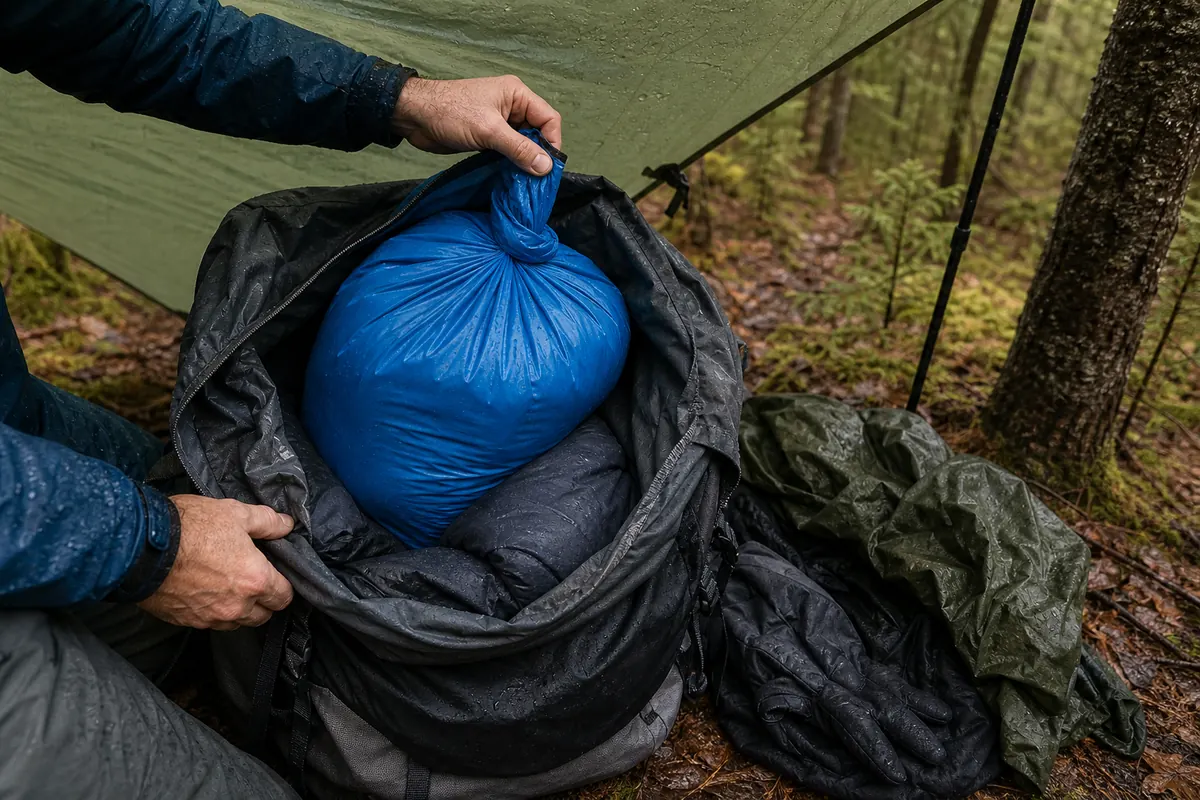
A pack cover can reduce direct rain on the fabric but leaves straps and the body side exposed. The broader backpacking load system still needs an internal dry barrier, and winter moisture margins show why the dry recovery reserve must survive colder conditions too.
Do not divide every small item into unnecessary bags. Too many closures slow camp and make the group open the pack longer, while one failed thin bag may still wet several critical items.
Run a controlled hose or shower test outdoors with noncritical contents before the trip. Move, set the pack down, open the access zone, and inspect the liner after realistic handling.
Dry means recoverable. Protect the few items that restore warmth and function rather than pretending the entire load will remain untouched by rain.
How should the pack open in rain?
You should keep the rain shell where you can reach it before the main compartment opens. If the forecast is uncertain, the top or outer access zone is safer than a position under sleep equipment.
The wet shelter belongs where it can be removed without exposing the dry core. After a wet night, it should return to the same exterior or isolated wet zone.
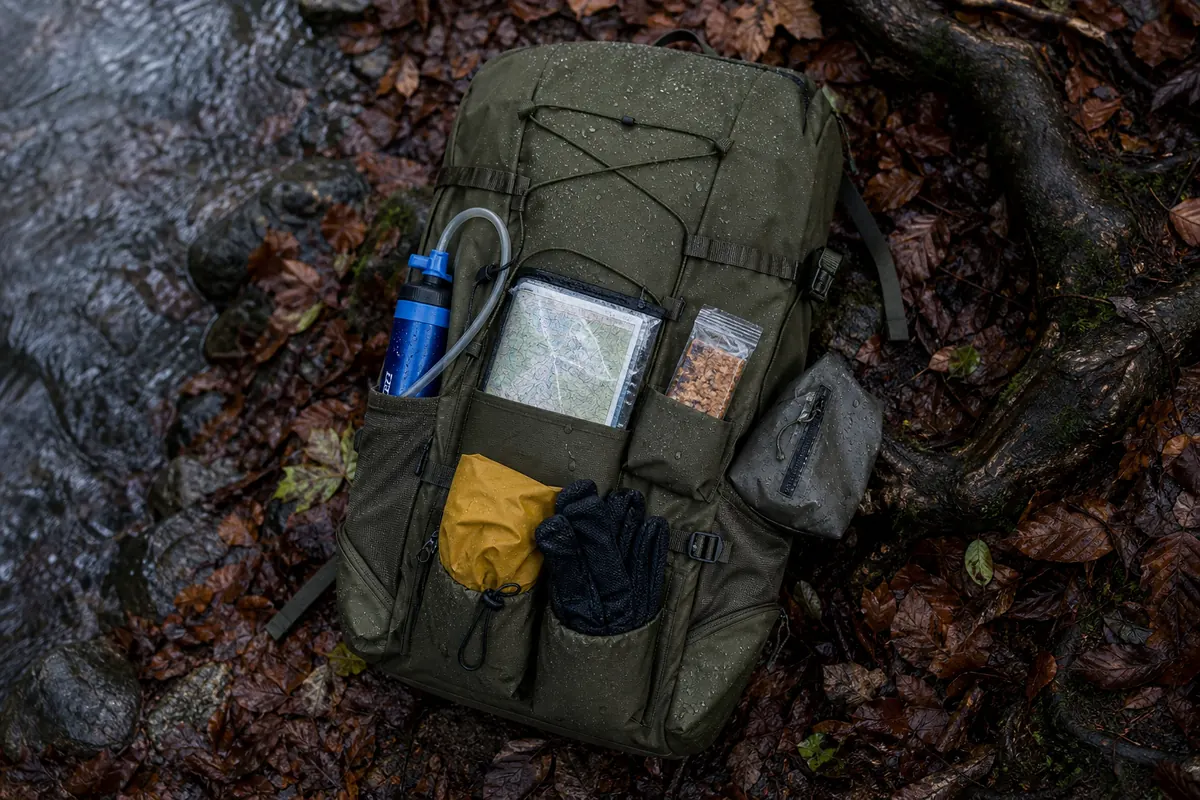
Use predictable locations for water, moving food, navigation, gloves, foot care, and light while a correct backpack fitting sequence preserves balance.
Practice the opening routine with wet gloves. A roll-top liner, zipper, or buckle that works easily indoors may demand two hands and expose the load longer when fabric is saturated.
Reclose the wet zone before walking so loose shelter fabric cannot collect more water, snag vegetation, or shift the pack as the route becomes slippery.
You should check the liner closure after every wet access stop. If an opening exposed the dry core, record it in the backpacking mistake review.
At a stop, orient the opening away from wind-driven rain, use safe and legal cover, and close the liner before arranging the retrieved item.
Do not place the pack in flowing water or a low puddle because it has a cover. Set it on durable higher ground or a barrier that does not create new impact.
Open for one task. A narrow repeated access routine protects the load better than a long search under a loose cover.
Which route features become harder in rain?
Wet rock can lose friction without changing appearance. Shorten steps, place the whole foot where possible, and avoid using speed to cross a slick section.
Roots and timber become slippery, especially when crossed at an angle. Step deliberately and keep enough space that one person's slip does not knock another person.
Mud changes both traction and impact. Stay on the durable established tread where required rather than widening the route around every puddle.
Loaded descents deserve more time because braking is less predictable and leaning far back can reduce control. A longer rainy trekking stage carries this slower footing and moisture cost into another day.
| Wet route feature | What changes | Conservative action |
|---|---|---|
| Rock or slab | Friction falls before the surface looks dangerous | Slow down and choose full stable contact |
| Roots or timber | Rounded surfaces become slick | Cross deliberately with space between people |
| Mud | Feet slide and detours widen impact | Stay on durable tread and shorten steps |
| Steep descent | Braking and pack balance become harder | Add time and use controlled foot placement |
| Stream crossing | Depth, speed, and debris may rise | Do not enter when a safe crossing is uncertain |
| Low trail or drainage | Water can collect or flow on tread | Reroute or turn around before commitment |
| Poor visibility | Junctions and terrain become harder to read | Confirm position more often and use the early exit |
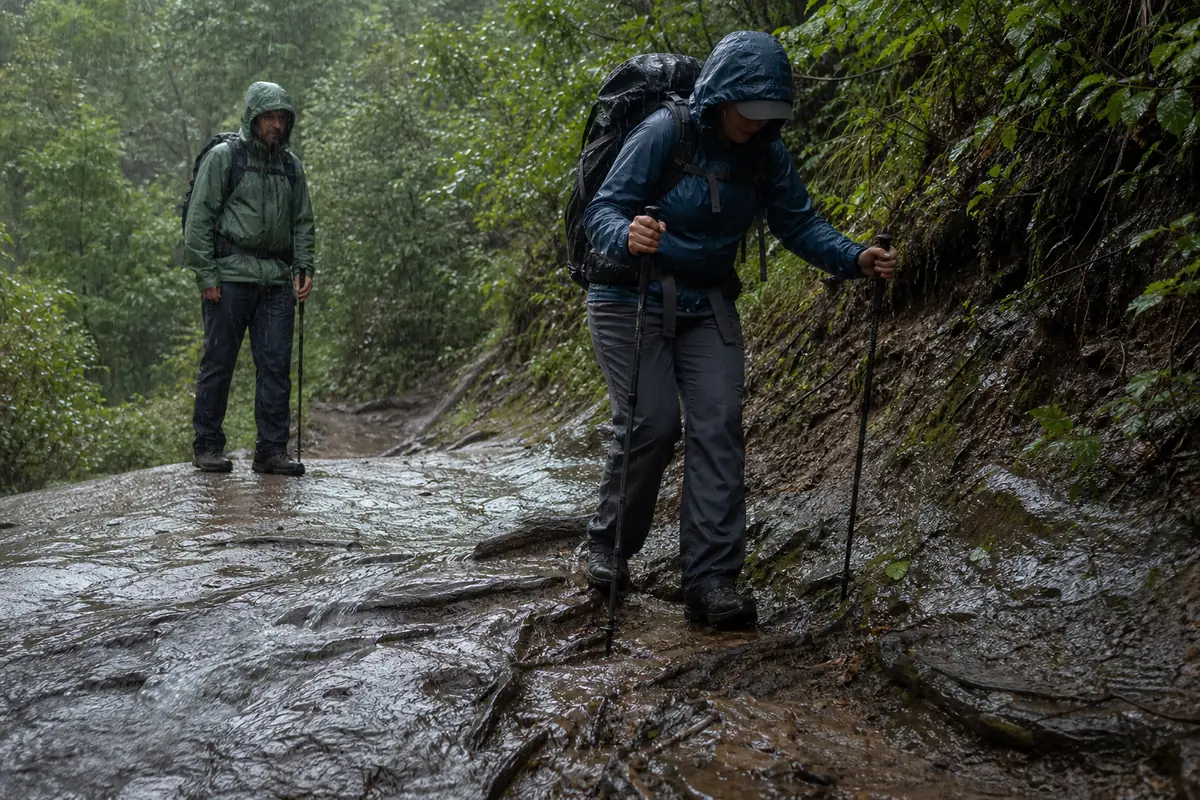
Rain can make streams rise during the trip. A crossing that was safe earlier may not remain safe on return, and clear water can still hide force, depth, debris, or unstable footing.
Do not enter a crossing when the group cannot assess it confidently or when a fall could trap, sweep, or chill someone. Use the planned alternative or turn around.
Thunder changes the decision beyond rain. The National Weather Service states that no place outdoors is safe when thunderstorms are in the area, so exposed routes need a safe-place and cancellation plan before departure.
Visibility and sound can also decline. Practiced compass navigation supports a stop at uncertain junctions before the group drifts farther.
Wet terrain costs time. Add that time before the trailhead so camp and exit decisions do not depend on rushing over reduced traction or rising water.
Camp setup needs a wet order
Pause before unloading. The first-trip campsite plan should already exclude low drainage, obvious runoff, and exposed wind.
Shelter comes first in active rain. Use a fly-first or other practiced setup only when the shelter design supports it, and keep the dry core closed until cover exists.
Create a wet zone at the entrance or vestibule. Rainwear, wet shelter fabric, footwear, filter parts, and dripping packs stay there instead of moving across the sleep area.
Wet zone
Rainwear, footwear, wet shelter, filter exterior, and muddy equipment remain contained.
Work zone
Water treatment, stove, food, repair, and foot care happen under safe ventilation and cover.
Dry zone
Sleep insulation and dry clothing open only after shelter and wet boundaries are stable.
Exit lane
Headlamp, map, shoes, shell, and emergency items stay reachable if camp must be abandoned.
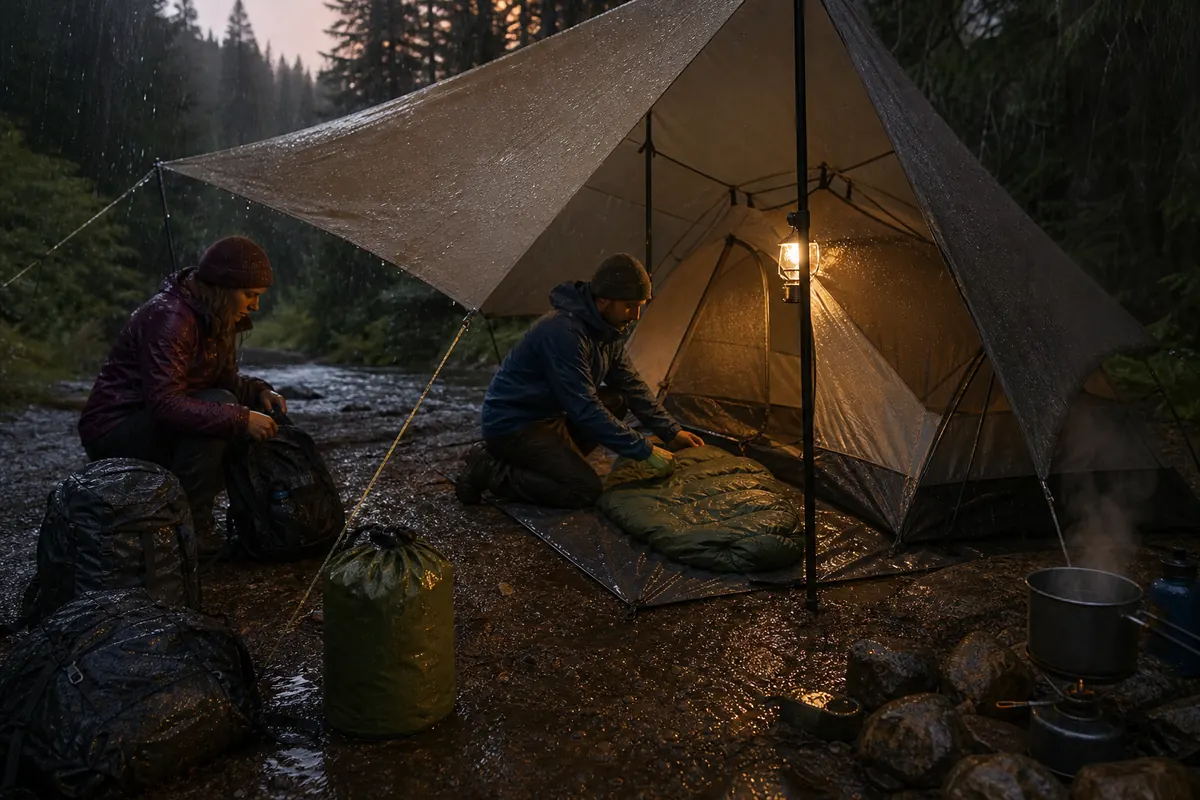
You should add a dry or warm layer before extended water and food work. Damp active clothing can cool quickly once movement stops, especially in wind.
You need to treat camp water early enough for dinner, overnight, and morning. Untreated collection equipment should stay away from the dry sleep area and clean bottle openings.
You should inspect your feet before the skin remains wet for another night. Remove socks, clean grit, dry the skin, treat hot spots, and protect a dry sleep pair.
A familiar meal limits loose parts and open containers while the group is cold and wet. You should eat while appetite remains, then secure every scented item and piece of wet trash under current local rules.
Ventilate the shelter according to its design. Closing every opening can trap breath and wet clothing moisture, increasing condensation around the sleep system.
Stage morning rainwear, footwear, light, map, first food, and the wet-shelter bag. The next pack-up should not require spreading dry equipment across wet ground.
Contain cooking moisture as carefully as rain. Boiling water and wet clothing add vapor inside small shelters, so use only safe ventilation and stove locations permitted by the equipment manufacturer.
Before sleep, confirm that runoff has not changed around the site. A location that looked adequate on arrival can collect water after hours of heavier rain.
Shelter creates the boundary. Recovery gear opens only after the group has a controlled place for rain, mud, wet equipment, food, and a possible exit.
Wet feet need a daily recovery cycle
Begin foot care when socks come off, not when a blister opens. A beginner camp routine protects time for wet skin before friction and pressure grow.
Clean visible dirt with safe water as appropriate, then dry the skin and inspect heels, toes, nails, and the spaces between toes. Look for whitening, tenderness, heat, rubbing, and broken skin.
Treat hot spots with the method already practiced. Change lacing, remove grit, smooth socks, and correct the movement or fit that created the friction.
- Remove wet socks as soon as the sheltered camp routine allows.
- Clean grit and inspect the whole foot under good light.
- Dry skin before applying practiced hot-spot protection.
- Rotate into a protected dry sleep pair.
- Air or drain footwear where it will not freeze, blow away, or enter the dry zone.
- Keep wet socks contained while giving them the best available drying chance.
- Check nail pressure and swelling before morning lacing.
- Walk without the full pack and confirm normal gait before continuing.
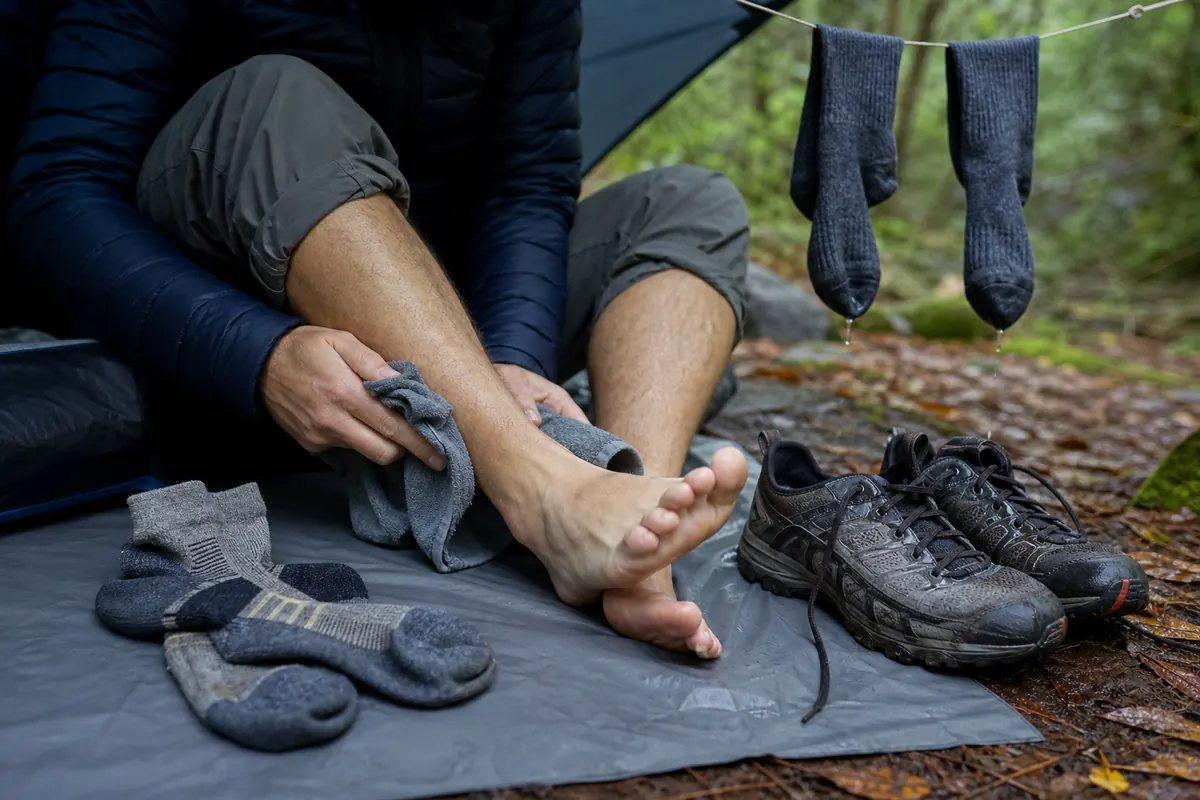
Camp footwear can provide relief but should not encourage barefoot movement around sharp or contaminated ground. It also adds weight and must have a clear use under the expected conditions.
Do not put wet socks inside the sleeping bag when that moisture threatens insulation. Drying strategy must preserve warmth first.
In the morning, loosen footwear for swelling and check the first steps. Pain that changes gait, open skin, numbness, or worsening swelling requires a shorter plan and appropriate care.
Dry skin before distance. Rain may keep footwear wet, but the group can still interrupt the moisture and friction cycle each night.
Food and water should require fewer open bags
Choose meals that remain practical when shelter space is limited and hands are wet. Long preparation, many ingredients, and extensive cleanup keep the group inactive for longer.
Measure cooking water and fuel during a wet-weather rehearsal. The water carry plan should include meals, cleanup where allowed, and the next morning.
Pros
- Familiar one-pot meal with measured water, fuel, and little cleanup
- No-cook or low-effort reserve for late arrival or stove failure
- Moving food portioned before rain and reachable outside the dry core
- Breakfast staged before sleep to shorten the wet morning opening
Cons
- Meal with many loose packages spread across the shelter
- Food that depends on a fire when restrictions or wet fuel prevent it
- Perishable later-day food without reliable cold control
- Scented waste left unsecured because storage was delayed by rain
Keep the stove safely ventilated and follow the manufacturer instructions. Never use a combustion stove to warm a closed tent because fire and carbon monoxide are serious hazards.
Collect and treat uncertain water without bringing the dirty system across the dry area. Rain does not make surface water safe to drink and can increase sediment or runoff.
Stage breakfast and the first moving food before sleep. A wet morning should not require opening every food bag while dry insulation remains exposed.
Simplify wet camp work. Fewer open containers mean less moisture spread, less cooling time, and an easier path to food storage.
Cold rain changes the stop rule
Hypothermia in cold rain can occur above freezing when rain or sweat chills a person. Do not wait for snow before treating cooling seriously.
Early signs include persistent shivering, exhaustion, fumbling hands, poor coordination, unusual quietness, and difficulty completing familiar tasks.
Confusion, memory loss, slurred speech, and drowsiness are serious warning signs. Affected people may not recognize their condition or make a safe route decision.
You need to check each other with simple questions and observations of hands, gait, speech, and behavior. Self-assessment becomes less reliable as cold affects thinking.
Food and warm nonalcoholic fluids may support an alert person who can swallow, but they do not replace shelter, dry insulation, evacuation, or medical care. Follow current official first-aid guidance.
Exit when the group cannot keep sleep insulation dry, restore warmth, use hands for shelter and water tasks, or preserve a safe morning. The campsite is not automatically safer than the route out.
Protect the rest of the group while organizing the response. One cold person can draw others into prolonged exposure if shelter, navigation, and communication are not assigned.
Warmth is a decision signal. Persistent cold or changed behavior ends the normal itinerary before determination replaces judgment.
When should the route be shortened or cancelled because of rain?
Cancel or choose a lower-consequence route when thunderstorms, flooding, damaging wind, very cold rain, closed access, or rising crossings are forecast beyond the group's safe plan.
The National Weather Service advises moving to a substantial building or hard-topped vehicle when thunder is heard. Small shelters, tents, and isolated trees are not safe lightning shelters.
Backcountry routes may not have a safe lightning location once committed. The useful decision is often made before departure or before entering exposed terrain.
- Cancel when thunderstorms are likely and the route lacks timely safe shelter.
- Cancel or reroute for flood warnings, closed crossings, or water expected to rise.
- Shorten when wet terrain makes the planned camp-ready time unrealistic.
- Shorten when the dry core, shelter, footwear, or stove system has not been tested.
- Exit for persistent shivering, failed warmth, uncertain position, or a crossing that no longer looks safe.
- Continue only while the legal camp, exit, weather trend, normal gait, and dry recovery reserve remain.
- Recheck the official forecast and land-manager notices close to departure.
Strong wind can damage shelter, drop branches, increase heat loss, and make exposed walking difficult. Match the site and route to the shelter's tested use rather than assuming rain is the only weather problem.
You should judge the return crossing as a future condition, not only as it appears on the walk in. Continuing rainfall upstream can raise water after the group has passed the point once.
When the route has only one crossing exit, define the water or forecast threshold that cancels the trip before departure. A crossing with no tested alternative should never become an improvised evening decision.
Cold rain deserves a lower distance ceiling than warm showers. Shorter exposure and easier exits matter more than extra clothing alone.
Do not use completion as evidence that the decision was good. Separate a completed route from a repeatable system.
Choose the lower consequence. Rain becomes a cancellation decision when the route removes safe shelter, stable crossings, warmth, or an early exit.
What morning signs support continuing?
Before committing to another day, you should take the first steps without the full pack. Normal gait, manageable skin, clear thinking, warm hands, and an appetite that supports movement show whether the body recovered.
You need to check the dry reserve before packing. Sleep insulation and the clothing needed for another night must remain usable, while wet equipment stays contained and the shelter can be packed without soaking the core.
You should compare current weather, route surface, crossings, water, camp options, and exit time with the previous plan. Another day adds more moisture and recovery cost.
Continue only when the body, dry system, route, and exit still have reserve. Morning evidence decides whether the wet workflow protected another day or merely survived the first one.
You should record which items crossed the wet-dry boundary overnight. A damp sleep layer, wet map, leaked bottle, or muddy stove bag shows where the packing or camp sequence needs one concrete change.
If the forecast is improving but the only exit crossing is rising, use the crossing evidence. Weather trend, body condition, gear dryness, and route access must all support the same decision.
Sources
The National Park Service recommends matching route difficulty, weather, equipment, people, current conditions, and backup options before an outdoor trip: NPS Trip Planning Guide.
The National Weather Service states that no place outdoors is safe during a thunderstorm and advises seeking a substantial building or hard-topped vehicle when thunder is heard: Lightning Safety.
The CDC explains that hypothermia can occur at cool temperatures above 40°F when rain, sweat, or cold water chills a person and lists its warning signs: Preventing Hypothermia.
Leave No Trace recommends preparing for severe weather, knowing hazards and regulations, and planning food and waste in advance: Plan Ahead and Prepare. Current local information comes first for closures, crossings, camps, storms, fires, food storage, and waste.
Step by stepPractical steps
- Seal sleep insulation, dry sleep clothing, and critical dry items before the rain begins.
- Keep rainwear, wet shelter, water, food, navigation, and foot care in narrow access zones outside the dry core.
- Slow for wet terrain and change the route before crossings, lightning, cold, or lost daylight remove the exit margin.
- Build shelter first, separate wet, work, and dry zones, then restore warmth, feet, food, water, and storage.
- Continue the next morning only when gait, warmth, dry insulation, weather, crossings, and the exit remain controlled.
AnswersQuestions readers ask
Can you go backpacking in the rain?
Yes, when the route has low consequences, the dry sleep core and shelter system are tested, wet terrain and crossings remain safe, and the group has clear cold, lightning, and exit rules.
How do I keep gear dry while backpacking in rain?
Seal sleep insulation and dry clothing inside a dependable pack liner, keep wet shelter and rainwear outside that core, and open the pack only as far as each task requires.
Should I use a backpack rain cover?
A cover can reduce direct rain but does not protect straps, the body side, pack openings, or wet equipment placed inside. Use it only with an internal dry barrier.
How do I care for wet feet while backpacking?
At camp remove wet socks, clean grit, dry and inspect skin, treat hot spots, use a protected dry sleep pair, contain wet footwear, and confirm normal gait in the morning.
When should I cancel a rainy backpacking trip?
Cancel or choose a lower-consequence route for thunderstorms without timely safe shelter, flooding, rising crossings, damaging wind, cold rain beyond the tested system, closures, or a failed dry-core plan.