
What Should Backpacking Beginners Prove Before the First Night?
Make the first overnight short enough that shelter, sleep, water, food, camp work, and the morning teach more than the mileage.
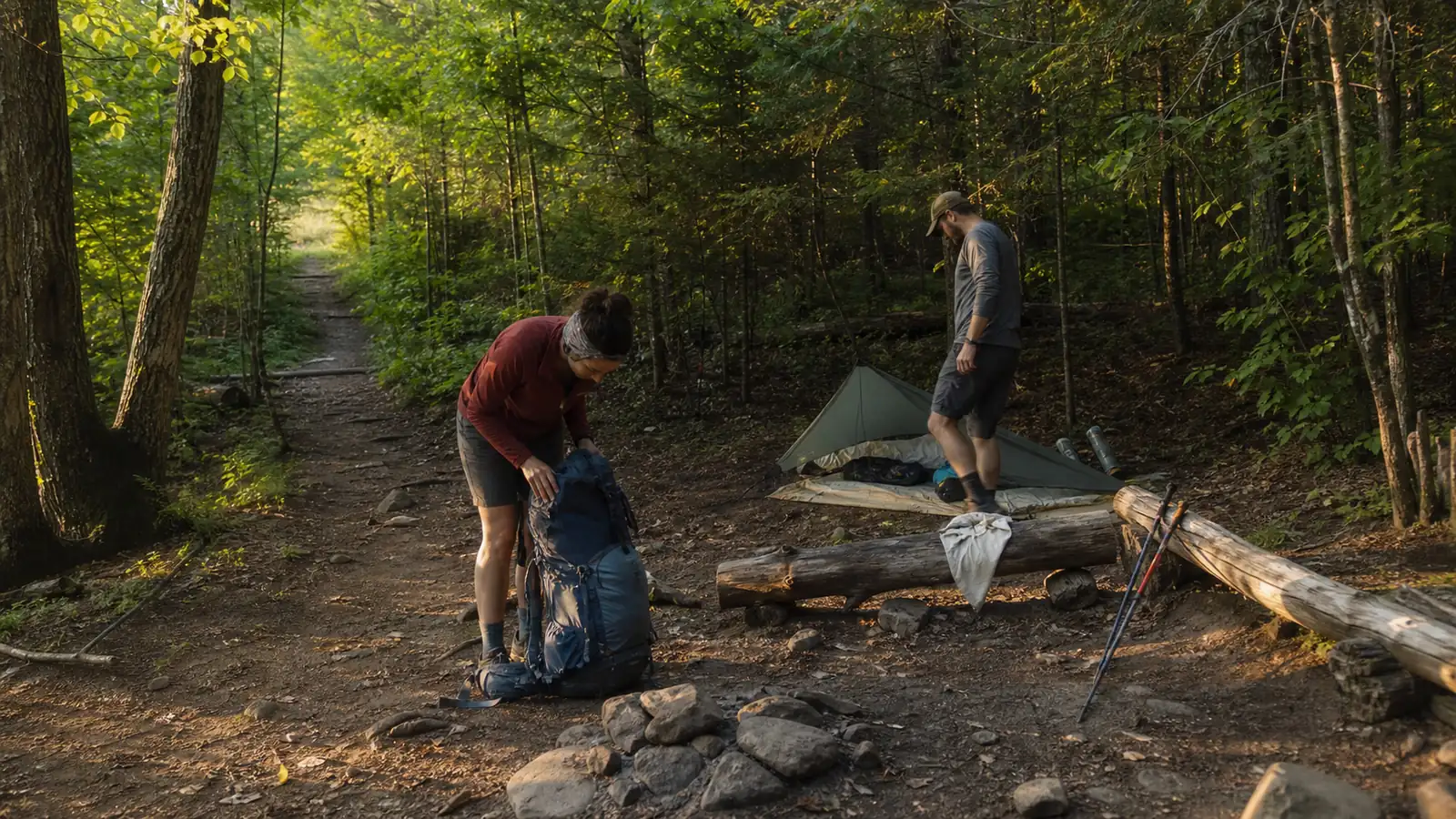
For a first backpacking trip, choose a short route with a legal known campsite, reliable water, moderate weather, and an easy exit. Test the shelter, sleep system, pack, stove, water treatment, navigation, and camp sequence before leaving, then use the first morning to decide what should change for trip two.
| System | Day hike | Backpacking overnight |
|---|---|---|
| Return | Back at the trailhead the same day | Safe movement must continue tomorrow |
| Load | Water, food, layers, navigation, and emergency items | Adds shelter, sleep, dinner, breakfast, fuel, and storage |
| Water | Carry or refill for one day | Treat, carry, and manage camp plus morning needs |
| End of walking | Trip is nearly finished | Shelter, warmth, food, feet, and storage still need work |
| Feedback | Tiredness ends at home | Sleep and morning movement reveal whether the system worked |
Backpacking starts when a normal hike could end but you still need to live outside and walk out tomorrow.
The first trip should make those overnight systems easy to observe, not bury them under difficult mileage or remote terrain.
Keep mistakes recoverable. A nearby exit, known campsite, and early arrival give a beginner room to fix a slow shelter pitch, poor meal, cold night, or uncomfortable pack.
What changes when a day hike becomes an overnight trip?
A day hike asks whether you can complete the route and return with enough water, daylight, and control.
Backpacking carries those decisions into shelter, sleep, dinner, water treatment, food storage, and a second day.
The added load changes pace before camp. A familiar trail can feel different when shelter, insulation, food, and extra water sit on your hips for several hours.
Camp then creates work at the moment energy begins to fall.
You need a legal site, secure shelter, treated water, warmer or dry clothing, food, clean feet, safe storage, and a morning plan.
Sleep quality affects the return. A cold pad, wet insulation, sliding site, cramped shelter, or unfamiliar noise can make a short walk out feel harder than the walk in.
Morning is part of the trip, not cleanup after it. You must judge feet, appetite, weather, water, gear, and pace before committing away from camp.
If all of that sounds larger than hiking, that is useful information. The hiking beginner baseline can build trail confidence first, while backpacking adds the overnight only after same-day movement feels controlled.
The overnight is the lesson. Keep the walking modest enough that you still have attention for everything that follows.
Which First Backpacking Route Leaves an Easy Retreat?
You should choose the route by the cost of a mistake.
A beautiful camp far beyond the last exit asks a beginner to solve every problem correctly on the first try.
A shorter walk-in leaves time to notice pack fit, find water, choose the legal site, pitch shelter, eat, and settle before darkness. It also makes a walk-out practical if the sleep system fails.
Limit major elevation change on the first overnight. Climbing under a new load and descending on tired legs are separate skills, and neither needs to dominate the first camp lesson.
Verify water with a current official or local source. A blue line on a map does not prove flow, access, or safe drinking water, and carrying the whole night's water can add significant weight.
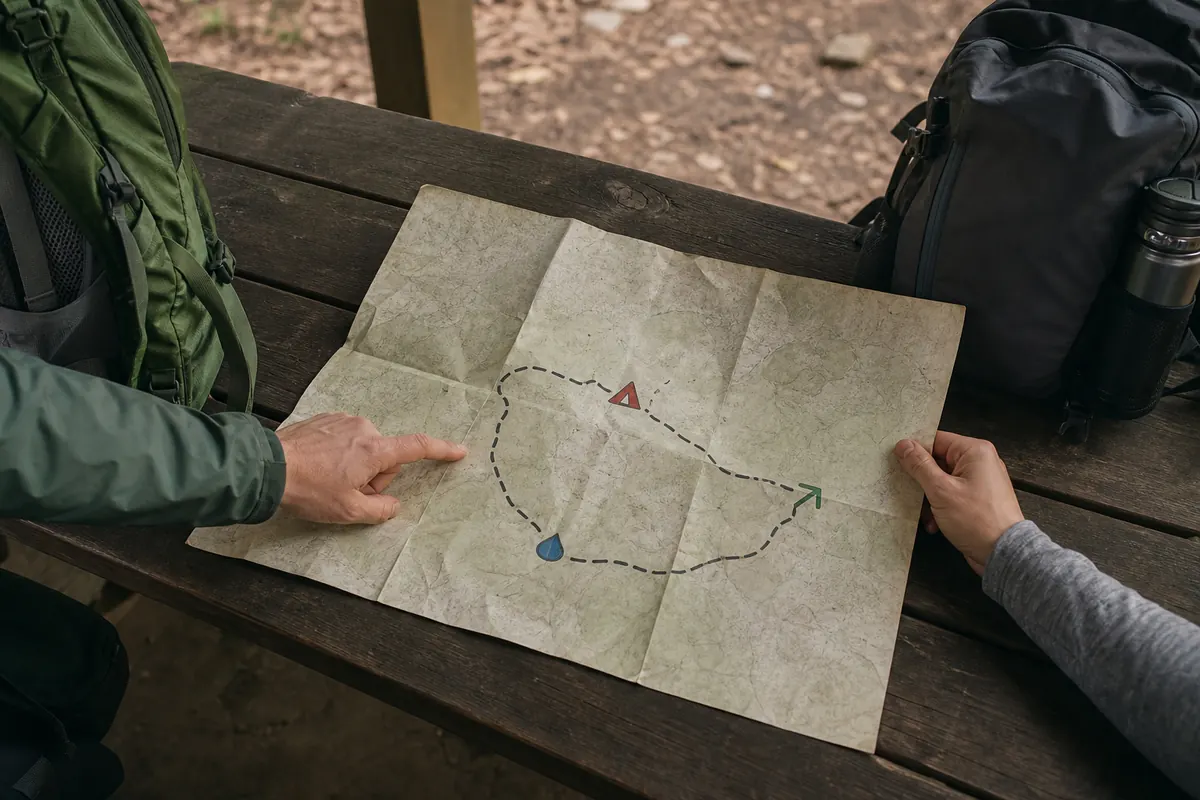
Check permits, camping rules, fire restrictions, food storage, weather, access, and transport before packing. The first backpacking trip plan can later handle a more complex itinerary, but trip one benefits from fewer moving parts.
Plan to reach camp with several hours of usable light. That margin absorbs a slower pace, pack adjustment, missed turn, crowded site, or water stop without pushing every camp task into darkness.
Read the route backward from the exit as well as forward from the start.
Mark the last easy turnaround, the last reliable water, the camp boundary, and the point where daylight becomes tight. That turns “we can always go back” into a decision with a place and a time.
Transport matters too. A loop that ends at the same vehicle keeps the exit simple.
A shuttle, pickup, or limited public service can turn an otherwise easy route into a fixed deadline, so confirm the fallback before choosing it for the first overnight.
Leave a trip plan with a trusted contact. Include the route, camp, vehicle or transport details, group contacts, and a specific overdue time.
Easy to leave is good design. The first overnight proves more when a small problem can lead to a calm exit rather than a forced continuation.
How do shelter and sleep gear work together?
Warmth starts below you.
A sleeping bag or quilt can lose much of its value when the pad does not insulate you from the ground.
Shelter keeps weather away, but it also depends on the site. A low depression can collect water, loose ground may not hold stakes, and dead overhead branches can turn an otherwise flat spot into a poor choice.
Test the shelter in the wind and rain conditions it is designed to handle. Practice every pole, stake, tension point, door, vent, and repair item while the consequences are small.
Ground
A pad provides insulation and enough stability for the sleeper to remain on it.
Top insulation
A bag or quilt matches the expected low temperature with personal margin.
Shelter
The body, fly, stakes, and guylines create weather protection without mystery parts.
Dry storage
Sleep clothing and insulation stay protected during rain and water collection.
Site
Legal durable ground avoids drainage channels, overhead hazards, and unnecessary impact.
Ventilation
Openings reduce condensation without exposing the sleeper to wind-driven rain.
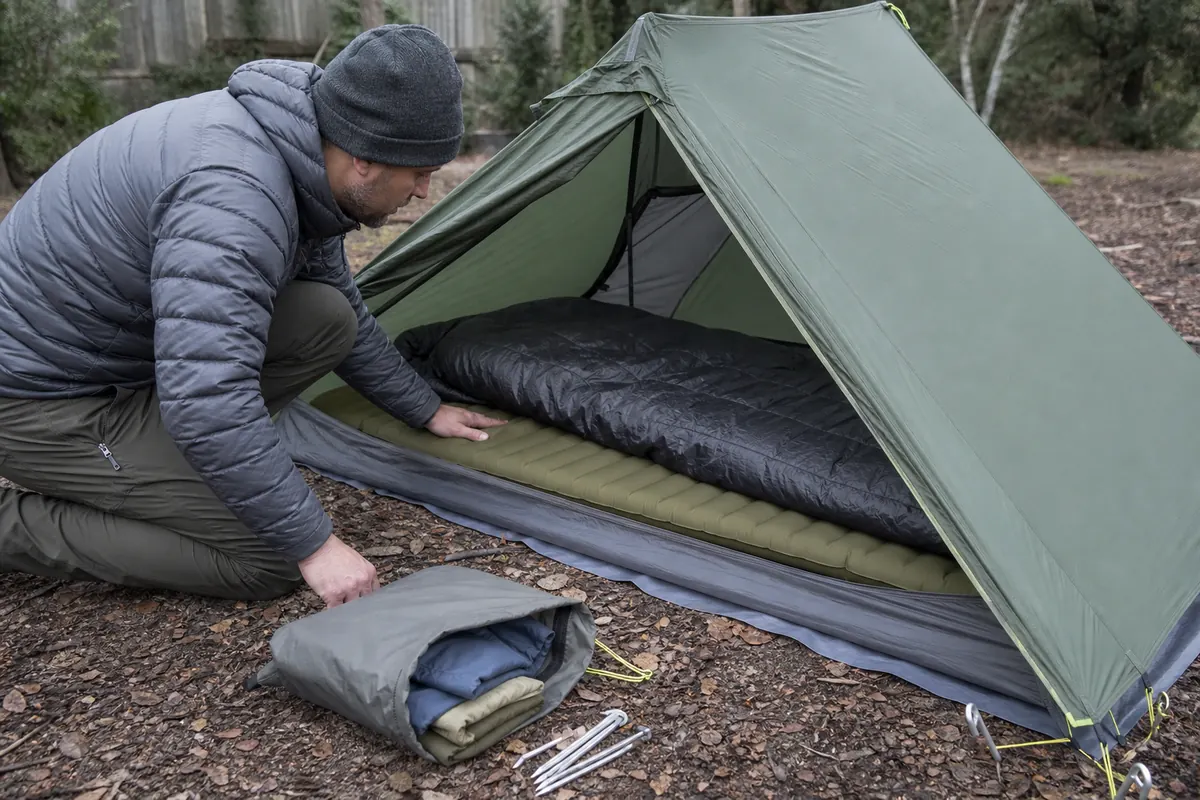
Sleep outside near home before the real trip. Notice ground cold, drafts, condensation, pillow support, noise, and the clothing actually needed after midnight.
Run that test with the same evening routine planned for camp. Eat the meal, fill water, change layers, close the shelter, and pack the morning items.
Warmth problems sometimes begin before bed when damp clothing, too little food, or a long inactive period cools the sleeper.
Do not use a product temperature claim as a promise of personal comfort. Metabolism, clothing, shelter, humidity, wind, food, fatigue, and pad insulation all change the result.
Pack sleep insulation in its own waterproof protection. The rain backpacking system should preserve at least one dry recovery layer and a dry place to sleep.
Test the cold side. A soft bed that leaves you chilled cannot support tomorrow's walk.
Fit the loaded pack after you start moving
Pack discomfort often appears late, after posture and attention begin to fade.
A beginner should judge fit after walking, not only while standing beside the car.
Load the pack with the real shape of the gear. Towels or gym weights can match a number while placing pressure in a completely different spot.
Water is useful for early tests because it can be poured out, but the final rehearsal should include the shelter, food, clothing, and sleep system in their planned positions.
Set the hipbelt so the pelvis carries most of the load, then adjust shoulder straps, load lifters, and sternum strap without restricting breathing. The backpack fit process explains those contact points in detail.
Separate base weight from consumables. Shelter, sleep gear, clothing, and equipment stay with you, while food, water, and fuel change across the trip.
- Fit signal
- Hips carry the load without slipping, sharp pressure, or numbness
- Balance signal
- The pack does not pull you backward or sideways on steps
- Gait signal
- Stride remains natural late in the walk
- Access signal
- Water, food, rain shell, map, and foot care are reachable when needed
- Weather signal
- Sleep insulation and dry layers remain protected through rain
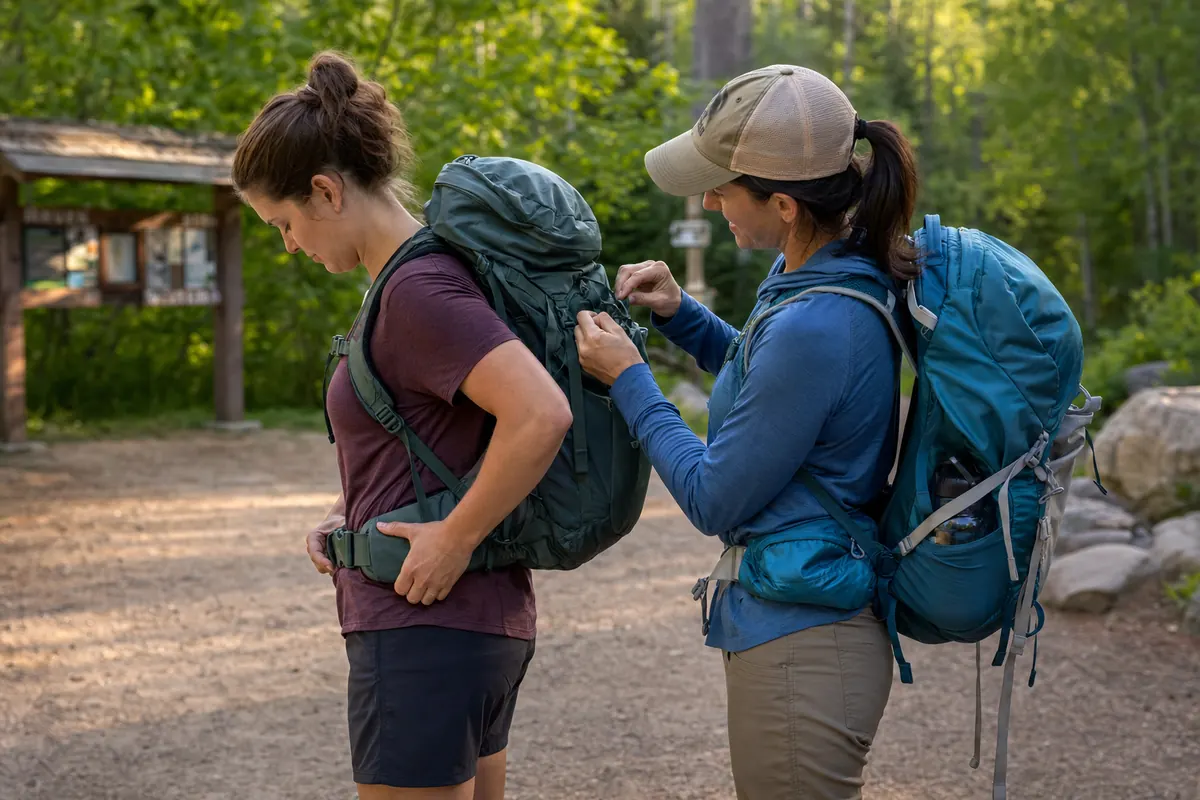
Pack dense items close to the back and control loose objects. A balanced load helps on steps and turns, while weight far behind you can pull the body out of line.
Keep the first weather and safety items accessible. A rain shell beneath the sleeping bag may stay packed until the person and critical gear are already wet.
The backpacking packing list owns the complete item selection. For the first trip, each carried item should solve shelter, sleep, water, food, clothing, navigation, light, first aid, repair, hygiene, or a known local rule.
Every kilogram needs a task. Comfort comes from fit, balance, and useful contents rather than a number alone.
How much food and water does camp require?
The final water source before camp may be the heaviest part of the day. You may need enough for drinking, dinner, cleanup, overnight needs, and the first morning segment.
Write the camp-water total before choosing containers. Include the meal recipe, treatment losses, and the distance to the next dependable source.
A small bottle that works during a day hike may force repeated dark trips or leave no reserve when the source is slower than expected.
Confirm source reliability and carry capacity before departure. The water carry plan should reflect heat, effort, distance between sources, treatment time, and the slowest person.
Treat uncertain natural water. Bring a primary method you have practiced and a suitable backup because a filter can clog, a container can leak, or chemical treatment can require waiting.
- Know the last reliable water source before camp.
- Carry enough capacity for the longest dry segment.
- Keep clean and untreated containers distinct.
- Practice filter maintenance and the backup method.
- Choose familiar shelf-stable food after cold storage is no longer reliable.
- Measure meal water, cooking time, cleanup, and fuel.
- Keep one simple meal for a late or failed-stove evening.
- Fit all food, trash, and scented items into the required storage system.
Moving food belongs where you can reach it during a short stop. Waiting until camp to replace a whole day of missed eating can leave you cold, impatient, and unwilling to complete the remaining work.
Dinner should be familiar and tested with the real stove, pot, water, and fuel. A long recipe can become a poor first-night choice when shelter setup runs late.
Store food by current local rules before sleeping. Wildlife does not distinguish dinner from toothpaste, wrappers, pet food, or scented hygiene items.
The trek food rhythm provides a useful cross-activity model for breakfast, moving food, dinner, and delay reserve. Keep the first backpacking menu simpler than the kitchen version.
Water carries into camp. Its source, treatment, weight, cooking use, and storage connect most evening tasks.
Practice camp tasks before you need a headlamp
Instructions feel different under a headlamp.
Practice at home or a nearby legal site where a missed stake, wrong stove part, or slow filter produces information instead of exposure.
Pitch the shelter once in daylight, then again in low light. Keep every stake, pole, and repair sleeve accounted for before adding wind or rain.
Treat water from a clean practice source, perform the manufacturer's normal maintenance, and run the backup method. Do not contaminate equipment to simulate a failure.
- Pitch shelterBuild the complete shelter and tension it without missing parts.
- Prepare sleepInflate or assemble the pad and protect insulation from wet ground.
- Treat waterOperate, clean, and pack the primary method, then use the backup.
- Cook and shut downMake one meal and cool, clean, and store the stove safely.
- Navigate offlineFollow a simple local route with offline and paper information.
- Repair one itemFix a loose strap, small tear, lost cord, or leaking container with the carried kit.
- Send a check-inConfirm the trusted contact understands the route and overdue action.
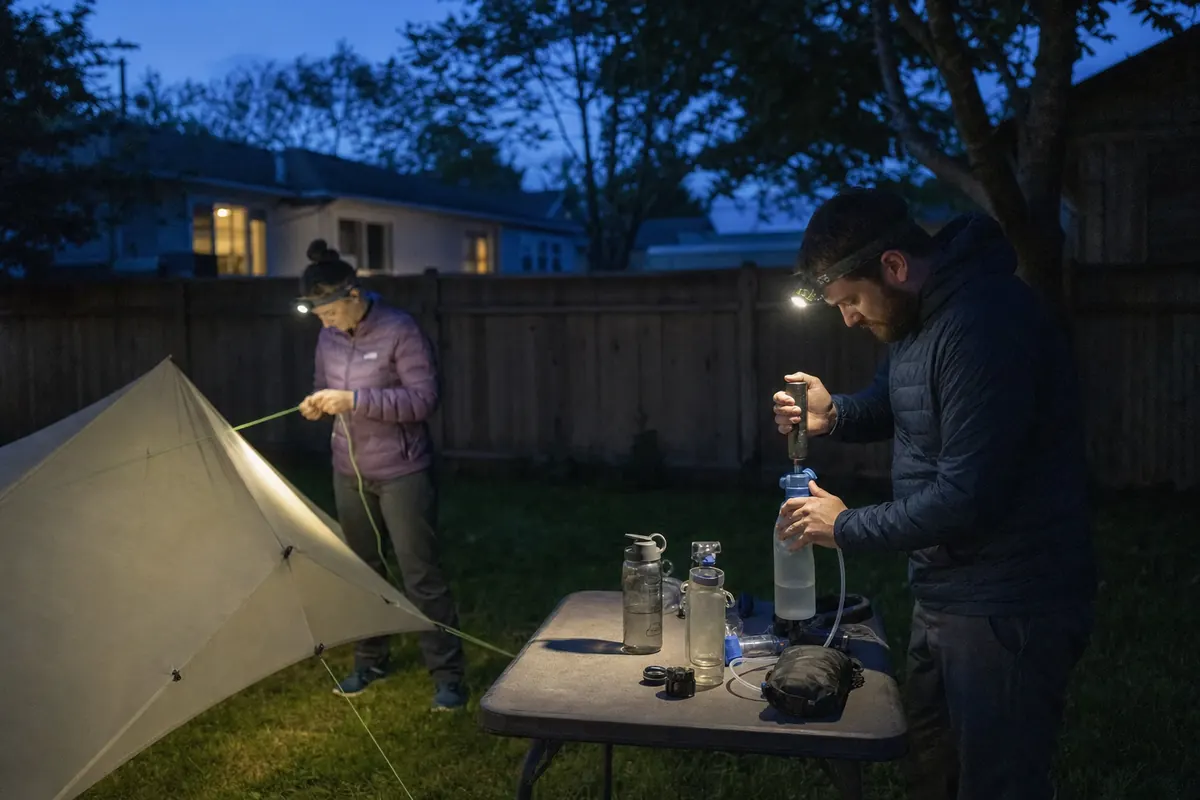
Know how to use the navigation carried. Basic compass backup skills should be practiced on an easy route before poor service or a damaged screen removes the phone.
Pack a second light source or accessible backup power. Changing a headlamp battery in darkness is easier when the spare is not buried.
The backpacking training plan should include the real pack during later sessions. Camp skills deserve their own rehearsal because stronger legs do not make unfamiliar buckles or knots obvious.
Practice the awkward version. A task that only works in the kitchen is not yet a field skill.
What should happen during the first hour at camp?
Take the pack off and pause before scattering equipment.
Confirm that the site is legal, durable, protected from obvious hazards, and close enough to water only as local rules allow.
Keep one part of the site clear while the shelter goes up. Loose stakes, cookware, food, and dry clothing spread across the ground are harder to find and easier to wet.
Open one system at a time, finish its immediate job, then move to the next priority.
Shelter usually comes first when weather threatens. In stable conditions, water may lead if the source requires daylight or a long round trip.
Change damp clothing before a long inactive period in cool weather. The body can cool quickly once walking stops and camp chores begin.
| Order | Task | Why it comes now | Change the plan when |
|---|---|---|---|
| 1 | Confirm site and weather | Prevents pitching in drainage, wind, or a prohibited area | No legal safe site is available |
| 2 | Shelter or urgent water | Protects the night and remaining daylight | Weather or source access is worsening |
| 3 | Add dry or warm layer | Limits cooling during slower work | Shivering or clumsy hands begin |
| 4 | Treat camp water | Covers dinner, overnight, and morning | Source flow or treatment fails |
| 5 | Inspect feet | Stops hot spots before tomorrow | Pain changes gait or skin is open |
| 6 | Cook and eat | Supports warmth and recovery | Fuel, appetite, or time makes the meal impractical |
| 7 | Store food and waste | Protects wildlife and the group | Required storage cannot be completed |
| 8 | Stage morning items | Makes the next start calmer | Forecast or body condition changes the route |
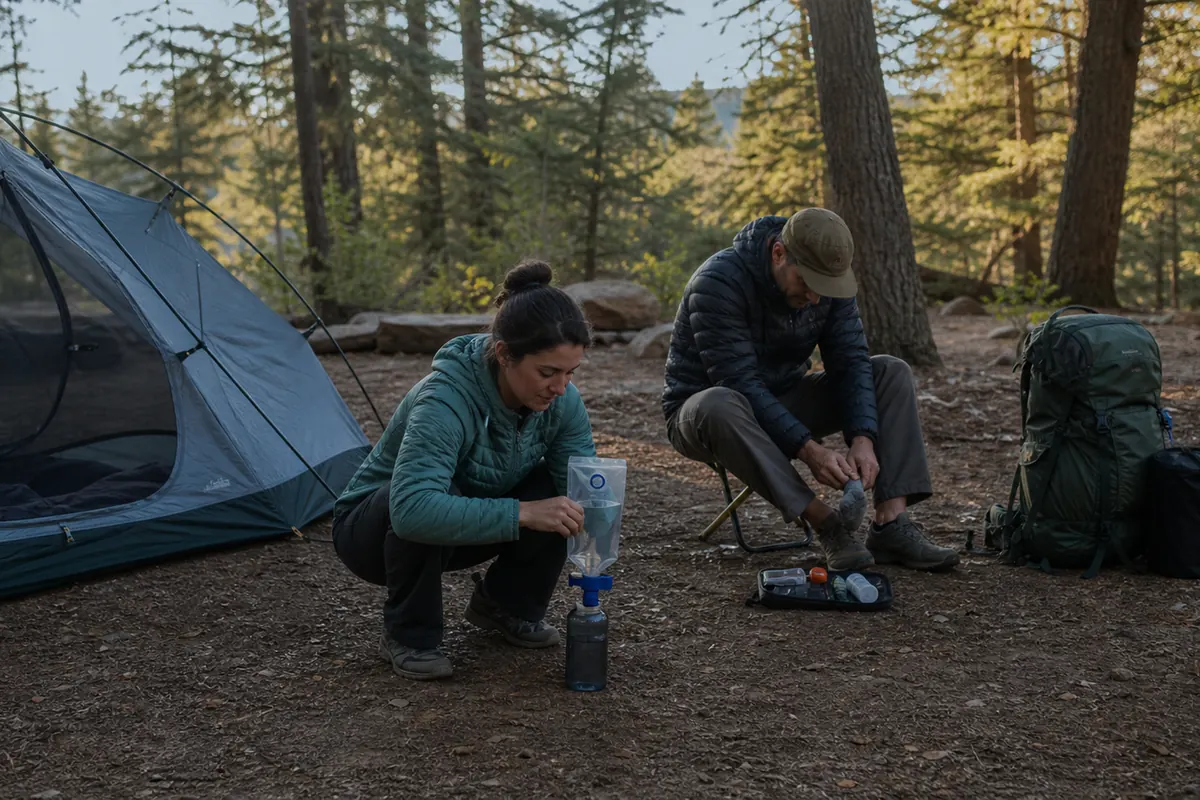
Wash and inspect feet while there is time to dry them. Treat small hot spots before sleep, and keep camp footwear from becoming an excuse to walk barefoot around sharp or contaminated ground.
Eat before fatigue removes appetite, then secure every scented item. The common backpacking mistakes often begin when late arrival turns normal tasks into rushed omissions.
Set out the headlamp, first food, morning layers, map, and rain shell. A calm morning starts with the previous evening's organization.
Camp has an order. The first hour should protect the night before it tries to make the site comfortable.
When should a first backpacking trip end early?
Early problems are usually easier to solve.
Stop for a pack adjustment, foot treatment, layer, food, water, or map check before discomfort changes movement or weather removes choices.
Shorten or leave when the group cannot confirm location, obtain safe water, keep sleep insulation dry, or create a secure shelter for the expected conditions.
Pain that changes gait is a route problem. Continuing can turn a short walk-out into a slow one and carry the same compensation into tomorrow.
Cold rain deserves quick action. Persistent shivering, fumbling hands, confusion, or unusual quietness can be cold stress signs that require warmth, shelter, and a more serious response.
Notify the trusted contact when the route or timing changes. A short solo backpacking route needs stricter communication because nobody else can share a failed device or notice a worsening decision.
Exit before complexity. A beginner gains useful experience from a controlled walk-out and very little from forcing a failing camp.
Use the first morning to diagnose the trip
Notice the first ten minutes after waking.
Normal stiffness may ease, while sharp pain, changed gait, reopened hot spots, nausea, or unusual weakness deserves a shorter plan.
Review the night before checking a shopping list.
A cold sleeper may need a better pad, a warmer insulation choice, more food, drier clothing, a less exposed site, or some combination. Buying the warmest bag first can miss the actual failure and add weight without fixing the ground or moisture problem.
Compare estimates with clock times. Record when walking stopped, shelter became secure, water was ready, dinner ended, and the group departed.
Those times show whether the next route can support more distance or whether the existing camp routine still consumes the whole daylight margin.
Ask whether the sleep system kept you warm enough and dry enough to function. Condensation, sliding, ground cold, or cramped space points to a specific change.
- Walk normally before putting on the full pack.
- Check feet for hot spots, swelling, damp skin, and nail pressure.
- Record whether the pad and insulation kept you warm.
- Note condensation and whether anything important became wet.
- Count unused gear and name why it was carried.
- Count missing or inaccessible items and name the task they delayed.
- Record uneaten food, fuel used, and water remaining.
- Compare planned and actual arrival, setup, sleep, and departure times.
- Choose one system to change before buying anything else.
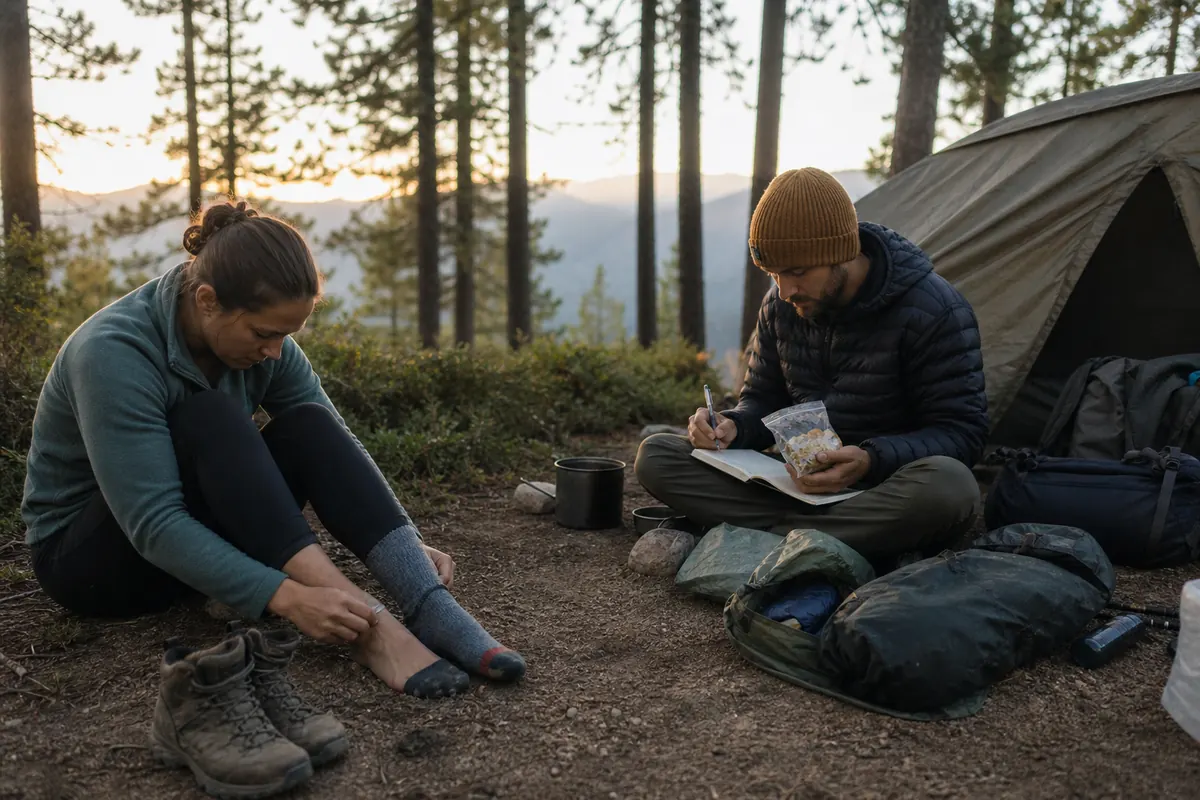
Avoid changing the pack, shelter, sleep system, menu, footwear, and route all at once. One clear change is easier to test than a complete replacement of everything familiar.
If the walk out feels controlled, the first trip worked even when the night was imperfect. The purpose was to expose the overnight systems with enough margin to learn from them.
The next route can become longer only when the evidence supports it. Add distance, climb, remoteness, colder weather, or another night one at a time instead of turning trip two into five new problems.
Review before upgrading. The most valuable first-trip result is a short list of specific changes backed by what actually happened.
Sources
The National Park Service recommends matching duration, difficulty, fitness, skill, weather, gear, permits, and backup options to the people taking the trip. It also recommends offline navigation and a trip plan shared with a trusted contact: NPS Trip Planning Guide.
The NPS Ten Essentials cover navigation, light, sun protection, first aid, repair tools, fire where appropriate, shelter, extra food, extra water, and clothing: Ten Essentials. An overnight needs those emergency functions plus the normal shelter, sleep, food, water, and camp systems described above.
Leave No Trace recommends knowing regulations and hazards, using appropriate group sizes, preparing for severe weather and emergencies, repackaging food, and minimizing impact: Plan Ahead and Prepare. The CDC advises treating uncertain backcountry water: Preventing Drinking Water-Related Illnesses.
Current local rules decide permits, camps, fires, water, food storage, wildlife, and waste.
Step by stepPractical steps
- Choose a short route with a known legal camp, verified water, moderate conditions, and an easy exit.
- Test shelter, sleep, pack, food, water treatment, navigation, lighting, and repair near home.
- Reach camp early and follow a simple order for site, shelter, warmth, water, feet, food, and storage.
- Leave or shorten the trip while water, weather, pain, navigation, or gear problems remain controlled.
- Use the first morning to review gait, sleep, wet gear, food, timing, and one change for trip two.
AnswersQuestions readers ask
Is backpacking hard for beginners?
It can be manageable when the first route is short, the campsite and water are known, weather is moderate, and all overnight systems have been practiced near home.
How long should a first backpacking trip be?
Use one overnight with modest distance and elevation, several hours of daylight at camp, and an exit you can still reach if shelter, sleep, water, or pain becomes a problem.
What should a beginner practice before backpacking?
Practice pitching shelter, setting up sleep insulation, fitting the loaded pack, treating water, cooking and shutting down the stove, navigating offline, using the repair kit, and sending a trip check-in.
How heavy should a beginner's backpack be?
There is no useful universal number. Carry only equipment with a clear job, fit the pack correctly, keep weight balanced, and test the real load until gait and comfort remain controlled late in the walk.
When should a beginner leave a backpacking trip early?
Leave when safe water, location, shelter, dry sleep insulation, weather margin, or normal walking cannot be restored with the skills and backup plan you have.