
How to Backpack With a Dog and Plan for the Carry-Out
Verify every dog rule, prove overnight recovery, protect paws and water, and test a carry-out that fits the actual dog.
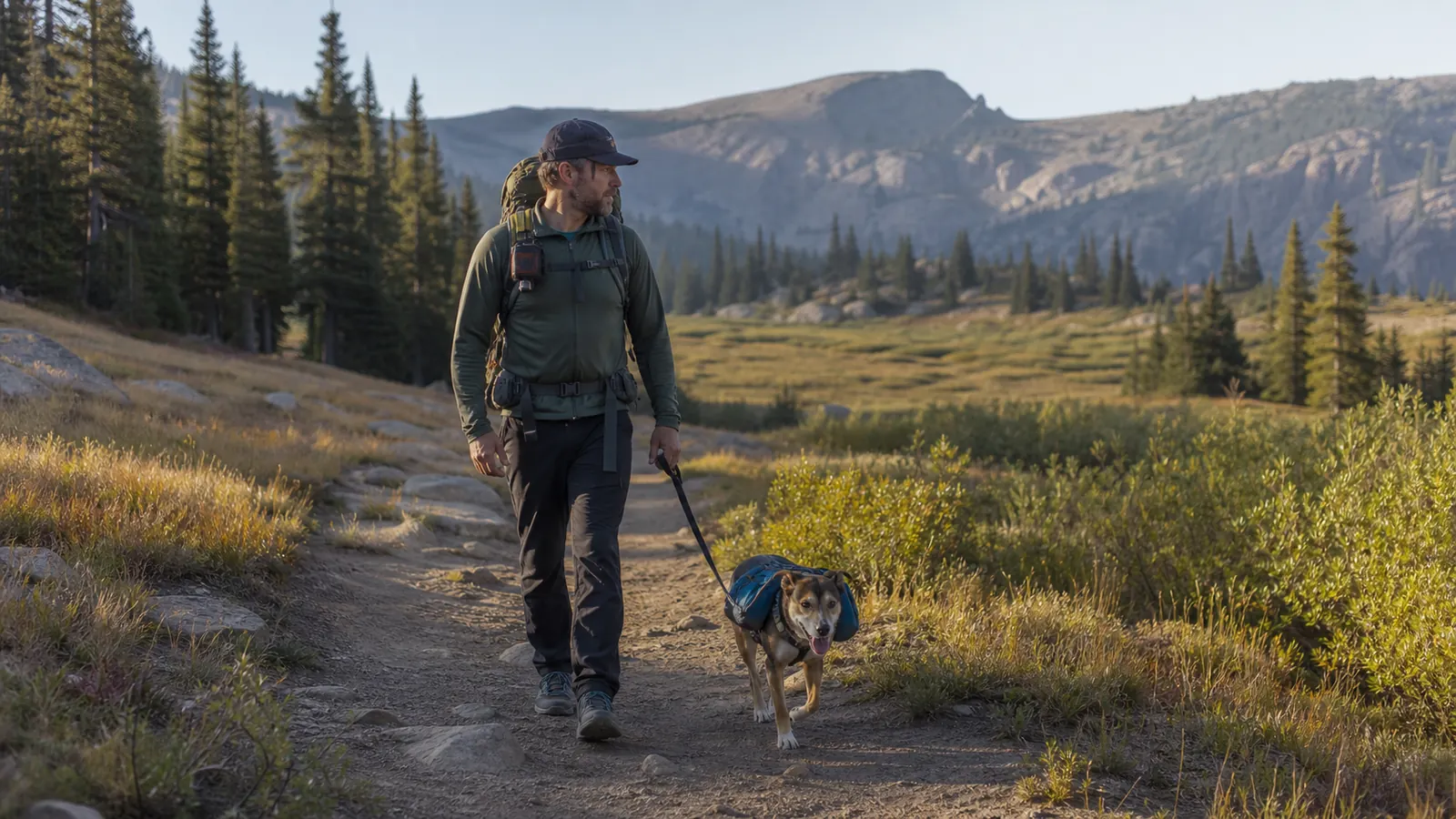
Backpacking with a dog is viable only when the dog is allowed on every route segment and the handler can move the dog toward help if walking stops. Prove the overnight routine close to home, carry clean water, keep the dog controlled at camp, and choose mileage that leaves real evacuation capacity.
Why can a strong dog still fail the route?
A strong trail dog can still be wrong for a backpacking route. The first veto is legal access.
The second is whether the handler can move that dog toward an exit after an injury or sudden loss of mobility.
Pros
- The land manager allows dogs on the trail, at the sleep site, and on any shuttle.
- The handler can take every item from the dog pack without losing balance or access to essentials.
- A tested carrier, sling, helper plan, or short direct exit matches the dog's size and the terrain.
Cons
- One route segment, camp, shelter, or transport link prohibits dogs.
- The trip depends on the dog carrying food, water, or insulation to remain viable.
- The only evacuation idea is that the dog will keep walking.
Check access before studying dog backpacks or bowls. Some parks allow pets on developed paths but not on backcountry trails.
Others allow dogs on a trail while prohibiting them in a shelter, designated camp, or seasonal wildlife area.
The carry-out question is just as concrete. A small dog may fit a tested carrier.
A large dog may need two people, a purpose-built rescue harness, or a route close enough to a road that help can reach the team.
Terrain changes the answer. A method that works across a lawn may fail on talus, a narrow bridge, deep mud, or a steep descent.
The handler also has to control the dog while solving the human problem. A sprained ankle, dropped leash, damaged harness, or loose dog near wildlife can turn one failure into two.
Carry an independent short leash and a simple repair that fits the harness material. Practice clipping and transferring restraint while wearing the full pack.
Keep the dog's first backpacking overnight shorter than the handler's normal route. That unused distance is working reserve.
The final backpacking gear list has to include dog food, water, restraint, sleep insulation, paw care, waste, and rescue equipment in the same load.
Two vetoes come first. Reject the trip when either access or removal depends on hope.
A fit dog still has to eat, settle, and walk out
Day-hike fitness does not prove overnight readiness. Camp adds a strange sleep surface, food near wildlife, colder inactive hours, and a second start after the dog has stiffened or slept poorly.
Ask a veterinarian about the individual dog's health, age, conditioning, pack suitability, and route conditions. General breed advice cannot replace that assessment.
Run a loaded walk that ends at a controlled legal campsite or near-home setup. Use the real harness, sleep pad, food, bowl, restraint, and night insulation.
- The dog completes the loaded walk without rubbing, limping, lagging, or changed gait.
- The dog drinks and eats a familiar meal after activity.
- The dog settles on the planned bed while restrained.
- The dog stays controlled when food, people, or another animal is nearby.
- The dog remains warm and dry during inactive evening hours.
- The dog sleeps without destroying the shelter or pulling free.
- The dog takes normal unloaded steps before breakfast the next morning.
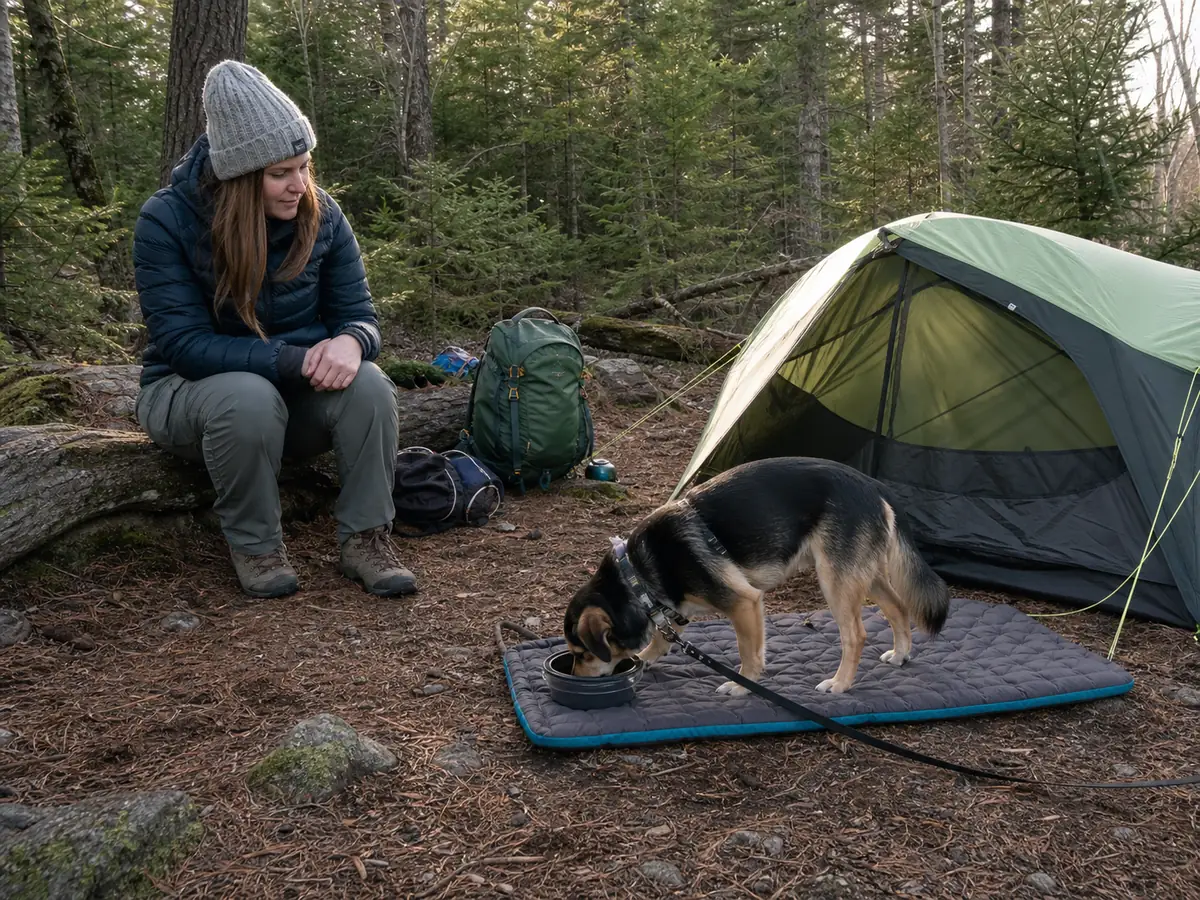
A dog that refuses food after exercise, cannot settle, guards the sleep area, or wakes with a changed stride needs another controlled test. Reduce one demand and repeat it.
Write down the dog's normal post-walk appetite, resting behavior, drinking pattern, and first morning steps. That baseline makes a change easier to notice when the handler is also tired.
Repeat the rehearsal in the coolest, warmest, or wettest conditions reasonably expected on the planned trip. A calm dry night does not prove that a wet dog can settle beside a tent while the handler works.
The same backpacking training principles apply to the dog, building duration and terrain gradually instead of jumping to one big weekend. The dog's conditioning plan still needs veterinary guidance and rest days suited to that animal.
Morning movement is evidence. Enthusiasm at the trailhead cannot substitute for a normal restart after camp.
Dog rules change between the trailhead and the sleep site
Treat the route as a chain. One dog-friendly trail does not make the whole overnight legal when the camp, shuttle, connecting path, or seasonal closure has a different owner.
Open the official page for each land unit. Record the rule and the date checked.
Then call or email the ranger office when the wording leaves any gap.
| Route element | Question to verify | Consequence |
|---|---|---|
| Trailhead and trail | Are dogs allowed and is a leash length specified? | A prohibition ends the route before departure |
| Backcountry camp | Are pets allowed at this exact site or zone? | Choose another sleep site |
| Shelter or hut | May a dog enter or sleep nearby? | Carry an independent legal shelter |
| Shuttle or boat | Does the operator carry dogs and under what conditions? | Arrange another transport link |
| Wildlife season | Is a temporary pet closure active? | Move the date or route |
| Food storage | Does dog food follow the same storage rule as human food? | Add capacity to the approved system |
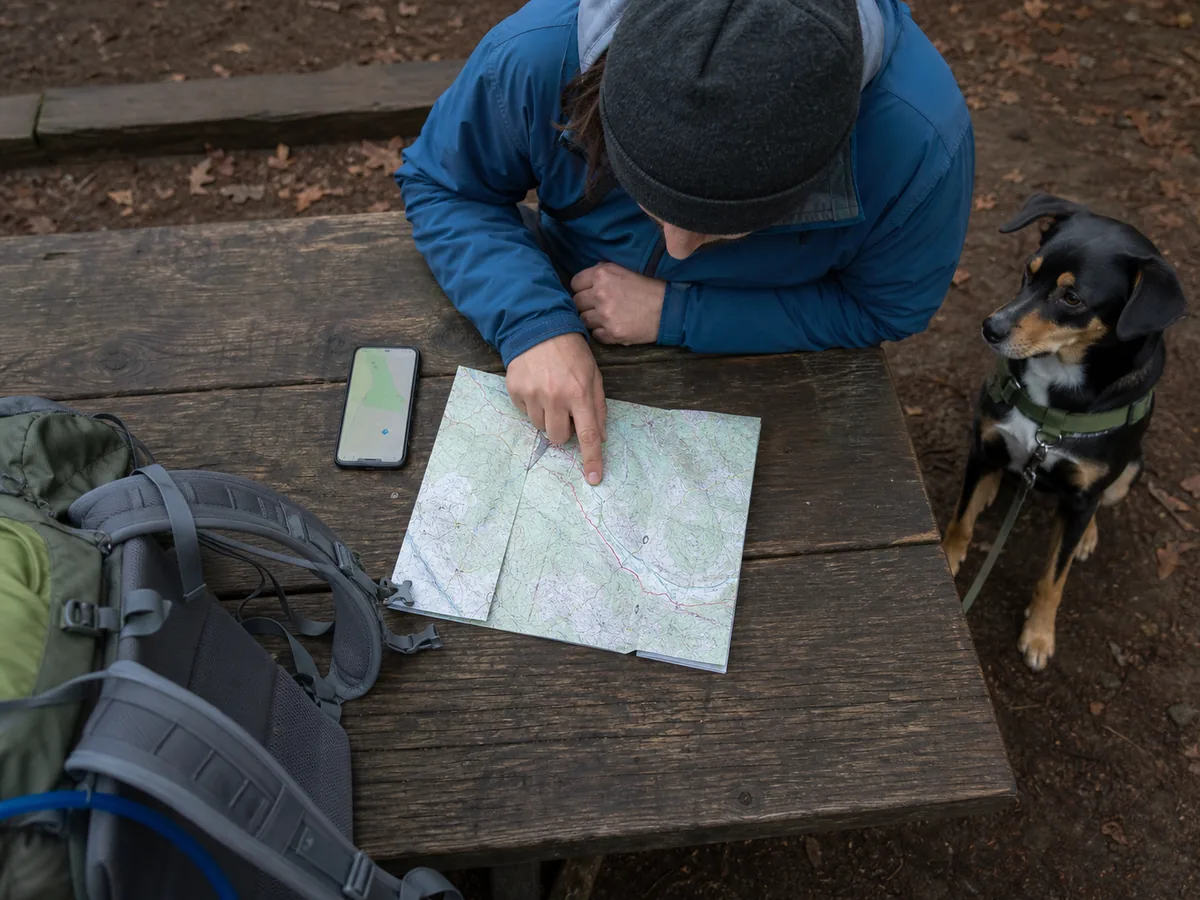
Save the relevant official page or permit offline. A screenshot helps when reception disappears, but it does not create permission where the current rule says no.
Check the return route under the same rules. A loop may cross a second land unit after camp.
A shuttle may accept a dog only in a crate that cannot be carried on the trail.
Record ranger office hours and the permit number with the trip plan. This gives the trusted contact a useful authority when an overdue response begins.
Dog access can also change which kind of trip remains possible. A dog-friendly day hike may remain practical when overnight camps prohibit pets.
Verify the entire chain. A legal trail that ends at an illegal camp is not a dog backpacking plan.
Anything on the dog has to come off in seconds
A dog pack is optional capacity. It must never become the only place for food, water, insulation, or another item required to get both travelers out.
Introduce an empty pack first. Watch shoulder movement, breathing, strap position, coat compression, and gait.
Add small balanced loads only after the empty fit remains stable.
- Fit test
- Two fingers under straps, free shoulder motion, no rubbing behind the front legs
- Balance test
- Similar bulk and weight on both sides with no rolling
- Movement test
- Normal stride on climbs, descents, steps, and turns
- Access test
- Water and restraint remain usable without unloading camp gear
- Transfer test
- Every dog-carried item fits safely in the human pack
- Stop signal
- Rubbing, shortened step, leaning, lagging, or repeated pack biting
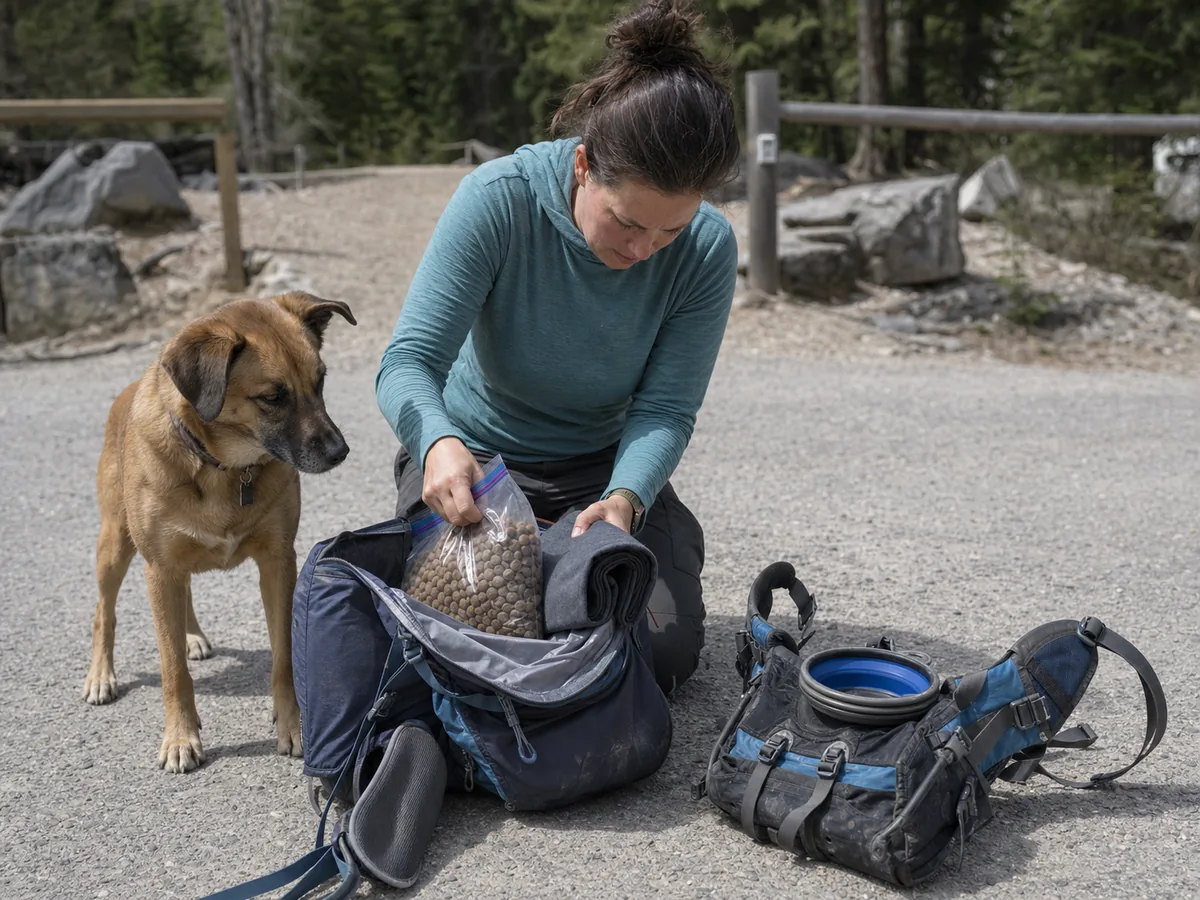
Avoid a universal percentage of body weight. Pack fit, age, health, coat, heat, terrain, conditioning, and the individual dog's movement all change usable capacity.
Keep dense items low and stable. Bulky insulation can fill one side while weighing little, so compare both scale weight and volume before adjusting the straps.
Remove the pack during long rests. Inspect the coat beneath every contact area, then let damp fur dry before the same strap returns to that spot.
Practice the transfer during a loaded walk. Refit the human backpack correctly and climb a representative hill.
Dog-carried weight is borrowed capacity. The human system must remain safe when that capacity disappears.
How much clean backup water does the dog need?
A dog may reach a stream before the handler can see stagnant edges, algae, livestock use, or another problem. Keep the dog under control until the source has been assessed.
Carry a separate dog allocation from the trailhead. Add margin for heat, dry stretches, spills, and a dog that will not drink neatly from the planned bowl.
Verified tap
Fill both allocations and leave with the next source and reserve already calculated.
Flowing source
Follow the land manager's current treatment guidance and prevent uncontrolled drinking.
Dry source
Use carried reserve and shorten or exit before either traveler reaches the emergency margin.
Suspicious bloom or scum
Keep the dog out, prevent contact, and use another source. Treatment is not a reason to risk exposure.
Muddy wildlife edge
Do not let convenience turn an uncertain pool into the only dog plan.
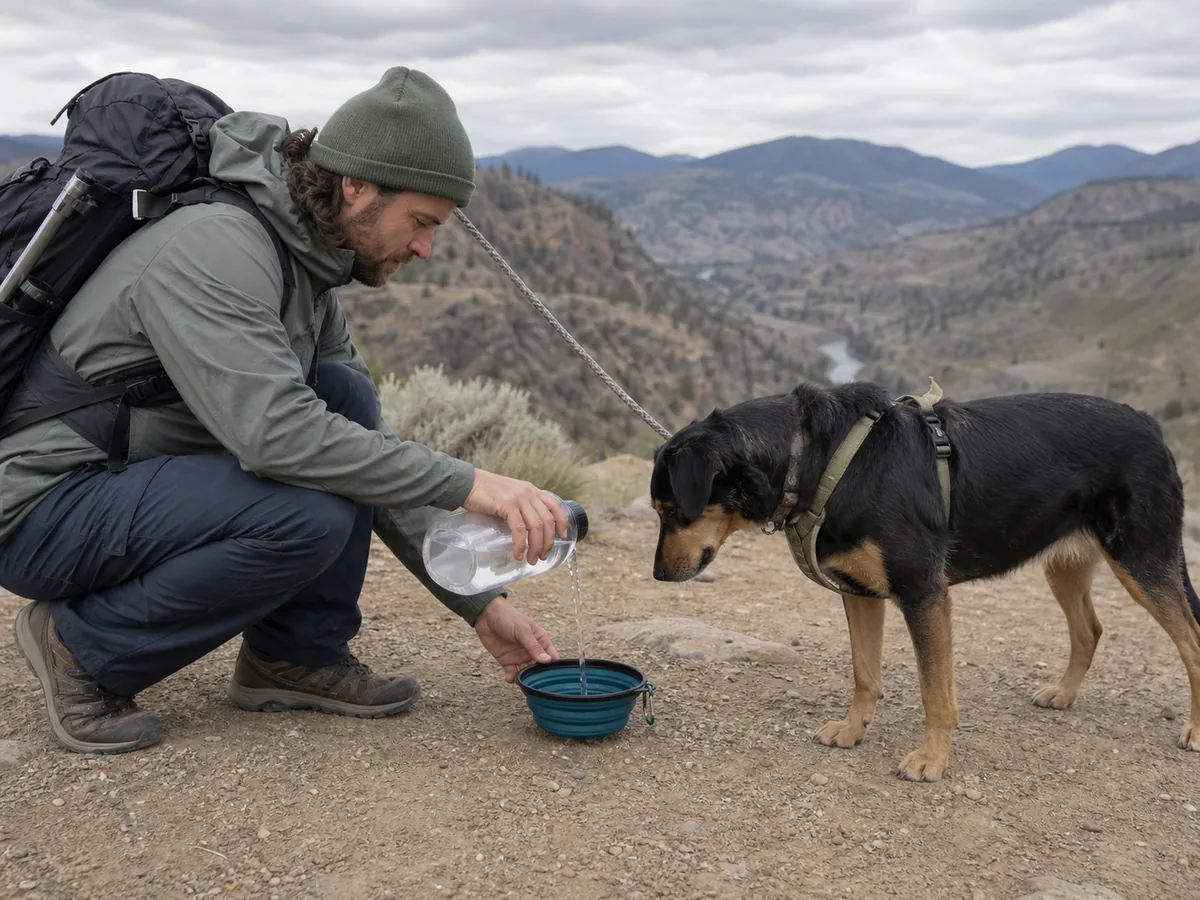
The CDC warns that harmful algal blooms can make animals sick and that pets should be kept away from water that looks or smells bad. Move away from suspicious water rather than trying to identify a bloom in the field.
Dog food also changes the water plan. Dry food may increase drinking demand.
Measure what the dog actually drinks after comparable exercise during rehearsal.
Split the clean reserve between containers so one puncture does not remove the entire dog allocation. Keep one portion reachable before the next uncertain source.
Offer small measured amounts during safe stops and note whether the dog drinks normally. A dog that repeatedly cannot or will not drink while function is changing needs an earlier exit and professional advice.
The trip water calculation covers the human route first, then adds the dog's tested demand and a separate failure margin.
Clean backup water buys control. It lets the handler pass an uncertain source without gambling on the next one.
How much dog food should you pack for the overnight?
Start with the dog's familiar daily ration, measured the same way you measure it at home. Ask the dog's veterinarian whether the route, weather, age, health, or expected effort changes that amount for this individual animal.
Do not introduce a new high-calorie food, supplement, or large portion on the trip. A stomach problem at camp is harder to manage, and it can make appetite, hydration, waste, and the exit plan fail together.
Divide each day into labeled portions. Keep the first evening meal and next morning meal easy to identify so the handler does not open every food bag after dark.
Add a separate delay reserve for the named extra time in the trip plan. The reserve covers an unplanned night or slow exit, so do not feed it as routine treats on the first day.
Test the complete food routine during the overnight rehearsal. Record whether the dog eats after the loaded walk, drinks normally, settles, and accepts breakfast before the second walk begins.
A skipped meal matters more when it appears beside changed gait, vomiting, diarrhea, unusual tiredness, poor drinking, or abnormal behavior. Shorten or end the trip and contact a veterinarian when the dog's normal function does not return.
Dog food and scented waste use the same wildlife-aware storage system required for other attractants. Confirm that the added volume fits before departure, including used bowls, treat packaging, and full waste bags.
Keep the food in the human load calculation even if the dog normally carries some of it. The handler must still reach the exit when the dog pack comes off.
Pack meals for the delay too. A measured reserve protects the dog without turning the normal ration into guesswork.
When should paws or temperature end the mileage?
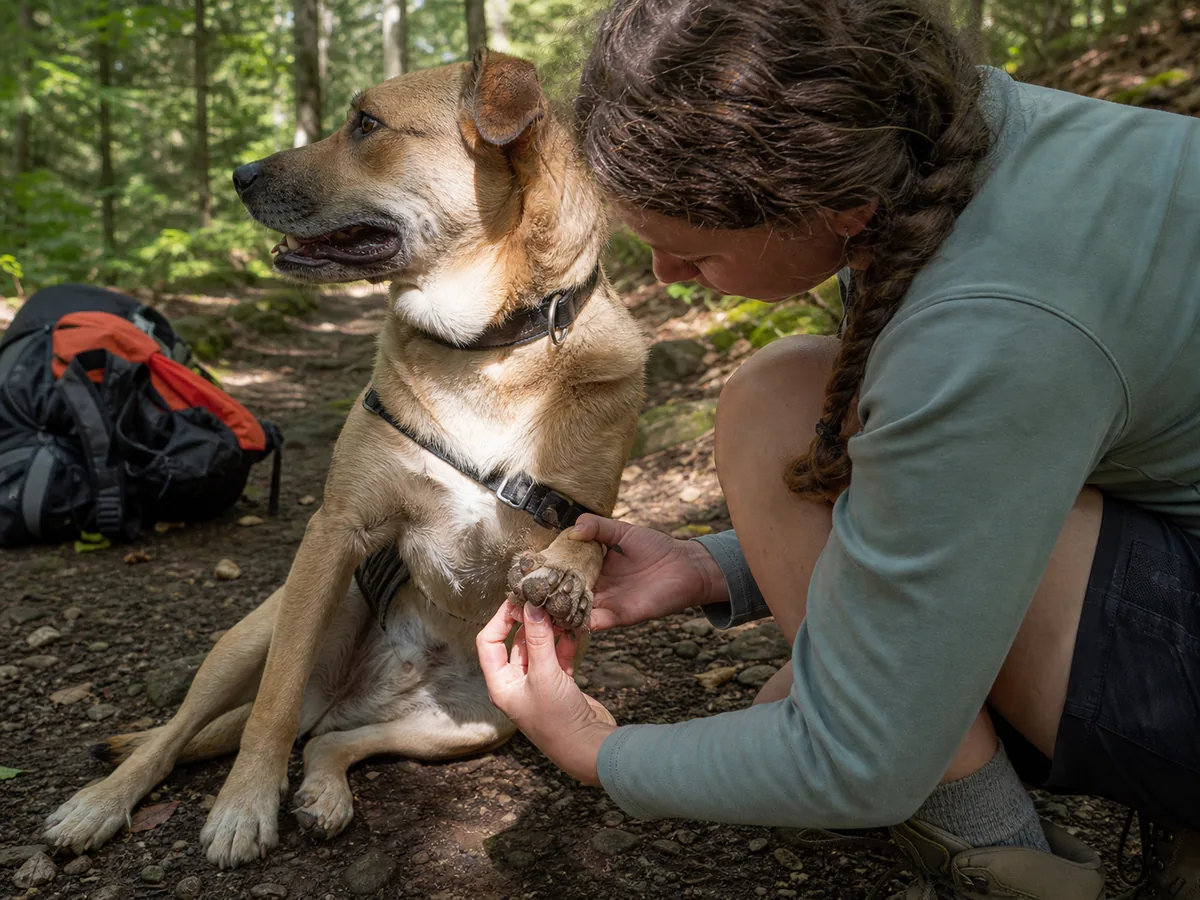
The first shortened step matters more than the planned campsite. Stop on safe ground and inspect all pads, between the toes, nails, dewclaws, and every strap contact area.
Hot ground, sharp rock, crusted snow, sand, burrs, and long wet exposure can change the dog's stride before damage is obvious from above. Check at breaks instead of waiting for a limp.
If the dog will use boots, fit and rehearse them before the trip. A boot that twists, rubs, or changes stride is not protection merely because it stays attached.
Carry only paw-care items the handler understands. Cleaning debris and protecting a minor surface problem is different from diagnosing a deeper injury or forcing continued mileage.
Heat risk rises when sun, humidity, warm ground, heavy coat, load, and limited water occur together. Shift travel to cooler hours, provide shade and water, remove the load, and shorten early.
Cold risk can rise after the dog stops moving. Wet fur, wind, snow contact, and a thin sleeping surface remove heat during camp.
Carry a dry dog layer or sleep system that the dog has already accepted.
Use a shorter version of the winter backpacking plan when snow, ice, or long darkness changes paw exposure and carry-out speed.
Learn the human team's heat hiking limits too. Seek professional veterinary care for concerning dog symptoms rather than relying on an article.
Function sets the distance. When normal gait, cooling, warming, or drinking cannot be restored, move toward help.
Camp control starts before the food bag opens
Secure the dog before unpacking food or shelter. A tired handler with open bags and a loose dog has created several preventable problems at once.
- Confirm the legal siteCheck the exact boundary, durable surface, leash rule, water setback, and current food-storage instruction.
- Attach a controlled restraintUse a system the dog has rehearsed and that cannot wrap around a stove or fragile vegetation.
- Inspect the dogCheck paws, gait, coat, harness areas, hydration, and behavior before camp work hides the evidence.
- Build the dry bedProtect the dog from cold ground, rain, and wind before inactive time begins.
- Offer measured water and foodKeep bowls controlled and remove leftovers promptly.
- Store every attractantPut dog food, treats, bowls with residue, waste bags, and scented care items into the required storage system.
- Handle wasteFollow the local rule and never leave a filled bag beside the trail or camp.
- Reset for sleepKeep leash, light, shoes, and the direct exit plan reachable overnight.
Dog food is wildlife attractant. Apply the current local storage rule to the entire supply, not only the bag intended for dinner.
Rain adds wet restraint, cold inactive time, muddy paw checks, and harder load transfer. The rain backpacking dry-core plan should protect both sleep systems.
Keep the dog close enough to prevent chasing, barking at passing hikers, entering water, or approaching wildlife. The backcountry food-storage system needs room for dog food and residue.
Do not attach a long restraint where it can girdle a tree, pull through fragile plants, cross a walking path, or reach the cooking area. Change the camp layout instead of accepting a hidden trip line.
Before sleep, check that the dog cannot contact hot cookware, food storage, sharp stakes, or another tent. Keep the handler's shoes and light ready for a controlled night bathroom break.
Control before convenience. A calm camp comes from sequencing the jobs while the handler still has attention.
Which carry-out works for this dog's size?
Put the actual dog in the planned carrier or rescue harness near home. Lift, walk, turn, lower, and repeat while another person observes breathing, limb position, escape risk, and handler balance.
| Constraint | Practical test | Route consequence |
|---|---|---|
| Small dog | One handler carries the dog plus the combined pack load | Keep the carrier accessible and test it on steps |
| Medium dog | Purpose-built harness with one or two handlers | Avoid terrain where helpers cannot stand beside the dog |
| Large dog | Two-person system, nearby road access, or organized assistance | Choose a short route with communication and a direct exit |
| Narrow or steep terrain | Carry system passes safely without pulling a handler off balance | Reject exposed scrambles and tight crossings |
| Solo handler | No second person can stabilize the dog or share the load | Use a more conservative route and communication plan |
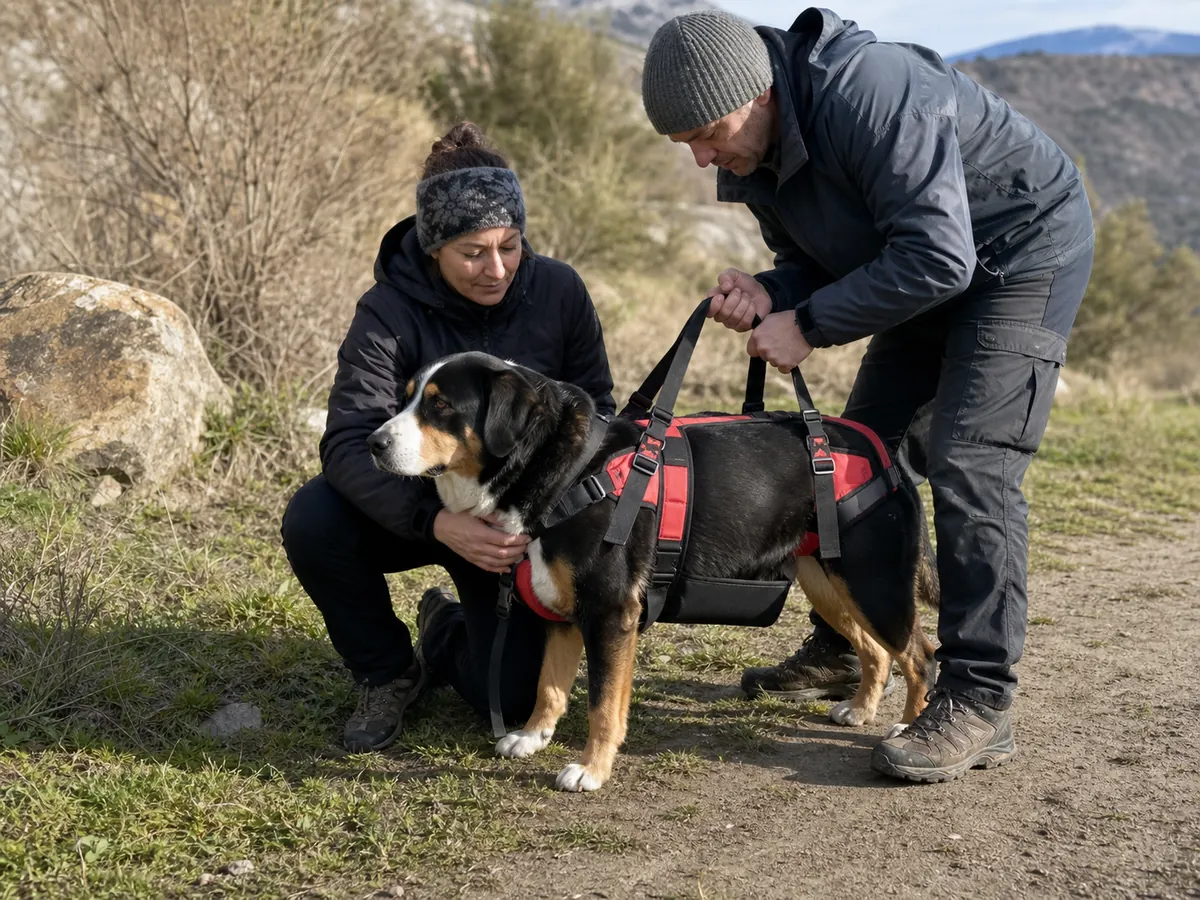
Know where vehicle access, ranger stations, veterinary care, and communication gaps sit relative to the route. A satellite communicator can request help, but it cannot guarantee that another person will carry the dog.
Most common backpacking failure chains change shape when one hand may be controlling a dog.
Repeated-night dog travel adds a different recovery problem. A multi-day dog plan covers day-two appetite, paws, and load decisions.
The handler should also know the limits of a solo backpacking plan when no partner can share restraint, navigation, or evacuation.
Give the trusted contact the dog's size, appearance, harness color, temperament around strangers, and rescue equipment carried. A responder who finds the team should know whether the dog can be safely approached.
For routes beyond phone coverage, practice sending location and condition through the chosen communicator. State clearly that a human may be stable while the dog cannot walk.
Test the hardest transition. Getting the dog from ground to carrier and moving over rough terrain matters more than owning the device.
What does morning gait say about the exit?
Watch the dog's first unloaded steps before fitting the pack. Look for equal stride, normal posture, willingness to turn, and ordinary behavior.
Inspect paws, nails, between the toes, harness areas, and any wet or cold spots. Offer familiar food and measured water before interpreting energy.
| Morning evidence | Continue conservatively | Shorten | Direct exit |
|---|---|---|---|
| Gait | Normal unloaded movement | Mild stiffness clears after a short warm-up | Limping or changed stride remains |
| Paws and skin | Clean and comfortable | Small issue protected without gait change | Bleeding, swelling, persistent pain, or rubbing |
| Food and water | Normal interest | Reduced appetite with otherwise normal function | Refusal plus falling energy or abnormal behavior |
| Temperature and breathing | Normal at rest | Conditions require cooler or warmer timing | Cannot cool, warm, or breathe normally |
| Handler reserve | Can absorb dog load | Use the shortest route | Cannot carry required load or control the dog |
Start toward the simplest known exit. Do not add a viewpoint or loop because the first few minutes look good.
Walk the first short section without the dog pack when morning evidence is uncertain. Recheck gait after the dog warms up, then keep the load with the handler if any asymmetry returns.
Stop again after the first descent. Downhill movement can expose paw tenderness or stiffness that level steps around camp did not show.
Tell the trusted contact when the route changes. The hiking safety plan should include the route, the dog, the likely carry method, and the fact that rescue may need veterinary coordination.
The human team also needs the hypothermia response because a slow carry-out can extend cold exposure for everyone.
The dog earns today's route through current movement and behavior, not yesterday's mileage.
Sources
The National Park Service explains that pet access differs by park and promotes the BARK actions of bagging waste, always using a leash, respecting wildlife, and knowing where pets may go: Pets in Parks. Current park pages and permit offices remain the authority for the chosen route.
The CDC advises keeping pets away from water with foam, scum, discoloration, or a bad smell because harmful algal blooms can harm animals: Harmful Algal Blooms and Your Health. REI covers gradual conditioning, pack fit, trail hazards, camp restraint, and dog first aid: Backpacking With Dogs.
Local rules control the trip. Verify access, leash requirements, camps, food storage, waste, water, closures, and emergency contacts before departure.
Step by stepPractical steps
- Verify that dogs are allowed on every trail, camp, shelter, and transport segment.
- Prove loaded walking, eating, settling, sleep, and normal morning gait during a controlled overnight.
- Carry clean dog water and enough human pack reserve to absorb every dog-carried item.
- Check paws, temperature, gait, and restraint before opening food or building camp.
- Test a carry-out method that fits the dog's size, the handler, the terrain, and the direct exit.
AnswersQuestions readers ask
Can you take a dog backpacking?
Only when the land manager allows dogs on every route and camp segment, the individual dog is prepared for an overnight, and the handler has enough water, control, load reserve, and tested evacuation capacity.
How far should a dog backpack on a first trip?
Use less than the dog has completed comfortably on loaded day walks, choose one short overnight, and keep a direct exit. Normal eating, settling, paws, gait, and morning movement matter more than a universal distance.
How much weight can a dog carry backpacking?
There is no safe universal percentage.
Ask a veterinarian, introduce an empty fitted pack, add small balanced loads gradually, and stop for rubbing, leaning, lagging, or a changed stride. The handler must be able to carry it all.
What water should a dog drink while backpacking?
Carry a clean dog allocation and prevent uncontrolled drinking until a source is assessed. Keep the dog away from water with scum, foam, discoloration, or bad odor, and use another source when safety is uncertain.
How do you carry an injured dog out of the backcountry?
Use a purpose-built carrier or rescue harness tested with the actual dog. Dog size, handler strength, helper count, terrain, and distance determine whether the route has a realistic carry-out.