
Build Your First Camping Trip Backward From the Finish
Build the first overnight from checkout, the coldest forecast hour, legal site rules, daylight setup, and the last easy decision to cancel.
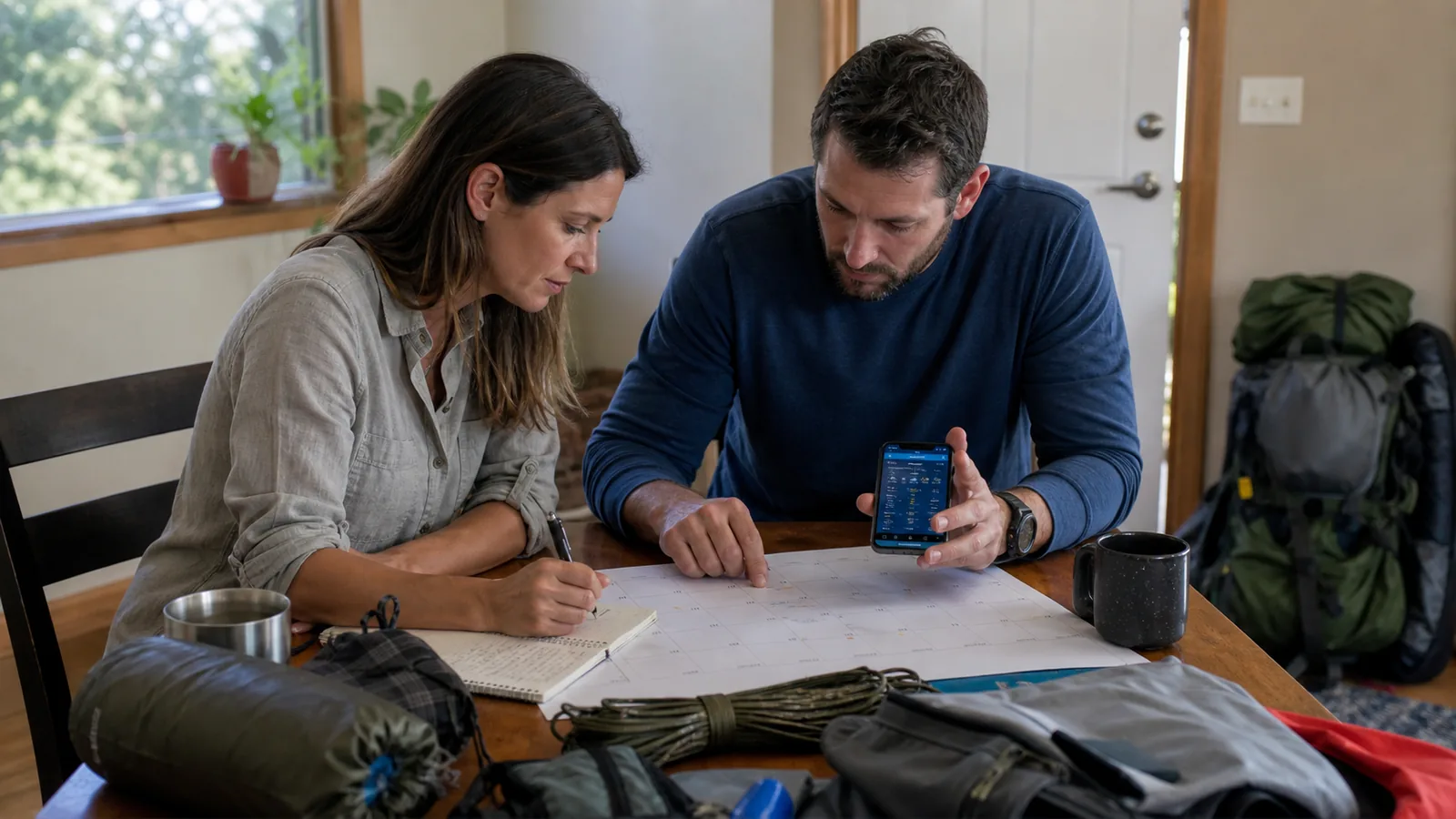
Plan your first camping trip as one legal night at an accessible site, then work backward from checkout and the overnight low. Confirm the reservation, facilities, food and fire rules, arrival daylight, simple meals, equipment tests, and a clear go or cancel decision.
Your easiest first camping trip begins with the finish.
Set the checkout time, route home, overnight temperature, and expected wake-up first. Those facts tell you how far to travel, when to arrive, what sleep system to test, and how much work the evening can hold.
Choose the version of the night that still works after a late drive, colder forecast, tired camper, or unavailable campfire.
First-trip planning rule
Keep the first plan to one night at a legal frontcountry site with direct vehicle access. More distance, isolation, weather, and days can come later, one tested change at a time.
The camping activity range is broad, so write the first plan in literal terms: developed or walk-in, vehicle beside the site or not, potable water confirmed or carried, toilet type, number of people, and one overnight. Those details prevent everyone from picturing a different trip.
Plan the overnight first. Daytime activities fit around shelter, food, sleep, and departure.
How do you plan backward from checkout and bedtime?
Write down when the site must be empty and how long the drive home takes. Add breakfast, packing, a final site sweep, and a buffer for damp gear or a tired group.
That gives you the latest useful wake-up time without rushing the campground's checkout rule.
Next, look at the overnight low, wind, and precipitation you are actually expecting.
The coldest hour often arrives near morning, after bodies have stopped generating heat through setup and activity. Your sleep system and dry clothing must work through that period and still leave enough function to pack.
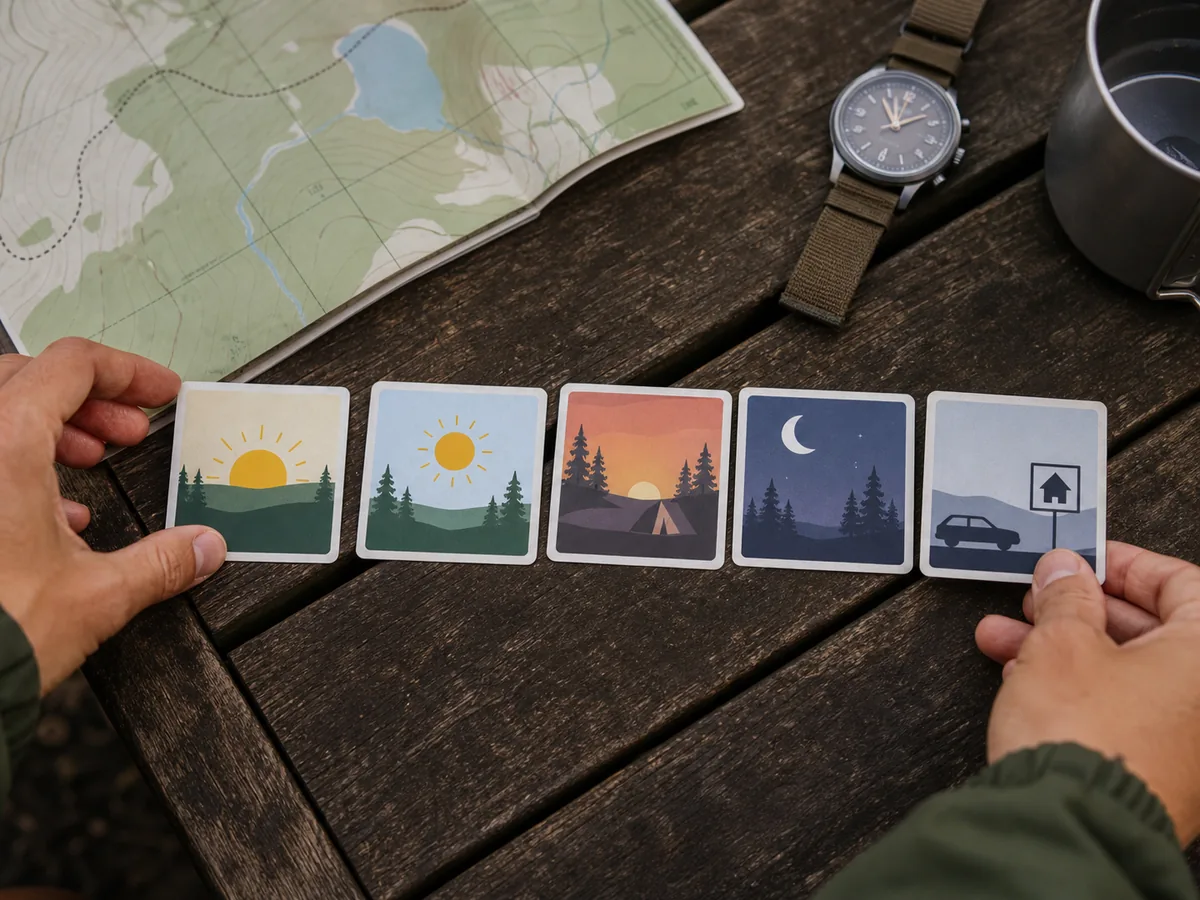
Work backward again to sunset. Tent setup, sleep preparation, food storage, and the first meal need daylight or reliable lighting.
A first trip should not require a perfect drive to reach camp just before dark.
Now decide what you can drop.
A walk, fire, complex dinner, and sightseeing stop can be removed without breaking the overnight. A legal site, shelter, warmth, water, food, light, medication, and route home cannot.
The beginner camping night explains the camp skills this small plan is meant to teach.
Build around fixed needs, then spend remaining time on recreation.
Some campsites forgive a first trip. Most do not
Look for an established campground with clear reservations, defined sites, current facility information, and a direct approach. A host, staffed entrance, or nearby developed area can reduce uncertainty, but you still need current official information before leaving.
- Access
- Direct vehicle route suitable for the forecast and vehicle
- Stay
- One legal reserved night with a known site or check-in method
- Facilities
- Current status of potable water toilets food storage and trash
- Exit
- A simple route home that does not depend on a difficult crossing
- Support
- Host ranger station or reliable emergency contact information
- Weather
- Conditions inside the group's tested shelter and sleep range
Check how far you carry everything from parking to the actual site.
“Drive-in campground” can still include walk-in pads or parking restrictions. Confirm whether a second vehicle requires a fee or separate lot and whether the gate closes at a particular time.
Match the site to every person. Consider mobility, medication, temperature sensitivity, toilet access, allergies, pet access needs, children's outdoor needs, and whether anyone needs to leave early.
The right first site supports the least experienced person without making them defend a smaller plan.
Do not talk yourself into remote access because a campground looks busy or ordinary.
Solitude is a preference. Recoverable mistakes are the first-night requirement.
Compare two or three candidate sites on the same facts rather than choosing the most attractive photo. Travel time, elevation, overnight weather, gate hours, cell limitations, and distance from the parking area can make a less dramatic site much more useful for learning.
If the site requires a hike with all overnight equipment, the first backpacking itinerary applies instead, because carried load, water sources, navigation, and a remote exit change the planning work.
Remove one uncertainty at a time with access, facilities, and support you can verify.
Save the booking details you will need offline
Save your confirmation number, site number, dates, named reservation holder, vehicle limit, check-in method, and checkout time. Keep an offline copy because coverage may be weak at the campground entrance.
Use the managing agency's current page for rules. Record what it says about occupancy, quiet hours, pets, generators, hammocks, parking, food and scented items, fires, firewood, water, trash, and wastewater.
| Fact | Official answer to record | Camping action |
|---|---|---|
| Reservation | Site date holder and check-in method | Carry confirmation and required identification |
| Water | Potable seasonal unavailable or treatment required | Set carried capacity and refill plan |
| Food storage | Locker vehicle container or other specified method | Pack the approved storage system |
| Fire | Allowed restricted or prohibited | Bring legal cooking and warmth alternatives |
| Vehicles | Number size parking and gate limits | Choose transport and arrival time |
| Pets | Allowed areas restraint and waste rules | Pack restraint water bedding and cleanup |
| Checkout | Exact time and site condition | Build the morning schedule backward |
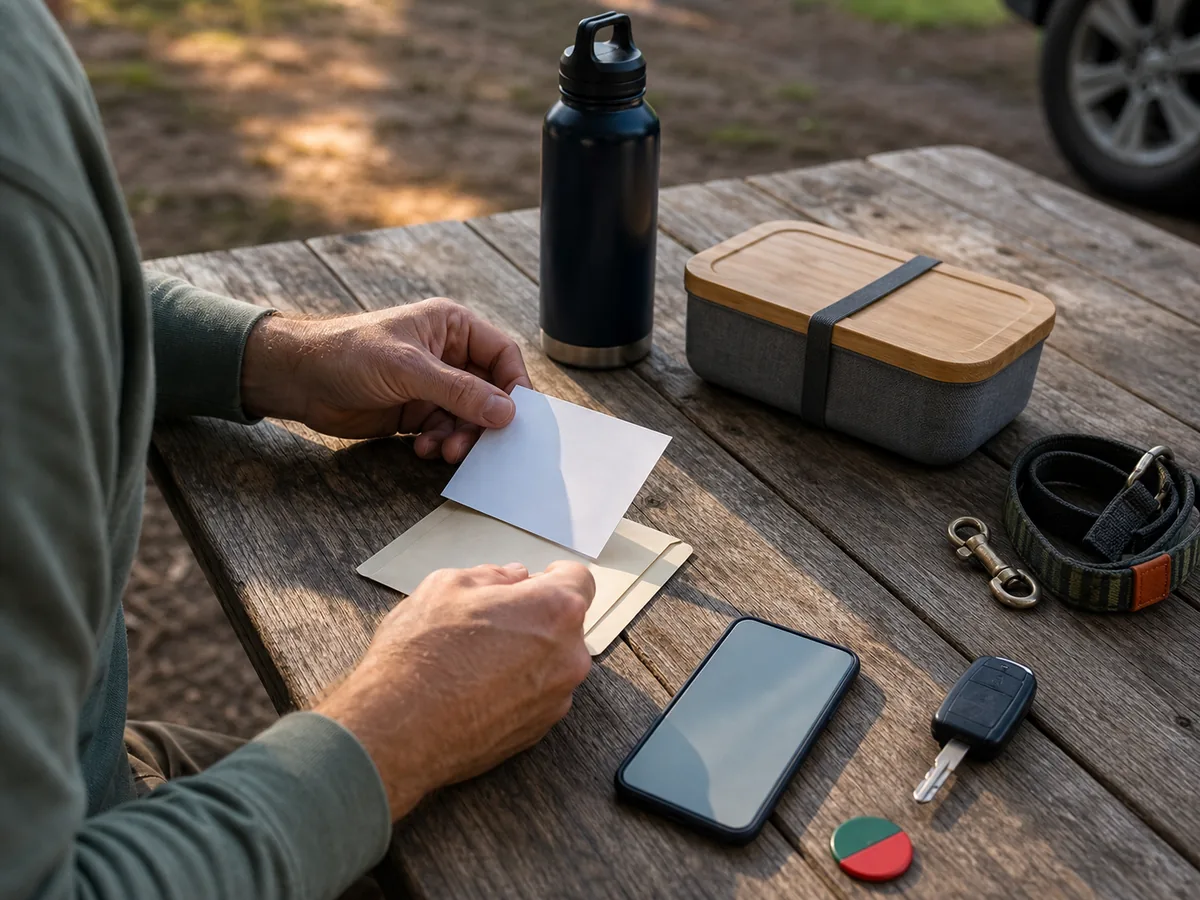
Do not copy rules from another park or an old trip.
Fire restrictions, water systems, road access, and food requirements can change with season and conditions. Check again close to departure.
Call or message the managing office when a critical statement is unclear. Ask a narrow question such as whether the listed water is potable and operating on your dates, whether a hard-sided vehicle meets the food rule, or how late arrival registration works.
Save the answer with your reservation record.
Look for the costs you pay separately.
Entrance, camping, extra vehicle, firewood, shower, reservation, and cancellation fees may have different owners. Record payment method and whether the site requires a printed pass or displayed tag.
A camping packing audit works only after these answers are known. Otherwise a generic list may bring the wrong storage method or omit water the campground no longer supplies.
Record the source and action for every rule that changes the load.
Which camp tasks must finish before dark?
Estimate the drive with stops, then add a realistic delay buffer. Set a departure time that leaves enough daylight to check in, inspect the site, pitch shelter, prepare the bed, secure food, and locate toilets and water.
- Set checkoutReserve time for breakfast packing an empty-site sweep and the drive home.
- Find the overnight lowTest the complete pad bag shelter and dry clothing for that range.
- Mark sunsetFinish site inspection shelter sleep setup and food storage before useful light ends.
- Estimate arrival workInclude check-in parking unloading and any walk to the pad.
- Add the driveUse realistic traffic fuel food and restroom stops.
- Set the departureChoose the home departure time from the total rather than from preference.
- Name the cutoffShorten or cancel when delay removes the daylight setup window.
When you arrive, reassess.
Check current notices and ask a host or ranger about weather, wildlife, fire, water, or road issues. Ask each person how they feel before adding a hike or other activity.
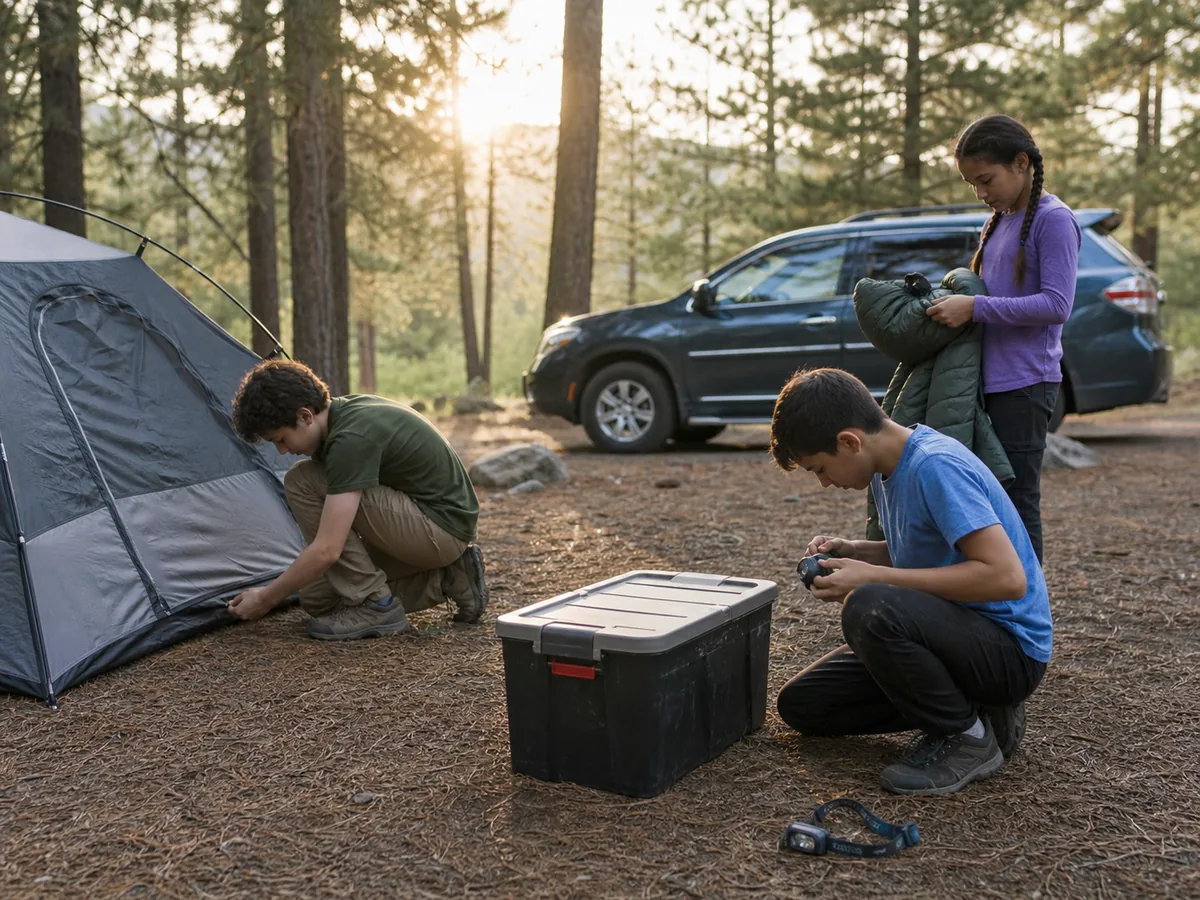
If you arrive later than planned, remove the optional activity and simplify dinner. If darkness would force a first shelter setup on a questionable site, use the alternative accommodation or return plan chosen at home.
Delay changes the evening. Do not force every planned task into a smaller light window.
How should you plan the first meal and night?
Choose food the group has eaten before and can prepare with the tested equipment. Keep the first dinner short, limit cleanup, and pack a no-cook fallback.
A first night is a poor time to depend on an unfamiliar stove, fire, or recipe.
Work out your drinking, cooking, and cleaning water separately.
Confirm potable water close to departure or carry the full amount. Natural water needs an appropriate treatment plan and containers that keep clean and untreated water separate.
- Dinner uses familiar food and the tested stove or no-cook method.
- Fuel matches the stove and covers cooking plus a reasonable delay.
- Water covers drinking cooking and allowed cleanup.
- All scented items fit the required storage method.
- The cooler plan keeps perishable food cold and protected from meltwater.
- Breakfast can be prepared without opening every packed bin.
- The pad bag shelter and dry layers suit the expected overnight range.
Set shelter and sleep gear before cooking when weather or darkness is approaching. Keep dry sleep clothing protected from spills, rain, and smoke.
Plan your breakfast and the drive home as carefully as dinner.
A morning meal that uses every pot and the last water can delay checkout. Keep enough drinking water available after cleanup and avoid packing keys or medication into a bin that becomes inaccessible.
The common camping warning signs are useful in this plan because late arrival, a soft pad, unsecured food, and unfinished morning work each have a cheaper earlier correction.
Do not plan on a fire to keep you warm.
Fire may be prohibited, wind may make it unwise, and it must be extinguished before sleep. Clothing, shelter, and bedding carry the night.
Simplify the dependencies. One familiar meal and one proved bed protect more time than elaborate camp plans.
Sleep, kitchen, and light have to work together before you go
Run one connected rehearsal at home early enough to replace a part or change the plan. Testing a stove on Tuesday and a tent on Friday can still miss the fact that the fuel, light, bed, and shelter are packed in an order that does not work at arrival.
Start with the tent still in its travel bag, exactly as you will find it.
Pitch it with the people who will use it, confirm every pole and stake, and time the setup without rushing. Then take it down and pack it again so everyone sees which parts can disappear into grass or darkness.
Build the complete beds inside. Inflate each pad, lie on it, check that bags fit without pressing wet tent walls, and leave the pads loaded long enough to expose a slow leak.
Prepare the planned dinner with the legal cooking method outdoors. Confirm the fuel fits, the ignition works, the pot is stable, and the no-cook meal can feed the group when the stove does not cooperate.
Fill the water containers to their planned level. A container that leaks, tips in the vehicle, or becomes too heavy for the intended person needs a different position or size before departure.
Turn on every light and place it where it will live overnight. Each person should be able to find a light, footwear, warm layer, keys, and medication without opening the main equipment bins.
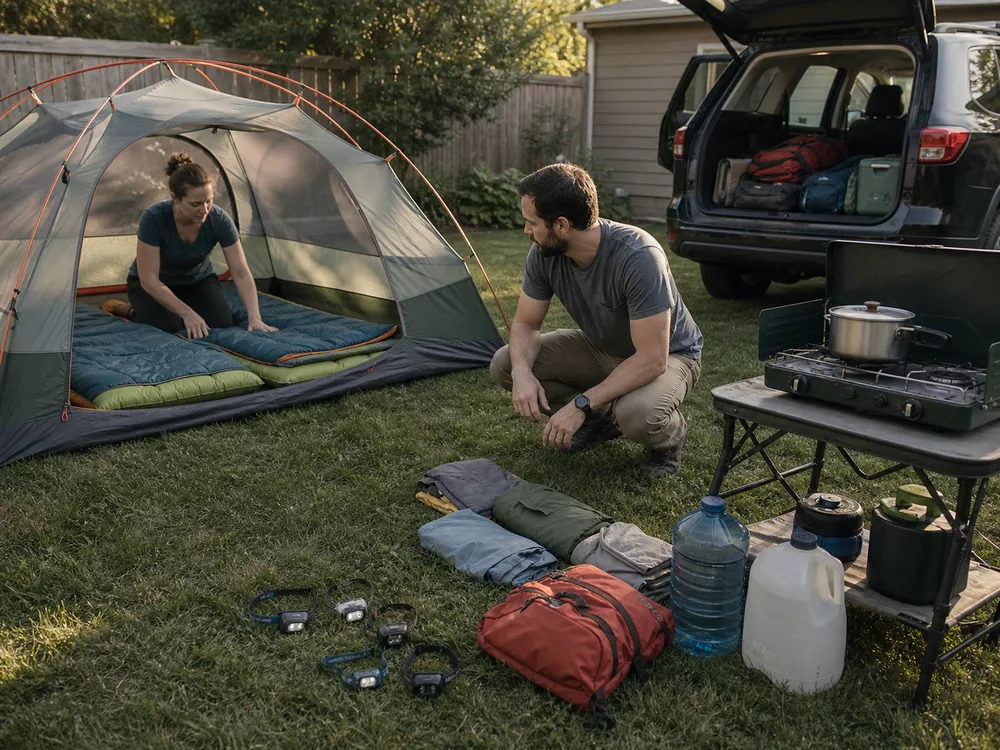
Pack the vehicle in arrival order after the test. Shelter, beds, food storage, water, and lights should come out before chairs, games, and optional cooking equipment.
Ask your group to solve one ordinary disruption.
Remove the campfire, delay arrival by an hour, make one light unavailable, or serve the no-cook meal. The answer should already exist in the load and schedule.
Repair one failed connection instead of buying random extras. A missing valve adapter, buried headlamp, leaking jug, or dinner that needs the banned fire is a specific problem with a specific correction.
Reset every supply used during the rehearsal. Refill water, replace test fuel, recharge lights, dry the shelter, and return medication or keys to their normal controlled location before the load is considered ready.
Write down any incompatibility while the equipment is still open. A pad that blocks the tent door, a cooler that prevents the vehicle from closing, or a stove that needs a missing lighter is easier to correct than a vague note to pack better.
Finish by closing every bag and loading the vehicle once. The test is complete only when critical gear can be found from its travel position, because campground setup begins with packed equipment rather than a neat display at home.
Shelter
Pitch from the travel bag and account for every pole stake and line.
Sleep
Load each pad long enough to expose leaks and confirm the beds fit.
Meal
Prove the stove fuel pot and no-cook fallback with the actual food.
Water and light
Fill containers run lights and return every item to its travel position.
Test the connected night while home, shops, and alternate shelter remain available.
What should your trip contact know?
Give one trusted trip contact the campground, site number, reservation name, vehicle description and plate, group names, departure and return times, and the official number to call if you miss the agreed check-in.
Tell the contact about any side trip that changes location or timing.
Close the plan when you return. Do not rely on live location sharing because coverage, batteries, or permissions may fail.
Inside the group, identify vehicle keys, emergency numbers, medication, first aid, and the route to the exit. The campground water plan should be understood by more than the person who filled the containers.
A useful contact has details and a deadline, not just a destination name.
When should you cancel or shorten the camping trip?
Check the official forecast, campground notices, road status, group health, and critical equipment before loading or leaving. Compare them with the limits written into the plan.
Go
The site is open the forecast is within tested limits everyone is well and all critical systems work.
Modify
Shorten the stay remove activities arrive earlier change the meal or choose the prepared easier site.
Cancel
Access is closed severe weather threatens the trip required equipment fails or a participant cannot safely stay overnight.
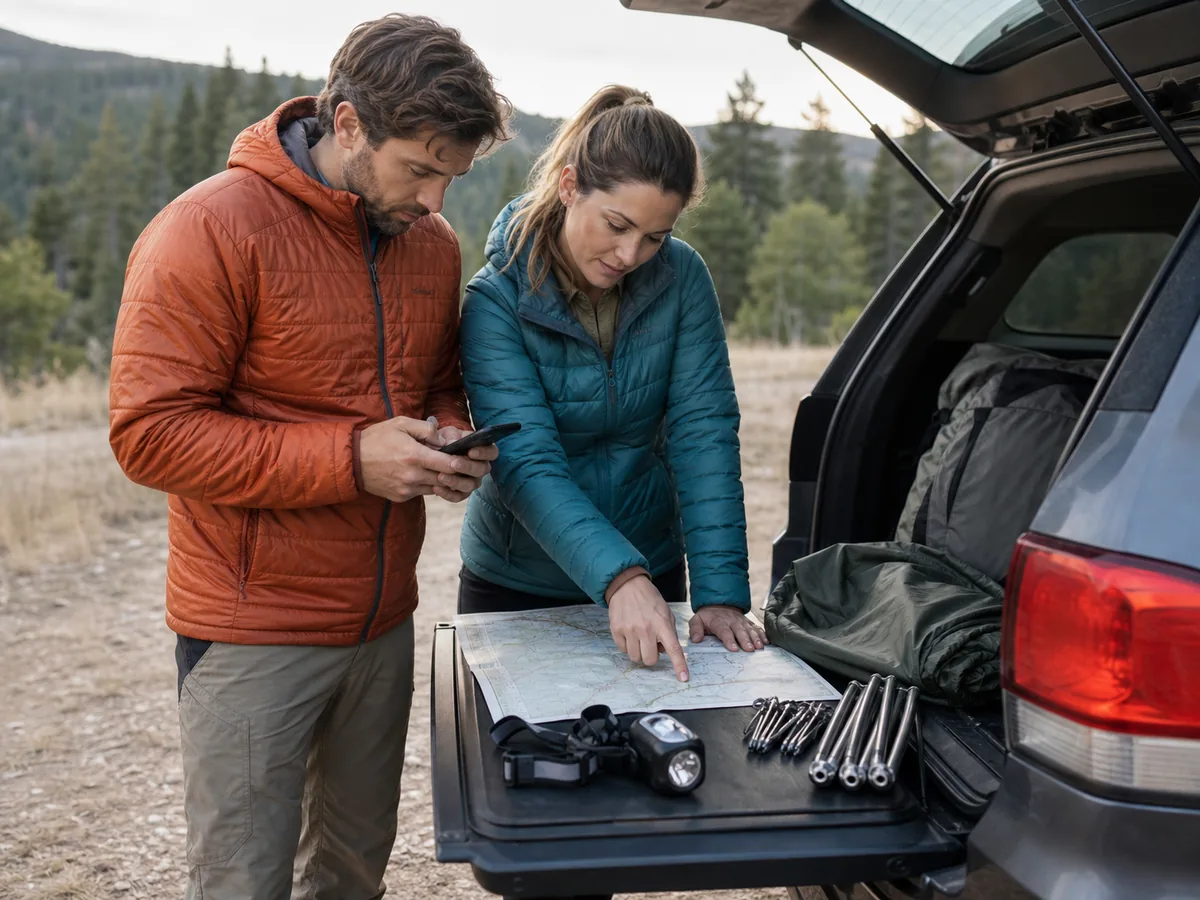
Cancellation is part of the plan, not a failed version of it. A campsite reservation is cheaper than forcing an overnight under conditions the group has not tested.
Winter adds more than a lower temperature. Snow can change parking and access, water can freeze, hands can lose dexterity, and the coldest morning may be the hardest work period.
Use a separate winter camping decision before applying this first-trip schedule to snow or sustained freezing conditions.
Write your cancellation decision down in advance.
“Cancel for severe weather” is vague. Name the official warning, road status, equipment failure, health change, or forecast range that moves the group to the alternate site or home.
This prevents enthusiasm at departure from silently raising the limit.
Run a ten-minute tabletop rehearsal with the group. Ask what happens if water is unavailable, the stove fails, arrival slips by two hours, a person feels sick, or the road closes overnight.
The answer should point to equipment, a simpler meal, an earlier cutoff, or the alternate route rather than a hopeful improvisation.
Make sure the person holding the reservation shares the record with you.
The plan should survive a dead phone, a separated vehicle, or that person becoming unwell. At least one other adult needs the site details, storage rule, emergency number, keys plan, and return deadline.
Check the human schedule as closely as the campground schedule. Work, school, pet care, sleep, and the following morning can create pressure to leave late or rush checkout.
Move the trip date or reduce the drive before those fixed commitments turn a simple overnight into a tight sequence.
Write your last fuel, food, and restroom stop into the drive.
A remote approach can add a long detour after the group passes services. Starting the final road segment with a full vehicle tank, fed group, and known directions protects the daylight budget reserved for camp.
If the weather becomes cold and wet, watch for hypothermia warning signs and leave early when warmth cannot be restored. Medical or weather deterioration is not an activity challenge.
Use the smaller safe option while transport, daylight, and shelter alternatives remain simple.
Sources
The National Park Service covers group limits, campsite choice, permits, conditions, food and fire rules, emergency contacts, essential equipment, and testing: Before the Trip.
Its campsite page explains reservations, facilities, overhead and drainage hazards, layout, and the reason to make camp before dark: Finding and Setting Up a Campsite.
The NPS arrival guidance recommends reassessing the group and asking about current weather, environmental hazards, fire restrictions, food disposal, and park alerts: Upon Arrival.
Check current official information twice, during planning and again close to departure.
Step by stepPractical steps
- Set checkout, route home, overnight low, sunrise, and sunset.
- Choose one accessible legal campsite that removes uncertainty for the least experienced person.
- Record reservation, facility, food, fire, vehicle, pet, and checkout rules from the managing agency.
- Build the departure and arrival schedule backward from daylight camp tasks.
- Test one simple meal, the water plan, and the complete sleep system.
- Leave an actionable itinerary and make the final go, modify, or cancel decision.
AnswersQuestions readers ask
How far in advance should I plan my first camping trip?
Reserve as early as the campground requires, but perform the final weather, water, road, fire, and alert check close to departure. Test shelter, sleep, stove, light, and storage several days before leaving.
How many nights should a first camping trip be?
One night is enough to learn arrival, shelter, sleep, food storage, overnight comfort, and checkout while keeping the exit simple. Add nights after the group can repeat those tasks calmly.
What campsite is best for a first trip?
Choose a legal established site with direct vehicle access, clear reservation details, confirmed facilities, mild conditions, and an easy route home. Match it to the least experienced person's needs.
What time should I arrive at a campground?
Arrive early enough to check in, inspect the site, pitch shelter, prepare beds, secure food, and locate facilities in daylight. Work backward from local sunset and include drive delays.
When should I cancel a first camping trip?
Cancel when access is closed, severe weather threatens the site or drive, required equipment fails, conditions exceed the tested sleep system, or a participant cannot safely stay overnight.