
Backpacking Safety Starts While Easy Options Remain
Protect the next safe option with a useful trip plan, independent navigation, verified water, weather cutoffs, orderly camp work, and early emergency communication.
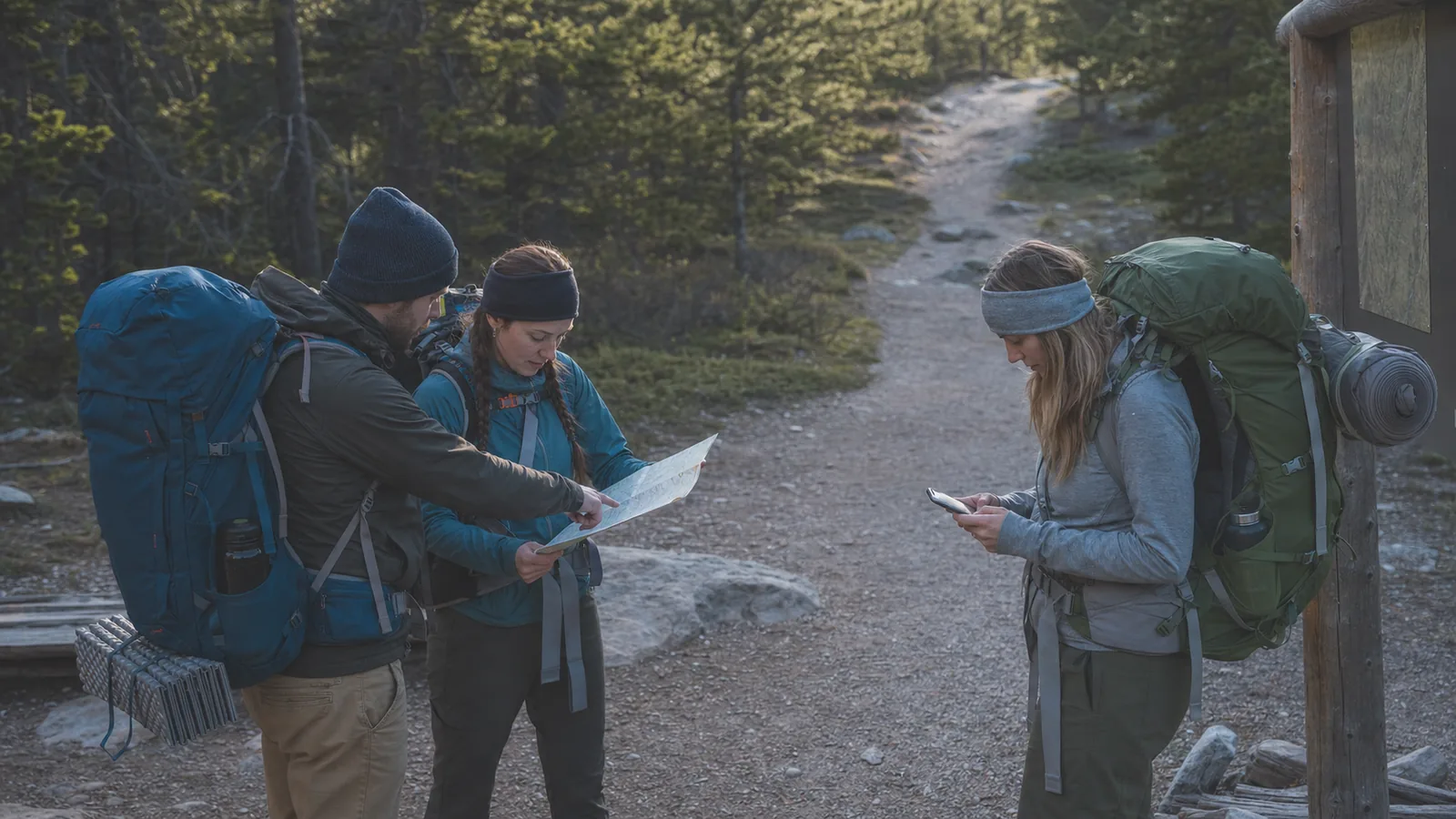
Backpacking safety depends on correcting the first failed assumption while the group can still shorten the route, treat water, add shelter, return to a known point, or call for help. Carry tested equipment, but give equal attention to the decisions that keep one problem from forcing the next.
Small problems turn into emergencies after dark
A missed water source does more than create thirst.
It can slow the group, delay camp, push cooking into darkness, reduce dinner, worsen sleep, and leave fewer choices the next morning. Backpacking problems often grow through connected systems.
Correct the first broken assumption before it spends the time, water, warmth, light, or attention needed by the next task.
Backpacking safety rule
The main systems are route knowledge, communication, water, shelter, warmth, food, light, first aid, and the ability to leave.
They do not need an expensive duplicate for every item. They do need enough independence that one broken device or wet bag does not remove several functions at once.
Route
Know the current location, the next decision point, and at least one legal exit.
Communication
Leave a precise outside plan and carry a method suited to the coverage gap.
Water
Verify source information, carry enough capacity, and keep a treatment backup.
Shelter and warmth
Protect the sleep system and keep weather layers reachable.
Light and time
Set camp and exit deadlines before the headlamp becomes the normal plan.
Response
Know which problems can be corrected, which require an exit, and which require emergency help.
Name stop conditions before departure. A specific water level, weather time, failed location check, worsening foot problem, or latest camp arrival creates a shared decision.
Without those triggers, tired people tend to preserve the schedule after the evidence has changed.
The first backpacking trip plan should keep route ambition below the group's skill. The beginner overnight process adds the shelter, food, and camp routines that a day hike never tests.
Protect the next option. Safety grows from the corrections still available, not from how much emergency gear is buried in the pack.
What should a backpacking trip plan tell your contact?
Imagine the trusted contact opening the plan after the expected return time. They need more than a park name and a promise to text.
Record every participant, vehicle, trailhead, direction of travel, intended camps, water assumptions, major crossings, planned exit, alternate exit, and expected return. Include clothing or shelter colors and the communication devices carried.
- Write the exact itineraryName trailheads junctions camps route direction and expected times.
- Add the alternateRecord what the group will do if weather water transport or pace changes.
- Define messagesState when a check-in is expected and which device or number will send it.
- Set the overdue timeChoose a time that reflects the route without leaving a real emergency unnoticed for a full extra day.
- Name the actionGive the responsible land agency or emergency contact and tell the trusted person what to report.
- Send and testConfirm the contact received the plan and understands the response.
- Close the planReport the exit promptly so nobody starts an unnecessary search.
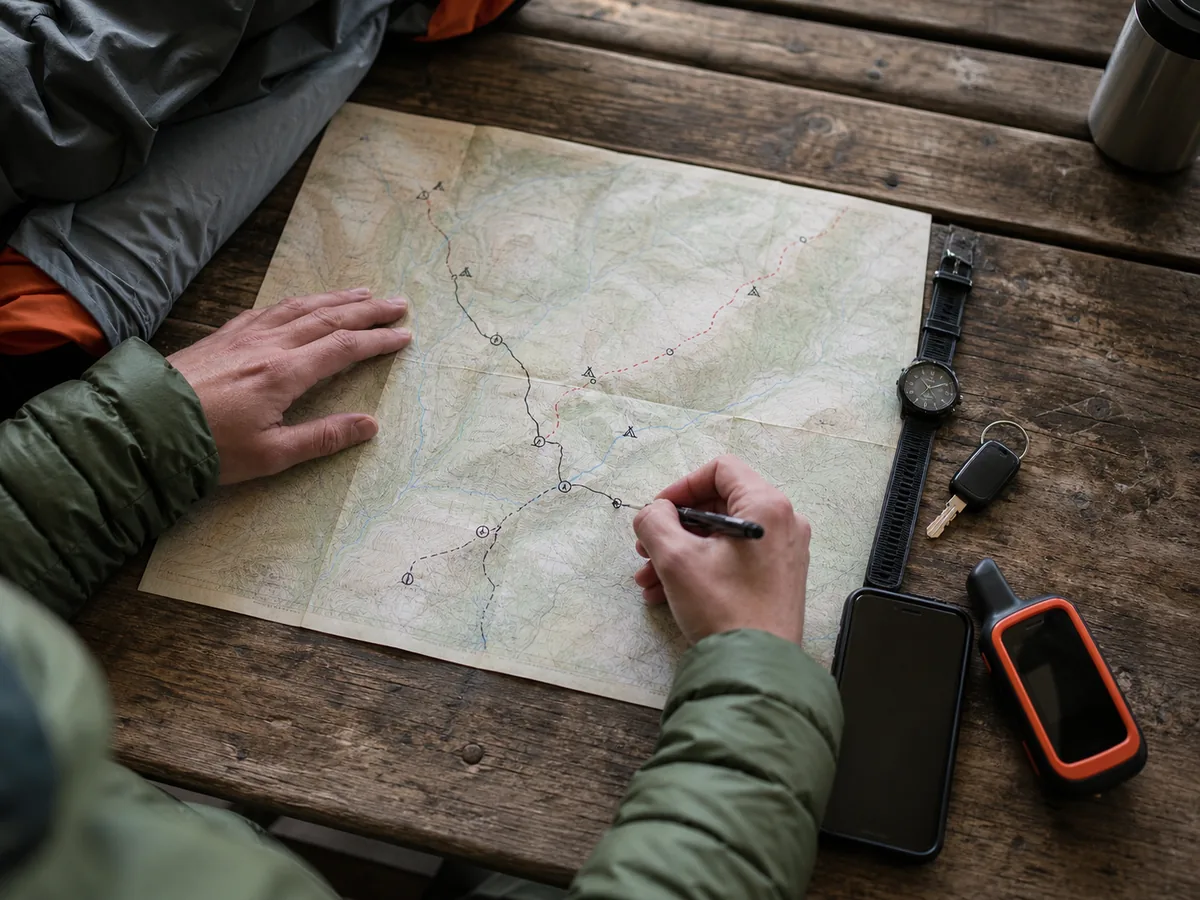
An NPS backcountry trip plan includes main and alternate itineraries, check-ins, travel method, route details, risk factors, and the people who should initiate a response.
The agency does not monitor an ordinary plan automatically. The chosen contact must know they own the phone call when the overdue threshold passes.
Update the plan when transport, route, camp, or timing changes. The solo backpacking communication chain needs an even tighter overdue response because no partner can notice a failed device or worsening judgment.
Make the plan actionable. A precise late time and named response are more useful than frequent casual messages.
Every group needs a second way to treat water
Clear water can contain bacteria, viruses, or parasites. The CDC advises treating water when its safety is uncertain and notes that no one method handles every contaminant in every setting.
Boiling kills germs when the water reaches the specified rolling boil time.
Portable filters vary by pore size and certification. Many common filters remove parasites but not viruses, while chemical disinfectants have their own organism limits and contact times.
Follow the exact instructions for the chosen equipment and the local risk.
| Method | Useful role | Important limit | Backup question |
|---|---|---|---|
| Boiling | Reliable germ control with enough fuel and time | Does not remove harmful chemicals or radioactive contamination | Is there enough fuel for drinking and meals? |
| Portable filter | Removes organisms within its tested specification | Some filters do not remove viruses or all bacteria | Can the group boil or disinfect if it breaks? |
| Chemical disinfectant | Small backup with stated contact time | Effectiveness varies by product organism temperature and cloudiness | Can cloudy water be clarified or filtered first? |
| UV treatment | Treats small amounts of clear water when used correctly | Cloudy water and failed power reduce reliability | Is another method available without electricity? |
| Carried water | Avoids treatment at the start | Weight rises quickly and capacity can still be too small | Where is the next verified source or exit? |
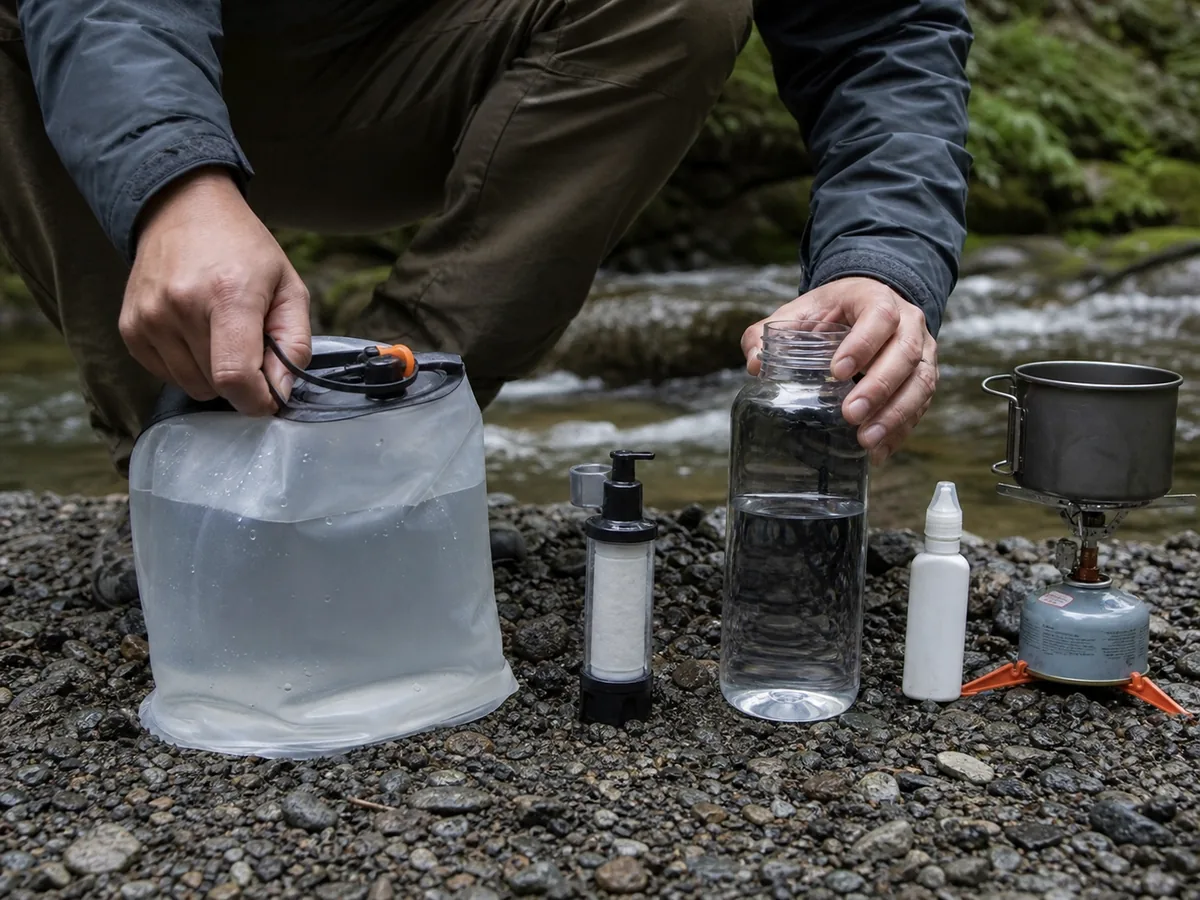
Carry enough capacity for the longest dry segment plus a realistic delay. A blue line on a map does not prove current flow or safe access.
Verify water with the responsible land manager and recent reliable reports, then keep a route-based water carry that does not depend on one uncertain source.
Prevent cross-contamination.
Mark the untreated container, keep its mouth and filter inlet away from the clean side, and use treated water for drinking, food, and tooth brushing. Water with a chemical or toxic contamination warning needs another source because boiling and normal disinfection do not make it safe.
The backpacking packing list should identify capacity, primary treatment, backup, and the route point where a missing source forces a return.
Capacity comes before treatment. A working filter cannot create water where the source is dry.
How do you stay found when a phone fails?
Navigation starts at the trailhead and continues at every junction, crossing, pass, camp, and change in trail character. Do not wait for the feeling of being lost.
Keep the phone useful with an offline map, protected battery, and power plan, but do not make it the only location system. A paper map and compass remain independent only when someone can orient the map, recognize terrain, and follow a bearing before stress arrives.
- Confirm the start point and direction before walking.
- Mark the next decision point and expected travel time.
- Look back after junctions so the return view is familiar.
- Keep one person other than the lead aware of the route shape.
- Stop after the first failed location check instead of walking to make the map fit.
- Name the last confirmed point before considering a backtrack.
- Retrace only when the return is safe and clear.
- Call for help when the group cannot locate itself or safely return.
The compass basics should be practiced on an easy known route. Skills learned from a screen at home are not yet a reliable backup in fog, darkness, snow, or dense forest.
If the route no longer matches the ground, stop the whole group.
Establish the last known point, compare the available evidence, and avoid wandering separately to search for signal or trail. Move only toward a safe confirmed point or away from an immediate hazard.
Stay found continuously. The last confirmed location is a resource that careless movement can spend.
When should weather stop you from entering exposed terrain?
Use the forecast to build a timing limit, not to promise the weather. Ask how long the group needs to leave a ridge, canyon, river corridor, snowfield, or other exposed ground after the first warning sign.
The National Weather Service states that no place outdoors is completely safe during lightning. If thunder is heard, leave elevated and open areas quickly and seek a substantial enclosed building or metal-topped vehicle when one is reachable.
A small tent, isolated tree, shallow cave, or rocky overhang is not safe lightning shelter.
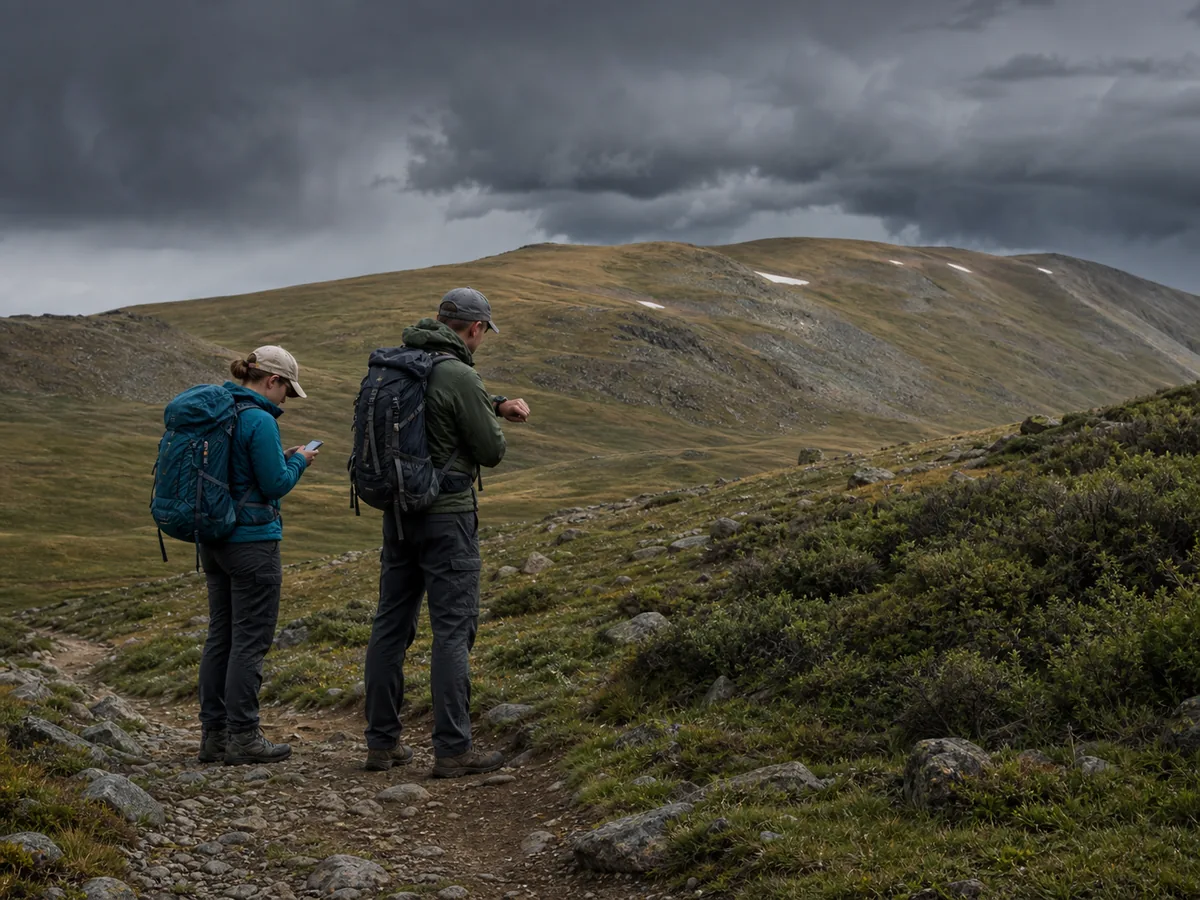
Heat, cold, rain, wind, snow, smoke, and rising water create different limits.
Hot travel raises water and cooling needs. Cold rain threatens hand function and dry insulation.
Heavy rain can change crossings and camps even when the storm falls upstream.
The wet backpacking system protects dry function, while the winter backpacking limits cover traction, liquid water, short daylight, and cold camp work. Use those controls before committing to specialized conditions.
Do not enter a crossing because it was easy yesterday. Depth, speed, footing, cold, and downstream consequences decide the current crossing.
Turn back when the safe method or exit is uncertain.
Leave before exposure closes. The right cutoff includes the time needed to reach better terrain.
What should you check before unpacking at camp?
Pause at the campsite boundary. Check dead or damaged trees, loose rock, drainage, flood evidence, tide or water changes, animal sign, existing durable surfaces, and the local separation rules for tents, cooking, and food storage.
Pitch on legal durable ground.
Protect the sleep system before opening food. Collect and treat enough water while there is light, then keep untreated containers distinct from clean ones.
Shelter
Choose legal ground and rig for the expected wind rain drainage and temperature.
Food storage
Put every food item trash cooking item toiletry and other attractant into the required local system.
Stove
Use outdoors on a stable surface away from flammable material and never inside a tent.
Water
Keep collection access clean and move treatment work to durable ground when rules allow.
Light
Place headlamps where everyone can reach them before darkness.
Exit
Know which direction and landmark begin the shortest safe departure.
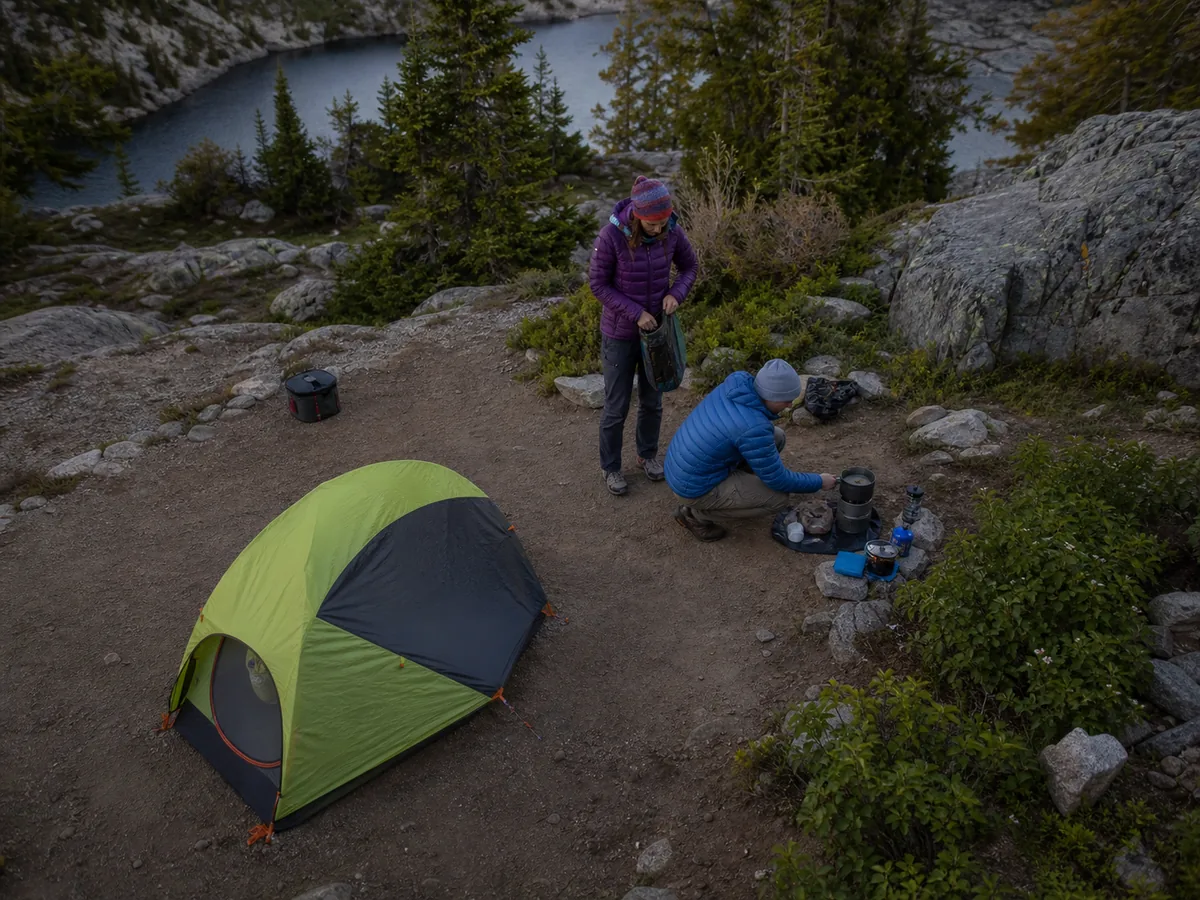
Follow the current land-manager food-storage method. A bear canister, locker, cable, vehicle rule, or other approved method is place-specific.
Never assume that a method accepted on one route is accepted on another.
The backpacking etiquette practices keep shared water, storage, durable ground, and quiet usable for other groups. The backpack loading sequence should make the shelter, rain layer, water treatment, first aid, and light available without emptying the pack.
Camp is a work site first. Complete the safety-critical jobs before comfort and social routines consume the remaining light.
Some warning signs should shorten the day on the spot
A warm patch on the foot, repeated toe strike, or slipping heel is cheap to fix while the skin is intact. Stop, dry the foot, smooth the sock, adjust lacing, and use the blister care you know before gait changes.
Watch the group, not only yourself. Repeated stumbles, silence, irritability, missed turns, poor food intake, unusual cold, and slow camp tasks can show that the original pace is no longer working.
- Ask each person about feet pain warmth food water and alertness at planned breaks.
- Set pace by the person losing function rather than the fastest walker.
- Treat a hot spot before the skin opens.
- Add layers before hands lose useful dexterity.
- Eat before low energy turns every task into a delay.
- Recheck location after repeated route doubt.
- Shorten the day when several small problems appear together.
- Use the nearest safe exit when a correction does not hold.
The common backpacking mistakes often begin when a group protects mileage after feet, water, weather, or attention changes. A lighter backpacking system can help only when it preserves the required function and still carries comfortably.
Run a short function check at every long stop and before the final push to camp. Ask each person to walk ten normal steps, drink, eat, name the next landmark, and report any hot spot, pain, chill, nausea, or unusual fatigue.
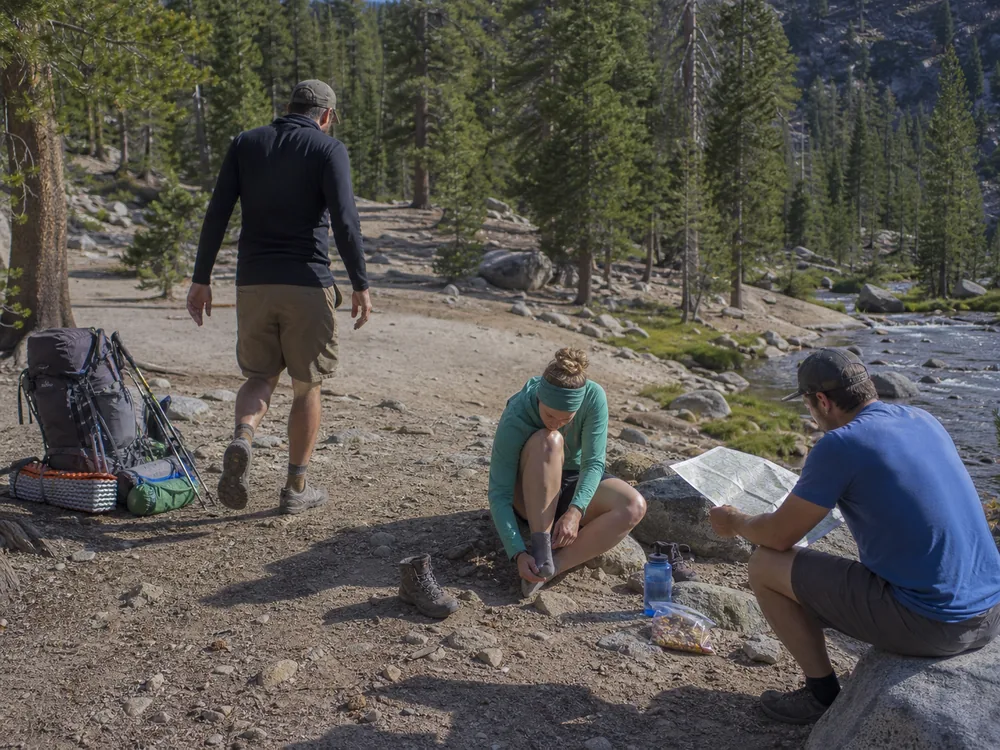
A foot problem changes the plan before it becomes a dramatic blister. Skin that feels hot or tender needs cleaning, drying, a smooth sock, and the proven protection carried for that spot.
Continuing until gait changes can move stress into the ankle, knee, hip, or the other foot.
Pace problems show up in the group gap. If the same person repeatedly falls several minutes behind, shortening each rest will not solve the cause.
Reduce the pace, move shared weight when that can be done safely, and choose the nearer camp or exit while daylight remains.
Attention deserves the same check. Missing two obvious turns, forgetting a routine treatment step, or struggling with a familiar buckle can mean cold, low food intake, dehydration, pain, or simple exhaustion is affecting decisions.
Correct one cause, then reassess after a short known segment. If normal walking, eating, warmth, or navigation does not return, change the route instead of testing the person on the next climb.
A useful safety check ends with a decision. Continue only when the group can still travel, think, treat water, build shelter, and reach the next safe place before conditions remove those options.
Fix function early. A schedule is easier to change than an injured foot, wet sleep system, or exhausted group after dark.
When should a backpacking group request emergency help?
Protect the group from the immediate hazard, establish the location, and check breathing, severe bleeding, warmth, shelter, and the ability to move safely. Use only first-aid skills you know.
Call local emergency services or activate SOS for a life-threatening emergency, a person who cannot be kept warm or sheltered, serious injury or illness, a location that cannot be safely resolved, or when safe self-evacuation is no longer realistic. Communicate early enough that battery, weather, or movement does not remove the option.
Build the first message around facts that change the response. Send the coordinates, how they were obtained, the time of the reading, the number of people, and a short description of the injury, illness, or missing capability.
Say whether the person can walk, remain awake, stay warm, drink, and follow instructions. Report immediate hazards such as rising water, lightning exposure, unstable rock, fire, severe cold, or a route that the group cannot safely retrace.
Describe the shelter and supplies already in use. Responders need to know whether the group has a tent, dry insulation, treated water, food, first aid, medication, and enough power for another contact.
Use coordinates from the most reliable available source, then repeat them slowly. Include the map datum or coordinate format when the device shows it.
A copied pin and a written number give the group two ways to catch a transcription error.
After contact, hold the reported position unless staying there creates a greater danger or responders direct movement. An unreported move can send help toward an empty location and spend battery on repeated location updates.
If movement is required, send the direction, destination, departure time, and reason before leaving. Mark the original point and record the route so the group can explain every change.
Protect the communication device from cold and water. Lower unnecessary screen use, keep one device available for the agreed contact time, and do not spend the remaining power on routine photos or messages.
The report should answer where, what, who, and what remains possible. Clear facts help responders choose equipment, access, timing, and whether the group should shelter or move.
- Stop the sceneMove only far enough to escape traffic falling rock flood fire or another immediate threat.
- Establish locationRecord coordinates landmarks route direction and the last confirmed point.
- Address immediate threatsUse trained first aid and protect airway breathing severe bleeding and temperature.
- Choose the responseCorrect a small problem exit on a known safe route or request emergency help.
- Send fixed factsReport location group size condition equipment weather and intended action.
- Support the waitKeep shelter warmth water light and communication ready while following dispatcher instructions.
Do not split the group casually.
If someone must travel for help, the decision needs known terrain, sufficient equipment, and a clear report. Often the safer response is to keep the group together and make the location easy to find.
The emergency device is not proof that the route is suitable. Test the device, know its coverage and controls, protect its power, and keep the outside trip plan current.
Communicate while you still can. Delaying a needed call does not make the group more self-reliant.
What should you check before restarting the next morning?
The next morning is not an automatic continuation. Check every person before the shelter and dry clothing disappear into packs.
Look at feet, pain, warmth, appetite, hydration, alertness, and normal walking. Count food, usable water capacity, treatment methods, dry insulation, fuel, light, navigation tools, and communication power.
| Morning evidence | Continue only when | Change the plan when |
|---|---|---|
| Feet and gait | Everyone walks normally after simple care | Pain swelling or altered stride persists |
| Shelter and insulation | Critical items remain dry and functional | Warmth or weather protection is degraded |
| Water and treatment | The next source and capacity remain credible | A source failed or the backup was used |
| Weather and route | Conditions fit the written limits | Exposure crossing or camp assumptions changed |
| Communication | Devices and outside plan remain usable | Power damage or timing removes the contact plan |
| Group judgment | People can explain the next segment and stop conditions | Confusion pressure or exhaustion controls the decision |
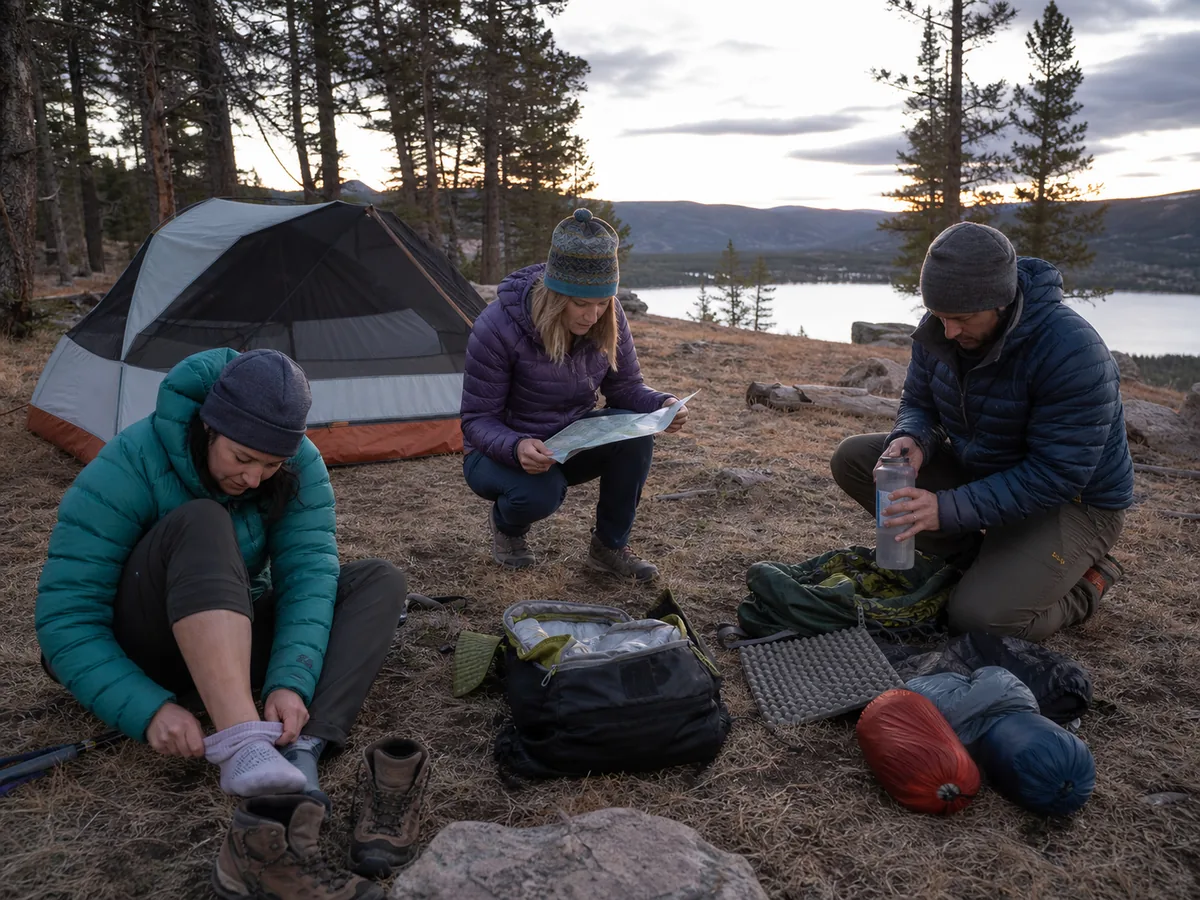
Choose the shortest safe exit when several systems are degraded. The backpacking with kids plan and dog backpacking plan require lower limits because adult reserve may be needed for care or load transfer.
Close the trip plan after reaching the exit. Then record which assumption failed first and change the next trip before memory turns the problem into a vague bad day.
Restart from evidence. The planned destination never outranks the group's current ability to reach the next safe place.
Sources
The National Park Service covers route research, permits, essentials, trip plans, hazards, and emergency preparation in its Trip Planning Guide. Its Backcountry Trip Plan lists main and alternate itineraries, check-ins, risk factors, vehicle details, and outside contacts.
The CDC explains why clear water can be unsafe and compares boiling, filtration, disinfection, and UV treatment limits: Water Treatment While Hiking and Camping.
The National Weather Service states that no outdoor location is completely safe during lightning and advises leaving elevated terrain when thunder is heard: Outdoor Lightning Safety.
Verify the exact place. Current access, permits, water, food storage, fire, weather, wildlife, waste, and emergency contacts come from the responsible land manager.
Step by stepPractical steps
- Name the route systems and stop conditions before departure.
- Leave a detailed itinerary, alternate, check-in, and overdue response with a trusted contact.
- Keep water, navigation, shelter, light, and communication usable after one failure.
- Correct changes in weather, pace, feet, attention, or camp timing while a simple exit remains.
- Call for help before safe self-evacuation or communication is lost.
- Run a fresh people, equipment, conditions, and route check every morning.
AnswersQuestions readers ask
What is the most important backpacking safety tip?
Set route-specific stop conditions before leaving and act on the first failed assumption. An early change to distance, camp, water, or exit preserves more options than extra emergency gear used late.
What should a backpacking trip plan include?
Include participants, vehicle, trailhead, route direction, camps, water, main and alternate itineraries, check-ins, expected return, overdue time, communication devices, and the agency or number the trusted contact should call.
Is a water filter enough for backpacking?
Not in every setting.
Filters vary in what they remove, and a broken filter needs a backup. Follow product instructions and local water risks, carry enough capacity, and use another source when chemical contamination is suspected.
What should I do if I become lost while backpacking?
Stop the group, record the last confirmed location, compare map, compass, GPS, signs, and landmarks, and retrace only when the return is safe and clear. Call for help when you cannot locate or safely return.
When should a backpacker activate SOS?
Use local emergency services or SOS for a life-threatening emergency, serious injury or illness, inability to maintain shelter or warmth, unresolved lost location, or when safe self-evacuation is no longer realistic.
Should I continue after a bad night at camp?
Only after a fresh check of gait, feet, warmth, food, water, treatment, shelter, weather, navigation, and communication. Use the shortest safe exit when several systems are degraded.