
How to Go Ultralight Backpacking Without Cutting a Needed Function
Measure the full load, remove unused overlap, compare the heaviest systems, preserve independent backups, and test each reduction before relying on it.
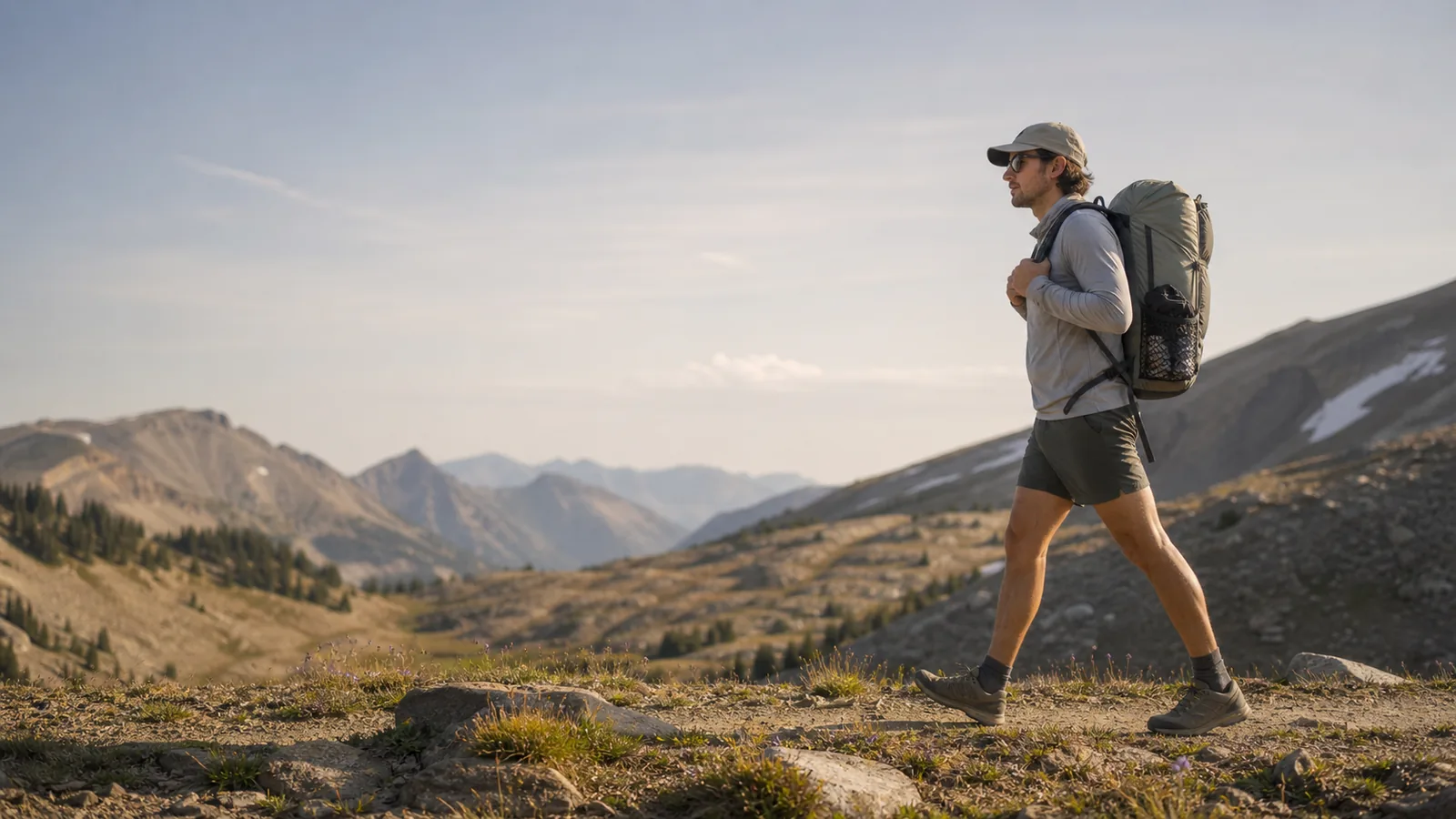
Go ultralight backpacking by weighing the complete first-day load, removing items that have no route-specific job, and replacing heavy systems only after you understand their warmth, weather, capacity, durability, and skill tradeoffs. Keep every function needed to stay sheltered, warm, hydrated, found, fed, and able to handle delay.
Going lighter has to improve something you can name
Ultralight backpacking should reduce the load you carry without removing a function the trip still needs. A lower number matters only when the finished system remains comfortable enough to carry and complete enough for the weather, water, camps, rules, and realistic delays.
Base weight usually describes carried gear without food, water, and fuel. It is useful for comparing equipment, but your legs move the total first-day load.
A long dry carry or mandatory food canister can matter more than the label applied to the base number.
There is no universal safe cutoff. A mild one-night route with a direct exit may support a smaller system than a cold remote trip, a family load, or a route that requires specialized equipment.
Lighter equipment can trade away structure, capacity, coverage, warmth, durability, or ease of use. Skills can reduce some equipment needs, but an unpracticed skill is not a weightless replacement.
Basic beginner backpacking skills should come before aggressive reduction. Learn shelter, sleep, water, food storage, navigation, repair, and camp routines with forgiving equipment first.
Protect function before numbers. The scale records mass, not the consequence of a missing system.
How do you measure a complete backpacking load?
Load the pack with the exact first-day food, water, fuel, required storage, clothing, and small items. Weigh the whole pack, then record categories so one large opportunity does not hide behind dozens of tiny objects.
- Weigh the first-day packInclude consumables and every item attached outside.
- Record base gearSeparate equipment that remains for the full trip.
- Record consumablesList food water and fuel with their starting and ending amounts.
- Record worn itemsShoes clothing poles and pocket contents still affect movement.
- Assign shared equipmentGive each shelter stove repair or first-aid item one named carrier.
- Mark every itemWrite its weight function last use and failure consequence.
- Sort the decisionsRemove unused items first compare overlaps second and consider replacements last.
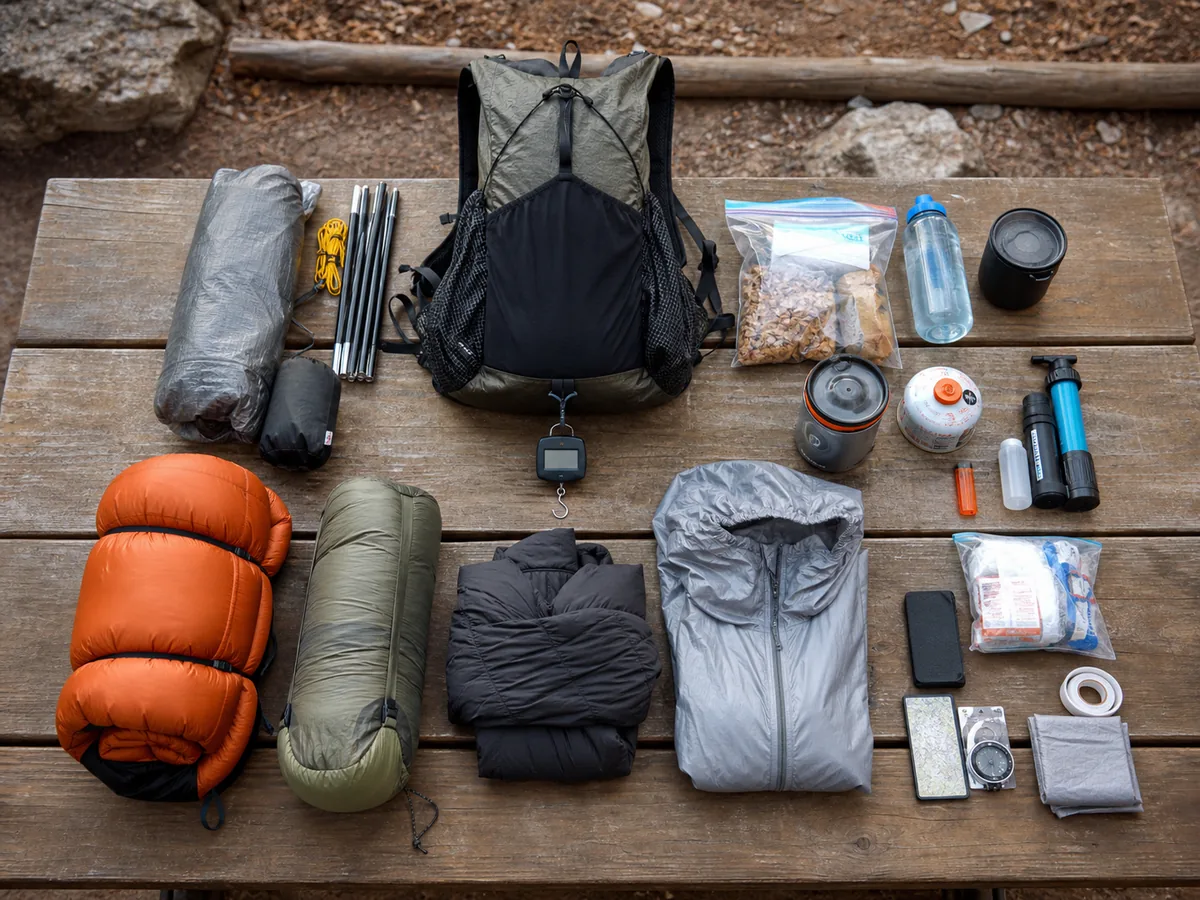
Do not hide mass by moving it into worn pockets. The body still accelerates shoes, clothing, poles, and carried electronics.
Category labels support comparison, not a loophole.
Use a simple note after each trip. Mark what was used, what remained untouched, what failed, what was difficult to reach, and what you wished had been stronger or warmer.
A written gear inventory record separates chosen, packed, and tested states so nothing untested reaches the trailhead. Testing loaded-pack balance then shows whether the reduced volume actually carries well.
Measure before replacing. The heaviest problem may be water, excess food, or a duplicated system rather than the item you planned to buy.
Which backpacking systems offer the largest weight savings?
Pack, shelter, sleeping bag or quilt, and sleeping pad often offer the largest equipment reductions. They also interact.
A smaller shelter may need better site selection. Less sleep insulation may require more clothing.
A frameless pack may carry well only after total mass and volume are already low.
| System | Possible reduction | Tradeoff to examine | Proof before relying on it |
|---|---|---|---|
| Pack | Less frame padding pockets or fabric | Lower load comfort capacity or durability | Carry the finished load over representative terrain |
| Shelter | Smaller footprint fewer poles or simpler design | Weather coverage condensation site skill or bug protection | Pitch in wind and rain close to an exit |
| Sleep insulation | Lighter fill design or temperature range | Warmth moisture control and draft management | Sleep in expected conditions with the full clothing system |
| Sleeping pad | Lower mass or shorter dimensions | Ground insulation comfort and puncture margin | Test on the actual surface type and low temperature |
| Cooking system | Fewer pieces or no-cook plan | Food acceptance water use fuel backup and cold comfort | Eat the planned menu on a rehearsal |
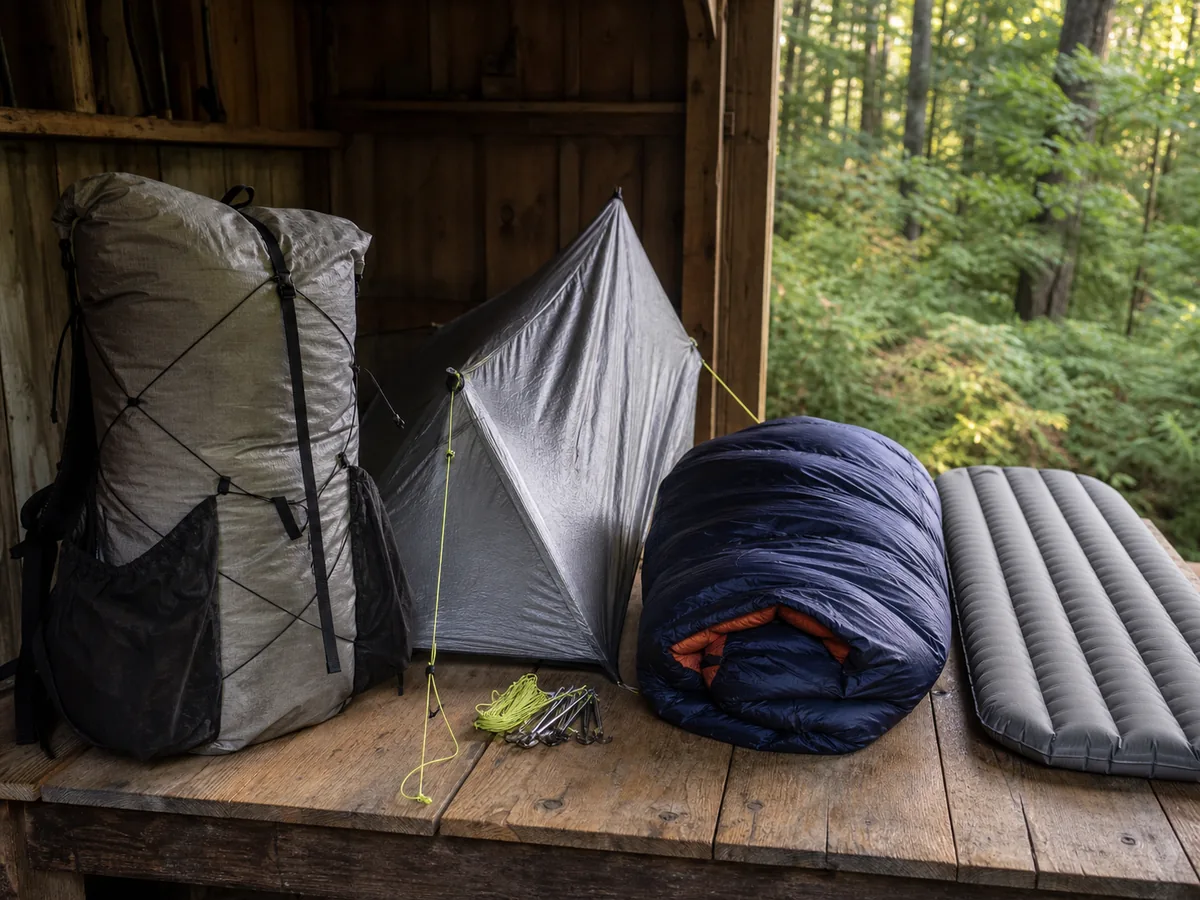
Change one major system at a time. Replacing pack, shelter, and sleep gear together makes it hard to know which change caused poor carry, a cold night, condensation, or slow setup.
Do not choose the smaller pack first. Reduce and prove the load in the current pack, then compare the final mass and volume with the maker's load range and capacity.
A winter backpacking load needs more insulation, fuel, liquid-water protection, and traction than a fair-weather list. That necessary mass should be accepted before the trip.
Compare systems, not products. A light item is useful only inside a complete shelter, sleep, food, or carry system.
Duplicates are the cheapest weight to lose
Some duplicates are accidental. Three knives, spare clothing with the same job, oversized toiletries, and unused packaging can leave without weakening the route.
Other redundancy is deliberate. Two water methods that fail differently, protected ignition, independent navigation references, extra light power, and repair materials for critical equipment may preserve the exit after one failure.
Pros
- Remove an item that has no named use on the planned route.
- Share one tested group item when everyone knows the carrier and separation plan.
- Use one object for two compatible jobs when both jobs are not needed at the same time.
- Keep a backup that fails independently for a critical function.
Cons
- Count two electronic functions as independent when they use the same phone and battery.
- Remove weather protection because the forecast looks mild at one update.
- Share one water treatment method without a plan for group separation or failure.
- Ask one small item to perform two jobs simultaneously at camp.
For each proposed cut, write the failure it was handling.
If the answer is none, removal is easy. If the answer is wet sleep insulation, lost location, unsafe water, or inability to repair shelter, identify the remaining method and prove it.
Group equipment needs a separation rule. If the person carrying the only shelter, filter, or stove leaves early, the remaining group should not lose a critical function.
A solo backpacking margin cannot rely on group sharing and therefore needs a different minimum. A child backpacking load may need adult reserve for warmth, food, care, and transferred weight.
Cut overlap, not recovery. A comfort duplicate and an independent safety method are not the same thing.
How much do food, water, and fuel change the starting load?
Mark every route segment between reliable water sources. Use current land-manager information and recent credible reports, then carry enough capacity for the longest gap and a realistic delay.
Water is heavy and changes through the day. That makes verified source planning valuable, but it does not justify assuming a seasonal creek flows or treating a contaminated source with an unsuitable method.
| Consumable | Weight-control decision | Unsafe shortcut | Better proof |
|---|---|---|---|
| Water | Match capacity to verified dry segments | Carry too little because a map shows blue | Confirm sources and retain a return reserve |
| Food | Test portions and remove repeated leftovers | Remove the delay reserve | Rehearse the menu and keep reserve separate |
| Fuel | Measure real meal and boil use | Carry only the calculated perfect amount | Test in expected wind and temperature with margin |
| Packaging | Repackage bulky food safely | Remove instructions or mix unknown contents | Label portions water needs and cooking time |
| Scented storage | Make every attractant fit the required method | Assume overflow can remain in the pack at camp | Pack the canister locker bag or other approved system at home |
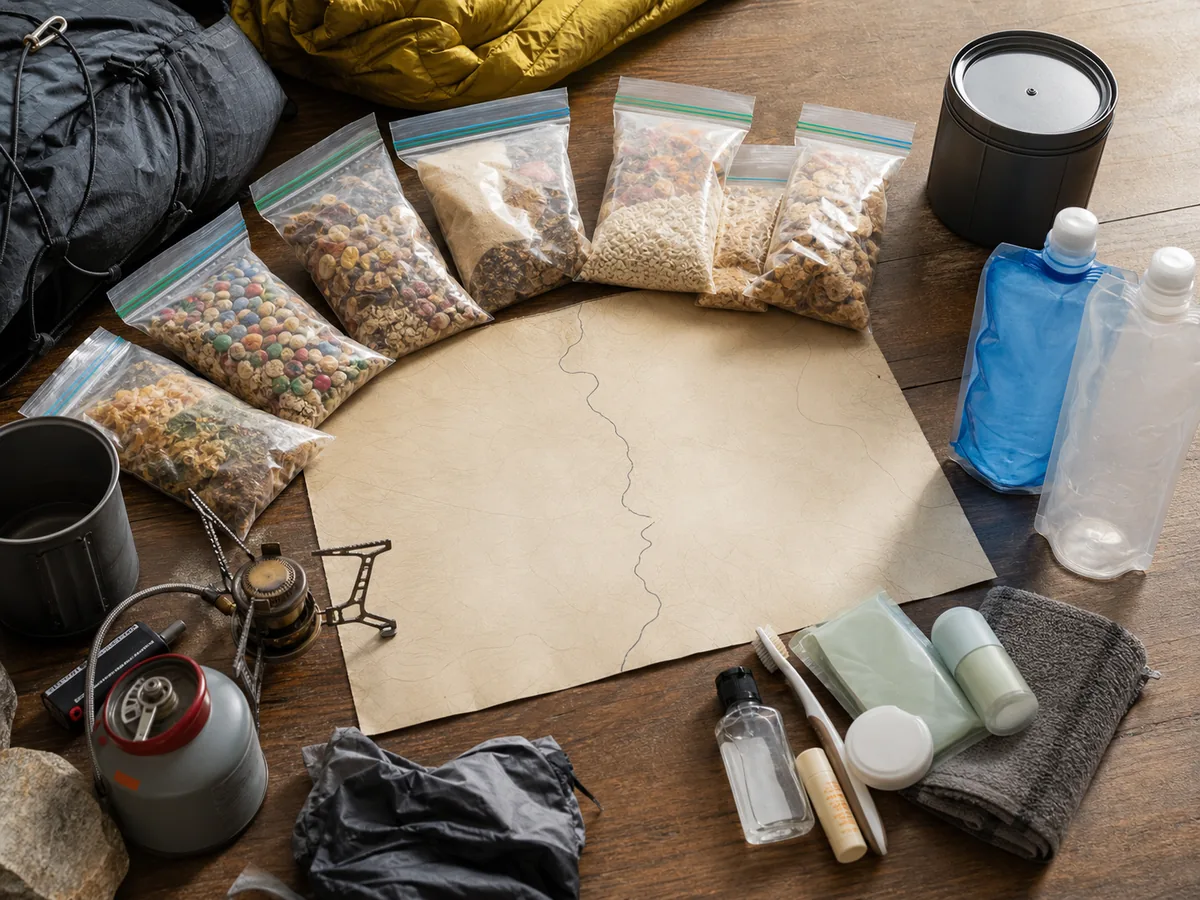
Meals affect both food and fuel.
No-cook food can remove stove weight but may reduce appetite or cold-weather comfort for some people. Dehydrated food reduces food mass but needs treated water and fuel.
The route water calculation shows what this trip actually consumes, which is rarely the universal daily number people copy. A steady multi-day food rhythm does the same job for calories, matching intake to walking hours instead of a flat weight per day.
Consumables follow the itinerary. The lowest base weight does not help when food, fuel, or water assumptions fail.
Weather and terrain set a floor you cannot cut through
Start with the lowest expected temperature, wind exposure, rain duration, surface, insect pressure, water gaps, and time from a simple exit. Those facts set the minimum protection before the target weight enters the discussion.
Minimal shelters demand site selection and pitch skill. A small tarp may work well below tree line on suitable ground and fail to match a fully exposed or insect-heavy route.
Test the exact shelter rather than transferring confidence from another design.
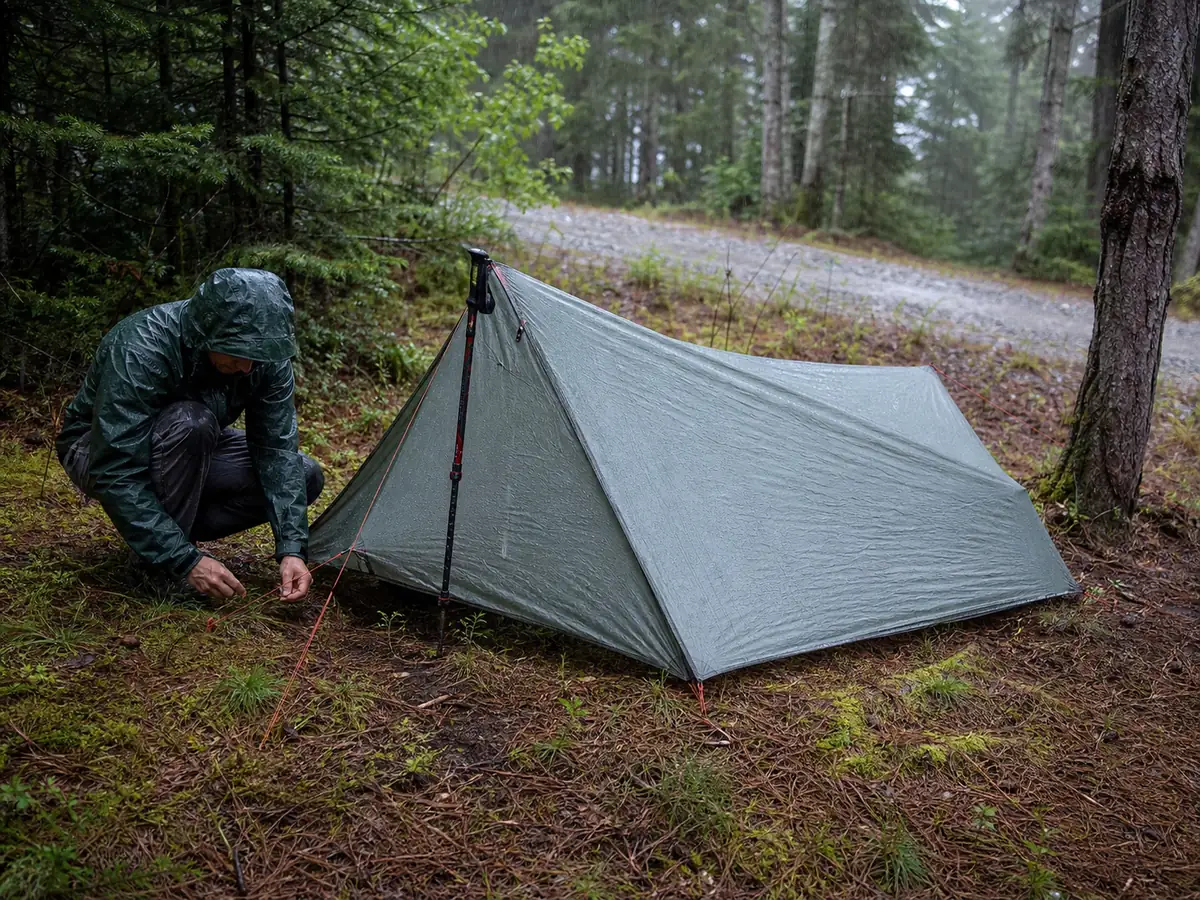
Cold and wet conditions make small errors more expensive.
Gloves slow knots.
Water treatment takes longer. A damp quilt loses useful performance.
Short daylight compresses camp work.
Wet-weather pack protection should veto a reduction that leaves no dry clothing or sleep insulation. The backpacking exit thresholds should also remain possible with cold hands, low light, and a tired group.
Leave No Trace responsibilities remain. A light kit still needs the legal waste method, approved food storage, durable surface plan, wildlife controls, and current fire compliance.
Conditions set the floor. A weight target cannot repeal weather, terrain, law, or the needs of the group.
When should you switch to a smaller backpack?
Use the current pack to test the reduced system. Measure total first-day mass and the volume after food, water, insulation, and required storage are inside.
Light packs may use thinner fabrics, less padding, fewer pockets, and little or no frame. Those features can work when the load stays within the maker's range and the packing method gives the bag enough structure.
Load range
Compare the full first-day mass with the maker's stated limit.
Volume
Make sure food and insulation fit without exterior overflow.
Frame
Decide whether the finished load needs rigid transfer to the hipbelt.
Access
Confirm water weather layers navigation and food remain reachable.
Durability
Match fabric and hardware to brush rock weather and trip length.
Required storage
Pack the exact bear canister or other mandatory container before choosing volume.
A foam pad can add structure in some frameless packs.
Soft items can prevent hard pressure. These methods do not increase the safe load rating or fix an overloaded bag.
Borrow or rent when possible. A test carry is more informative than comparing empty-pack weights.
Shrink the load first. Buying a small pack cannot force a large system to become suitable.
How do you test one weight reduction at a time?
Begin close to home or a direct exit. Set up the changed item with the hands, light, weather, and fatigue expected on the trip.
- Change one systemKeep the rest of the proven kit stable so the result has a clear cause.
- Practice at homePitch shelter inflate the pad prepare food treat water and complete repairs.
- Take a loaded walkUse the real first-day mass on similar climb descent and footing.
- Sleep close to an exitTest warmth comfort condensation and night access in controlled conditions.
- Add representative weatherUse safe wind rain or cold that reveals handling limits without trapping the group.
- Record the resultNote sleep warmth food water setup time unused items repairs and next-day movement.
- Repeat before remotenessUse the same system successfully before increasing distance or exposure.
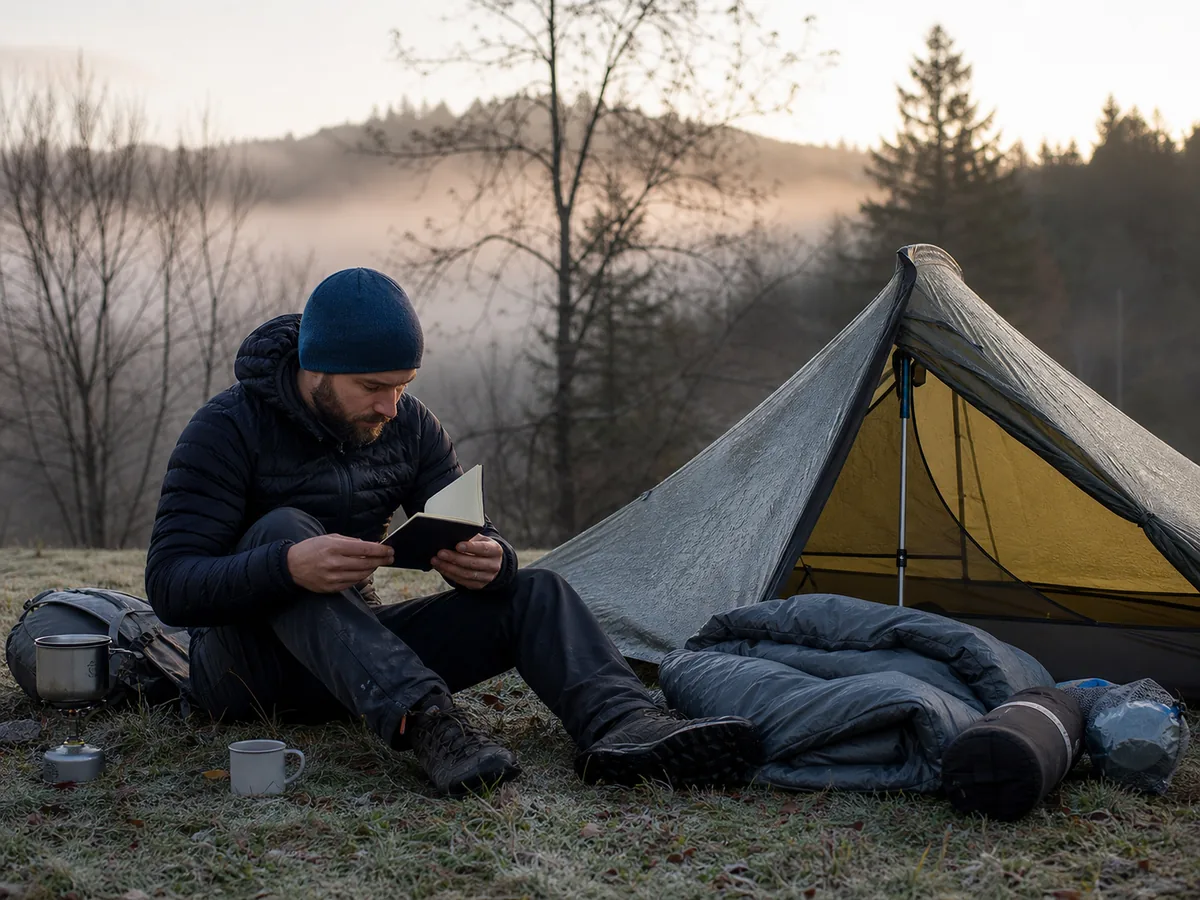
Do not count an item as unused when good planning prevented its use.
Rain gear on a dry trip, first aid, repair materials, and emergency communication have conditional jobs. Evaluate the probability and consequence before removing them.
Loaded-pack training can reveal whether the lighter system improves pace and recovery. Normal walking recovery signals keep a lower pack number from hiding poor gait or an overly hard route.
Prove each reduction. A successful shopping decision is not the same as a successful night outside.
When is an ultralight setup the wrong tool?
A conventional supportive pack and extra margin are rational when skills are new, weather is severe, mandatory equipment is bulky, a dependent person needs backup, or the route offers few clean exits.
- This is the first overnight with the shelter sleep or water system.
- A bear canister or specialized equipment controls volume and load shape.
- Cold wet wind snow or high exposure reduces the margin for error.
- An adult may need to carry a child's dog’s or injured partner's equipment.
- The group cannot yet pitch the shelter or treat water reliably under stress.
- The route has uncertain sources long dry carries or no easy exit.
- The light pack would exceed its stated load range on day one.
- Removing more weight would delete an independent critical backup.
Carry the equipment that makes the trip manageable now. Skill, route knowledge, and proven systems can lower the load later.
A dog carry-out plan includes water, food, paw care, restraint, and a tested way to move the animal. Those responsibilities may raise rather than lower the needed mass.
Use the right load for today. A heavier proven system can be the more efficient choice when it prevents delays, cold, or a failed carry.
What function does each weight saving reduce?
Record the mass before and after each proposed change. Then write what capability becomes smaller, slower, harder, or less reliable because the lighter option earned that saving somehow.
A lighter shelter may save substantial weight but need a smaller site, tighter pitch, or more careful condensation control. A lighter pad may trade comfort, coverage, puncture margin, or ground insulation.
The useful question is not whether the tradeoff exists. Ask whether you can manage it on this route with your current skill, weather margin, and exit options.
Put high-consequence losses above easy comfort losses. Removing a camp pillow is easy to reverse with spare clothing, while removing required water capacity cannot be fixed on a dry segment.
Consider how often the lighter choice asks you to perform perfectly. A shelter that works only with the ideal site and exact stake angle carries a larger skill cost than one that tolerates a rough setup.
Time is part of the cost. A no-cook menu may save stove and fuel mass, but a minimal shelter that takes longer to pitch in rain can consume the daylight and warmth you expected to save.
Durability matters over the complete trip rather than in the gear room. Thin fabric rubbing against rock, brush, hardware, or an exterior pack attachment can turn a small mass saving into a repair that slows the whole group.
Use a simple three-part note for each cut. Record the weight saved, the function reduced, and the test that proves the remaining method is enough.
Reject a cut when the test is vague. "I probably will not need it" is not proof for shelter coverage, water treatment, light, navigation, medicine, or the ability to repair a critical system.
A good saving has visible proof. You should be able to name both the lost margin and the test that makes the loss acceptable.
One small part can disable an entire system
Do not judge importance by mass alone. A tiny cap, gasket, valve tool, patch, battery, cord lock, or connector can control equipment that weighs far more.
Inspect every dependent system before removing its small parts. The water filter needs the pieces that seal it to the chosen bottle or reservoir, and the pad repair needs adhesive that works with that exact material.
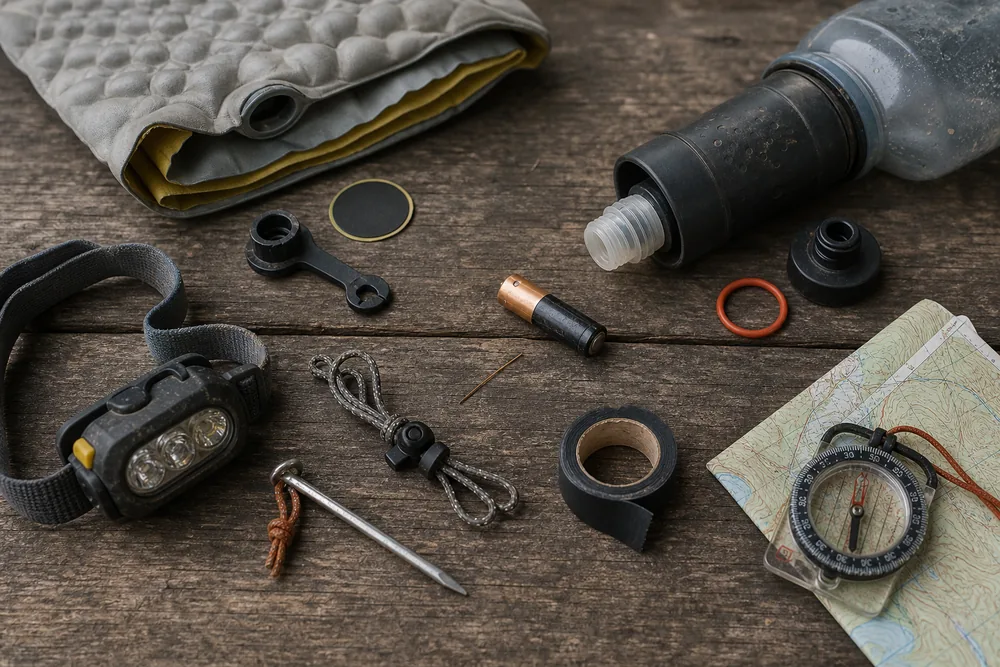
Shelter stakes are another example. Fewer stakes may work for a calm test pitch, but the actual shelter design may require more anchor points when wind changes direction or soil holds poorly.
Navigation methods need independent power and knowledge, not merely several apps on one phone. A map saved inside the same dead device does not back up the primary map.
Light follows the same rule. A phone flashlight, navigation app, camera, and emergency contact all depend on one battery, so counting them as four separate tools creates false redundancy.
Label repair pieces that are easy to confuse. A valve adapter, spare O-ring, or pole sleeve is useful only when the group can match it to the failing item in low light.
Store these control parts where they remain dry and findable. Saving one stuff sack is poor value if loose repair pieces disappear into food packaging or the bottom of the pack.
After every trip, replace used tape, patches, batteries, fuel, medicine, and water-treatment supplies. A light kit loses its margin quickly when the tiny backup is present on the list but empty in the pack.
Protect the control pieces. Their weight is small, but their failure can remove water, shelter, sleep, light, or repair capacity from the trip.
Which ultralight change should you pay for first?
No-cost changes come first. Remove unused packaging, empty containers, duplicate comforts, and items that never received a route-specific job.
Share proven group equipment with a separation plan.
Next, improve organization. A smaller food volume, better daily portions, or fewer stuff sacks can reduce bulk without replacing a shelter or sleep system.
| Action order | Cost | Useful result | Stop condition |
|---|---|---|---|
| Remove unneeded item | None | Lower mass and simpler packing | A required function loses its method |
| Repackage and resize | Low | Less bulk and fewer leftovers | Instructions safety or food storage become unclear |
| Repair or modify proven gear | Low to medium | Extends use and may reduce extras | The change weakens reliability |
| Replace one heavy system | Medium to high | Meaningful mass or volume reduction | Tradeoff is untested or moves failure elsewhere |
| Buy the smaller pack | High | Fits the proven reduced system | First-day load exceeds comfort or maker limits |
Prioritize a replacement that solves two known problems, such as excessive mass and excessive volume, without creating a larger weather or capacity gap. Keep the old system until the new one passes its rehearsal.
Reweigh the complete first-day load after every major change. The useful endpoint is a kit you understand, can carry, and can operate when conditions are less convenient than the gear room.
Spend on a known problem. The scale should confirm a proven system change, not start the decision.
Sources
REI describes the major pack, shelter, sleeping bag, and pad opportunities along with reduced structure, capacity, and load-limit tradeoffs: Ultralight Backpacking Basics. Its ultralight packing method covers soft bottom items, dense weight close to the spine, and using a pad to add structure in some packs.
The National Park Service Ten Essentials and Trip Planning Guide identify the navigation, shelter, water, food, light, first-aid, repair, weather, and planning functions that a lighter kit still must provide.
Leave No Trace explains the planning, durable-surface, waste, wildlife, fire, and consideration duties that remain with a smaller load: The 7 Principles.
Lighter is a tested outcome. It is not permission to leave a required job undone.
Step by stepPractical steps
- Weigh the complete first-day load and record each item's function.
- Remove items with no route-specific job and examine overlap without deleting independent critical backups.
- Compare the pack, shelter, sleep insulation, pad, and cooking system one change at a time.
- Use verified route segments to size food, water, fuel, storage, and delay reserve.
- Test every reduction at home, on a loaded walk, and during a controlled night before a remote trip.
- Choose the pack only after the lighter system's total mass and volume are proven.
AnswersQuestions readers ask
What counts as ultralight backpacking?
There is no universal number that makes every trip ultralight. Use base weight for equipment comparison, but judge the real result by total first-day load and whether route-specific shelter, warmth, water, food, navigation, and emergency functions remain intact.
What should I lighten first?
Measure first. Remove unused items and accidental duplicates, then compare the heaviest systems: pack, shelter, sleeping insulation, and pad.
Change one system at a time so you can test the tradeoff.
Should I buy an ultralight backpack first?
No. Reduce and prove the complete load in your current pack, then choose capacity, frame, fabric, and load range for the finished first-day mass and required food storage.
Is ultralight backpacking safe for beginners?
Beginners should first prove shelter, sleep, water, food storage, navigation, repair, and camp routines on a forgiving route. Reduce weight gradually and test each change near a direct exit.
Which backpacking items should never be removed?
Keep every function the route requires. The exact item can change, but do not remove needed navigation, weather protection, sleep warmth, water treatment and capacity, food, light, first aid, repair, communication, or required storage without a proven alternative.