
Common Camping Mistakes Begin Before the Visible Problem
Trace cold beds, rushed setup, wildlife visits, unsafe fires, and late checkout to the first signal and the cheapest available correction.
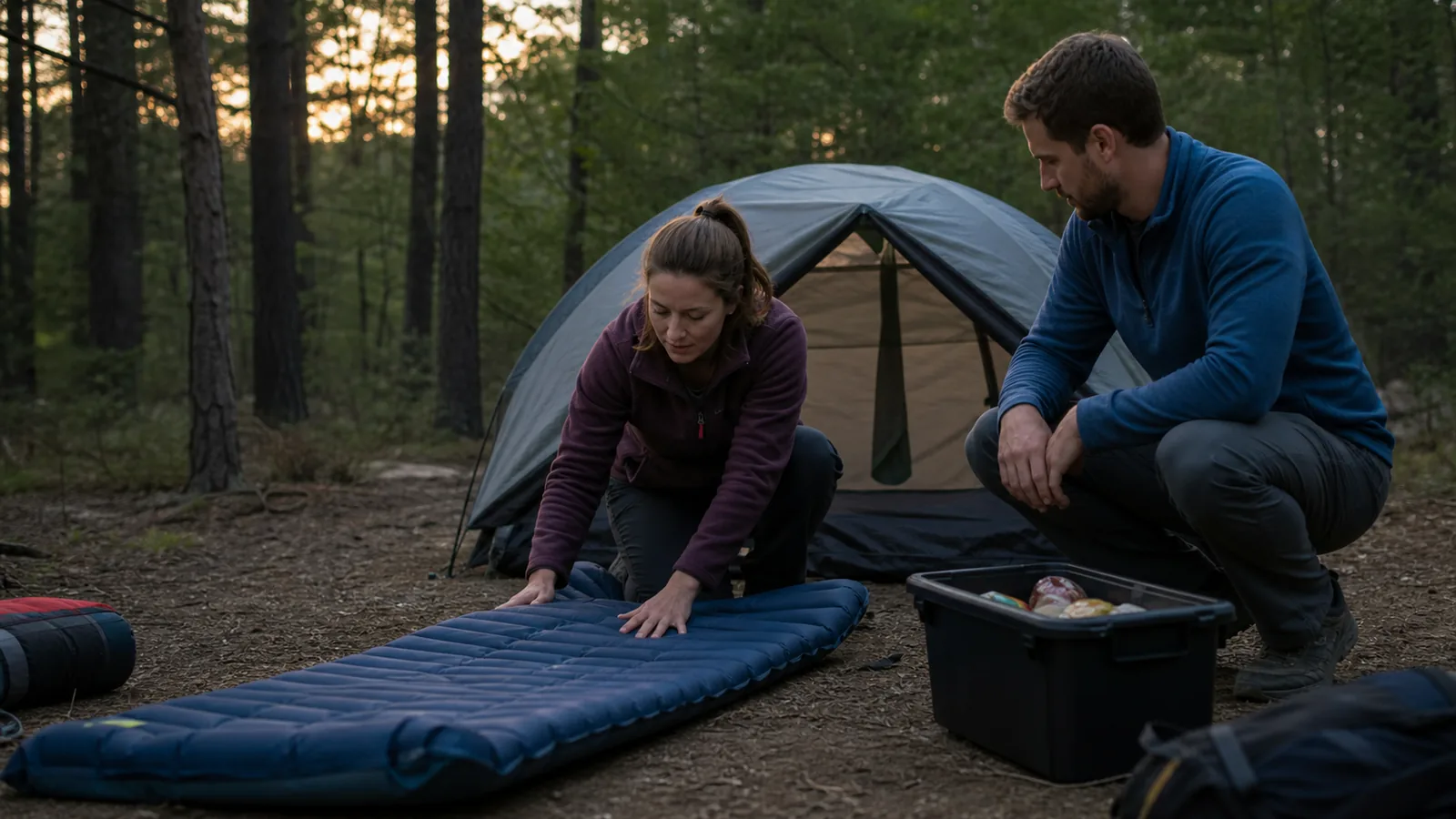
Common camping mistakes develop in chains. A late departure compresses setup, a missing pad becomes a cold bed, and one unsecured scented item can bring wildlife into camp, so find the earliest signal and make the least costly correction while daylight, transport, and dry gear remain available.
A camping mistake is most useful when you can name four points: the early choice, the first visible signal, the cheap correction, and the later consequence. Waiting for the consequence turns learning into recovery.
- Early choice
- The decision that starts the chain
- First signal
- The first fact you can observe
- Cheap correction
- The smallest action that still breaks the chain
- Late consequence
- The problem that appears after options shrink
This approach avoids blaming a camper for being new. It shows exactly when to leave earlier, move the tent, add ground insulation, secure food, simplify dinner, or cancel the activity.
Correct the first signal. The visible problem is often several decisions late.
Camping mistakes announce themselves before they bite
Take a cold first night. You meet the outcome in your sleeping bag after midnight, but the chain may begin with an unchecked forecast, an unsuitable pad, damp clothing, or a shelter pitched where water collects.
Each earlier fact offers you a cheaper correction.
The same model applies to food.
Wildlife at the tent is a late consequence. The earlier signals were an unknown storage rule, a cooler left out, crumbs under the table, or toiletries forgotten in a day bag.
Diagnosis depends on the camping activity context around the problem. A developed site, walk-in pad, dispersed camp, and winter site can produce the same outcome through different causes.
Your correction has to match the actual access, facilities, weather, and land rules.
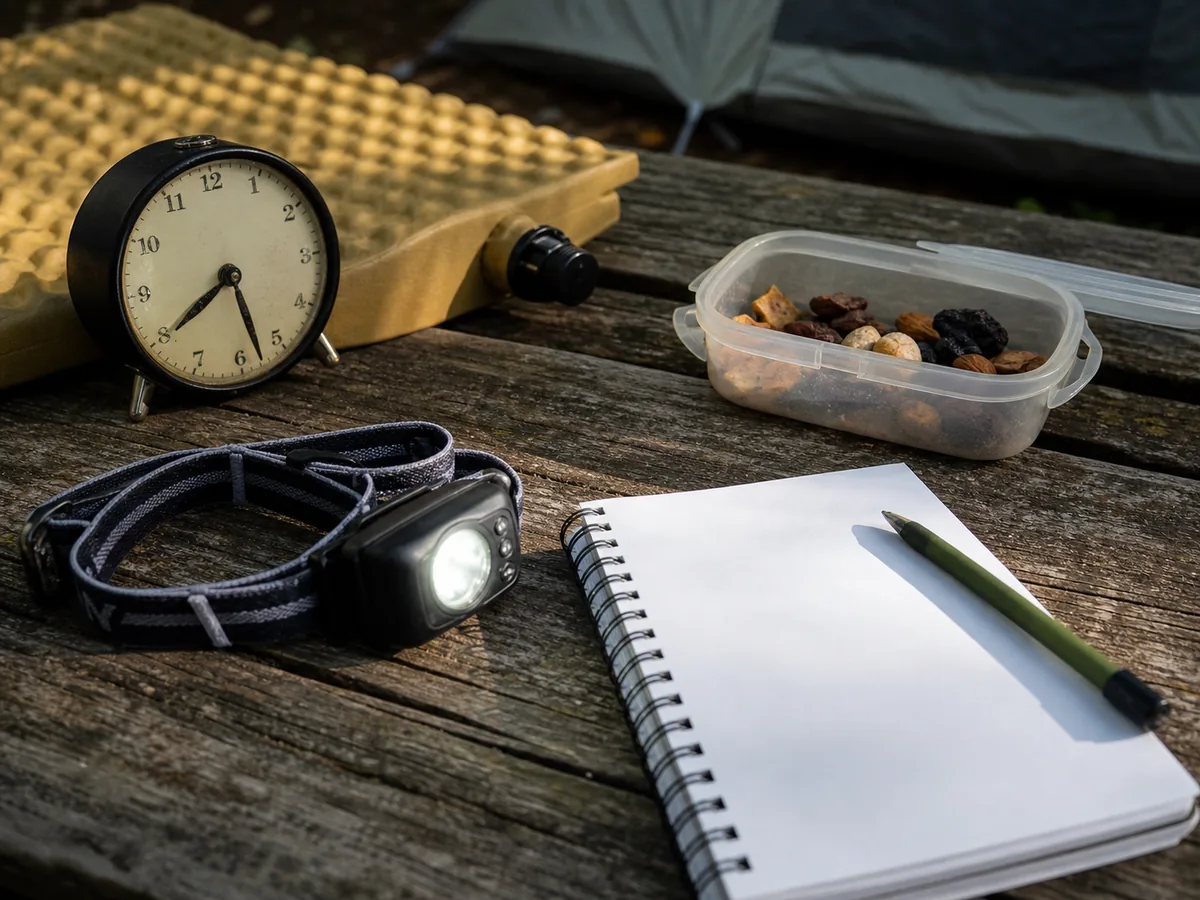
Name what changed rather than saying the trip “went wrong.” Was the drive longer, wind stronger, pad soft, water unavailable, or camper unusually tired?
A specific observation produces a specific next action.
The first camping plan is where the assumptions that can change get recorded. The plan becomes useful when it shows which change requires a smaller trip.
Look one step upstream whenever a problem seems sudden.
Why does arriving late create more campsite problems?
A delayed departure consumes driving time and setup light. The group then tries to pitch shelter and cook dinner during the same remaining window.
Missing parts become harder to find, site hazards are less visible, and people grow colder while standing still.
- Notice the delayCompare the new arrival time with sunset and check-in limits.
- Protect shelter timeRemove the optional stop activity or complex meal first.
- Use the fallbackChoose the prepared closer site or alternate accommodation when setup light is gone.
- Inspect before unloadingKeep enough light to look overhead and check drainage fire and traffic conflicts.
- Prepare for darknessPut headlamps on people before light fails rather than in a buried bin.
The cheap correction is rarely “set up faster.” It is leaving earlier or reducing the evening before the vehicle reaches camp.
A beginner trip should not depend on every traffic and food stop taking the minimum time.
Set two arrival thresholds while you are still planning. The first removes optional activities and switches to the simplest meal.
The second activates the alternate site or accommodation because there is no longer enough useful light to inspect and build camp safely.
Keep headlamps on people rather than loose in a shared bin.
Darkness can arrive while the vehicle is open and equipment is spread across the site. Each person should know where footwear, light, and a warm layer will remain overnight.
If you arrive late, put up shelter, sleeping gear, required food storage, water, and light. Skip the fire and simplify dinner.
The beginner camp order protects those tasks before recreation.
Shorten the evening when daylight shrinks. Do not ask the same plan to fit a smaller window.
Why can a cold night start beneath your sleeping bag?
Insulation beneath the body compresses inside a sleeping bag. The pad must slow heat loss to the ground.
A thick-looking bag cannot correct a leaking or unsuitable pad by itself.
Moisture creates another chain.
Wearing damp activity clothing to bed transfers water into insulation. Closing every vent can increase condensation, while pressing the bag against a wet tent wall can damp its loft.
| Mistake | Early signal | Cheap correction |
|---|---|---|
| Pad missing or losing air | Hips or shoulders reach cold ground | Repair replace or use the vehicle exit before bedtime |
| Bag outside its useful range | Forecast low is below tested comfort | Add a suitable tested system or cancel |
| Damp clothing enters bed | Base layers feel cool wet or sweaty | Change into the protected dry reserve |
| Tent ventilation closed | Moisture collects on walls early | Use designed vents while keeping rain out |
| Sleep gear unpacked late | Bag and pad remain compressed near bedtime | Build the bed during daylight after shelter |
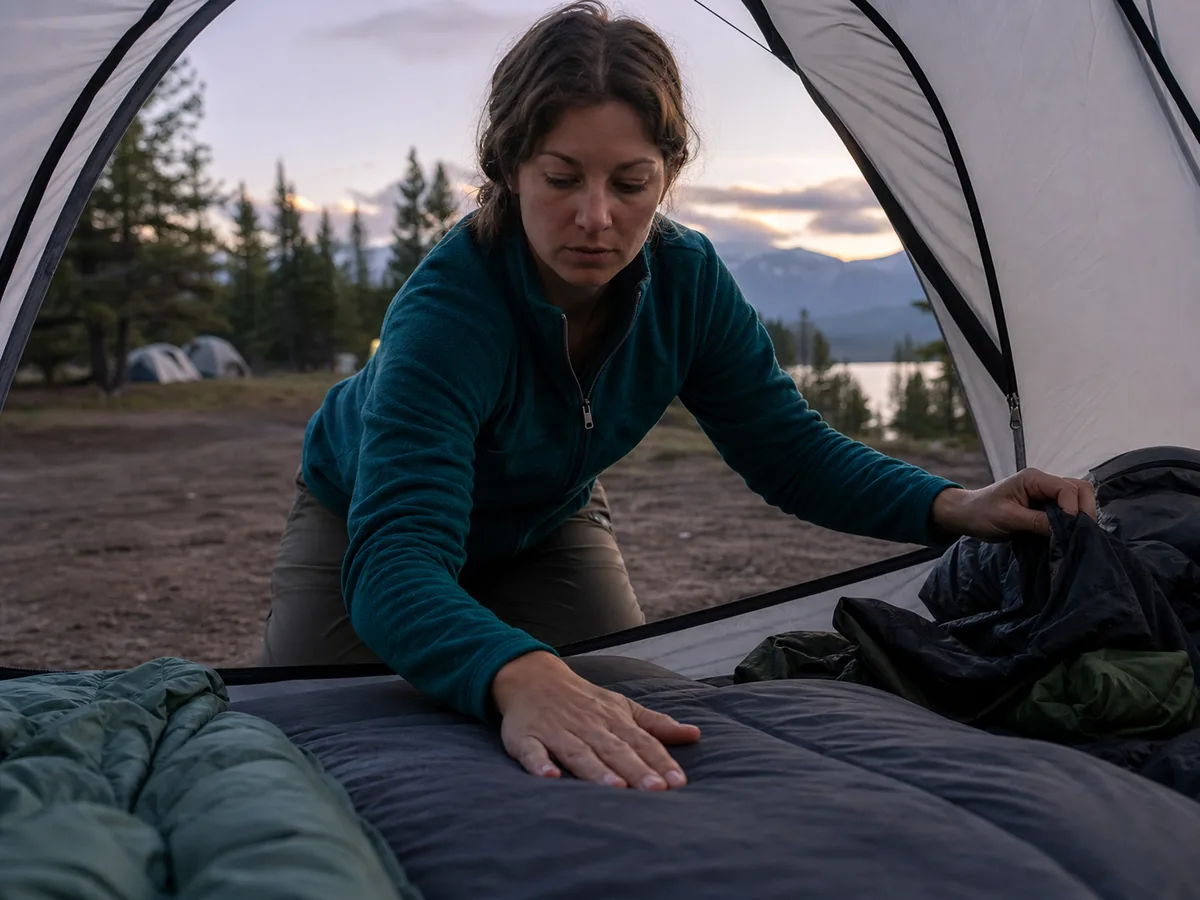
Test the entire sleep system before you leave. Inflate the pad, lie on it, check the fit, and inspect the bag.
Treat the expected overnight range as a condition you assess, not a promise that any rating guarantees you comfort.
Check the pad again after it has carried weight for several hours.
A slow leak can look fully inflated during setup and reveal itself only near midnight. Pack the compatible patch, know the repair surface requirements, and keep a low-consequence exit for an unrepairable failure.
Cold air can also shrink pad volume without a puncture. Diagnose contact with the ground, valve condition, and continued pressure loss before assuming every softer pad is damaged.
A cold-night sleep check should happen before discomfort becomes persistent shivering, fumbling, confusion, unclear speech, or unusual drowsiness.
Those warning signs shift the night into hypothermia response, so warm the person and seek appropriate help. That is no longer a bedding review.
Check beneath and around the sleeper before adding random layers on top.
How do kitchen mistakes reach the sleeping area?
One unattended scented item can defeat an otherwise careful camp. Food, trash, toiletries, pet food, cooking oil, coolers, and dirty dishes may all need approved storage under local rules.
Close containers while you are cooking instead of waiting until bed.
Catch crumbs, seal trash, clean the table, and place used dishes in the approved storage location. Never feed wildlife, even when an animal already approaches people.
Fire has a similar chain. The early campfire safety choice is checking current restrictions and wind before building one.
The signals are sparks leaving the ring, nearby dry fuel, inadequate water, or a fire left while someone gathers supplies.
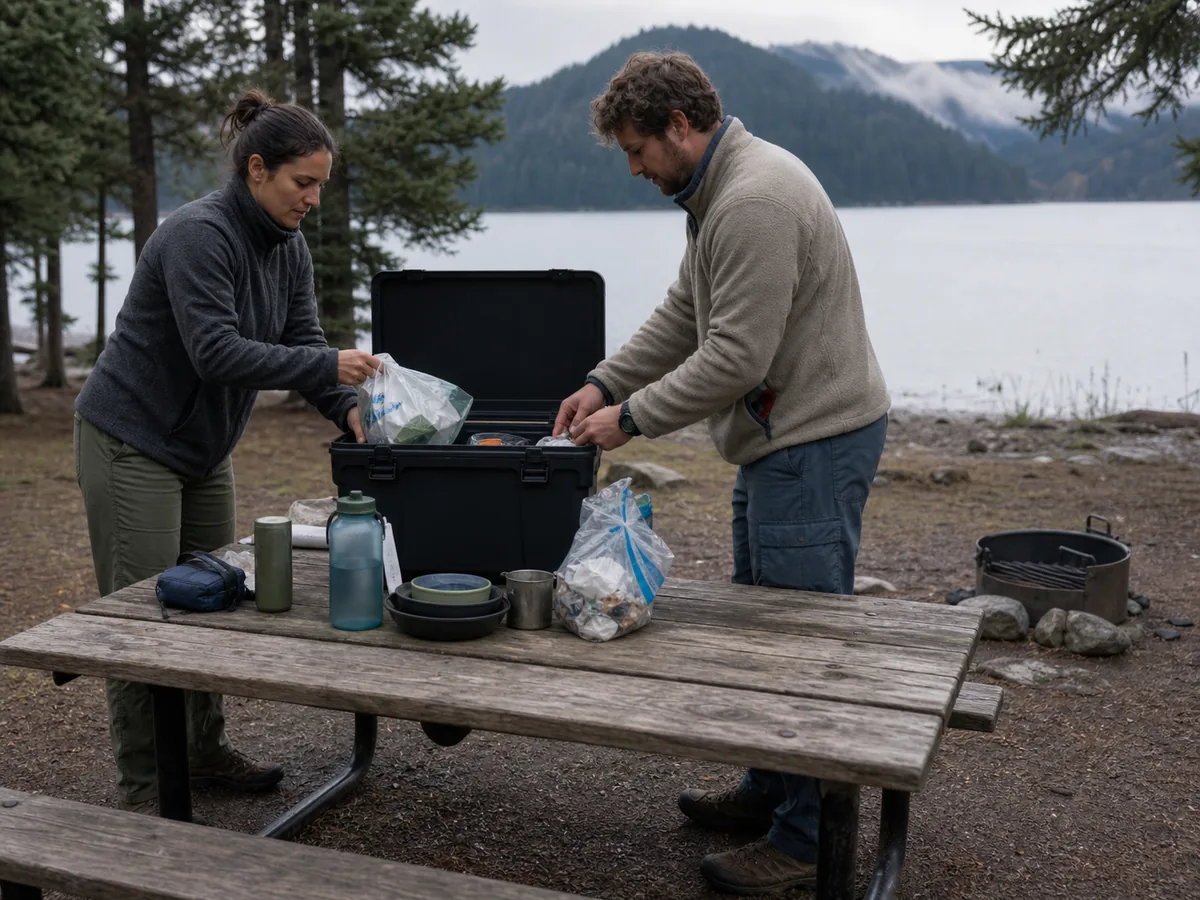
Light a fire only where and when your site allows it.
Keep water ready, attend it, and extinguish it by wetting, stirring, adding more water, and confirming the remains are cold. Do not bury hot coals.
Separate firewood from the cooking plan. Local rules may prohibit gathering, restrict transported wood, or ban fires after you arrive.
A legal stove and no-cook meal keep food independent of the fire decision.
Put the trash container out before you start cooking.
Small wrappers and scraps are easiest to control when every cook knows where they go. Close the container whenever the kitchen pauses rather than leaving cleanup for the end.
The camping packing systems keep fuel, ignition, cookware, storage, cleanup, and the no-cook fallback together.
Close food and flame completely before the sleeping area becomes the focus.
Campsite layout creates hazards nobody planned
Look up before you unload. Dead or damaged branches can fall into the site you just chose.
Then check the ground for low areas, runoff channels, unstable slopes, sharp debris, and traffic between the tent, vehicle, kitchen, toilet path, and fire ring.
Overhead
Move away from dead branches or trees and ask staff when the assigned site appears unsafe.
Drainage
Avoid low ground and channels where rain can collect or flow.
Fire
Keep shelter and loose gear away from the legal flame area and sparks.
Traffic
Route guylines doors and kitchen work away from the path people use after dark.
Food
Follow the required separation and storage arrangement for the exact land unit.
Inspect before you unload. Once your bed is built and the kitchen is open, moving feels expensive, so people tolerate a poor site longer than they should.
Walk the site deliberately after setup. Follow your real route from tent to toilet, water, vehicle, and kitchen with a headlamp.
Move or mark guylines and obstacles that enter the walking line, while keeping the shelter anchored as designed.
A rain drainage mistake can stay hidden while the ground is dry.
Notice flattened vegetation, debris lines, channels, and low depressions before pitching. Never dig drainage trenches or damage the site to protect a poor placement.
Do not create a new campsite outside the assigned area to solve a layout problem. Speak with campground staff or use the legal alternative.
Move early while the site is still empty.
When do camp activities interfere with essential chores?
A packed recreation schedule competes with required work. The group returns late, leaves wet gear closed in bins, postpones water, or starts dinner after everyone is hungry and cold.
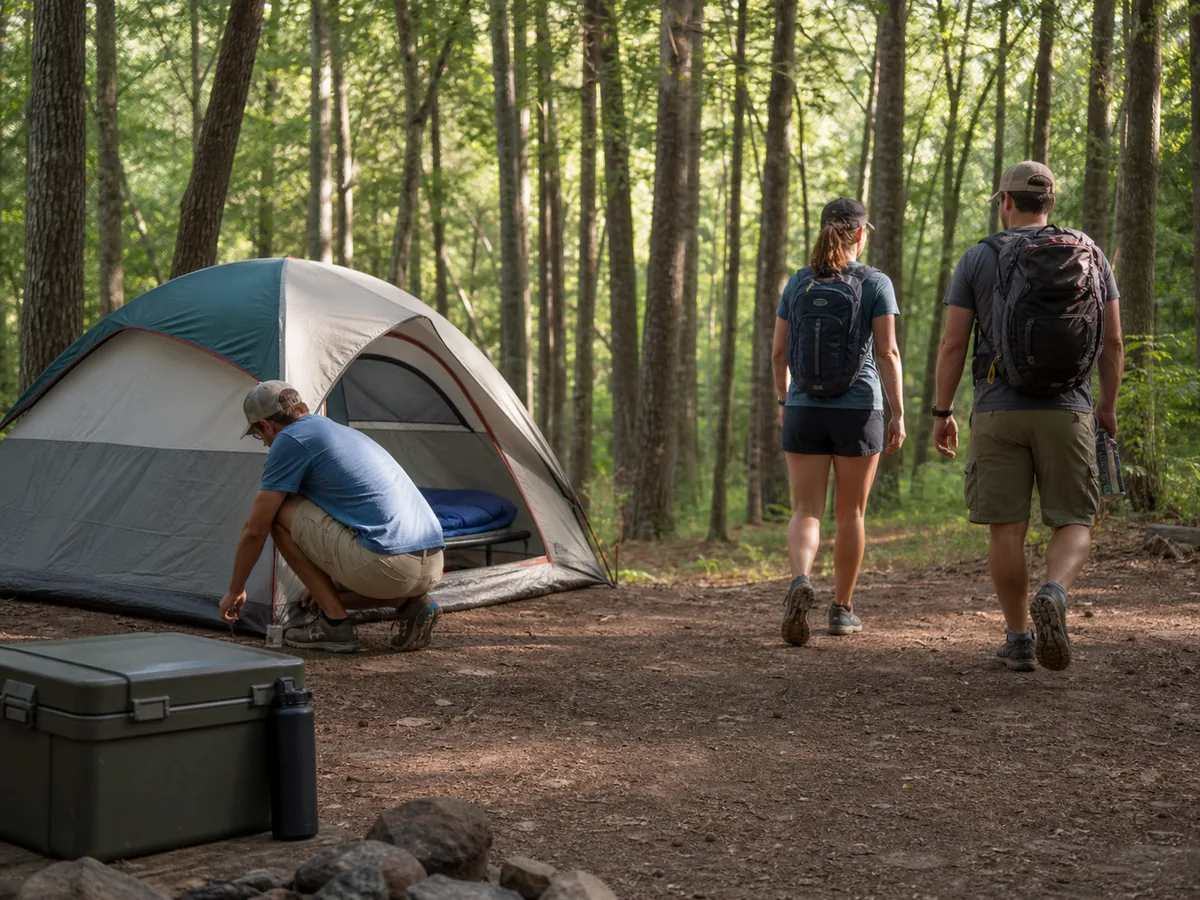
Set yourself a maintenance floor.
Shelter, sleep, legal storage, water, weather protection, medication, and light must be ready before the group leaves the site. On return, check warmth, food, and the next weather change before beginning another project.
Children, pets, illness, heat, and poor sleep can reduce the group's usable time. Remove an activity rather than borrowing from camp setup or the route home.
The campground water estimate also needs maintenance time.
Filling, treating, carrying, and distributing water are tasks, not just quantities. A dry or distant source can remove the activity window before it creates thirst.
A winter camping chain can move faster because moisture freezes, water becomes inaccessible, and cold hands slow correction. Reduce the schedule before cold turns routine work into a long exposure.
Camp tasks have first claim on time. Recreation uses the remainder.
Shared tasks need a confirmed handoff, not an assumption
"I thought someone packed it" is an early warning, not a harmless joke. Fuel, water, medication, food storage, shelter parts, keys, and reservation details can disappear from the plan when a group discusses them without confirming completion.
Give each critical system one responsible adult and one visible check. The check is the working stove with matching fuel, the filled water container, the complete tent bag, or the medication in the adult's control, not a message saying the task will be done later.
Use a closed reply for changes. "You have the vehicle keys now" needs an answer and a known pocket or clip before the first person walks away.
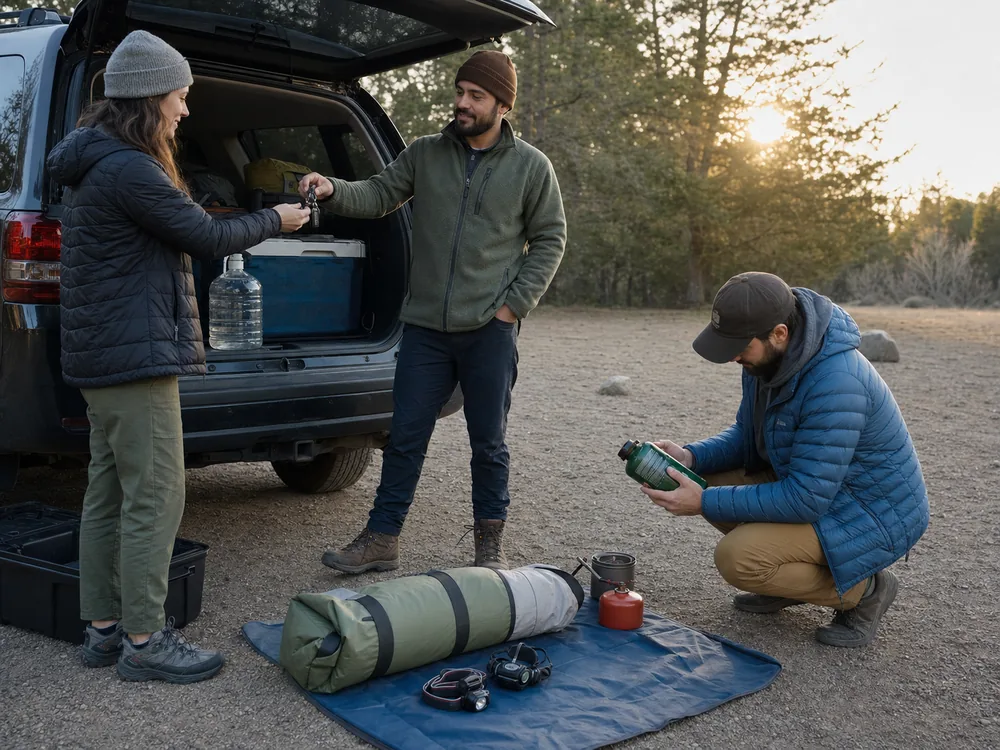
Check the physical item when failure would break the night. Two people can both remember "the stove" while one packed the burner and the other assumed the fuel was attached.
At arrival, divide work by complete outcomes. One person establishes shelter and beds while another handles water and required food storage, then both state what remains before optional activity begins.
Repeat the handoff when roles change. A person who leaves to help a child, speak with staff, or move the vehicle may no longer be completing the task everyone still expects.
A solo camper uses the same method as a final scan. Touch the keys, light, water, shelter bag, food storage, medication, and route record before leaving home rather than trusting a mental list during a rushed departure.
After the trip, trace a missing item back to the last confirmed point. The correction may be a fixed storage place, a spoken transfer, or a physical check, not a longer packing list.
Avoid blame when the system was vague. The useful question is which item, action, reply, or location would have made completion visible while the correction was still cheap.
Check compatibility as well as presence. A stove and fuel can both be packed but still use different connections, while spare batteries may be the wrong size for the only light.
Duplicate effort can hide another gap. Two adults may each bring dinner and assume the other packed water, cleanup supplies, or the required food-storage method.
Close the load with one short group scan of complete systems. Shelter, sleep, water, food, light, medication, rules, and transport should each have a verified item and a person who knows where it is.
- One adult accepts each critical task aloud.
- The physical item is present complete and compatible.
- The next person knows the item location.
- A role change includes a new spoken handoff.
- Shelter sleep water food light medication rules and transport are each checked.
- The group closes the load only after every system is visible.
Confirm the finished task before the group depends on it.
How do checkout failures start the night before?
The shared-camp etiquette work begins before bed. Read checkout time, put away unused equipment, secure trash, prepare breakfast, and separate items that must remain accessible.
This leaves fewer loose pieces when the group is cold, hungry, or hurried in the morning.
- Extinguish any allowed fire until all remains are cold.
- Close food trash and scented-item storage after the final meal.
- Pack optional equipment and organize the vehicle at night.
- Keep breakfast water medication keys and weather layers accessible.
- Pack dry sleep gear before opening the shelter to weather.
- Walk the empty site for stakes cord scraps food and personal items.
- Dry repair clean and restock equipment promptly at home.
Do your final sweep after everything is loaded.
Look from several angles and check beneath the table and around the fire ring. An empty site reveals small objects hidden by bins and chairs.
At home, record the first signal, not just the outcome. “Pad softened after two hours” leads to a repair.
“Camping was cold” does not show what to change.
Separate equipment faults from planning faults. A torn fly needs repair.
A sound fly left in the garage needs a packing change.
A correct shelter pitched after dark on low ground needs a timing and site-inspection change. One outcome can require different owners.
Write down the consequences as well as the moment you noticed.
A late dinner may have reduced sleep, left dishes unsecured, and delayed breakfast. Fixing only the recipe misses the departure time that began the chain.
Draw the sequence until the first choice you can change appears.
Take one repair with you on the next trip.
Changing the site, schedule, tent, menu, and group tasks at once makes it hard to learn which correction worked. Hold the safe parts constant and test the specific change in a forgiving setting.
Ask another camper what they observed. One person may remember being cold while a partner noticed the pad losing height or dinner running an hour late.
Combine those observations into one timeline before you choose a repair.
Keep a short equipment quarantine at home for wet or damaged items. Do not return a leaking pad, torn fly, empty fuel container, dead battery, or incomplete first-aid kit to normal storage where it can be packed unchanged next time.
Some discomfort is a preference rather than a failure. A lumpy pillow or plain dinner may not need a larger load.
Prioritize corrections that affect sleep, warmth, food security, water, health, legal compliance, and the ability to leave.
Compare that evidence with the backpacking mistake chains only when the trip also involved carried load and remote camp. Vehicle camping should not inherit weight and mileage corrections that did not cause its problem.
Write the correction while evidence is fresh.
Sources
The National Park Service covers overhead hazards, drainage, tent and kitchen placement, food separation, and making camp before dark: Finding and Setting Up a Campsite.
Its camping safety guidance addresses secure food, clean sites, wildlife, fires, weather exposure, and water planning: Camping Safely.
The NPS campfire instructions explain current-rule checks, water readiness, continuous attendance, and extinguishing until all material is cool: Campfire Safety.
Current site rules control the correction when food, fire, water, access, or campsite boundaries are involved.
Step by stepPractical steps
- Name the early choice, first signal, cheap correction, and late consequence.
- Protect daylight setup by shortening the evening as soon as arrival slips.
- Check ground insulation, moisture, loft, and ventilation before bedtime.
- Close every scented item and extinguish every allowed fire before sleep.
- Inspect overhead, drainage, fire, traffic, and food layout before unloading.
- Reset at night, sweep the empty site, and record the first signal at home.
AnswersQuestions readers ask
What is the most common camping mistake?
There is no single mistake in every setting, but late correction is a common pattern. Campers notice a delay, soft pad, unsecured food, poor drainage, or changing weather and continue until the consequence is harder to reverse.
Why do beginners get cold while camping?
Common causes include inadequate ground insulation, a leaking pad, a sleep system outside its tested range, damp clothing, compressed loft, and unmanaged condensation. Check the whole system rather than only the sleeping bag.
What camping mistakes attract wildlife?
Leaving food, trash, toiletries, pet food, coolers, cooking oil, crumbs, or dishes unsecured can attract wildlife. Follow the current local rule for every scented item and close the kitchen before bed.
Is arriving at camp after dark a problem?
It removes light needed to inspect overhead hazards, drainage, boundaries, and shelter parts. If delay consumes the setup window, shorten the evening, use the prepared alternative, or cancel rather than rushing every task.
How do I learn from a bad camping trip?
Record the first observable signal and the action that would have broken the chain. Specific notes about timing, equipment, weather, water, food, or group condition lead to a usable correction.