
What Is Good Camping Etiquette at a Shared Campground?
Keep people, sound, light, smoke, scent, water, pets, waste, and checkout work from spilling into another campsite.
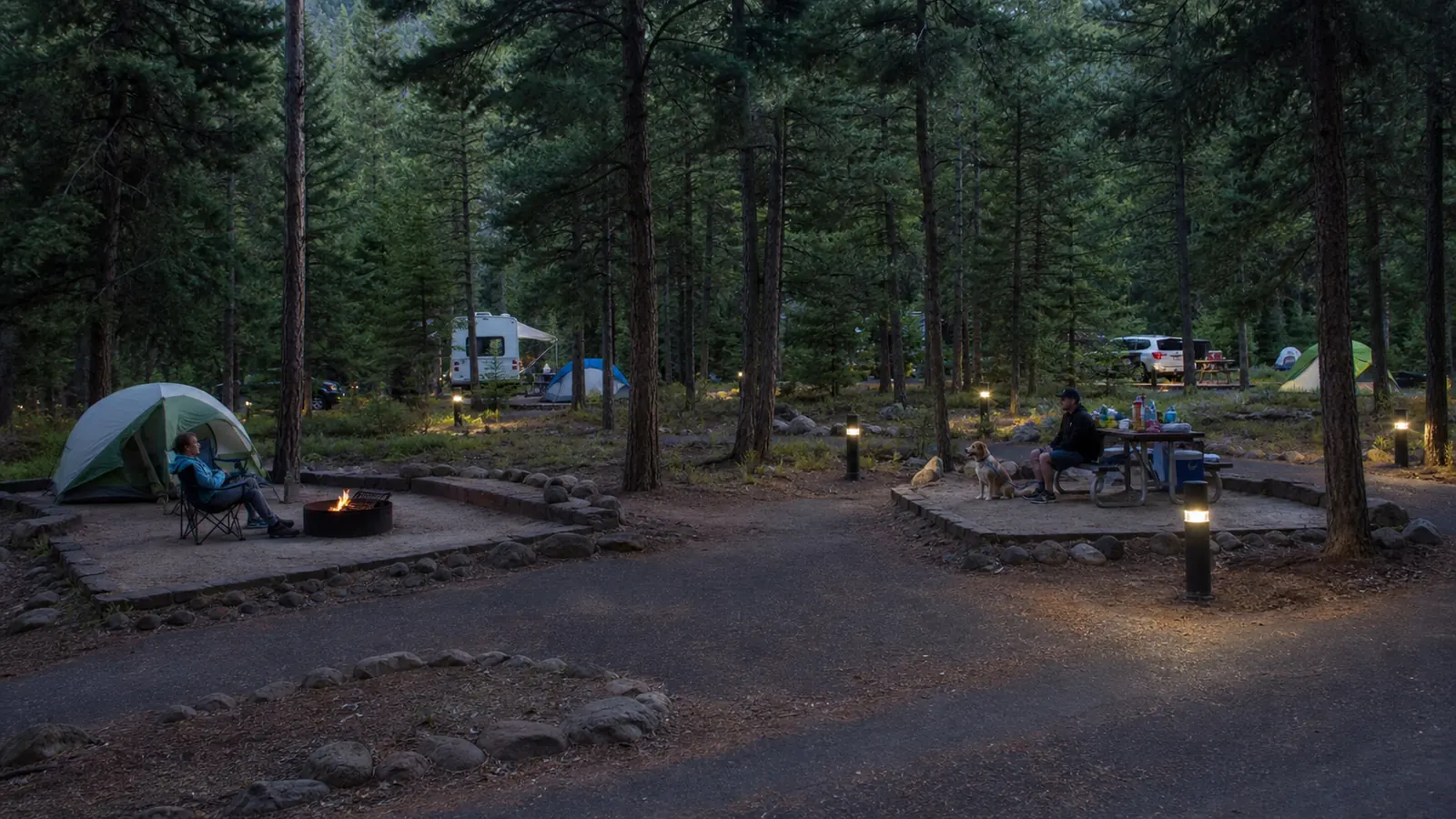
Camping etiquette means containing the effects of your stay so neighboring campers, staff, wildlife, and the next occupants can predict where people, sound, light, smoke, scent, water, pets, and waste will go.
A campsite gives you a place to sleep, but it does not keep voices, headlights, smoke, food scent, running children, loose pets, or dishwater inside the numbered pad.
Pros
- Use marked paths and keep chairs games and gear inside the assigned area
- Lower voices lights and repeated vehicle activity before posted quiet hours
- Close food cooking waste and wash-water tasks under the local rule
- Return shared facilities and the campsite ready for the next person
Cons
- Cut through occupied sites or spread into an empty neighboring pad
- Treat quiet hours as permission to export noise at every other time
- Assume a fire ring pet rule or water tap permits every convenient use
- Leave scraps hot material cord or cleanup work for staff and wildlife
Good campground behavior makes effects predictable. A neighbor should not have to guess whether your group will cross the site, shine light into a tent, draw animals with food, or leave a shared sink unusable.
Contain the effect, not just the object that caused it.
What Makes Good Camping Etiquette Predictable?
Smoke can leave a legal fire ring and enter another tent. A lantern can stay on your table while its beam reaches a sleeping area.
Etiquette begins by noticing where an action lands, not merely where it starts.
The campsite boundary covers more than gear placement. Foot traffic, games, pet lines, food scent, music, conversation, and vehicle doors all use space beyond the pad when they are not controlled.
Predictable behavior helps people solve ordinary needs without conflict. Campers can reach the toilet on a marked path, sleep during posted hours, collect water from a clean tap, and approach their own site without stepping around someone else's equipment.
Current campground rules come first. The first-trip planning notes should capture limits for occupancy, vehicles, pets, food, fire, generators, quiet hours, waste, and checkout before arrival.
Legal is the starting line. The effect still needs a boundary.
How do you set up camp without disrupting the loop?
Arrive within the stated check-in window and confirm the exact site before unloading. A vacant pad may be reserved, closed, or held for accessible use even when nobody is there yet.
Park only where the site rules allow. Keep the road, neighboring driveways, fire lanes, and accessible routes open while people carry gear.
Finish repeated door closing, air-mattress inflation, hammering, and bright-light work as early as practical. Late arrival happens, but the setup should become smaller and quieter rather than turning the whole loop into a work area.
Aim vehicle headlights away from occupied tents when the site layout allows. Switch off the engine once active parking and safety tasks are complete.
Use the marked path from the vehicle to the pad. Carrying one heavy cooler through a neighboring site still crosses the same personal space as walking through it empty-handed.
Introduce pets to the site under restraint. Do not let a dog inspect another table, cooler, tent, or pet while you arrange the tether.
Keep children with a named adult during setup. Stakes, cords, moving vehicles, hot equipment, and an unfamiliar road make this the wrong time for unsupervised exploring.
Tell a host quickly when someone occupies your assigned site or blocks legal access. Do not move another camper's gear or use an unassigned pad while the reservation is checked.
Arrival uses shared space briefly. Good setup returns the road, path, light, and quiet as soon as the essential work is done.
Where Does Your Campsite Boundary Really End?
A simple campground used for first-camp practice still requires marked routes to the toilet, water point, parking area, and trail. Do not cut between another tent and table.
Keep every item within the assigned area and on approved surfaces. An empty neighboring pad is not an extension of your site.
Children need a boundary they can recognize. The supervision plan for camping with kids should name the site marker, road edge, neighboring pads, shared path, fire area, and adult-only zones.
The restraint system for camping with a dog also stays inside the boundary. A leash or tether should not cross a path, reach a road, or enter another pad.
Assigned pad
Keep sleeping cooking seating gear and supervised play within the legal site.
Marked path
Use it for movement rather than taking a shortcut through another campsite.
Shared facility zone
Queue without blocking doors taps roads or accessible space.
Road and parking
Keep people pets cords and equipment out of traffic.
Closed or recovering ground
Do not move barriers widen paths or create a new route.
Neighbor boundary
Keep light smoke sound water and pet reach from crossing it.
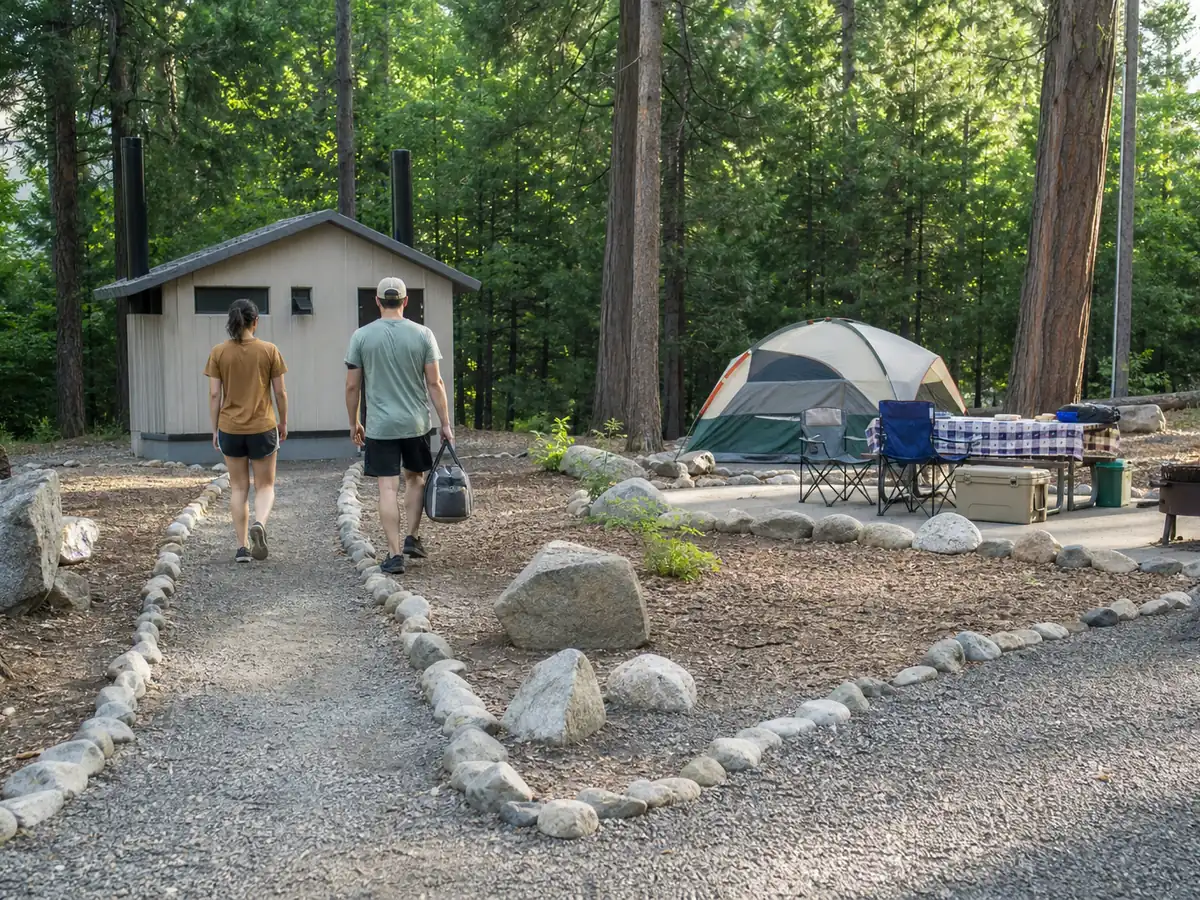
If equipment or traffic has damaged the edge of a site, stop using that area. Report a broken marker, unsafe branch, flooded path, or damaged facility instead of building a new route around it.
The marked route protects privacy as well as soil and vegetation.
When should campers reduce sound and light?
Posted quiet hours set a clear limit, but sound can be disruptive at noon too. Repeated shouting, amplified music, barking, a generator, vehicle alarms, and slamming doors can dominate a loop even when the clock does not forbid them.
Control sound at the source. Repeated loading, alarms, music, and slamming doors are avoidable camping mistakes even before quiet hours.
Use a generator only where, when, and how current rules allow. Position it within the assigned area, follow fire and exhaust requirements, and recognize that compliance with operating hours does not make continuous noise considerate.
Match campground power needs to the site before arrival when charging, cooling, or medical equipment depends on a generator.
If the need cannot fit the legal generator window, choose another legal power arrangement. Running beyond the limit transfers the planning failure to everyone within hearing distance.
Light needs the same control. Aim headlamps down, choose the lowest useful setting, shield lanterns, close vehicle doors before bright cabin lights remain on, and avoid sweeping beams across tents and roads.
Darkness is part of the shared setting. Decorative lights should remain inside the site, use low output, and switch off when people sleep.
A light that marks a step can prevent a fall, while an unshielded string around the whole pad can illuminate several neighboring tents.
| Source | What crosses the site | Better control |
|---|---|---|
| Voices and music | Words rhythm and bass | Lower volume move inward and stop before quiet hours |
| Generator | Continuous engine sound and exhaust | Follow exact rules limit run time and protect other sites |
| Vehicle | Headlights cabin lights alarms and doors | Aim away finish unloading early and disable avoidable signals |
| Lantern or string lights | Glare into tents roads and dark sky | Shield dim and switch off when the task ends |
| Dog barking | Repeated alert sound | Increase distance settle the dog or leave if control fails |
| Children at play | Running calls and thrown objects | Use an approved open area and adult supervision |
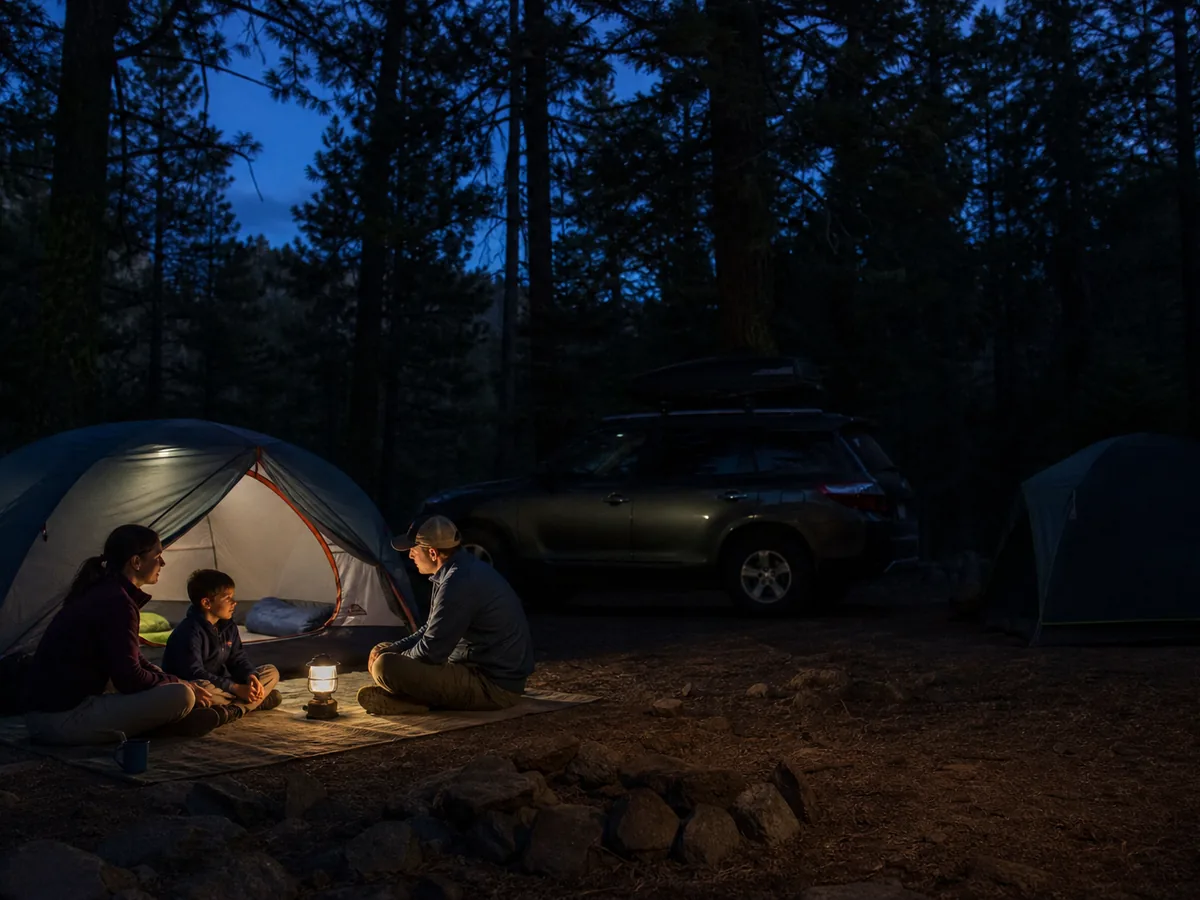
Adjust before someone must complain. If a sound or beam is obvious at the site boundary, move it inward, reduce it, or stop it.
Quiet hours are a floor, not the only time sound matters.
How should you contain food, dishwater, and waste?
Trace one used dish after dinner.
Food moves from storage to preparation, serving, leftovers, washing, and either secured storage or legal disposal. Every open stop can leave scent, crumbs, grease, or wash residue.
Use the storage method required at that exact campground. A vehicle, locker, approved container, or another system may apply.
Include coolers, drinks, trash, pet food, bowls, toiletries, and anything else the managing agency treats as scented.
Keep cooking and eating within approved areas and away from tents when local guidance requires it.
Clean spills promptly. Do not feed wildlife, and do not leave a small scrap because an animal is already nearby.
Dishwashing water is not automatically safe to pour onto the ground, into vegetation, or at a water tap. When camping in rain, standing water still does not become a legal drain.
- Open one mealRemove only the food and tools needed for the current meal.
- Control crumbsKeep preparation and eating on an approved cleanable surface.
- Close leftoversReturn unused food to the required storage as soon as serving ends.
- Clean equipmentUse the campground's approved washing and water-disposal method.
- Capture food wasteSecure particles grease packaging and pet food with the other scented items.
- Inspect the groundPick up scraps and wipe spills before darkness hides them.
- Lock the kitchenFinish with every scented item in legal storage or disposal.
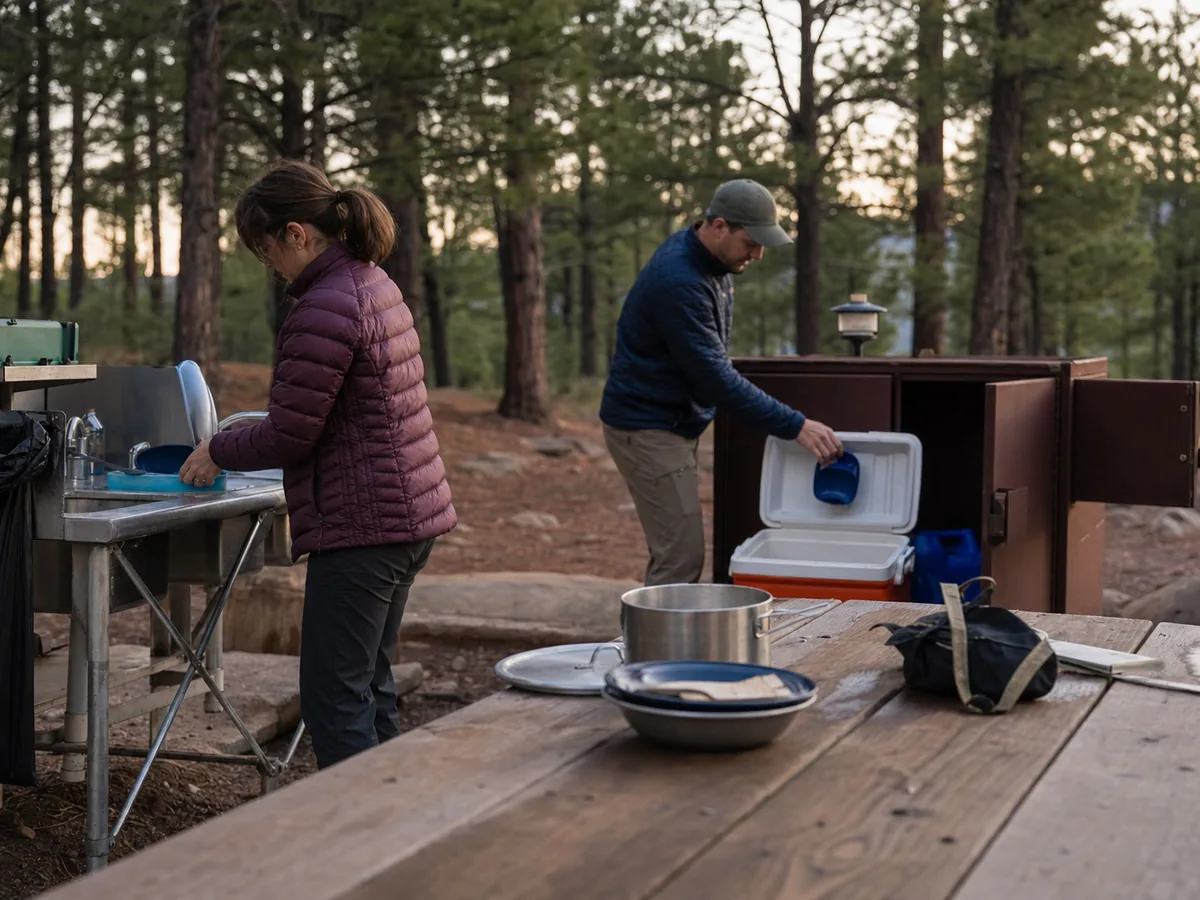
Trash does not belong beside a full bin, fire ring, toilet, or locked dumpster. If a receptacle cannot accept it, keep the waste secured and use the next legal option.
The kitchen closes completely before people leave or sleep.
When should you skip a campfire or smoky meal?
Check current restrictions before lighting any flame. Weather, fuel conditions, seasonal rules, and local emergencies can change what a reservation page allowed when the trip was booked.
A fire ring is a location, not permanent permission. The stricter heat and fuel decisions in winter camping still begin with current restrictions, approved fuel, attendance, and a cold finish.
Smoke from a cooking stove or grill can also cross a boundary. Move approved equipment within the legal cooking area, adjust the meal, or wait when smoke and odor repeatedly enter a neighboring tent or shared path.
Do not burn trash, food, foil, plastic, glass, pet waste, or other prohibited material. A ring containing the object does not contain toxic smoke, sharp residue, or the work left for the next camper.
A cold ring is the finish. Walking away from low flames or warm ash is not.
How Should You Leave Shared Campground Facilities?
Think about the next person already waiting.
Toilets, taps, sinks, showers, charging points, dump stations, pet areas, and accessible spaces serve the whole campground. Bring what you need, finish the task, clean ordinary residue, and move gear out of the way.
At a toilet, follow signs for trash and sanitation. Do not leave wipes, diapers, bags, food packaging, or wash equipment where the facility does not accept them.
Tell staff about a blockage, missing supply, sharp object, or serious mess instead of creating a second problem.
At a water point, fill your containers without washing dishes, bodies, muddy gear, or pets unless the facility specifically allows that use.
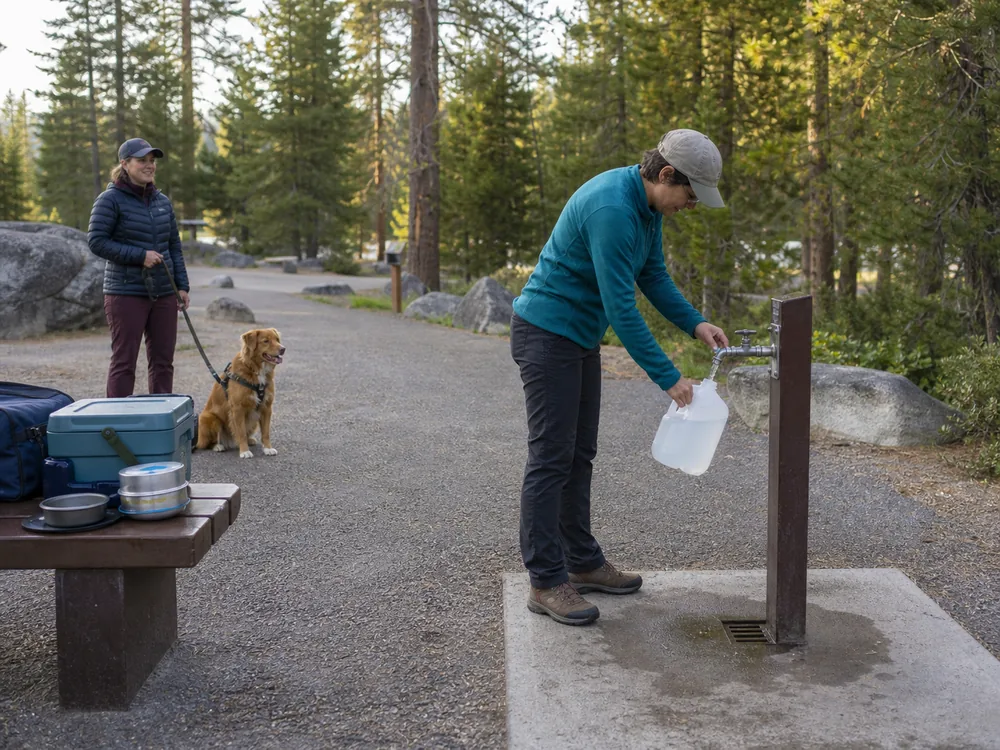
Handle dishwater and wastewater through the stated campground system. Rules differ because plumbing, soil, wildlife, and local capacity differ.
Asking staff is better than copying what another camper did.
- Read the posted use and disposal instructions before starting.
- Keep the entrance path and accessible space clear.
- Complete one task without spreading gear across the facility.
- Prevent pets and children from contacting taps drains or waste.
- Remove personal trash hair food particles mud and packaging.
- Report damage blockage overflow or contamination to staff.
- Leave as soon as the facility is ready for the next person.
Pet relief areas require the same handoff. Maintain restraint, collect waste immediately, use the stated bin, and prevent the dog from approaching people or animals that did not invite contact.
Shared means ready next, not available for unlimited private use.
What should a final campsite sweep include?
Stand where the next camper will arrive and look across the empty pad.
Remove stakes, cord, food, charcoal, bottle caps, small plastic, pet waste, tape, and gear hidden under the table or vehicle. Restore movable items only as the campground directs.
- Pack every personal item and secure waste for legal disposal.
- Confirm permitted fire material is fully out and cold.
- Clear food scraps cooking residue and scented items.
- Inspect parking edges tent footprint table and nearby path.
- Remove pet waste and release no wastewater onto the site.
- Report damage hazards or lost property instead of hiding them.
- Leave by the posted checkout time without occupying another pad.
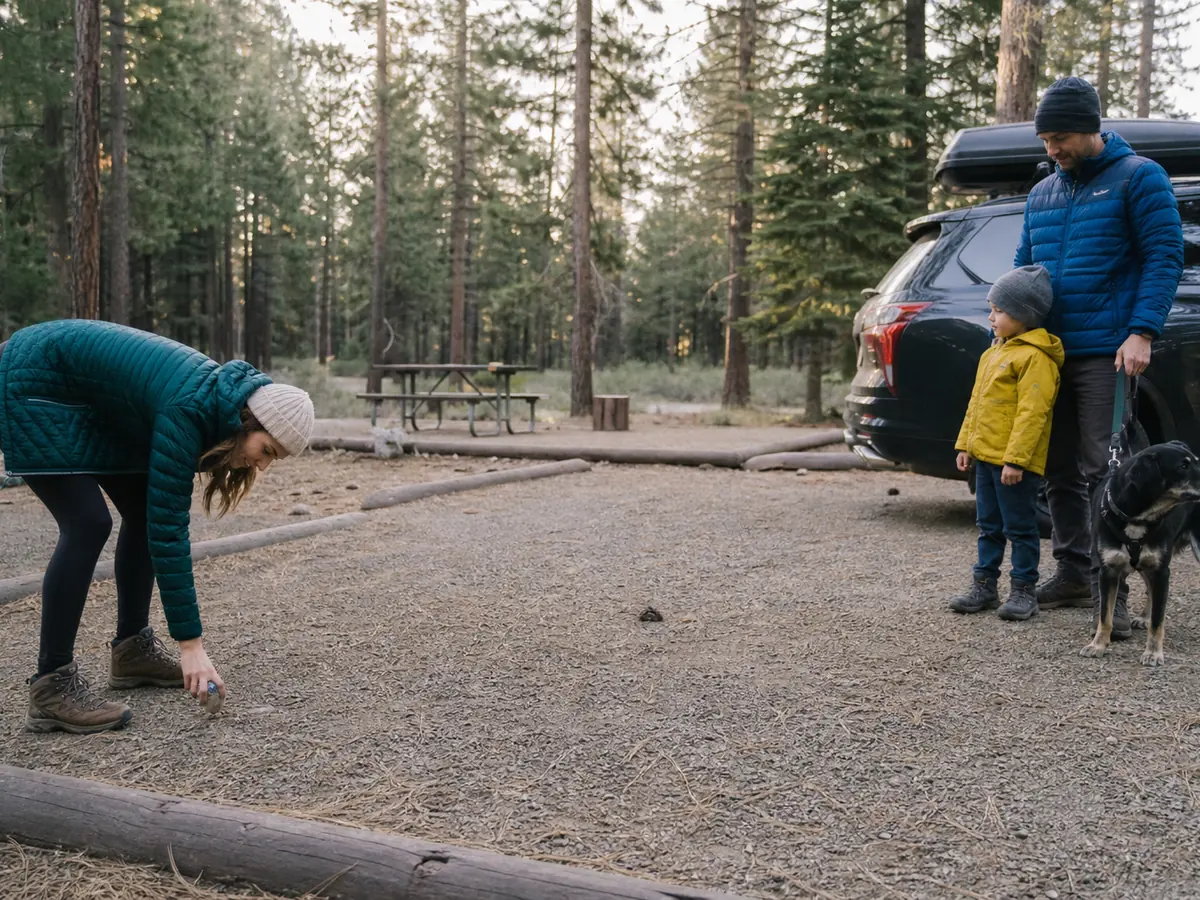
Report accidental damage before leaving. Staff can respond faster when they know the site number, facility, time, and specific problem.
Do the final sweep before the vehicle occupies the exit lane or children and pets are loaded without supervision.
A vehicle loading order keeps waste, site access, and the final inspection from being buried under packed gear.
The staged closeout used in solo camping keeps keys, waste, site access, and the final inspection under one person's control.
Return the full campsite, including the space, quiet, cleanliness, and safe access around it.
How should you handle a campground conflict?
Start with the smallest clear request when contact feels safe. Name the action crossing the site boundary, such as a light aimed at your tent, music after quiet hours, a loose dog, smoke, or repeated foot traffic.
Give the other camper a practical correction. Asking someone to aim a lantern down is easier to act on than accusing the whole group of being inconsiderate.
Keep your voice calm and stay outside their campsite. Do not touch their equipment, block their vehicle, photograph children, or use a crowd to pressure them.
A normal nuisance belongs with the host, ranger, or campground office when one polite request fails. Note the site number, time, and specific behavior so staff can apply the posted rule.
Skip direct contact when a person is threatening, visibly violent, handling a weapon recklessly, driving dangerously, or creating an immediate camp danger. Move to a safer place and contact campground staff or emergency services as the situation requires.
Noise, smoke, and pet conflicts can also have a practical escape. Close a vehicle window, move a sleeping position within your own site, or spend time in a legal shared area while staff responds.
Those choices do not excuse the other behavior. They reduce your exposure without escalating a dispute.
Do not answer one violation with another. Louder music, brighter lights, unleashed pets, threats, or blocked access make staff's job harder and can create a safety problem.
After staff responds, let them handle enforcement. Record a repeated issue through the official channel rather than returning to the other site for another argument.
Keep children out of the conversation unless their immediate safety requires movement. Adults should not ask a child to deliver a complaint to another campsite.
If smoke, exhaust, or noise affects a health need, say what action would reduce the exposure without sharing more medical detail than necessary. Staff can often address the source or explain whether another legal site is available.
Save emergency calls for immediate threats to life, fire, dangerous driving, violence, or another urgent condition. Ordinary quiet-hour and boundary disputes belong with campground staff.
When the issue ends, let it end. Repeated comments, staring, filming, or online confrontation can restart a conflict that staff already resolved.
Specific requests are easier to solve because everyone can see whether the light, sound, smoke, animal, or traffic changed.
Handle a disagreement with a clear request about the effect. Trail passing and yielding belong in hiking etiquette, while campground requests should address the beam, path, dog, sound, smoke, or other effect crossing the site.
Keep the request narrow and observable.
"Please keep the music inside your site" is easier to act on than judging the whole group. If direct contact feels unsafe, use the campground's reporting method instead.
Note the site number, time, and specific behavior without entering the other site or touching its equipment.
Staff should handle repeated rule enforcement. Campers can protect their own space, move away when practical, and provide clear information, but they should not block roads or turn a correctable nuisance into a confrontation.
Sources
Leave No Trace explains planning, durable-surface use, waste disposal, leaving what is found, minimizing fire impacts, respecting wildlife, and considering other visitors: The Seven Principles.
The National Park Service covers food security, clean camps, wildlife distance, fire safety, water, and weather during a stay: Camping Safely.
Its campsite guidance addresses assigned sites, drainage and overhead hazards, shelter placement, cooking areas, food storage, and daylight setup: Finding and Setting Up a Campsite.
The National Park Service also explains current fire restrictions, approved fuel, attendance, extinguishing, and cold ash: Campfire Safety.
Predictability is practical courtesy in a shared campground.
Step by stepPractical steps
- Keep people, gear, games, pets, and shortcuts inside approved boundaries.
- Reduce sound and light before they cross the site edge or posted quiet hours begin.
- Move food from use to approved storage or disposal without leaving scent and waste open.
- Use fire and cooking equipment only when current rules and conditions allow containment.
- Leave toilets, taps, sinks, showers, and pet areas clean and ready for the next user.
- Sweep the whole site, report problems, and depart by checkout time.
AnswersQuestions readers ask
Is it rude to walk through another campsite?
Yes.
Use marked roads and paths even when crossing a campsite is shorter. An occupied pad contains sleeping, cooking, children, pets, cords, and personal space that should not become a public walkway.
Can I play music before campground quiet hours?
Only if current rules allow it and the sound remains contained. Quiet hours are a minimum limit, so lower or stop music that dominates neighboring sites at any time.
What should I do with dishwater at a campground?
Follow the exact campground instructions for sinks, drains, strainers, food particles, and disposal points. Do not assume the ground, vegetation, toilet, or drinking-water tap is an approved place.
Is a campfire always allowed when a site has a fire ring?
No. Current restrictions, weather, fuel rules, wind, and attendance requirements still apply.
Skip the fire when it is prohibited or when sparks, smoke, fuel, water, or supervision cannot be controlled.
How should I handle a noisy neighboring campsite?
Make a calm specific request when it feels safe, such as lowering sound or redirecting light. Contact the host, campground office, ranger, or emergency service when rules, safety, or threatening conduct require help.