
Should You Thaw Frostbite Before You Reach Help?
Usually not, and the reason costs people fingers every winter.
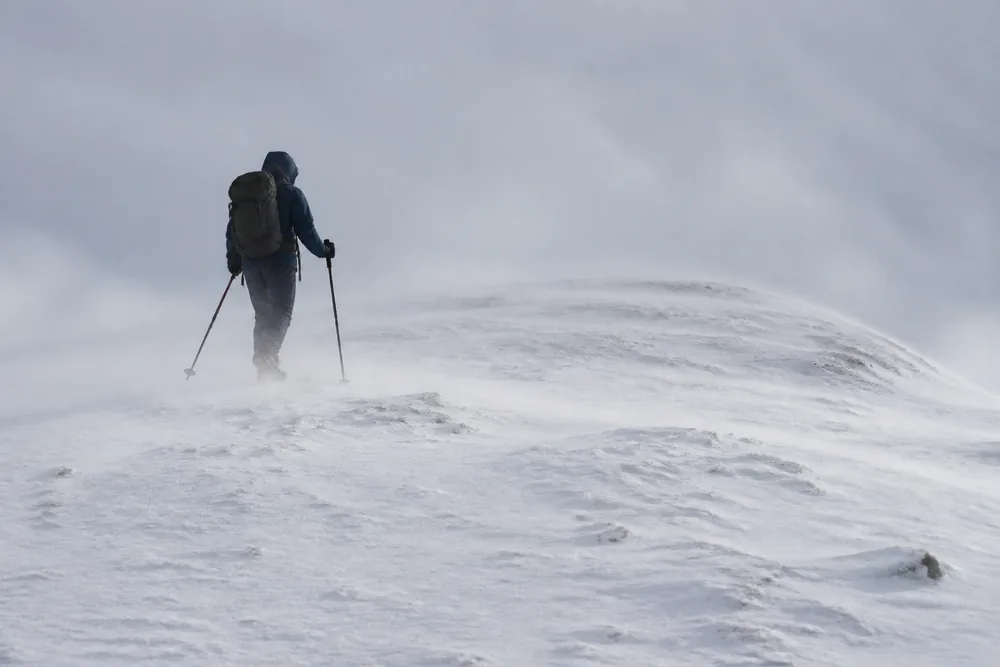
Numb white skin is still free to fix, and the whole treatment is bare skin against a warm torso. Once tissue has actually frozen the decision changes, because warming it and then letting it refreeze destroys far more than leaving it frozen would have.
Numb, white fingertips are still free to fix. Nothing has frozen yet, and twenty minutes against warm skin undoes the whole thing.
Once the tissue underneath has actually frozen, the next question is not how to warm it. It is whether to warm it at all.
These opening moves hold either way.
- Get out of the wind before anything else
- Remove anything wet, and anything tight enough to restrict blood flow, including rings
- Warm the affected part against bare skin, in an armpit or against a companion's belly
- Warm the whole person, not only the hand or the foot
- Leave the area alone otherwise, with no rubbing and nothing rubbed into it
- Do not thaw anything you cannot keep thawed
That last line is the one this page exists for, and it runs against every instinct you have.
Frostnip is the stage you can still fix for free
The difference between the two stages is physical rather than a matter of degree. In frostnip nothing freezes, and the injury sits in the outermost layer of skin only.
Frostbite means ice has formed in the tissue, and it can reach the dermis, the fat beneath it, and in bad cases muscle and bone.
That distinction decides everything that follows.
Frostnip announces itself as numbness and pins and needles, with the skin going pale or blanched in patches. Cheeks, nose, ear lobes and fingertips go first because they are thin, exposed and far from the core.
The tissue underneath still feels soft.
- What is frozen
- Nothing in frostnip, ice in the tissue in frostbite
- How deep
- Outer skin only, against dermis, fat, and sometimes muscle and bone
- How it looks
- Pale and blanched, against waxy, grey or yellow-white
- How it feels
- Numb and tingling, against no sensation at all
- Underneath
- Soft, against firm or wooden
- On rewarming
- Full return of feeling and colour, against no return
- Tissue lost
- None, against potentially permanent
The fix costs nothing and needs nothing carried. Bare skin against a warm armpit, a belly, or the inside of a thigh will bring a nipped fingertip back in ten to twenty minutes.
Stop walking to do it properly.
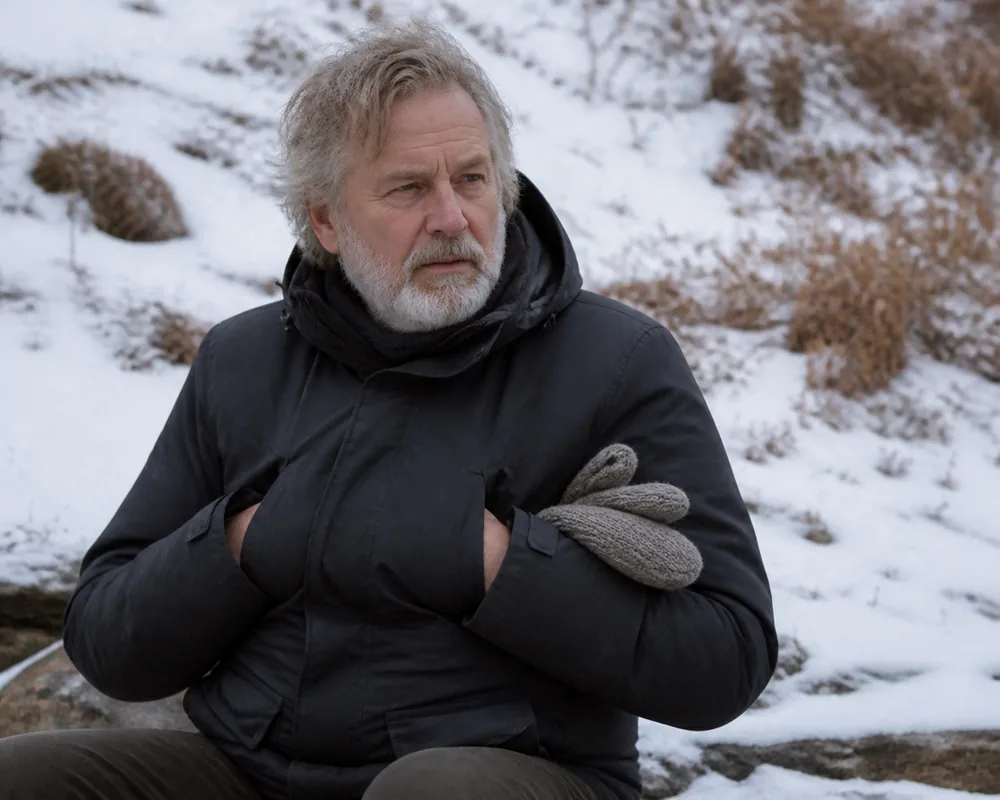
Doing it badly is why people end up further down this page. A hand shoved into a cold pocket, or held near a stove for two minutes while the group waits, is not rewarming.
Then run the test that actually settles which stage you are in.
Sensation should come back. Feeling returns, colour returns, and the skin behaves normally afterwards, and if all three happen you had frostnip and the incident is over.
If the area stays numb and dead-looking after honest warming, it has gone past the reversible stage. Treat that as frostbite and stop trying to grade it.
Which tissue is frozen, and can you tell?
Frozen tissue feels different before it looks dramatic. The colour turns waxy, grey or a yellowish white, and the surface goes firm under a fingertip instead of dimpling.
How far that firmness goes is the thing you want to know and the thing you cannot reliably measure.
| What you can see or feel | What it suggests | When it appears |
|---|---|---|
| White or blanched, soft underneath | Most superficial, often still reversible | Immediately |
| Waxy, grey or yellow-white, firm | Tissue has frozen rather than chilled | Immediately |
| Hard and wooden all the way through | Deep involvement | Immediately |
| Clear blisters | Generally the more superficial pattern | One to two days later |
| Blood-filled blisters | Deeper injury | One to two days later |
Look at the right-hand column. The findings that actually distinguish depth arrive a day or two after every decision has already been made.
Blisters are a retrospective clue rather than a triage tool. By the time they tell you anything, the party has already chosen whether to thaw and whether to walk.
Field assessment also runs optimistic. Frostbite is routinely deeper than it looked at the time, and final depth often is not settled for weeks, sometimes not until dead tissue has fully separated from living tissue.
So the practical position is uncomfortable but simple.
You cannot grade this injury and you do not need to. The decisions in front of you are the same whether it turns out to be shallow or deep, which is what the rest of this page covers.
Should you thaw it in the field?
Only if two things are both true. Definitive care is more than two hours away, and you can guarantee the tissue will not refreeze.
Fail either one and you leave it frozen.
The first condition is easy to misread. Two hours from definitive care means two hours from a hospital, not from the trailhead, so almost any backcountry party clears it without thinking.
That puts the whole weight of the decision on the second condition. It is the one nobody can honestly promise.
The reason is narrow and it is the whole argument. A freeze, then a thaw, then a second freeze does far more damage than an unbroken freeze does.
Ice crystals forming a second time tear through tissue that the first thaw has already left swollen and fragile. The second freeze lands on an injury that is no longer intact, which is why it costs so much more than the first.
Most parties cannot meet the second condition, and that is not a failure of preparation. A tent in a storm, a long walk in the dark, or a single stove and dwindling fuel are all situations where you cannot promise anything about the next six hours.
Where rewarming is not possible, letting the part thaw slowly and on its own is what the guidance allows.
Now the instruction people argue with. Walk out on frozen feet.
Frozen feet still carry weight. Thawed feet swell, hurt beyond description, and stop working, which turns somebody who could have walked to the trailhead into a casualty who has to be carried out of it.
If the plan involves that person walking, do not thaw their feet before they walk.
The same logic applies more gently to hands. Thawed fingers cannot manage zips, poles or a stove, so a party that thaws too early can lose the ability to look after itself.
How do you rewarm it without doing more damage?
Water between 37 and 39C, which is 98.6 to 102.2F. Use a thermometer if you have one, because the range is narrower than it sounds and both directions cause harm.
Cooler water rewarms too slowly to help. Hotter water burns tissue that has no way of telling you it is burning.
- Warm the whole person firstA chilled body pulls blood away from the extremities, so warming a hand on a cold casualty fights itself
- Heat water to 37 to 39CComfortably warm on the inside of your own wrist, never hot
- Immerse the part without letting it touch the potContact with a hot surface causes the exact burn the bath is meant to avoid
- Keep adding warm waterA bath left alone falls out of range within minutes and the rewarming stalls
- Continue until the tissue is red or purple and pliableThat is the endpoint, rather than a fixed number of minutes
- Give ibuprofen and expect real painThis hurts badly, and knowing that in advance stops people abandoning a half-finished thaw
- Dress it loosely and separate the digitsGauze between fingers or toes stops thawed skin sticking and tearing
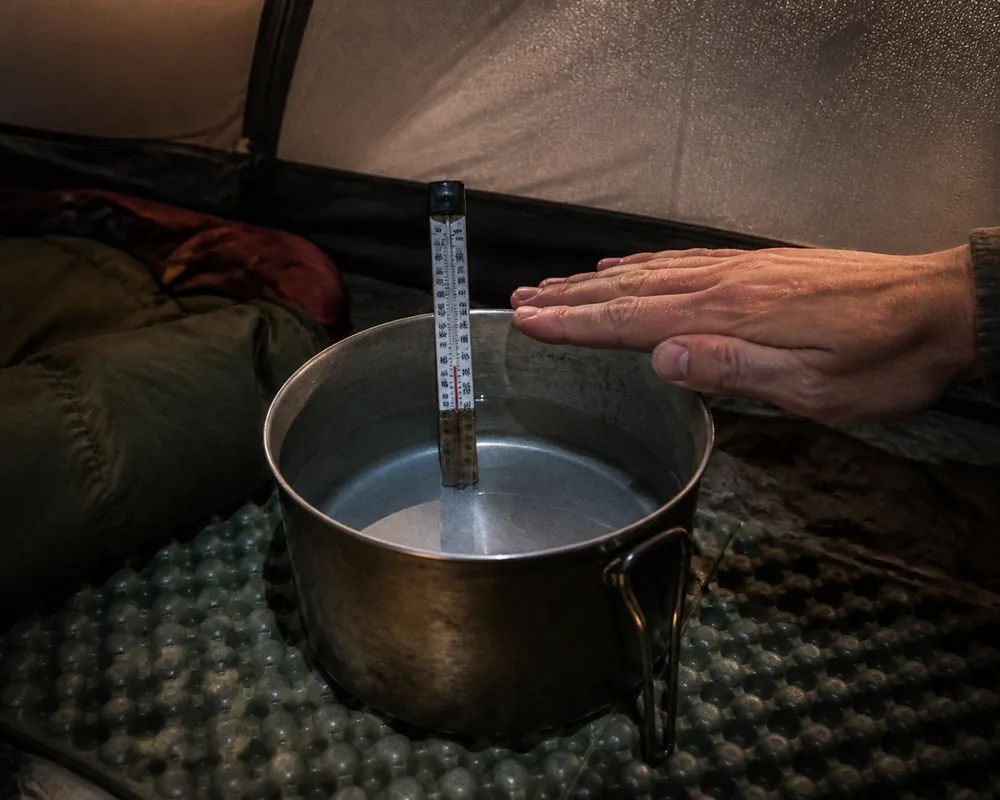
Dry heat is the error that does the most damage. A fire, a stove, a vehicle heater or a heat pack applied directly will burn frozen skin badly, because the nerves that would normally pull your hand away are not working.
People have cooked their own fingers this way while feeling nothing at all.
Rubbing is the second error, including the old instruction to rub the area with snow. Frozen tissue is brittle, and rubbing it grinds the ice crystals through cells that would otherwise have survived.
Leave blisters intact. They are a sterile barrier over damaged skin, and opening them invites infection into an injury that is already struggling for blood supply.
After a successful thaw the person is a stretcher case rather than a walker. Keep the part raised, padded and warm, and plan the exit around somebody who can no longer use it.
The pain on rewarming is worth preparing someone for. It arrives as the tissue comes back and it is severe enough that people ask you to stop, which is the moment a half-thawed injury gets created.
Exposed skin freezes faster than most people plan for
The numbers are shorter than the feeling suggests, which is why bare-handed jobs go wrong.
How long exposed skin lasts
- 30 minutesWind chill near minus 19FShorter than most people assume for a cold day
- 10 minutesWind chill near minus 45FLess time than sorting out a stove or a binding takes
- 5 minutesExtreme wind chillShorter than a single bare-handed task
Wind is doing something specific here. Still air lets a thin warm layer sit against the skin, and moving air strips it away continuously, so heat leaves at a rate the thermometer alone never shows.
That is why a windy day at minus 10F is a different problem from a calm one. The thermometer reads the same and the exposure budget does not.
The person matters as much as the conditions. Somebody already cold is shunting blood inward to protect the core, which means fingers and toes are running on a reduced supply before the wind even reaches them.
Wet skin freezes sooner than dry skin, and so does skin under a boot laced too tight or a strap pulled down hard over a glove.
Alcohol and nicotine both work against you here. Nicotine narrows the vessels feeding the fingers and toes directly, and alcohol widens the ones at the surface, which sheds core heat while making the cold feel more bearable than it is.
The habit that prevents most of this is unglamorous. Check hands, feet, ears and nose on a schedule rather than waiting to feel something, because the first symptom of the injury is the loss of the sensation you would be relying on to notice it.
Ask other people too. A companion can see a white patch on your cheek that you have no way of feeling.
Sources
The rewarming water range of 37 to 39C, the two conditions for field rewarming, and the guidance to allow spontaneous or slow thawing where rewarming is not possible come from the Wilderness Medical Society Clinical Practice Guidelines for the Prevention and Treatment of Frostbite, 2024 Update, summarised for practitioners in Frostbite: Recommendations for Prevention and Treatment from the Wilderness Medical Society.
The distinction between frostnip and frostbite, including that frostnip involves no tissue freezing and reverses without loss, is set out in StatPearls on frostbite.
The instructions not to rub the area or rub it with snow, not to use dry heat, and not to break blisters follow Mayo Clinic frostbite first aid.
Freezing times for exposed skin against wind chill come from the National Weather Service wind chill chart and safety guidance.
AnswersQuestions readers ask
What is the difference between frostnip and frostbite?
Frostnip freezes nothing. It sits in the outer layer of skin, shows as numbness and pale patches, and reverses completely with warming. Frostbite means ice has formed in the tissue and can reach the dermis, fat, and sometimes muscle and bone.
How do you know if it is still reversible?
Warm the area properly against bare skin and see whether feeling and colour come back. If both return and the skin behaves normally afterwards, it was frostnip. If it stays numb and dead-looking, treat it as frostbite.
Should you thaw frostbite in the field?
Only if help is more than two hours away and you can guarantee the part will not refreeze. A freeze, thaw and second freeze destroys far more tissue than an unbroken freeze, so if you cannot promise both conditions, leave it frozen and move.
Can you walk on frostbitten feet?
Frozen feet still carry weight, and thawed feet swell and stop working. If the plan involves that person walking out, do not thaw their feet first, because thawing turns somebody who could walk into somebody who has to be carried.
What temperature should rewarming water be?
Between 37 and 39C, which is 98.6 to 102.2F, held there by adding more warm water. Never use dry heat from a fire, stove or heat pack, because frozen tissue has no sensation to warn you it is burning.
How fast can exposed skin freeze?
Around a wind chill of minus 19F, roughly 30 minutes. Near minus 45F it drops to 10 minutes or less, and at extreme wind chills it can happen in about 5 minutes, which is shorter than one bare-handed task.