
Abbotts Lagoon Trail: Choose the Overlook, Bridge, or Ocean
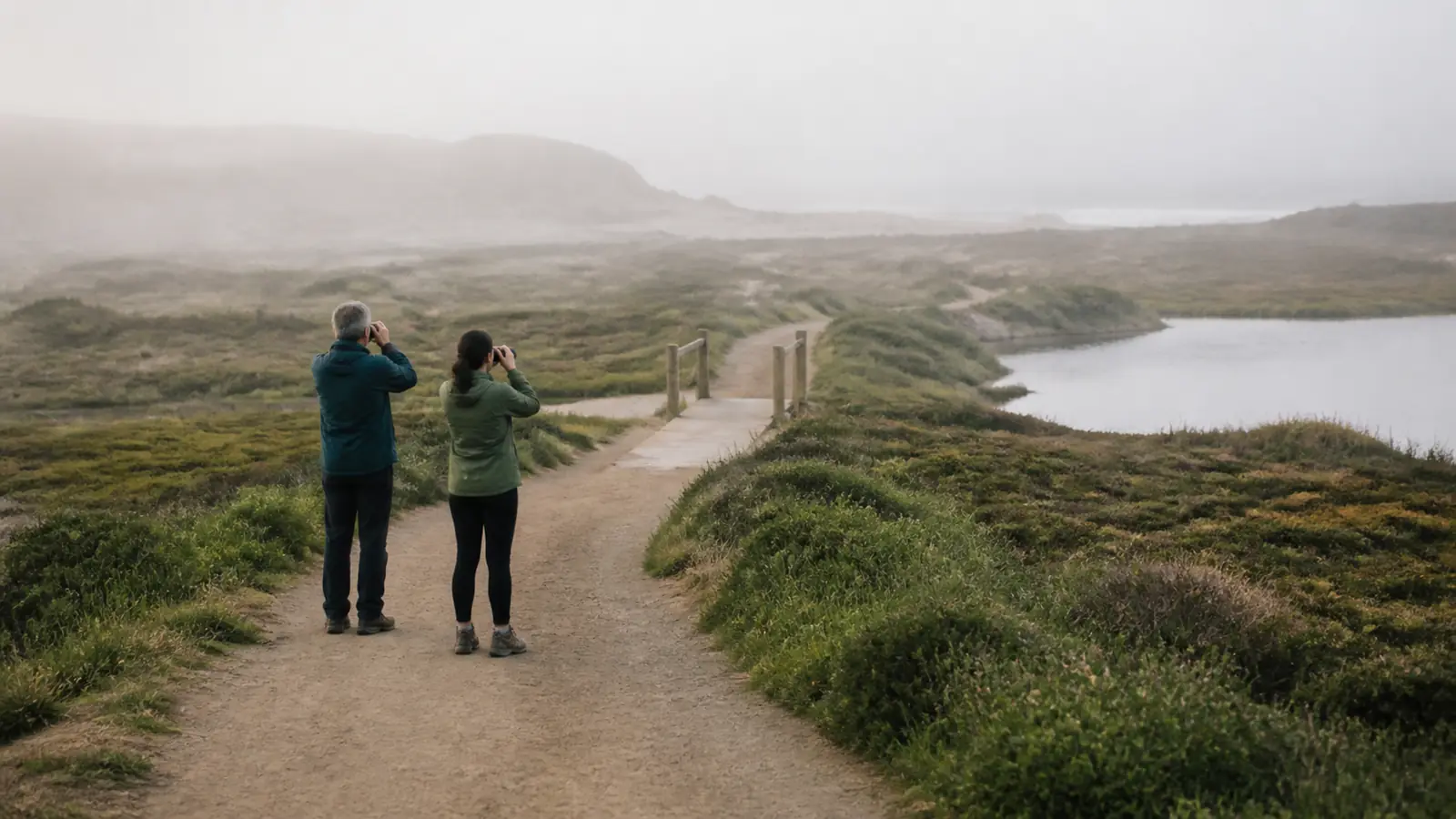
Abbotts Lagoon can be a short overlook, a two-mile footbridge walk, or a 2.8-mile ocean hike. Choose the endpoint from surface, mobility, wildlife closures, and surf rather than treating the beach as mandatory.
Abbotts Lagoon is not one walk with one required finish. You can turn around at an accessible overlook, the footbridge, or the ocean, and each choice changes the surface, time, wind exposure, and safety decisions.
Choose your endpoint before leaving the trailhead, then shorten it if wildlife restrictions or coastal conditions change. The ocean is optional, and reaching the bridge already delivers a complete lagoon walk.
Which Abbotts Lagoon endpoint fits your walk?
The first decision is what your group wants from the outing. A visitor who needs firm tread and a brief wildlife view has a different good endpoint from a strong walker who wants to cross loose sand to the coast.
Accessible overlook
About 0.25 mile from the trailhead on the gentler maintained approach. Choose it for a short lagoon view or a low-barrier outing.
Footbridge
About 0.9 mile each way. This endpoint keeps the walk near two miles round trip and avoids committing to the unmaintained sand beyond.
Ocean beach
About 2.8 miles round trip. Choose it only when surf, fog, wind, wildlife closures, and loose sand all leave enough margin.
Earlier turnaround
A valid choice when mobility, fatigue, bird activity, or deteriorating weather changes the day.
Stopping short is a complete trip.
The lagoon, marsh, and bird habitat are present well before the beach, while the last segment mainly adds sand and coastal hazards.
How long does the ocean walk take?
The National Park Service estimates 60 to 90 minutes for walking to and from the ocean, but that describes movement rather than the whole visit. Birding, photography, wind, and slower travel over sand can add meaningful time.
Build time around the endpoint
- TrailheadConfirm the intended turnaround and current closure noticesThe group starts with one shared plan
- OverlookReassess wind, mobility, and interestA short visit can end here without entering harder terrain
- FootbridgeDecide whether loose sand and the coast still fit the groupContinuing becomes a separate commitment
- OceanKeep enough daylight and energy for the less obvious sandy returnBeach time does not consume the return reserve
If wildlife watching is the purpose, a longer stop is useful rather than wasted time.
Set a turnaround time that includes those stops instead of calculating the day from walking speed alone.
What changes after the footbridge?
The footbridge is about 0.9 mile from the start. Beyond it, maintained tread gives way to an unmaintained route in Phillip Burton Wilderness, and loose sand increases rolling resistance and slows many walkers.
| Segment | Surface | Navigation | Practical effect |
|---|---|---|---|
| Trailhead to overlook | Firm maintained approach | Defined route | Best option for a short or lower-barrier visit |
| Overlook to footbridge | Maintained coastal tread | Generally obvious | Wind and exposure matter more than route-finding |
| Beyond footbridge | Loose, unmaintained sand | Landmarks matter | Pace drops and mobility becomes more demanding |
| Beach and lagoon edge | Shifting sand with open sightlines | Fog can erase visual references | Record the route back before exploring |
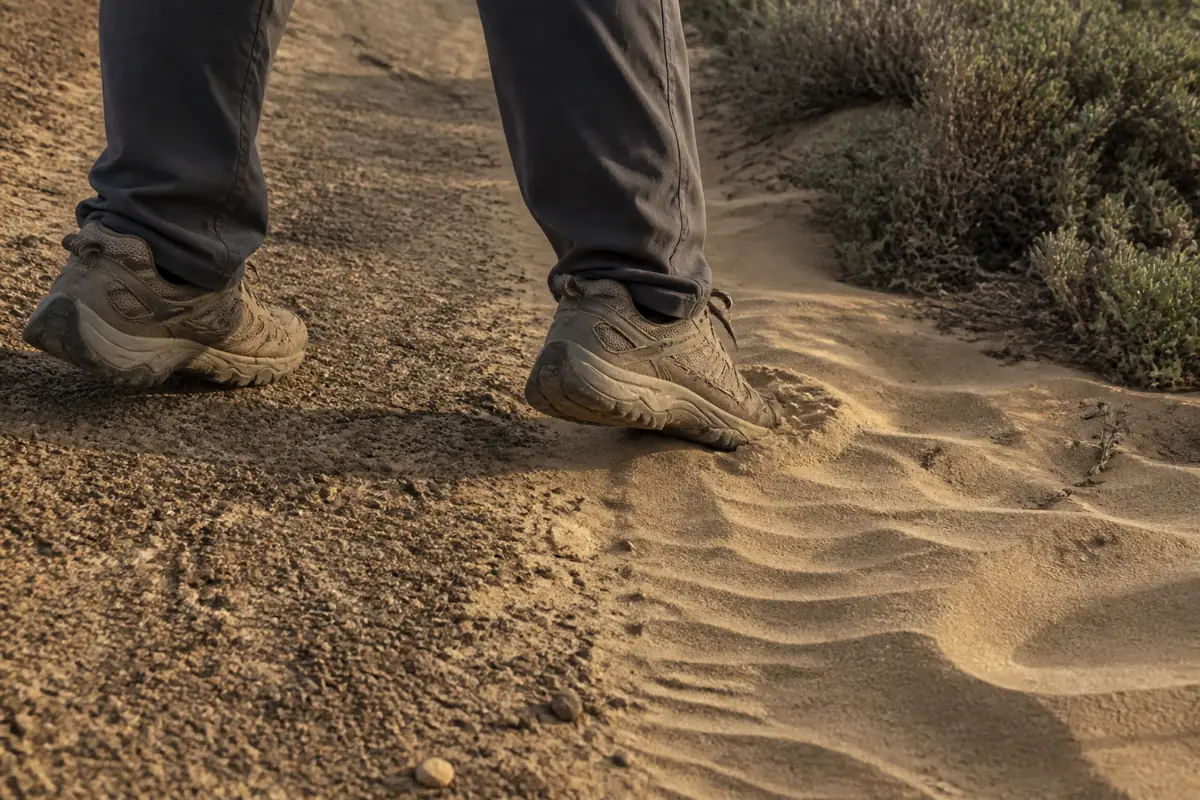
Pause at the transition and look backward.
A photograph of the bridge-side approach and one distinctive dune or vegetation line can help you find the correct return when fog or wandering around the lagoon changes the view.
When do wildlife closures change the beach extension?
Seasonal protection can limit beach travel without closing the entire Abbotts Lagoon approach. In 2026, the protected area south of the lagoon mouth is closed on weekends and federal holidays from the Saturday before Memorial Day through Labor Day to protect western snowy plover nests and chicks.
Observe birds from the established route and give feeding or nesting animals room. Leave No Trace here means choosing distance over a closer photograph and complying with every posted boundary.
How dangerous is the surf at Point Reyes Beach?
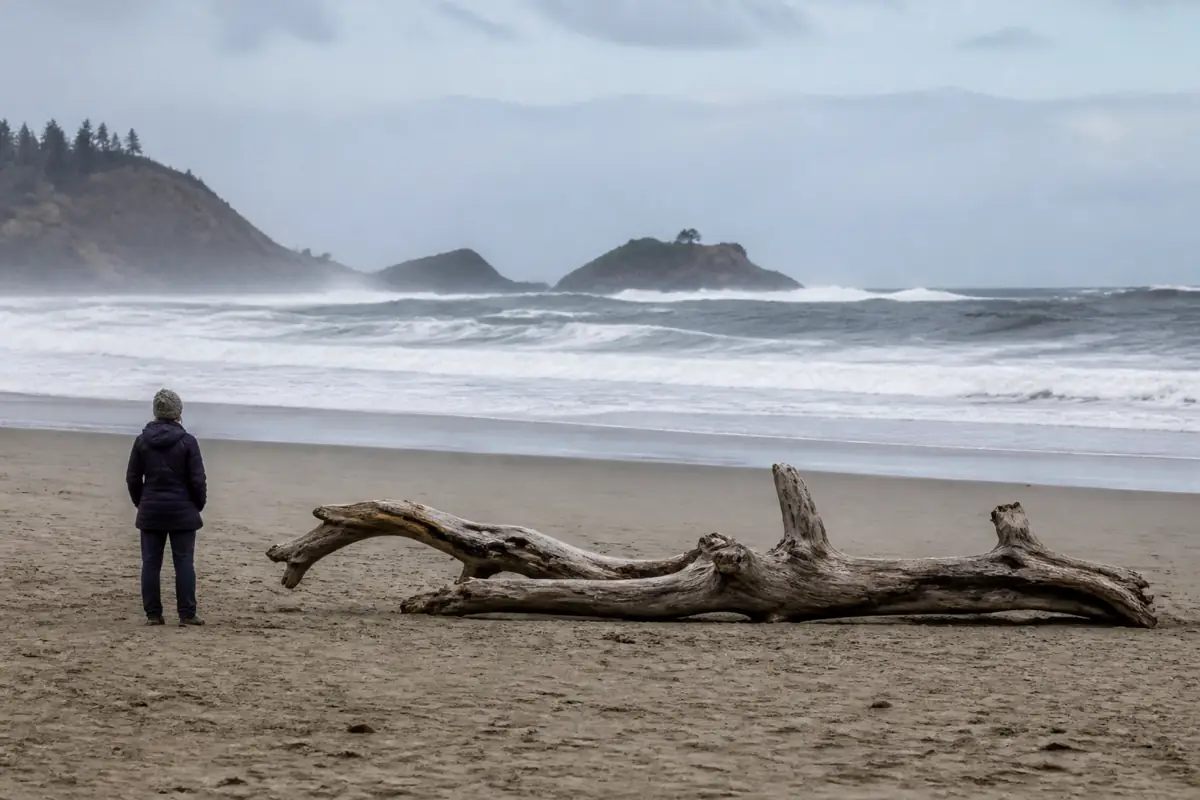
The lagoon can look calm while the outer beach carries sneaker waves, powerful shore break, cold water, and moving driftwood.
A quiet interval predicts nothing about the next set, so the wet-sand line is not a reliable place to rest.
- - Stay well inland from active shore break and watch several wave sets before choosing where to stand
- - Keep children and companions within immediate reach rather than spreading along the waterline
- - Do not sit, climb, or shelter on driftwood where a wave can move it
- - Treat cold-water immersion as an emergency with rapid hypothermia risk
- - Turn toward the lagoon route before fog removes the landmarks used on the way out
Tide information can explain how much beach may be exposed, but it cannot promise the absence of sneaker waves. If surf reaches farther inland than expected, leave the beach rather than searching for a narrowly drier strip.
Are dogs allowed, and how accessible is the route?
Pets are not allowed on Abbotts Lagoon Trail. Do not plan to leave a hiking companion dog in a vehicle while the group walks, especially when sun or temperature makes a parked car unsafe.
- Accessible parking
- Two designated spaces at the trailhead
- Trailhead facilities
- Accessible restrooms are available
- Lower-barrier route
- Gentle maintained approach to an overlook about 0.25 mile away
- Surface limit
- Sand after the footbridge is not uniformly accessible
- Pets
- Not allowed on the trail
- Wildlife viewing
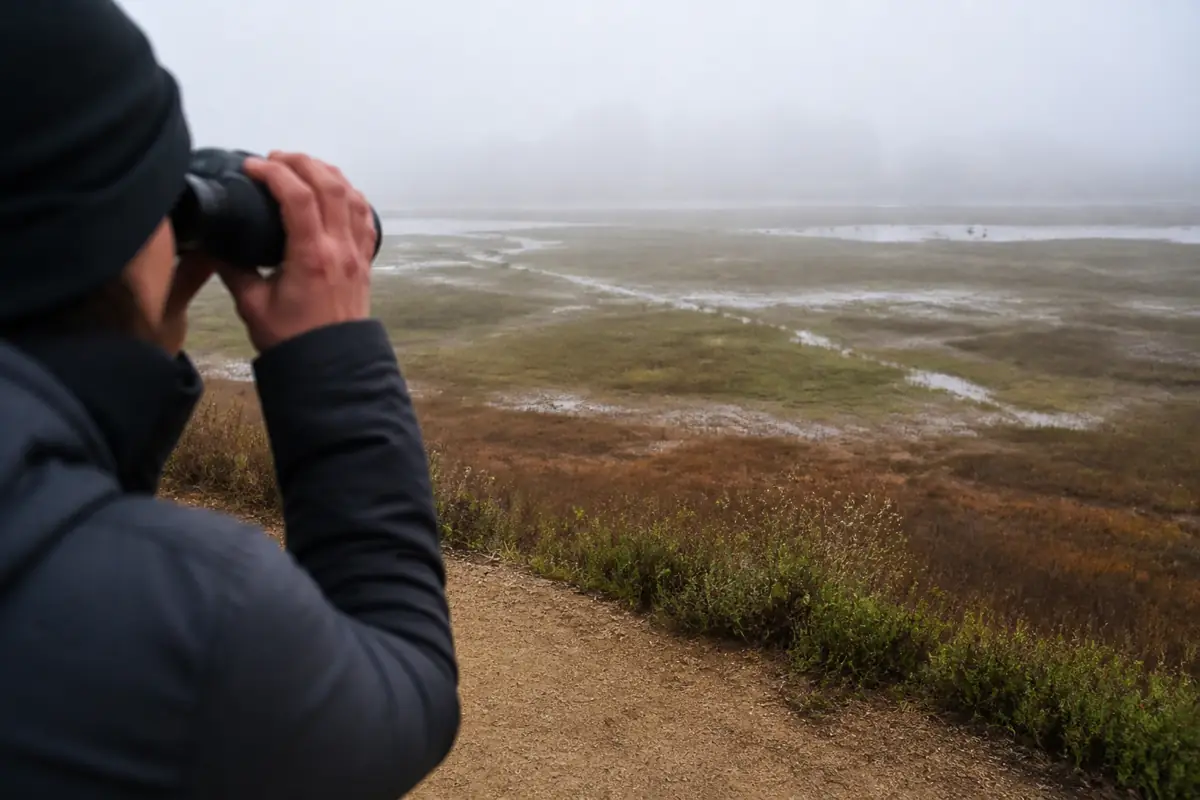
- Use binoculars and preserve distance
The accessible overlook is a destination in its own right, not merely the first part of an ocean hike.
Describe the surface change honestly to every participant and let the person using mobility equipment decide whether the later rough ground suits them.
Sources
Route and rules. National Park Service Abbotts Lagoon supports the overlook, footbridge, ocean distances, maintained and unmaintained surfaces, dog restriction, and general route description, verified August 30, 2026.
Closures and coast safety. Point Reyes current conditions, seasonal wildlife closures, and beach safety support current access checks, snowy plover protection, sneaker-wave risk, cold water, and driftwood caution, verified August 30, 2026.
RespectHazards to plan for
- sneaker waves
- cold surf
- moving driftwood
- strong wind
- fog
- seasonal wildlife closures