
What Do the Leave No Trace Principles Ask You to Do?
Seven principles become useful when each one changes a concrete choice before, during, or after a trip.
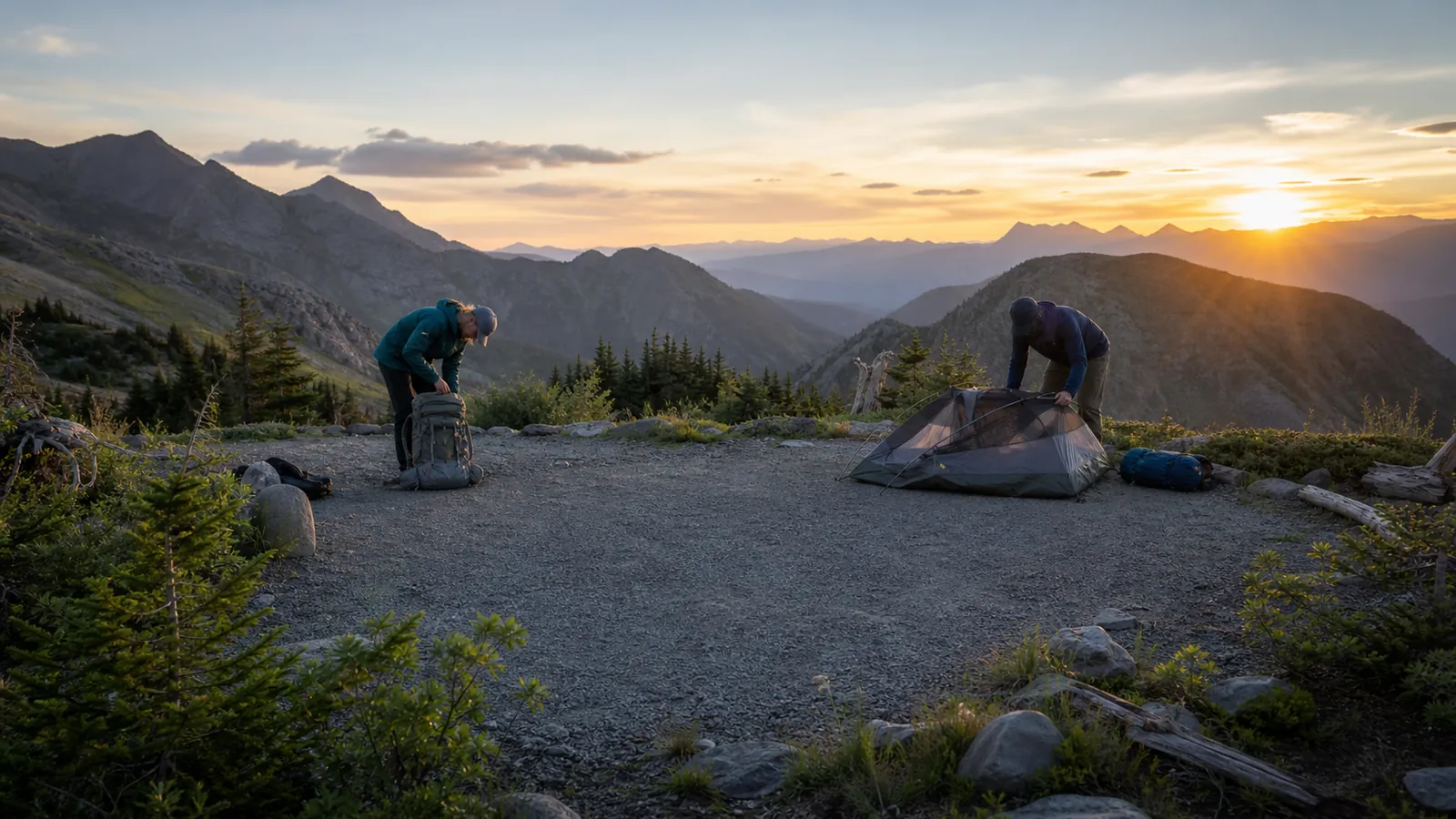
Leave No Trace is a decision framework for reducing avoidable damage, waste, wildlife conflict, and friction between visitors. Apply the local rule first, then choose the durable, reversible action that leaves the site functioning for whoever arrives next.
Leave No Trace is a way to make field decisions, not a promise that outdoor travel leaves no physical effect. Every boot compresses something, every campsite occupies space, and every group changes what wildlife and other visitors experience.
The practical job is to prevent avoidable impact and place necessary use where the land can absorb it. Local regulations come first because soil, water, wildlife, fire danger, and visitor pressure change the right method.
What are the seven Leave No Trace principles for?
The official principles are to plan ahead and prepare, travel and camp on durable surfaces, dispose of waste properly, leave what you find, minimize campfire impacts, respect wildlife, and be considerate of other visitors.
They provide questions to ask rather than one technique that fits every landscape.
| Decision | Principles involved | Field question |
|---|---|---|
| Before the trip | Plan ahead and prepare | Do the rules, conditions, group size, and equipment fit this place today? |
| On the ground | Travel and camp on durable surfaces | Will this step or campsite widen damage or create a new used area? |
| What leaves with you | Dispose of waste properly | Can food, soap, trash, and sanitation leave without creating another problem? |
| What remains | Leave what you find and minimize fire impacts | Will objects stay in context and will fire leave no scar or heat? |
| Living and shared space | Respect wildlife and consider other visitors | Does the group change animal behavior or another visitor's use of the place? |
The seven principles work together inside those five decisions. A campsite choice can involve preparation, durable surfaces, food storage, wildlife, fire, and consideration for the people sleeping nearby.
Start with local rules. A desert canyon that requires waste pack-out, a forest under a fire ban, and a campground with a provided food locker need different actions under the same principles.
The framework has three useful levels:
- Prevent an impact through timing, group size, preparation, or a different route. - Concentrate unavoidable use on an established or durable surface. - Disperse limited use only where regulations allow it and repeated traffic will not create a new path or campsite.
Those choices can conflict. Staying on a muddy established trail may look messier than stepping onto green vegetation, yet the narrow used corridor prevents the trail from becoming wider with every passing hiker.
An action also has more than one consequence. Leaving food scraps affects waste, wildlife behavior, the next visitor, and sometimes the animal that is later removed after learning to approach people.
You can use the principles to trace those consequences before choosing the most convenient method.
They also apply in city parks, beaches, picnic grounds, and developed campgrounds. The durable surface and waste method may differ, but preventing unnecessary damage and protecting shared space remain the same job.
You should not use "Leave No Trace" to conceal use from land managers or avoid permits. Good ethics includes following closures, capacity limits, and restoration work designed to keep an area usable.
Why does low-impact travel begin before the trailhead?
Many field impacts are fixed by the trip chosen at home. A group too large for small campsites, a route attempted during saturated conditions, or food packed without required storage cannot be repaired by careful footsteps later.
- Read current land-manager rules for permits, fire, camping, food, pets, and waste
- Match group size to trail and campsite capacity
- Avoid saturated ground and peak-use periods when a practical alternative exists
- Repackage food and remove material that would become small camp trash
- Carry the food-storage and sanitation system required for that place
- Prepare for weather so urgency does not force poor campsite choices
- Share the plan so route changes do not create an unplanned search
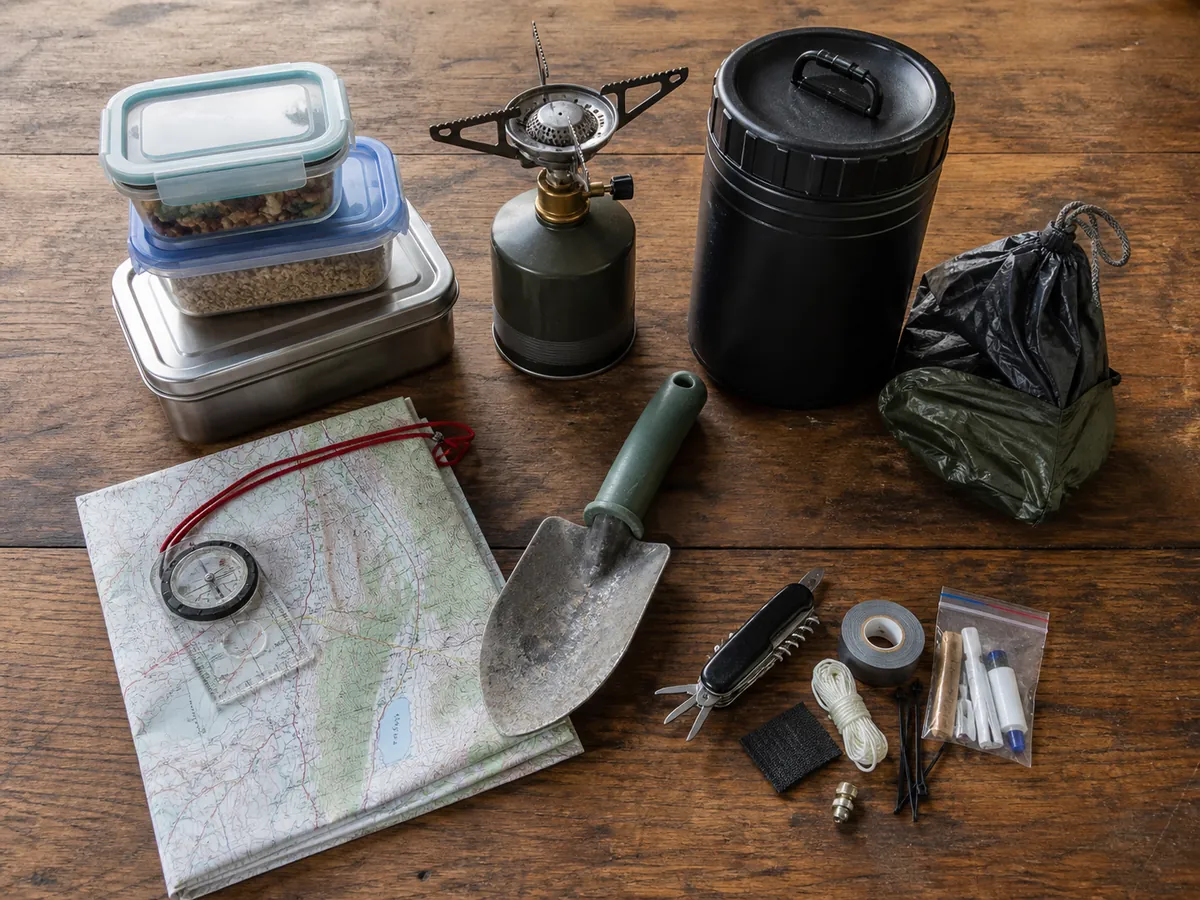
Group size changes more than noise. Large parties need more sleeping area, concentrate cooking and bathroom use, and can push activity beyond an established site's durable footprint.
Timing changes soil response. Wet trails deform and widen more easily, while crowded periods increase the chance that every established campsite, parking area, and toilet is already carrying heavy use.
Preparation protects the site too. A group that lacks rain protection may cut vegetation for shelter or light a prohibited fire because the weather feels urgent.
You should check the official source close to departure. Fire restrictions, food-storage orders, closures, water conditions, and waste rules can change more quickly than a general outdoor-ethics article.
Build a fallback that has a different impact rather than a weaker version of the same plan. If the intended camp is occupied or saturated, know the legal alternative before the group begins expanding the first site.
If no lower-impact fallback exists, change the trip. Preparation includes the willingness to choose another day or place when current conditions make the original plan inappropriate.
Should you walk through mud or around it?
On an established trail, stay on the tread even when it is wet or muddy unless the land manager has closed or rerouted it.
Walking around the edge creates a second track, then later hikers step farther around that damage.
| Surface or setting | Lower-impact action | Reason |
|---|---|---|
| Established trail, including mud | Stay within the existing tread | Prevents widening into vegetation and soil |
| Rock, gravel, dry grass, or snow | Concentrate travel where permitted | These surfaces often tolerate use better |
| Cryptobiotic soil, wetland, or fragile plants | Avoid completely | A small disturbance can persist for years |
| Established campsite | Keep tents, cooking, and traffic inside the footprint | Contains repeated use in one place |
| Pristine dispersed area where camping is allowed | Spread limited use and avoid creating paths | Prevents one new durable-looking site from forming |
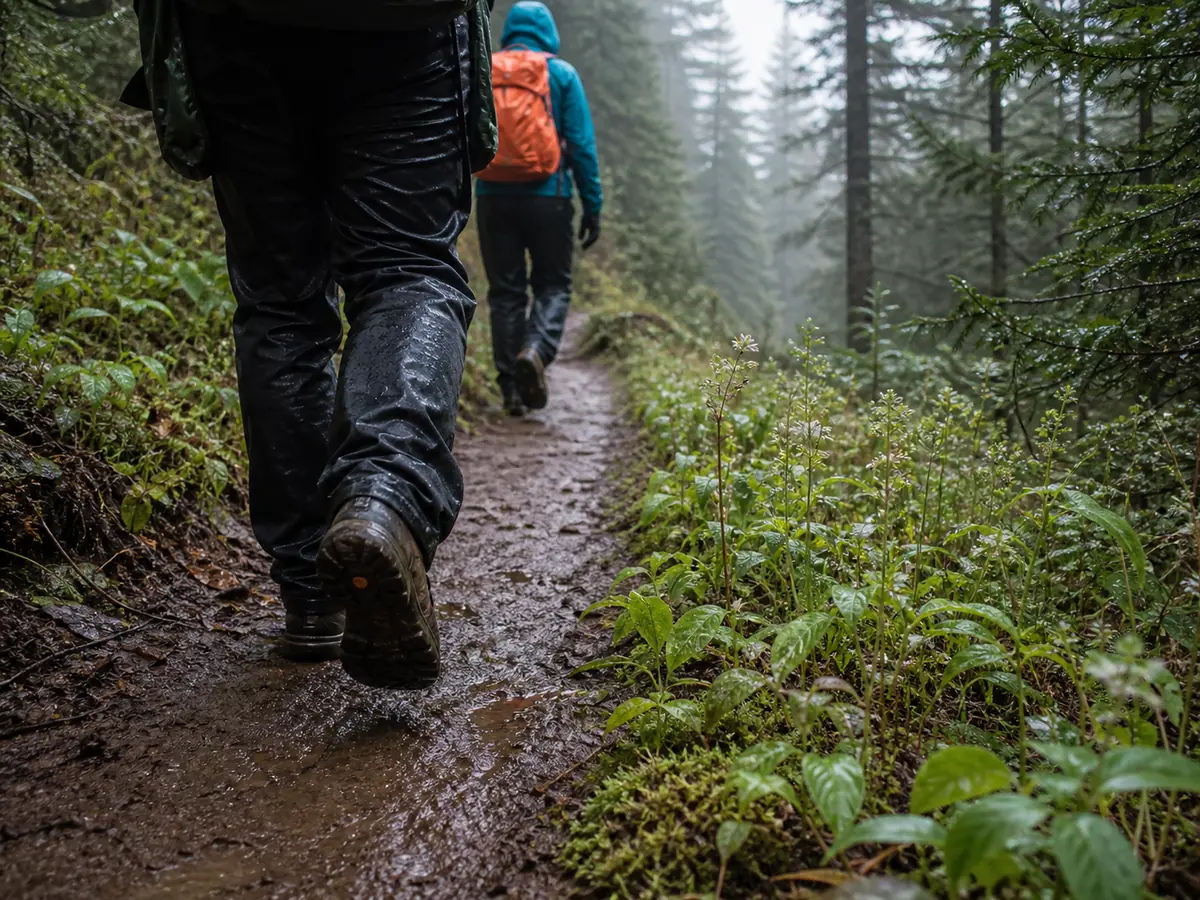
Durability is not hardness. Rock generally resists trampling, but a rock slab covered with delicate lichen or beside nesting wildlife can still be a poor choice.
Established campsites should not be improved. Do not trench around tents, move logs into furniture, strip branches, or expand tent pads because the current footprint feels inconvenient.
In a dispersed area where camping is legal, choose a surface that needs no construction. Keep the stay short, vary walking lines between kitchen, water, and sleeping areas, and leave before repeated movement creates a visible network.
You should not apply dispersal inside a heavily used established site. There, spreading out usually enlarges the damage rather than allowing the ground to recover.
Travel in single file on a narrow established trail unless passing requires a brief safe step. Side-by-side walking and repeated passing can turn a single tread into parallel lanes.
When stepping aside, choose the most durable nearby spot and wait there rather than continuing along the edge. One deliberate pause causes less expansion than several moving footsteps.
How do you dispose of food, washing water, and human waste?
If an item arrived in your pack, the default is that it leaves in your pack. Fruit peels, nut shells, tea bags, burned foil, fishing line, and spilled food are trash even when some material could eventually decompose.
Toilet paper and hygiene products may need to be packed out even where burying human waste is allowed. Use an opaque, secure system and follow the land manager's distance and depth instructions rather than importing one universal number.
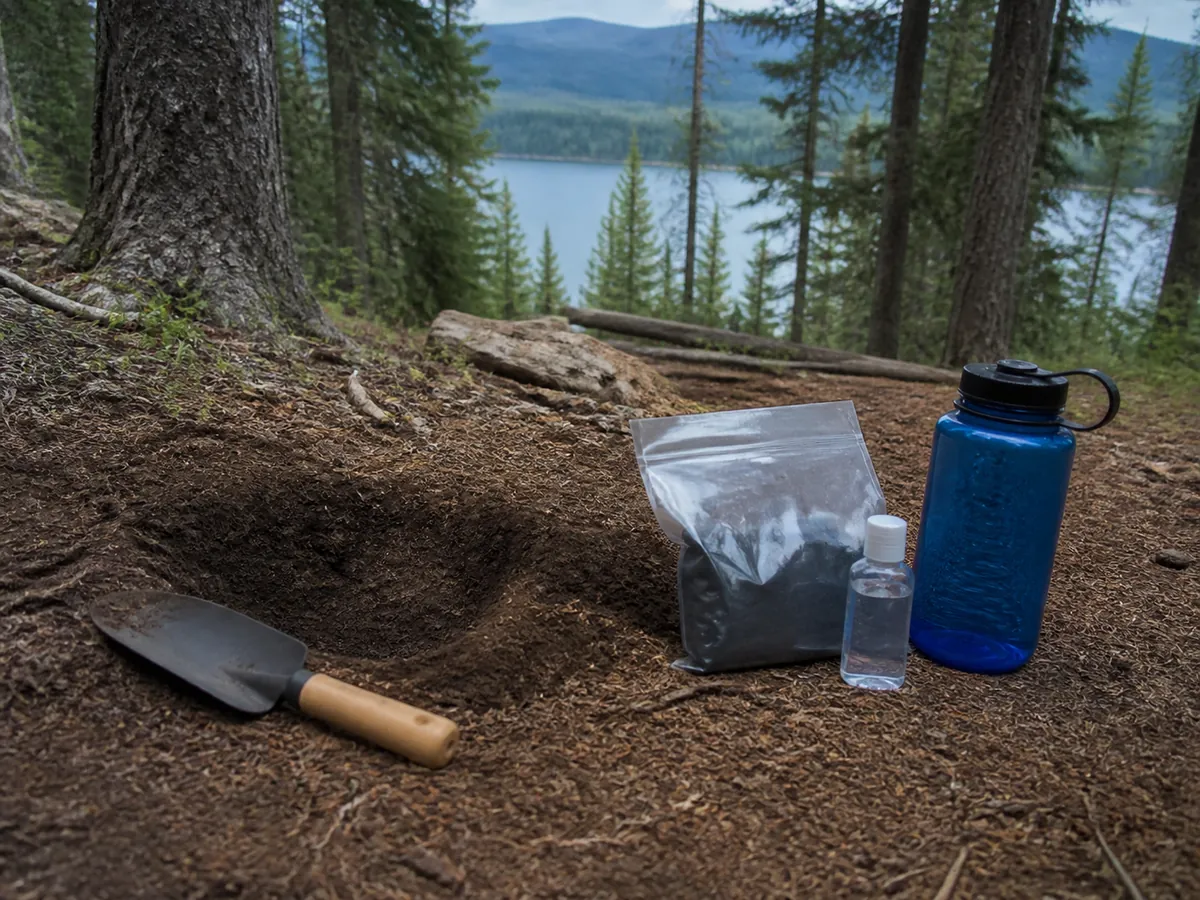
Biodegradable does not mean harmless. Food particles and scented water can attract animals, while soap can affect water quality even when labeled biodegradable.
You should use a small amount of water away from lakes and streams according to local guidance. Strain food scraps into the trash, disperse the remaining water across a broad suitable area, and never dump it into a fire ring or one concentrated spot.
Keep these universal pack-out items together:
- Food scraps and packaging. - Hygiene products and wipes. - Pet waste, including filled waste bags. - Microtrash such as torn corners, wrappers, tape, and cord pieces. - Any toilet paper or waste the local rule requires you to carry.
Inspect the kitchen in daylight. Tiny noodles, oats, and drink powder are easy to miss and still teach wildlife that camps contain food.
Water sources need protection from both waste and trampling. Collect water without washing dishes, bodies, or clothing at the shoreline, and follow the site's required setback for every disposal method.
Carry water away for washing so one popular access point does not become a soap, food, and mud basin.
Pet waste belongs in the trip's sanitation plan. Bagging it and leaving the bag beside the trail only changes the form of the litter, so carry it to the disposal point required by the land manager.
Can you have a campfire and still Leave No Trace?
A fire must be legal, appropriate, and completely cold before you leave.
Legal is only the first test. In an area with scarce wood, heavy use, strong wind, dry fuels, or no established fire structure, a stove may meet the real cooking need with far less impact.
- Check bans and local rulesA restriction ends the fire decision
- Ask whether a stove meets the needCooking does not automatically justify a ground fire
- Use an existing ring where permittedKeep the impact inside a structure already provided
- Keep the fire smallUse only appropriate dead and down wood under local rules
- Drown and stir the remainsReach every pocket of heat rather than wetting the surface
- Confirm the ash is coldLeave only when no warmth remains to the touch
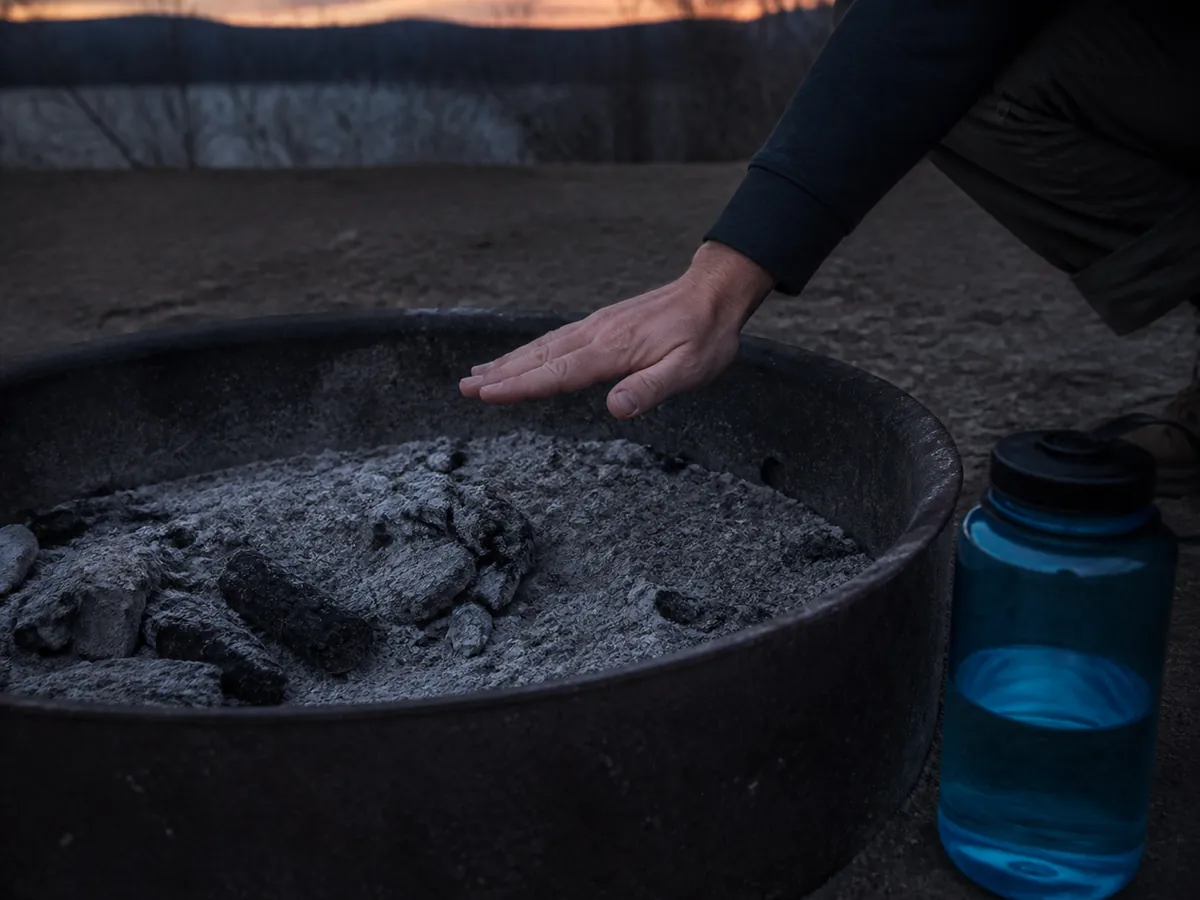
Do not strip branches from standing trees or break large pieces that would decompose into the site. Wood collection rules vary, and some places prohibit collecting anything.
Burning trash creates residue, odor, and sometimes toxic fumes. Foil, plastic, food, glass, and cans leave with you rather than entering the fire.
An established ring does not make a fire safe during restrictions. Weather, fuel moisture, wind, and official orders control the current decision.
How do you avoid changing wildlife behavior?
An animal that receives food may repeat the approach with the next group. The visible moment can be brief while the behavior change persists.
Food and trash reward animals for entering camps, while a close approach can displace them from feeding, rest, nests, or young. Sensitive seasons raise the cost of disturbance, especially during mating, nesting, raising young, and winter.
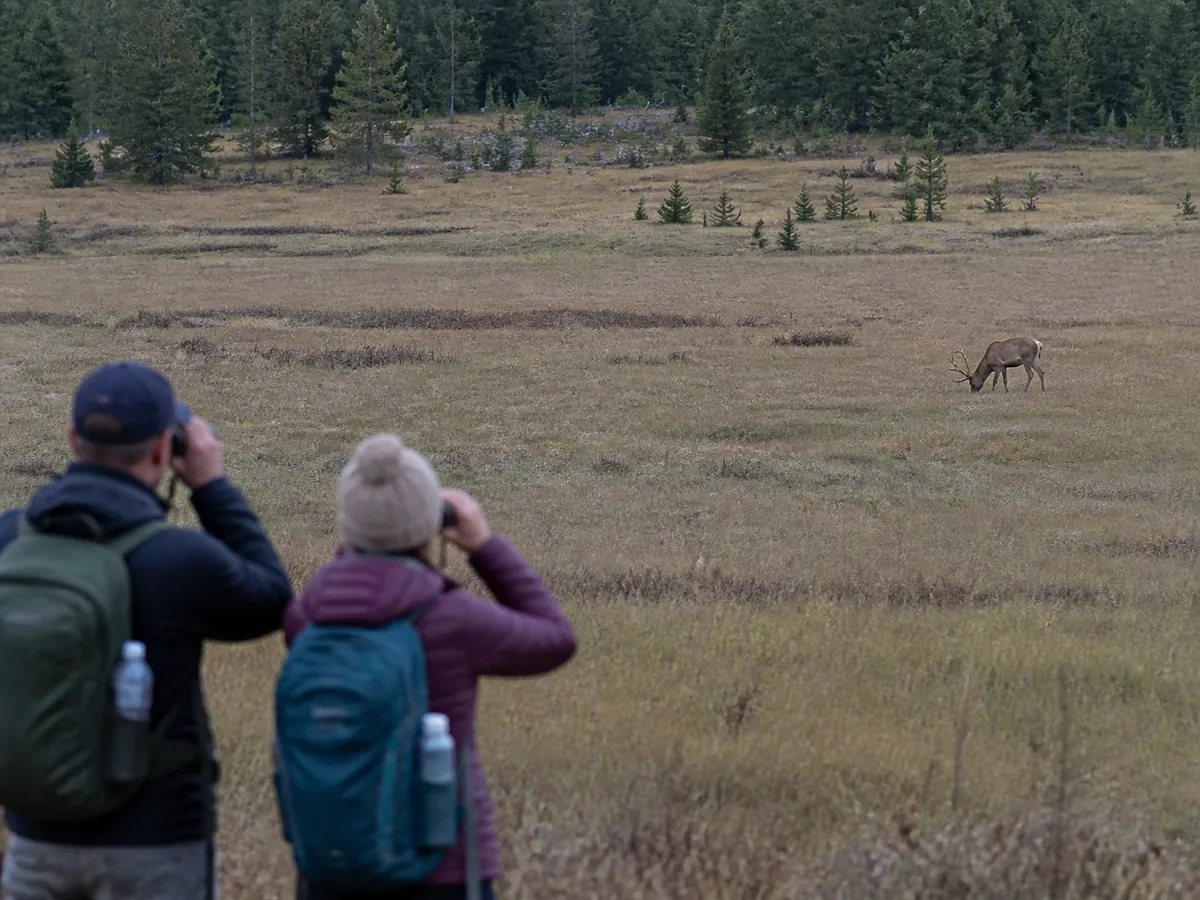
One loose snack can defeat the food-storage system. Store food, trash, scented items, and cooking equipment in the required system.
Never follow an animal for a closer photograph. If it stops feeding, changes direction, raises alarm posture, or watches you continuously, increase the distance.
Pets need the same planning. Leash rules are the legal minimum, while some trips are poor choices for a pet because of nesting birds, large animals, heat, terrain, or crowded trails.
Wildlife protection includes the next visitor. Secure food and clean the site so another group does not inherit an animal already investigating the campsite.
Why should mud, seeds, rocks, and artifacts stay where they are?
Leaving what you find includes more than refusing a souvenir. Mud and seeds on boots, tent stakes, tires, watercraft, and pet fur can carry invasive organisms between trailheads, camps, and waterways.
Clean before you move. Remove visible soil, seeds, burrs, and plant material from footwear and equipment, then follow local cleaning or drying instructions for the activity and landscape.
Do this at the end of the trip, where the material originated, rather than brushing it off at the next destination. Pay particular attention to boot tread, gaiters, tent hems, trekking-pole baskets, tire grooves, and damp gear that contacted soil or water.
Leave rocks, plants, antlers, artifacts, and historic objects in context. Moving one item can be illegal, remove information from a cultural site, or encourage a visible pattern of collection.
Do not carve, stack, dig, or build unless the land manager authorizes that work. An unofficial cairn can direct later visitors into a fragile area or away from the maintained route.
Photographs preserve the encounter without separating an object from its place. When you find something culturally sensitive, leave it untouched and report it through the land manager's stated process if reporting is requested.
How should you leave a campsite for the next visitor?
Other people encounter the place you leave, not the intentions you had. Noise, blocked trails, altered camps, and food residue all change their experience.
A departure check starts at the kitchen and sleeping area, then widens beyond the exact footprint. Remove food residue, cord, tape, tissue, tent stakes, and microtrash, and make sure the next visitor does not need to move or repair anything.
At camp, walk a slow circle beyond the occupied area. Look from ground level for reflective wrapper corners, tissue, food, tent stakes, and pieces of cord.
Sound travels beyond the campsite. Speakers, shouting, drones, and repeated calls can reach wildlife and visitors far outside the visible group area.
Yielding rules vary by trail system, and safety controls the actual move. Communicate early, step to a durable safe side where required, and avoid forcing another user off the tread.
Then listen and look at the site as if arriving for the first time.
A successful departure leaves no new task, attraction, hazard, or instruction for the next visitor.
Sources
The definitions and field guidance for all seven principles come from the Leave No Trace Center for Outdoor Ethics' official Seven Principles and Skills and Ethics Guide. Its current Leave What You Find guidance also covers cleaning equipment between trips to limit the spread of invasive species.
The National Park Service explains the principles and their application across parks in Leave No Trace Seven Principles.
Site-specific regulations can override general technique. Verify fire, food-storage, camping, pet, and waste requirements with the land manager responsible for the actual trip.
Step by stepPractical steps
- Check local rules and current restrictions
- Plan food, storage, waste, water, and group size before leaving
- Travel and camp on durable surfaces
- Pack out trash and use the required human-waste method
- Leave natural and cultural objects where they are
- Skip fires when conditions or impact make them a poor choice
- Keep wildlife wild and be considerate of other visitors
AnswersQuestions readers ask
Are fruit peels and nut shells litter?
Yes. They are food waste brought into the site, can attract wildlife, and should leave with the rest of the trash.
Should you leave a filled dog-waste bag beside the trail?
No. Carry the filled bag to the disposal point required by the land manager. Leaving a bag beside the trail changes the form of the litter rather than removing it.
Why clean boots and gear between trips?
Mud, seeds, burrs, and plant material can move invasive organisms between trailheads, camps, and waterways. Clean where the material originated and follow local activity-specific instructions.
Should you walk through mud or around it?
On an open established trail, stay within the existing tread rather than widening the damage into vegetation. Follow closures or reroutes provided by the land manager.
Is biodegradable soap safe in a lake or stream?
No. Biodegradable does not mean harmless in water. Use a small amount away from shore according to local guidance and disperse strained wash water in a suitable area.
Does an existing fire ring make a fire acceptable?
No. Current restrictions, wind, fuel conditions, wood scarcity, and the real need for a fire still control the decision. A stove often creates less impact.