
Agate House Trail: Surface, History, and Viewing Rules
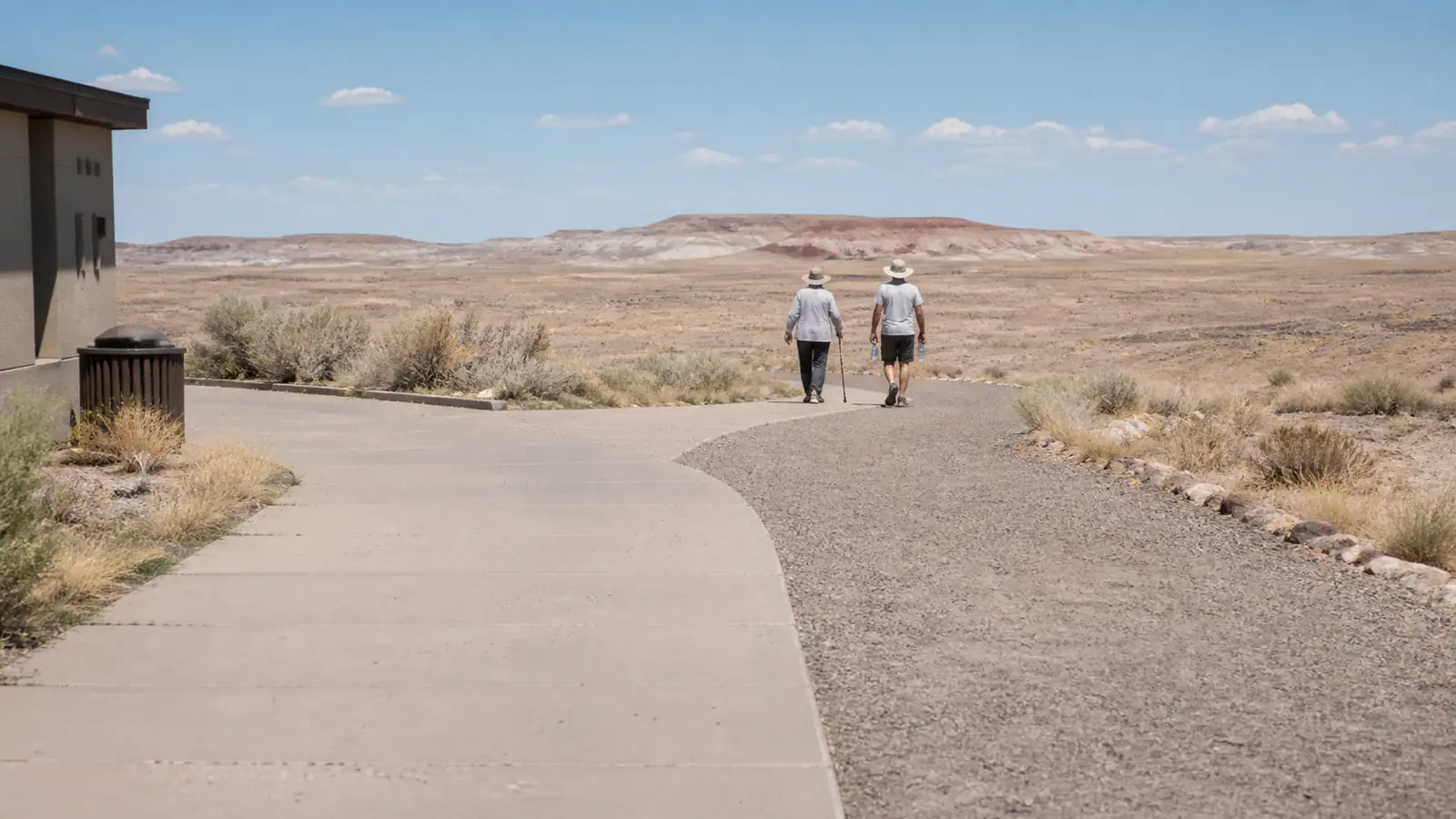
Agate House Trail is a two-mile walk from Rainbow Forest Museum with a paved first half-mile and rougher tread beyond. The destination is a protected eight-room reconstruction that visitors must view from at least 15 feet away.
Agate House Trail is a two-mile out-and-back from Rainbow Forest Museum. The first half-mile is paved, the remaining tread is rougher, and the destination is an eight-room Ancestral Puebloan structure that you view from at least 15 feet away.
The walk is short enough to combine with Long Logs, but surface, sun, park hours, and cultural-site rules decide whether that addition makes sense. Treat the paved approach as a complete option when the rough ground does not suit someone in your group.
What is the Agate House Trail?
The route crosses open high-desert country to a structure built with petrified wood and mud mortar. Its distance is modest, while the lack of continuous shade and the change from pavement to rough tread make preparation more important than the mileage suggests.
- Distance
- 2 miles round trip
- Start
- Rainbow Forest Museum parking area
- Initial surface
- Paved for about the first half-mile
- Later surface
- Broad but rough unpaved tread
- Destination
- Eight-room Ancestral Puebloan structure
- Viewing boundary
- Stay at least 15 feet from Agate House
- Combined option
- 2.6 miles with Long Logs
Use the museum area, surface transition, or Agate House as deliberate endpoints. The paved approach can be complete when the full route does not suit the group.
How accessible is the trail after the paved section?
National Park Service measurements report an average grade of 4.1 percent and a maximum of 14.7 percent. Grade alone does not settle accessibility because rough material, cross slope, heat, and the effort of the return also affect mobility.
| Feature | Paved approach | Rough section | Decision to make |
|---|---|---|---|
| Surface | Firm pavement | Uneven gravel and natural tread | Decide whether wheels, balance, and footwear suit the change |
| Grade | Generally gentle overall | Includes a maximum reported grade of 14.7 percent | Preserve enough effort for the return climb or descent |
| Width | Broad route | Generally broad but less predictable | Passing space does not remove roughness |
| Shade | Limited | Limited | Carry enough drinking water and sun protection for the full exposure |
| Access certainty | Lower-barrier option | Not uniformly accessible | Let the person using mobility equipment choose the turnaround |

Stop at the material boundary and inspect the actual conditions rather than relying on one accessibility label. Surface and cross slope matter with grade because loose gravel can change rolling and walking effort.
What is original at Agate House?
People occupied this area roughly between 1050 and 1300, and the structure had eight rooms made with pieces of petrified wood held by mud mortar. It belongs to the history of living descendant communities rather than serving only as a novelty built from unusual stone.
Read the visible walls in historical order
- Ancestral occupationResidents built and used an eight-room structure with local materialThe place was part of a lived cultural landscape
- Archaeological investigationResearchers documented the remaining walls and materialThe site entered a recorded preservation history
- 1930s reconstructionWorkers rebuilt walls using original petrified woodMuch of today's form reflects a modern interpretation
- Present visitDescendant connections and fragile material continueViewing rules protect a cultural site, not a display prop
During the 1930s, workers reconstructed the walls with original petrified wood recovered at the site. The visible structure is therefore original material in a modern reconstruction, not an exact reproduction of the ancient eight-room building.
Material and form differ. That distinction lets you value the surviving material without mistaking the present wall arrangement for untouched fabric from the 1050-to-1300 occupation period.
How close can you get to Agate House?
The 2026 Superintendent's Compendium keeps the structure closed to public entry and requires visitors to remain at least 15 feet away. Do not touch, climb, enter, or remove material, even when a fragment looks loose.
Children and leashed pets need close supervision near the boundary. Explain the rule before arriving so curiosity does not become an avoidable touch or climb.
Should you add Long Logs to the walk?
Combining Long Logs with Agate House creates a 2.6-mile route. Add it when your group has time before the park road and Rainbow Forest Museum close, enough water for extended sun exposure, and interest in a broader petrified-wood landscape.
Choose Agate House only
Best when cultural history is the priority or rough ground, heat, and time favor the shorter out-and-back.
Combine with Long Logs
Useful when the group wants more petrified-wood context and still has a clear return margin before closing.
Keep the paved segment
A complete low-barrier option when the later surface does not fit the group's mobility.
Bring a leashed pet carefully
Pets must remain leashed, and you must keep them outside structures and protected areas under current rules.
Leave the bicycle behind
Bicycle access ends after the initial half-mile segment, so it cannot carry you through the full walking route.
The park road and Rainbow Forest Museum currently close at 5 p.m. Mountain Standard Time. Arrive early enough that the return does not depend on rushing past the cultural site or pushing a tired group over rough ground.
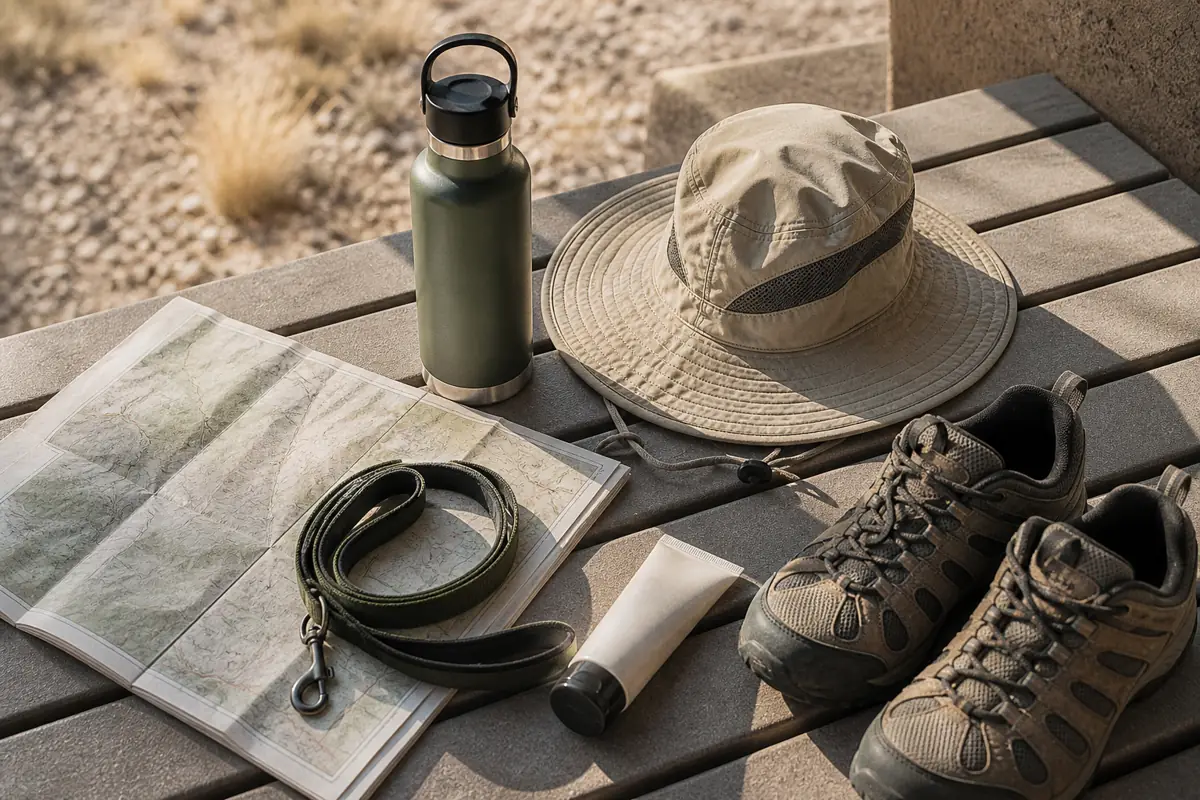
Before choosing the combined route, use the same questions you would apply when choosing a hiking trail: surface, exposure, available time, group mobility, and a comfortable return. More mileage adds value only when those conditions still support the reader's purpose.
Sources
Trail and site. National Park Service Agate House Trail and Agate House history support the route distance, surface change, eight-room structure, materials, excavation, and reconstruction history, verified August 30, 2026.
Current rules. Petrified Forest current conditions, the 2026 Superintendent's Compendium, and park regulations support hours, the 15-foot closure, resource protection, pet rules, and bicycle limits, verified August 30, 2026.
RespectHazards to plan for
- heat
- sun exposure
- rough surface
- limited shade
- park closing time