
When Does Hyponatremia Become an Emergency on a Hike?
The drinking history can matter as much as the headache.
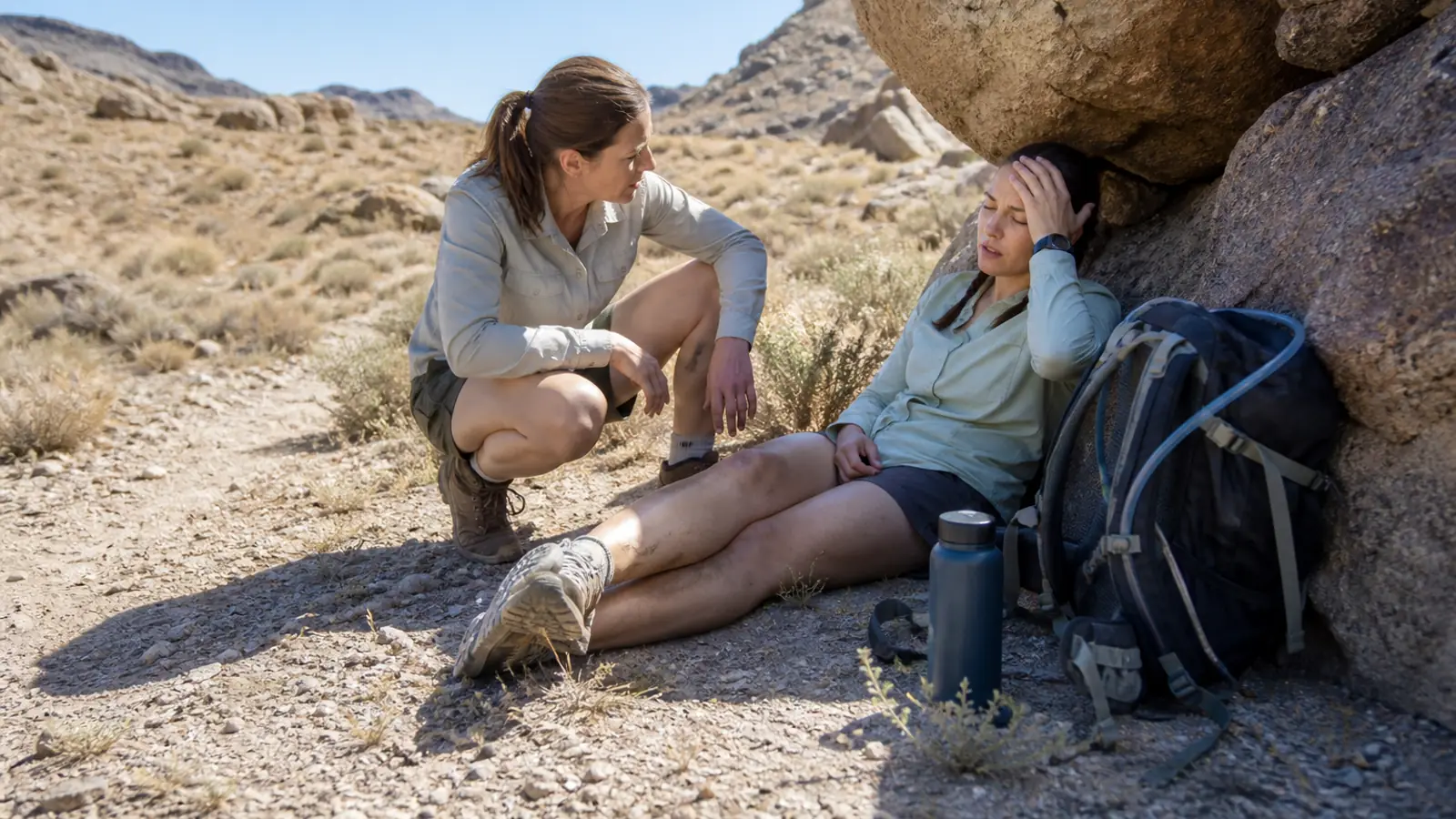
Exercise-associated hyponatremia can resemble dehydration or heat illness while requiring a different fluid decision. Drinking history, thirst, urination, swelling, and neurological change help a hiking party stop the actions that could worsen it and call for help at the right threshold.
A hiker with a headache, nausea, and heavy legs may look dehydrated. The same hiker may instead have too much water in the body and too little sodium relative to that water, which makes another large drink the wrong response.
Exercise-associated hyponatremia needs that distinction. It can develop during a long hike or in the 24 hours afterward, and the early signs overlap heat exhaustion, dehydration, ordinary fatigue, and stomach trouble.
You cannot confirm it by appearance. You can, however, use the drinking history, thirst, urination, swelling, temperature, and changes in thinking or coordination to make safer decisions while arranging help.
Why can drinking too much water cause hyponatremia?
Hyponatremia means the sodium concentration in blood has fallen below the normal range. In exercise-associated hyponatremia, that drop happens during physical activity or within 24 hours after it.
The common outdoor version is primarily a water-balance problem. A person drinks more fluid than the body loses, while exertion, pain, nausea, heat stress, or physical stress can keep antidiuretic hormone active and make the kidneys hold water.
Fluid intake outruns loss
Water enters faster than sweat, urine, breathing, and other losses remove it, so total body water rises instead of falling.
Exercise limits water clearance
Antidiuretic hormone can remain active during prolonged effort, especially with nausea or pain, which reduces how quickly the kidneys release free water.
Sodium becomes diluted
The sodium is spread through more retained water. That is different from proving the hiker simply failed to eat enough salt.
Plain water can contribute to that excess, but a sports drink can too. Most sports drinks are still hypotonic compared with blood, so electrolytes do not cancel volume when a person keeps drinking beyond losses.
Long duration matters because the mismatch accumulates. Exercise-associated cases have been reported in hikers, backpackers, trekkers, climbers, ultrarunners, military trainees, and cold-weather endurance athletes, so this is not only a hot-desert problem.
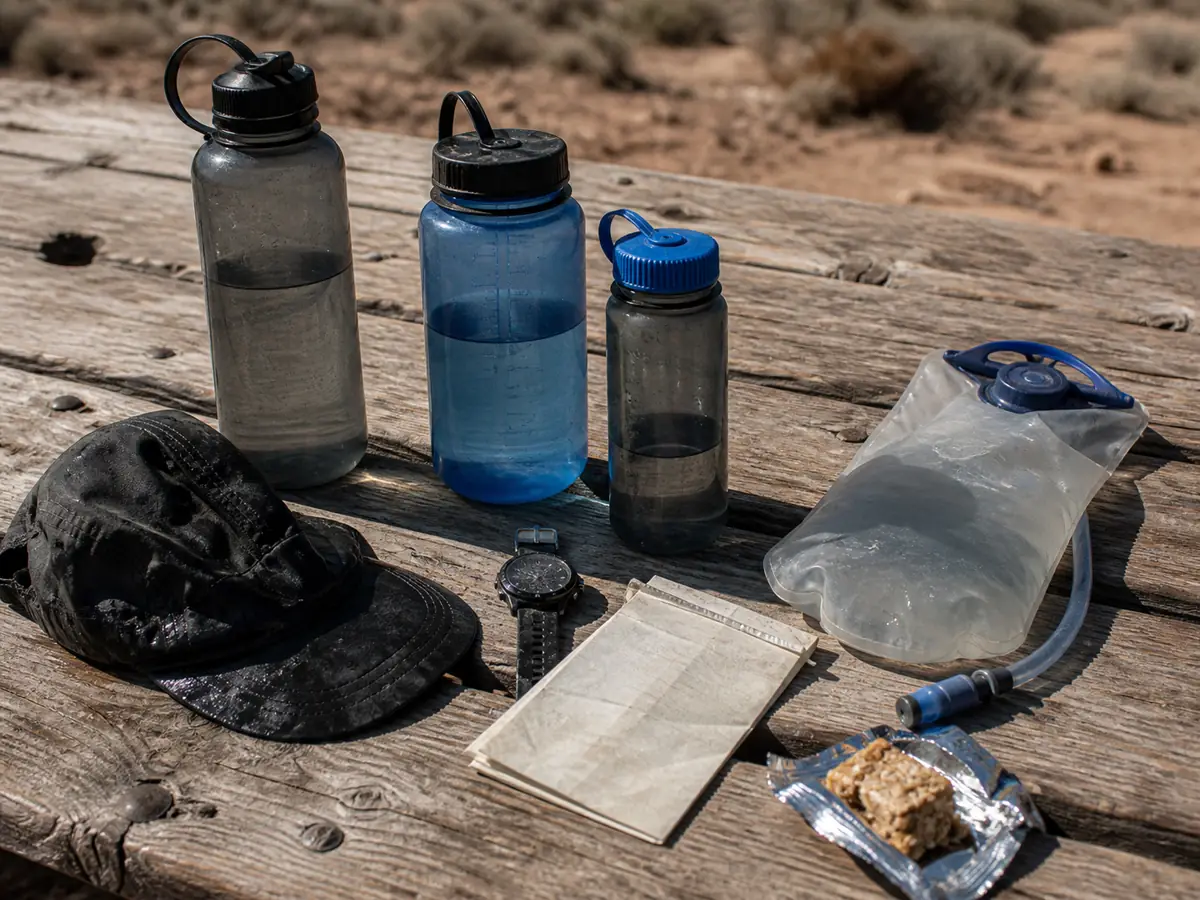
The useful question is not whether the hiker drank water. Ask how much they consumed, over how many hours, whether they were drinking from thirst or from a schedule, and whether their body seems to be shedding or retaining that fluid.
Hyponatremia can look like an ordinary bad hour
The first symptoms are frustratingly ordinary. Headache, nausea, dizziness, fatigue, malaise, irritability, and vomiting can all occur before there is any obvious neurological emergency.
Context gives those symptoms more meaning. Bloating, puffy hands, tight rings, repeated clear urination, low thirst despite continued drinking, or a known gain in body weight support an overhydration history, although none confirms hyponatremia alone.
A companion may notice the change before the affected person does. Answers become slow or inappropriate, walking becomes clumsy, behavior stops matching the situation, or a normally capable person cannot complete a familiar task.

Confusion and poor coordination are escalation signs. Severe cases can progress to agitation, seizures, profound drowsiness, coma, breathing difficulty, and brain swelling as water moves into cells.
Symptoms do not always peak at the trailhead. Exercise-associated hyponatremia is defined across a window extending up to 24 hours after activity, so a worsening headache, vomiting, or confusion later that evening still belongs in the history.
A blood sodium measurement is needed to confirm the diagnosis. The practical job outside is to recognize a plausible pattern, stop the actions that could worsen it, and treat neurological change as an emergency.
How can you tell hyponatremia from dehydration or heat illness?
There is no reliable visual test. All four conditions below can produce weakness, headache, nausea, vomiting, or collapse, and a hiker may have more than one problem at once.
History narrows the field better than one symptom does. The amount and timing of fluid, thirst, urine pattern, swelling, heat exposure, cooling response, and mental state matter together.
| Condition | Clues that support it | Immediate implication |
|---|---|---|
| Exercise-associated hyponatremia | Large or scheduled fluid intake, little thirst, bloating or puffiness, frequent clear urine, worsening headache, confusion, or poor coordination | Stop routine drinking and exertion, seek medical help, and do not improvise treatment from symptoms alone |
| Dehydration | Thirst, dry mouth, reduced or dark urine, postural dizziness, and a history of intake falling behind losses | Rehydration may be appropriate when the person is alert and can swallow, but reassess if neurological signs appear |
| Heat exhaustion | Heavy fatigue, nausea, sweating, weakness, and preserved mental status with improvement after rest and cooling | Stop, move to shade, cool, and monitor closely for behavior or thinking changes |
| Heatstroke | Altered mental status in a hot person, with collapse, confusion, aggression, seizure, or inability to answer simple questions | Activate emergency help and cool immediately rather than waiting for certainty |
Thirst, dry mouth, postural dizziness, and low urine output support dehydration, but they do not prove it. A substantial drinking history, low thirst, bloating, puffiness, or weight gain points the other way toward fluid overload.
Mental status changes do not settle the cause either. They make the situation more urgent because both severe hyponatremia and heatstroke can affect the brain, while true heatstroke loses outcome-critical time if cooling waits for a perfect diagnosis.
Uncertainty changes the response. Do not keep pouring fluid into a person whose intake already appears excessive, and do not withhold immediate cooling from a hot, confused person while debating sodium.
Core temperature and serum sodium are the measurements that clarify the case clinically. Most hiking parties have neither, which is why a precise fluid history and an early call for trained help carry more value than a confident label.
Stop routine fluid when overdrinking fits the history
Stop the exertion and stop automatic drinking. Move the person to a safe resting position, note the time, and contact emergency services or search and rescue when there is confusion, poor coordination, seizure, severe drowsiness, repeated vomiting, breathing trouble, or rapid deterioration.
An alert person with mild symptoms and a strong overdrinking history should rest and avoid further routine fluid while professional advice is sought. This is a cautious holding action, not a field diagnosis and not a reason to delay evacuation when symptoms progress.
Protect a drowsy or vomiting person's airway by placing them on their side when it is safe to do so. Keep them from walking unsupported, monitor breathing and responsiveness, and be ready to start the emergency response appropriate to your training if they become unresponsive.
Do not make a concentrated salt drink or ask someone to swallow salt tablets as an improvised cure. Hypertonic saline is a trained-responder treatment, and the concentration, route, monitoring, and diagnosis all matter.
The heatstroke exception remains important. If the person is hot and mentally altered after exertion, call for help and begin effective cooling while you withhold unsafe oral fluid, because waiting for laboratory certainty can also cause harm.
Write down what the party knows before the details blur:
- when symptoms began and how they changed, - approximate fluid volume, drink type, and timing, - whether drinking followed thirst or a schedule, - urine frequency and appearance, - food, electrolyte products, and medicines taken, - heat exposure, pace, rest, and cooling already attempted.
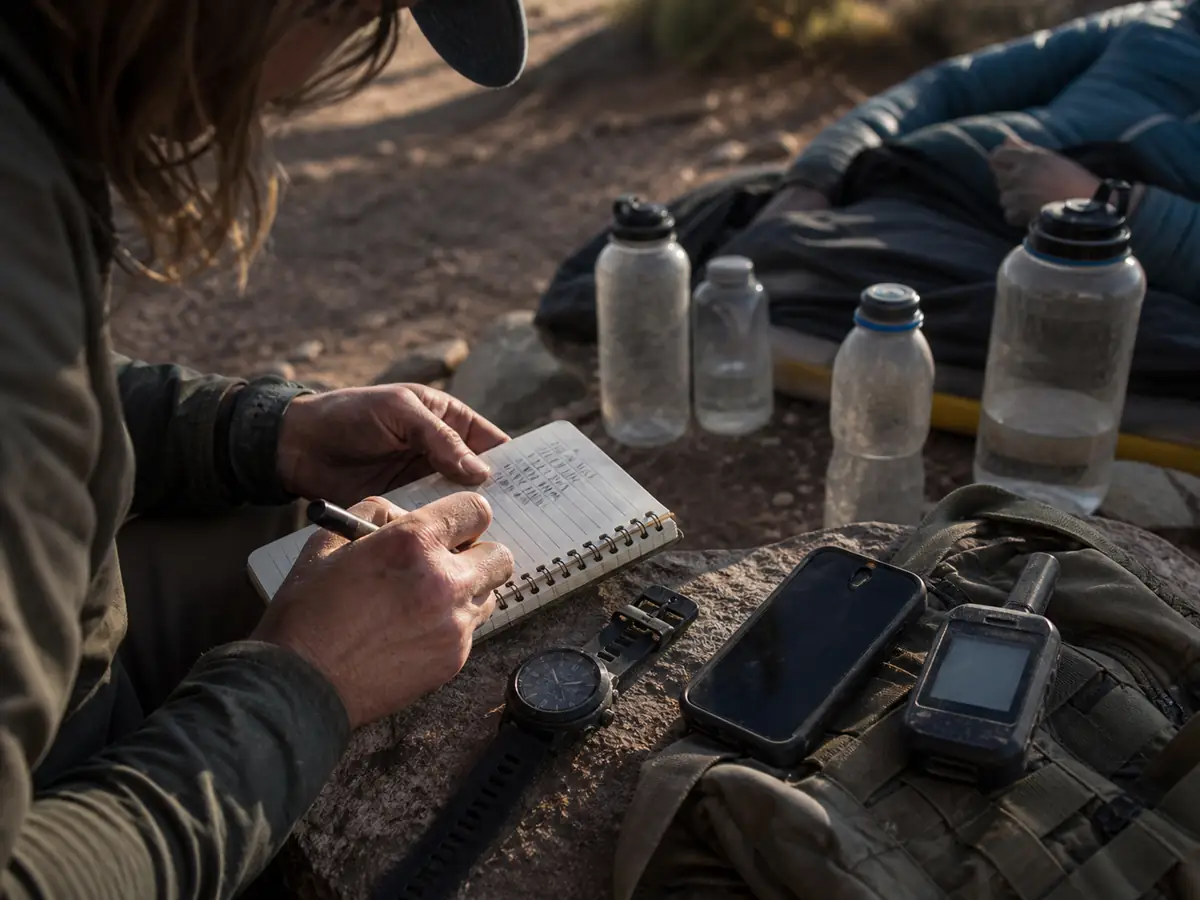
That record helps rescuers distinguish competing causes. It also prevents several people from giving conflicting estimates after a stressful evacuation.
When is hyponatremia an emergency?
A headache after a long day is not automatically an emergency. The line changes when symptoms persist after the hiker stops, the drinking history suggests substantial excess, or any change in brain function appears.
Neurological change is the threshold. Confusion, unusual agitation, poor coordination, inability to answer simple questions, marked drowsiness, or behavior that does not fit the situation warrants an urgent rescue call.
How the action changes
- Persistent headache, nausea, or vomitingStop exertion and routine drinking, keep observing, and obtain professional medical adviceThe symptoms are nonspecific, but continued walking or forced fluid can deepen the problem
- Confusion, agitation, poor coordination, or severe drowsinessActivate emergency evacuation, protect the airway, and give nothing by mouth if swallowing is doubtfulBrain involvement can progress even after the person stops exercising
- Seizure, unresponsiveness, or breathing difficultyCall emergency services, place the person safely on their side when appropriate, and provide trained emergency careCerebral swelling and respiratory compromise require immediate advanced treatment
Do not wait for a person to become unconscious. A companion who cannot walk a straight line, repeatedly gives the wrong answer, or drifts in and out of alertness has already crossed the practical threshold.
Improvement does not erase the event. Keep monitoring through evacuation, because symptoms may worsen after exertion ends and the diagnostic window extends through the following 24 hours.
Someone who develops new headache, vomiting, confusion, or coordination trouble later that evening should report the prolonged exercise and total fluid intake when seeking care. That context can prevent the episode from being mistaken for a routine stomach illness or simple dehydration.
Electrolytes cannot cancel overdrinking
No electrolyte product makes overdrinking safe. Sodium in food, drink, or capsules may slow the fall in blood sodium in some circumstances, but it does not prevent exercise-associated hyponatremia when fluid intake continues to exceed losses.
Sports drink still counts toward total fluid. A stronger flavor, colored bottle, or electrolyte label does not change the central prevention decision.
- Drink when thirsty :: Thirst-led drinking is the central prevention recommendation for prolonged exercise, rather than forcing a universal hourly volume
- Learn your own pattern :: Compare body weight before and after similar training sessions when practical. Weight gain shows that intake exceeded total losses
- Eat normal trail food :: Regular food supplies energy and sodium without turning salt into permission to drink past thirst
- Back off when nausea builds :: Nausea can promote water retention and makes forced drinking harder to tolerate safely
- Keep watching after the hike :: Headache, vomiting, confusion, or poor coordination can worsen after activity ends
Pre- and post-activity weight is a useful training observation, not a trail diagnostic. A pattern of finishing heavier than you started indicates net fluid gain and gives you a concrete reason to change the drinking routine before a longer trip.
Conditions still matter. Heat, pace, pack weight, altitude, clothing, fitness, body size, and access to water all change losses, so one person's successful hourly target should not become another person's rule.
The durable approach is less dramatic: start normally hydrated, carry enough for the route, drink to thirst, eat ordinary trail food, and avoid treating every uncomfortable sensation as proof that more fluid is required.
Sources
The definition, mechanism, prevention advice, assessment limits, and field-fluid cautions follow the Wilderness Medical Society clinical practice guideline for exercise-associated hyponatremia.
The symptom progression and distinction from heat illness are supported by the American Family Physician summary of that guideline and the StatPearls clinical review of exercise-associated hyponatremia.
National Park Service Hike Smart material confirms the practical relevance to hikers and the way water intoxication can resemble early heat exhaustion.
AnswersQuestions readers ask
Can drinking too much water cause hyponatremia on a hike?
Yes. Exercise-associated hyponatremia commonly develops when fluid intake exceeds losses while exertion and nausea limit water clearance, diluting blood sodium even if the person consumed some electrolytes.
How can you tell hyponatremia from dehydration?
You cannot confirm either condition by appearance alone. Heavy fluid intake, little thirst, puffiness, bloating, frequent clear urine, or weight gain support fluid overload, while thirst, dry mouth, and reduced urine support dehydration, but blood testing provides confirmation.
Should you give electrolytes if you suspect hyponatremia?
Do not improvise a concentrated salt drink or use salt capsules as field treatment. Sodium does not make continued overdrinking safe, and severe symptomatic cases need trained medical assessment and treatment.
Should someone with suspected hyponatremia stop drinking?
Stop routine fluid intake when an alert person has mild symptoms and a strong overdrinking history while you seek professional advice. Give nothing by mouth when the person is confused, seizing, very drowsy, vomiting repeatedly, or unable to swallow safely.
When is hyponatremia an emergency?
Confusion, unusual behavior, poor coordination, severe drowsiness, seizure, breathing trouble, unresponsiveness, or rapid deterioration requires emergency rescue. Stop exertion, protect the airway, and do not delay help while trying to correct sodium yourself.
Can hyponatremia symptoms start after the hike?
Yes. Exercise-associated hyponatremia can appear during activity or within 24 hours afterward, so later headache, vomiting, confusion, or poor coordination should be reported with the exercise and fluid history.