
Moose Encounters: When to Back Away and When to Run
A moose wants the space you are standing in, which reverses the bear rules you already know.
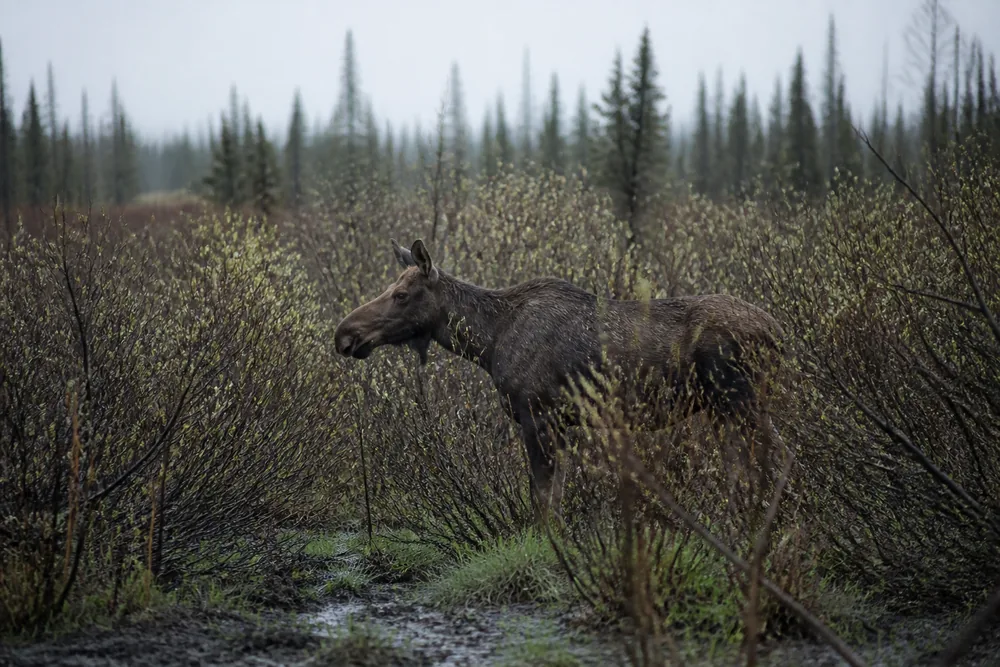
A moose is not hunting you, it is trying to make you leave, and that single difference flips the bear advice most hikers carry. Reading the animal decides whether you back out quietly or run for cover.
Most people walking into moose country are carrying bear rules. Those rules are good rules, and two of the important ones will get you hurt here.
A moose is not hunting you.
It is trying to make you go away, and that single difference reverses most of what you have been taught about meeting a large animal in the woods. The useful skill is knowing when the animal has stopped tolerating you.
- Ears laid flat back along the neck
- The long hair on the hump and shoulders standing up
- Licking or smacking its lips
- Head lowered, sometimes swaying from side to side
- A grunt, or a front hoof stamped into the ground
- Walking slowly toward you instead of away
Any one of those is enough. Colorado Parks and Wildlife puts the threshold plainly: if a moose reacts to your presence at all, you were already too close before it reacted.
Which moose is a problem, and which one is just a moose?
Most moose sightings end with nothing happening at all.
An animal feeding in a willow flat will normally register you, decide you are not worth the interruption, and go back to stripping leaves. That is the ordinary outcome, and it is the one to expect.
What changes the situation is attention.
A moose that stops chewing and turns its head to hold you in view has moved from ignoring you to assessing you, and everything on this page is about the minute that follows. An animal that keeps feeding, keeps walking, or drifts into the brush has already made its decision about you.
Distance is the variable you control. The National Park Service asks visitors to stay at least 25 yards from a moose, and to widen that considerably around a cow with a calf.
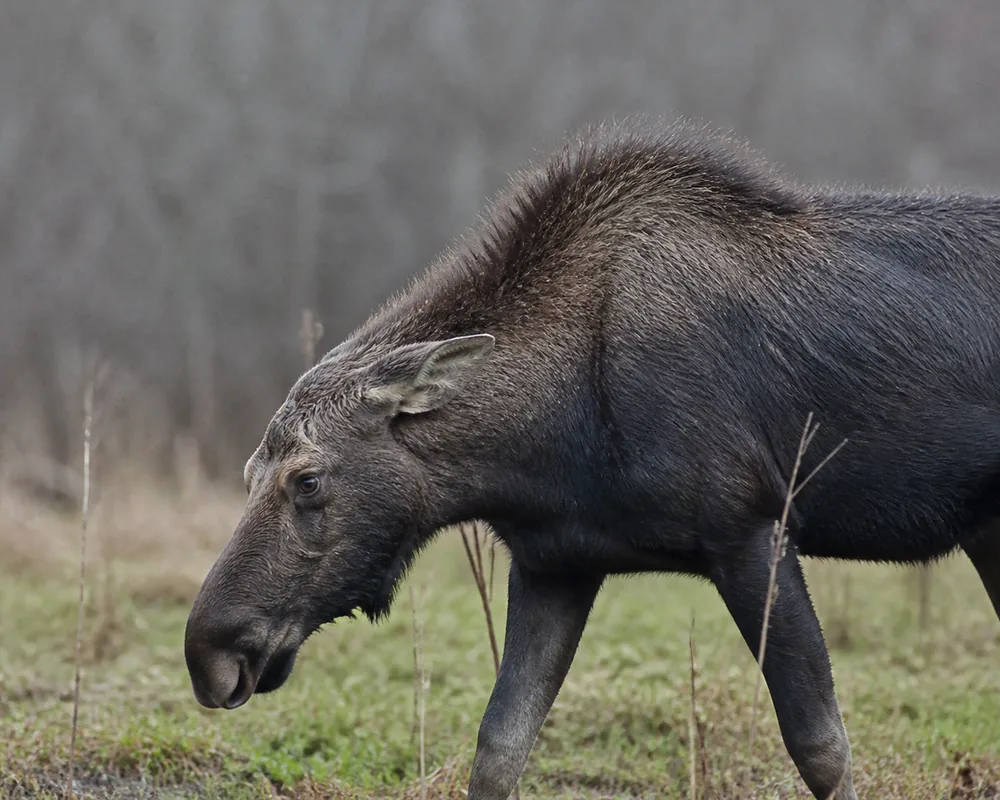
The signals in that list are not a countdown to a charge. They are the animal telling you that the space between you has already failed, which is why the response to any of them is the same regardless of which one you see.
One warning is easy to misread. A moose that walks slowly toward you is not curious or friendly, and in places where people have fed them it may simply be expecting food.
The harder problem is finding the animal in the first place.
An 800 pound animal disappears into a willow thicket at forty feet, and moose spend their days exactly where the brush is thickest, along ponds, creeks and wet flats. You are far more likely to hear a branch break than to see the moose that broke it.
Reading one moose is also not the same as reading the situation. A cow whose calf is bedded in the brush behind her can go from indifferent to committed with none of the escalation the list describes, because the thing she is defending is not where you are looking.
How do you back out once a moose has fixed on you?
The reflex is to make yourself big and loud, and that is the one thing wildlife agencies specifically ask you not to do.
Alaska's Department of Fish and Game asks people not to shout at moose or bang things to move them along, because a moose under pressure often answers by walking toward whatever is applying it. Noise works on an animal that wants to leave, and you are looking at one that has decided to stay.
What works instead is slow, quiet and boring.
- Stop moving and lower your voiceTalk calmly and steadily so the animal knows what you are, at a volume you would use across a kitchen table rather than across a valley.
- Back away while facing itKeep the moose in front of you. Turning your back costs you the only information you have, and a retreating shape is easier to follow.
- Get something solid between youA trunk, a boulder, a parked vehicle. Put it in the line between you and the animal while you still have the time to choose which one.
- Open about 50 feet before you turnThat is roughly three car lengths, and it is the point at which turning your back stops being a gamble.
- Leave on a different lineWalking back through the same willows puts you in front of an animal that is now alert and knows where you are.
The tree in step three is not a hiding place, and it is worth being clear about what it does.
A person can get around a trunk faster than a moose can, and that mismatch is the entire reason cover matters more than speed here.
You are not concealing yourself. You are giving yourself something to circle.
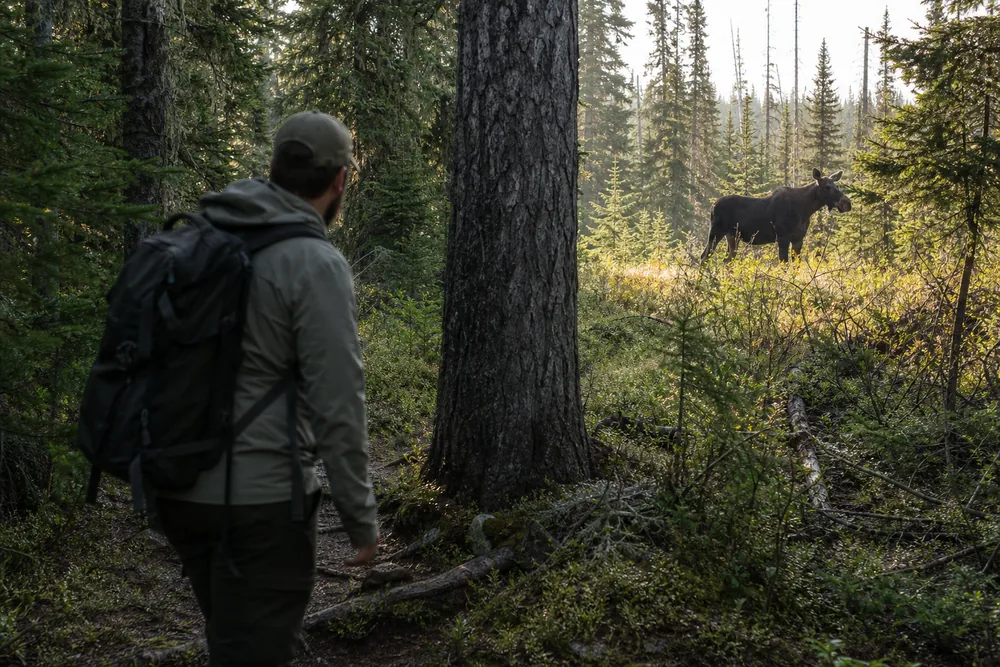
Backing out assumes the moose lets you, and sometimes it does not.
If the animal closes the gap as you open it, or follows you down the trail, you have run out of the quiet option. What comes next is the section below, and it starts with an instruction most readers will not want to believe.
What should you do if a moose charges you?
Run. Get a tree, a boulder or a vehicle between you and the animal, and keep it there.
That is the whole answer, and it is worth saying before anything explains it, because a moose covering ground at close range does not leave you time to reason it out.
Many charges are bluffs. A moose that wants you gone will often commit hard for a few strides and pull up short, and you have no reliable way to tell that from the real thing while it is happening, which is why the response is the same for both.
The reason to run is not that you can outpace it. A moose runs about 35 miles an hour, so a footrace on open ground is not a plan.
What you can do is get around a trunk faster than an animal that long can, and moose do not press a chase far once the threat has removed itself. Distance and an obstacle do the work that speed cannot.
If it reaches you, the instruction changes again.
Holding still is the part people abandon, and it is the part that ends the incident.
A moose stops because you have stopped being a problem, not because it has finished with you. Standing up while it is still standing over you undoes that in a second.
Two situations make this harder than the clean version.
On open tundra or a bare ridge there may be nothing to put between you, which leaves distance as the only tool you have. And a cow whose calf is somewhere behind you may not break off at the range that normally ends these encounters, because you are still between her and the thing she is defending.
Running is right here and wrong with a bear
Everything above inverts the advice you have probably absorbed about bears, and the reason sits in what each animal wants from you.
A bear that charges may be defending itself, its cubs or a carcass, and it may also be treating you as food. A moose is never doing the last one.
It wants the space you are standing in, and once you have taken yourself out of that space, the incident is over from its point of view. That is why leaving works, and why leaving is exactly what you must not do with a predator that has decided you are worth following.
The second difference is how a moose fights.
Moose do not bite. They strike with the front hooves, kick behind them, and rear up to bring their full weight down, which is a defence built for wolves rather than for people.
That matters because of where those hooves land. An adult stands roughly five to six and a half feet at the shoulder and weighs somewhere between 800 and 1,200 pounds, with big bulls heavier still, so the working end of the animal arrives at your chest and head rather than your legs.
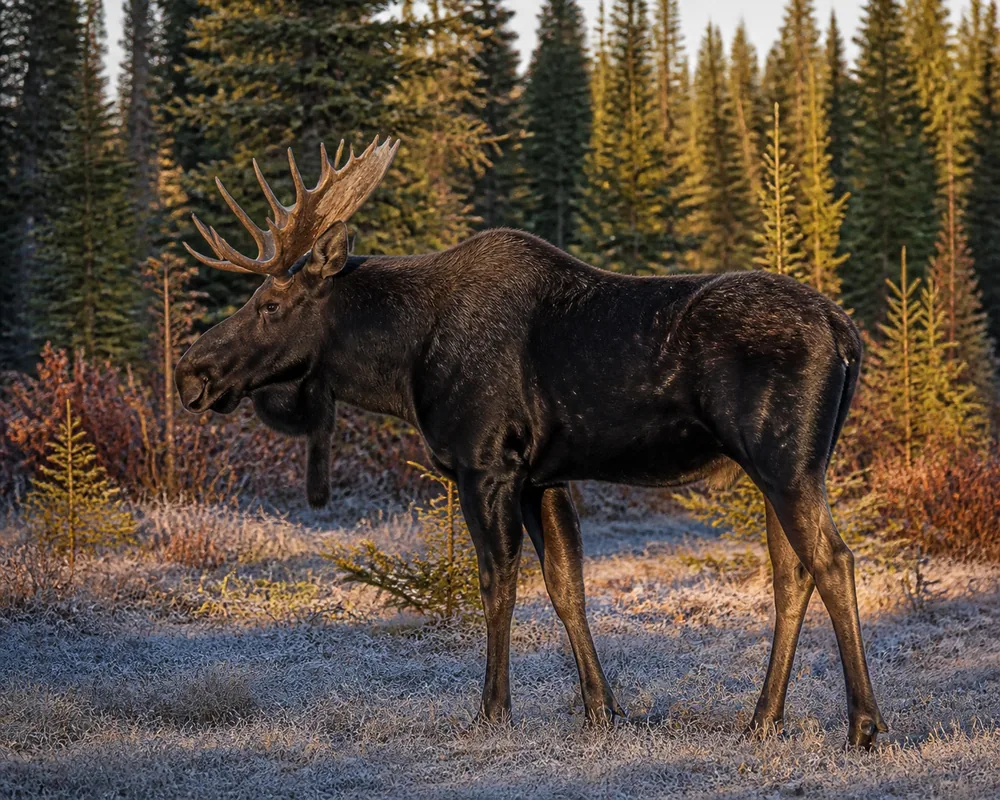
Laid side by side, the two responses split cleanly.
| Situation | Moose | Bear |
|---|---|---|
| It charges | Run, and put something solid between you | Hold your ground. Running invites a chase |
| Cover behind a tree | Works, because you can circle faster than it can | Little help. A bear climbs and outruns you |
| It reaches you | Curl up, cover your head, stay still | Depends on the species and on why it attacked |
| What it wants | The space you are in | Food, safety, or its young, depending on the animal |
The bear column is a summary and nothing more, because the play-dead decision reverses on species and on what the animal is doing.
One statistic tends to reorder people's assumptions here. In Alaska, moose injure roughly five to ten people a year, while three or four are hospitalised after bear attacks.
That is not evidence that a moose is the more dangerous animal in the abstract. Alaska holds somewhere between 175,000 and 200,000 moose against about 130,000 bears of both species, and moose live in the places people live, so the number mostly reflects how often the two species meet.
Your dog is the most likely reason a moose comes at you
When a dog appears, a moose does not see a pet.
It sees a wolf, which is the animal that kills its calves, and the response it has for that is the response you are then standing next to. This is the single largest cause of the conflicts that get recorded.
The Colorado numbers make the pattern hard to argue with.
What the Colorado record shows
- 90%Of dog-related moose conflictsInvolved a dog that was off leash
- 22Moose-related injuries since 2019In a state most hikers rank well below Alaska for moose risk
- 3Attacks between 30 May and 1 June 2025Every one of them involved a person out with dogs
The first decision is made at the trailhead, not on the trail.
In willow country during calving season, a leash goes on before you see anything, or the dog stays home. Colorado Parks and Wildlife says as much directly, and adds the detail people find hardest to accept: a moose will go out of its way to kick at a dog that is leashed, fenced, or behind a closed gate.
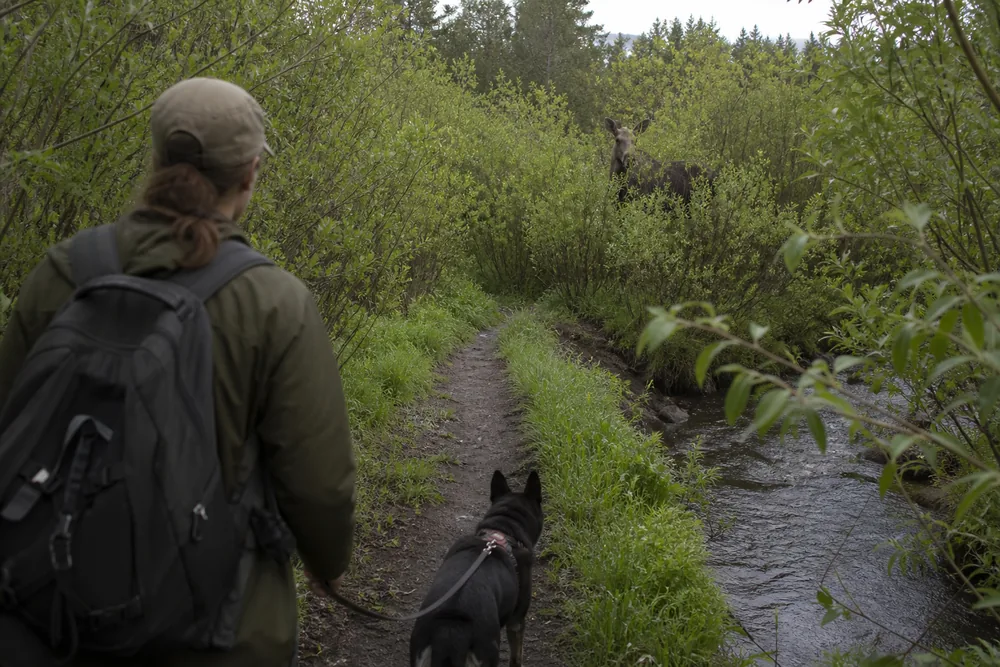
A leash prevents your dog from starting something. It does not protect either of you once a moose has decided.
The second decision comes late, and it is the one worth settling now rather than in the moment. If a moose commits to your dog, let go of the leash.
Holding on anchors you to the target, and a loose dog can move in ways you cannot. In the Colorado case that put a man in hospital in May 2025, dropping the leads is what allowed him to get clear and call for help.
When is a moose most likely to come at you?
Three windows in the year produce a different animal, and the calendar is doing more work than most people give it credit for.
The three windows that change the animal
- Mid-May to early JuneTreat every cow as though a calf is nearby and turn around rather than passCalving peaks around the third week of May, and a cow with a newborn is the most reactive animal on any trail
- Late September to NovemberGive bulls a wide berth and expect them on trails they usually avoidThe rut has bulls moving hard and paying attention to other bulls rather than to you
- Deep-snow winterPlan routes that let you leave the packed tread, and start earlier so waiting is affordableHungry animals working through snow have little energy to spare and answer pressure sooner
The calving window is the sharpest of the three.
A cow defending a newborn is not reading your intentions, and Colorado Parks and Wildlife singles her out as the animal most likely to react to people and to dogs. If you see a calf, the trip past that point is over.
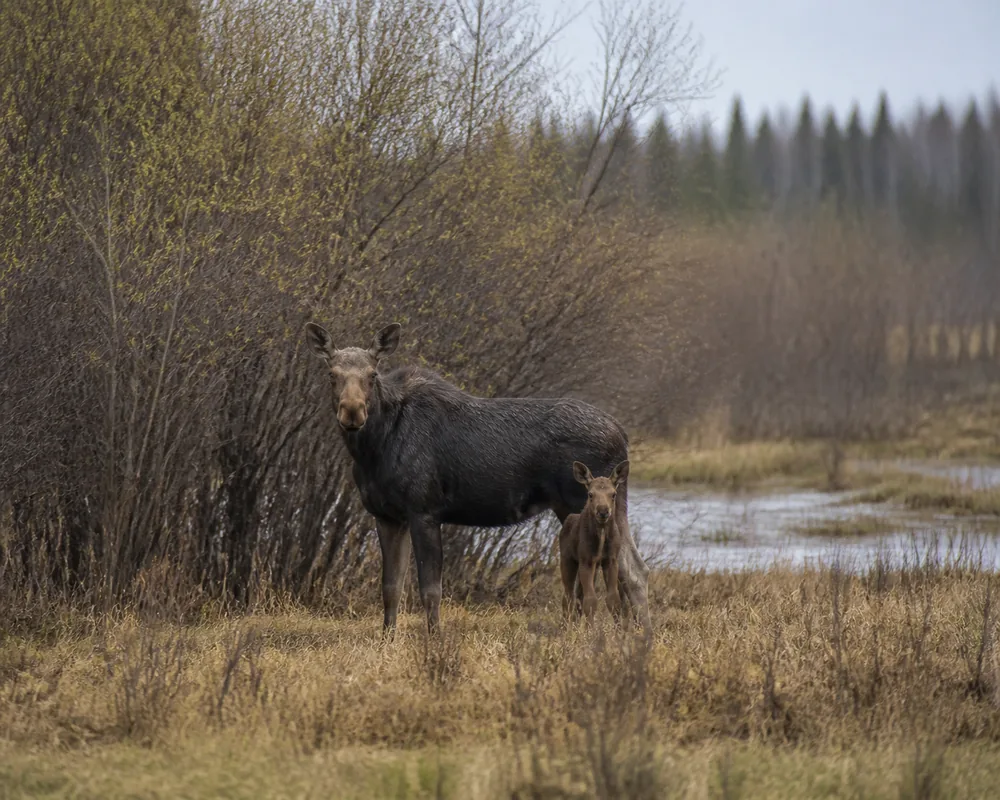
The risk does not end when the calf stops looking like one. Cows commonly stay with a yearling into the following spring, so a large young moose beside an adult still means the same thing.
The rut runs from late September into November, and the animal it produces is different in kind rather than degree.
Bulls in rut are moving, competing, and largely indifferent to what else is on the trail, which makes them unpredictable in the specific sense that their attention is elsewhere. They also turn up in open country and on trails they would normally avoid.
Winter is not a date on the calendar so much as a condition.
Once snow reaches roughly 23 to 28 inches, a moose starts paying a real energy cost for every step, and an animal in that state has less patience than the same animal in July. Where it chooses to walk is the subject of the next section, and it is probably where you are walking too.
A moose on the trail is a route problem, not a standoff
A moose standing in the middle of a packed winter trail is not being stubborn.
It is doing the same arithmetic you did when you chose the broken trail over the unbroken snow beside it. Moose use packed trails, plowed roads and rail lines through deep-snow months for exactly the reason you would, and one study of moose movement found their daily travel dropping from several kilometres to under 500 metres once snow depth passed the knee.
That reframes the whole encounter. You are not facing an aggressive animal, you are sharing a corridor with one that has nowhere cheap to go.
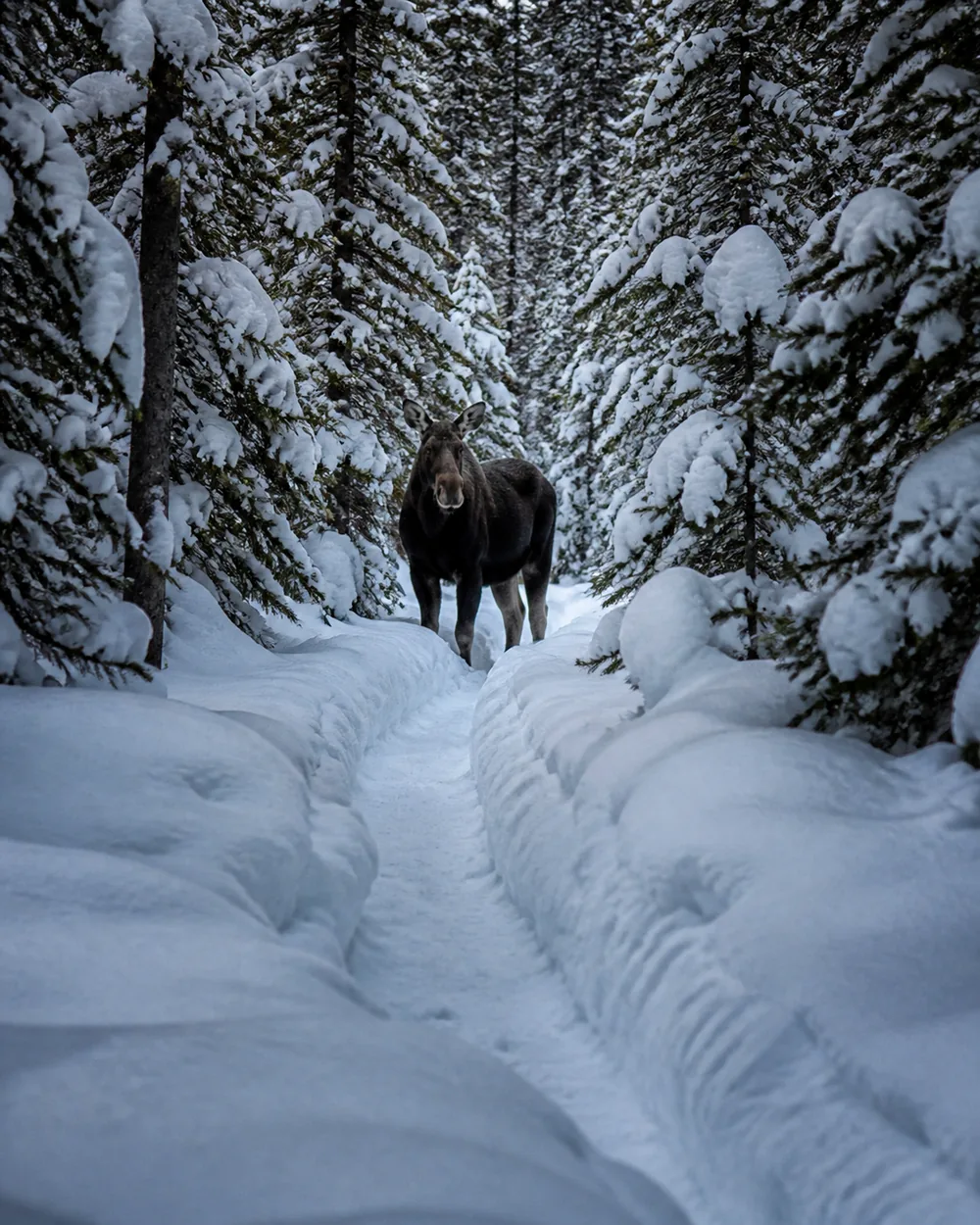
That leaves three moves, and picking between them is the actual decision.
Wait it out
The default, and usually the right one. A moose that is feeding rather than travelling may take twenty minutes to move on, so the real cost is measured in cold fingers and daylight rather than distance.
Detour wide
Leave the tread early and go around with far more room than feels necessary, at least 50 yards where the terrain allows it. In deep snow this is exhausting and slow, which is precisely why people do it too narrowly.
Turn back
The option most hikers resist and the honest answer in a snow trench with fading light. A route you can reverse is worth more than a summit you reach at dusk.
What is not on that list is moving the animal.
Shouting, whistling and banging poles are all requests for the moose to spend energy it does not have, and Alaska's guidance is to detour or wait rather than push. Crowding one on ice or hard pack risks injuring an animal that cannot get traction, which turns a delay into something much worse for both of you.
Winter recreation carries a wrinkle worth knowing. Studies of disturbance have found that quiet, non-motorised traffic such as skiing and snowshoeing unsettles moose more than machines do, most likely because a near-silent shape appearing at close range gives the animal no warning at all.
Does bear spray work on a moose?
Yes, and it is worth keeping the canister where you can reach it in moose country.
The Interagency Grizzly Bear Committee lists moose among the wildlife that bear spray may deter, and Washington's Department of Fish and Wildlife puts moose on its list of mammals the capsaicin affects. The honest caveat is that there is no moose equivalent of the large Alaskan studies that measured bear-spray outcomes across hundreds of incidents, so this rests on agency guidance and reported cases rather than on a dataset.
Two things differ from bear use.
Aim higher than you would at a bear, because a moose carries its head and chest well above yours and a cloud placed at waist height mostly misses. And check what the wind is doing before you release anything, since a face full of your own spray in front of an agitated moose is a worse position than the one you started in.
The last difference is legal rather than tactical. Spraying an animal that is simply standing there can count as harassing wildlife, and the canister is for an animal that is coming at you.
Reaching for it is also a signal in itself. If your hand is on the trigger, the distance, the timing or the dog decision already went wrong somewhere further back.
Sources
The warning postures, the instruction to run and take cover, the position to hold if you are knocked down, the seasonal aggression windows and the note that moose kick at dogs even behind fences come from: Alaska Department of Fish and Game, Aggressive Moose.
The 25 yard viewing distance and the guidance for a charge and a knockdown come from: National Park Service, Moose Safety, Kenai Fjords National Park.
The rule that any reaction means you are too close, the calving and rut dates, the dog guidance and the Colorado conflict record come from: Colorado Parks and Wildlife, Living with Moose.
The winter trail-sharing guidance, including the request to detour or wait rather than move an animal along, comes from: Alaska Department of Fish and Game, Challenging Snow Conditions Stress Moose and People.
The statement that bear spray may deter moose and other wildlife comes from: Interagency Grizzly Bear Committee, Bear Spray.
AnswersQuestions readers ask
Should you run from a moose?
Yes, once it charges, which is the opposite of the bear rule. Get a tree, boulder or vehicle between you and the animal, because a moose will not press a chase far and you can round a trunk faster than it can.
What should you do if a moose knocks you down?
Curl into a ball, cover your head with your hands, and hold still until the animal has moved well away. Standing up or crawling while it is still over you is what restarts an attack that had already finished.
How close is too close to a moose?
The National Park Service asks for at least 25 yards, and further around a cow with a calf. Colorado Parks and Wildlife sets a simpler test: if the moose reacts to you at all, you were already too close.
Why do moose attack dogs?
A moose reads a dog as a wolf, the predator that kills its calves. Colorado records show 90 percent of dog-related moose conflicts involved an off-leash dog, and a moose will kick at a dog that is leashed or behind a fence.
Can you outrun a moose?
No. A moose runs about 35 miles an hour, so the point of running is to reach cover rather than to win a footrace.
Should you report an aggressive moose?
Yes. State wildlife agencies including Alaska's Department of Fish and Game take encounter reports, and a moose that has charged people on a popular trail is worth flagging so the land manager can post or close the route.