
Staying Motivated When a Long Trek Stops Feeling New
Make the next safe action small enough to start, while keeping illness and injury outside the motivation problem.
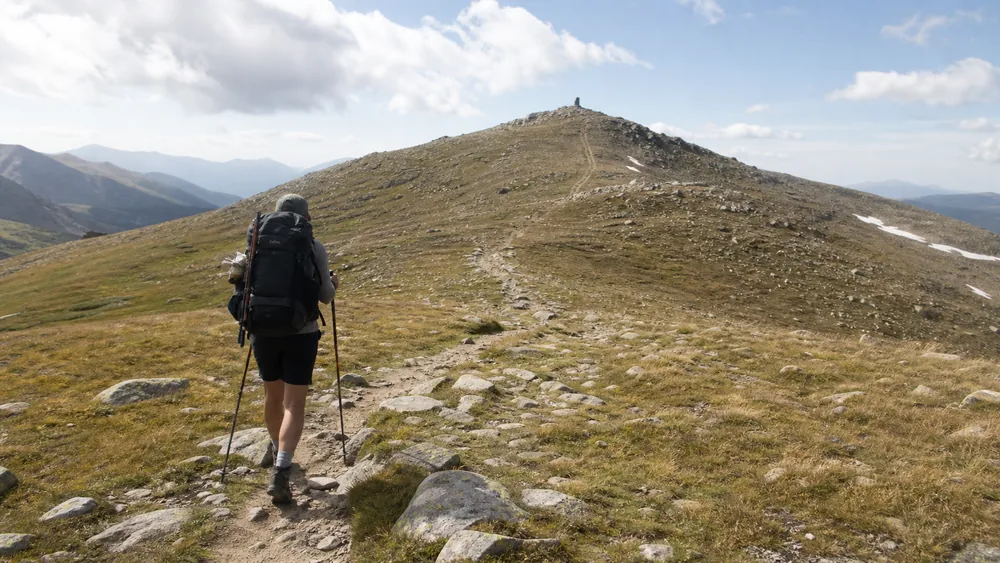
To stay motivated on a long trek, reduce a hard day to the next useful checkpoint, follow a repeatable morning routine, and judge progress by actions you control. First check whether low morale is actually hunger, poor sleep, pain, illness, altitude, or unsafe conditions, because encouragement cannot correct those problems.
Motivational self-talk significantly reduced RPE.
Blanchfield and colleagues, Medicine & Science in Sports & Exercise
That result came from a small randomized cycling study with 24 participants. It shows that practiced cue words can change perceived effort in a controlled test. It does not prove that a phrase can overcome illness, injury, altitude, or poor route choices.
A low day often arrives without drama. Breakfast runs late, wet socks go back on, and the first climb begins before anyone has said they slept badly. By the time the group stops, “I don't want to do this” may be carrying four different problems that need four different responses.
Check the cause first. Motivation tools belong after you have dealt with the physical and safety problem in front of you.
Check the body before coaching the mind
Ask concrete questions before calling someone unmotivated. When did they last eat and drink? How did they sleep? Is pain changing their gait? Do they have headache, nausea, chills, unusual breathlessness, confusion, or poor coordination?
| What you notice | Likely action |
|---|---|
| Hunger, thirst, or irritability | Eat, drink, pause, then reassess |
| Hot spot, limp, or pack pain | Stop and correct the load or foot problem |
| Headache with nausea or poor coordination at altitude | Stop ascent and follow the altitude response plan |
| Confusion, chest pain, fainting, or severe breathing trouble | Seek urgent help |
| Safe conditions with normal movement but low enthusiasm | Use a smaller target and routine |
Compare the person with their normal state and with the previous day. A sudden personality or coordination change deserves more caution than ordinary boredom.
Check your trek rest pattern after food and sleep. Persistent decline across several days may require a changed itinerary.
Solve the real problem. A pep talk cannot replace calories, dry clothing, first aid, descent, or sleep.
Turn the route into visible pieces
Replace the entire remaining stage with one named checkpoint. Choose the next water source, junction, contour break, shaded rest, pass shoulder, or thirty-minute interval.
- Name one reachable pointIt should be close enough to picture and safe enough to stop at.
- Choose one actionWalk steadily, drink at the stop, or check the map at the junction.
- Hide the total for a whileDo not recalculate the whole trek during every difficult minute.
- Arrive and resetEat, check feet, confirm conditions, then choose the next point.
- Keep an exit visibleSmall targets never cancel the day's turnaround time.
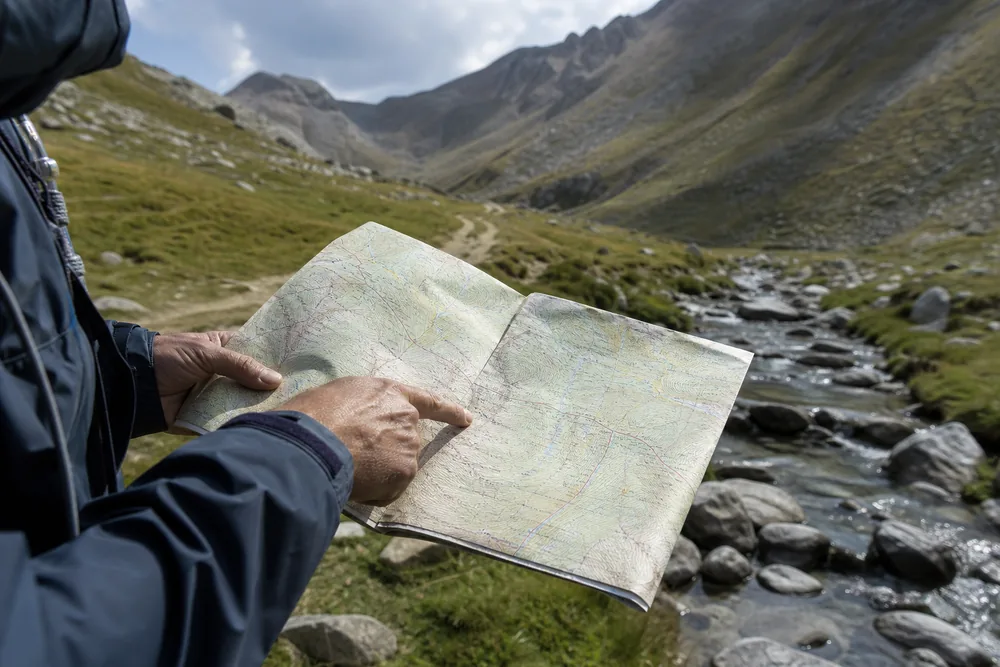
Count completed actions rather than constantly checking distance. A clean water refill, corrected hot spot, accurate navigation choice, or steady climb is useful progress.
The technique works best when the checkpoint is real. “Just keep going” has no finish and gives the tired brain nothing definite to complete.
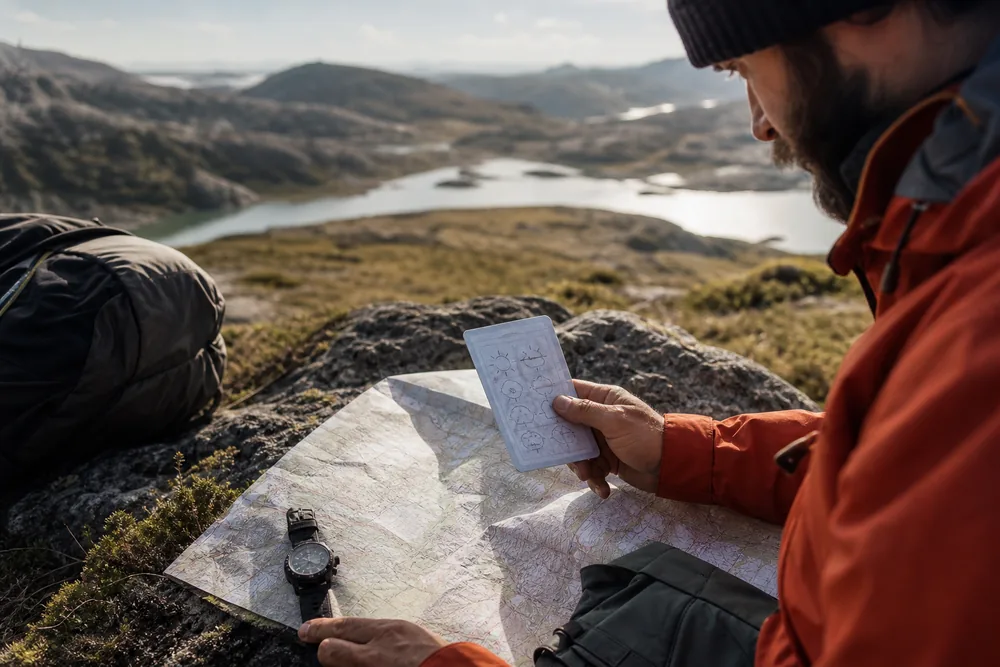
Use a map to select points that match terrain, not arbitrary mile marks hidden on a steep climb. Confirm a doubtful direction with a compass bearing.
Make progress visible. One completed piece creates evidence that you can begin the next.
Use process goals and useful self-talk
A process goal describes what you will do now. Keep a sustainable step, breathe evenly, eat at the next break, or place each foot carefully on loose ground.
Outcome goals such as reaching camp still matter, but you cannot control weather, trail damage, or another person's condition. Process goals keep attention on a controllable action.
Steep climb
“Short step, steady breath.”
Long descent
“Soft knees, place the foot.”
Cold rain
“Shell closed, hands warm, keep eating.”
Late-stage fatigue
“To the marker, then check.”
Navigation stress
“Stop, map, compass, confirm.”
Group strain
“Ask, listen, choose together.”
Write two cue phrases during training and use the same words on the trek. Familiar language is easier to retrieve when tired.
Research on self-talk is mixed across tasks. Use it as one attention tool and judge whether it helps your movement and decisions.
Cue the action. “Steady breath” is more useful than telling yourself that nothing is hard.
Build a morning system for low days
Prepare clothing, water, breakfast, and the first route note before sleep when conditions allow. Fewer morning decisions make it easier to start after a poor night.
- Eat a known breakfast even when novelty has faded
- Fill water and pack snacks where they can be reached
- Check feet before socks hide yesterday's damage
- State the first checkpoint and the turnaround time
- Choose one thing worth noticing during the day
- Agree on the first honest group check-in
Begin with five or ten easy minutes. Let stiff legs warm before evaluating the entire day.
Keep one small ritual that fits every camp, such as tea, a route-note entry, or drying socks. The ritual marks closure and reduces the sense that every chore is improvised.
A multi-day preparation routine should remain short enough to use in rain and cold.
Lower the starting effort. You only need to begin the first safe segment, not feel excited about the whole day.
Manage boredom without losing awareness
Long valleys, road sections, and repeated forest can feel mentally flat. Rotate attention between the next marker, breathing, foot placement, distant terrain, and a conversation.
Use music or audio only where local rules allow and the ground is simple. Keep one ear free or the volume low enough to hear warnings, animals, water, traffic, and the group.
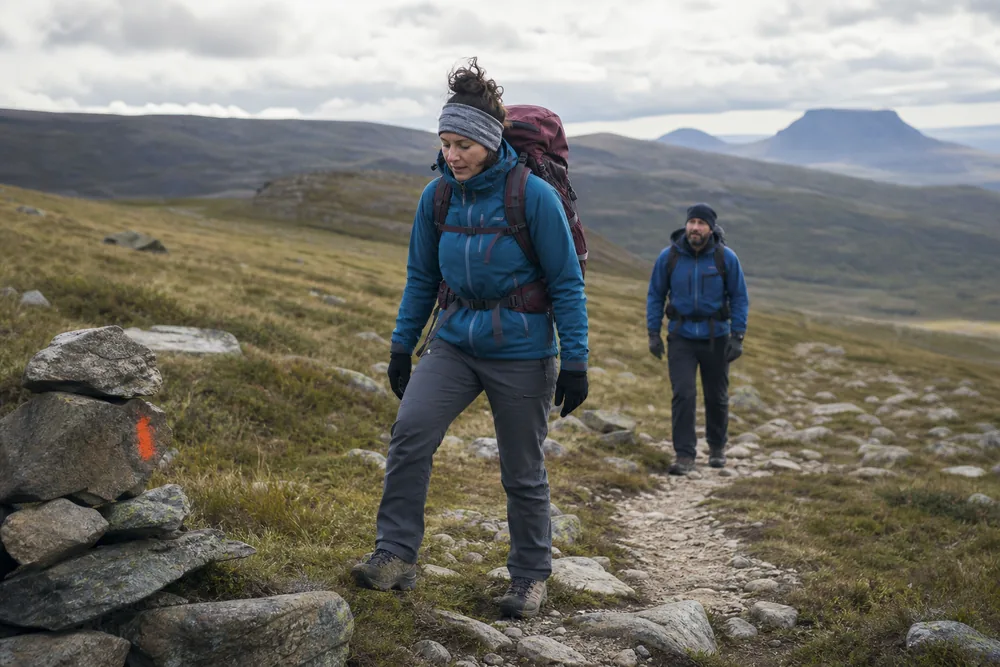
Give the day a small observation task. Identify cloud development, compare map contours with slopes, note three water crossings, or photograph one trail feature at rest stops.
Do not chase stimulation on technical ground. Loose rock, exposure, river crossings, and poor visibility require full attention.
Rotate attention safely. Boredom needs a new focus, not less awareness.
Support group morale without pressure
Ask, “What is making this section hard?” The answer may be pace, pack fit, silence, hunger, cold hands, uncertainty, or conflict about the plan.
Help with the next problem before discussing the person's attitude.
Practical group rule
Share useful work. Refill water, check the map together, move group equipment, or provide a dry layer while the person eats.
Keep check-ins private when embarrassment may prevent an honest answer. Never compare a tired member with the fastest person or with what they did yesterday.
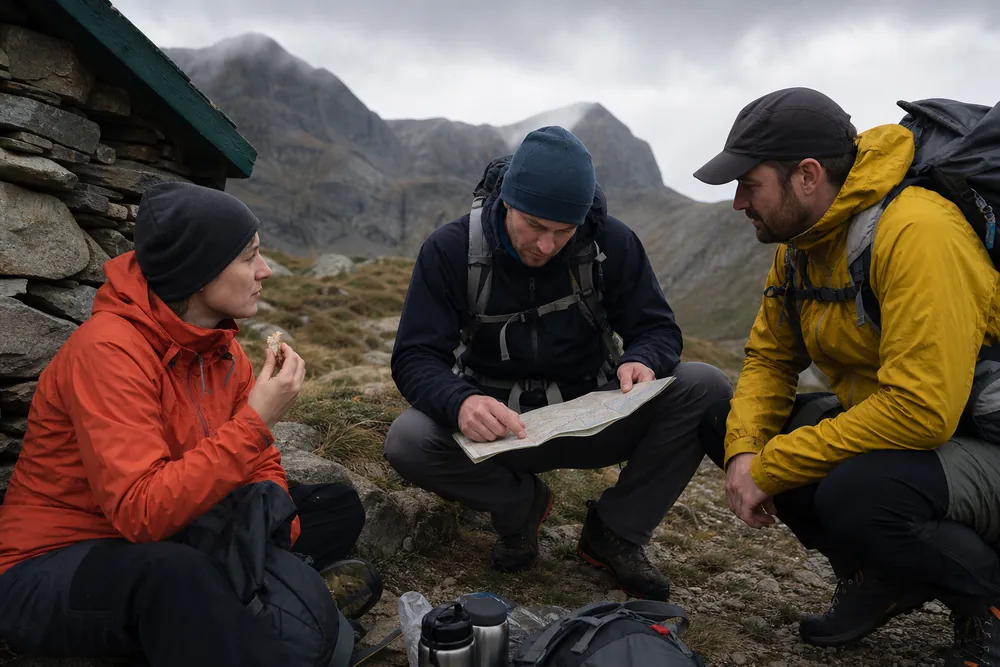
Agree on pace before departure and at every terrain change. The person at the back should not spend each break catching the group. A guided trekking agreement should make that expectation explicit.
Allow a person to say that they want to stop. Support does not mean removing their ability to choose.
Protect honest answers. A group becomes safer when nobody must perform enthusiasm.
Repair food, sleep, and foot problems
Low energy often appears as irritability, indecision, or a sense that the next climb is impossible. Eat on schedule before appetite disappears, using a trekking food plan that keeps a familiar snack reachable during the low part of the day.
Sleep quality often explains the next morning. In persistent rain, protect dry recovery items with the wet-day packing routine instead of asking a cold, damp person to solve the day through attitude alone.
Altitude requires a different check. Compare morale with the person's acclimatization pattern before deciding the problem is mental. When symptoms are absent and the issue is the rhythm of a steep climb, the rest step on climbs may reduce the repeated stopping that makes progress feel impossible.
At camp, review common trekking mistakes without assigning one person the blame for a group decision. Keep the day's trekking safety limits visible too, because a small-target exercise can narrow attention enough to hide a worsening hazard.
Use familiar carbohydrate-rich snacks during movement and a meal with enough energy and protein for recovery. Follow any personal medical nutrition plan.
Dry the sleep system and clothing when weather permits. A wet layer, cold camp, noise, or late meal may explain a poor night better than attitude.
Inspect feet at camp and before departure. Follow a repeat-day foot routine rather than waiting for a blister to change gait.
If several basics fail together, shorten the next stage. More time in camp can restore food intake, drying, wound care, and sleep.
Restore capacity. Motivation becomes easier when the body is warm, fed, rested, and moving normally.
Choose between a shorter day, rest, and exit
Choose a shorter day when the group can still travel safely but needs more recovery time. Use a rest day when a protected camp, adequate supplies, and a likely improvement make waiting useful.
Pros
- Shorten when an earlier camp preserves the route and recovery.
- Rest when sleep, drying, food, or a minor problem is likely to improve.
- Exit when symptoms worsen, safety limits are crossed, or desire to continue is gone.
Cons
- Do not rest in a place exposed to the same hazard.
- Do not add tomorrow's mileage automatically.
- Do not make a person defend a voluntary exit.
Build a daily mileage range before the trip so one slower day does not feel like breaking an unchangeable promise.
An exit is a route decision, not a verdict on character. The mountain, trail, and future treks remain available.
Choose freely and early. The best decision leaves enough time and ability to carry it out safely.
Use the evening review to make tomorrow easier
Record one useful detail after each day. Note when morale fell, the physical cause, and what actually helped. After three entries, a pattern may emerge around a missed snack, a long silent climb, wet feet, or uncertainty about camp.
Do not demand positivity at the check-in. Ask for one change that would make tomorrow more workable, such as an earlier breakfast, a slower first hour, clearer navigation updates, or ten minutes alone at camp. A brief scheduled message home may also reduce worry when it is part of the communication plan, but constant checking consumes battery and pulls attention away from the trail.
Celebrate completed stages without turning tomorrow into a test. A meal, photograph, route-note entry, or shared story can mark progress without pressure to outperform the previous day.
When the same person remains withdrawn after warmth, food, sleep, pain care, and a changed plan, ask directly how they are doing. Take any statement about self-harm seriously and seek urgent professional help through the available emergency system.
Use training walks to learn which tools feel natural. One person may respond to a cue phrase, while another prefers quiet counting, a map checkpoint, conversation, or a steady breathing pattern. Do not introduce a competitive challenge during a low period because racing to a pass or comparing step counts can hide symptoms and split the group.
Set expectations for ordinary discomfort before departure. Sore muscles, chores, poor weather, and repetitive food may occur, but everyone can still report a limit without being accused of breaking the plan. Give each willing person one simple camp role so collecting water, checking the forecast, organizing dinner, or recording the route gives the evening a visible finish.
On a rest day, use the same structure for recovery. Eat, dry equipment, care for feet, review the route, and name a departure or exit decision time.
When camp is safe and supplies are adequate, sleep before making a nonurgent final decision. Morning can reveal whether the problem was one exhausted evening or a continuing loss of capacity. Keep the exit welcoming throughout, because people report real limits sooner when transport home has already been accepted as a valid outcome.
Change one thing tomorrow. A useful evening review ends with a specific adjustment, not a demand to feel better.
How do you stay motivated through days of bad weather?
Several wet, grey days test motivation more than any single hard climb. The scenery disappears, gear stays damp, and the view that pulls you forward on a clear day is simply gone.
Shrink the horizon to the next shelter. On a bad-weather day the goal is not the summit or the panorama, it is the next dry stop, the next hot drink, the next chance to swap a wet layer. Break the day into short, reachable targets and let each small arrival carry you to the next one instead of dwelling on the hours still to come.
Build a tight wet-weather routine and keep to it. A dependable rhythm for packing, eating, and layering removes decisions when morale is low, and a dry set of clothes protected for camp gives you something real to look forward to at the end of the stage. A dry night resets a wet day, so guard that dry set above almost everything else.
Hold the group together without pressure. Low mood spreads fast in bad weather, so keep the pace honest, share the small jobs, and let people walk quietly when they need to. Decide whether to continue, shorten, or stop by the forecast and the terrain, not by how flat everyone feels, because weather that raises real risk is a safety call and not a test of willpower. Motivation tends to return on its own once people are warm, fed, and dry, so protecting those three does more than any pep talk.
Sources
The 2014 self-talk trial tested a motivational self-talk intervention in 24 participants during a cycling endurance task. A later reflection self-talk study reported mixed results, which supports cautious claims. Mount Rainier hiking safety guidance covers pacing, rest, heat, weather, and altitude considerations.
AnswersQuestions readers ask
Is it normal to lose motivation during a long trek?
Yes. Novelty fades, routines become repetitive, and accumulated discomfort can make one day feel larger than it is.
Should you push through a low day?
Only after checking food, water, sleep, feet, illness, altitude, weather, and the route. Some problems require rest, descent, or exit.
Can music help trekking motivation?
It may help on safe, simple ground, but keep volume low enough to hear the group, wildlife, water, rockfall, vehicles, and weather.
How do you help a discouraged trekking partner?
Ask what is wrong, solve concrete needs, agree on the next checkpoint, and avoid shame or comparisons.
When should you quit a long trek?
Leave or change the route when safety limits are crossed, symptoms worsen, normal movement fails, or the person freely decides the cost is no longer worthwhile.