
Which Knee Injuries Mean You Should Stop Hiking?
The trail decision depends on function, stability, red flags, and the terrain still between you and help.
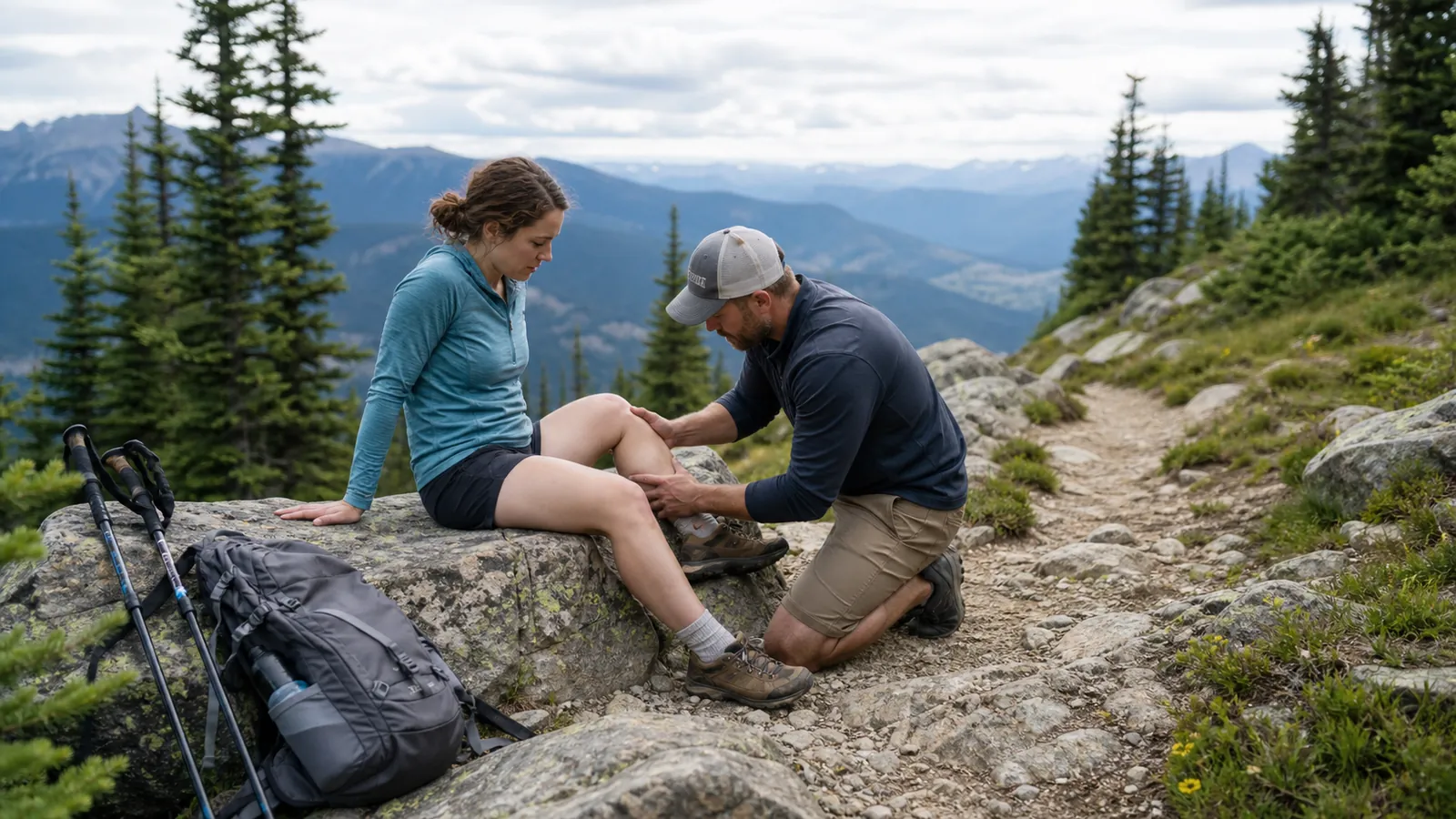
Knee pain on a trail does not need a confident diagnosis before you act. Check whether the joint bears weight, bends, stays stable, and is getting worse, then decide whether walking out remains safe.
Knee pain on a trail creates two different questions. One asks what tissue may be irritated or injured, while the field decision asks whether the leg is aligned, stable, supplied with normal circulation and sensation, and capable of carrying the person across the actual route home.
Do not force a diagnosis from pain location or a sound. Function, trend, and terrain are the evidence that decide whether someone can walk out or needs help.
Which knee-pain pattern changes the field decision?
How the problem began matters. A gradual ache after a long descent calls for a different level of concern from a planted foot followed by a twist, pop, rapid swelling, or immediate collapse.
- Gradual ache around or behind the kneecap
- Repeated load is more likely; reduce load, stop aggravating movement, and reassess
- Outer-knee pain that builds with distance
- An overuse pattern may be changing gait; end or shorten the route before limping develops
- Sudden twist with swelling or instability
- A traumatic mechanism raises concern; protect the knee and lower the walk-out threshold
- Direct blow, deformity, or inability to move
- Serious injury is possible; keep weight off and arrange urgent evacuation
A pattern is not a diagnosis. Those diagnoses need a clinician and sometimes imaging.
Age, prior injury, arthritis, training history, and the day's load can produce similar symptoms through different causes. Do not borrow another hiker's diagnosis.
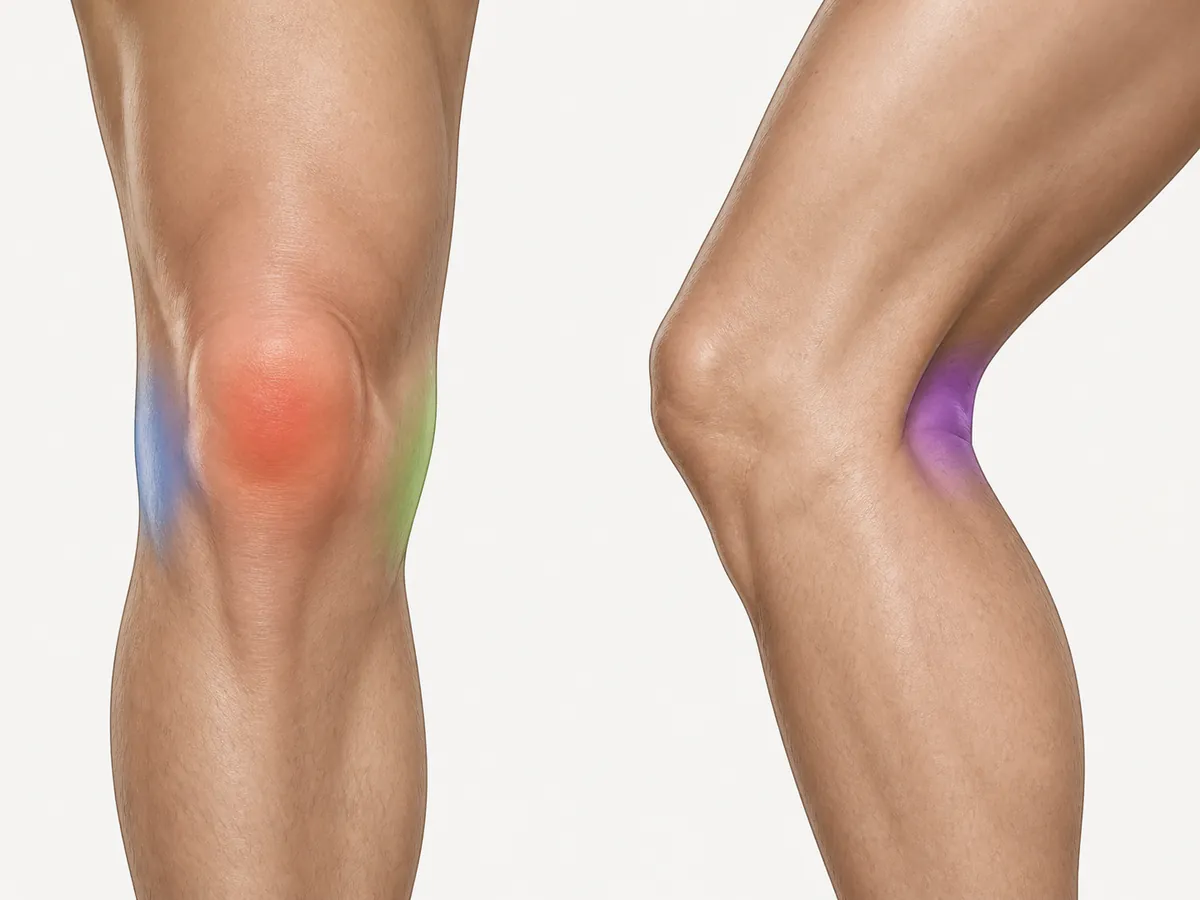
Overuse pain often grows across miles. The hiker may still bear weight but shortens a stride, avoids bending, or rotates the hip to protect the knee.
A changed gait is a stop signal. Limping transfers load to the other leg, hip, ankle, and back while making the original knee harder to assess.
Traumatic injuries need more caution when any of these follow the event:
- The knee gives way or cannot support a controlled step. - Swelling appears quickly or continues to increase. - The joint locks or cannot bend or straighten gently. - A visible change in alignment appears. - Numbness, tingling, unusual coldness, or color change develops below the knee.
Pain intensity still matters, but people report pain differently and adrenaline can delay it. A moderate pain report with repeated buckling can be more important for evacuation than severe pain with preserved stable function.
Do not ask the person to recreate the twist or perform a deep squat to prove what hurts. The field assessment should collect information without loading the joint beyond what the route already demands.
Can the knee bear weight, bend, and stay stable?
Begin with the person seated or lying in a comfortable safe position. Remove the pack and inspect both knees for alignment, swelling, wounds, and obvious differences without manipulating the injured side.
- No visible deformity, open joint-area wound, or rapidly increasing swelling
- Normal skin color, warmth, sensation, and circulation below the knee
- Gentle ability to bend and straighten without force or a hard block
- Ability to tighten the thigh and lift or reposition the leg without collapse
- Ability to stand with support and take a few controlled flat steps
- No buckling, locking, or worsening pain during the brief function check
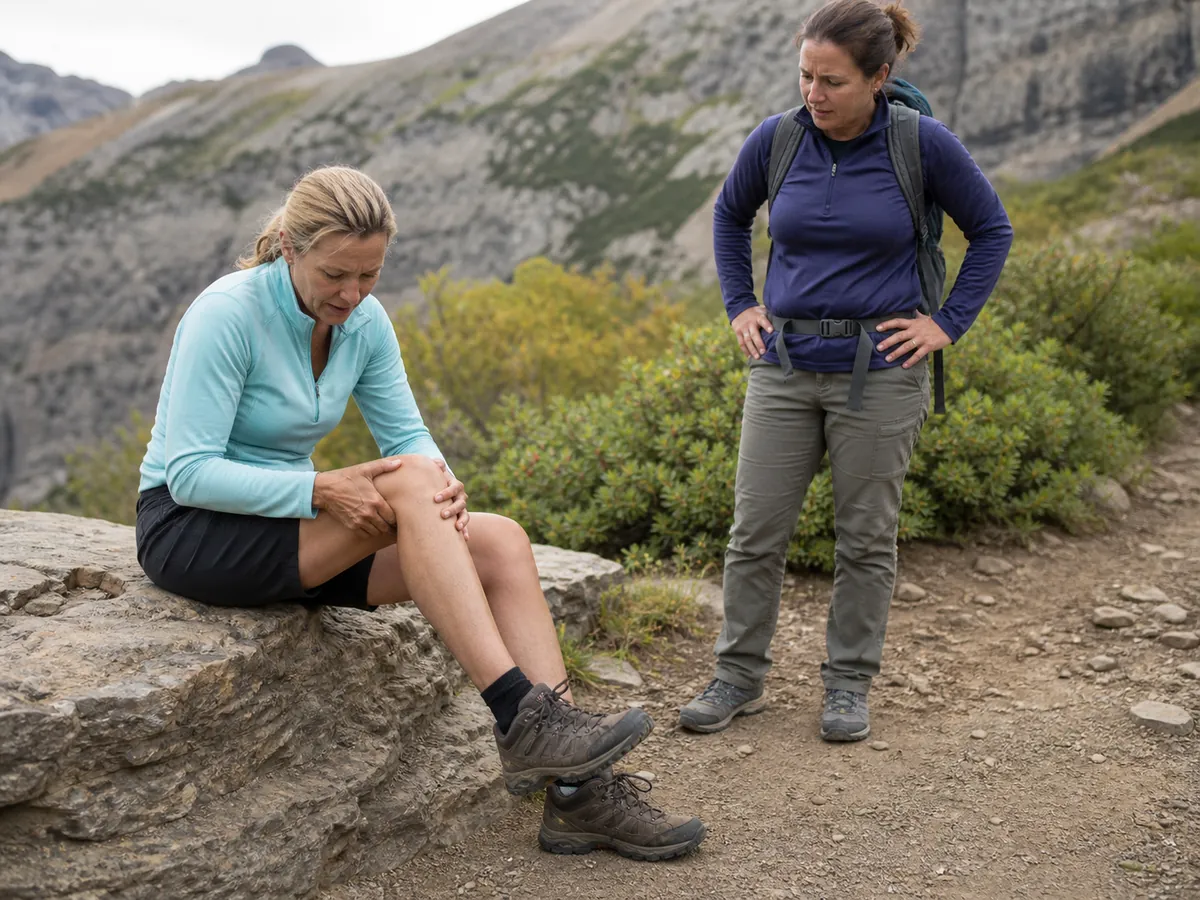
You should compare color, temperature, sensation, and movement with the uninjured side. Recheck them after any wrap or support because swelling and compression can change circulation or nerve function.
You should not force range of motion. A hard stop, deformity, intense resistance, or sharp worsening pain ends the movement check.
A flat test is only a flat test. It does not prove the person can descend loose rock, cross a stream, carry a pack, or travel several miles before dark.
You need to ask what the knee does, not only how much it hurts:
- Does it feel stable under load? - Can it bend enough for the next terrain? - Does each step feel the same, better, or worse? - Can the person stop safely if it gives way?
You should record the answers and time. The direction of change after rest is more useful than one snapshot taken immediately after the problem begins.
What should you do in the first twenty minutes?
Stop the movement that caused or worsens the pain. Move only as far as needed to leave rockfall, traffic, water, cold ground, or another immediate hazard.
First field reassessment
- 0 minutesRemove the pack, rest, and support the leg in a comfortable positionRepeated load stops
- 5 minutesInspect alignment, swelling, skin, circulation, and sensationHard red flags become visible
- 10 minutesUse a wrapped cold source briefly if available and comfortablePain may ease without exposing skin to cold injury
- 20 minutesRecheck swelling, motion, stability, and controlled weight bearingTrend informs the evacuation decision
Cold can reduce discomfort, but never place ice directly on skin. Wrap the cold source, limit one application to about 10 minutes, and skip it when exposure or impaired sensation makes a cold injury more likely.
Comfort is not clearance. Cooling is optional support rather than proof that the knee is safe to use.
Compression can also improve comfort when applied gently. It must not hide the foot, stop circulation checks, or become tighter as swelling increases.
Useful immediate priorities are simple:
- Protect the person from weather and cold ground. - Reduce pack weight before any movement test. - Keep the joint in the most comfortable supported position. - Reassess after rest rather than testing it repeatedly. - Plan the exit before daylight or weather removes options.
Avoid repeated walking trials. One short controlled test can inform the decision, while several attempts can enlarge swelling and consume the remaining ability to self-evacuate.
A wrap can support comfort, but it cannot create stability
An elastic wrap can limit uncomfortable movement, but it cannot rule out a fracture, ligament injury, meniscus injury, tendon problem, or dislocation.
If the knee buckles, looks deformed, loses normal circulation or sensation, or cannot bear weight, external support does not make rough terrain safe.
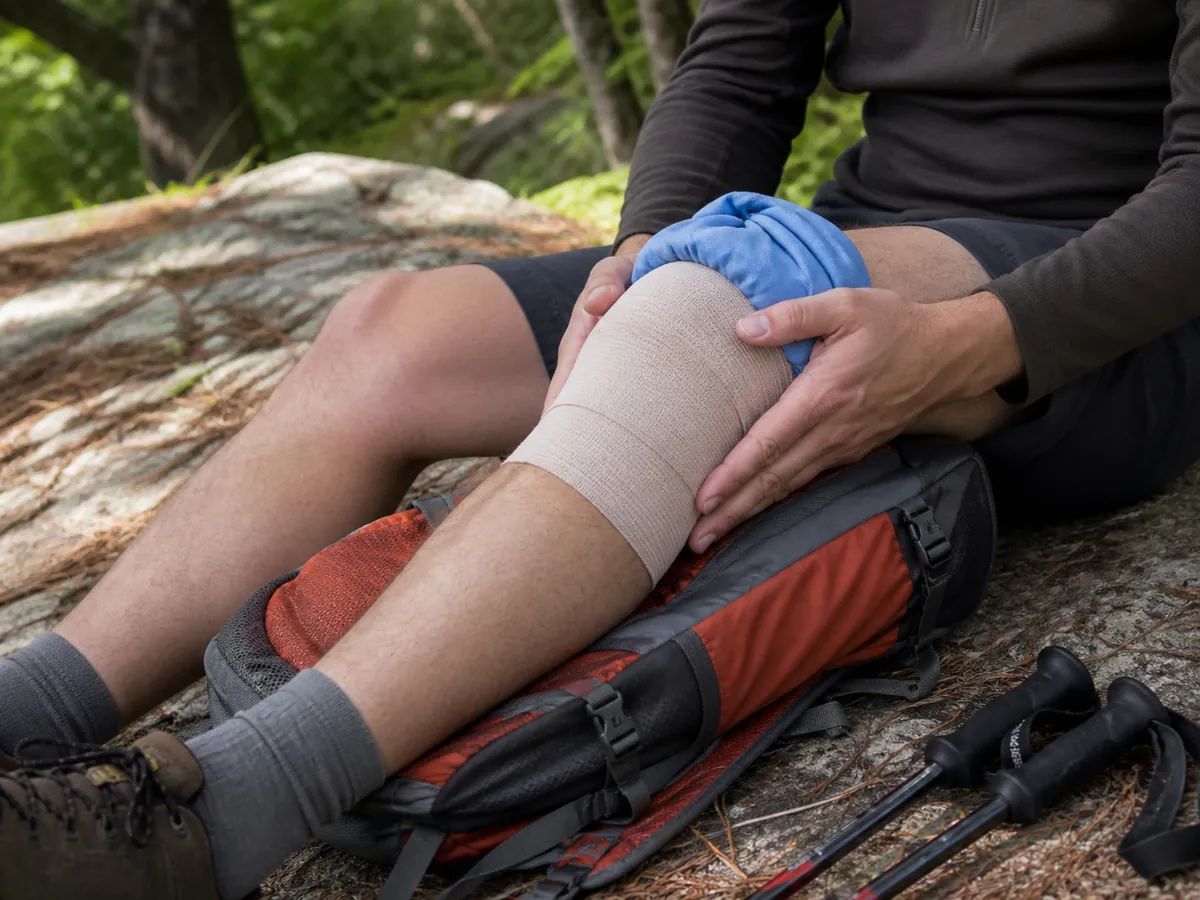
Support the leg in the position found if changing it causes resistance or marked pain. Do not straighten an obviously deformed knee as a routine lay-responder action.
Recheck below the wrap. Check the foot for warmth, normal color, sensation, and the ability to move the toes.
Loosen the support if symptoms change, swelling increases, or the person reports new numbness or tingling.
Trekking poles can help a stable, weight-bearing hiker balance during a cautious assisted walk. They do not make a non-weight-bearing person ambulatory and should not be used to justify a difficult descent.
An improvised rigid support may be useful during a carry or long wait when trained responders choose it. Poorly placed material can create pressure points, interfere with circulation, or force the joint into a worse position.
When is a knee injury an evacuation emergency?
The evacuation route is the real function test. It may include loose descent, large steps, water, snow, exposure, darkness, and no place to stop if the joint gives way.
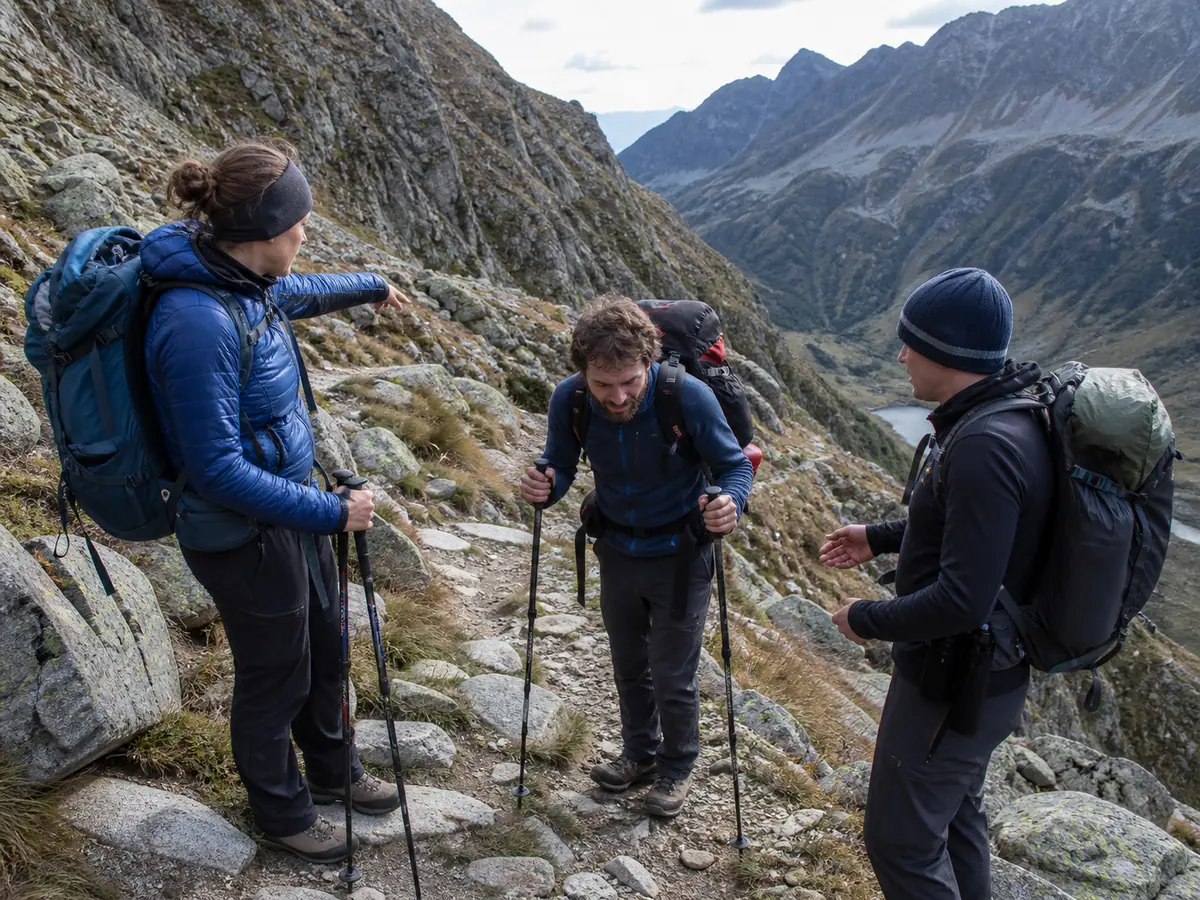
Call before the margin disappears. Activate the available emergency communication system when the person cannot travel safely and delay will narrow protection from weather, pain, swelling, or darkness.
Give the location, mechanism, visible findings, function, circulation and sensation status, group resources, and terrain.
A cautious assisted walk-out may be reasonable only when all of these remain true:
- The knee is aligned and the skin is intact. - Circulation and sensation below the knee are normal. - The person can bear weight without buckling. - Pain and swelling are stable or improving after rest. - The route is short and forgiving enough for slow supported travel. - The group can stop, shelter, and call if function worsens.
Set a trial boundary before moving, such as the next flat landmark or a few minutes of easy travel. Stop the trial if gait changes, swelling grows, pain climbs, the knee feels unstable, or the terrain ahead demands more bend and control.
Walking out is a changing decision, not a one-time vote. Reassess at every terrain transition and do not spend the last stable function simply because the trailhead seems close.
Fever, a hot red swollen knee without a clear injury, or worsening illness alongside knee pain also needs urgent medical assessment. That pattern is not a normal hiking overuse problem.
Why do descents expose knee problems first?
Descending asks muscles to brake the body under load. Every step controls body weight plus the pack, and a long downhill repeats that demand far more often than one stair.
- Build distance and descent graduallyGive muscles and connective tissue time to adapt
- Strengthen quadriceps, hips, calves, and trunkImprove control of the leg under load
- Reduce unnecessary pack weightLower the force controlled on every step
- Shorten the stride on steep groundKeep the foot closer to the body's center of mass
- Use trekking poles with practiced timingShare balance and some load without reaching awkwardly
- End the hike before gait changesPrevent compensation from spreading the problem
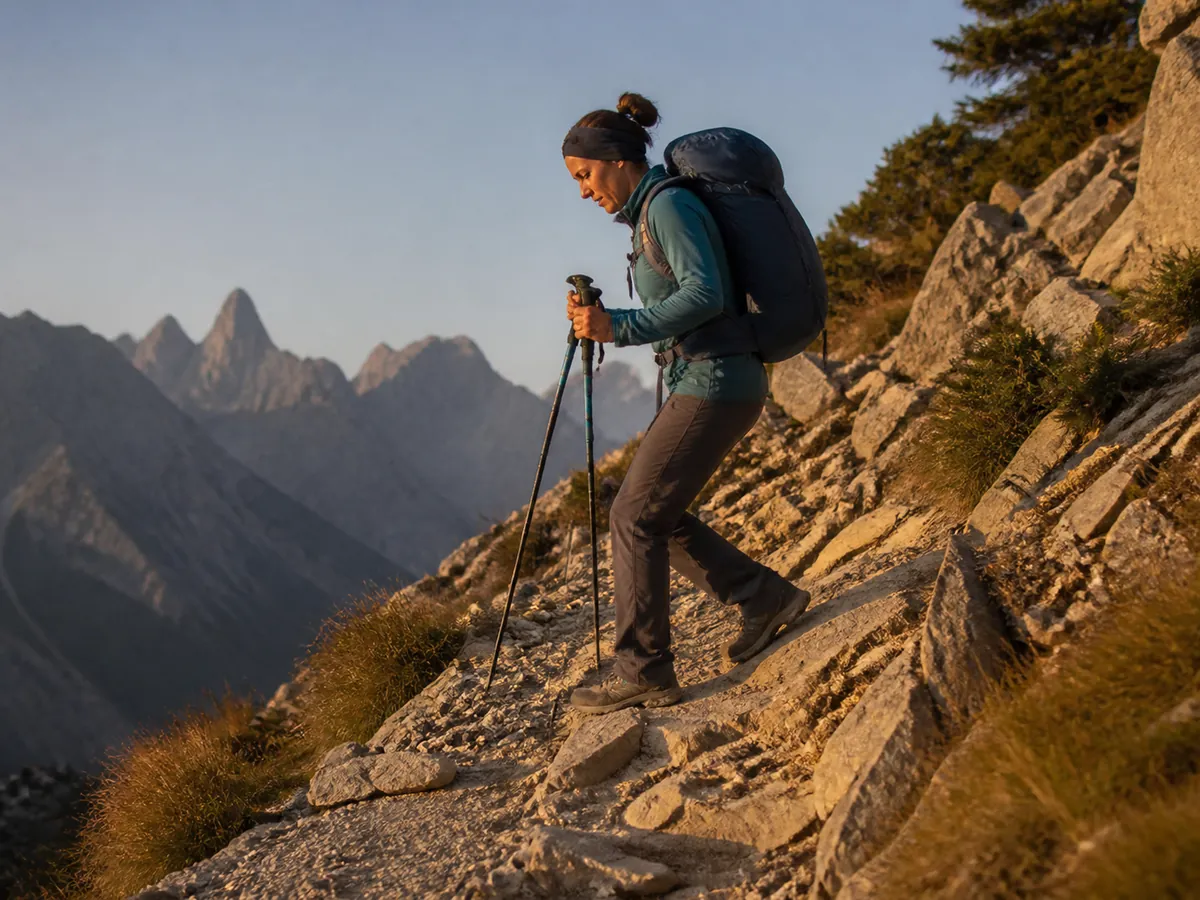
Change one demand at a time. Increase distance, pack load, elevation loss, and roughness separately enough to see which demand produces pain.
Trekking poles help only when they fit the terrain and the user has practiced planting them without twisting or reaching. Lengthening them slightly for descent may improve position for some hikers, but pole setup should be tested before a difficult trip.
Footwear affects traction and comfort, yet no shoe can compensate for a route that exceeds current conditioning. A stable stride on predictable terrain is more protective than a stiff product label.
Persistent, recurring, swollen, unstable, locking, or function-limiting knee pain needs assessment by a qualified clinician before another demanding hike. Prevention begins with knowing what problem is actually being trained.
When should knee pain be checked after the hike?
A mild ache that settles is different from pain that changes ordinary walking the next day. The trip ending removes the evacuation problem but does not establish a diagnosis.
Arrange a clinical assessment when swelling persists, the knee locks or gives way, normal bending remains limited, pain disrupts sleep, or daily walking is still altered. A traumatic twist, rapid swelling, or inability to bear weight deserves earlier assessment even if the person managed to reach the trailhead.
Bring the timeline, not a guessed diagnosis. Tell the clinician how the problem began, where it hurts, when swelling appeared, whether the knee buckled or locked, what terrain and pack load were involved, and how function changed after rest.
Avoid testing recovery on another hard descent. Resume ordinary pain-free movement first, then rebuild distance, elevation loss, load, and rough terrain separately so a returning symptom has a clear trigger.
Persistent loss of function needs an answer. Repeatedly masking pain for another trip can delay the assessment that distinguishes a load problem from an injury needing specific rehabilitation.
Sources
Urgent warning signs, including deformity, inability to bear weight or move the knee, sudden swelling, severe pain after injury, exposed tissue, and fever with redness, come from the Mayo Clinic's knee pain symptom guidance and the NHS knee pain guidance.
The British Red Cross' official strains and sprains first-aid guidance supports rest, a wrapped cold source for no more than 10 minutes, and comfortable support that is not tight. The Wilderness Medical Society's 2024 acute pain guidance places protection, relative rest, cold, compression, and elevation within an austere-care assessment rather than treating pain relief as proof of safe function.
This page supports field decisions and does not diagnose or replace medical care. A new traumatic injury, persistent symptoms, or loss of normal function warrants professional assessment.
AnswersQuestions readers ask
Is a cold pack required for a knee injury?
No. A wrapped cold source can reduce discomfort, but protection, relative rest, and reassessment matter more. Skip cold when exposure or impaired sensation creates a cold-injury risk.
How tight should an elastic knee wrap be?
It should feel supportive, not tight. Loosen it for new numbness, tingling, cold skin, color change, increased pain, or swelling that makes the wrap constrict.
Can trekking poles make an injured knee safe to walk on?
Poles may help a stable weight-bearing hiker balance, but they cannot make a buckling, deformed, or non-weight-bearing knee safe on rough terrain.
What knee signs require urgent help?
Deformity, an open injury, circulation or sensation change, inability to bear weight, repeated buckling, rapidly increasing swelling, uncontrolled severe pain, or no safe route out exceed a cautious walk-out.
What information should you send when arranging evacuation?
Send the location, mechanism, visible findings, weight-bearing and stability, circulation and sensation below the knee, symptom trend, group resources, and terrain.
When should knee pain be assessed after the hike?
Seek assessment for persistent swelling, locking, giving way, limited motion, altered ordinary walking, or a traumatic event with rapid swelling or inability to bear weight.