
How to Choose a Backpack That Carries Weight on Your Hips
Match capacity to the trip and torso length to the frame so the load rides on your hips.
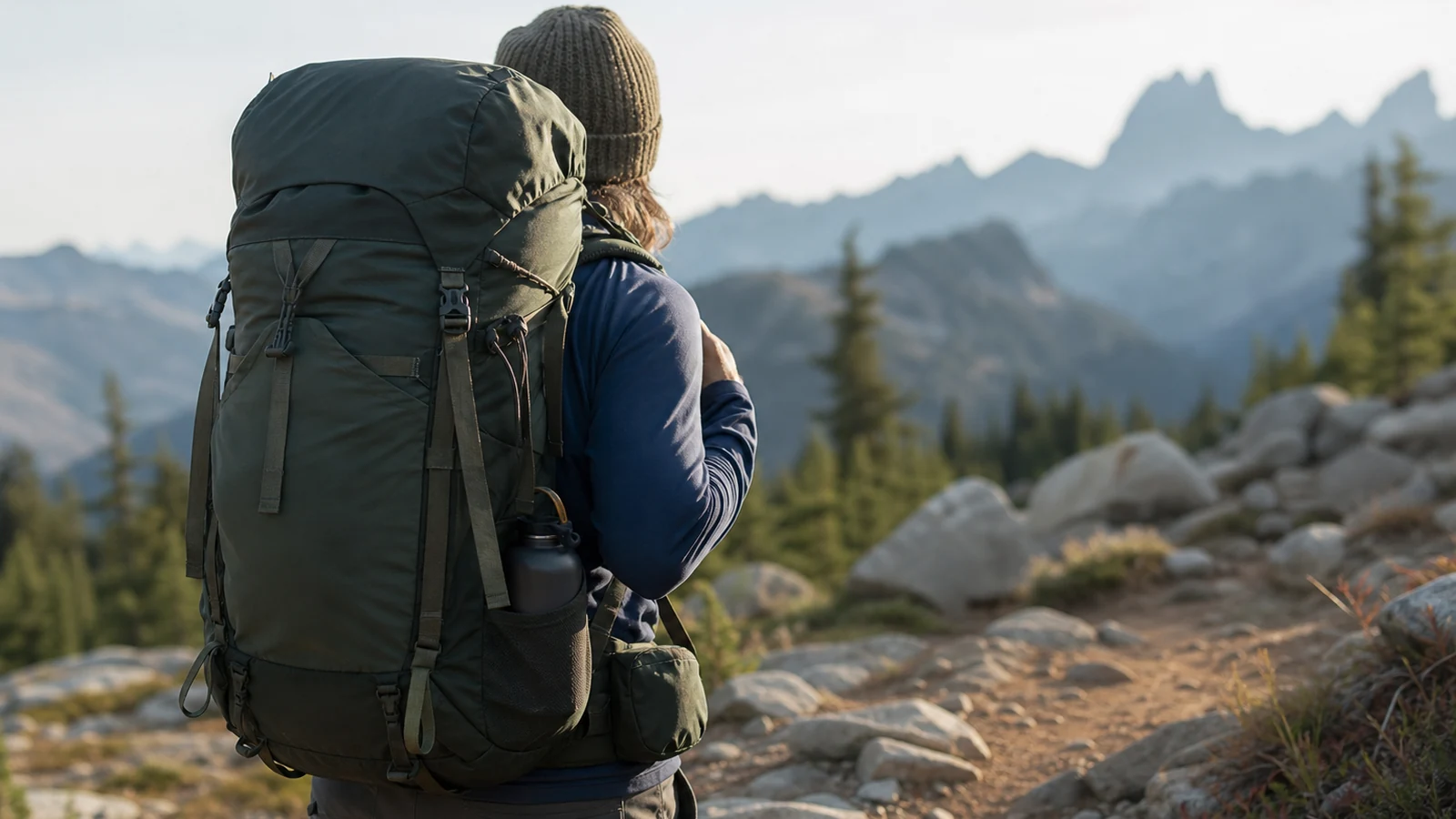
The pack that feels light on a long climb is usually the one sized to your torso and loaded so the hip belt, not your shoulders, carries the weight.
A backpack that hurts after two hours is almost always the wrong size or badly loaded, not badly built. The parts that decide comfort are the ones you measure before you buy, so the choice is less about the brand on the label and more about matching a pack to your body and your trip.
Two numbers drive the decision. Capacity and torso length settle most of it, and everything else is a smaller adjustment on top. Here is how much each factor actually changes how a loaded pack feels once it is on your back.
The top two carry the most weight in the decision, because a pack that is the wrong length or too small will hurt no matter how good the materials are. Work down that list in order and the pack you end up with will feel light for its load rather than heavy for its price.
How big a backpack do you actually need?
Match capacity in liters to how many nights you sleep out and how bulky your gear is, not to your body size. A larger person on a single overnight still needs a small pack, and a small person on a week-long winter trip needs a big one.
Volume is measured in liters, and the useful bands are wide. A weekend load and a week-long load are genuinely different problems, so the pack that carries one comfortably will sag or overflow with the other.
| Trip length | Capacity | Typical loaded weight | Best for |
|---|---|---|---|
| Day hike | 15 to 30 L | 3 to 7 kg | Water, layers, food, the ten essentials |
| Overnight to weekend | 40 to 55 L | 8 to 14 kg | 1 to 3 nights, three-season gear |
| Multi-day | 55 to 70 L | 12 to 18 kg | 3 to 5 nights, or a bulky sleeping bag |
| Extended or winter | 70 L and up | 16 to 25 kg | 5-plus nights, or cold-weather insulation |
Three items set most of your volume, and they are the shelter, the sleeping bag, and the sleeping pad. A compact three-season kit collapses into 40 to 45 liters, while an older bag and a bulky tent can push the same trip length past 60. Food adds roughly one liter per day, so a five-day resupply eats real space that a weekend never sees.
Winter pushes you up a band even for the same number of nights, because a cold-rated sleeping bag, an insulated pad, and extra layers take up room a summer kit never needs. Ultralight hikers move the other way and fit a multi-day load into 45 to 55 liters, because the volume you need follows the gear you actually carry more than the calendar.
Compression straps widen the useful range of any pack. Cinching the load down steadies a light pack and stops a half-full bag from sagging, so one 55-liter pack with good compression can carry a light overnight or a stuffed weekend. That range is why most hikers own a single backpacking pack instead of three.
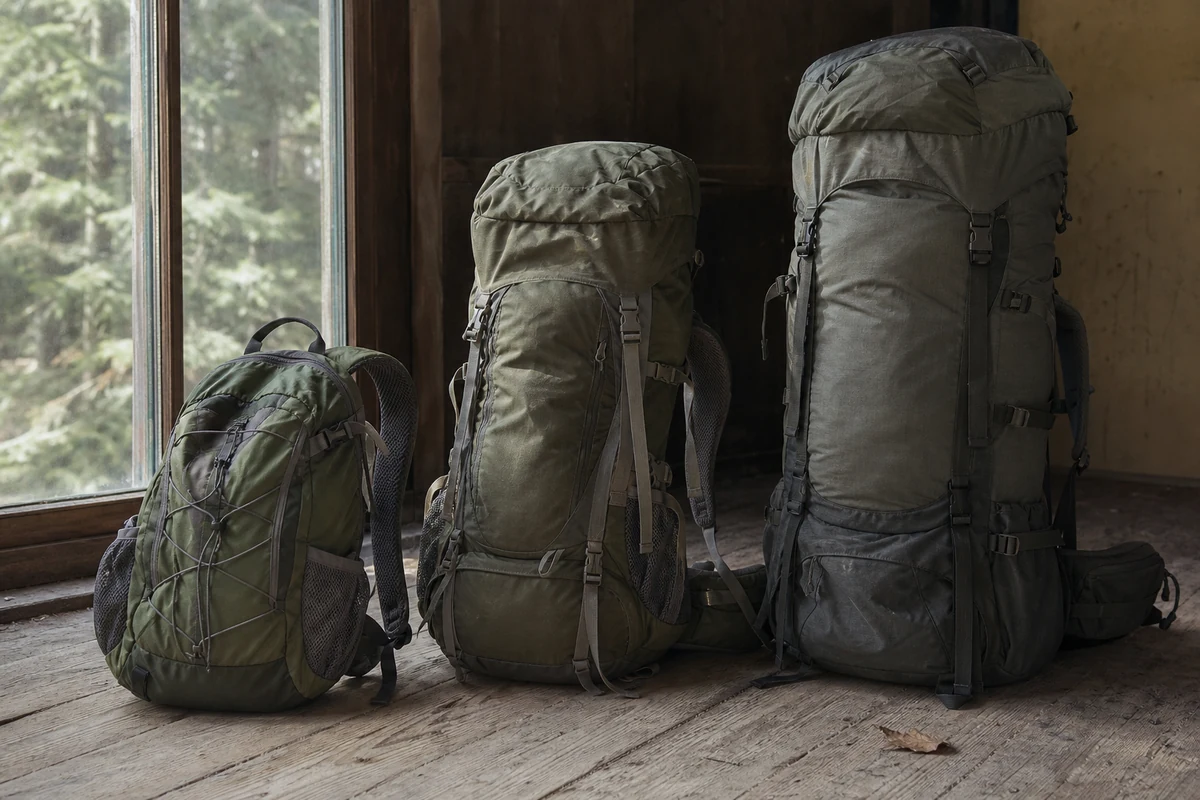
Buying one size larger "to be safe" is a common mistake. A half-empty big pack lets the load shift and sit low, and the empty volume tempts you to fill it, so a pack sized close to your real kit usually rides better than an oversized one. For a short outing, size down to a day hike load and skip the frame weight entirely.
Match the frame to the load, not the trip name
The frame is what moves weight off your shoulders and onto your hips, so pick it by how heavy your load actually gets. A frame rated for your weight range keeps its shape under the load instead of collapsing into your back.
Most trail packs use an internal frame, a hidden framesheet or a pair of aluminum stays that give the pack a rigid line from the shoulders to the hip belt. That rigid line is what transfers load downward, and it is why a framed pack can carry 15 kilograms in comfort while a soft bag of the same size cannot.
Internal frame
A framesheet or aluminum stays hidden in the back panel. The default for loads above about 9 kg, and the right call for nearly every backpacking trip.
Frameless
A soft pack with no support structure. Light and simple, but only comfortable under roughly 7 to 9 kg, so it suits ultralight kits and short trips.
External frame
A visible rigid frame outside the pack bag. Rare now, but strong for very heavy or oddly shaped loads and hot climates where airflow matters.
Back-panel design comes with the frame and changes how you feel the load. A suspended mesh panel holds the pack a couple of centimeters off your spine and moves air, which helps in heat but pushes the load slightly away from your back. A close-contact panel keeps the weight tight to your body for better balance on steep or uneven ground, so the right choice depends on your climate and terrain.
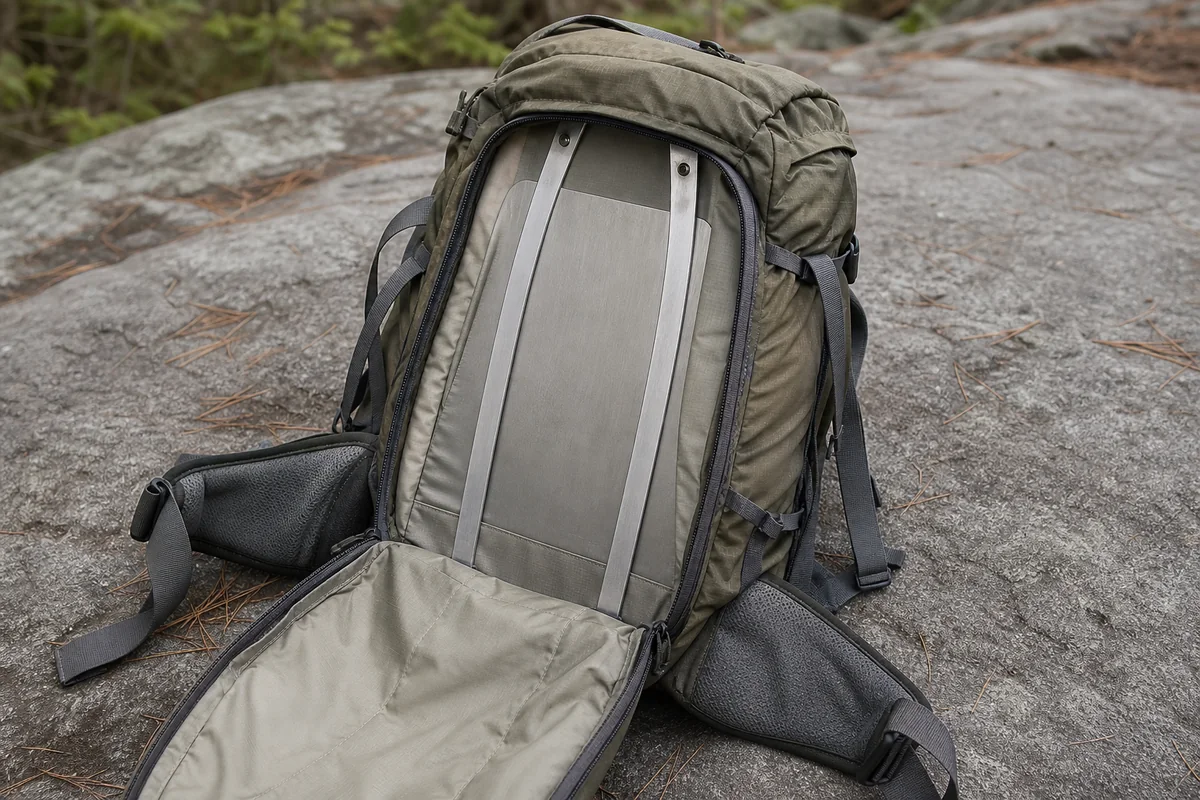
Every pack lists a load range, and it is a real limit rather than marketing. Load a frameless pack past its comfortable ceiling and the weight drags straight down on your shoulders, which is the exact problem a frame exists to prevent. If you plan to carry a heavier load on most trips, buy the frame that suits the top of your range, not the average. Even a loaded daypack rides better with a light framesheet once it passes about 7 kilograms.
Your torso length sets the size, not your height
Pack size is fitted to the length of your spine, not your overall height, so two people the same height can need different frame sizes. A tall torso on short legs and a short torso on long legs wear very different packs.
Measure from the bony bump at the base of your neck down to the point on your lower back level with the top of your hip bones. That distance in inches is your torso length, and it maps to the small, medium, or large frame a maker offers.
- Extra small torso
- roughly 15 inches and under
- Small torso
- about 16 to 17.5 inches
- Medium torso
- about 18 to 19.5 inches
- Large torso
- about 20 inches and up
- Measure between
- C7 vertebra and the iliac crest line
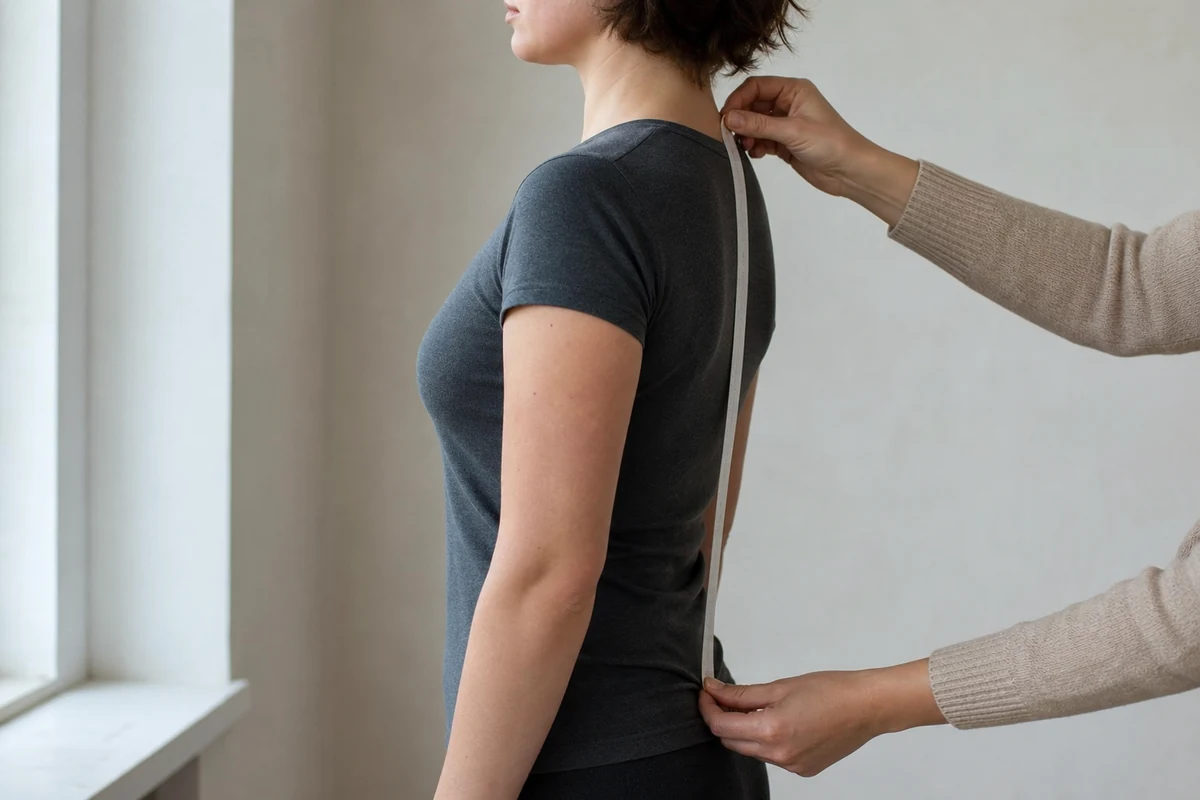
Waist size is a separate measurement, and the hip belt has to match it independently of the frame. Some packs let you swap the belt size on its own, which matters if your torso lands in one size band and your waist in another. Women's and youth frames usually run shorter in the torso and add a hip belt shaped for a different pelvis, so they are worth trying even by hikers who do not assume they need them.
Many packs add an adjustable back panel that slides a few inches, which helps if you fall between sizes or share a pack. A fixed-length frame that matches your torso still rides better than an adjustable one set near the edge of its range, so measure first and treat adjustability as a bonus. Getting the torso and hip belt dialed in is the single change that turns a heavy pack into a stable one.
How should the hip belt carry the weight?
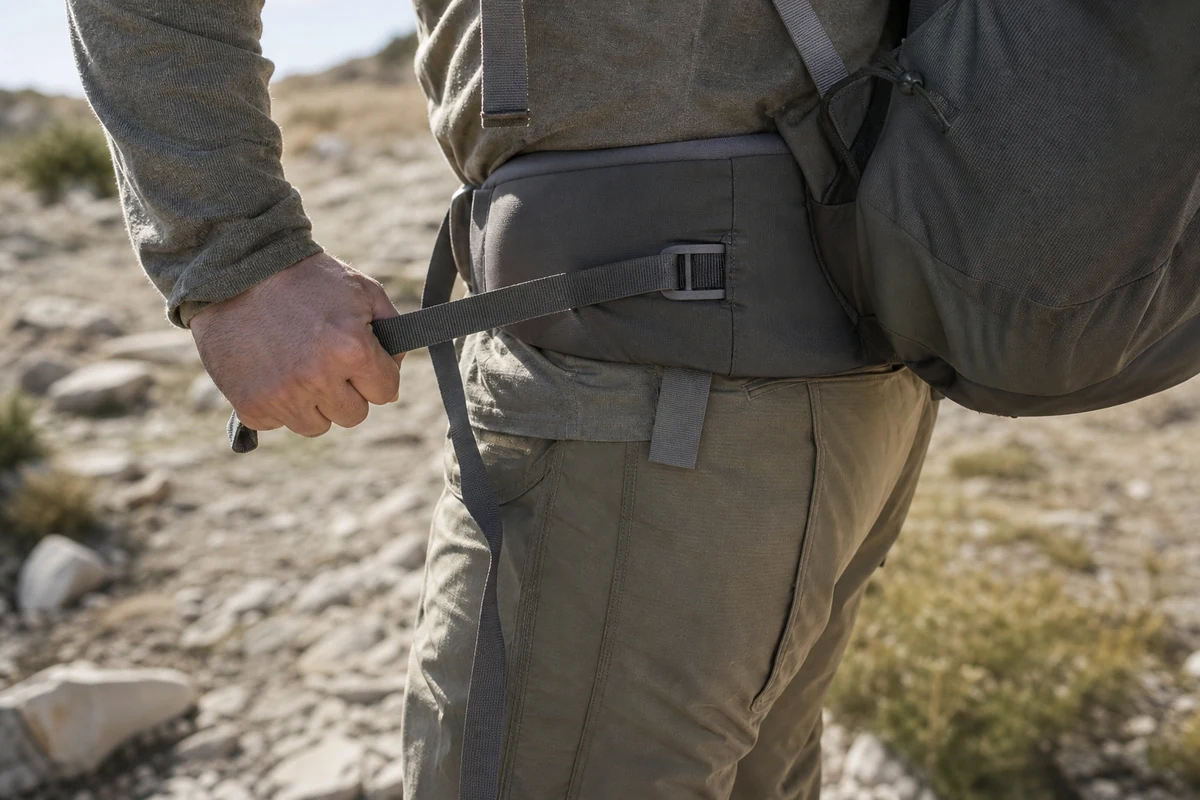
The hip belt should wrap the top of your hip bones and take most of the load, leaving the shoulder straps to steady the pack rather than hold it up. When it is set right, roughly 80 percent of the weight rests on your hips, where your legs can carry it for hours.
Fit the belt in order once the pack is loaded, because an empty pack hides how the belt will actually sit under weight. Each step sets up the next, so work from the hips up.
- Load firstPut 10 to 12 kg in the pack so the belt and straps sit the way they will on trail.
- Set the hip beltCenter the padded belt over your hip bones, then tighten until the load lifts onto your hips.
- Snug the shouldersPull the straps until they contact your shoulders without carrying weight.
- Set load liftersTension the straps that run from the shoulders to the top of the frame to about a 45-degree angle.
- Fine-tune the sternum strapClip it across your chest to stop the shoulder straps sliding outward.
A belt that sits on your waist above the hip bones cannot transfer load, so it slides down under weight and drops the pack onto your shoulders. Belt padding matters as much as position, because a thin, soft belt folds under a heavy load while a firmer belt spreads the pressure across the hip bones. Load-lifter straps only work when the frame reaches above your shoulders, which is another reason the frame length has to match your torso.
Which features change the carry, and which are just marketing?
A few features genuinely change how a pack works, and many exist mainly to fill a spec sheet. Sort them by whether they affect the load, your access to gear, or only the look on the shelf.
Access is the feature most worth checking. A top-loading pack is simple and light but forces you to dig, while a front panel or side zip lets you reach the bottom without unpacking everything above it.
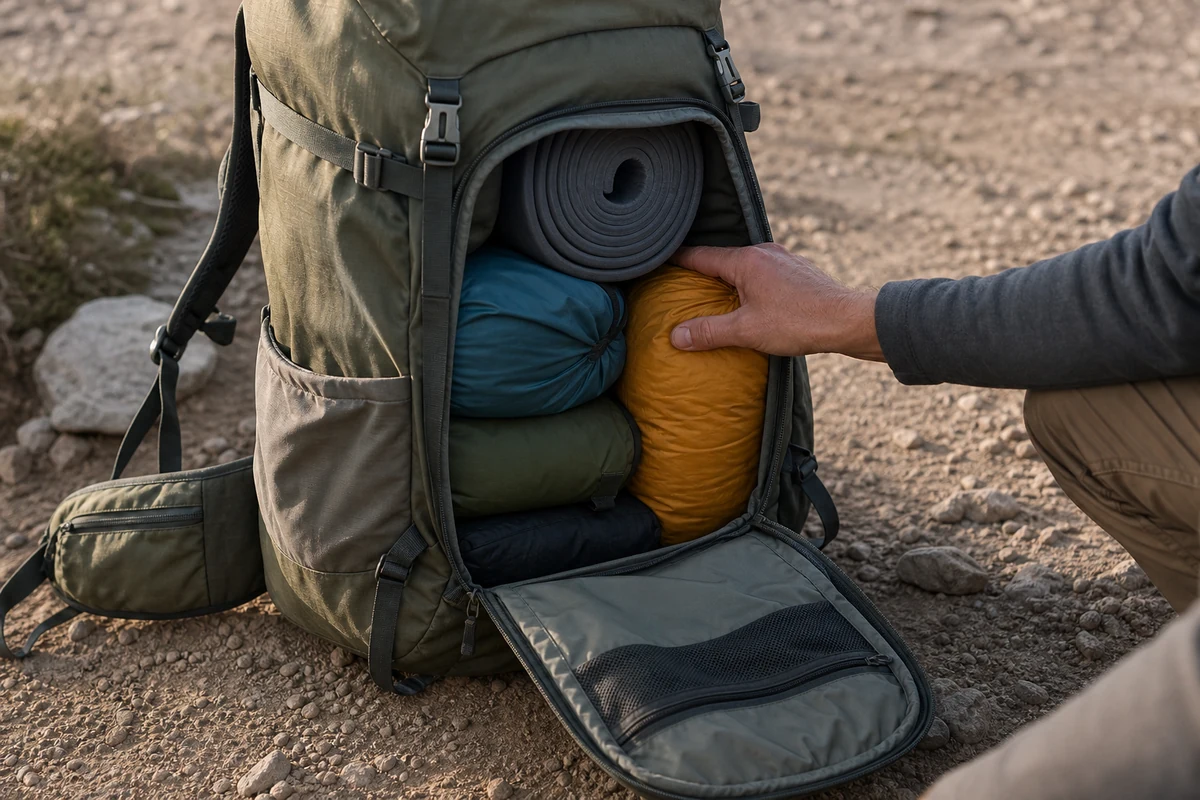
Think about where your rain layer and lunch live, because a pack you have to empty at every stop wastes time and scatters your gear across the trailhead.
Pros
- A floating top lid adds a little volume and quick-access storage for a map and snacks.
- Hip belt pockets keep a phone, snacks, and lip balm reachable without stopping.
- Stretch side and front pockets hold water bottles, a wet fly, or layers you shed.
- A sleeping bag compartment with a zip helps you pack in the dark or in the rain.
Cons
- Dozens of straps and daisy chains add weight and snag on brush more than they help.
- A rain cover sold as a headline feature is often better replaced by a pack liner bag.
- A built-in hydration reservoir is handy, but rarely worth paying a premium to include.
External attachment points decide what rides outside the pack. Ice-axe loops, trekking-pole keepers, and gear loops let you carry tools and a wet tent without opening the main bag, which matters more on an alpine or shoulder-season trip than on a summer trail. Compression straps double as outside carry, holding a foam pad or a rope flat against the pack body.
Fabric denier tells you how tough the pack cloth is, and higher numbers resist abrasion at the cost of weight. A 210-denier pack is light and fine for maintained trails, while a 400-denier or higher base stands up to granite, scree, and years of hard use. Match the fabric to your terrain rather than paying for the burliest option by default, because most three-season hikers never wear out a mid-weight pack. The features that help you organize the load matter far more than the number of external straps.
When does a lighter pack cost you?
A lighter pack saves real effort, but past a point the savings come out of the frame, the padding, or the fabric that make a load bearable. The lightest pack is the right choice only when your load is light enough that the missing structure does not matter.
Ultralight packs cut weight by removing frame stiffness, thinning the hip belt, and using lighter cloth. That works when your total load stays under roughly 9 to 11 kilograms, and it fails when you add water, a bear canister, or winter gear that pushes past the pack's comfortable ceiling.
A useful order is to cut the load first, then buy the lightest pack that still carries that load on its frame. Hikers who have trimmed to a lower base weight can drop into a frameless pack safely, because they have already removed the weight that would need a frame. Buying the frameless pack first and then loading it heavy just moves the strain back onto your shoulders.
Conditioning changes the math too. A hiker who is training for a heavy carry can handle a slightly heavier, more supportive pack that a lighter, thinner one could never match on a long climb. The pack and the body have to suit the same load.
What to check before you buy
Load a candidate pack in the store and walk with it, because a pack that feels fine empty tells you nothing about how it carries weight. Most outdoor shops keep sandbags for exactly this, and a few minutes under load reveals more than any spec sheet.
Run through a short set of checks with real weight in the pack before you decide.
- Torso length matches your measurement, not just your height
- The loaded hip belt wraps your hip bones and lifts the weight onto them
- Shoulder straps contact without gaps and without carrying the load
- No pressure points at the hip bones, collarbones, or lower back after ten minutes
- Capacity suits your real kit, with a little room but not a lot of empty space
- You can reach the gear you need most without unpacking the whole bag
- The return policy lets you test it fully loaded on a real trip
Trying two or three packs back to back under the same weight is the fastest way to feel what a frame and belt actually do. A women's or youth frame is worth a try for a shorter torso, and a lightly used pack from a reputable maker can fit as well as a new one when the frame size is right.
Price tracks materials and weight more than comfort, and a solid three-season pack runs about 180 to 320 dollars new. A mid-range pack that fits your torso will out-carry a premium pack that does not, so spend the fit budget first. If you are shopping for a first backpacking trip, put your money into a frame rated for your load and a belt that fits, and let the lighter fabrics and extra pockets wait until you know how you hike.
Sources
The REI guide to choosing a backpack sets out the capacity bands by trip length, the torso-length measurement method, and the way a hip belt transfers load onto the hips. OutdoorGearLab's backpacking pack testing explains the tradeoffs between pack weight, frame support, and durability across load ranges.
AnswersQuestions readers ask
What size backpack do I need for a weekend trip?
A 40 to 55 liter pack fits most one to three night trips with three-season gear. Drop toward 45 liters if your kit is light and compact, and size up toward 55 if you carry a bulky sleeping bag or a bear canister.
Should the weight sit on my shoulders or my hips?
On your hips. When the hip belt wraps the top of your hip bones and is tightened under load, roughly 80 percent of the weight rests on your hips and the shoulder straps only keep the pack steady.
How do I measure my torso length?
Measure along your spine from the bony bump at the base of your neck down to the point on your lower back level with the top of your hip bones. That length in inches, not your height, sets your frame size.
Is a lighter backpack always better?
No. Ultralight packs remove frame stiffness and belt padding, which only works under about 9 to 11 kilograms. Above that a thin belt and soft frame drop the load onto your shoulders, so match the pack to your real load.
How much should I spend on a backpack?
A solid three-season backpacking pack runs about 180 to 320 dollars. Put the budget into a frame rated for your load and a belt that fits your torso first, because fit matters more than premium fabrics or extra pockets.