
Muscle Cramps While Hiking: What Actually Causes Them
The salt-and-water story is the weaker of the two explanations, and the better one changes what you do.
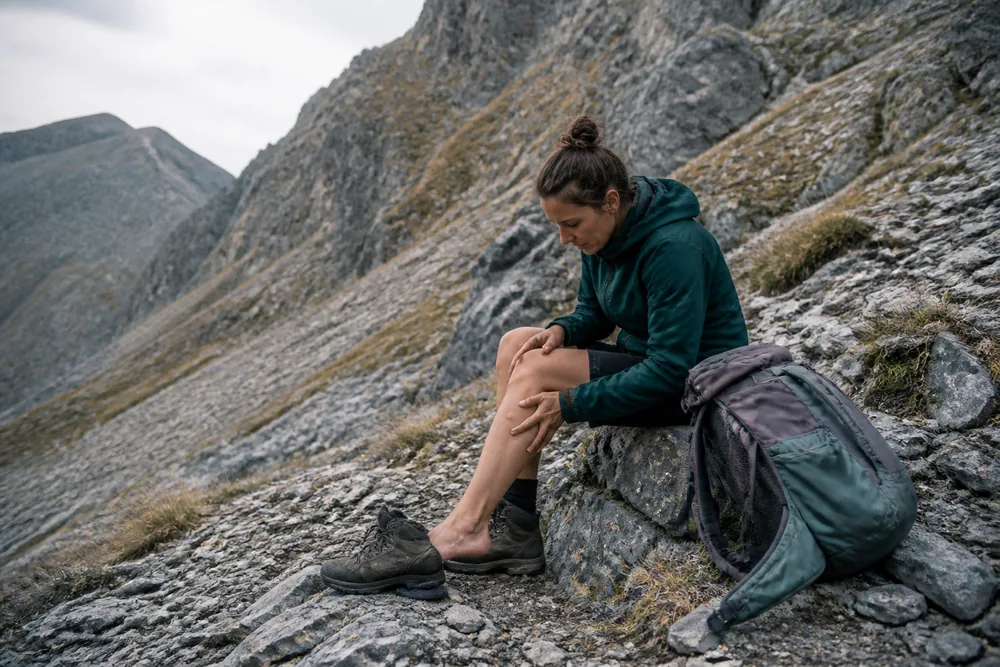
A cramping muscle is not running out of anything, it is being told to contract by a nerve loop that fatigue has tipped out of balance. That explains why a stretch releases it in seconds while a drink cannot, and why training beats supplements for preventing the next one.
Two hours into a climb your calf seizes, and you already know what everyone is going to say about it.
Drink more, eat a banana, take a salt tablet.
There are two competing explanations for what just happened to that muscle, and the popular one is the weaker of the two.
Those ratings are an editorial read of where the published evidence currently sits, not a settled verdict, and the honest summary is that cramping is multifactorial and nobody has proved either case outright. What follows is written from the higher-rated explanation, because it changes both what you do in the next minute and what you do before the next big day.
Why does a muscle lock up on a climb and not on the sofa?
A cramping muscle is not running out of anything. It is being told to contract, continuously, by a nerve that will not stop sending the message.
That distinction sounds academic until you notice what it predicts. A supply problem should improve when you resupply, and a control problem should improve when you interrupt the signal, which is exactly what the next section is about.
The control in question is a loop with two halves.
Muscle spindles sit inside the muscle and report stretch, pushing the motor neuron to fire. Golgi tendon organs sit where muscle meets tendon, report tension, and push the other way, damping the same neuron down.
Fatigue tips that balance. The excitatory side rises, the inhibitory side falls, and the motor neuron ends up firing in a sustained loop that the muscle has no way to argue with.
Two observations fit this and do not fit the salt story.
The first is that people cramp with entirely normal hydration and entirely normal blood electrolytes, which a shortage cannot explain. The second is where cramps happen: overwhelmingly in muscles working in a shortened position, which is precisely the position in which the tendon organ has least to say.
The case for the electrolyte explanation is thinner than its popularity suggests. It rests largely on case reports and on the observation that people who cramp have often also been sweating hard, which is a description of a hot day rather than a mechanism.
None of this means salt is irrelevant to a long day in the heat. It means salt is probably not what is happening in your calf right now.
What actually releases a cramp in the next two minutes?
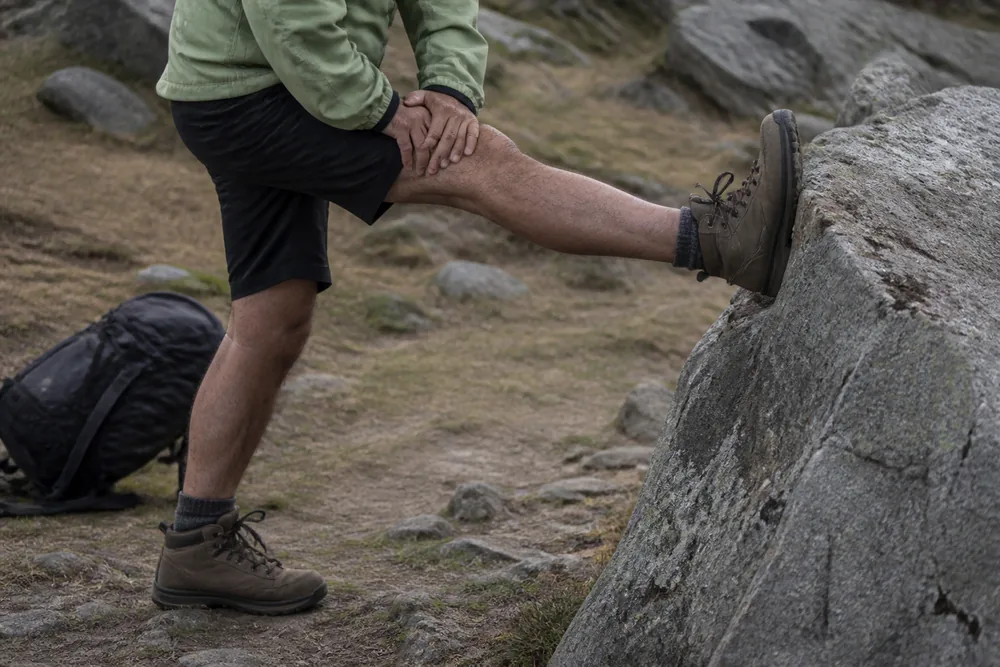
Stretch it. Not later, not after a drink, now, and hold it.
If the tendon organ has gone quiet, then loading it deliberately is the obvious way back, and a sustained stretch is the only tool you have that does that directly.
- Stop and take the load offStanding on a cramping calf keeps the drive that produced it running. Get the weight off it before you do anything else.
- Straighten the knee and pull the toes toward the shinThe geometry decides whether this works. A bent knee shortens the calf you are trying to lengthen, which is the single commonest error.
- Hold it, do not bounce itSustained tension is what loads the tendon organ. Repeated pulses do not, and they hurt more.
- Massage the belly of the muscle as it givesThe last of the contraction lets go under pressure, and this is where most people stop a few seconds too early.
- Walk gently before loading it againA released cramp comes back readily, and the first hundred metres decide whether it does.
Now for the odd one, because it is the single most useful piece of evidence on this page.
In laboratory work on electrically induced cramps, a small volume of pickle juice released them in around 85 seconds. That is far too fast for anything in the liquid to have been digested, absorbed, and delivered to a muscle in the leg.
Whatever is happening is happening in the mouth and throat, not the bloodstream. Stimulating receptors there appears to trigger a reflex that dampens the excitability of the very motor neurons doing the firing.
Which settles an argument. If a swallowed liquid can end a cramp before it could possibly have been absorbed, then absorption was never the mechanism.
The practical version is duller than the science. Stretching remains the first move, the oral trick is a curiosity worth knowing, and that evidence comes from induced cramps in a lab rather than from hikers on a trail.
What definitely will not help in this window is a drink. Nothing you swallow reaches the muscle inside the time the stretch has already worked.
Salt tablets and bananas are solving a different problem
Almost certainly not, and the banana is the clearest case.
A banana carries a few hundred milligrams of potassium. A large muscle group holds many grams of it, blood potassium is regulated within tight limits regardless of what you eat, and no plausible arithmetic gets from one to the other inside a hiking day.
Sports drinks and salt tablets are a slightly better bet but not for this reason. They matter most for people who sweat heavily and salt visibly on long hot efforts, which is a real minority rather than a general case.
The evidence for supplements preventing exercise cramps is weak across the board. No product has been shown to do it reliably, which is a different claim from saying they do nothing at all for you on a hot day.
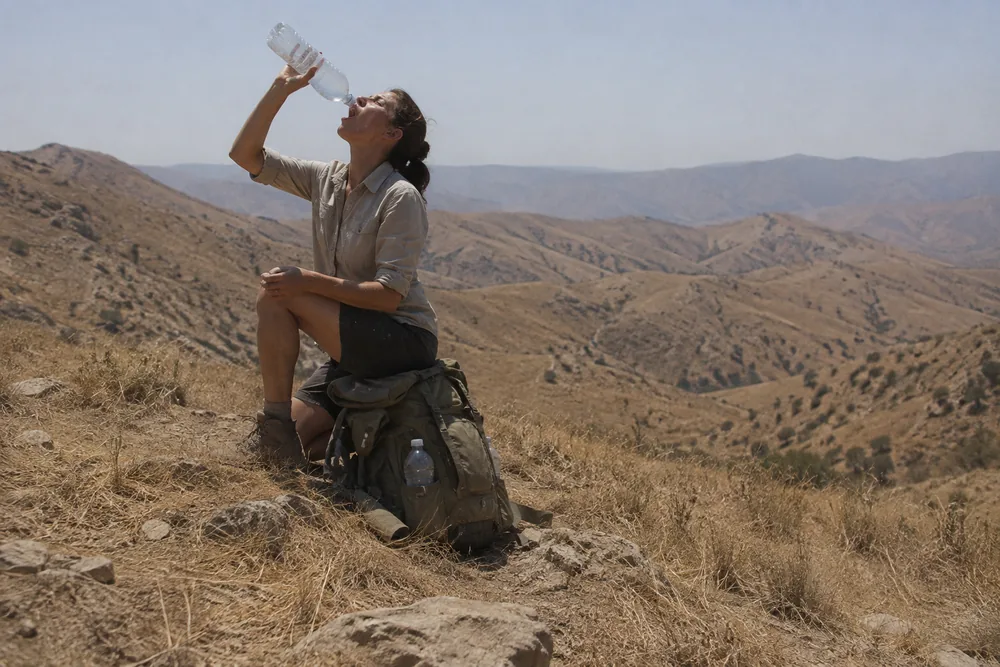
Carrying sodium on a long hot day is still sound practice. Expecting it to prevent your calf from seizing on the third climb is where the reasoning breaks.
Which muscle goes tells you what the day did to you
Four sites account for most trail cramps: calf, hamstring, quadriceps, and the small muscles of the foot.
That is not a random list. Three of them cross two joints, which means they can end up shortened at one end while still being asked to work at the other, and that is exactly the position the mechanism predicts.
Calf
The commonest by a distance. Points at climbing, at toe-off, and at hours of it rather than at anything you drank.
Hamstring
The clearest illustration of the two-joint problem, and it usually arrives late in a long day rather than during the hard part.
Quadriceps
Almost always a descent. If your quads cramp, the day's hardest demand was the way down, not the way up.
Foot and toes
Usually about footwear, terrain and time on your feet. Look at the shoe and the ground before you look at your diet.
The quadriceps case is worth its own sentence, because it is the one people misread most.
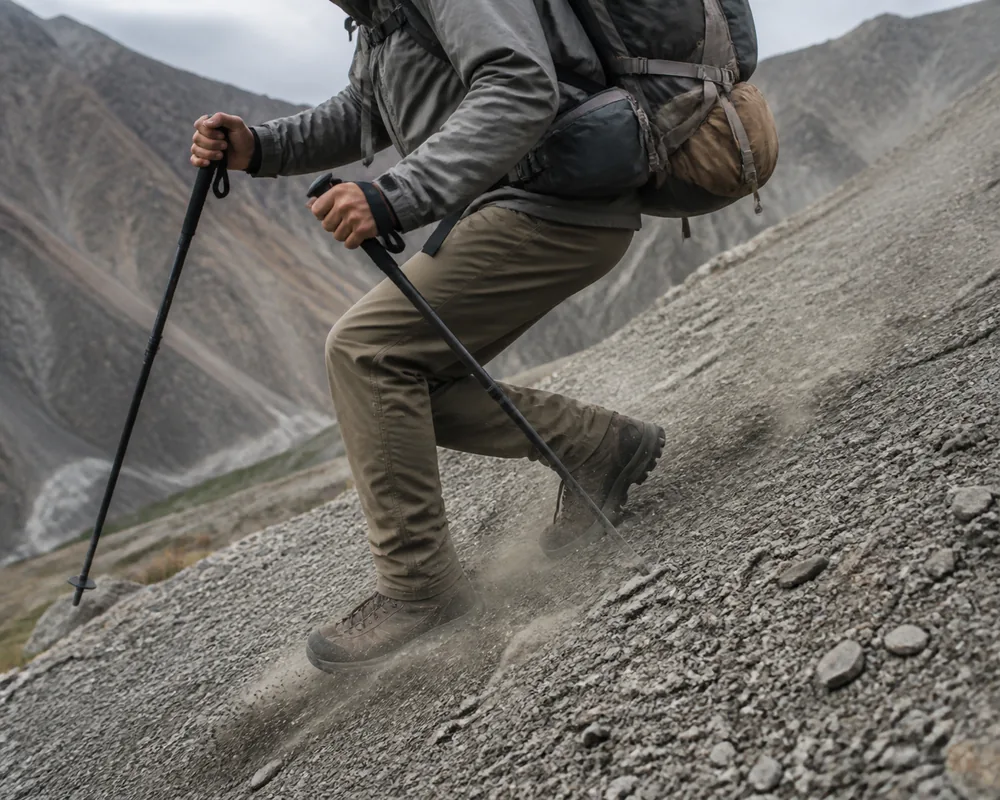
Walking downhill loads the muscle while it lengthens, which is a far harder demand than the same muscle shortening on the way up. Almost nobody trains for it, and the bill arrives at the bottom.
Timing carries information too.
Cramps mostly arrive late in an effort or in the half hour after stopping, which fits accumulated fatigue rather than crossing some supply threshold. If it happened at the top of the last climb rather than the first, that is the pattern behaving normally.
One predictor beats all the others. If you have cramped before on this kind of day, you are considerably more likely to cramp again, and that history is worth more than any product.
How do you keep it from happening on the next big day?
The honest answer is the one nobody wants, which is that you train for the day you intend to have.
Since the mechanism is fatigue, the intervention with the best support is arriving less fatigued at the point where you used to cramp. That is conditioning, and it is unglamorous next to a sachet.
- Train the distance and the vertical you actually intend to walk
- Rehearse descents under load, not just climbs
- Carry the real pack weight before the trip rather than discovering it on day one
- Pace the first climb below what feels comfortable
- Treat a previous cramp as a prediction about this trip
The descent line matters most because it is the one people skip.
Training walks tend to go uphill hard and come down casually, which rehearses the easier of the two demands. If your cramps are in the quadriceps, the fix is deliberately walking downhill under weight until it stops being novel.
Pacing is the only lever left if the trip is tomorrow.
Going out slower than feels right on the first climb moves the point at which fatigue arrives, and moving it past the car is the whole objective. It costs you nothing except the pleasure of the first hour.
Stretching, oddly, does not prevent much despite being the best treatment. The evidence for routine stretching as prevention is weak, and the honest position is that it earns its place after a cramp rather than before one.
None of this promises a clean day. Prevention shifts the odds, some people cramp on efforts that leave others untroubled, and that susceptibility does not fully train away.
When a cramp is telling you something else
Almost every cramp on almost every trail is a nuisance and nothing more. It hurts, it releases, you walk on.
A small number are the visible edge of something that should end the day, and they are worth being able to pick out.
| What it is | The cramping looks like | What separates it | What you do |
|---|---|---|---|
| Ordinary exercise cramp | One muscle, locked hard, late in the effort | Releases within a minute or two of a proper stretch | Stretch it, walk gently, carry on |
| Low blood sodium from overdrinking | Cramping with headache, nausea, sometimes confusion | The drinking history: large volumes of plain water over hours | Stop fluids and treat it as an emergency |
| Heat illness | Cramping with heavy sweating and a climbing heart rate | A hot casualty, not one locked muscle | Stop, cool, and get out of the heat |
| Muscle breakdown after severe effort | Deep aching and weakness rather than a sharp lock | Pain out of proportion, swelling, cola-coloured urine | End the trip and seek medical assessment |
The last row is the one hiking pages almost never mention.
After an unaccustomed severe effort, damaged muscle can release its contents into the blood, and the sign that reaches you on a trail is urine the colour of dark cola alongside pain and weakness that do not match the walk you did. That combination is not something to sleep on.
Two other findings should stop you regardless of which row they belong to.
A cramp that will not release with a proper stretch is not behaving like a cramp, and any cramping alongside confusion, vomiting or a change in how someone is responding is an evacuation rather than a rest stop.
These conditions overlap and can happen together, so finding one does not rule out another. The purpose here is deciding whether to walk on, not arriving at a diagnosis.
Sources
The neuromuscular explanation, the spindle and Golgi tendon organ imbalance, the observation that cramps occur without dehydration or electrolyte deficit, and the assessment that the altered neuromuscular control theory is the better supported of the two come from: Muscle cramping during exercise: causes, solutions, and questions remaining.
The finding that pickle juice inhibited electrically induced cramps in around 85 seconds, faster than any electrolyte could be absorbed, and the reflex explanation for it, come from: Reflex inhibition of electrically induced muscle cramps in hypohydrated humans.
The multifactorial framing, the weakness of the supporting evidence for the dehydration hypothesis, and the treatment and prevention discussion come from: Exercise associated muscle cramps: discussion on causes, prevention and treatment.
AnswersQuestions readers ask
What causes muscle cramps while hiking?
The better supported explanation is fatigue in the nerve loop controlling the muscle, where excitatory drive from muscle spindles rises while inhibitory drive from Golgi tendon organs falls. Cramps happen in people with normal hydration and normal blood electrolytes, which a supply shortage cannot explain.
How do you get rid of a cramp fast?
Stretch the muscle and hold it. For a calf, straighten the knee and draw the toes toward the shin rather than pushing the foot down, hold rather than bounce, and massage the belly of the muscle as it releases.
Do bananas or salt tablets stop cramps?
Not reliably. A banana's potassium is tiny against what a muscle holds and blood potassium is tightly regulated anyway. Sodium matters most for heavy, salty sweaters on long hot days, and no supplement has been shown to prevent exercise cramps dependably.
Does pickle juice work for cramps?
In laboratory work on induced cramps it released them in around 85 seconds, far too fast for anything to be absorbed. The effect appears to come from receptors in the mouth and throat damping motor neuron excitability, which is evidence against the electrolyte explanation rather than for it.
Why do my quads cramp going downhill?
Descending loads the quadriceps while they lengthen, which is a harder demand than climbing and the one almost nobody trains. Quadriceps cramping points at the descent rather than at heat or fluid loss.
When is a muscle cramp a medical emergency?
Cramping with headache, nausea or confusion after drinking large volumes of plain water suggests low blood sodium. Deep pain out of proportion, weakness and cola-coloured urine after severe unaccustomed effort suggests muscle breakdown. Both end the trip.