
River Crossing Danger: The Decision You Make on the Bank
Where you enter and what time you arrived decide this, and both are settled before anyone gets wet.
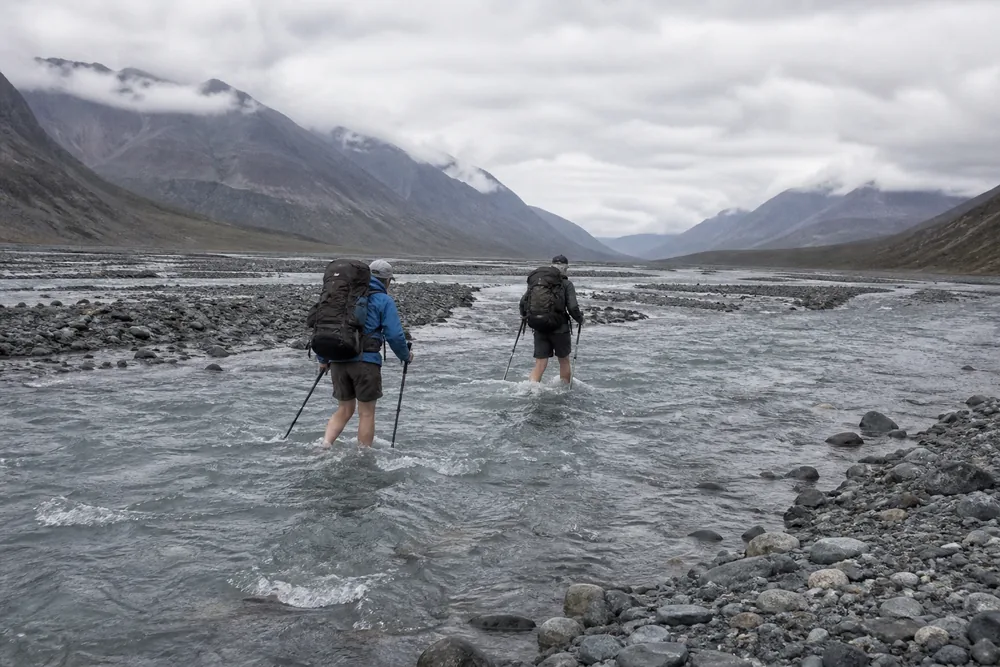
A river crossing turns on depth paired with current speed, not on depth alone, and on a crossing point chosen rather than inherited from where the trail meets the water. Snowmelt rivers also run on a timetable, which is why the same crossing is routine at seven and impassable at four.
Almost every bad river crossing looked fine from the bank. The water was lower than that last year, the far side is right there, and the group has a shuttle to catch.
Two readings decide this, and neither of them is how the surface looks.
| Depth at the crossing | Slow, smooth flow | Fast, broken flow |
|---|---|---|
| Ankle to mid-calf | Usually straightforward | Already unstable, six inches moving is enough to take you over |
| Knee | The published limit, and the sensible one | No |
| Thigh | Only in a flat pool with almost no current | No |
| Above thigh | No | No |
Read down the right column and the pattern is the point. Speed matters as much as depth, and a fast shin-deep channel is a worse proposition than a slow knee-deep one.
Which rivers are you allowed to say no to?
Standing on a bank, almost everybody does the same thing. They look at the surface and estimate how deep it is.
That reading is unreliable on its own and dangerously unreliable in silty water, and it also ignores the variable that does most of the damage.
The National Park Service puts the working limit at your knees, and offers exactly one exception, which is a flat pool with little or no current. That is a narrow exception and it is worth treating as narrow.
The reason the exception is so tight is what moving water does to a standing body.
Six inches of it is enough to take an adult off their feet. That is a depth you would step over without thinking on a wet path, and in a current it is already a problem.
So the two numbers have to be read together.
Water at your knees moving slowly is a crossing, and water at your shins moving fast is a swim you did not plan.
Some water cannot be read at all. Glacial and heavily sedimented rivers are opaque, which means you cannot see the bed, cannot judge depth, and cannot see the rock that is going to catch your foot.
One honest caveat about the knee guideline. It is calibrated for an average adult, and a shorter or lighter person reaches the same trouble in less water, which matters when a group is deciding together.
Where you cross matters more than how you cross
The trail arrives at the river where it does for reasons of terrain, history and whoever built it. None of those reasons is that somebody stood there and judged it the best place to get across.
That is the most useful thing on this page, because a river that fails the test at the trail may pass it comfortably two hundred metres upstream.
Wide or braided reaches
The same volume of water spread thinner and slower. A river split into five channels is five easy problems instead of one hard one, and this is the biggest improvement available for nothing.
The straight between two bends
Where a meandering river is most even across its width. Look at the middle of the straight rather than at either end of it.
The outside of a bend
Deep and fast, because that is where the current has been cutting. It usually looks like the obvious place and it is the wrong one.
Whatever is downstream
This decides the consequence rather than the difficulty. Strainers, log jams, rapids or a drop within swimming distance rule a crossing point out no matter how good the water looks.
The downstream check is the one people skip, and it is the one that changes a slip into a fatality.
Falling over in a wide gravel-bedded reach with two hundred metres of shallow water below it is unpleasant. The same fall thirty metres above a log jam is a different event entirely.
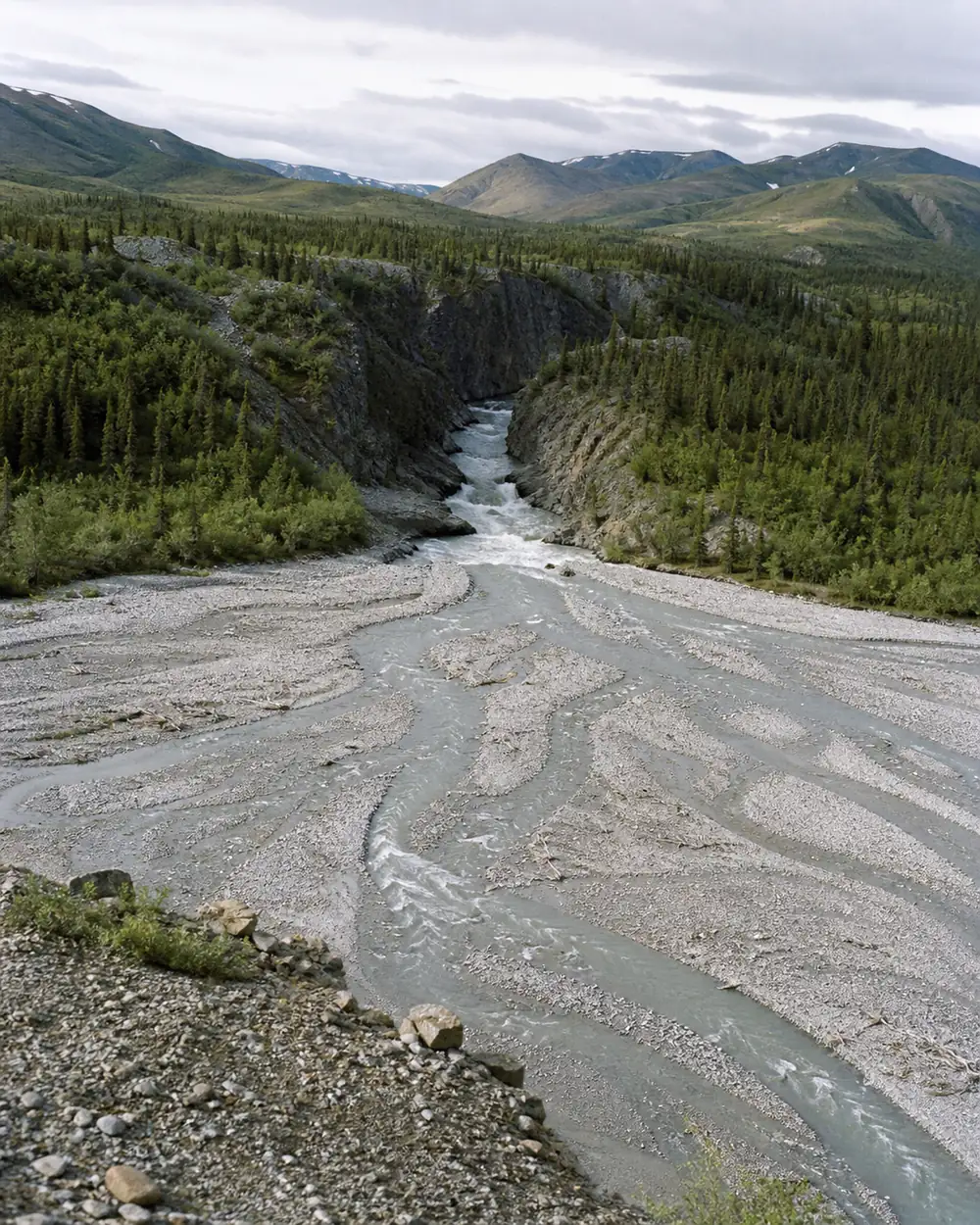
Walking to find a better reach costs twenty minutes and is the cheapest safety measure on this page.
Two limits are worth knowing. A braided reach can hide one deep channel among the shallow ones, so each channel gets read on its own, and in a gorge there may be no better reach within a day's walk, which turns this into the decision in the last section instead.
How do you cross once you have decided to?
Undo your hip belt and your sternum strap before you step in.
It takes three seconds on the bank and it is the only preparation on this list that cannot be improvised once you are in the water.
A fastened pack is what turns a stumble into a drowning. It floats your back, rolls you face down, fills with water, and then holds you there, and it can snag on anything the river has collected.
- Undo the hip belt and the sternum strapLoose and hanging, so the pack can be shrugged off in one movement. Practise it once with a loaded pack before you need it.
- Put something on your feetSpare sandals or trainers if you carry them, otherwise your boots with the socks and insoles taken out. Barefoot loses traction and finds every sharp thing on the bed.
- Face upstream and angle slightly downstreamFacing the far bank is the instinct and it presents your whole side to the current. Facing into the flow lets you see and brace against what is pushing you.
- Shuffle sideways, leaning into the currentTwo points of contact at all times, no crossing strides. Poles go in upstream, planted before you move a foot.
- Link up if it is swift or deepArms locked behind each other's pack straps, strongest person slightly upstream breaking the current for the rest.
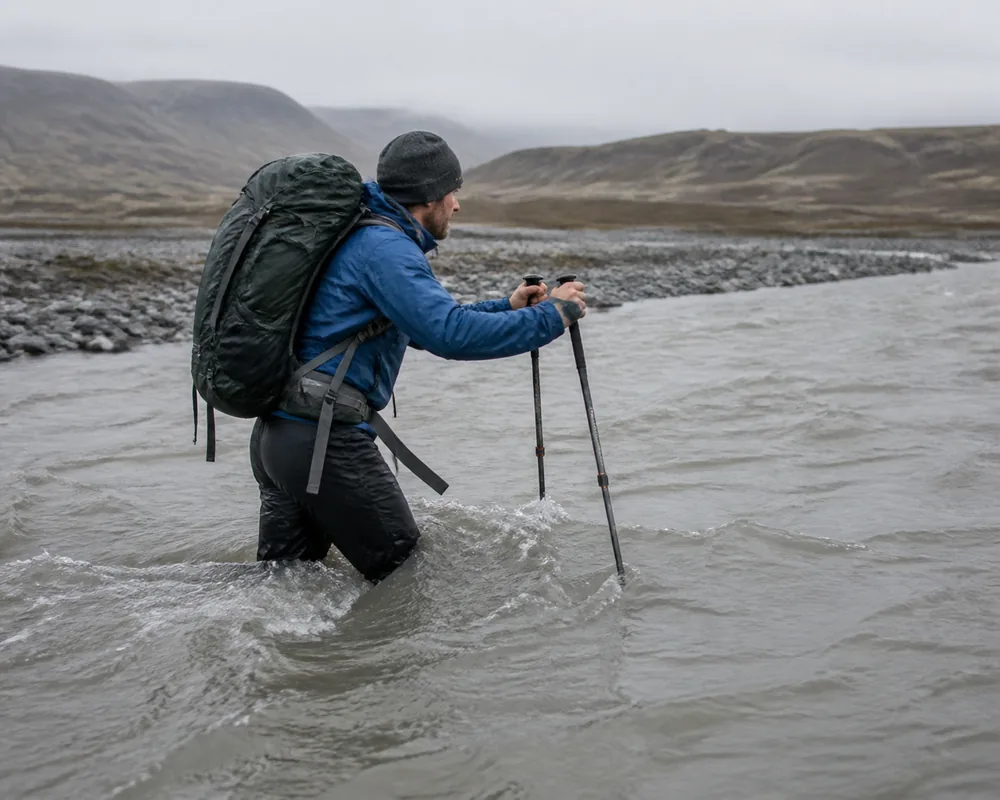
The group link is powerful and it has a cost worth naming.
Three people locked together are far more stable than three people crossing alone, and they are also much harder to sort out if one of them goes down. Agree beforehand what happens if someone loses their footing, rather than discovering it mid-river.
The river you crossed this morning is not the river you meet at four
The classic way to get stranded is not to misjudge a crossing. It is to make a perfectly good one at nine in the morning and come back to it at five in the afternoon.
Snowmelt and glacial rivers run on a daily cycle. Overnight cold slows the melt and the river drops, the sun works on the snowpack all day, and the water arriving at your crossing is the melt from several hours earlier.
The same crossing, across one day
- First light to mid-morningCross now if you are going to cross at allThe river is at its lowest and the bed is at its most readable
- Early afternoonReassess rather than assume this morning's reading still holdsMelt output peaks and levels can rise significantly within a few hours
- Late afternoon and eveningExpect the return crossing to be harder than the outward oneThis is where parties get stranded on the far side with the light going
- Hours after rain upstreamTreat the river as rising even if the weather cleared where you areThe catchment delivers long after the sky above you looks fine
On a warm sunny day the difference across those hours is not subtle. Levels can rise significantly within a few hours, which is enough to move a crossing from routine to impossible.
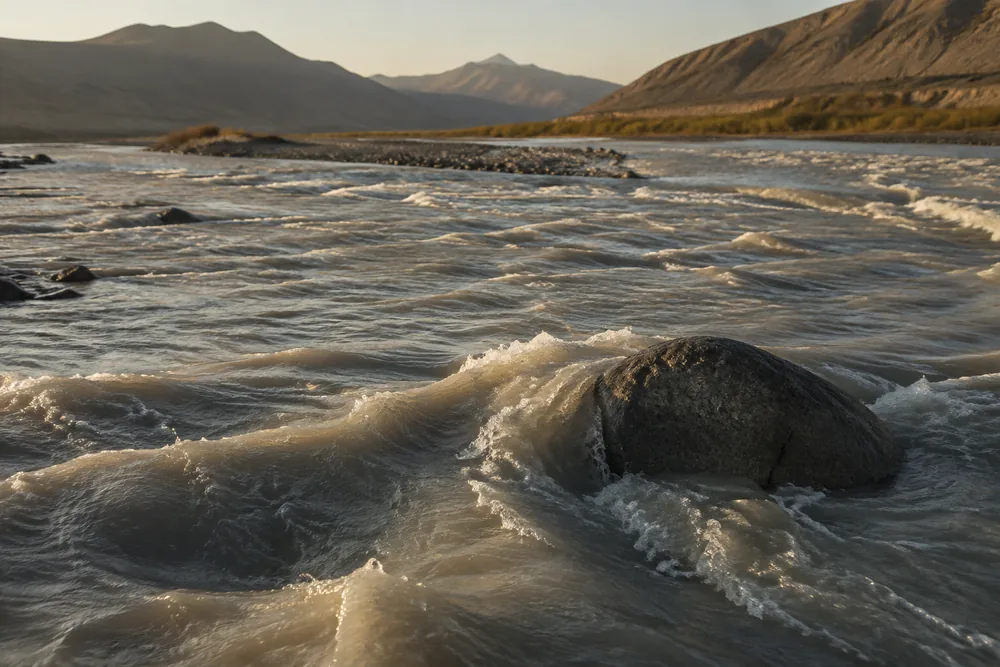
This is why an unbridged crossing changes how you plan the day rather than just how you pack for it. It argues for early starts, for out-and-back routes over loops where the loop puts the crossing at the end, and for a night on the wrong side being part of the plan rather than a disaster.
Rain is the same problem with a longer fuse. Water that fell on high ground hours ago is still on its way down, and the sky clearing where you are standing tells you nothing about it.
Not every river does this. Dam-released rivers rise on a schedule that belongs to somebody else entirely, and spring-fed ones can stay much the same all day, so the cycle is a strong default rather than a rule.
What to do if the river takes you
Get onto your back with your feet pointing downstream and your head up.
That position puts your legs between you and everything the river is about to introduce you to, and it keeps your face out of the water while you work out where you are going.
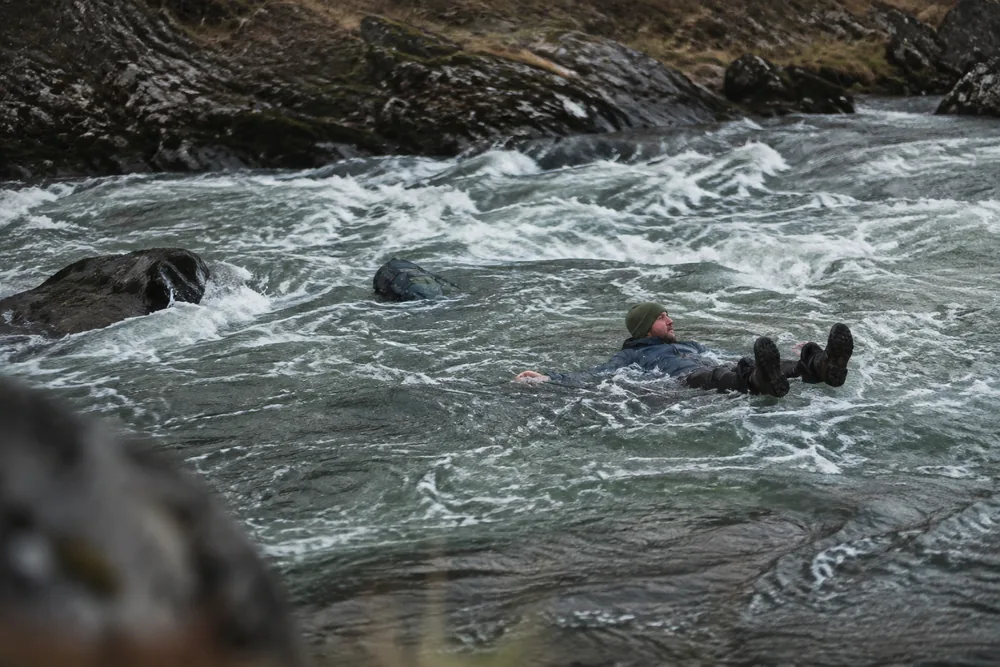
If the pack is dragging you down, get out of it. This is the moment the released buckles were for, and it is the only moment they matter.
Then swim, and swim like you mean it. Aim at an angle toward the nearer bank rather than fighting straight across the flow, because the current is going to carry you downstream either way and the angle is the part you control.
Look for the slack water rather than the shortest line. Eddies behind boulders, the inside of bends, and any place the flow visibly slows are where you get out, and they are often further downstream than the point you were aiming at.
Two honest limits. In shallow fast water there may be no swimming available at all, only protecting your head until things slow down, and cold water removes the ability to do any of this faster than most people expect.
Turning back is the skill nobody practises
Every pressure at a river crossing points the same way.
The far bank is visible, the group has come a long way, somebody has a flight, and turning around means the whole day was for nothing. None of those pressures has any information in it about the water.
Groups make this worse rather than better. A party tends to default to the confidence of its most confident member, and the person with doubts often says nothing because they assume everyone else has assessed it properly.
The fix is procedural and it is dull. Decide the turn-back criteria on the bank, out loud, before anyone is wet, and give one person the explicit job of calling it.
Pros
- Waiting until morning often drops a snowmelt river enough to change the answer completely
- A better reach may be twenty minutes upstream, and you have the daylight to look
- Nobody has to argue with a criterion the group agreed before they were committed
Cons
- Waiting costs cold, food, daylight and sometimes a booked shuttle, and pretending otherwise is why this advice gets ignored
- Turning back can mean a long reverse of ground you have already walked
- A party already across is facing a worse version of the same decision on the way home
That last line is the argument for deciding early. A crossing you can only make in one direction is not a crossing, it is a commitment, and it should be treated as one before anyone steps in.
Drowning is a leading cause of death in backcountry areas, and unbridged crossings are among the highest-risk minutes of any trip that has one. That is not a reason to avoid rivers, and it is a reason to treat the decision on the bank as the serious part rather than the formality before the wading.
Sources
The knee-depth guideline and its flat-pool exception, the instruction to release the waist and sternum belts, the footwear guidance and the upstream-facing shuffle come from: National Park Service, safe river crossings.
The same source supplies the group crossing with the strongest person upstream, the advice to look at the straight section between bends and at wide or braided channels, the early-morning timing for glacial streams, and the statement that levels can rise significantly within a few hours on warm days or after heavy rain.
The account of what a fastened pack does to a person who falls, and the practical detail on choosing a crossing and reading the water, comes from: SectionHiker, how to safely cross rivers and streams.
The swept-away position with feet downstream, the foot entrapment hazard, and the aggressive angled swim toward the bank come from: Backpacker, how to cross currents without getting swept away.
AnswersQuestions readers ask
How deep is too deep to cross a river?
The National Park Service advises against crossing water deeper than your knees, with a flat pool holding almost no current as the only exception. Speed matters as much as depth, because six inches of moving water can take an adult off their feet.
Should you unbuckle your pack to cross a river?
Yes, undo the hip belt and sternum strap before you step in. A fastened pack rolls you face down, fills with water and can snag on debris, and unbuckling is the only preparation that cannot be improvised once you are in the current.
Where is the safest place to cross a river?
The widest or most braided reach, where the same volume is spread thinner and slower, and the straight section in the middle between two bends. Check what is downstream first, because strainers, log jams or a drop rule a point out regardless of how the water looks.
Why do glacial rivers rise during the day?
Melt increases as the day warms, and the water reaching your crossing is melt from several hours earlier. Levels can rise significantly within a few hours, so a crossing made at nine in the morning may be impassable on the return at five.
What should you do if you are swept away in a river?
Get on your back with your feet pointing downstream and your head up, shed the pack if it is dragging you, and swim aggressively at an angle toward the nearer bank. Do not try to stand up, because a wedged foot with current behind it pulls you under.
How do you decide to turn back at a river crossing?
Set the criteria out loud on the bank before anyone is wet and give one person the job of calling it. Waiting until morning often drops a snowmelt river enough to change the answer completely.