
Rockfall: What Lets It Go, and When to Be Somewhere Else
Rock does not fall at random. Something releases it, and the releases have a timetable.
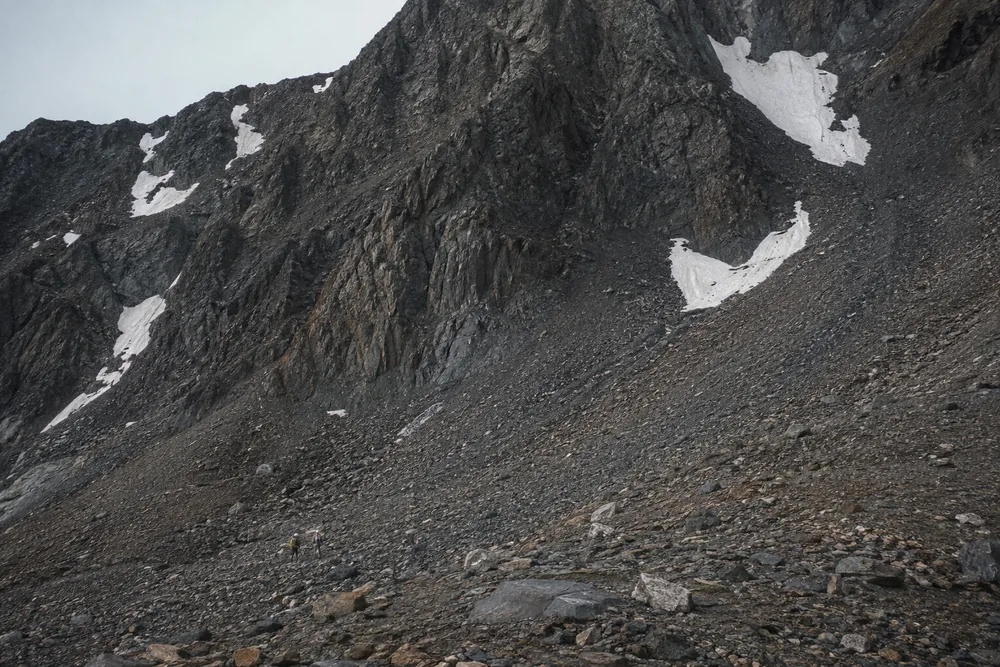
Freeze and thaw, water and warmth, and the party above you account for most falling rock, and all three can be timed or positioned around. That turns rockfall from bad luck into a scheduling problem you solve before you are ever standing underneath it.
Rock does not decide to fall. Something lets it go, and there are only really three candidates.
| What releases it | When it does the releasing | What you can do about it |
|---|---|---|
| Freeze and thaw | Shoulder seasons, and any night that drops below freezing | Move the exposure to the cold hours, or wait for a hard freeze |
| Water and warmth | Afternoons, sun arriving on the face, during and after heavy rain | Be somewhere else at that hour, and read the aspect |
| People above you | Any time there is a party on the route | Space out, go one at a time, and pick a quieter day |
Read the right-hand column and the useful shape of this appears. Almost all of the defence is timing and position, decided long before anyone would hear anything.
How does rock come loose in the first place?
Start with water, because every natural mechanism on this page is a variation on what water does once it gets inside.
Rock is not solid in the way it looks. It is jointed, cracked and bedded, and water works its way down into all of that and sits there.
Then it freezes. Water expands as it turns to ice, and inside a joint that expansion has nowhere to go except against the rock on either side.
One cycle rarely does much. Repeated freezing and thawing prises the joint open a fraction at a time, working along the weaknesses that are already there, until a block is attached to the face by very little.
The second mechanism is the same ice, doing the opposite job.
On a high face, ice in the cracks is often the only thing holding loose blocks in place. When a night is warm enough that the face never refreezes, that glue is simply absent, and the blocks are held by nothing.
The third mechanism has boots on.
People above you are a leading source of falling rock, especially on loose ground and in gullies, and it is the mechanism nobody counts because it does not feel like a natural hazard. It is also the only one you can switch off.
Two honest limits. A large slope failure can happen with no trigger a party could have seen, and a face that has been quiet for a decade can release once, so a clean-looking slope is weak evidence rather than good news.
When does the mountain actually let go?
Rockfall runs around twelve times higher during a superficial thaw than during a cold period.
That is not a modest difference. It means the same face, in the same week, is a fundamentally different proposition depending on whether the surface is frozen or running with meltwater.
One face, one day, four different hazards
- Before dawn after a hard freezeCross now, and accept the early alarmThe joints are locked with ice and the face is about as quiet as it gets
- Mid-morning as the sun reaches itGet off or past the face before the light doesWarmth on the rock is itself the trigger, and it arrives at a different hour depending on aspect
- Afternoon in active thawStay out from underneath entirelyThis is the twelve-times window, with water moving through every joint
- A warm night with a high freezing levelChange the objective rather than the start timeThe face never locked up, so there is no cold window to start in
That last row is the one parties talk themselves out of.
An alpine start works because the rock is frozen, not because it is early. If the freezing level sat above the face all night, leaving at three in the morning buys you darkness and nothing else.
Aspect decides which hour is yours.
An east-facing route takes the first sun and loosens early, while a west-facing one stays quiet through the morning and comes alive in the afternoon. The same peak can offer both on the same day.
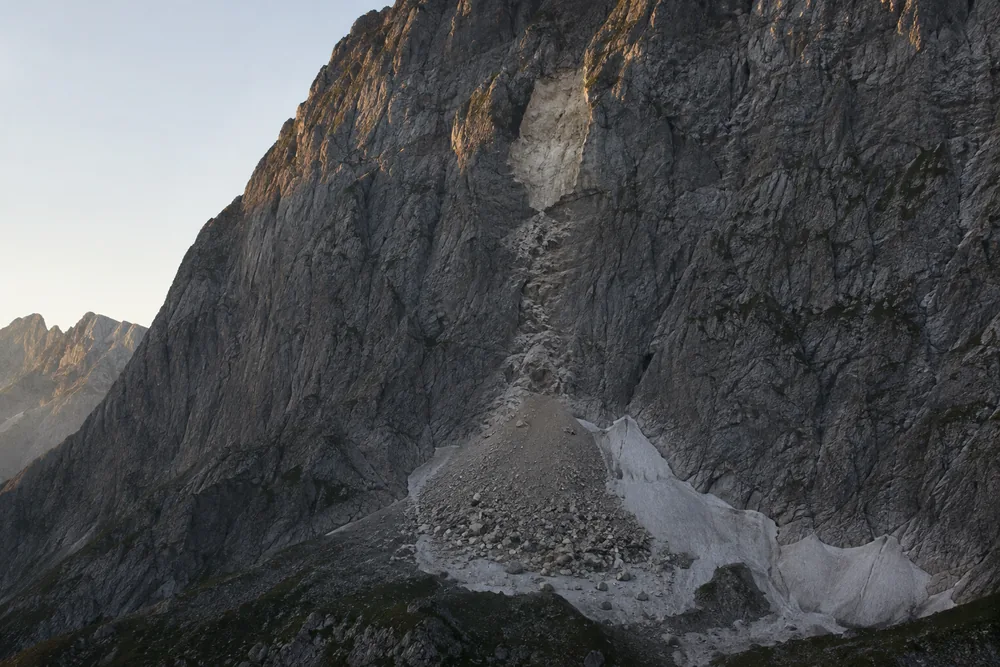
Rain ignores the timetable. Water moving through the rock releases blocks whether or not anything froze the night before, and the activity carries on for as long as the face is draining.
Seasons run the same cycle more slowly. Spring and autumn swing through freezing every day, which is why the shoulder months have the reputation they do.
How do you read ground you are about to be underneath?
A gully is a funnel. Anything that comes off the walls above ends up in the channel, and the channel is where the route goes.
That geometry is the whole reason couloirs and grooves carry the reputation they do. On an open face rock scatters, and in a gully it is aimed.
- A gully, couloir or groove that funnels the fall line onto the route
- Fresh angular debris sitting on top of snow or crushing vegetation
- Pale unweathered scars high on the face and scarring on trees below
- No line out of the fall zone once you are in it
- The number of seconds you will actually spend underneath
The last two matter more than the first three, and they are the ones people never assess.
Standing at the mouth of a gully, the instinct is to look up and judge how loose it looks. The more useful questions are where you would go if something came down, and how long you are going to be standing where you cannot go anywhere.
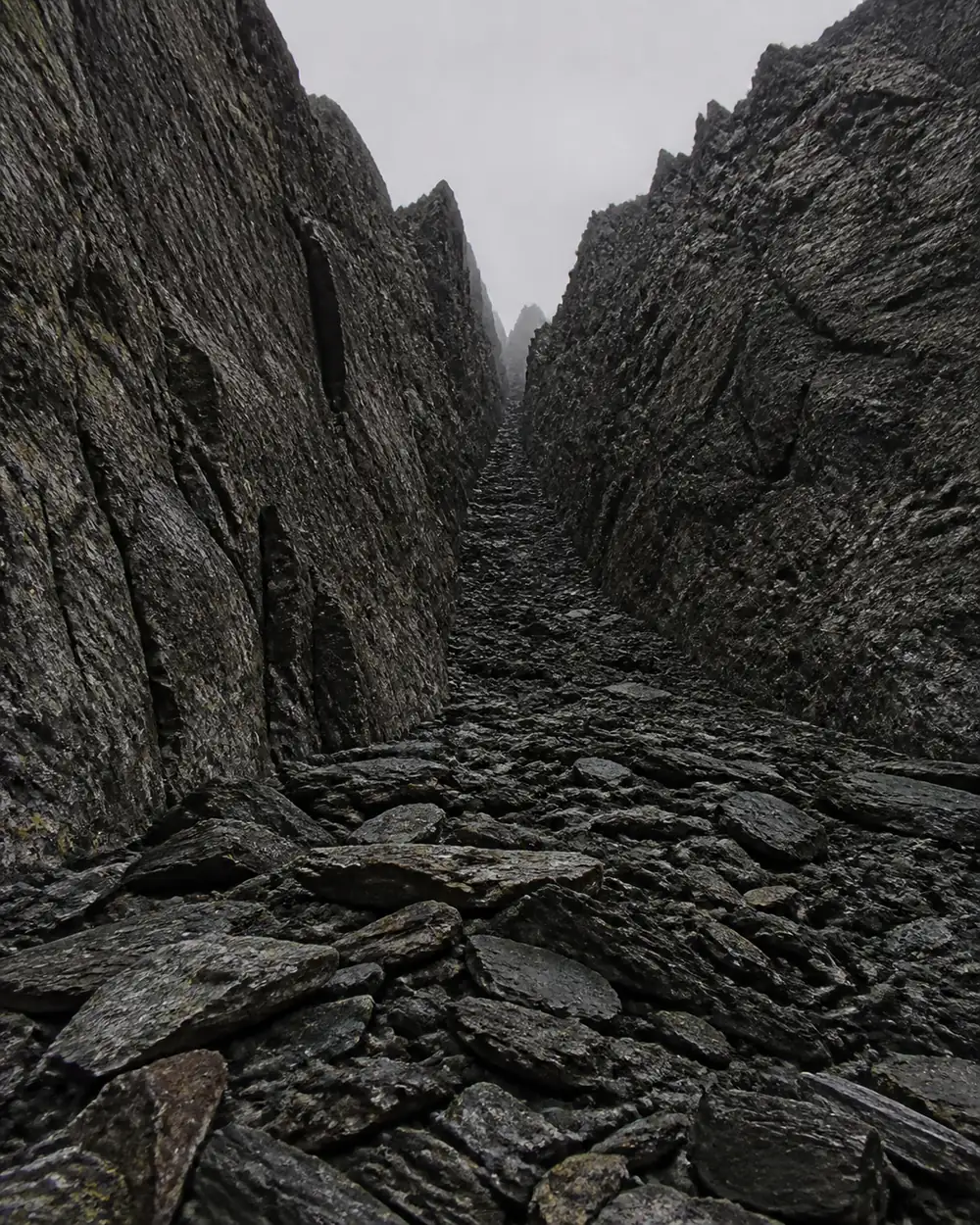
Once you frame it that way, exposure becomes a duration rather than a place.
A gully you cross in forty seconds is a different problem from the same gully climbed for an hour, which is why the standing advice for hikers is to move through the risky ground rather than to pick a way carefully through the middle of it.
That instruction has an obvious tension in it. Moving fast on loose ground is how people slip, and the honest position is that this is a trade rather than an instruction to run, which is a good moment to have already read how to move on loose rock.
Some gullies are the only line there is. The answer there is not avoidance but timing, which puts you back in the previous section.
The rock in your hand is a different hazard from the rock above you
Everything so far has been about rock arriving from above. A good share of loose-rock injury comes from rock the person was touching.
Those are two problems wearing one name, and they fail in different directions.
The belayer takes it
The commonest version. Somebody above dislodges a block while climbing or moving, and the person who gets hit is standing still at the bottom having done nothing wrong.
The hold comes away
A hand or foot loads a block that is not attached, and a loose-rock problem instantly becomes a fall. The injury pattern is completely different from being struck.
Random release from above
The category the rest of this page is about, and the one people picture when they hear the word rockfall.
The middle one is worth sitting with, because it does not feel like a rockfall problem at all.
A flake that comes away under body weight sends you down and sends the block down onto whoever is below, which is two accidents from one bad hold.
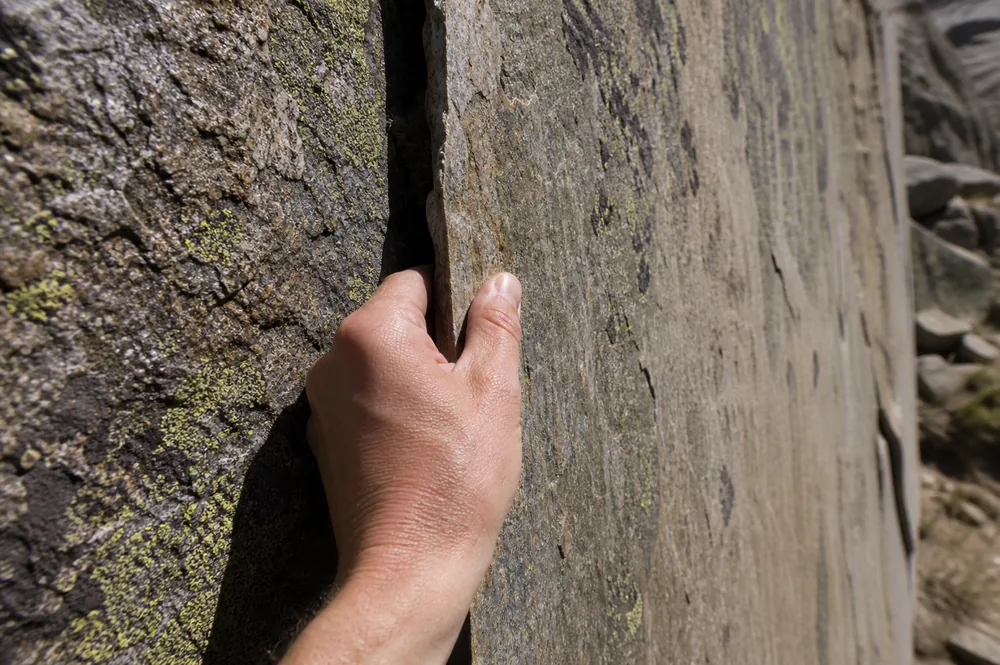
Gear placed behind a loose block carries the same problem forward in time. If you fall on it, you do not simply rip the placement, you pull the block down the line of the rope onto your belayer.
The rope itself is a hazard on this ground, which people forget because it is not sharp and does not weigh much. A rope dragging across loose rock sweeps it off, so the line the rope takes is a thing to look at rather than something that just happens.
Testing helps and it has limits worth stating. Tap a suspect block with the heel of your hand and a hollow note means it is detached from the face behind it, while a solid note means nothing more than that this particular test did not find the problem.
Telling the person behind you what you found is the cheapest part of all of it. They are about to touch the same rock.
The party above you is the source you can control
A large share of the rock that hits people was kicked off by a person.
That is uncomfortable and it is also good news, because it is the one mechanism on this page that responds to a decision rather than to the weather.
- Stop outside the fall zone and lookDo the assessment from somewhere that is not already underneath. Standing in the gully mouth to decide about the gully is the common version of this mistake.
- Send one person at a timeThis is the part that gets skipped when a party is cold, late, or strung out, and it is the whole procedure.
- Wait until they reach shelterOne at a time means the next person starts when the first is out of the fall line, not when they are simply further up.
- Keep out from directly belowFollowing in someone's exact line puts you where everything they dislodge is going to arrive.
- Regroup somewhere out of the channelParties reassemble at the top of a gully and stand about in the worst available spot, congratulating each other.
The cost is time, and it collides directly with the previous section.
One at a time keeps the party from dropping rock on itself, and it also means the group is under the hazard for far longer in total. Which way that trades depends on whether the rock is being released by your boots or by the sun.
Other parties are the version you cannot sequence. If there is a group above you on a loose route, no amount of internal discipline helps, and the only real answers are to get ahead of them, to let them get well clear, or to come back on a quieter day.
A helmet belongs in this section rather than at the top of the page. It is standard for scramblers and climbers, it is the only thing that helps once rock is actually moving, and it is the last line rather than the plan.
Nobody gets to push rocks off a cliff for fun
Trundling is the practice of deliberately pushing or throwing loose rock off a cliff to watch it go, and a great many people have done it without thinking of it as a decision.
In 2007 a hiker threw a rock roughly the size of a bowling ball off the top of a crag in Wyoming. It killed Pete Absolon, a regional director for the National Outdoor Leadership School, who was climbing below.
There is an argument people make for it, and it is worth taking seriously enough to answer.
The claim is that removing a poised block now prevents a worse accident later, the way a controlled burn removes fuel before a wildfire. The problem is that a controlled burn is controlled, and a rock thrown off a crag is not, because the ground below has not been cleared or closed and nobody has checked it.
The injury pattern also does not support the framing. The vast majority of rockfall injuries are not caused by people trundling at all, but by leaders cleaning holds as they climb and by blocks working loose through freeze and thaw.
Deliberate clearing does happen legitimately, and it looks nothing like this. Guides and land managers occasionally bring down a genuinely dangerous block with the ground below closed and people posted.
The accidental version still needs the same response. A block you kick off by mistake is exactly as dangerous as one you pushed, and it earns the shout described further down this page.
What a helmet is measured to do, and what it cannot
Most pages tell you to wear a helmet. Fewer tell you what wearing one is actually worth, which is the part that changes behaviour.
A British Mountaineering Council survey of nearly five hundred climbers who had suffered head injuries found that people not wearing helmets were more than twice as likely to have sustained a severe head injury.
What the injury data shows
- 2xMore likely to suffer a severe head injury without a helmetFrom a survey of nearly 500 climbers with head injuries
- 50%+Reduction in severe injury risk with a helmetA separate estimate from a Wilderness Medical Society study
- 19%Of UK rock climbing deaths, 2000 to 2019, involved fatal head injuryWhich is what the protection is protecting against
Two independent estimates pointing the same way is a stronger position than either one alone.
[ko_image src="/images/safety/rockfall-struck-helmet.webp" alt="A climbing helmet resting on rock with a deep bright scar and a crushed dent through one side of the shell, the foam liner visible through the crack - a helmet that has taken a single impact | KnowOutdoor"] That dent is one impact. The helmet did its job once and is now finished, because the foam that absorbed the energy does not come back.
[/ko_image]
Which is the retirement rule, and it catches people out because the helmet still looks wearable. A shell that has taken a significant strike gets replaced rather than kept for the next trip.
The boundary is worth being precise about, because it decides what you do when rock is already moving. A helmet covers your skull and nothing covers your face, which is exactly why the instruction two sections down is to keep your chin tucked and your eyes on the ground.
One honest caveat about all these numbers. They come from climbing populations rather than from walkers, so applying them to a hiker crossing a gully is a reasonable inference rather than a measurement.
None of it moves the helmet up the list. It is the last line, it works on the arrival rather than on the frequency, and everything earlier on this page is about the frequency.
What to do in the two seconds after the shout
Do not look up.
Then shout yourself, immediately and loudly, so that anyone below gets the same two seconds you were given.
After that there is one decision to make, and only one. Either there is a line out of the fall zone or there is not.
If there is, take it, and take it now rather than after assessing. Rock accelerates and you do not, so distance gained in the first second is worth more than any amount gained later.
If there is not, get in rather than out. Press tight against the wall beneath any overhang or projection you can reach, because the closer you are to the face the more of the fall line passes over you instead of through you.
One thing worth knowing about where rock ends up. It bounces, and the fan spreads wider the further it falls, so a line that looks out of the way from directly below is often still in it.
None of this is a substitute for the first four sections. This is what is left after the timing and the position have already been decided, and if you are relying on it, the decisions that mattered were made some time ago.
The face is still live while you are helping
Somebody goes down and every instinct says run to them. That instinct is how one casualty becomes two.
Stop and look up first. The block that hit your friend came from somewhere, that somewhere is often still shedding, and you are about to walk into the middle of it.
- Stop and look up before moving toward themTen seconds of assessment from where you are standing. If the face is still releasing, going in now buys nothing and costs the party its rescuer.
- Decide whether the fall zone can be left at allThe usual rule is not to move somebody with a suspected head or spine injury. An active fall zone is the exception, and it is a decision rather than a reflex in either direction.
- Support the head in line with the body if you move themOne person takes the head, hands either side of the skull, keeping it pointing the same way as the body while everybody else moves them as one piece.
- Insulate underneath and cover on topThe ground takes heat faster than the air does. Jackets and a mat underneath, more on top, and this happens early rather than once everything else is sorted.
- Call for rescue rather than planning to walk them outHead, spine, pelvic and internal injuries are not walk-out injuries. Call early, from wherever you have signal, and give a location before anything else.
That second step has no clean answer and it is worth being honest about it.
Moving somebody with a possible spinal injury carries real risk, and leaving them under an actively releasing face carries a different one. What decides it is how live the ground above looks, which is a judgement the party makes on the spot with imperfect information.
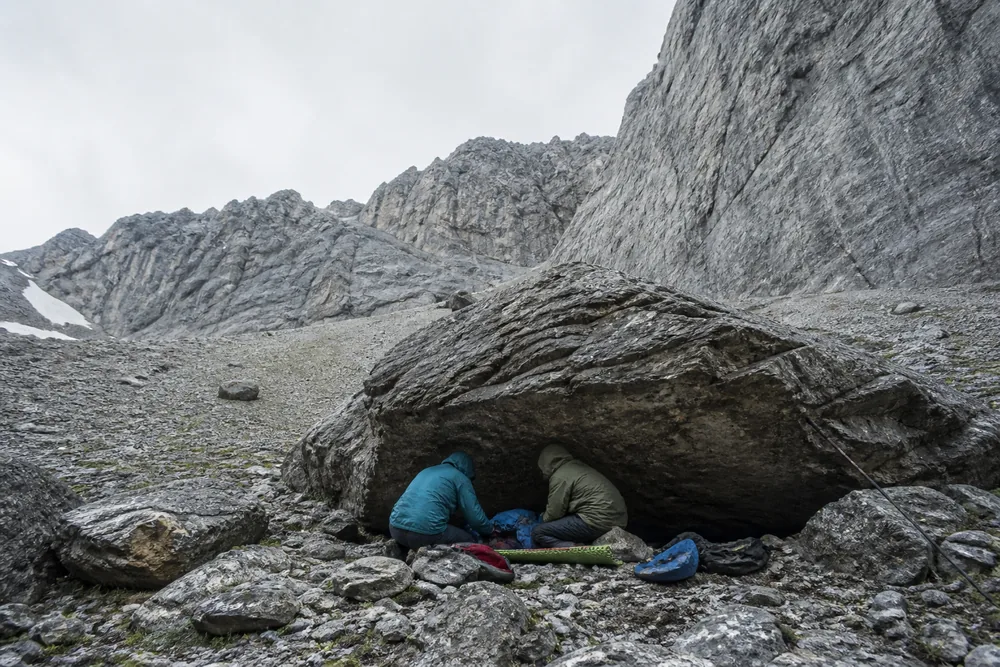
Cold arrives faster than people expect and it is the part that gets forgotten in the first ten minutes.
A casualty lying still on rock or scree loses heat quickly even on a summer afternoon, and a party focused on injuries will look up an hour later to find somebody shivering hard who was fine when they arrived.
Detailed assessment of what is actually wrong belongs to first aid training and its own decisions rather than to this page. What belongs here is the thing nobody else will tell you, which is that the hazard did not stop when the rock landed.
Sources
The freeze and thaw mechanism, the role of ice as the glue holding blocks in place, the guidance to wear a helmet during freeze-thaw conditions, and the advice for hikers to avoid ground with rock overhead come from: What hikers, skiers and climbers need to know about freeze-thaw cycles.
The finding that rockfall is roughly twelve times greater during a superficial thaw than during a cold period comes from the same reporting on freeze-thaw research, and the practical route-timing guidance around it comes from: Alpine Club of Canada safety bulletin on rockfall.
The instruction not to look up, the shouted warning, sheltering against a projection or the wall when there is no line out, and travelling one at a time through narrow gullies come from: The Mountaineers, how to avoid rockfall.
The advice to move quickly through higher-risk zones, the treatment of gullies and grooves as concentrated exposure, and the guidance on keeping the rope out of rockfall zones comes from: Climbing, things you can do to reduce the risk of rockfall.
The three categories of loose-rock accident, the hazard of placing protection behind a loose block, and the practice of testing suspect holds come from: VDiff Climbing, climbing on loose rock and runout routes.
The account of trundling, the 2007 death of Pete Absolon, and the finding that most rockfall injuries come from leaders cleaning holds and from freeze-thaw rather than from trundlers, come from: Outside, trundling: look before you throw or push rocks.
The British Mountaineering Council survey of nearly 500 climbers with head injuries, and the Wilderness Medical Society estimate of over 50 percent reduction in severe injury risk, are reported in: Climbing, why climbers should wear helmets.
The scene-safety assessment before approaching a casualty, the handling of a suspected spinal injury, the neutral head position, and the speed of heat loss from somebody lying still come from: UKClimbing, first aid skills: managing a casualty after a fall.
AnswersQuestions readers ask
What causes rockfall?
Water getting into joints and freezing prises rock apart over repeated cycles, ice in cracks acts as the glue holding loose blocks so a face that never refreezes has nothing holding them, and people above you dislodge rock directly. Heavy rain and rapid melt do the same work as thaw.
When is rockfall most likely?
During thaw. Rockfall runs around twelve times higher during a superficial thaw than in a cold period, which puts the risk in the afternoon, in the shoulder seasons, and on any face that has just taken the sun.
Does an alpine start protect you from rockfall?
Only if the face actually froze. An early start works because the rock is locked with ice, not because it is early, so a warm night with a high freezing level means leaving at three in the morning buys darkness and nothing else.
What should you do if you hear rockfall?
Do not look up, because a helmet covers your skull and nothing covers your face. Shout a warning, then either move out of the fall zone immediately if there is a line out, or press tight against the wall or under a projection if there is not.
How do you recognise a rockfall gully?
Look for a couloir or groove that funnels the fall line onto the route, fresh angular debris sitting on top of snow, and pale unweathered scars overhead. Then ask where you would go if something came down, and how many seconds you will spend underneath.
Why travel one at a time through a gully?
Because people above are a leading source of falling rock. One person crosses while the rest wait outside the fall zone, and the next starts only once the first has reached shelter out of the fall line.
How much does a helmet reduce rockfall head injury?
A British Mountaineering Council survey of nearly 500 climbers with head injuries found non-helmet wearers more than twice as likely to have suffered a severe head injury, and a Wilderness Medical Society study put the reduction in severe injury risk at over 50 percent. A helmet that has taken an impact is replaced, not reused.
Is it ever acceptable to trundle rocks off a cliff?
No. From the top you cannot see the base, where approach paths and belay stances sit. Trundling killed NOLS regional director Pete Absolon in 2007, and most rockfall injuries come from leaders cleaning holds and from freeze-thaw rather than from deliberate throwing.
What do you do if someone is hit by rockfall?
Stop and look up before approaching, because the face is often still releasing and a rescuer becomes the second casualty. An active fall zone is the exception to not moving a casualty; if you move them, support the head in line with the body. Insulate them early and call for rescue rather than walking them out.