
Scorpion Sting: When Severe Pain Means Nothing, and When It Does
One species in the country does the real damage, and it announces itself by hurting without leaving a mark.
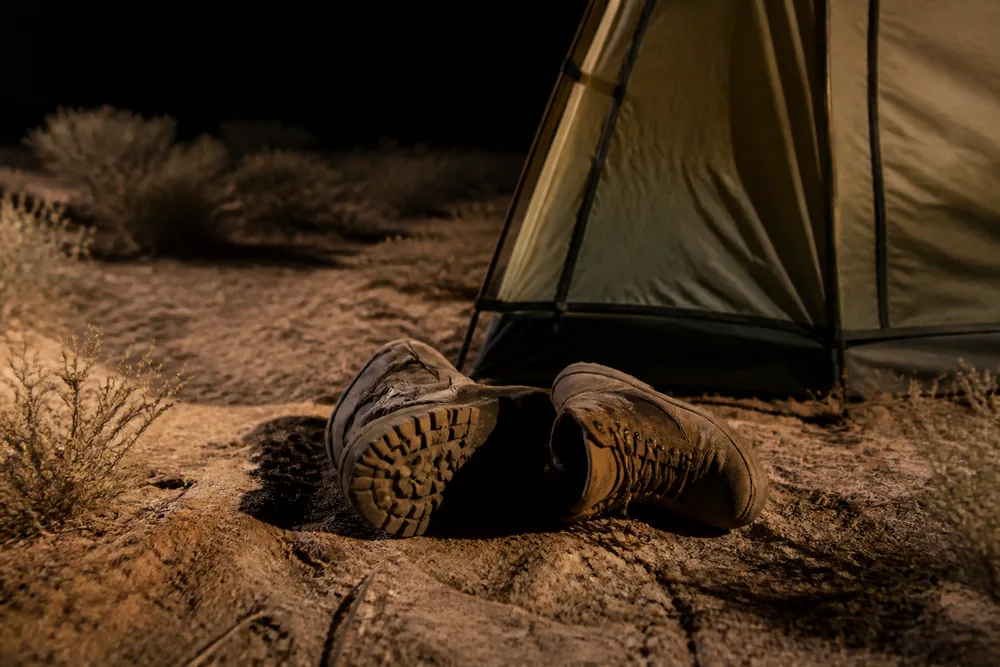
Almost every scorpion sting in the United States is a painful hour for a healthy adult. The exception is the Arizona bark scorpion, whose venom works on nerves rather than tissue, which is why severe pain with nothing to see is the presentation that matters.
Two findings on this page change what you do. Everything else is comfort measures and waiting.
Neither of those describes most stings. What follows is how to tell which one you have.
How bad is a scorpion sting, honestly?
For a healthy adult in almost every part of the United States, a scorpion sting is a bad hour.
It hurts immediately and out of proportion to the size of the animal, often with numbness or a pins-and-needles feeling spreading a short way from the site. Then it fades.
Most of it is gone within a few hours and effectively all of it within a day. The great majority of North American species simply cannot deliver enough of anything to trouble an adult, whatever they look like.
That said, an ordinary sting is not nothing. It can be painful enough to write off a night's sleep and leave a hand you do not want to use until morning.
The instinct at this point is to go looking for the scorpion with a torch. It is worth resisting.
Identification at night, of a small fast animal that has already left, is unreliable at best, and it is not what sorts this out. The symptoms in front of you do that far faster than the species does, which is what the next three sections are about.
One case does sit outside all of this. Anyone with a known allergy to stings has a different problem from envenomation, and that distinction comes back at the end.
One species in the country does the real damage
The animal that matters is the Arizona bark scorpion.
- Species
- Arizona bark scorpion, Centruroides sculpturatus
- Where it lives
- Arizona and parts of adjacent southwestern states, into northern Mexico
- What it looks like
- Small, pale straw-coloured, slim pincers and a narrow tail
- Where you meet it
- Shoes, bedding, walls and ceilings, because it climbs
It is the only species in the United States capable of serious envenomation, which makes geography the fastest filter available. A reader well outside that range can stop worrying at this line.
The appearance catches people out, because it is the wrong way round.
The scorpion most likely to frighten you in a desert campsite is the desert hairy scorpion, which is large, dark, heavy-bodied and thoroughly intimidating. It is also close to medically trivial.
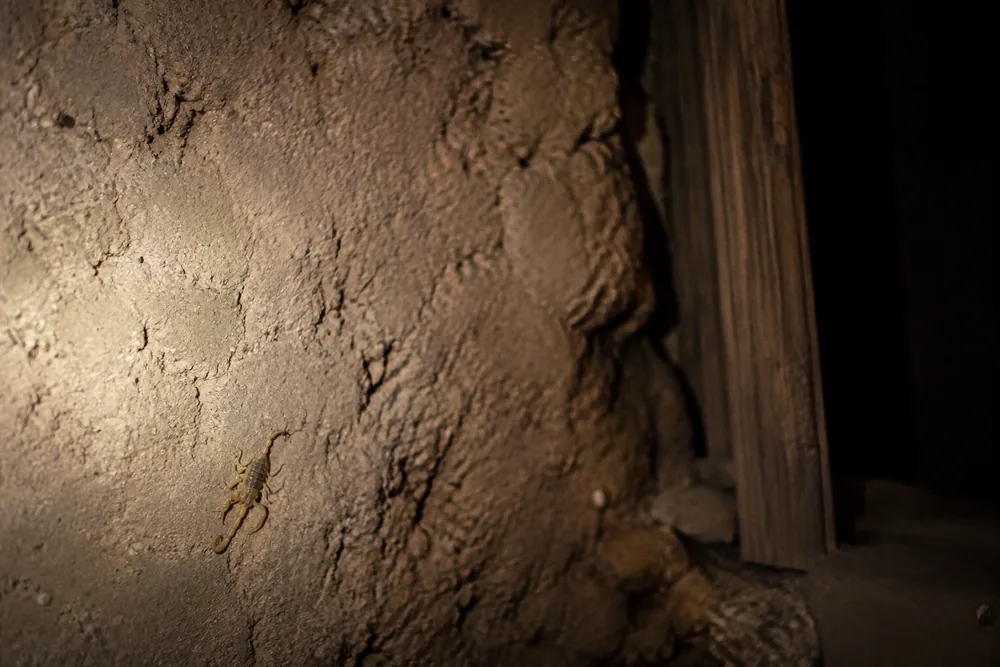
The climbing habit is the other half of the identification, because it explains where the stings happen.
Bark scorpions go up walls, across ceilings and into anything left on the floor, which is why the classic sting is a foot going into a boot or a hand reaching into a pack. The heavy ground-dwelling species stay under rocks and mostly get stepped on rather than reached into.
A UV torch turns a dark campsite into a readable one
Scorpions glow. Under ultraviolet light they fluoresce a bright, unmistakable green, because of a layer in the exoskeleton called the hyaline layer.
Nobody knows for certain why they do it. What matters at a campsite is that a cheap UV torch turns an animal you would never spot into one visible from about ten feet away.
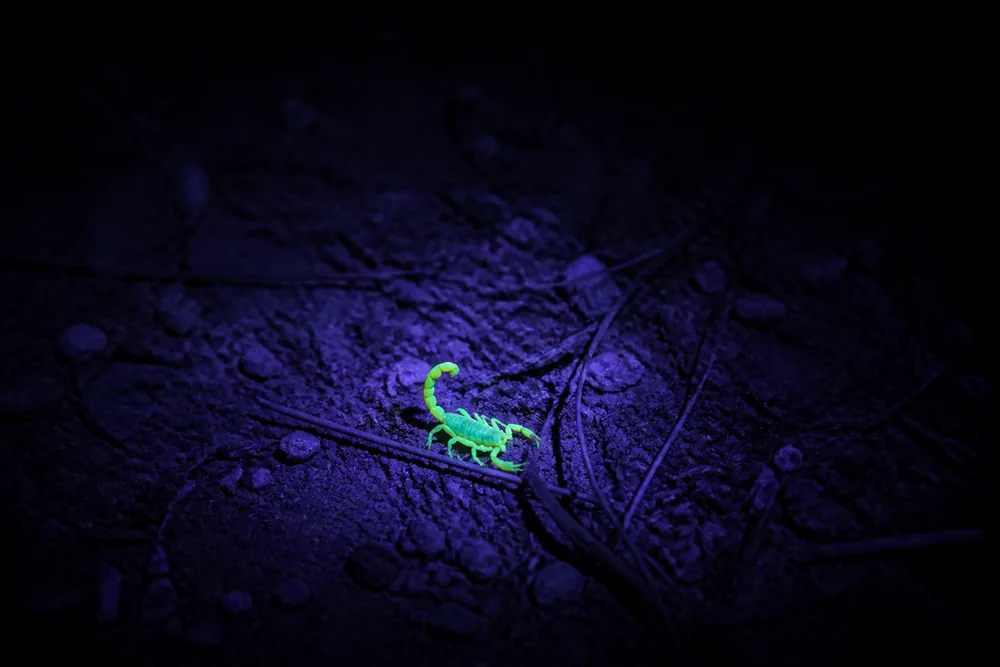
The sweep takes about two minutes and it is worth doing on arrival rather than at bedtime.
Walk the perimeter of the camp, then the ground around the tent, then anything sitting on the ground. The glow does the work, and you are looking for a green spark rather than trying to recognise a shape.
Timing changes what you find. Bark scorpions are most active in the first one to two hours after sunset, once the temperature drops below roughly 85 degrees Fahrenheit, which is exactly when people are cooking and moving about camp in sandals.
- Sweep the camp with a UV torch in the hour after dark
- Shake out boots, clothing and bedding rather than peering into them
- Keep footwear inside a zipped tent, not in the vestibule
- Remember they climb, so hanging gear and a tent ceiling are not out of reach
- Check under groundsheets and mats before rolling them up
The climbing habit is what makes this species different to plan around. Hanging a bag off a line works against ground-dwelling species and does nothing against one that walks up a tent wall.
There is an honest limit on the torch. It finds scorpions in the open, and it will not find the one already inside a boot, under a mat or folded into a shirt, which is why shaking things out stays on the list.
Fluorescence is also detection rather than identification. Every scorpion glows, including the large harmless ones, so a green spark tells you something is there and nothing about which species it is.
Severe pain with nothing to see is the worrying combination
Here is the part that runs against everything you know about injuries.
With most wounds, the angrier it looks the worse it is. With a scorpion sting the relationship inverts, and a site that swells and reddens is the reassuring version.
The reason is what the venom does. Bark scorpion venom works on nerves rather than on tissue, so it produces enormous signalling and almost no local damage, which means severe pain arriving at a patch of skin that looks essentially untouched.
| What you can check | Ordinary sting | Bark scorpion envenomation |
|---|---|---|
| The skin | Redness, a lump, real swelling within minutes | Little or nothing to see, sometimes a tiny puncture |
| The pain | Sharp then dull, staying local | Immediate severe burning, with numbness and tingling spreading outward |
| Tapping the site | Sore, in proportion | Sharply and disproportionately painful |
| Over the next hours | Steadily settling | Holding, or adding twitching and odd movements |
That tapping row is a genuine bedside sign and it costs nothing to try.
Light taps on the sting site produce a sharp, exaggerated response in a bark scorpion envenomation. It supports a suspicion rather than confirming anything, and it is more information than you had a moment ago.
Severity varies with how much venom went in, which is why the picture is a spectrum rather than two boxes. A bark scorpion can sting without delivering much, and that sting behaves like an ordinary one.
At the far end, the signs stop being about the sting site at all. Twitching and jerking movements, thrashing, roving or jerking eye movements, heavy drooling and difficulty swallowing are the body telling you this has gone systemic.
There is a scale, and most stings sit on the bottom of it
At this point most readers are choosing between two options, which are that this is nothing and that this is the beginning of something terrible.
Clinicians use a four-point scale instead, and it is more useful than either of those.
Those bars are how often each grade actually turns up, which is the reassuring part.
Grade I is local pain, sometimes with pins and needles, and nothing else. It accounts for roughly 83 percent of stings, and the puncture may not be visible at all, which is worth remembering after the previous section.
Grade II adds sensation travelling away from the sting, so a stung hand produces tingling up the forearm. That is around 9 percent.
Grade III is where the signs stop being about the limb. Cranial nerve or neuromuscular dysfunction, meaning the eye movements, the swallowing and the twitching described earlier, and it sits at under 5 percent with antivenom entering the picture.
Grade IV is both of those at once, at around 3 percent, and it is the version that can produce fever above 104 degrees Fahrenheit, muscle breakdown and organ failure.
Add the top two together and they are under one sting in ten. That is not a reason to ignore them, and it is a reason to stop assuming you are in them.
One caution on how to use the scale. A case can climb it over the first hours, so a grade is a snapshot of where you are now rather than a verdict on where this ends, which is why the recheck at an hour matters.
What to do in the first hour
Most of the first hour is comfort and observation, and there is a short list of things worth doing.
- Wash the site with soap and waterOrdinary wound hygiene, and the step people skip because the pain has all their attention.
- Apply a cool compressA damp cloth or a wrapped cold pack over the site. This does more for the pain than anything else you have.
- Keep the limb at or below heart levelThe opposite of what you would do for a sprain, and people get it backwards for exactly that reason.
- Sit still and take simple pain reliefMoving about and being agitated makes the experience worse and achieves nothing.
- Call poison control on 1-800-222-1222They take these calls constantly, they know the local species, and they will tell you whether this needs to be seen.
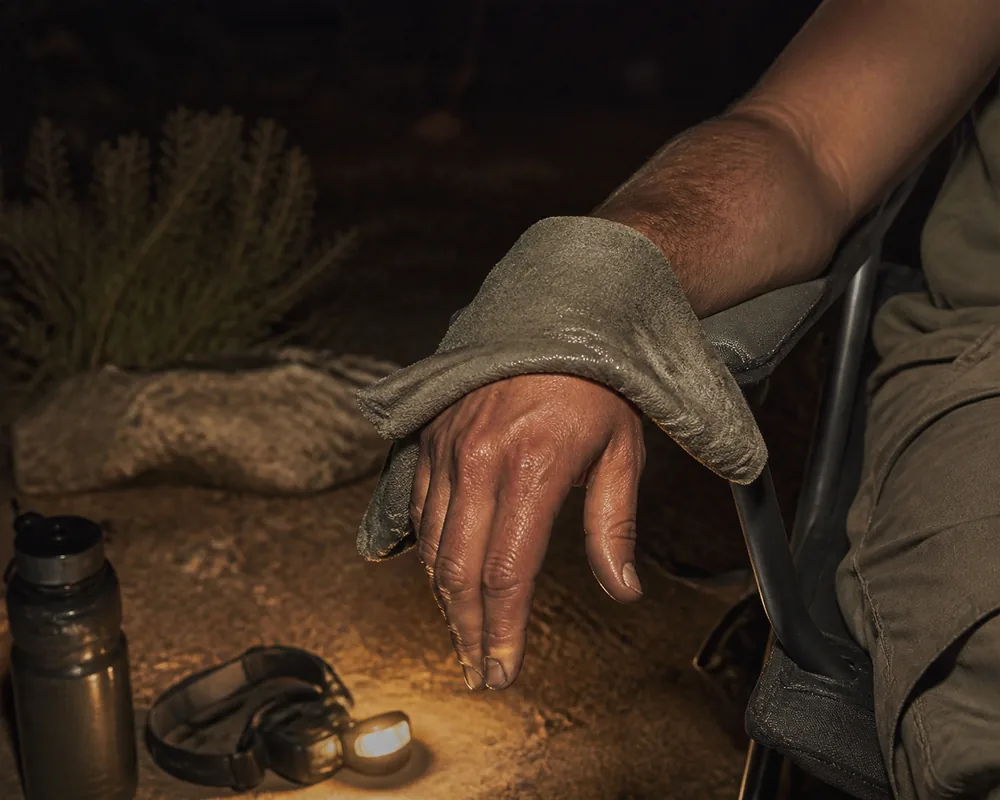
The things not to do are the traditional ones.
There is no role for cutting the site, trying to suck venom out, applying a tourniquet, or putting ice directly against skin. None of them helps and the last one adds a cold injury to a painful evening.
Losing signal changes the shape of this. Without a phone the poison control step becomes a judgement you make yourself, which is a good reason to read the next section before you need it rather than after.
It takes longer to finish than people expect
The pain is worst early and eases first, which is the part of the timeline that behaves the way people assume.
Everything else takes longer. Venom effects can persist for up to around 72 hours rather than resolving over an evening, so a sting on Friday night is still a factor on Monday morning.
- Worst of the pain
- The first few hours
- Venom effects overall
- Up to around 72 hours
- Tingling and numbness
- Can persist for weeks, and goes last
- Worth checking
- A new symptom appearing later, rather than an old one lingering
The tingling is the one that causes a second, unnecessary panic.
An electric-current or pins-and-needles sensation is typically the last symptom to resolve, and it can hang about for weeks after everything else has gone. People who have stopped thinking about the sting entirely notice their thumb is still odd and start worrying again.
By itself, with nothing else alongside it, that is the expected tail of an ordinary sting rather than a sign that something was missed.
A stung hand or foot can also stay unpleasant to use for a day or two after the pain has settled, which is a practical problem if you are meant to be carrying a pack or driving home.
The distinction that matters is between old and new. A symptom that has been fading since the first night is behaving normally, and a symptom that appears for the first time on day two is not, and belongs in the last section of this page.
A stung child is a different problem from a stung adult
The same sting delivers the same venom into a body that may be a fifth of the size.
That is the whole of it. Children are far more likely than adults to develop life-threatening effects from a bark scorpion sting, and the paediatric cases are where the serious outcomes concentrate.
What it looks like in a small child is not subtle, and it is not the same as an adult describing symptoms. A stung toddler cannot tell you their tongue feels thick.
Instead you see inconsolable screaming that will not settle, a child holding or shaking the stung hand or foot, muscles twitching, limbs flailing, and eyes moving in a jerky, roving, unfocused way. That last sign is distinctive and unmistakable once you know to look for it.
There is a separate emergency that looks nothing like envenomation and needs mentioning once.
If the person develops breathing difficulty, throat tightness, a spreading rash or swelling of the face and lips, that is an allergic reaction rather than a venom effect, and it is answered by the response to a systemic allergic reaction rather than by anything on this page.
The timing is what catches people out. Severe envenomation develops over the first hours rather than in the first minute, so a picture that looked fine at ten minutes is worth rechecking at an hour, particularly in a child.
Sources
The clinical picture, including immediate pain with numbness or tingling, the usual absence of swelling and few skin changes, the neuromuscular and cranial nerve findings in severe envenomation, the greater risk to children, and the existence of a Centruroides antivenom given to severe cases, come from: Merck Manual, scorpion stings.
The identification of the Arizona bark scorpion as the only United States species capable of serious envenomation, its appearance and its climbing habit, come from: Arizona Cooperative Extension, bark scorpion.
The signs to watch for in young children, and the advice to contact a poison centre, come from: University of Arizona Health Sciences, what you need to know about scorpion stings.
The consumer-facing description of the sting and its management, including cool compresses and simple pain relief, comes from: Merck Manual consumer version, scorpion stings.
The four-grade scale for scorpion envenomation, the frequency of each grade, and the description of what Grade IV involves come from: Scorpion toxicity, StatPearls.
The persistence of venom effects for up to around 72 hours, and the observation that pins and needles is the last symptom to resolve and can last for weeks, come from: Scorpion envenomation clinical presentation.
AnswersQuestions readers ask
How dangerous is a scorpion sting in the US?
For a healthy adult, almost always a bad hour and nothing more. The Arizona bark scorpion is the only species in the United States capable of serious envenomation, so geography rules the serious case out for most people.
Why does a scorpion sting hurt so much with no swelling?
Bark scorpion venom acts on nerves rather than tissue, so it produces severe pain with almost no local damage. That inverts the usual rule: a sting that swells and reddens is behaving like an ordinary sting, and one that hurts badly with nothing to see is the worrying version.
What should you do right after a scorpion sting?
Wash the site with soap and water, apply a cool compress, keep the limb at or below heart level rather than raised, sit still and take simple pain relief, and call poison control on 1-800-222-1222.
How do you identify an Arizona bark scorpion?
Small, pale straw-coloured, with slim pincers and a narrow tail rather than heavy crab-like claws. It climbs, which is why it turns up in shoes, bedding and on walls, unlike the large dark ground-dwelling species that look far more frightening.
Are scorpion stings more dangerous for children?
Considerably. Children are far more likely than adults to develop life-threatening effects. Watch for inconsolable screaming, twitching, flailing limbs and jerky roving eye movements, all of which mean travelling to a hospital now.
How serious is my sting on the clinical scale?
Clinicians grade scorpion envenomation from I to IV. Grade I is local pain or tingling only and accounts for around 83 percent of cases. Grade II adds sensation spreading from the site at about 9 percent, Grade III adds cranial nerve or neuromuscular signs at under 5 percent, and Grade IV combines both at around 3 percent.
How long does a scorpion sting last?
Pain is worst in the first few hours, venom effects can persist up to around 72 hours, and pins and needles is the last symptom to go and can linger for weeks. A symptom that has been fading is behaving normally; a new symptom on day two is not.
How do you find scorpions at a campsite?
With a UV torch. Scorpions fluoresce bright green under ultraviolet light and are visible from around ten feet, so a two-minute sweep after dark shows you what is in camp. They are most active in the first one to two hours after sunset.
When does a scorpion sting need a hospital?
Difficulty swallowing, heavy drooling, a thick tongue or slurred speech, noisy breathing, muscle twitching or thrashing, jerky eye movements, or a young child who cannot be consoled. A Centruroides antivenom exists for severe cases.