
How to Recognize and Treat Anaphylaxis in the Backcountry
The clock on a severe reaction is usually shorter than the walk out.
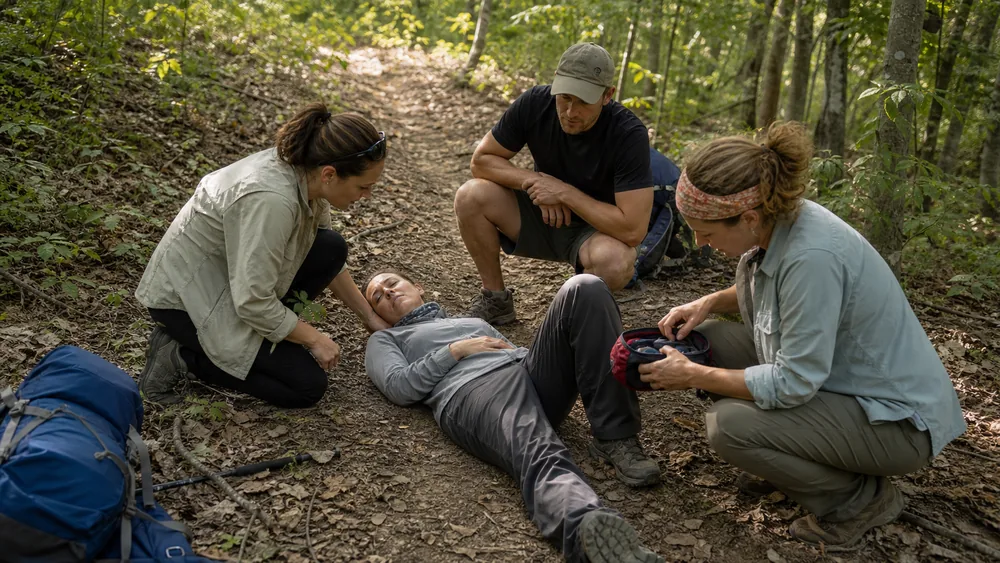
Anaphylaxis is a whole-body reaction that can close an airway within minutes of a sting or a mouthful of food. Outdoors the deciding factor is rarely the diagnosis, it is whether the injection already in somebody's pack reaches a thigh in time.
Anaphylaxis is not an allergic reaction that got worse. It is a whole-body reaction that can close an airway or drop a blood pressure while the person is still standing there telling you they feel strange.
What turns it into a wilderness problem is arithmetic.
A study of fatal reactions in the United Kingdom put the median time from exposure to respiratory or cardiac arrest at a few minutes to half an hour, depending on what caused it.
Those are medians, so many reactions move more slowly and some move faster. The useful conclusion is that the window is often shorter than the walk out, which means the treatment has to already be in somebody's pack.
The rest of this page follows from that. Recognition has to be quick enough to act on, the injection has to land properly the first time, and the party has to keep heading for help after the person insists they are fine.
How do you know it is anaphylaxis and not a bad sting?
The honest difficulty is that a severe local reaction looks frightening. A wasp sting on a forearm can swell the whole limb over two days, and a group watching that happen will reasonably wonder whether they should be reaching for an injector.
They should not, because that reaction stays where it started.
Anaphylaxis announces itself by spreading. The pattern worth memorising is skin or mouth signs plus something happening in a second body system, so hives together with wheeze, or facial swelling together with vomiting, or a rash together with sudden faintness.
The second pattern needs no rash at all.
If somebody has just been stung, or has just eaten something they are known to react to, and their breathing or their circulation starts to fail, that is enough on its own. Waiting for a rash to confirm it is how the fastest reactions get missed.
Skin plus one other system
Hives, flushing, or swollen lips together with wheeze, vomiting, cramping, faintness, or confusion. Two systems involved is the bar, and it does not require knowing the person's history.
Known trigger plus failing breathing or circulation
A sting or a suspect food followed by throat tightness, a hoarse voice, or a person who cannot stay upright. Treat this even with clear skin.
A severe local reaction
One limb swelling over hours after a sting, with normal breathing and no symptoms elsewhere. Alarming to look at, and not the same problem.
Throat symptoms cause the most hesitation because they sound subjective. A person saying their throat feels tight, or whose voice has gone hoarse, or who is struggling to swallow their own saliva, is describing an airway, not anxiety.
Around one reaction in ten never produces the skin signs people are watching for. Absence of a rash is not reassurance when a known trigger and a failing system are both present.
Epinephrine goes into the outer thigh, and it goes in early
The injection goes into the muscle on the outer thigh. That site is chosen because it absorbs faster than the upper arm, and because it stays reachable when somebody is on the ground and not cooperating.
Autoinjectors are built for exactly these conditions. They fire through a single layer of ordinary clothing, which matters more than it sounds when the alternative is peeling a wet layer off somebody in the wind.
Get the person down before you inject rather than after.
A person who faints mid-injection can drag the needle sideways and lose most of the dose, and somebody already lying down cannot fall. Hold the device firmly against the thigh rather than jabbing and pulling back, because withdrawing early leaves the drug on the skin instead of in the muscle.
- Get them downLower the person to the ground before the device comes out, so a faint cannot turn into a wasted dose.
- Find the outer thighThe muscle on the outer side of the thigh, roughly halfway between hip and knee, absorbs faster than the arm.
- Go through clothingFire through a single layer rather than spending the window undressing somebody in bad weather.
- Press and holdKeep firm contact for the time the device specifies instead of pulling away as soon as it fires.
- Say the time out loudSomebody in the group needs to remember it, because the next decision is measured from this moment.
- Keep the used deviceIt tells whoever receives the patient what was given and when.
The Wilderness Medical Society puts intramuscular epinephrine ahead of every other treatment in the field, which is worth stating plainly because the instinct in a group is to try the gentler option first.
Hesitation is the expensive part. The reactions that end badly are rarely the ones where somebody injected and was wrong.
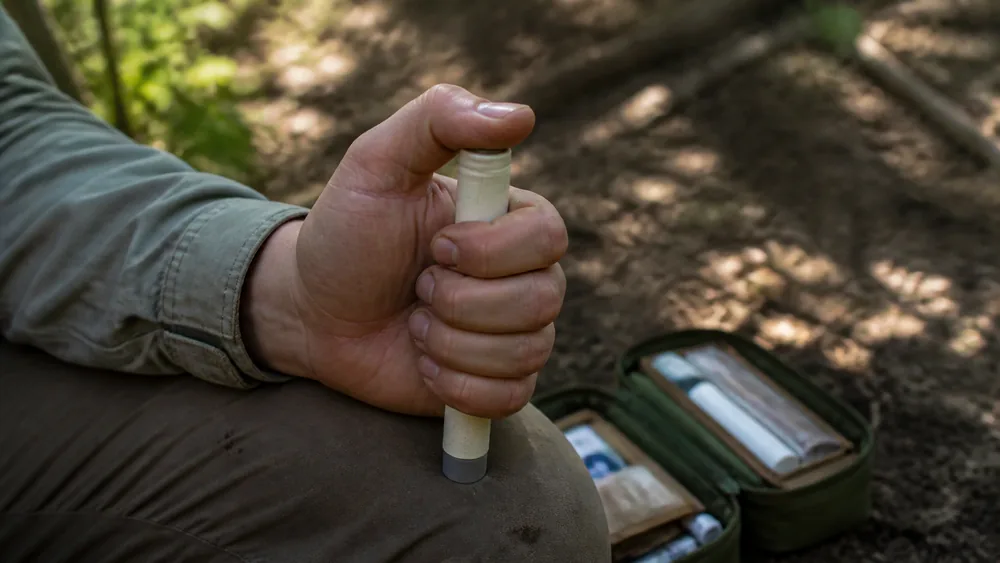
Antihistamines and inhalers do not stop the reaction
Almost every group carries an antihistamine, and almost nobody carries it for this. Reaching for the familiar packet feels like doing something, and it is the delay that shows up again and again in accounts of fatal reactions.
An antihistamine works on itching and hives.
It does nothing to the swelling closing an airway and nothing to a blood pressure heading for the floor, which are the two things that actually kill. An asthma inhaler has the same problem from a different direction, easing wheeze in the lower airway while the obstruction sits above it in a swollen throat.
Steroids act over hours. Whatever value they have arrives long after the minutes that decided the outcome.
None of this makes those drugs useless. It makes them second, and the distinction between second and instead is the whole point.
Why should someone who feels better stay on the ground?
Lie the person flat and raise their legs. Blood pressure is falling, and gravity is quietly working against whatever the injection is trying to do.
There are two exceptions worth knowing before you need them.
Somebody struggling to breathe should be allowed to sit up, because forcing a person with a closing airway to lie flat helps nothing. Somebody unconscious but breathing goes into the recovery position, on their side, where their airway stays open without anybody holding it for an hour.
| What you are looking at | Position | Why it matters |
|---|---|---|
| Conscious, breathing reasonably | Flat on the back, legs raised | Helps blood return to the heart while pressure is dropping |
| Struggling to breathe | Sitting up, supported | Lying flat makes a closing airway harder to work against |
| Unconscious but breathing | Recovery position on the side | Protects the airway when nobody can hold it open indefinitely |
| Feeling better and wanting to stand | Still flat, legs still raised | Improvement after adrenaline can be temporary, and pressure can fall again |
That last row is the one that catches people. Guidance from resuscitation bodies is explicit that a person should not stand, sit up quickly, or walk after adrenaline has been given, and it stays explicit for the case where they look fully recovered.
This is awkward in practice, because a person who feels better wants to get up and get moving.
Holding them down feels excessive right up until it does not. Recovery can be temporary, and the moment of standing is the one described in fatal case reports.
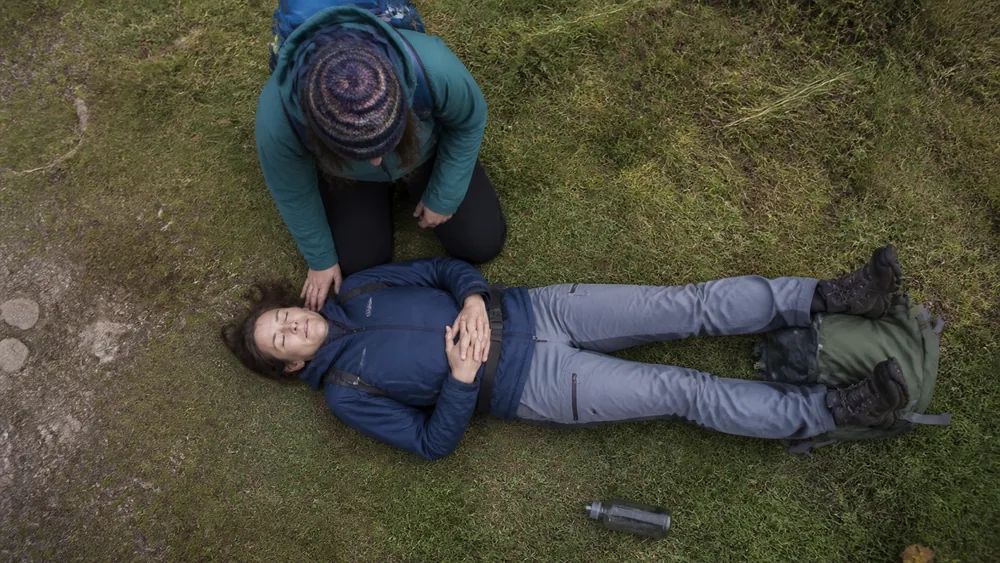
What do you do when one dose is not enough?
Watch for five to fifteen minutes and judge whether the reaction has turned around. Field guidance allows a repeat dose in that window when it has not, and a party with a second device should use it rather than save it.
Turning around means real change. Breathing eases, colour returns, the person stops deteriorating, and they can hold a conversation.
Turning around does not mean they said they felt a bit better.
What the clock looks like from the first symptom
- First symptomsStart the clock and get the injector outNothing else in the sequence works if this moment is spent debating
- Injection givenNote the time aloud and lay the person downEvery later decision is measured from here
- 5 to 15 minutes laterReassess and give a second dose if the reaction has not turnedWaiting past this window on a worsening patient wastes the drug you still have
- Around 15 minutes, insect venomUnderstand this is the published median to arrestExplains why the walk out is not a plan on its own
- After apparent recoveryKeep moving toward helpThe group's instinct to relax here is the one that costs
A party carrying one device faces an uncomfortable version of this. The interval between doses is shorter than most backcountry exits, which is the whole argument for a second injector on a remote route rather than a spare being a luxury.
Call for help earlier than feels justified.
The request can be cancelled if the person recovers, and it cannot be accelerated once you have lost the time. The Wilderness Medical Society does address recovering leftover drug from a discharged autoinjector, and it frames that as something for a situation where nothing else exists at all, not as a technique to plan around.
The reaction can come back after it looks finished
A second wave can arrive hours after the first has settled, without any further contact with whatever caused it. The person is sitting up, eating, apologising for the fuss, and the group starts thinking about where to camp.
That is the wrong conclusion.
Anyone who has needed epinephrine needs proper assessment, which makes the evacuation part of the treatment rather than a precaution attached to it. A party that pitches tents after an apparent recovery has put its casualty further from help at the exact point a second reaction becomes possible.
Three things go with the patient. The used device, the time it was given, and whatever the party thinks triggered it.
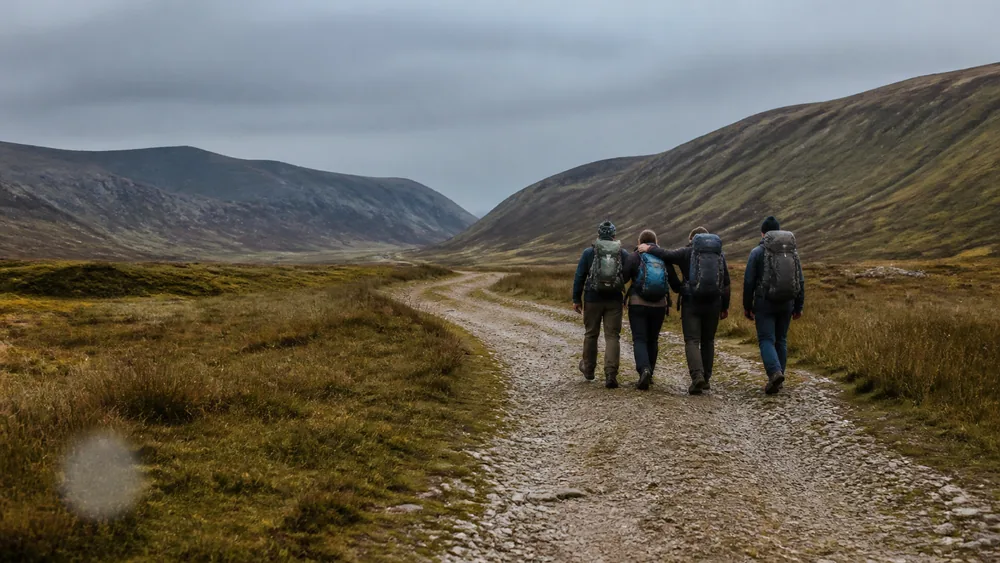
Heat, cold, and expiry all reach the injector in your pack
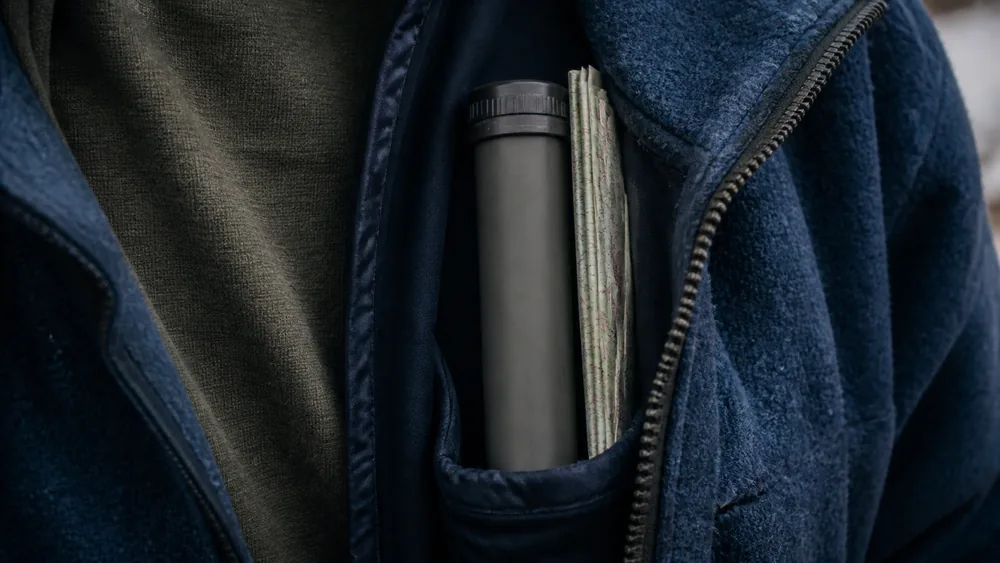
Epinephrine degrades with heat and light rather than failing neatly on a printed date. A device that has spent a summer in a car and a season in the lid pocket of a black pack has had a harder life than the storage instructions assume.
The Wilderness Medical Society looked at this specifically, because standard advice quietly assumes a cupboard at room temperature rather than a rucksack crossing a pass.
Cold is the failure people do not expect.
Walkers treat cold as safe storage, and a frozen device is its own problem rather than a preserved one. On winter trips the injector belongs in an inside pocket against the body, in the same category as a water filter and a phone battery.
- Heat and direct sun
- The worst everyday exposure, and a closed car is worse than a pack
- Freezing
- Not safe storage, so carry it inside your layers in winter
- Light
- The reason the carrier tube exists, so keep the device in it
- Expiry date
- Marks declining potency rather than a sudden cutoff
Look at the solution through the window before every trip. Discolouration, cloudiness, or visible particles mean the device gets replaced rather than trusted.
An expired device is better than no device when it is genuinely all that exists. That is a fallback, not a plan, and it is not a reason to skip the replacement.
The person carrying the injector is the one who cannot use it
There is a structural problem here that other field emergencies do not have. The treatment is a single object, it usually belongs to the person having the reaction, and that person is frequently the least able to find it, open it, or explain where it is.
So the device cannot be a private arrangement.
At least one other person needs to know which pocket it lives in, and ideally to have handled a trainer device at some point. Reading an instruction panel for the first time while somebody's throat closes is a poor use of the window.
Saying known triggers out loud at the start of a trip costs nothing and speeds up recognition later.
It also means the party can tell a clinician what happened rather than guessing. On remote routes the carrying decision changes too, because a single dose covers less time than the exit will take.
- More than one person knows exactly where the injector is carried.
- Somebody other than the owner has handled a trainer device at least once.
- Known allergies and triggers are said out loud before walking in.
- Two devices go on routes where the walk out is longer than about half an hour.
- Who goes for help, and how, is agreed before anybody needs it.
Field organisations train guides, instructors, and camp staff to give epinephrine precisely because the casualty cannot be relied on to treat themselves. A private group is in the same position with none of the training, which is a good reason to have the conversation at the trailhead instead of at the emergency.
Sources
The Wilderness Medical Society sets out intramuscular epinephrine as the primary field treatment ahead of antihistamines, corticosteroids, and inhalers, the 5 to 15 minute interval for repeat dosing, and the wilderness-specific questions of field storage temperature, expired product, and residual drug in a discharged device: Clinical Practice Guidelines on Anaphylaxis.
A study of fatal anaphylactic reactions established the median times from exposure to respiratory or cardiac arrest of about 5 minutes for injected drugs, 15 minutes for insect venom, and 30 minutes for food: Lessons for management of anaphylaxis from a study of fatal reactions.
The Resuscitation Council UK covers positioning, the flat position with raised legs, the exceptions for breathing difficulty and unconsciousness, and the instruction not to let a person stand or sit up suddenly after adrenaline: Emergency treatment of anaphylactic reactions.pdf).
The World Allergy Organization sets out the recognition criteria used here, covering typical skin signs with a second organ system involved, and respiratory or cardiovascular compromise after a known or probable trigger: Anaphylaxis Guidance 202030375-6/fulltext).
AnswersQuestions readers ask
What are the first signs of anaphylaxis?
Hives, flushing, or swollen lips appearing together with wheeze, vomiting, throat tightness, or sudden faintness. Two body systems reacting at once is the pattern worth acting on.
Can you have anaphylaxis without a rash?
Yes, and roughly one reaction in ten produces no skin signs at all. A known trigger followed by failing breathing or circulation is enough on its own.
Where do you inject epinephrine?
Into the muscle on the outer thigh, roughly halfway between hip and knee, which absorbs faster than the upper arm. Auto-injectors are built to fire through a single layer of ordinary clothing.
Will an antihistamine help anaphylaxis?
It treats itching and hives and does nothing for the airway swelling or falling blood pressure that cause deaths. Give epinephrine first, then use other medicines afterwards.
How soon can a second dose be given?
Field guidance allows a repeat after 5 to 15 minutes when the reaction has not turned around. That interval is shorter than most backcountry exits, which is the argument for carrying two devices.
Does someone still need help if they feel better?
Yes. A second reaction can develop hours later without any further contact with the trigger, so the evacuation continues even after an apparently full recovery.