
Bee and Wasp Stings: How to Treat One and When It Is Serious
Speed of removal decides the dose. The method everyone argues about does not.
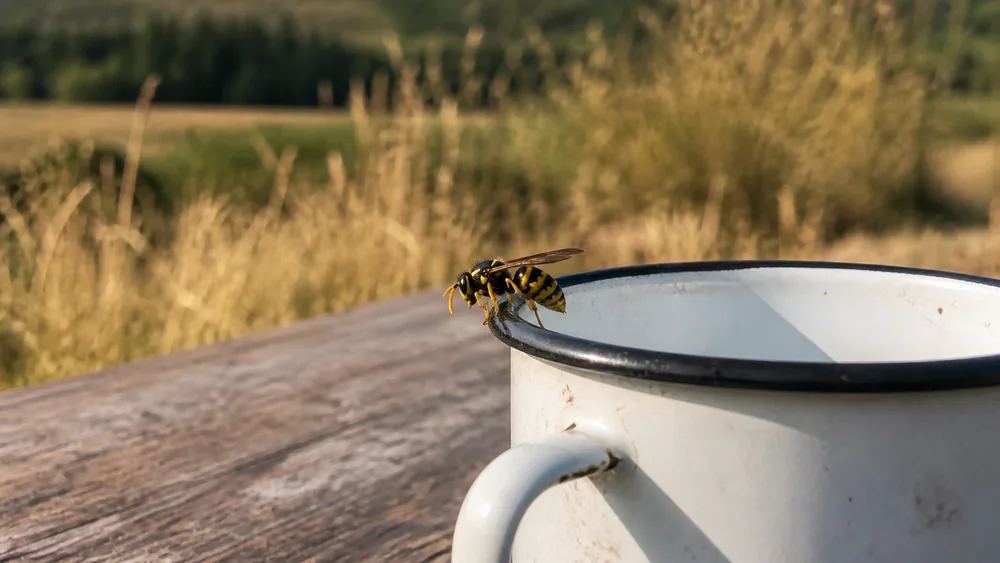
Nearly every sting is painful, ugly to look at, and medically unremarkable. The two that are not are a disturbed ground nest and a reaction that spreads away from the sting, and both are easy to recognise once you know what separates them.
Almost every sting you will get outdoors is painful, alarming to look at, and medically boring. It hurts for an hour, swells for two days, itches for three, and then stops.
The first useful question is what stung you.
A honeybee and a wasp do mechanically different things, and most of the practical advice on this page follows from that difference rather than from anything about venom.
| What stung you | What it leaves behind | What that means for you |
|---|---|---|
| Honeybee | The sting, still pumping | Get it out fast. The bee dies and will not sting again |
| Wasp or yellowjacket | Nothing | Nothing to remove. It can sting you again, and often does |
| Hornet | Nothing | Same as a wasp, with a larger insect and more venom per sting |
| Bumblebee | Usually nothing | Rarely stings unless handled or trodden on |
That table decides the first thirty seconds. The rest of the page is about the days that follow, and about the two situations that are not routine.
Get the sting out now, and stop worrying about how
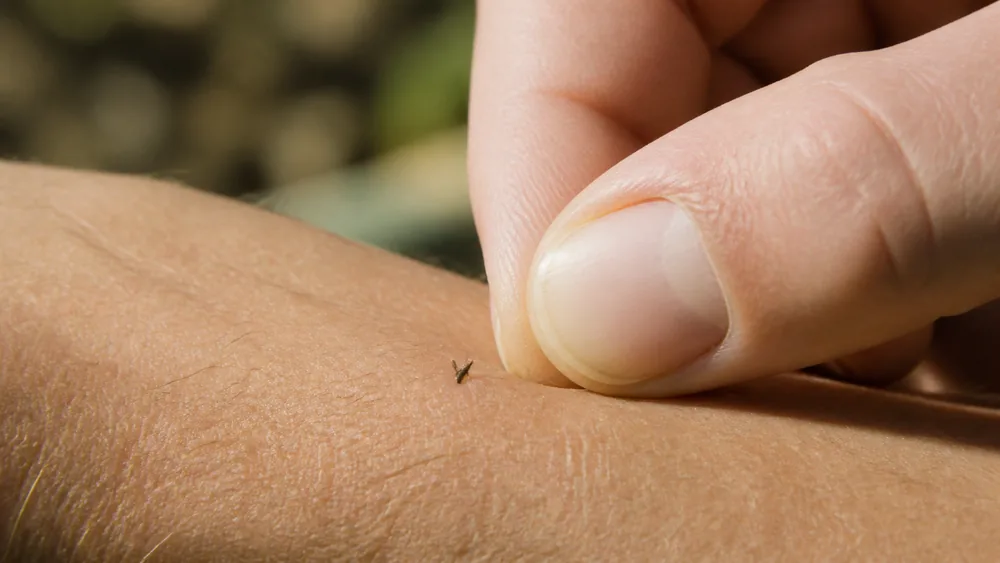
A honeybee sting keeps working after the bee has gone. The apparatus tears free of the insect and the muscle attached to it goes on pumping venom into you, which means the dose depends on how long it stays in.
That single fact settles a long-running argument.
You have probably been told to scrape the sting sideways with a fingernail or a credit card, and never to pinch it, because pinching supposedly squeezes the venom sac. It sounds convincing and it was tested.
Researchers measured the weal after stings and found that the size grew with every second of delay.
They also found no difference between scraping and pinching once two seconds had passed. Speed is the variable that matters, and the method is not.
So the practical instruction is short. Get it out immediately with whatever is already touching your skin, which is usually a fingernail.
- Remove it in the first secondFingernail, thumbnail, edge of a hand. Do not go looking for a card.
- Move away from the spotA honeybee sting site is scent-marked, and a wasp is still there and can sting again.
- Wash the siteBroken, scratched skin is how the sting becomes the infection people later mistake for an allergy.
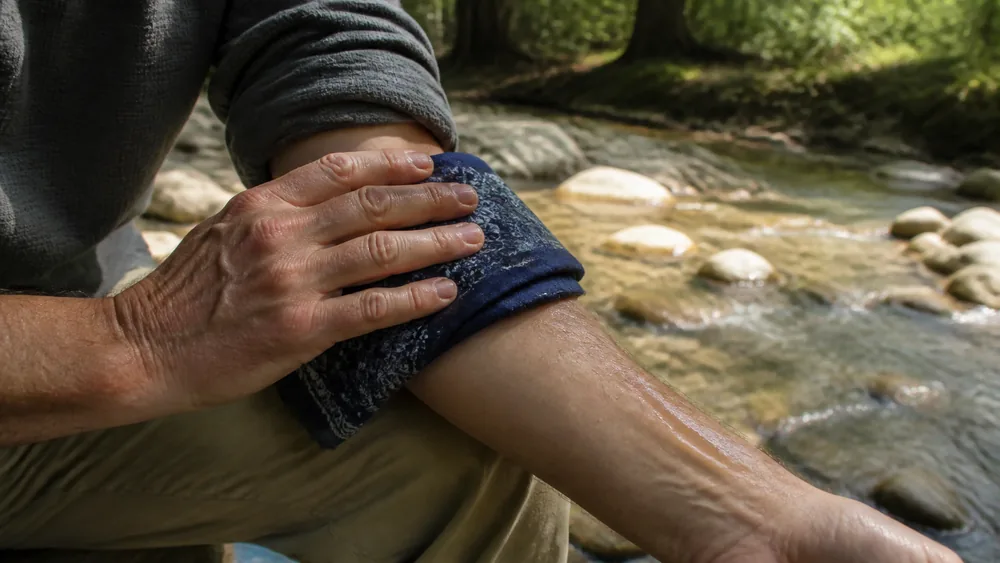
- Cool itCold does more for the pain in the first hour than anything else you are carrying.
- Take rings and watches offSwelling peaks a day or two later, and a ring on a swelling finger becomes its own problem.
Wasps and hornets leave nothing behind, so there is nothing to remove and the whole question disappears.
How long does a sting take to settle?
The pain is worst almost at once and fades within an hour or two. The swelling does the opposite, which is what confuses people.
Day two frequently looks worse than day one.
A sting that was a red lump when you went to bed can be a hot, tight, spreading swelling by the following afternoon, and that progression is normal rather than a sign of deterioration. The itch usually arrives last, as the swelling begins to go down.
Cold is the most useful thing you have on a trail.
Apply it for longer than feels necessary, and reapply it. Most people stop after a few minutes because the pain has eased, which is exactly when it was working.
- Cold
- The best field measure for pain, and the one people give up on too early
- Elevation
- Free and easy to forget, and it matters most for a stung hand or foot
- Oral antihistamine
- Works on the itch, does nothing for the pain
- Simple pain relief
- Deals with the part that actually bothers you on day one
- Mud, vinegar, tobacco, baking soda
- Trail folklore, none of it does anything useful
The folklore deserves one line so you can stop wondering about it. None of the traditional pastes and dabs have been shown to do anything the cold and time were not already doing.
Swelling the size of a grapefruit is usually not an allergy
This is the section people arrive at in a mild panic, usually on day two, looking at a forearm that has swollen from wrist to elbow.
That is a large local reaction, and it has a definition.
Swelling larger than 10 cm around the site counts as one. It peaks at 48 to 72 hours, can take up to 10 days to fully settle, and it is not anaphylaxis no matter how dramatic it looks.
Size is the thing that misleads. What actually separates the three explanations is timing and where the symptoms are.
Large local reaction
Swelling over 10 cm, centred on the sting, peaking at 48 to 72 hours. Alarming to look at, uncomfortable for days, and not an allergic emergency.
Infection
Redness and swelling that begin several days after the sting rather than within two, often with spreading warmth and fever. Runs on a different clock, which is the tell.
Systemic reaction
Hives, swelling, or breathing trouble somewhere other than the sting. Identified by distance from the site rather than by size, and it leaves this page immediately.
The infection confusion runs both ways and is common enough that large local reactions are frequently misdiagnosed as cellulitis. The clock is what separates them, since a reaction that started within a day or two of the sting and is now improving is behaving like a reaction, not an infection.
One more thing worth knowing about large local reactions.
Having had one does not mean you are heading for anaphylaxis next time. They are unpleasant, they are common, and they are a poor predictor of the reaction that matters.
A disturbed ground nest sends more than one wasp
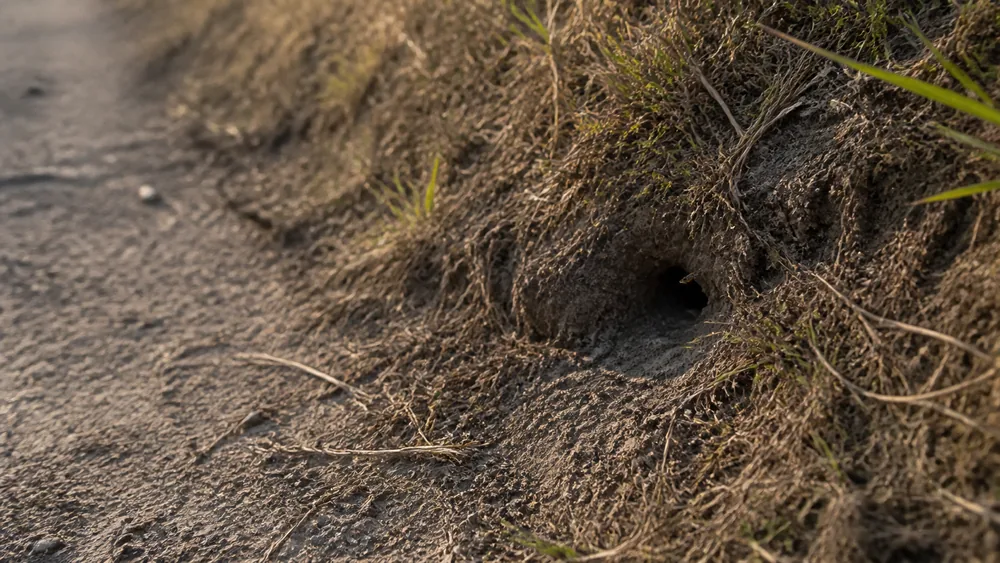
The classic trail sting incident is not a bee on a flower. It is a boot going through the entrance of a yellowjacket nest in a bank beside the path.
Ground nests are the reason this happens without warning.
You cannot see them from above, they sit in old rodent burrows and earth banks, and the first sign is usually the sound. By then the person behind you is the one who gets stung, because the nest is roused and the front walker has moved on.
A disturbed wasp does not just sting. It releases an alarm signal that brings others to that exact spot, which is why the count climbs so quickly.
Get well clear before you stop to look at the damage. Fifty metres is not far enough if the nest is genuinely active, and people routinely stop at the first gap in the attack rather than at the end of it.
Multiple stings are mostly a matter of pain and swelling multiplied.
The venom load only becomes a problem in its own right at counts far higher than a trail incident normally produces, so a handful of stings is a bad afternoon rather than a medical emergency. What changes the picture is the same thing as always, which is symptoms somewhere other than the stings.
Keeping wasps off your food and out of camp
Wasps change what they want as the season goes on. Early in the year they are hunting protein for larvae and have no interest in you, and by late summer the colony is at its largest and has switched to sugar.
That is why August picnics attract them and June ones do not.
The habits that matter are unglamorous and they work. Keep food covered until the moment you eat it, clear plates straight away, and bag rubbish rather than leaving it on the table.
The drink can is the one that causes real harm.
A wasp crawls into an open can, you do not see it, and the sting lands inside your mouth or throat. Swelling there is dangerous whether or not you are allergic to anything, which is the whole argument for a bottle you can see into or a lid.
- Keep food covered until you are actually eating it.
- Drink from a bottle or a cup with a lid rather than an open can.
- Clear plates and bag rubbish immediately rather than at the end.
- Leave a wasp alone if it lands on you, and let it go.
- Expect far more of them from late summer onward.
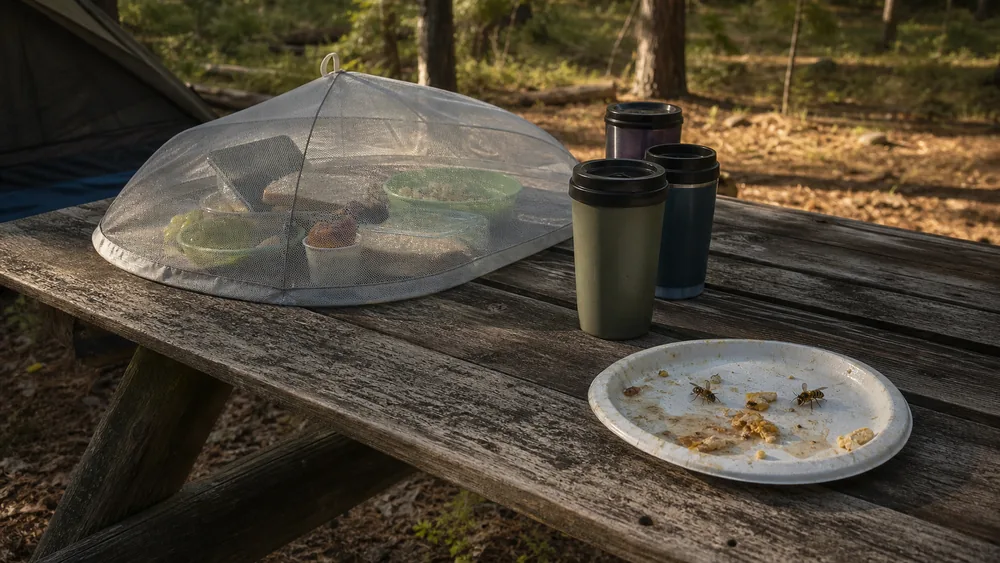
The last one is worth internalising because the instinct is wrong. Swatting, crushing, and flapping at a wasp are what convert an insect investigating your sandwich into a sting.
When does a sting stop being a sting problem?
The dividing line is not severity and it is not size. It is distance from the sting.
Everything on this page assumes the reaction stayed where the sting went in.
Hives spreading across the body, swelling in the face or tongue, difficulty breathing, or a sudden feeling of collapse are symptoms happening somewhere the venom did not go. That pattern is a systemic reaction, and the response to it is a different page and a different set of decisions.
Two other situations need help regardless of allergy.
A sting inside the mouth or throat is an airway problem on its own, and a very large number of stings can cause trouble from the venom load alone. Distance from the sting decides, and everything else on this page is about a reaction that stayed put.
Sources
The finding that removal speed determines the venom dose, and that scraping and pinching made no measurable difference after two seconds, comes from a measurement study of stings and weal size: Removing bee stings, The Lancet01367-0/abstract).
The clinical restatement of that finding, that a retained sting should be removed as fast as possible with no disadvantage to pinching and pulling, is set out in: Rapid Removal of a Bee Stinger, American Academy of Family Physicians.
The definition and timeline of a large local reaction, including swelling over 10 cm, the 48 to 72 hour peak, the up to 10 day duration, and the frequent misdiagnosis as cellulitis, come from: Large Local Reactions to Insect Stings or Bites, ASCIA.
The mechanics of the honeybee sting apparatus continuing to pump venom after it separates from the bee are described by: Bee Sting Removal, University of California Riverside.
AnswersQuestions readers ask
Should you scrape or pinch out a bee sting?
Either. A measurement study found the weal grew with every second of delay and found no difference between scraping and pinching after two seconds, so remove it instantly with a fingernail rather than looking for a card.
Do wasps leave a stinger behind?
No. Only honeybees do, which is why there is nothing to remove after a wasp or hornet sting and why a wasp can sting you repeatedly.
Why is my sting more swollen the next day?
That is normal. Pain peaks within an hour or two while swelling peaks at 48 to 72 hours, so day two frequently looks worse than day one.
Is a very swollen arm after a sting an allergic reaction?
Usually not. Swelling larger than 10 cm centred on the sting is a large local reaction, it peaks at 48 to 72 hours and can last 10 days, and it is often misdiagnosed as cellulitis.
What should you do if you disturb a wasp nest?
Run, keep running well clear, cover your face, and do not swat. This is the one wildlife situation where running is correct, because a disturbed wasp signals others to the same spot.
When does a sting become an emergency?
When symptoms appear away from the sting site, such as spreading hives, facial or tongue swelling, or breathing trouble. A sting inside the mouth or throat is also an airway problem regardless of allergy.