
Spider Bites: Most of Them Are Something Else
You almost certainly did not see a spider, and that changes what the mark on your arm probably is.
When people presenting with spider bites are actually examined, the commonest finding is a bacterial skin infection rather than a bite. Since nobody can confirm a spider bite without the spider, the useful question is not what caused the lesion but which way it is heading.
You almost certainly did not see a spider. That single fact does more work on this page than any photograph could.
- What people report
- A spider bite
- What was usually found
- A skin and soft-tissue infection
- Confirmed spider bites
- Rare, and mostly widow bites when identified
- What confirms one
- The spider, caught or seen biting
The lesion is real and worth taking seriously. What is almost certainly wrong is the name you have given it.
Most spider bites are not spider bites
When emergency department patients who reported a spider bite were actually examined, the commonest diagnosis was not a bite at all.
It was skin and soft-tissue infection. Clinically confirmed spider bites turned out to be rare in that population, and where a species could be identified at all, they were widow bites.
The organism behind a great deal of it has a name. Much of what gets called a spider bite is bacterial cellulitis, frequently caused by community-acquired MRSA, which produces a painful red swollen lesion that people reasonably assume something bit.
The clearest evidence that this is a naming habit rather than an observation is geographic. Brown recluse bites are confidently diagnosed in states where the brown recluse does not live, which tells you the diagnosis is coming from the internet rather than from the ground.
None of that means your wound is trivial, and the error runs in both directions.
A skin infection called a spider bite goes untreated while somebody watches it, and a genuine recluse bite called an infection has led to surgery that was not needed. Getting the name wrong has a cost either way, which is why the rest of this page is about something other than the name.
Nobody can confirm this without the spider
The standard for a confirmed spider bite is stricter than almost anyone expects.
It requires the spider. Caught, or at least clearly seen in the act of biting, and then identified by somebody competent to identify it.
Puncture marks do not settle it either. Most spider bites leave nothing distinctive, plenty of other things leave two small marks, and a pair of dots on skin has no diagnostic weight.
The necrotic lesion is the case where this goes furthest wrong. Ulcerating wounds have a long list of causes, spider bite is among the least common of them, and a dramatic photograph attributed to a recluse is usually attributed rather than established.
One reader does have real information here. If you saw the spider, or better still have it in a jar, that is worth taking to a clinician, and it is the only version of this where identification is on the table.
The two that matter, and what their venom actually does
Two groups in the United States are medically significant, and they are significant in completely different ways.
A widow bite is a nervous system event. The venom is neurotoxic, and what people describe is cramping pain and muscle stiffness that spreads well beyond the bite, typically worst in the abdomen, the back and the legs, sometimes with weakness or tremor.
The site itself may show almost nothing, which is the part that catches people out.
A recluse bite is a tissue event. The venom is cytotoxic, and the classic lesion develops over days into a dark blue or purple centre inside a pale ring inside a larger red ring, which is where the bullseye description comes from.
| Widow | Brown recluse | |
|---|---|---|
| What the venom does | Neurotoxic, acts on nerves | Cytotoxic, destroys local tissue |
| What you feel, and when | Cramping pain and stiffness in the abdomen, back and legs, within hours | Local pain developing into a lesion over days |
| What the site looks like | Often very little to see | Dark centre, pale ring, red outer ring in the classic case |
| Where it lives | Widely across the United States | Southeastern and midwestern states, not the west coast or northeast |
The range row is the most useful thing in that table, because it is the only entry a reader can check without seeing the animal.
Both species are reclusive, which is where the recluse gets its name and where almost all bites come from. Neither hunts anything your size and neither has any interest in you.

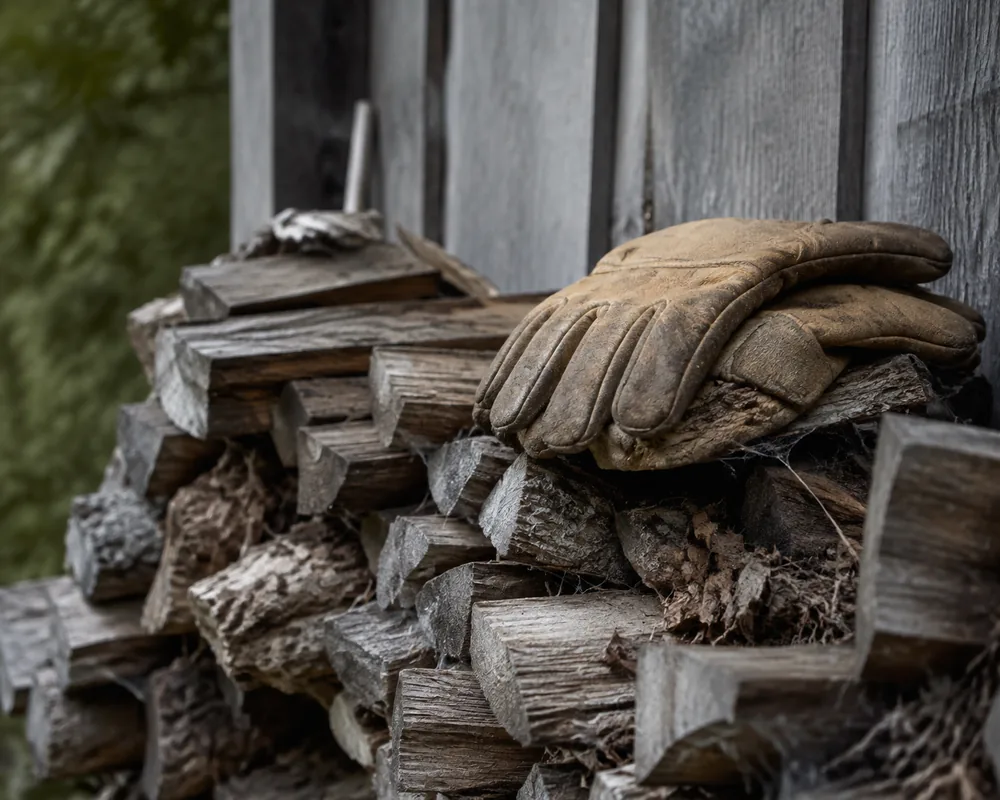
Bites happen when one is pressed against skin. A hand into a woodpile, a foot into a boot left outside, a body rolling onto one that got into a sleeping bag, or an arm into a sleeve that spent the night on the floor.
That behaviour is also the prevention, and it is duller than any identification guide. Gloves for woodpiles and debris, shake out boots and clothing, and keep bedding off the ground.
A real widow bite announces itself within two hours
Everything else on this page runs on a clock measured in days. This one does not.
Widow envenomation produces cramping and rigidity somewhere between about thirty minutes and two hours after the bite, which means a reader genuinely in it should not be watching a mark on their arm and waiting for Tuesday.
- Onset
- Roughly 30 minutes to 2 hours
- Where the pain goes
- Abdomen, back and thighs, away from the bite
- The abdomen
- Rigidity severe enough to be mistaken for a surgical problem
- What comes with it
- Sweating, raised blood pressure, nausea, restlessness
The distribution is the counterintuitive part and it is what makes this recognisable.
A bite on the hand produces cramping in the abdomen and thighs. People arrive at hospital convinced something is wrong with their stomach, and abdominal rigidity from widow envenomation has been mistaken for a surgical abdomen more than once.
Meanwhile the bite site itself may show almost nothing, which is the same trap the scorpion page describes and for the same reason. Neurotoxic venom does not damage much tissue, so there is very little to look at.
Antivenom exists for widow envenomation and is held back for severe cases, which is worth knowing mostly because it settles where you go rather than what you do.
Not every widow bite does any of this. Many produce local pain and nothing more, and the ones that go systemic are worse in children, in older people and in anyone with heart disease.
In tick country, the other candidate is Lyme disease
A nine year old boy was treated for a brown recluse bite. He had Lyme disease.
That case is in the literature, and it is not an isolated one. Lyme has been documented masquerading as necrotic arachnidism often enough that tick exposure belongs in the differential for any spreading ring-shaped lesion in a Lyme region.
The reason is straightforward once you see the two side by side. The erythema migrans rash of early Lyme can closely resemble the lesion people are shown as a recluse bite, both expand outward over days, and both can develop a darker centre.
That second figure is the one worth sitting with, because it describes exactly the situation this page is written about.
Somebody turns up with a lesion, no memory of a tick, no ring, and a confident theory about a spider. The theory gets accepted because nothing contradicts it, and the actual diagnosis waits.
What it costs is time, and with Lyme time is the thing that matters most, because early treatment is straightforward and late treatment is not.
None of this means your lesion is Lyme. It means that in a region where Lyme is present, the honest list of what this might be has more than one entry on it, and a spider is not automatically the top one.
Watch which way it is heading, not what caused it
You cannot answer what bit you. You can answer whether this is getting better or worse, and that turns out to be the more useful question anyway.
An infection has a direction. Redness spreads outward, pain increases rather than settling, the area gets warmer, and a centre may soften and discharge.
What to watch, and when
- First few hoursNote any cramping pain spreading to the abdomen, back or legsThat pattern is a widow bite declaring itself, and nothing else on this page arrives that fast
- Day one to twoExpect an ordinary bite or sting to start settlingRedness that is still growing at 48 hours is not behaving like a resolving bite
- Day two to threeLook for spreading redness, increasing pain, warmth, pus, fever or chillsThis is the divergence point where infection separates itself from everything else
- At any pointLook for a red streak tracking away from the lesion toward the bodyThis stops being a watching problem and becomes a same-day appointment
Whole-body signs carry more weight than the lesion does. Fever, chills and feeling generally unwell point at infection, because a local venom effect does not usually make you feel ill all over.
Timing separates the widow case cleanly. Systemic cramping within hours is a very different thing from a lesion that has slowly got angrier since Tuesday.
Two complications are worth holding. A genuine bite can become infected, in which case both pictures are running at once, and anyone immunocompromised or diabetic moves faster through all of this and should not sit through the full three days waiting to see.
What to do about the mark on your arm
Here is the good news after all that uncertainty. The care is the same whether a spider was involved or not, so not knowing costs you nothing.
- Clean it with mild soap and waterCorrect for a bite, correct for an early infection, and the step most people skip in favour of watching.
- Cool compress, about 15 minutes at a timeReduces pain and swelling. Off and on rather than left in place, and not ice against bare skin.
- Raise the limb where you canWorth saying because it is the opposite of what you do for a scorpion sting, and people mix the two up.
- Draw round the redness and write the timeThe single most useful thing here. It turns it looks worse into a measurement.
- Keep it clean and coveredReduces the chance of the secondary infection that produces most of these lesions to begin with.
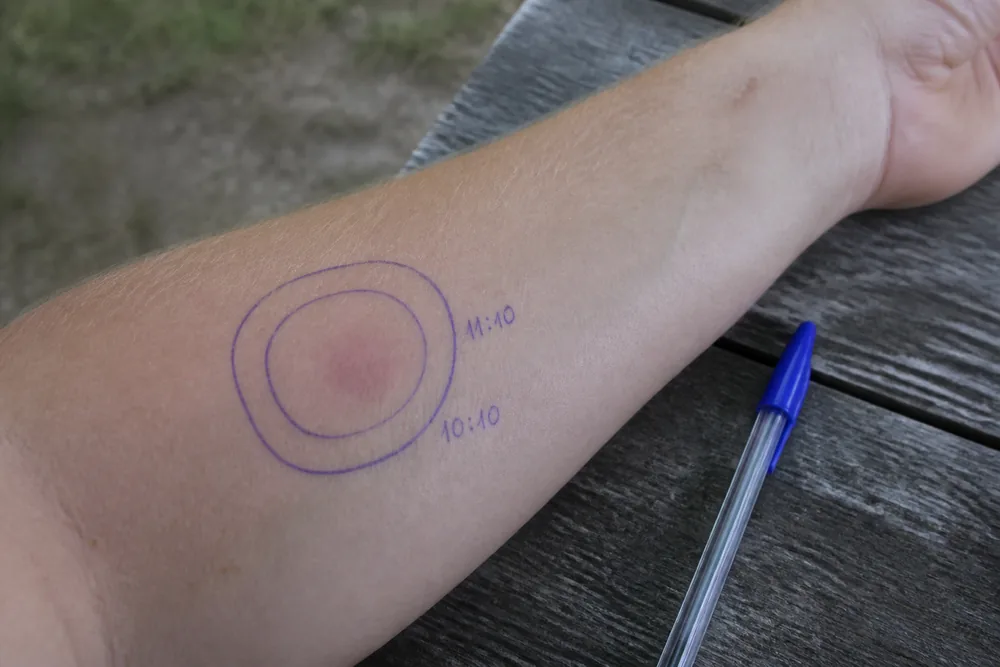
The pen deserves its place at the top of the list.
Nobody can accurately recall how far the redness reached yesterday evening, and everybody is certain they can. An outline with a time beside it settles the argument, and it gives a clinician something better than an impression.
A few findings mean stopping the watching and being seen. Spreading redness, a red streak, fever or chills, severe cramping pain, a rapidly deteriorating lesion, or any real suspicion of a widow or recluse bite.
Children and anyone with a condition affecting healing or immunity should be seen sooner rather than working through the timeline. So should anyone whose lesion is worse each time they look at it, whatever the calendar says.
The prevention is dull and it is mostly gloves
Neither species hunts anything your size and neither has any interest in finding you.
That is what makes prevention here unusually specific. These are defensive bites delivered when a spider is pressed against skin, so you are not avoiding spiders in general, you are closing about four situations.
- Gloves before moving wood, rocks, boards or debris
- Shake out boots, gloves and clothing rather than looking into them
- Keep bedding and sleeping bags off the ground and packed away
- Long sleeves and trousers in sheds, cellars and around woodpiles
- Treat clothing and footwear with permethrin
The gloves are the single highest-yield habit on the list, because a hand going blind into a woodpile or under a board is how most of these happen.
Shaking out rather than looking in is the second, and the distinction matters. A dark boot tells you nothing when you peer into it, and turning it upside down and giving it a shake tells you everything in about a second.
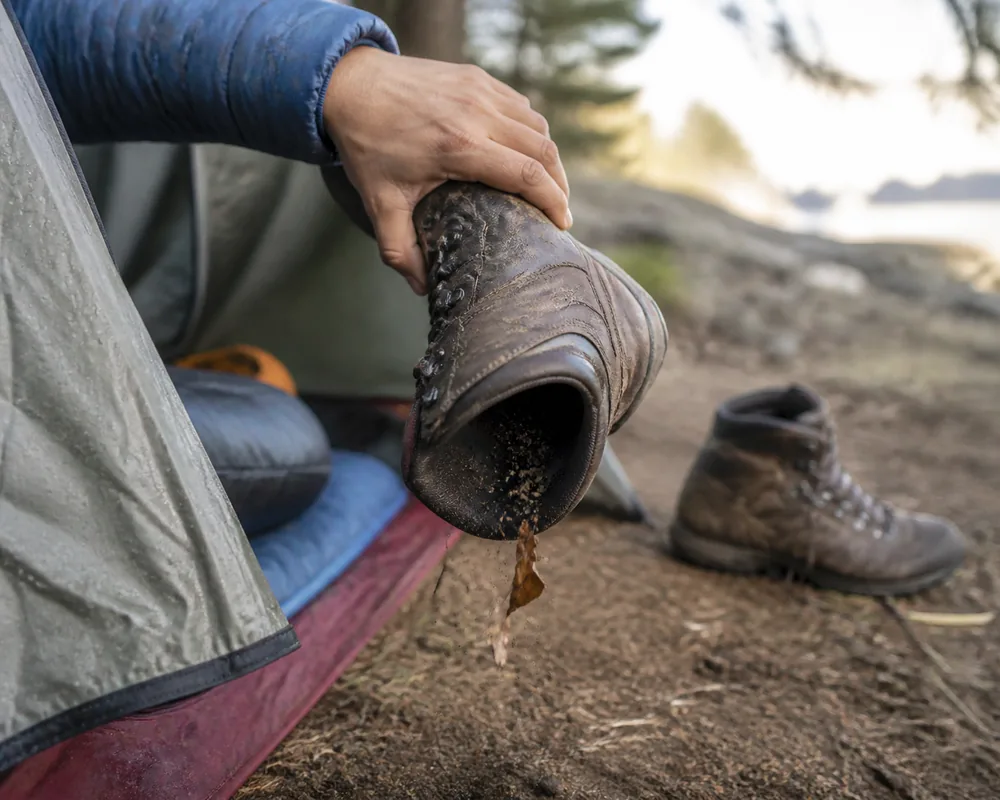
The overnight route is the one people forget in a tent. A sleeping bag left unrolled on the ground all evening is an inviting dry space, and rolling onto something at two in the morning is a classic way to get a defensive bite.
Permethrin is on the list for a reason beyond spiders. Treated clothing works against ticks as well, which given the previous section is the more valuable half of the argument.
None of it is complete. A spider already inside the boot is not affected by any of it, which is why shaking things out stays on the list rather than being replaced by the rest.
Sources
The finding that emergency department patients reporting a spider bite were most frequently diagnosed with skin and soft-tissue infections, and that clinically confirmed bites were rare and mostly caused by widow spiders, comes from: Spider bite lesions are usually diagnosed as skin and soft-tissue infections00792-6/abstract).
The account of brown recluse bite overdiagnosis, including diagnoses made in regions where the species does not occur, comes from: American Academy of Family Physicians, diagnosis of brown recluse spider bites is overused.
The venom effects, symptom pictures and lesion descriptions for widow and brown recluse spiders, and the guidance on cleaning the wound and applying a cool compress, come from: Cleveland Clinic, spider bites.
The prevention advice on gloves, shaking out clothing and footwear, and the guidance on when bites need medical care, comes from: Johns Hopkins Medicine, spider bites.
The documented cases of Lyme disease misdiagnosed as brown recluse bite, including a paediatric case, come from: Lyme disease masquerading as brown recluse spider bite51394-9/abstract) and Lyme disease misdiagnosed as a brown recluse spider bite.
The finding that most patients do not recall a tick bite or present with a bullseye rash, and the proportion of early Lyme cases presenting without a rash, come from: Rethinking erythema migrans after 50 years of Lyme disease in the United States.
AnswersQuestions readers ask
Is my lesion actually a spider bite?
Probably not. When emergency department patients reporting spider bites were examined, the commonest diagnosis was skin and soft-tissue infection, frequently caused by community-acquired MRSA. Confirmed spider bites were rare.
Can a doctor tell whether it was a spider?
Usually not. A confirmed spider bite requires the spider to have been caught or clearly seen biting, and identified. There is no test that detects spider venom in a lesion, so identification from a photograph is guesswork.
Which spiders in the US actually matter?
Widow spiders, whose neurotoxic venom causes cramping pain and stiffness in the abdomen, back and legs within hours, and brown recluse, whose cytotoxic venom produces a lesion developing over days. Recluse occurs in the southeastern and midwestern states, not the west coast or northeast.
How do you tell a spider bite from an infection?
By direction rather than appearance. An infection worsens over days with spreading redness, increasing pain, warmth and sometimes pus, often with fever or chills. A red streak tracking toward the body means being seen the same day.
What should you do about a suspected spider bite?
Clean it with mild soap and water, apply a cool compress for about 15 minutes at a time, raise the limb where you can, draw round the redness and write the time so spread can be measured, and keep it clean and covered.
Could a suspected spider bite actually be Lyme disease?
In a Lyme region, yes, and it is documented. The erythema migrans rash closely resembles the lesion attributed to a brown recluse. Most people with Lyme never notice the tick and most do not get the textbook bullseye, so neither absence rules it out.
How fast does a black widow bite cause symptoms?
Roughly 30 minutes to two hours. Cramping and rigidity settle in the abdomen, back and thighs rather than near the bite, often with sweating, nausea and raised blood pressure, while the bite site itself may show almost nothing.
How do you prevent spider bites?
Gloves before moving wood, rocks, boards or debris; shake out boots, gloves and clothing rather than peering into them; keep bedding off the ground and packed; cover skin around woodpiles and in sheds; and treat clothing with permethrin, which also covers ticks.
When does a suspected spider bite need a doctor?
Spreading redness, a red streak, fever or chills, severe cramping pain, a rapidly deteriorating lesion, or real suspicion of a widow or recluse bite. Children and anyone immunocompromised or diabetic should be seen sooner.