
How to Treat Insect Bites Outdoors and Know When It Is Serious
Check the whole-body reaction first, treat the mechanism you can see, and record delayed changes.

Most insect bites cause a small area of pain, itch, redness, or swelling that can be cleaned, cooled, and watched. The urgent decision is whether the reaction affects breathing, circulation, or the whole body.
Most insect bites cause a small area of pain, itch, redness, or swelling that can be cleaned, cooled, and watched. The urgent decision is whether the reaction is spreading beyond the bite site or affecting breathing, circulation, or the whole body.
Do not spend your first minutes trying to identify an insect from a skin mark.
Check the person, remove any mechanism you can actually see, and record what changes over time.
Treat the reaction, not the mystery. A breathing problem needs emergency action even when nobody saw the insect, while one itchy bump rarely becomes clearer after an hour of image searching.
Sort the reaction before you sort the insect
A mild local reaction stays around one bite or sting.
It may hurt, itch, redden, or swell, but the person otherwise breathes, speaks, thinks, and moves normally.
A large local reaction can spread across much of a limb over hours and still remain local. That size deserves monitoring and medical advice when severe or worsening, but it is different from symptoms appearing in another body system.

Whole-body symptoms may include hives away from the bite, facial swelling, throat tightness, wheezing, dizziness, collapse, nausea, vomiting, or diarrhoea. Several mild-looking symptoms occurring together can be more important than dramatic swelling confined to one arm.
Timing matters. An immediate systemic change after a sting suggests a different pathway from fever or an expanding rash that appears days after a tick exposure.
Identification is useful when the mechanism is visible. An attached tick, a retained bee stinger, a nest exposure, or a witnessed venomous arthropod gives the incident a specific next step.
Skin appearance alone is weak evidence. Scratching, individual immune response, infection, and the time since exposure can make different causes look similar.
Run the emergency screen in the first minute
Ask the person to speak a full sentence and describe any throat, chest, or breathing change.
Look for swelling of the lips, tongue, face, or neck, then check for faintness, confusion, widespread hives, vomiting, or rapidly worsening symptoms.
- Use prescribed epinephrine immediatelyFollow the person's action plan and device instructions when anaphylaxis is suspected
- Call local emergency servicesState the suspected severe allergic reaction, exact location, access problem, and time epinephrine was given
- Position for the person's conditionKeep a faint person lying down when breathing allows, or let breathing difficulty determine a more comfortable position
- Remove continuing exposureMove away from a nest or swarm without delaying medication or the emergency call
- Prepare for another dose only as directedFollow the prescription, device instructions, and dispatcher or clinician guidance
- Monitor breathing and responsivenessBe ready to begin CPR if the person becomes unresponsive and is not breathing normally
Do not make your companion walk out because symptoms briefly improve. Anaphylaxis can progress quickly, and epinephrine treats the reaction while emergency assessment addresses recurrence, airway risk, and evacuation.
Do not substitute an antihistamine for epinephrine when breathing or circulation is affected. An antihistamine may reduce itch or hives, but it does not act fast enough to reverse life-threatening airway swelling or shock.
Local swelling by itself is not automatically anaphylaxis. Swelling at the mouth, tongue, throat, or neck is different because it can compromise the airway and needs urgent evaluation.
Treat the mechanism you can actually see
Move to a place where another sting or bite is unlikely, then inspect without squeezing the area.
Remove rings, watches, or tight items early when swelling could trap them.
| What you see | Useful action | Avoid |
|---|---|---|
| Mild bite with intact skin | Wash with soap and water, apply a wrapped cold pack, and protect it from scratching | Ice directly on skin, cutting, suction, or aggressive squeezing |
| Visible bee stinger | Remove it promptly by scraping or grasping without wasting time debating technique | Delaying removal while searching for a preferred tool |
| Painful swelling | Raise the limb when practical and use labelled medicine only when appropriate for that person | Giving unfamiliar medicine without checking allergies, age limits, pregnancy, interactions, or the label |
| Broken scratched skin | Clean it, cover when dirt or friction will continue, and monitor for infection | Repeated scratching or sealing obvious infection under dirty tape |
| Unknown mark without symptoms | Record time and location, then watch the person rather than repeatedly manipulating the skin | Burning, cutting, applying caustic substances, or trying to extract invisible venom |
Use a cloth-wrapped cold pack for short intervals to reduce pain and swelling. American Academy of Dermatology guidance also supports appropriate over-the-counter anti-itch treatments, but the product label and the person's health history control whether they are suitable.
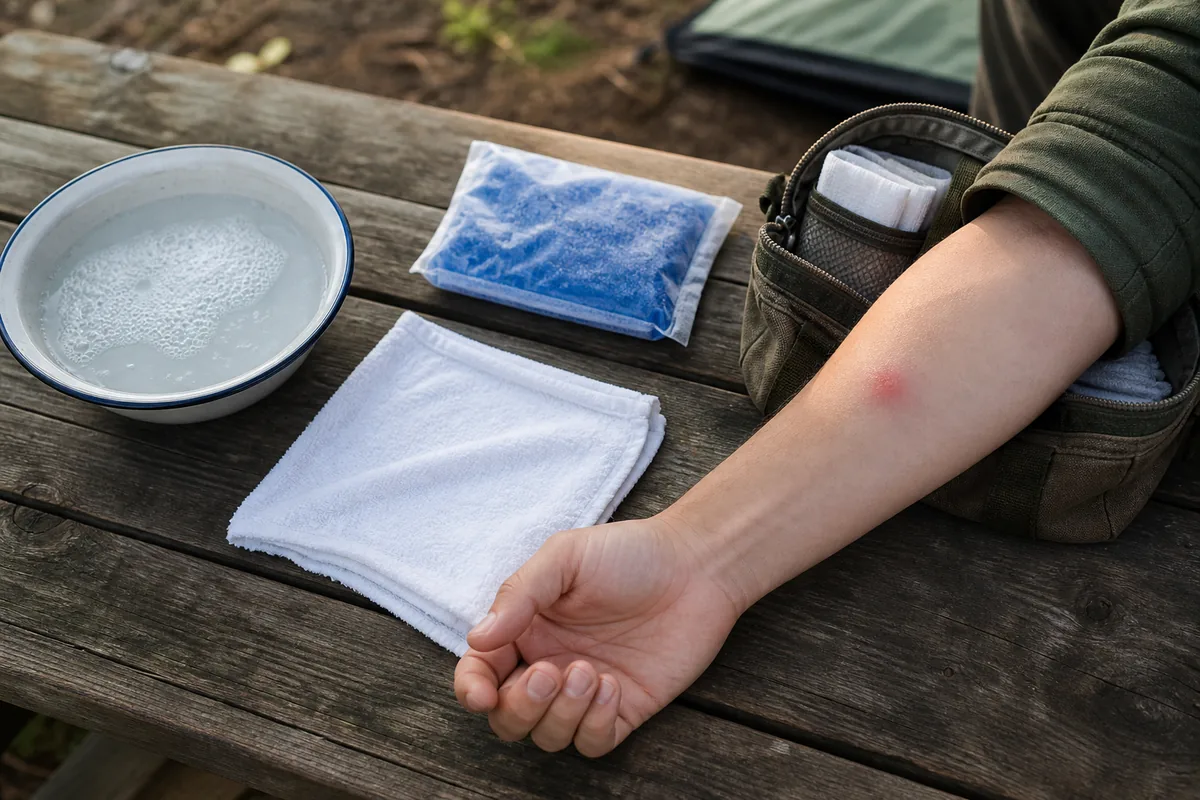
Prompt bee stinger removal matters more than the old argument about scraping versus tweezers. Remove what is visibly retained without compressing a venom sac unnecessarily, then clean and cool the area.
Pain that rapidly intensifies, swelling that continues to expand, pus, red streaking, spreading warmth, fever, or reduced function needs medical advice. A bite near the eye or inside the mouth also deserves a lower threshold for care.
Remove an attached tick now, then record the date
Do not wait for a clinician to remove an attached tick. The CDC advises prompt removal with fine-tipped tweezers.
- Expose the tick clearlyUse good light and steady the affected body part
- Grasp close to the skinPlace fine-tipped tweezers around the tick as near the attachment point as possible
- Pull upward with steady pressureKeep the pull even rather than twisting or jerking
- Dispose of the tick safelyUse a sealed container, alcohol, tape, or flushing as CDC guidance describes, and avoid crushing it with bare fingers
- Clean the area and handsUse soap and water, rubbing alcohol, or hand sanitiser
- Record exposure detailsNote the date, general location, body site, and any later rash or fever
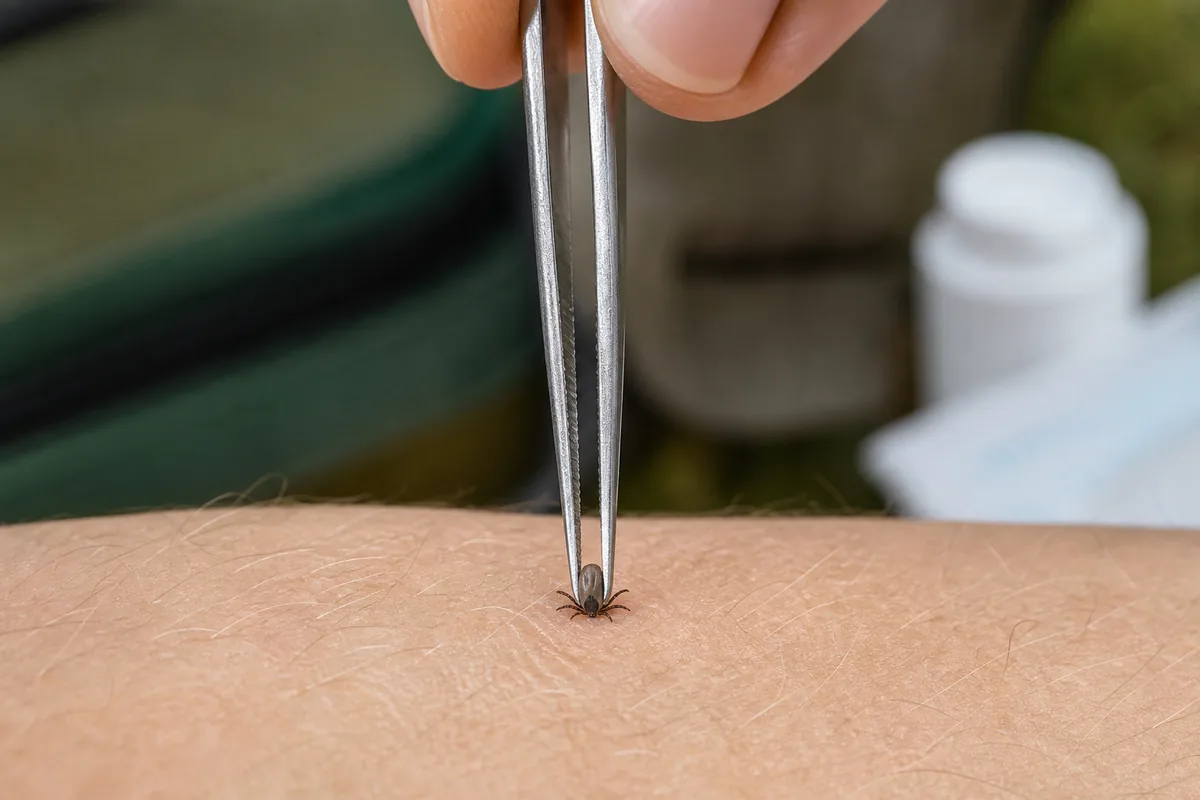
Do not coat a tick attached to you or your companion with petroleum jelly, nail polish, or heat. These methods delay removal and can make the tick harder to handle safely.
If small mouthparts remain and do not come out easily with clean tweezers, the CDC says the skin can be allowed to heal. Digging aggressively creates more tissue damage.
Testing the tick is not a substitute for monitoring or medical advice. Laboratories and local health authorities vary in what they recommend, while symptoms and exposure context still determine care.
The useful record is a timeline, not a bite photo alone
A clear photograph can document appearance, but it cannot show fever, headache, spreading pain, breathing changes, or the rate at which redness expands. Add dates, measurements, symptoms, and exposure location.
- At discoveryPhotograph the area with a size reference and record where and when exposure probably occurredLater changes have a usable starting point
- During the first dayNote expanding swelling, new hives, increasing pain, breathing changes, faintness, or stomach symptomsEmergency and local reactions separate by pattern and timing
- Over the next several daysWatch for spreading redness, pus, warmth, red streaks, fever, body aches, headache, weakness, or a new rashInfection or delayed illness reaches care with context
- When contacting a clinicianGive the date, region, outdoor setting, attached-tick duration if known, symptoms, medicines used, and photographsThe clinician receives more than an uncertain insect name
You can mark the edge of expanding redness lightly with the time when doing so does not irritate the skin. The comparison helps show whether inflammation is stable or moving.
Seek medical care for fever, body aches, a spreading rash, worsening local infection signs, severe pain, or symptoms that do not improve as expected. After a tick bite, CDC guidance specifically says to contact a healthcare provider if rash or fever develops within days to weeks.
Emergency symptoms bypass the timeline. Breathing difficulty, throat swelling, collapse, severe weakness, or rapidly spreading whole-body symptoms require emergency action whenever they appear.
Build barriers around the way insects reach you
Prevention works best as several independent barriers. One missed patch of repellent should not leave every other route to the skin open.
Choose time and route
Learn when local mosquitoes, biting flies, ticks, or stinging insects are active and avoid nests, dense brush, and stagnant margins when practical
Cover access points
Use long sleeves, long trousers, socks, closed shoes, and a head net when exposure warrants them
Use registered skin repellent
Select an EPA-registered product and follow the exact age, application, reapplication, and face-use instructions on its label
Treat gear correctly
Use factory-treated items or label-approved permethrin products on clothing and gear, never directly on skin
Protect camp and sleep
Close tent mesh, repair holes, use screens or nets, and keep food and sweet residue from attracting insects
Check after exposure
Inspect the whole body, shower when available, check children and pets, and examine clothing and gear for ticks
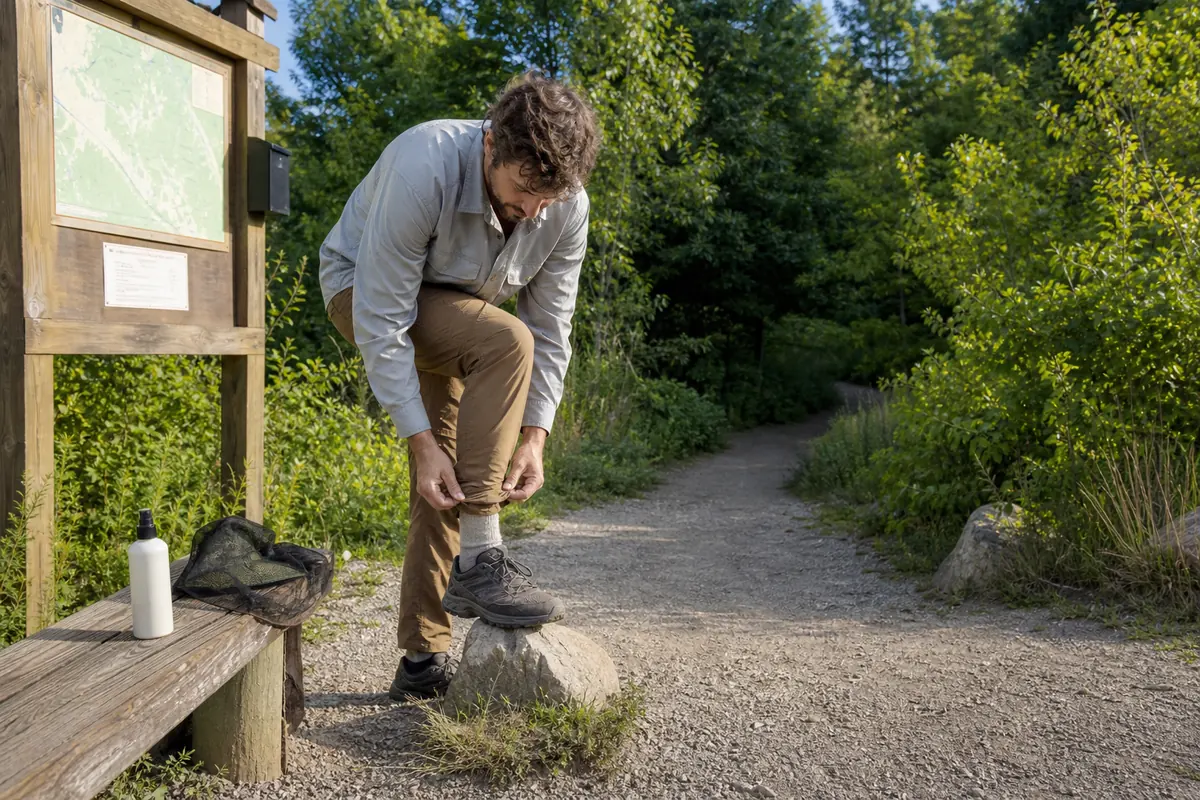
EPA-registered active ingredients include DEET, picaridin, IR3535, oil of lemon eucalyptus, para-menthane-diol, and 2-undecanone. Registration does not make the products interchangeable, so choose by label, local insect pressure, age restrictions, and the time protection is needed.
CDC guidance says not to use oil of lemon eucalyptus or PMD on children under three. Adults should apply repellent to their own hands before putting it on a child's exposed skin, and products should stay away from hands, eyes, mouth, cuts, and irritated skin.
Permethrin belongs on clothing, footwear, nets, or gear when the product label allows it. It does not belong directly on skin.
After returning, check warm and hidden areas such as the scalp, behind ears, armpits, waist, groin, behind knees, and between legs. Ticks can travel on clothing or gear before attaching later.
The layered plan should match the actual exposure. A breezy open lunch stop may need little intervention, while dense summer vegetation, dusk beside water, or sleeping without intact mesh can justify every barrier.
Sources
Local bite care, prevention, and thresholds for rash, fever, or body aches follow the American Academy of Dermatology's bug bite guidance.
Emergency signs and basic first aid follow Mayo Clinic guidance for insect bites and stings.
Repellent, clothing, net, and child-use precautions follow CDC advice on avoiding bug bites.
The removal sequence and delayed rash or fever advice come from CDC tick bite guidance.
Registered active ingredients and treated-clothing restrictions come from the EPA pages on skin-applied repellents and repellent-treated clothing.