
How to Stay Warm in a Sleeping Bag Without Guessing
Diagnose ground loss, loft, moisture, fit, and body heat, then leave before the system loses its margin.
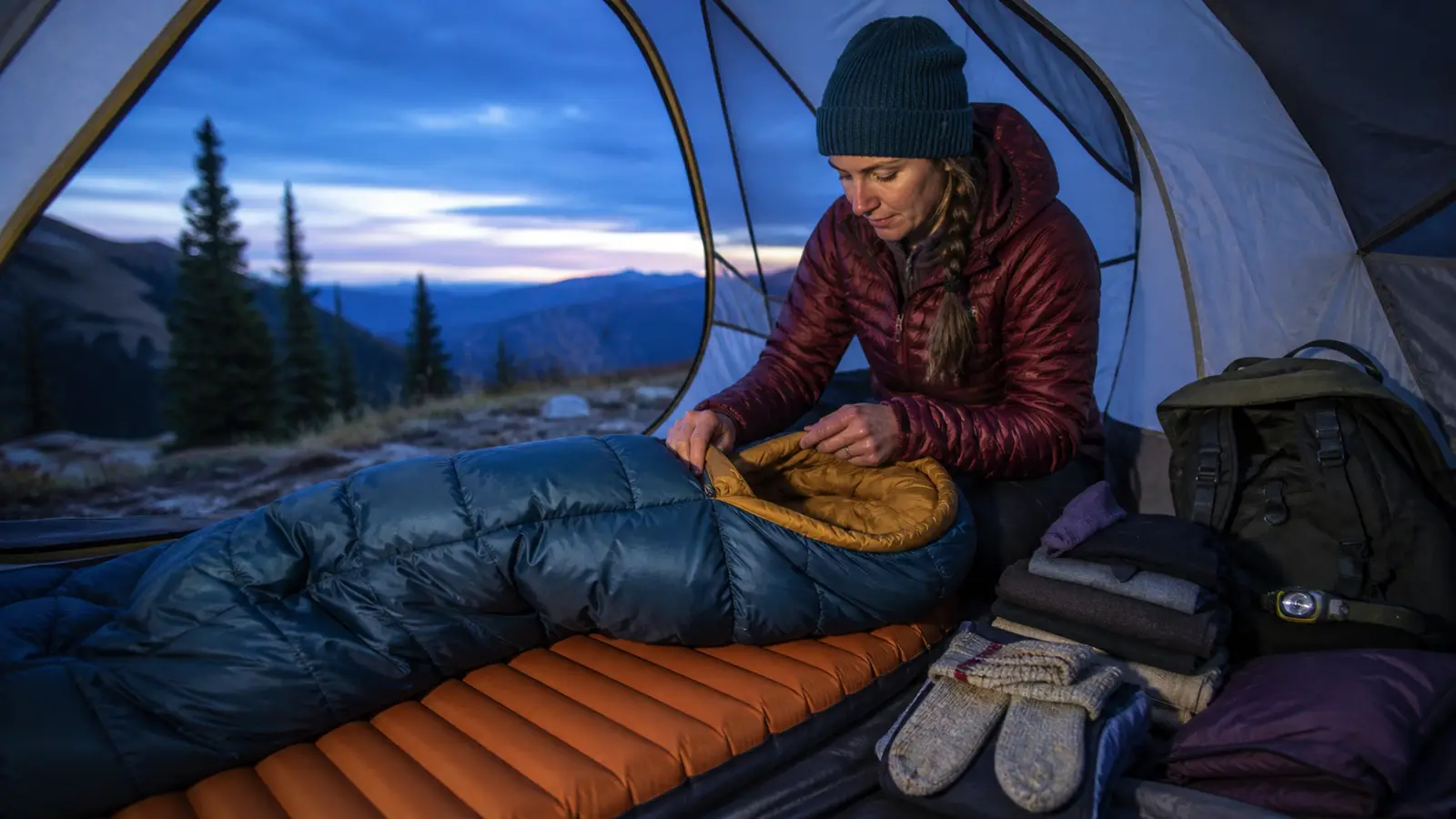
Stay warm by protecting insulation below, preserving dry loft above, closing controllable drafts, and entering the bag warm without sweating.
To stay warm in a sleeping bag, protect insulation below you, preserve dry loft above you, block controllable drafts, and enter the bag warm but not sweaty. If those controls cannot keep your thinking, movement, and shivering normal, the sleep system or conditions are beyond its useful margin.
A sleeping bag slows heat loss. It does not create heat, insulate the compressed underside well, or make wet clothing harmless.
Diagnose the cold path before adding layers. The fastest fix depends on whether heat is leaving through the ground, air gaps, moisture, wind, or an under-rated system.
How is heat leaving your sleep system?
Cold feet do not always mean the footbox needs more insulation. The whole body may be losing heat into the ground, through a loose hood, or while drying damp layers inside the bag.
| What you notice | Likely heat path | First check |
|---|---|---|
| Back and hips feel cold | Conductive loss below | Pad insulation, leaks, gaps, and contact with cold ground |
| Shoulders or neck feel cold | Moving air at the opening | Hood, collar, zip, and unused interior space |
| Bag feels clammy | Moisture reducing loft | Wet clothing, breath, condensation, and damp shell |
| One cold spot follows compressed fill | Lost loft | Baffles, clumping, pressure from gear, and bag condition |
| Whole body stays cold after settling | System limit or low heat production | Air temperature, food, hydration, fatigue, illness, and rating suitability |
| Warm at bedtime, cold near dawn | Falling temperature or declining body heat | Forecast low, pad, fuel, and remaining dry layers |
You should change one major variable at a time when conditions allow. If replacing the pad gap or sealing the collar improves warmth quickly, that evidence is more useful than piling clothes onto every part of the body.
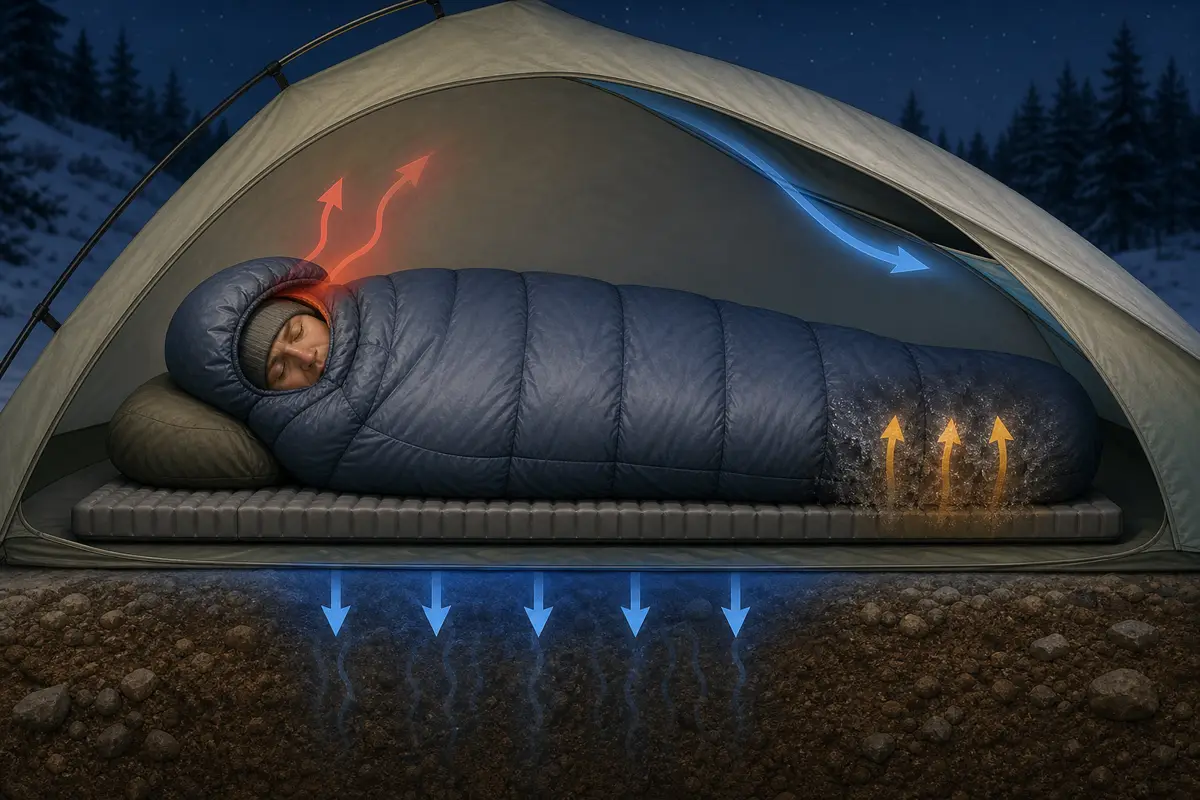
Persistent or worsening cold is not a comfort puzzle. Treat it as a safety decision when a person cannot warm after the obvious sleep-system faults are corrected.
Why does the sleeping pad matter so much?
Your body compresses the sleeping bag beneath you until much of that fill loses its insulating air. The pad becomes the main barrier between warm skin and cold ground.
The pad supplies the insulation that compressed bag fill can no longer provide beneath your body.
Check inflation and body position before assuming the bag rating failed. You can place spare compatible insulation beneath the pad or at a confirmed gap, but avoid materials that trap dangerous stove heat or puncture the pad.
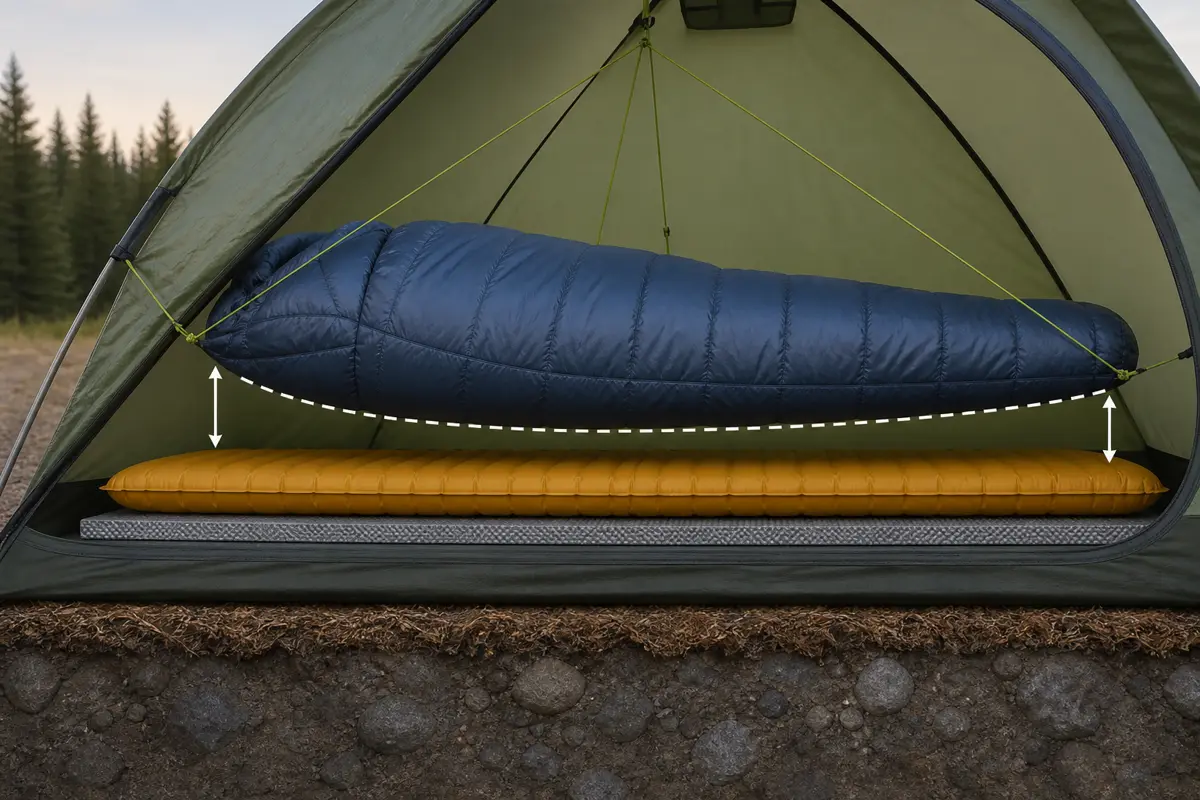
A thick-looking air mattress can still be poorly insulated. Use its documented thermal resistance, continuous body coverage, and your trip conditions rather than judging by height.
Watch for a slow air leak and for two pads separating into a cold channel. A compatible foam layer can preserve some ground insulation after an inflatable pad fails, including on compacted snow.
How should the bag fit and loft before bed?
Unpack the bag early enough for the fill to recover from compression. Shake and redistribute it gently according to the care instructions, then inspect baffles for thin or clumped areas.
- Give fill time to expand :: Remove the bag from its stuff sack before the temperature falls sharply
- Keep the shell dry :: Protect it from wet tent walls, boots, cookware, and condensation
- Match length and width :: Avoid crushing the footbox while limiting large empty spaces that promote air movement
- Seal the opening :: Close the zip, draft tube, collar, and hood while leaving the nose and mouth clear
- Protect the loft :: Remove heavy gear and isolate a failed zip, torn shell, migrating fill, or wet baffle
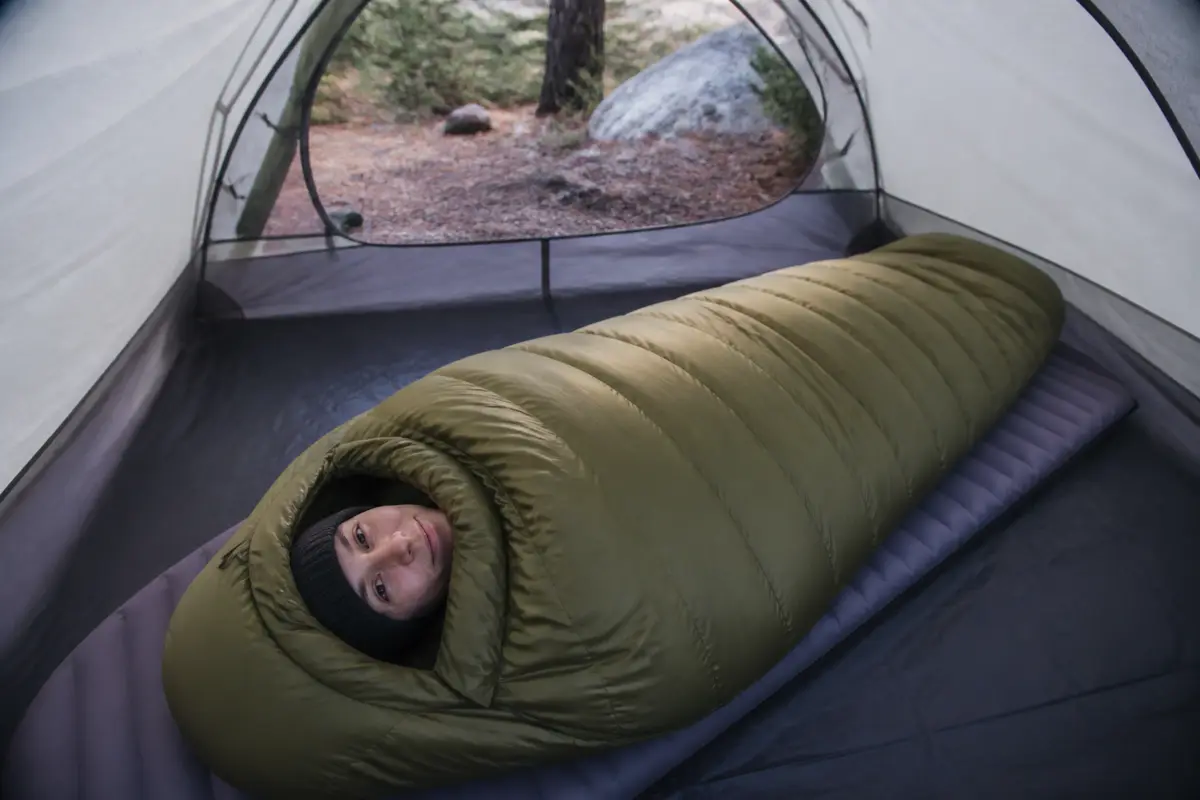
You should leave the nose and mouth outside the bag. Breathing into the hood adds moisture that can reduce warmth through the night.
What should you wear inside a sleeping bag?
Change out of damp hiking layers before they cool against the skin. Dry base layers, socks, and a clean hat can preserve loft and reduce evaporation without overfilling the bag.
You do not need to sleep naked for insulation to work.
If added clothing makes the bag tight, move the extra insulation over the bag where it can remain lofted and dry, provided it will stay in place safely. You should keep critical dry sleep clothing protected throughout the day rather than hoping to dry everything with body heat at night.
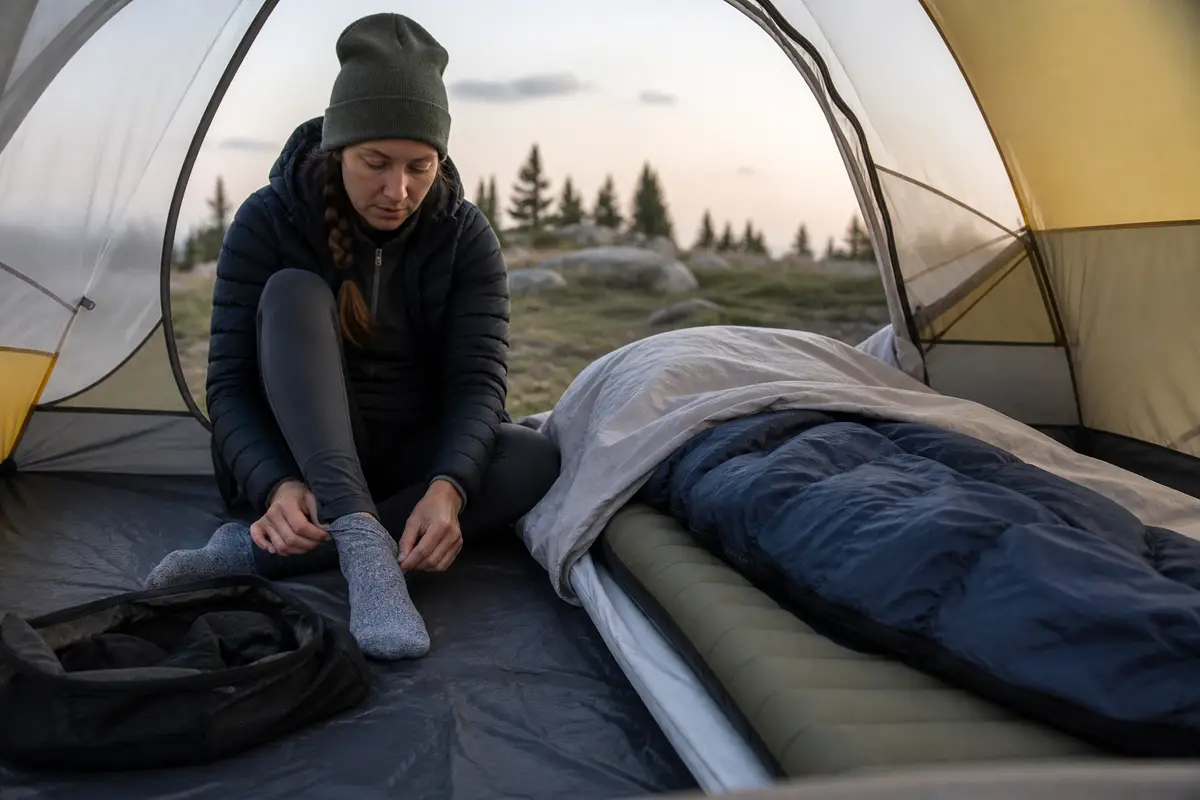
Use dry base layers, unconstricted socks, and a hat or hood that leaves the face clear. Wet clothing needs a managed drying plan because spreading it through the bag transfers moisture into the insulation.
Numbness confined beneath tight socks, booties, or drawcords can signal restricted circulation. Loosen the item and reassess instead of adding another tight layer.
When should you eat, drink, and move before sleep?
Enter the bag with useful body heat, but stop activity before sweat wets the sleep layers. A short walk, simple camp tasks, or controlled movement can warm you without creating a moisture problem.
Food does not rescue an inadequate bag, pad, or shelter. It supports heat production only when the person can eat safely and is not already showing a condition that needs urgent treatment.
Protect dry layers before the evening cools, eat and drink during dinner, and finish water, toilet, and storage tasks before changing. Add brief movement just before bed, then seal the pad, zip, collar, and hood and notice where cold first appears.
Emptying your bladder can reduce the need to leave the bag later. You should keep footwear, light, and an outer layer positioned so a night exit does not become a long cold search.
Can a hot-water bottle safely add warmth?
A tightly sealed container designed for hot liquid can provide stored heat when its manufacturer permits that use. Test the closure, protect skin from direct contact, and keep the container away from insulation that could be soaked by a leak.
Container compatibility
Use only a vessel rated for the water temperature and inspect its cap and seal
Skin barrier
Wrap the bottle so prolonged contact cannot burn or irritate skin
Placement and temperature
Follow the container limit and place it without compressing loft or creating a pressure point
Leak response
Remove wet insulation, switch to the dry backup, and handle the cooled water under the trip water plan
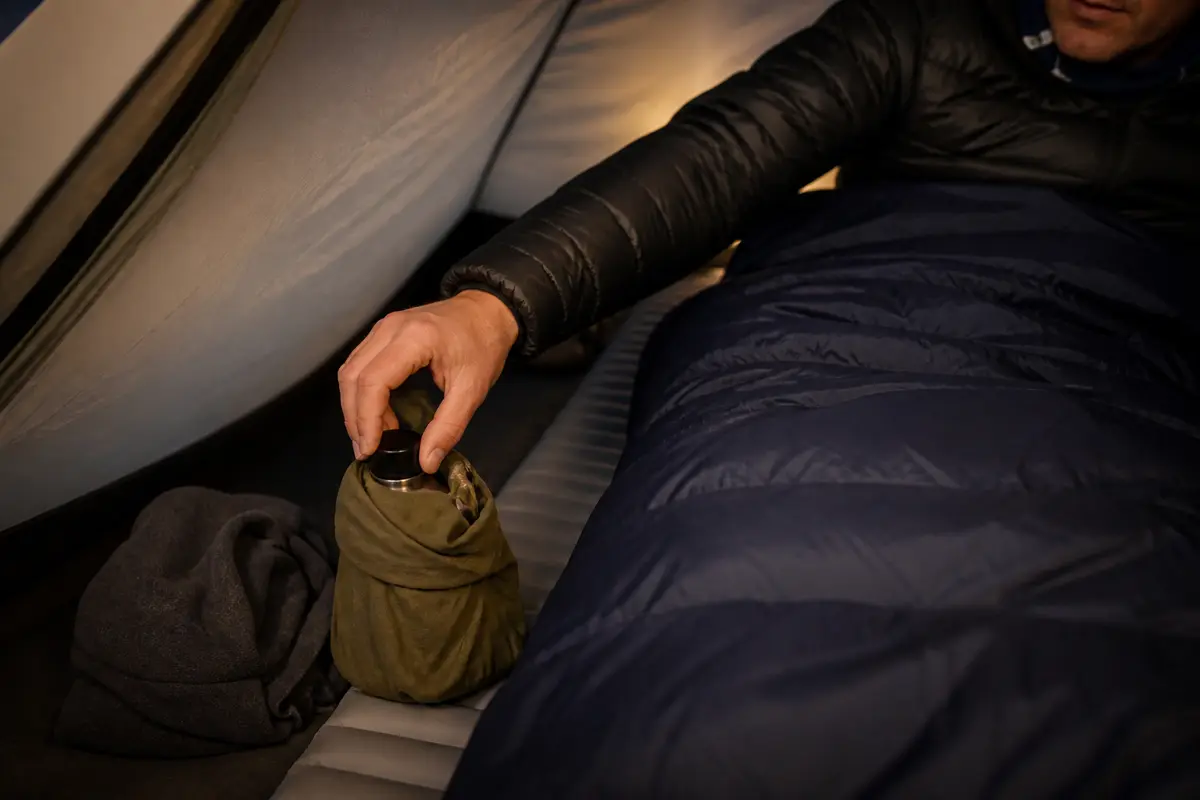
Never place a fuel-burning heater, stove, charcoal device, or chemical heat source inside the bag. Fire, fumes, burns, oxygen use, and melted fabric are more serious than a cold footbox.
What should you do after waking up cold?
Respond while hands and judgement still work. You should identify whether the pad slipped, the bag became damp, the hood opened, the temperature fell, or the person cannot produce enough heat.
- Wake and assessInvolve the partner or group and check thinking, coordination, speech, and shivering
- Restore the ground barrierReposition the pad, close gaps, and use compatible backup insulation
- Replace wet layersMove into protected dry clothing without exposing the person longer than necessary
- Recover heat safelyRestore loft and seals, then use appropriate food, drink, or a sealed hot-water container
- Change location or leaveMove to a warmer shelter or transport before the remaining margin disappears
Do not wait for dawn simply because the sleeping system was expected to work. A forecast error, wet bag, damaged pad, illness, or exhaustion can invalidate the original plan.
After the person warms, record which layer failed. You can then decide whether the equipment needs drying, repair, replacement, or a warmer trip plan.
Which common fixes make the bag colder or less safe?
Blocking every tent vent can increase condensation and wet the insulation. Bringing combustion into a sleeping shelter adds carbon monoxide and fire risk without repairing the sleep system.
You should also avoid burying your face, wearing circulation-restricting layers, or placing a leaking bottle in the bag. Heavy blankets and jackets help only when they remain dry, stable, and uncompressed.
Alcohol can impair judgement and normal cold responses. It should not be used as a warming method.
When is the sleep system no longer adequate?
A person who remains cold after pad, loft, dryness, food, and drafts are corrected needs a new environment or a stronger system. Worsening shivering, confusion, or clumsiness raises the urgency, as do apathy and inability to perform simple tasks.
- Thinking and hands stay functional :: The person knows the plan and can manage zips, light, phone, and shelter controls
- Shivering improves :: Warmth measures reduce rather than intensify whole-body shivering
- Insulation stays dry :: The bag and clothing are not accumulating moisture faster than they can be protected
- Exit remains usable :: The group can still pack, walk, drive, or call before coordination declines
- Backup and help remain reachable :: A safer shelter, transport, emergency system, and symptom threshold are still clear
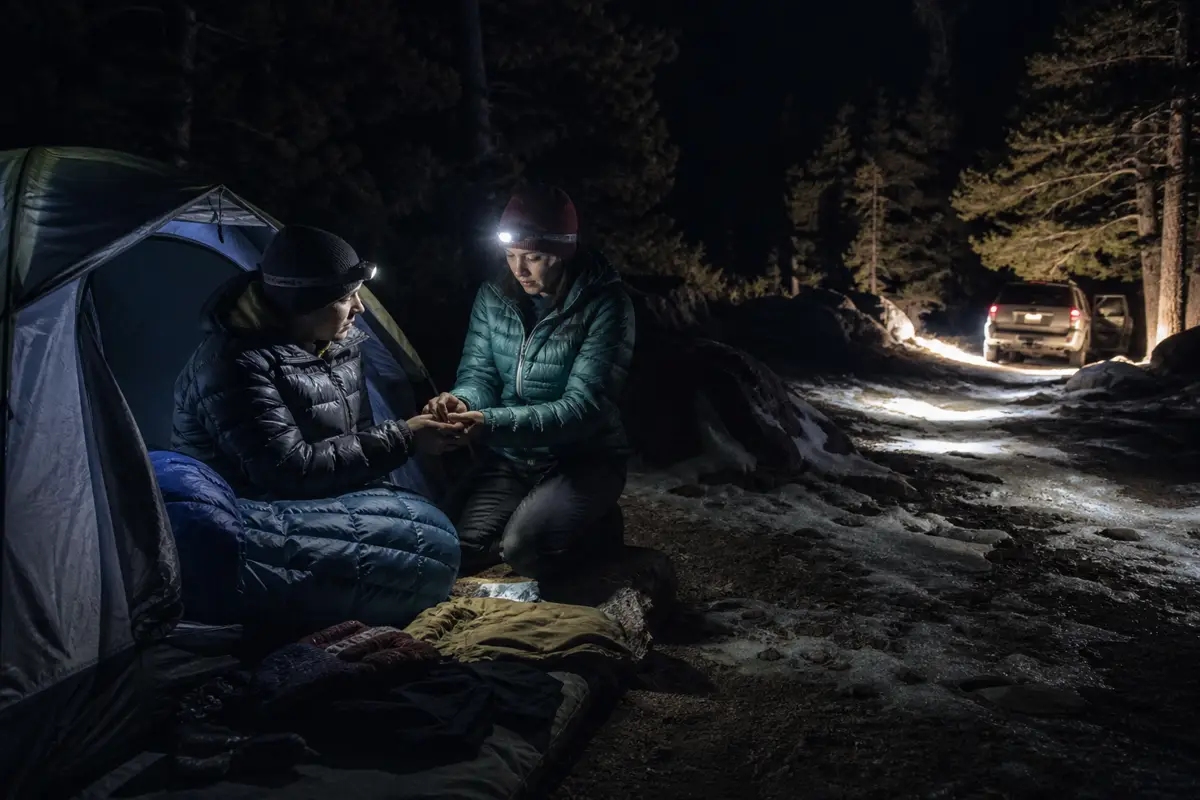
The best correction may be ending the night. You should not make a cold person prove that a published temperature rating was accurate.
Sources
Heat-loss paths, pad use, dry clothing, food, movement, and sleep-system adjustments follow REI's guidance on staying warm in a sleeping bag.
Cold-environment sleep preparation and warm food or water support are informed by the Walter Reed Army Institute of Research guide to sleep in the Arctic environment.
Step by stepPractical steps
- Identify the active heat-loss path
- Restore the pad, loft, dry layers, and seals
- Add safe body heat or a protected hot-water container
- Reassess thinking, movement, and shivering
- Move to a stronger shelter or leave before function declines