
Mountain Lion Encounters: Stand Tall, and Never Crouch
The lion you can see has already passed on the ambush. What you do next decides whether it reconsiders.
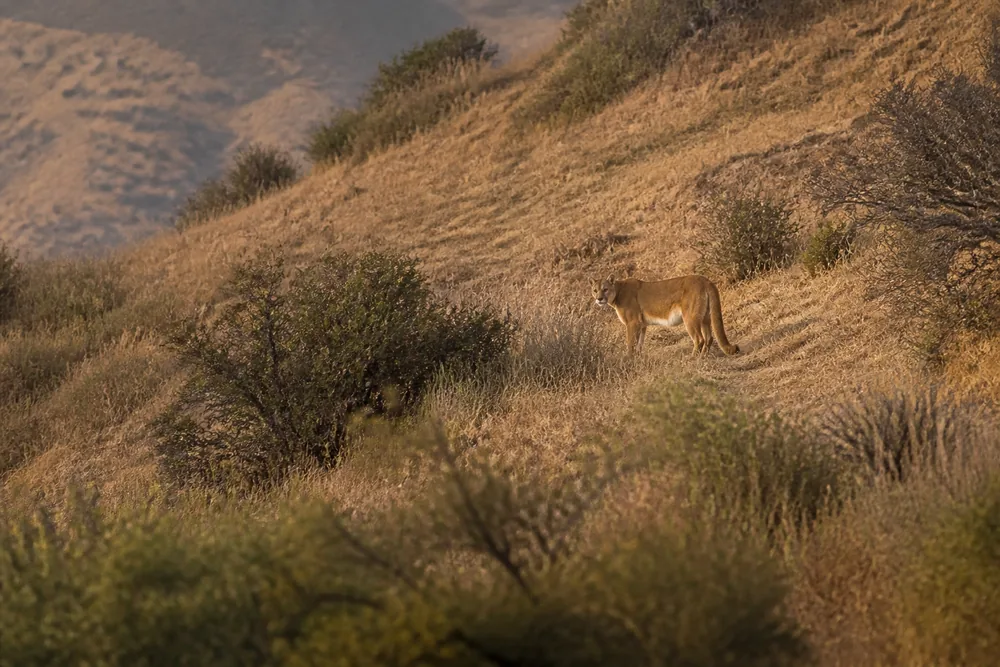
Mountain lions hunt from cover and from behind, so an animal standing in the open watching you has given up its method rather than started it. The response that follows is the opposite of the bear and moose rules most hikers already carry.
A mountain lion hunts by ambush. It works from cover, from behind, and from above, and it does not announce itself first.
Which means the lion standing in the open watching you has already given up the only approach that reliably works.
Do not run from a lion. Stand and face the animal.
National Park Service
Two instructions, and both of them fight the instinct to put ground between yourself and a predator. What follows is why each is there, and which of your reflexes is most likely to break it.
What does it mean that you can see a mountain lion?
Almost every lion that sees a hiker lets the hiker walk past without ever being noticed.
The animals are built for the approach you never detect. A cougar closes the last distance through cover and takes prey from behind at the neck, so an animal sitting in plain sight thirty metres away has abandoned its method rather than begun it.
That is not a promise. It is a starting position, and it is a considerably better one than most people assume they are in.
The numbers behind that are worth holding. North America has recorded on the order of 126 attacks and 27 deaths since 1890, which works out near one fatality every five years across a continent.
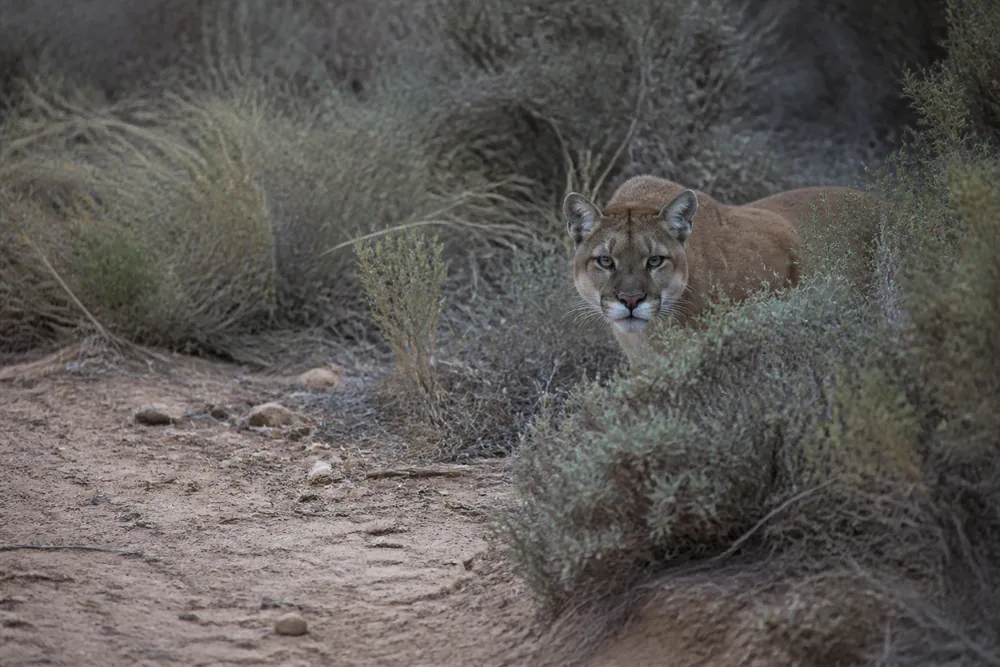
Set against that baseline, a few behaviours do change the reading.
A held gaze is the first of them. An animal that keeps its eyes on you while its body stays low and still, that twitches the end of its tail, or that closes distance while you are watching, is doing something other than passing through.
Movement toward you is the clearest of the set. A lion that has seen you and comes anyway has made a decision, and the rest of this page is written for that minute.
One situation skips the whole sequence. A deer carcass on or near the trail belongs to something, lions return to a kill over several days, and the correct response to finding one is to leave the area rather than to work out where the owner is standing.
How should you stand, and what do you do with your arms?
The first instruction is about your feet, and it is to do nothing with them.
Holding ground is harder than it reads. Every other large-animal rule you have absorbed involves moving somewhere, and standing still while a predator looks at you runs against the whole nervous system.
But running is what converts you from a standing problem into a moving target, and a cougar's chase response is triggered by exactly that.
- Feet planted, body square to the animal
- Eyes on it, and holding
- Arms up, jacket open, pack lifted overhead
- Small children picked up, older ones pulled in beside you
- Voice loud, low and level
The eye contact is the item people quietly skip.
It feels like provocation, and with some animals it would be. Here it is one of the few signals available that says a predator is looking back, and dropping your gaze to check the ground is a small version of the mistake the next section is about.
Height and width are worth more than either feels. A raised pack adds most of a metre to your outline, an open jacket doubles your width, and neither costs anything you are not already carrying.
Children need deciding in advance, because the answer costs you something. A small child at knee height is both the wrong size and the wrong shape, so they come up, and if there is a second adult the child goes to them so your arms stay free.
Only then does leaving enter it.
You back away slowly, facing the animal the entire time, and you do not turn until it has broken off and you have real distance. On a narrow ledge or a steep sidehill where there is no line backwards, holding position is the better answer than a retreat you cannot make cleanly.
Bending down is the mistake nobody warns you about
Stand at the edge of a field at dusk and watch a person crouch. From a hundred metres, in poor light, at an animal's eye level, the shape they make is not a smaller human.
It is a horizontal, four-legged outline roughly the size and posture of a deer.
That is the whole of the argument, and it is why every agency page carries some version of the same line without ever quite explaining it. Crouching changes your species in the only language the encounter is being conducted in.
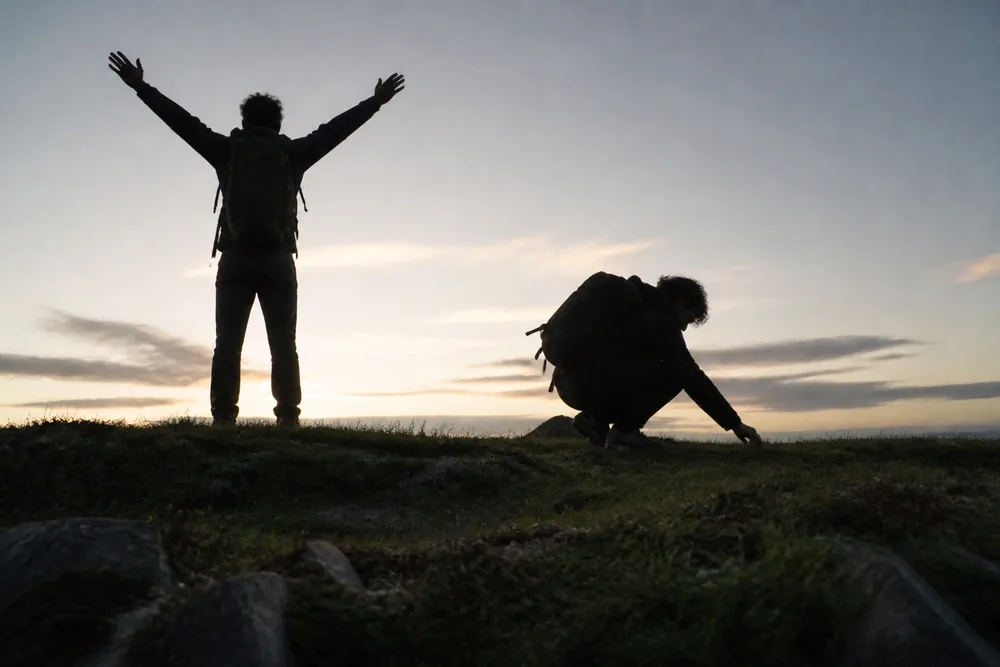
There is a second cost that is easier to picture. Bending forward puts the back of your neck uppermost and within reach, and the neck is precisely where a cougar bites.
So the crouch does two things at once. It advertises prey, and it presents the target.
The awkward part is that nobody crouches on purpose during an encounter. They crouch for entirely ordinary reasons, at the worst possible moment.
Reaching for a rock to throw is the commonest of them, which is an unfortunate collision between two pieces of correct advice. Tying a loose lace, lifting a pack strap, steadying a dog by the collar and kneeling to bring a child close all do the same thing.
Photographers are their own category here, because a long lens and a low angle are the same movement.
When you genuinely have to reach the ground, the way to do it is to bend at the knees rather than the waist, keep your head and shoulders up, and keep your eyes on the animal the whole time. You will be slower and clumsier, which is the correct trade.
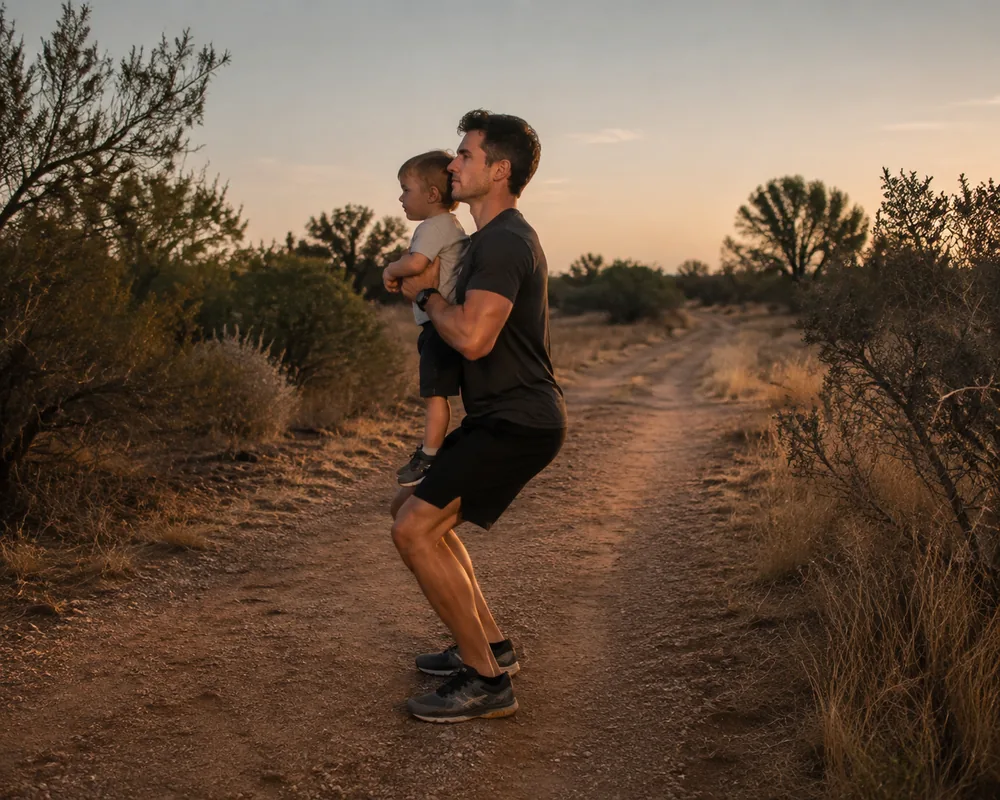
Staying upright also has a use later. A person on their feet can still fight, and a person who has gone down has given away the position the animal was trying to create.
Throwing things is the correct answer here
Most people will not throw the first rock, and it is worth naming why.
Almost everything else you have been taught about wildlife points the same direction: do not provoke, do not crowd, do not escalate. With a bear you stay calm and non-threatening, and with a moose you simply take yourself out of its space.
A lion that stays put after you have stood tall and shouted needs a stronger version of the same message, because the quiet options have already been spent. Throw stones, throw branches, throw whatever is within reach.
The throwing has a technique, and it is mostly about what you do not do.
You throw without turning away, without stepping toward the animal, and without dropping into a crouch to hunt for ammunition. Anything already in your hand or at waist height goes first, and a trekking pole swung or jabbed does the same job without any of the bending.
What you are doing is not injuring the animal, and aiming to is a good way to end up throwing badly.
The message is that you are not prey, and a rock landing near a lion carries that perfectly well while shouting firmly at the same time doubles it.
The same caution applies in reverse to an animal that is already leaving. Pelting a lion that has broken off achieves nothing and, in most states, counts as harassing wildlife.
If it attacks, you fight and you stay on your feet
You fight back. You do not play dead, and the fact that playing dead is correct for one kind of bear encounter is exactly why people get this wrong.
A cougar attacking a person is not defending cubs or a carcass or its own space. It has made a category error about what you are, and the response has to correct that error rather than confirm it.
Where it is aiming decides most of what follows. Cougars take prey at the head and the back of the neck, which means the animal is trying to get above and behind you, and everything you do should make that harder.
Staying on your feet is therefore not bravado but geometry. On the ground you are the shape and the height the attack was designed for, and standing is the single condition that keeps you fighting.
Trekking poles
The only thing most hikers carry that has both reach and a point. They are also the first thing people drop, so keeping hold of them is part of the answer.
A rock or a stick
What the recorded cases keep coming back to, and both work from a standing position without going to the ground for them.
A jacket or a pack
Wrapped on the forearm it takes a bite and adds bulk, at the cost of one hand for as long as you hold it.
Bare hands, at the face
People have driven cougars off with nothing else. Target selection is what made the difference, and it was the eyes and the face rather than the body.
Rocks, sticks, garden tools, jackets and bare hands have all turned cougars away in documented cases.
That is a genuinely encouraging record and it should be read for what it is, which is evidence that fighting back is the best available option rather than a reliable one. The great majority of people reading this will never need any of it.
Three animals, three opposite answers
By this point you may be carrying three separate sets of instructions with no way to tell which one you are in.
That is a real problem rather than a tidiness one. The correct response to a charging moose is close to the worst response to a lion, and the bear answer is different again.
| Situation | Mountain lion | Moose | Bear |
|---|---|---|---|
| It closes on you | Stand tall, hold ground, get loud | Run and put something solid between you | Hold your ground |
| If it reaches you | Fight, at the face, on your feet | Curl up, cover your head, stay still | Depends on species and on why it attacked |
| Eye contact | Deliberate, and held | Not the point. Distance is | Talk and identify yourself as human |
| What it wants | Possibly you, as food | The space you are standing in | Safety, food, or its young |
Read the bottom row and the other three follow from it.
An animal that wants you gone stops once you are gone, which is why leaving works on a moose. An animal that may want to eat you does not stop for the same reason, which is why leaving is the wrong instinct here and fighting is the right one.
The bear column is a pointer rather than an answer, because that decision reverses on species and on intent and is worked through properly in the bear encounter response.
The shortcut has an honest limit. Motive is inferred from behaviour, behaviour is read in seconds under stress, and no table survives contact with an animal doing something none of the categories predicted.
The exposure is in running, dusk, and children out ahead
The same trail carries a different risk depending on how fast you are moving along it.
A walker is a slow, upright, noisy, unmistakably human shape. A runner is a fast-moving body at roughly deer speed, often alone, usually quiet, frequently in the last hour of light, and that combination is why agencies single out jogging in lion country rather than hiking in it.
The instruction is not to stop running. It is to know that the activity is a different category from walking the same ground, and to treat it accordingly.
Light matters nearly as much. Lions move most at dawn, at dusk and through the night, and a route that is unremarkable at eleven in the morning is a different proposition at half past eight in the evening.
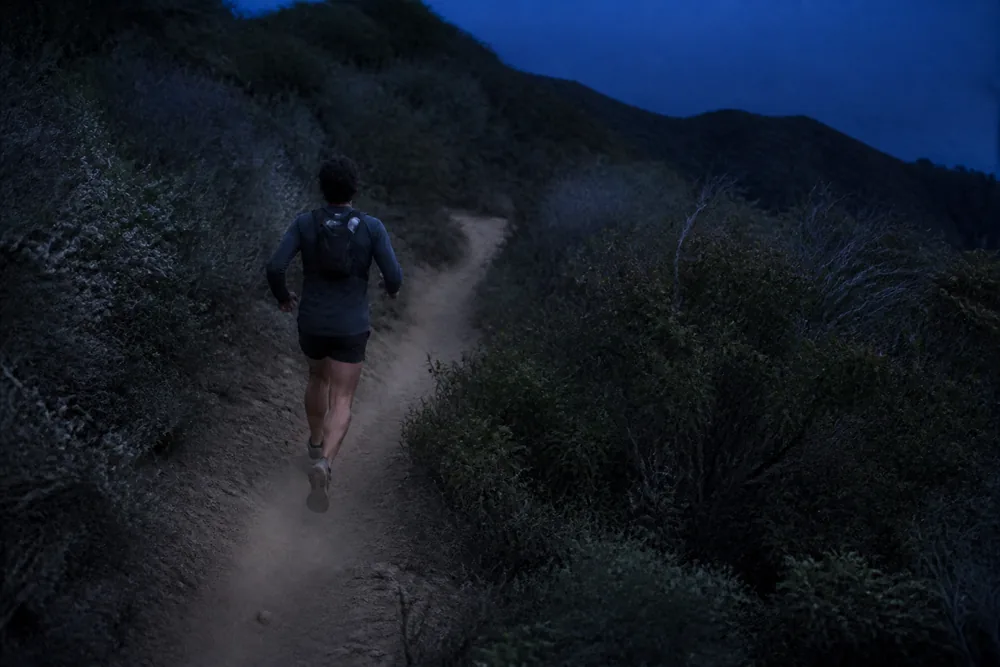
Children are the third piece, and the fix is duller than the fear.
Kids on trail naturally run ahead, drop behind, and stop at knee height to look at things, which is the wrong speed, the wrong distance and the wrong outline in one package. Keeping them within arm's reach where cover comes close to the trail costs the walk some of its freedom, and that is the trade.
None of these adjustments are free, which is the reason to be honest about them rather than to list them as rules.
An earlier start means an earlier alarm, a shorter run means a shorter run, and a child kept close is a child having less fun. They are worth making where the ground and the hour justify it, and they are choices rather than commandments.
Sources
The instruction not to approach or run, the standing posture, the height and eye contact, picking up small children, throwing stones and branches, fighting back at the head and neck, and the advice against jogging or hiking alone come from: National Park Service mountain lion safety.
The prohibition on crouching and bending because it makes a person resemble four-legged prey, and the account of what people have used to fight cougars off, come from: US Fish and Wildlife Service mountain lion safety.
The encounter behaviours that distinguish a passing sighting from hunting attention come from: Mountain Lion Foundation encounter guidance.
The continental attack and fatality counts used for scale come from: Risk and Recreation: what we know about mountain lion attacks in North America.
AnswersQuestions readers ask
What should you do if you see a mountain lion?
Stand still, face the animal, and hold eye contact. Raise your arms, open your jacket, lift a pack overhead, pick up small children, and speak loudly. Back away only while still facing it, and never run.
Should you play dead if a mountain lion attacks?
No. Playing dead belongs to one kind of defensive bear encounter and is dangerous here. Fight back, aim at the face and eyes, and do everything you can to stay on your feet.
Why should you not crouch around a mountain lion?
Crouching turns your outline into a horizontal, four-legged shape roughly the size of a deer, and it puts the back of your neck within reach, which is exactly where a cougar bites.
Is it safe to throw rocks at a mountain lion?
It is the recommended response for a lion that will not leave. Throw stones or branches without turning away or bending to search the ground. The exception is a lion standing over a kill, which you leave alone.
How common are mountain lion attacks?
Rare. North America has recorded on the order of 126 attacks and 27 deaths since 1890, which averages close to one fatality every five years across the continent.
Is trail running more dangerous than hiking in mountain lion country?
It carries more of the risk. A runner is fast, quiet, often alone and frequently out at dusk, which is why agencies advise against jogging alone in lion country rather than against hiking there.